
The Rostov Region stretches across the steppe zone of the southern Russian Plain, encompassing part of the North Caucasus. The combination of a temperate continental climate and proximity to water bodies creates favorable conditions for mushroom growth. A mushroom picker's task is to navigate the diversity of species to avoid picking a poisonous or inedible specimen.
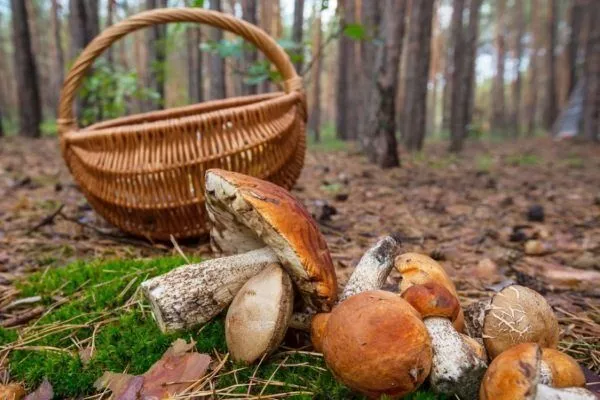
Mushroom-picking spots in the Rostov region
These regions aren't considered "mushroom-growing" areas, so most people who spontaneously go mushroom-picking have little understanding of their varieties and often can't distinguish edible specimens from inedible ones. Our quick overview will help you avoid making mistakes during your "silent hunt."
- ✓ Proximity to water bodies to ensure the necessary humidity.
- ✓ The type of forest (coniferous, deciduous, mixed) influences the diversity of mushrooms.
In the Rostov region, the best places to find mushrooms are in the north and northeast. Mushroom-picking spots:
- Pine forest of Kamensky district.
- State farm "Temernitsky" - to the north of Rostov.
- Forests in Veshensky, Sholokhovsky and Oblivsky districts.
- The plantings are deciduous and coniferous, and the groves are poplar, oak, and oak-ash. Look for these plantings near the towns of Rostov, Semikarakorsk, Azov, and Shakhty.
- Millerovo district. Near the village of Degtevo. Pine forests near Millerovo.
- Plantings in the vicinity of Kamensk-Shakhtinsk.
- Chertkovsky and Tarasovsky districts.
- Pine forests near the village of Nizhnekundryuchenskaya.
- Shchepkinsky forest near Rostov-on-Don.
- Coastal zone of the Don River.
The first mushrooms appear in April—these are fragile spring species that few mushroom pickers are interested in. And by May, the full-blown "hunt" begins, continuing until October. The opening of the mushroom season depends on a combination of favorable factors. Mass mushroom growth depends on established temperatures and soil moisture.
Edible mushrooms
Hundreds of mushroom species grow in the Rostov region, but only a few dozen are considered edible. Conditionally edible species can be eaten after special preparation, but regional doctors advise against this. Furthermore, they believe mushroom picking in this region is potentially dangerous because:
- the climate can make even edible mushrooms dangerous to humans;
- an increase in the natural gamma background is observed.
If you're not planning on giving up the pleasures of the "quiet hunt" and plan to use your catch for pickling and other dishes, be sure to explore the mushroom "assortment" of local forests and plantings.
| Object | Ripening period | Productivity | Fruit weight |
|---|---|---|---|
| Rows | Autumn | High | 5-15 cm |
| Raincoat | Summer-autumn | Average | 2-50 cm |
| Russula | Summer-autumn | High | 5-11 cm |
| White mushroom | Late summer-autumn | Average | 8-30 cm |
| Aspen mushroom | Summer-autumn | Average | 5-30 cm |
| Birch boletus | Summer-autumn | Low | Up to 18 cm |
| Butterlets | Summer-autumn | High | 5-15 cm |
| Volnushki | Summer-autumn | Average | 3-12 cm |
| Chanterelles | Late summer-early autumn | High | 3-12 cm |
| Dung beetles | Summer-autumn | Low | 3-25 cm |
| Milk mushrooms | Summer-autumn | Low | Up to 20 cm |
| Morels | Spring | Low | 2-15 cm |
| Lines | Spring | Low | 2-30 cm |
| Chanterelles | Summer-autumn | High | 5-12 cm |
| May mushroom | Spring | Low | 4-10 cm |
| Honey mushrooms | Autumn | High | 2-10 cm |
| Champignon | Summer-autumn | High | 5-15 cm |
| Oyster mushrooms | Spring-autumn | High | 3-25 cm |
| Dubovik | Summer-autumn | Average | 4-12 cm |
| flywheel | Summer-autumn | Average | 3-10 cm |
| Tinder fungi | All year round | Low | 5-50 cm |
| Umbrellas | Summer-autumn | Average | 35-45 cm |
| Deer mushroom | Spring-autumn | Low | 5-15 cm |
| Orange pezza | Summer-autumn | Low | 3-10 cm |
| Podabrikosoviki | Summer | Low | 7-10 cm |
| Flammulina | Autumn-Winter | Average | 3-11 cm |
Rows
DescriptionTrichophytons are agaric mushrooms of the Trichophyton family. They grow in groups and rows, hence the name. The caps are usually colored, less commonly white. Their shape changes with age, from hemispherical to prostrate. They have a dense stalk, and the membranous veil persists as a ring.
VarietiesThere are countless varieties of Trichomycetes, including edible ones. Several varieties of Trichomycetes with excellent flavors commonly grow in the Rostov region:
- Purple. This small mushroom is also known as the blueleg or blue root. The hemispherical cap is 6-15 cm in diameter. The cap is whitish-yellow with a purple tint. The gills are cream-colored. The purple stems are 5-10 cm tall and 3 cm thick. They have fleshy flesh of varying colors—white, gray, and gray-violet. The taste is sweet and fruity.
- Gray. The convex or hemispherical fleshy caps are grayish-yellow. Mature mushrooms have jagged edges and a flattened tubercle in the center. Gray caps can have olive, purple, or lilac hues. They have a starchy taste and odor.
- Poplar. The cap, like all Tricholomae, is initially hemispherical, then spreading. The color is yellow-brown with reddish hues. It reaches up to 15 cm in diameter. The surface is uneven, with cracks and pits.
- Green (greenfinch)This is a conditionally edible mushroom with a brownish-green cap covered with reddish scales. The cap diameter is 4-15 cm, and the stem height is 3-7 cm.
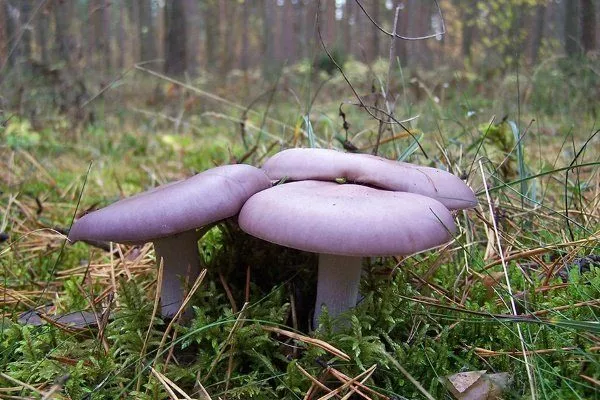
Purple rowan
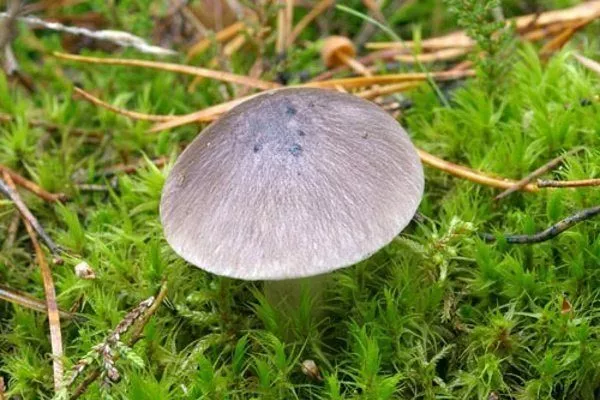
Gray rowan
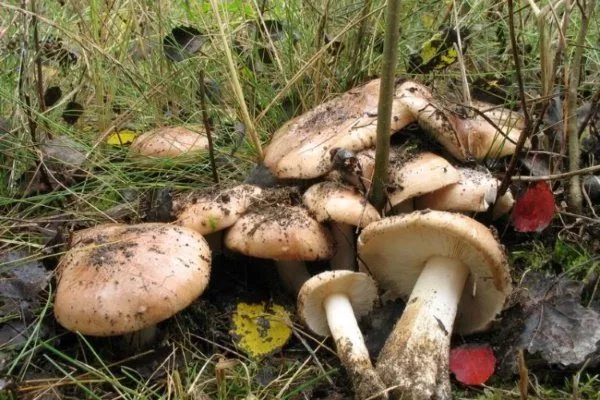
Poplar rowan
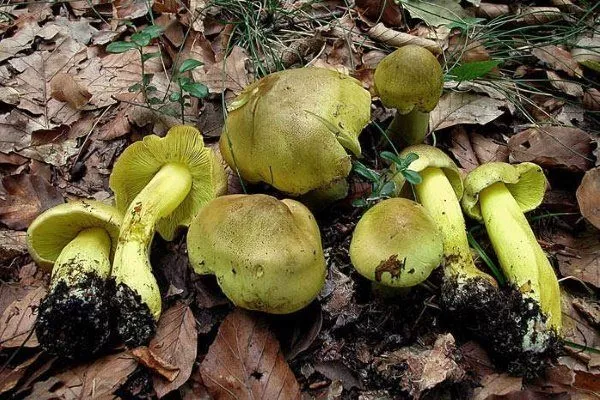
Green rowan
Where and when does it grow? The mass fruiting of Trichomycetes begins with the arrival of autumn and ends with frost. Trichomycetes are usually harvested in the Shchepkinsky Forest, near Orbitalnaya; there are also many in the Chertkovsky District. Bluelegs prefer sandy and calcareous soils and deciduous forests. They thrive under ash trees. Poplar Trichomycetes prefer plantings of the same name. Gray Trichomycetes prefer pine forests with sandy soils.
Doubles. There are many types of Trichomycetes. Among them are both edible and highly poisonous mushrooms, such as the sulfur Trichomycetes. Edible Trichomycetes have no lookalikes; the main thing is not to confuse them with their poisonous counterparts.
A mushroom picker talks about growing purple-legged rowan mushrooms on his farm:
Raincoat
DescriptionPuffball sizes vary depending on the variety. All puffball species are similar—they are spherical mushrooms. There is no separation between the stem and cap—they form a single mushroom body. Size ranges from 2-3 cm to 20-50 cm. They have firm skin and firm white flesh, which turns yellow in older specimens. Puffballs are very tasty, especially when fried.
Varieties: In the Rostov region you can find different types of raincoats:
- Spiky – covered with conical needles. It has a pleasant aroma. The skin is creamy, the flesh is white.
- Giant – grows up to 40 cm in diameter and weighs up to several kilograms.
- Pearl It has a white, pear-shaped body that turns yellow as it grows. Its skin is covered with spiny growths.
- Oblong – just above the spiny puffball. Delicate and delicate, this puffball is edible when young.
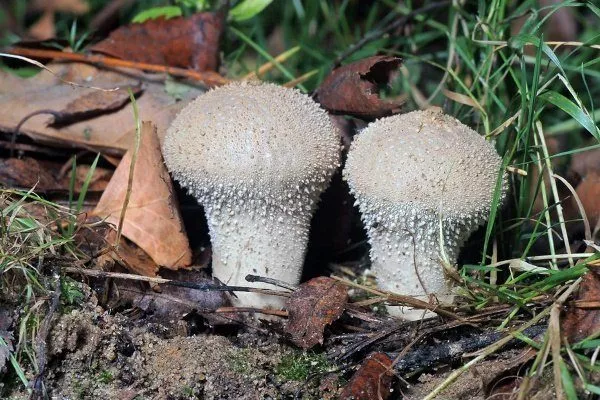
Prickly puffball mushroom
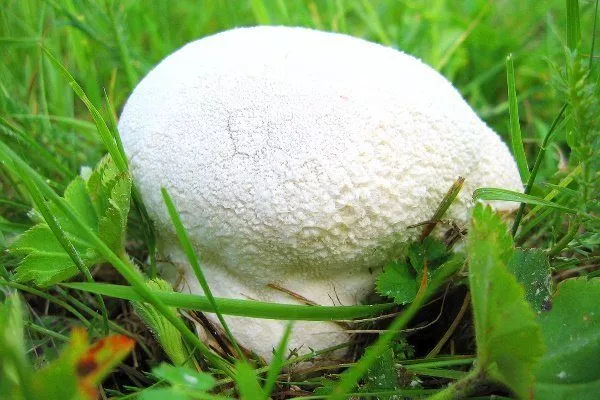
Giant puffball mushroom
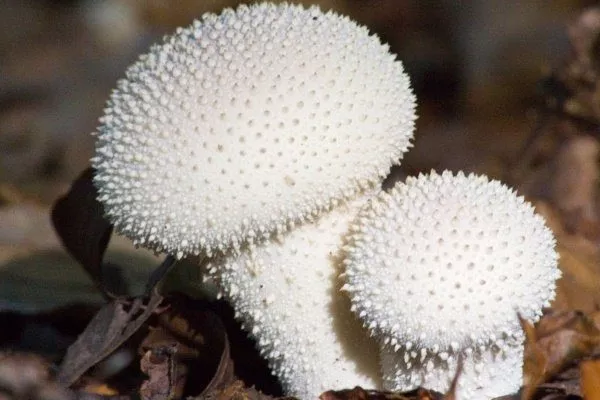
Pearl puffball mushroom
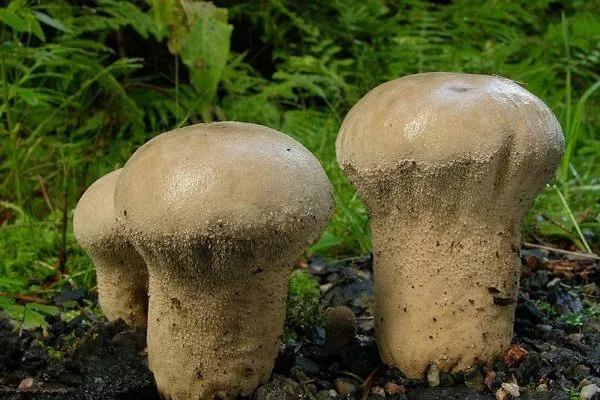
The oblong puffball mushroom
Where and when does it grow? Fruiting occurs from early summer until October. Puffballs grow everywhere—except perhaps in Antarctica. In the Rostov Region, puffball colonies can be found in any forest or planting, in meadows, clearings, and along roadsides. Puffballs prefer nitrogen-rich soil.
Doubles. They can be confused with false puffballs, which are considered poisonous in Russia but are considered edible in Europe. They can be distinguished by their warty, scaly, yellowish-ochre skin with small cracks.
Russula
DescriptionThese are small, lamellar mushrooms with sturdy white stems and multicolored caps—grayish, reddish, greenish, yellow, brown, and bluish. While not considered a delicacy, the mushroom is no less delicious than chanterelles or champignons. The caps are initially spherical and bell-shaped, then spreading.
Where and when does it grow? They grow in coniferous and deciduous forests. Large colonies of russula have been observed in the Shchepkinsky Forest, as well as in the Semikarakorsky District. These mushrooms are so numerous that they account for 45% of all mushrooms. They grow in coniferous and deciduous forests, primarily under pine, spruce, alder, oak, and birch trees.
Varieties. There's never been a shortage of russula mushrooms—they grow in abundance. At least several varieties grow in the Rostov region:
- Green. It has a thick, fleshy white stem, up to 10 cm in height. The cap is greenish-gray and up to 10 cm in diameter. This is one of the most delicious varieties of russula – it is not only salted, boiled, but also fried.
- Food. The cap is 5-11 cm in diameter. The color ranges from wine-red to lilac-brown. This is a very tasty russula.
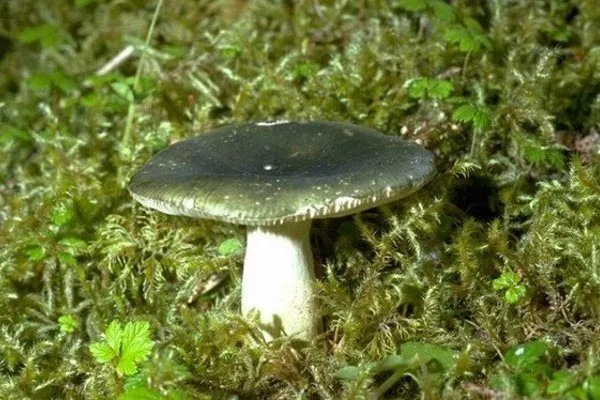
Green russula
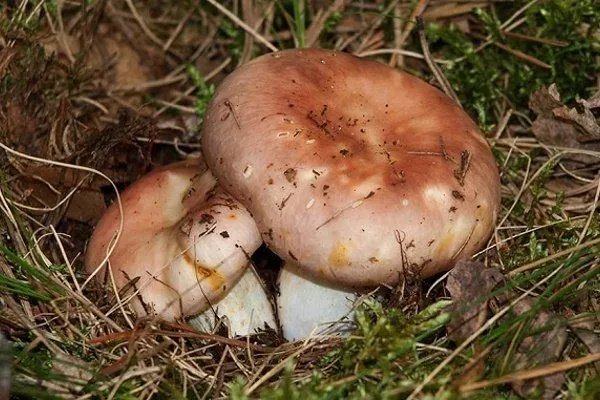
Edible russula
Doubles. Often confused with toadstools, russulas lack the ringed "skirt" on the stem that toadstools have. The latter also has a characteristic thickening at the base of the stem. Inedible russulas with bright red and purple caps—such as the acrid, pungent, and emetic—should also be avoided. There are no poisonous russula species.
White mushroom
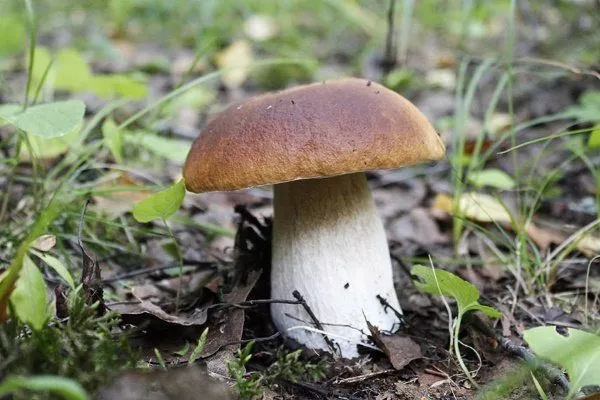
Description. All porcini mushrooms They are similar in appearance – they have strong, robust stems, club-shaped. The caps are convex, becoming somewhat straighter with age. The caps are brownish in color. The cap diameter is 8-30 cm, the stem length is 10-12 cm.
Porcini mushrooms contain many nutrients. It's important to cook them promptly—after just 10 hours, they lose half their nutritional value.
Where and when does it grow? The mass harvest of boletus mushrooms begins in late August and continues into October. However, fruiting begins as early as July. Many boletus mushrooms have been spotted in groves near the villages of Shakhty and Azov. People also travel to the Semikarakorsky district to pick porcini mushrooms. They grow in open forests, preferring spruce, pine, and birch forests. In summer, they are found singly, but in clusters as autumn approaches.
| Type of mushroom | Preferred forest type | Soil |
|---|---|---|
| White mushroom | Coniferous, deciduous | Sandy, limestone |
| Aspen mushroom | Foliar | Moist, rich in organic matter |
Varieties. Finding noble mushrooms, including boletus, in the Rostov region is a real treat. This arid region doesn't always offer a bountiful harvest. From the second half of August, boletus mushrooms can be found here:
- Pine (pine forest) It has a convex cap of a reddish-brown hue. The skin is permanent. The diameter is 8-15 cm. The thick stem is covered with a brownish mesh.
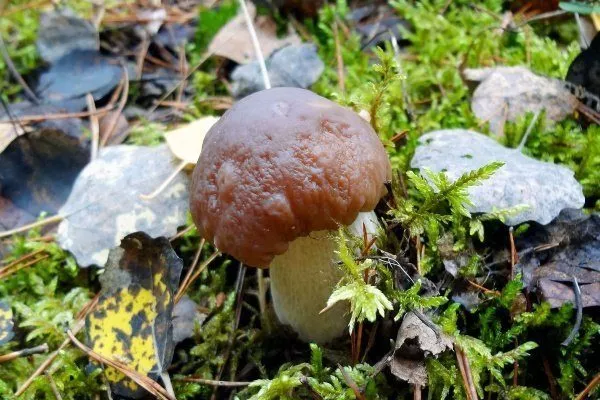
- Birch It has a cushion-shaped, then flattened cap, reaching 15 cm in diameter. The cap skin is slightly wrinkled, and the color is light ochre, sometimes almost white. The barrel-shaped stem is up to 12 cm long.
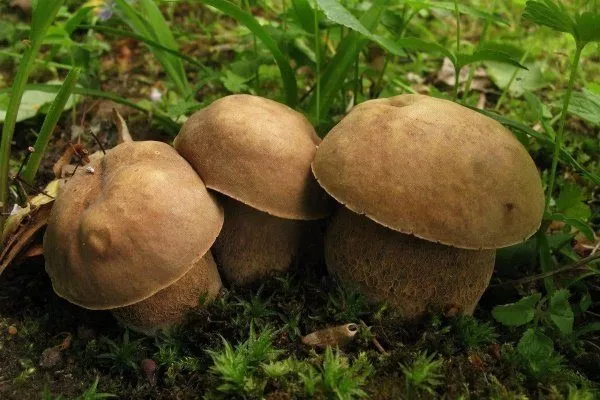
- Oak Its slightly velvety cap becomes cracked in dry weather. Initially, it becomes spherical, then cushion-shaped. The cap color ranges from ochre to brownish.
- Spruce — Grows in spruce forests. It is particularly large, growing up to 2 kg. The cap is wrinkled, bumpy, and brownish in color. It ranges from 5 to 20 cm in diameter. The stem is sturdy, like all boletus mushrooms, and reaches a height of up to 20 cm.
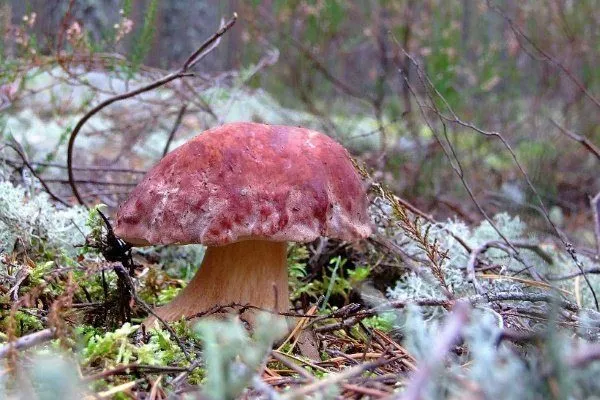
Pine porcini mushroom
Birch porcini mushroom
White oak mushroom
Spruce porcini mushroom
Doubles. Only inexperienced mushroom pickers can confuse porcini mushrooms with other species. A boletus can be mistaken for a boletus. gall mushroom, less chances - satanic mushroom, it is easily distinguished by its reddish stem.
Aspen mushroom
DescriptionAnother name is the redhead. The cap is brick-red. The diameter is 5-30 cm. The shape of young mushrooms is hemispherical, later becoming cushion-shaped and convex. It feels like felt or velvet. The stem is tall, over 20 cm, and its surface is covered with tiny scales.
Where and when does it grow? Grows in groups and solitarily. It prefers aspen forests and prefers moist lowlands. Fruiting period runs from mid-June until frost. Good harvests of aspen mushrooms have been observed near the Don River coast, as well as in the Semikarakorsk district. Redheads are especially abundant in aspen forests near Kamensk.
Varieties. Along with the red aspen mushroom, the most popular of its kind, you can find the following in the Rostov forests:
- Oak aspen mushroomIt has a brick-red cap and white-gray flesh. When cut, the flesh turns blue-purple, then black.
- Yellow-brown aspen mushroomIt has a light-colored stem and a yellow-brown cap. The stem turns blue-green when cut.
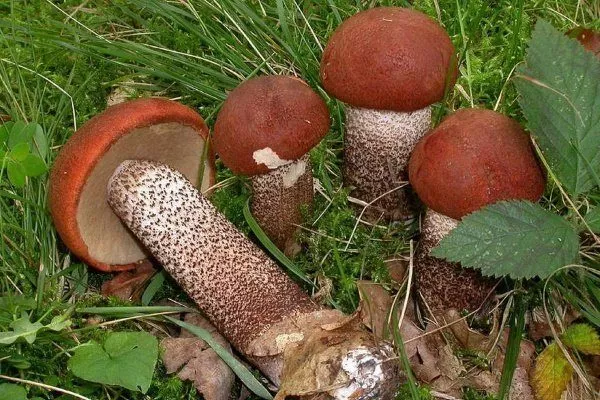
Oak aspen mushroom
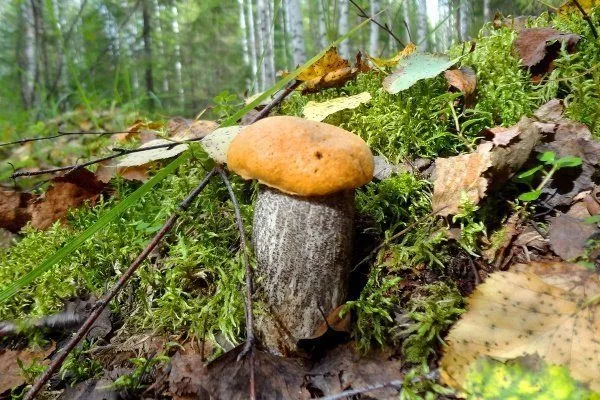
Yellow-brown aspen mushroom
Doubles. False aspen mushroom Also known as the bitterling mushroom or the pepper mushroom, it grows only in coniferous forests. The easiest way to recognize the bitterling mushroom is by its pink flesh.
Birch boletus
DescriptionThe cap is dark brown. The diameter is up to 18 cm. The cap changes from hemispherical to cushion-shaped. The stem is long and cylindrical.
Where and when does it grow? The Rostov region is not rich in noble mushrooms. Boletus mushrooms They are rare here, and only found in birch forests under favorable weather conditions. If the weather is rainy, they appear in summer, and fruiting continues until October. Mushroom pickers have noted birch boletes growing in the Kamensk-Shakhtinsky area.
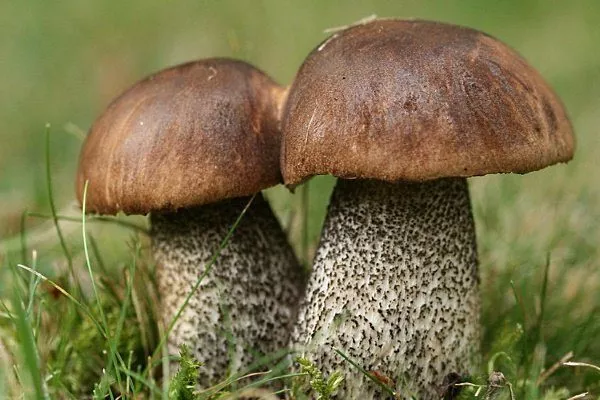
Doubles. It's sometimes confused with the false birch bolete, also known as the bitter bolete. Its cap is brownish in color, but it's easily recognized by its bitter taste.
Butterlets
DescriptionThey have sticky, oily caps 5-15 cm in diameter, hemispherical, or less commonly conical. The color varies depending on the conditions, from yellow and ochre to brown and russet. The white stem is 4-10 cm long. The true butter mushroom grows in the Rostov region.
Butterlets cook for just 15-20 minutes – they can be fried, stewed, or boiled. They contain not only minerals and vitamins, but even aphrodisiacs and antibiotics.
Where and when does it grow? The butter mushroom harvesting season begins in summer and lasts until autumn. Pine forests near Millerovo, Veshenskaya, and Nizhnekundryuchenskaya are abundant. They are also collected near the villages of Azov and Shakhty, and in pine forests in the Tarasovsky District. They grow at forest edges, along trails, in clearings, and in areas with young coniferous stands.
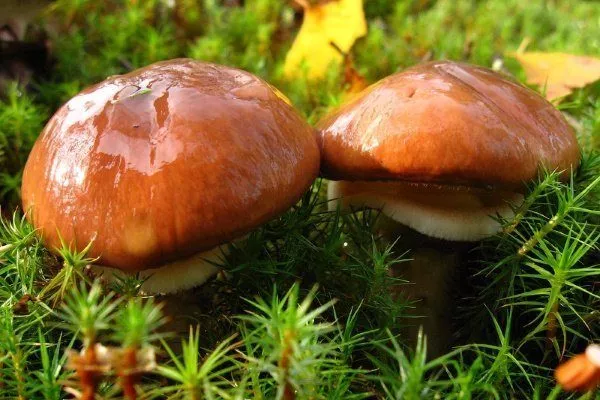
Doubles. Butterlets are often confused with edible boletus mushrooms. Young panther mushrooms also resemble them.
Volnushki
Description. The milk cap is easily recognized by its pink cap with fringes and concentric circles. It has a short, hollow stem and a slightly bitter taste. They are soaked and salted. They are used as a seasoning for other mushrooms.
Where and when does it grow? They grow in mixed and deciduous forests. They form a mycorrhiza with birch trees. They often grow in dense colonies. Fruiting begins in June, and mass harvesting occurs between August and October. The best place to look for milk mushrooms is in the Millerovsky District, where saffron milk caps grow.
Varieties. Volnushki mushrooms prefer northern latitudes, so there haven't been any large-scale harvests of this mushroom in the Rostov region. Volnushki mushrooms can occasionally be found here:
- Pink. A typical pink-colored volnushki mushroom. It's often called a Volzhanka.
- WhitesThese milk cap mushrooms are also called "white milk caps" due to the color of their caps. They are smaller and more inconspicuous than the pink milk cap mushrooms.
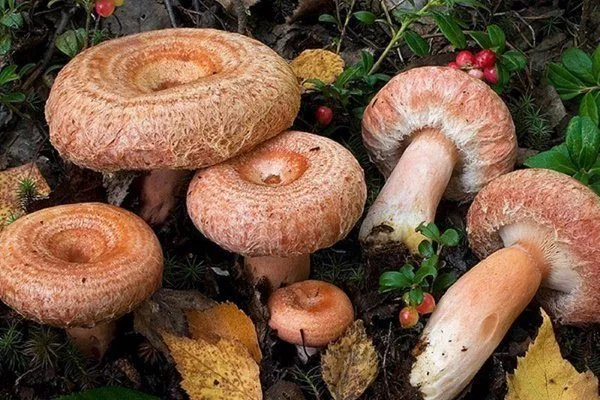
Pink volnushka
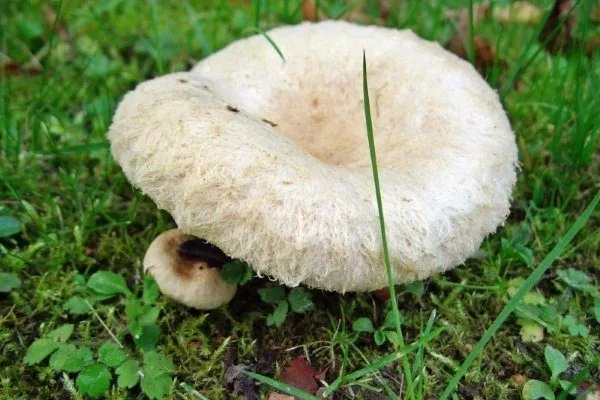
White volnushka
Doubles. Volnushki mushrooms are difficult to confuse with other mushrooms, except perhaps with some of the lactiflora family. There are no poisonous volnushki mushrooms. Foreign catalogs often list volnushki mushrooms as inedible, but in Russia, they know how to properly process them to make a delicious pickle.
Chanterelles
DescriptionA brightly colored mushroom with an orange cap. It has a hollow center and curved edges. It is 3-12 cm in diameter. The stem is fragile and hollow, short—7-9 cm. A milky sap oozes when cut.
Where and when does it grow? The hunt for saffron milk caps can begin in late July. They bear fruit until early September, weather permitting. Large colonies of saffron milk caps have been spotted near the village of Degtevo in the Millerovsky District. Saffron milk caps thrive in sandy soils, so they are more common in pine forests, particularly under larch and pine trees, on the north side.
Some mushrooms need to be soaked for several days before pickling, but pickled saffron milk caps can be eaten in just two weeks – they are the fastest pickling mushroom.
Varieties. Look for two types of saffron milk caps in the pine forests of the Rostov region:
- Real or spruce. It prefers to grow in spruce forests, in large clusters. In Europe, it's considered inedible, but in Russia, it's considered a delicacy. The spruce saffron milk cap can be distinguished from the pine saffron milk cap by the curled edges of its cap.
- Pine or pine forestThis species is less common, growing only in pine forests and on sandstone. It usually grows solitary. It is harvested even after frost.
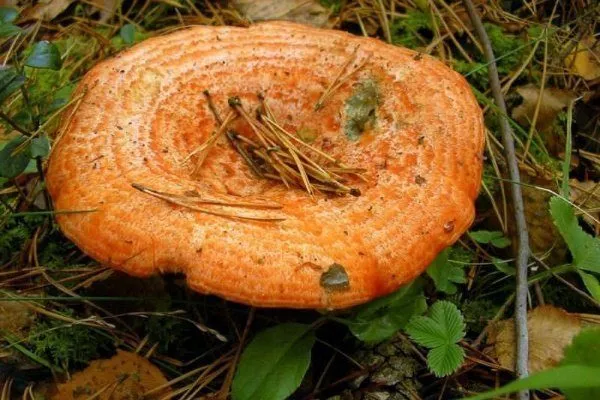
Real saffron milk cap
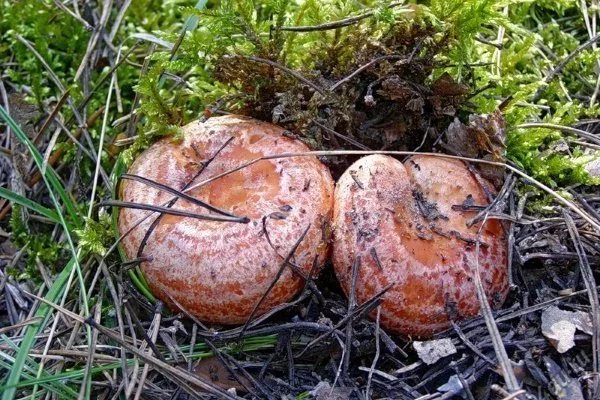
Pine saffron milk cap
Doubles. The saffron milk cap has no poisonous lookalikes. It can only be confused with false saffron milk caps from the milk cap family.
Dung beetles
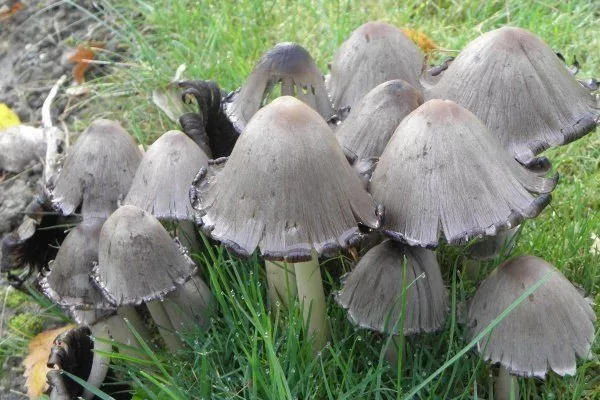
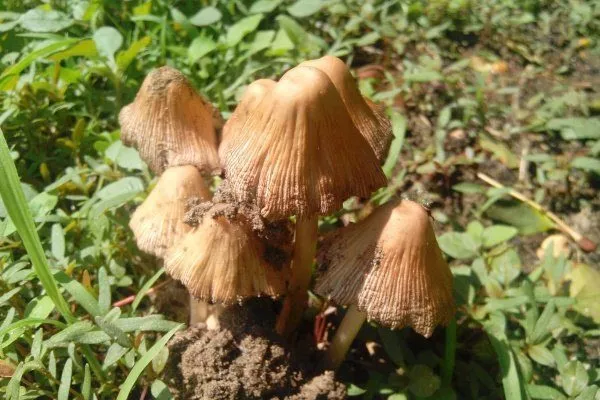
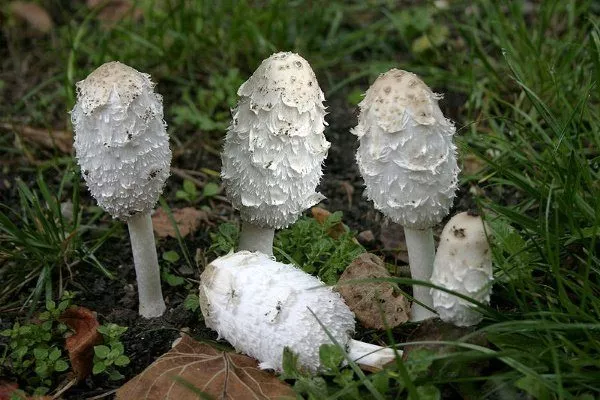
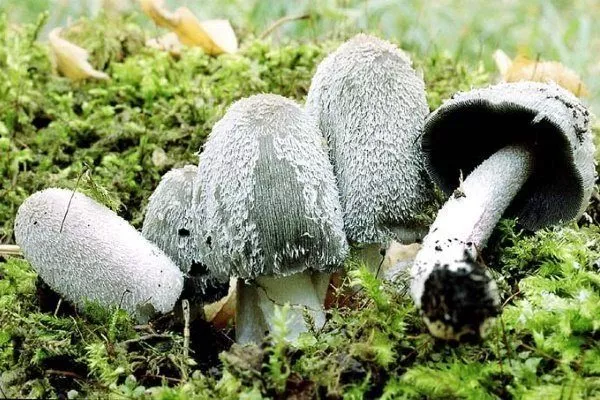
DescriptionThe cap is bell-shaped and scaly. The scales are large and resemble flakes. Dung beetle It is thin and fragile, has almost no pulp, and is not in demand among mushroom pickers.
Where and when does it grow? Dung beetles are distinguished by their incredibly rapid growth rate—in just a few hours, the mushroom can reach adult size, completing its growth cycle. They thrive in manured soil, hence their name. Dung beetles can be found in forests, parks, landfills—they grow anywhere, as long as the soil is fertile. They fruit from May to October.
Varieties. There are a large number of dung beetles, but none of them are of interest to mushroom pickers. They prefer to hunt for boletus, saffron milk caps, or honey mushrooms in the forests rather than bother with identifying the various varieties of dubious dung beetles. Many of these grow in the southern regions, for example, the dung beetle:
- grey;
- silver;
- ordinary;
- white;
- hairy arthropods and others.
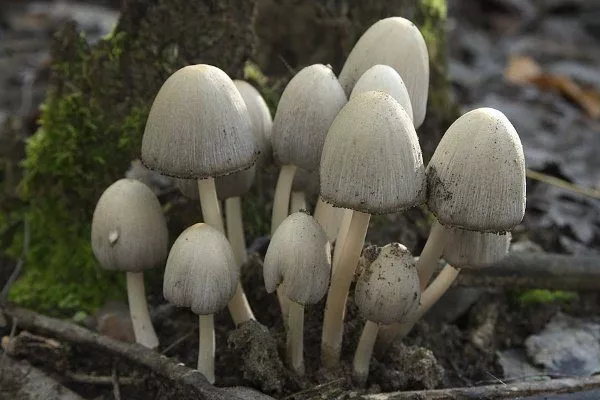
Gray dung beetle mushroom
Silver dung mushroom
Common dung beetle mushroom
White dung mushroom
Hairy dung beetle
Doubles. Dung beetles do not have poisonous look-alikes.
Milk mushrooms
DescriptionThe true milk mushroom has a creamy-yellow or white cap. The stem is short and thick. A milky sap oozes when cut. The caps reach up to 20 cm in diameter. Milk mushrooms grow in clusters, but they are difficult to spot, as they are well camouflaged among pine needles and foliage.
In Rus', the milk mushroom was once considered the only mushroom suitable for pickling. Milk mushrooms were called "royal" mushrooms.
Where and when does it grow? Milk mushrooms They prefer to form a mushroom-root with birch trees—that's where you should look for them. They are found at the edges and clearings of forests, both coniferous and deciduous. They begin to bear fruit in July. In the Rostov region, milk mushrooms don't produce a good harvest, but finding one here is a stroke of luck.
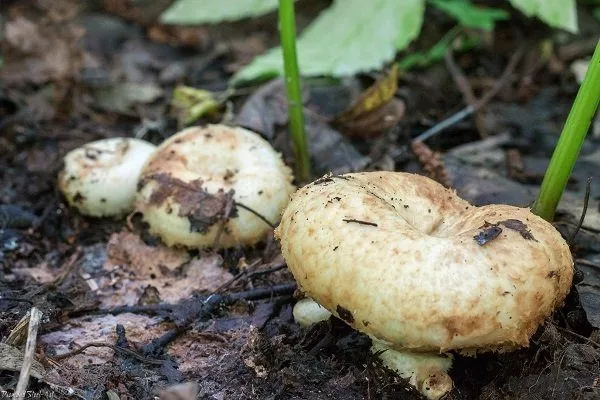
Real milk mushroom
Varieties. In Rostov forests and plantations, in addition to the common milk cap, you can also find the black milk cap. Its cap is 6-15 cm long with felt-like, folded edges. The color is almost black. When broken, a white, milky juice flows. The light-colored stem is up to 7 cm long, brittle, cylindrical, and spotted.
Doubles. They are often confused with conditionally edible varieties of milk mushrooms, which have a bitter taste - these are the peppery, camphor, felt and golden-yellow milk mushrooms.
Morels
DescriptionAn early mushroom that doesn't inspire enthusiasm among mushroom pickers. It's prized by gourmets for its rich flavor and aroma. It has a honeycombed, ochre-yellow cap. The morel has no gills, and virtually no flesh—it has a brittle, cartilaginous body. The stem is thin and fragile, up to 8 cm long.
Where and when does it grow? It grows in fertile soils in forests of all types. It appears in April. It's best found in sandy soils and pine forests. It often grows in clearings, along roadsides, and at forest edges.
Varieties. In forests and plantings in early spring you can find morels different types:
- Ordinary It has an egg-shaped cap with cells. The color is yellowish-brown. The height is up to 10 cm.
- Conical It has a hollow, pointed cap. The honeycombed cap makes up two-thirds of the morel's height. The stem is up to 4.5 m tall.
- Steppe The morel mushroom is the largest mushroom native to Russia. It has a spherical, gray-brown cap, ranging in diameter from 2 to 10-15 cm.
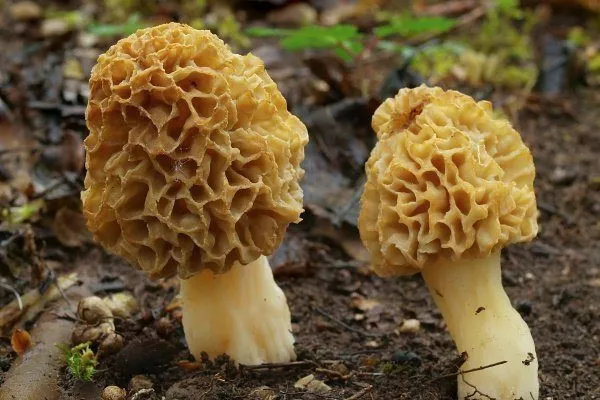
Morel mushroom
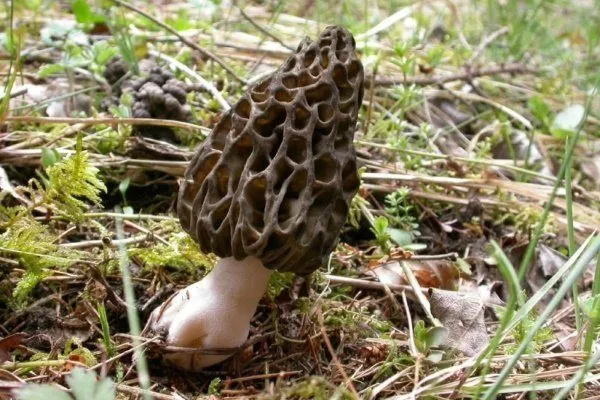
Conical morel
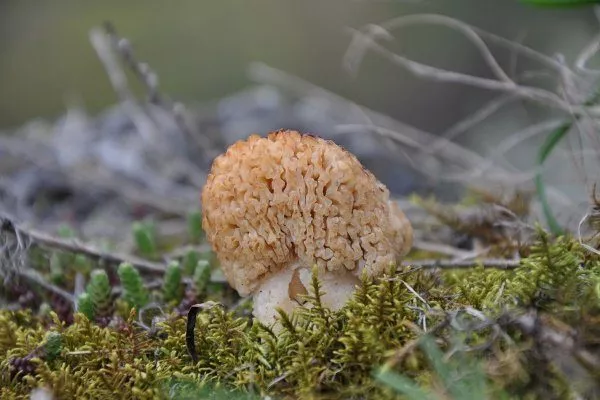
Morel
Doubles. False morels smell bad—like rotten meat. However, the French consider them a delicacy. They have a bell-shaped cap 5 cm high. The mushroom has a dark olive-green, slimy cap and a white stem up to 30 cm long.
Lines
DescriptionGyromitra mushrooms are deadly poisonous when raw. However, they are eaten only after special cooking. Their cap is dark brown, sinuous, and irregularly shaped. They are often confused with morels, which is why poisonings occur.
Scientists recently discovered a powerful poison in morels—gyromitrin—that doesn't break down when cooked or dried. The poison content varies depending on where the morels grow. Morel poisonings have been reported, for example, in Germany.
Where and when does it grow? Like the morel, the gyromitra grows in April. It's most common in pine forests, but can also grow in fields, parks, and gardens.
Varieties. Morel has varieties that grow not only in the Rostov region, but throughout most of our country:
- Ordinary. The cap is irregularly rounded, 2-13 cm in diameter, and chestnut-brown in color. The stem is hollow, light, and flattened. It has a pleasant scent.
- Giant. The sinuous cap, with its cavities inside, reaches 30 cm in diameter. The stem is only 2-3 cm high – not visible under the cap.
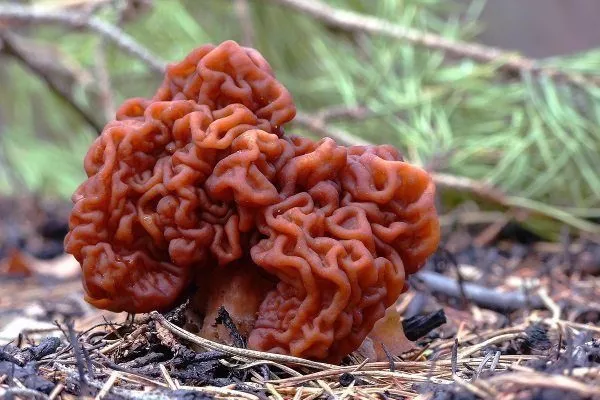
Common morel
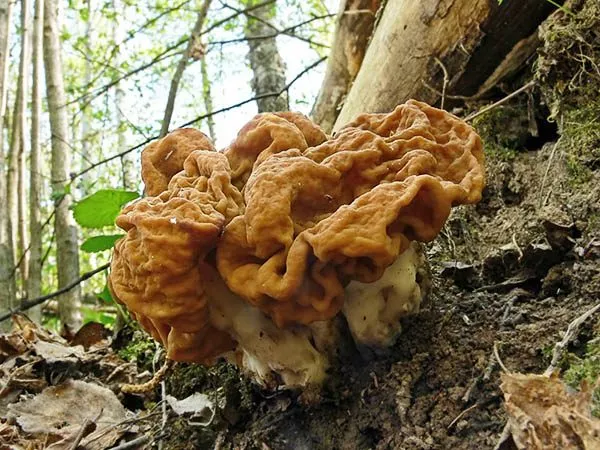
Giant morel
Doubles. Morel has no poisonous counterparts; it is itself quite dangerous if the technology for its preparation is violated.
Chanterelles
DescriptionThe true chanterelle (common chanterelle) has a stem and cap that are inseparable. The mushroom's body is bright yellow. The cap is 5-12 cm in diameter. This mushroom is renowned for its excellent taste.
Where and when does it grow? They bear fruit all summer and fall, until October. They prefer mixed forests and prefer damp areas. They grow in colonies and often grow on tree stumps. Chanterelles are collected in the forests near Rostov, Shakhty, Azov, and Semikarakorsk.
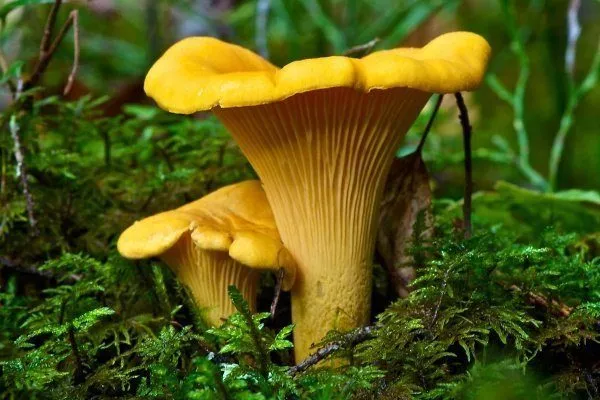
Doubles. It can be confused with the false chanterelle, an inedible mushroom with poor nutritional value. Information on its toxicity is conflicting. The lookalike can be distinguished by its piercingly bright color.
May mushroom
DescriptionOther names include the May Tricholoma or Calocybe. The cap is 4-10 cm in diameter and round, hemispherical, or cushion-shaped. The stem is thick and short, 2-7 cm long. The cap and stem are the same color—cream. The flesh is white and dense, with a flour-like aroma and flavor. This unique mushroom is prized primarily by gourmets.
Where and when does it grow? It appears in May and disappears completely by summer. It grows in groups, forming circles. It is found everywhere, not only in forests but also in the steppe, and can even grow on lawns or in vegetable gardens.
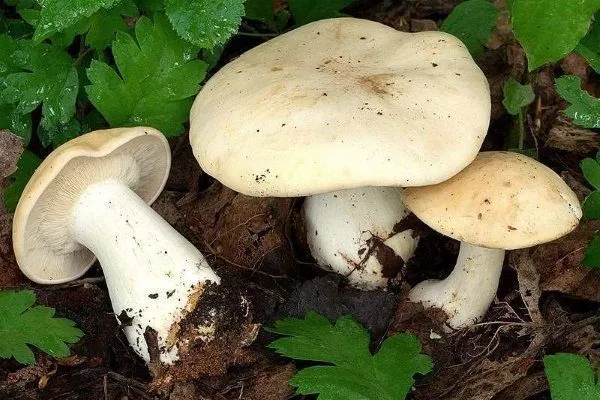
Doubles. None.
Honey mushrooms
DescriptionThese mushrooms grow in large clusters. They thrive on stumps, dead, and damaged trees. They have small, scaly caps and thin, skirted stems. Young mushrooms have a tubercle on their caps.
Where and when does it grow? They prefer deciduous trees. Fruiting occurs in September-October. They are common in the coastal zone of the Don River, as well as in the Semikarakorsk region.
Varieties. The following species grow in the Rostov region: honey mushrooms:
- WinterIt has a slimy, copper-yellow or orange-brown cap. The creamy flesh has a pleasant aroma. The caps are 2-10 cm in diameter.
- MeadowThe spherical and bell-shaped caps spread out with age, with a tubercle. The color is ochre and yellow-brown. The diameter is 2-6 cm.
- AutumnCaps are ochre with scales, 3-10 cm. White aromatic flesh.
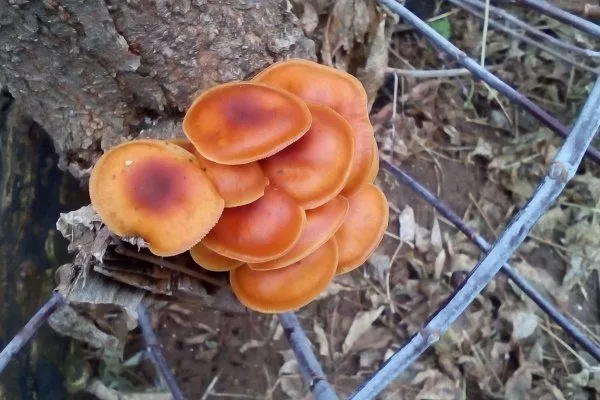
Winter honey fungus
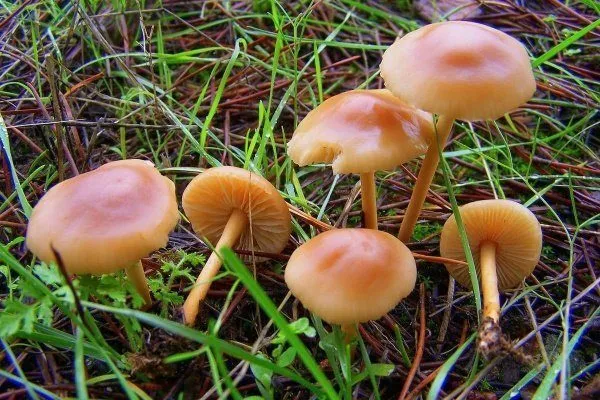
Meadow honey fungus
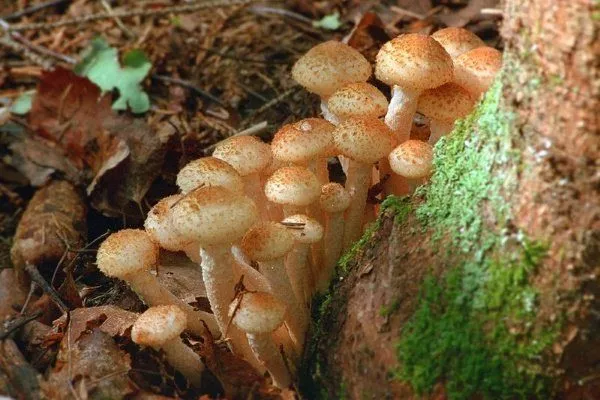
Autumn honey fungus
Doubles. The most dangerous lookalike is the sulfur-yellow mushroom, which differs from the edible honey mushroom in its piercingly bright color and lack of scales.
Champignon
DescriptionThe common button mushroom has a fleshy, grayish-white cap—at first hemispherical, then spreading. The white flesh turns slightly pink when broken. The gills are pink, then brown. The cap diameter is 5-15 cm, and the stem is 3-8 cm high.
Where and when does it grow? The fruiting period is from late May to October. They grow in ring-shaped colonies. They are abundant in the Chertkovsky district. They prefer fertile soil and grow everywhere—in forests, plantations, and parks.
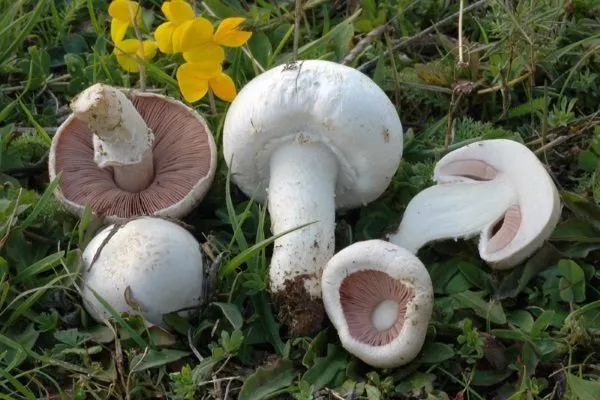
Varieties. In the Rostov region, in addition to the common champignon, you can also find:
- Bernard's champignonThe cap is large and thick-fleshed, measuring 8-20 cm. When touched, the whitish-brown cap slowly turns red. The top of the cap is covered with scales. The mushroom is edible, but not tasty.
- Straw yellow champignonWhen pressed, the convex cap is whitish in color and turns yellow.
Doubles. The most dangerous mistake to confuse a champignon is the death cap. When the death cap is small, it resembles the champignon in color and shape. There is also a yellow-skinned champignon, which is poisonous. The flesh is white, but at the base of the stem it turns sharply yellow and smells of iodine. If you press on the cap, it will turn yellow.
Oyster mushrooms
Description. The common oyster mushroom, or oyster mushroom, is the most common mushroom in the wild. It has a convex cap, 3-25 cm in diameter, spread out. It is asymmetrical, fan-shaped, and has grayish hues. The stipe is 3-12 cm long and tapers toward the base. Only the cap is eaten.
Where and when does it grow? It grows everywhere, preferring stumps, fallen trees, and dead wood. It prefers poplar, willow, walnut, and aspen trees. Fruiting occurs from April to November.
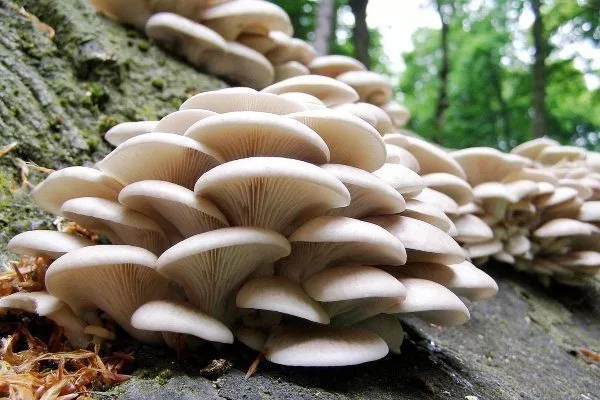
Varieties. Along with the common oyster mushroom, the oyster mushroom can be found in the Rostov forests. It is edible. Its cap is funnel-shaped, gray or brown.
Doubles. There are no poisonous analogues, there are only inedible mushrooms that look similar to oyster mushrooms.
Dubovik
DescriptionIt grows in the Rostov region. dubovik (poddubnik)The cap is thick-fleshed, round, and cushion-shaped. It feels velvety to the touch and is brownish, ranging from olive to brown. The flesh turns blue when broken. The aroma is pleasant. The cap is 4-12 cm. The stem widens toward the bottom, reaching a height of 7-15 cm.
Where and when does it grow? It grows well in the steppe zone, preferring beech and hornbeam groves. Its growth period is May–October. It is occasionally found in plantings and forests throughout the region, and has been spotted near the village of Zelenchukskaya.
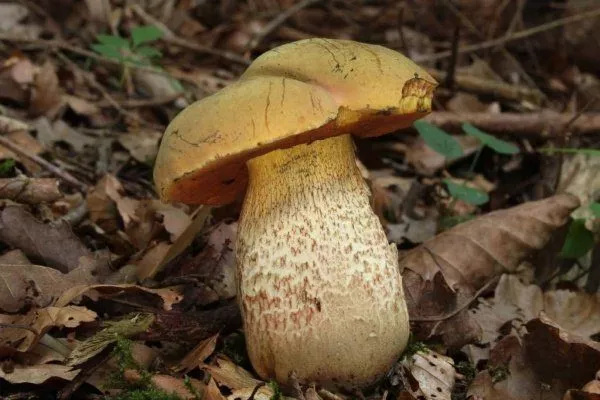
Doubles. The boletus can be confused with the satanic mushroom, which is also blue when cut. The poisonous mushroom can be distinguished by its reddish stem.
flywheel
DescriptionThe fissured boletus can be found in the forests and plantations of the Rostov region. Its cap is 3-10 cm in diameter, thick-fleshed, initially convex, then spreading. The color ranges from orange-reddish to dark brown. Velvety at first, it becomes bare and dry with age. The stipe is yellow or rusty, 3-6 cm tall, and curved.
Where and when does it grow? Can be found from June to September in poplar and oak plantations, in pine forests, and in willow thickets.
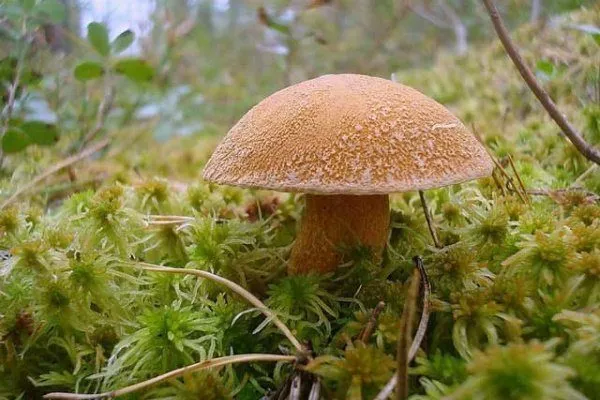
Doubles. It can be confused with the pink-legged boletus, which is classified as a conditionally edible mushroom.
Tinder fungi
DescriptionFew edible polypore species exist due to their tough flesh. The caps are spreading, with or without stalks.
Where and when does it grow? Tinder fungi They grow on wood, and occasionally on the soil. They are often found in clearings and can grow on both living and dead trees. The fruiting bodies of many polypores grow year-round.
Tinder fungi are parasites that destroy wood.
Varieties. There are two edible tinder fungi in the Rostov region:
- Scaly. The fruiting bodies are prostrate, with a cap ranging from 5 to 50 cm in thickness. The cap is whitish or cream-colored. It is covered with large brownish scales. The stalk is dense, 4-8 cm long. Fruiting occurs from May to September.
- Sulphur yellowThe loose body is 10-40 cm in diameter. Thickness is 4-6 cm. Eaten when young. Semi-circular or shapeless. Color: orange, sulfur-yellow, ocher.
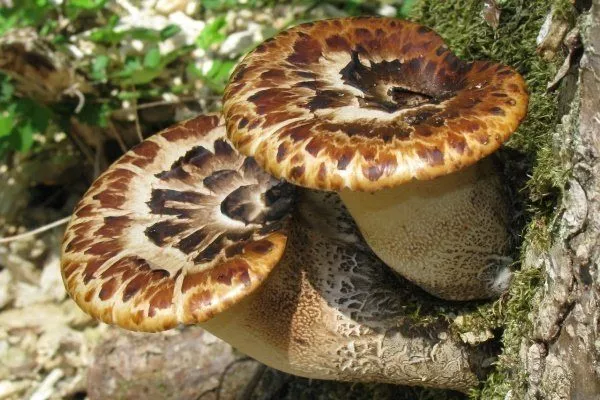
Scaly polypore
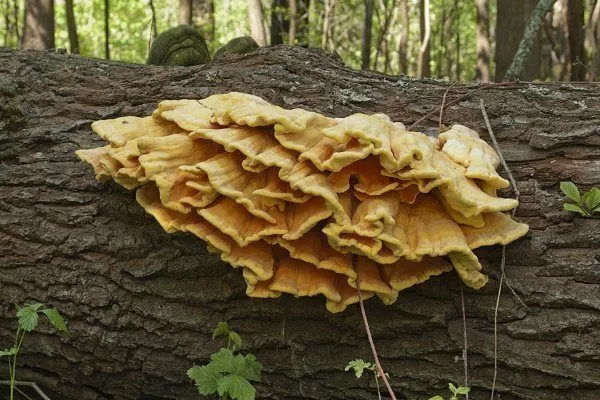
Sulphur-yellow tinder fungus
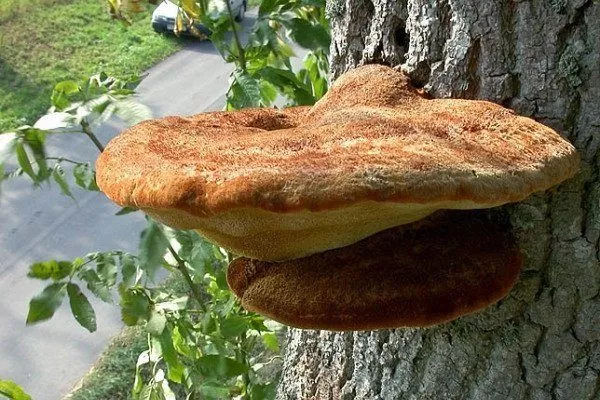
Inedible polypore bristly-haired
Doubles. The following polypores are found in the region: bristly-haired, pine, birch, true and false - all of them are inedible.
Umbrellas
DescriptionA delicious mushroom from the agaric family. Resembling an open umbrella, the domed cap rests on a thin stem. The cap diameter is 35-45 cm, and the stem height is 30-40 cm. The caps are dry with a few scales.
Where and when does it grow? Umbrellas grow from June to October-November, depending on the species. They are found in pastures, meadows, and various types of forests. They are undeservedly under-populated among mushroom pickers. Umbrellas can be collected in plantings in the Tarasovsky and Chortkovsky districts, as well as in other parts of the region.
Varieties. In the Rostov region you can find two types of umbrellas:
- Blushing. The cap is 5-10 cm, ovoid, bell-shaped, and grayish-brown in color. The stem is thin, up to 25 cm long. The whitish stem turns red when touched.
- Variegated (large)Reaches 40 cm in diameter. The grayish-brown cap has a tubercle in the center. It is covered with flaky scales. The stem is 10-38 cm long and fibrous-scaly.
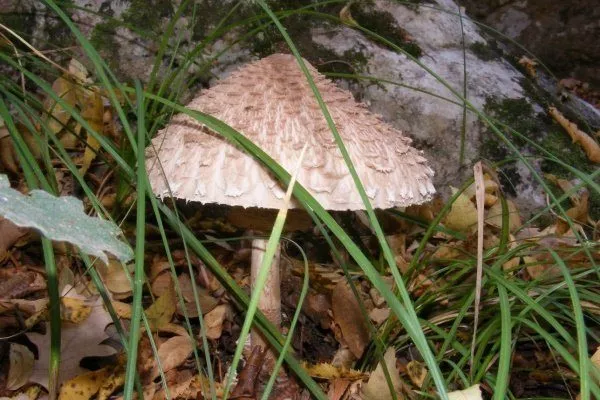
Reddening parasol mushroom
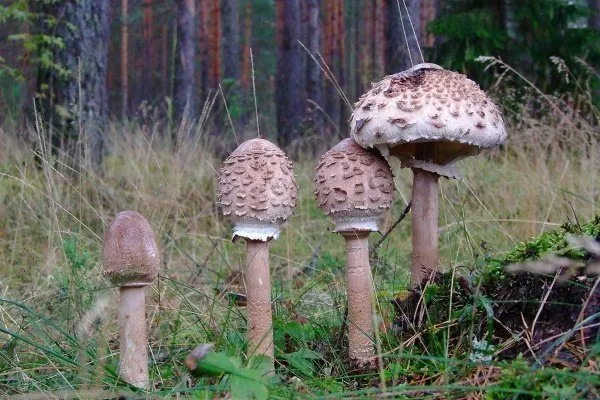
Parasol mushroom
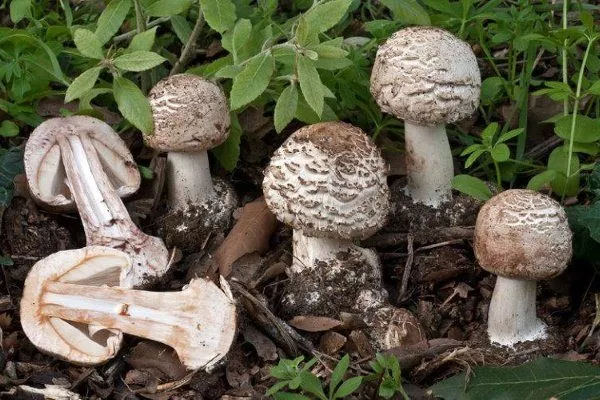
The parasol mushroom can be confused with the poisonous Chlorophyllum cinquefoil.
Doubles. It can be confused with its poisonous look-alikes – Chlorophyllum scoriatum, Chlorophyllum slagum and the stinking fly agaric..
Deer mushroom
DescriptionThe deer mushroom, or pluteus, is unpopular among mushroom pickers. Many mistake it for poisonous. It has a brown cap—light or brown. It is 5-15 cm in diameter. It has a tubercle in the center. The cap changes from bell-shaped to spreading. The stem is long and fibrous. The flesh smells like radish.
Where and when does it grow? Fruiting occurs from May until autumn. It grows on stumps, wood, and soil.
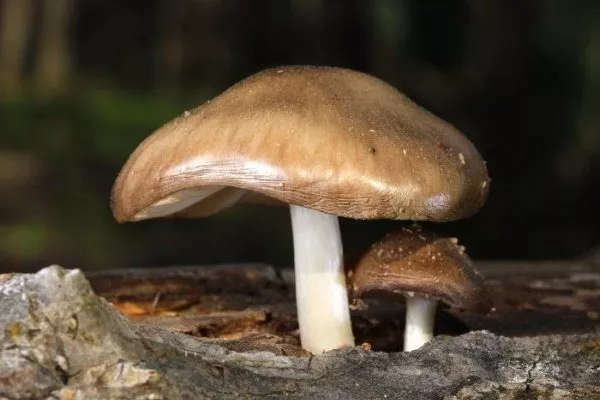
Doubles. There are no poisonous lookalikes. They are easily confused with their edible relatives, the Plutea. Inexperienced mushroom pickers often mistake the deer mushroom for a toadstool.
Orange pezza
DescriptionThis little-known mushroom has a saucer-shaped, cup-shaped cap with upturned edges. These fragile mushrooms are distinguished by their bright orange color. The inside of the cap is smooth, while the outside is matte. The taste and aroma of the white flesh are indistinct.
Where and when does it grow? Fruiting season ranges from midsummer to late September. Few people in the Rostov region are willing to harvest this strange mushroom, although it grows everywhere, from roadsides to sand dunes.
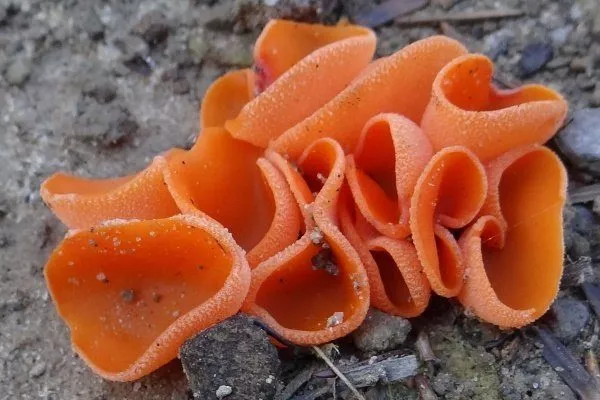
Chefs use peziza to garnish dishes—its vibrant flesh makes a beautiful decoration. This mushroom can detoxify and cleanse the body after chemotherapy.
Doubles. They can only be confused with other types of pezi, but none of them are poisonous.
Podabrikosoviki
DescriptionThe garden entoloma, or subpricot mushroom, is distinguished by its pinkish gills. The cap is 7-10 cm long. The shape is bell-shaped, convex-conical. The color is whitish-gray. The stems are often curved and twisted, reaching 10-12 cm in height. It is considered conditionally edible.
Where and when does it grow? They grow in forests of all types and are often found in orchards—under apple and apricot trees, etc. Fruiting peaks in June. They grow in families.
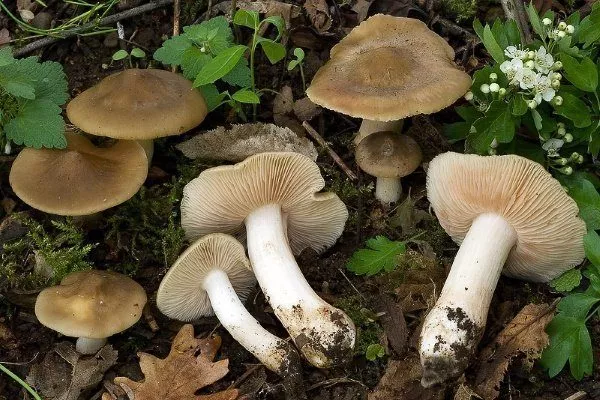
Varieties. Besides the garden entoloma, you can also find the pale brown entoloma in Rostov forests and gardens. It differs from the apricot mushroom in the color of its cap. It grows in May and June.
Doubles. Edible entolomas can be confused with their poisonous counterpart, the poisonous entoloma. It has a large, dirty-white cap, up to 20 cm long.
Flammulina
DescriptionFlammulina belongs to the Trichomycetes family. It is also known as the winter mushroom. The cap is hemispherical when young, later becoming spreading. The color is yellow-brown or honey. The center of the cap is darker. In damp weather, the cap becomes slimy. In mature specimens, the cap becomes spotted. The watery flesh has a pleasant aroma and taste.
Where and when does it grow? Fruiting occurs in late autumn and even early winter. It grows on stumps and dead wood, primarily on deciduous trees. In the Rostov region, these mushrooms can be found in plantings and forests in various districts.
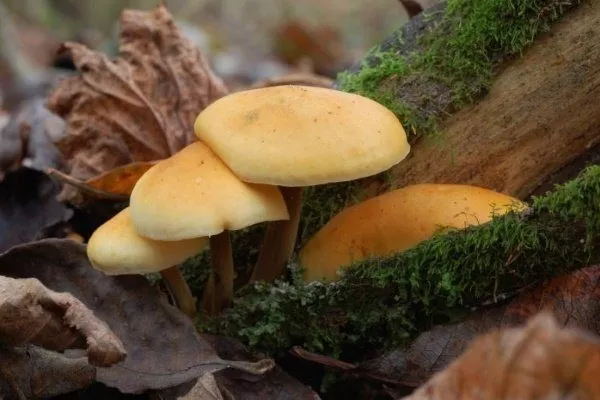
Doubles. It's almost impossible to confuse the Flammulina with anything else—no other mushrooms grow as late as it does. Earlier in the season, it's often confused with mushrooms that grow on wood, such as the inedible Collybia fusiformis. It has a reddish-brown cap and a twisted stem.
Poisonous and inedible mushrooms
Compared to other mushroom-producing regions, the Rostov region is poor in noble mushrooms. However, poisonous species are abundant here—they outnumber edible ones several times. To avoid mistakes, carefully study the external signs of the most dangerous mushrooms.
Death cap
Description. The cap is 5-15 cm in diameter and hemispherical in shape. As it grows, the cap flattens. The edges are smooth. The color is greenish or grayish. The cylindrical stem is 8-16 cm high. The stem is thick at the bottom and has a membranous ring at the top. The white flesh does not change color when cut. The taste is pleasant, and the aroma is mushroom-like.
Where and when does it grow? Death caps bear fruit in the last ten days of summer and continue to grow until the autumn cold. They are most common in deciduous forests, preferring to grow under beech and hornbeam trees. They thrive in humus-rich soils. In the Rostov region, death caps are abundant in the northern part.
Who can be confused with? Death caps are often confused with russula and champignons, popular among mushroom pickers. They can be distinguished from edible mushrooms by the following characteristics:
- at the bottom of the leg there is an ovoid thickening;
- at the top - a ring located at the top of the leg;
- It differs from champignons in the color of its gills - the toadstool's gills are white and do not become darker with age;
- The death cap differs from the russula by the moire pattern on its stem.
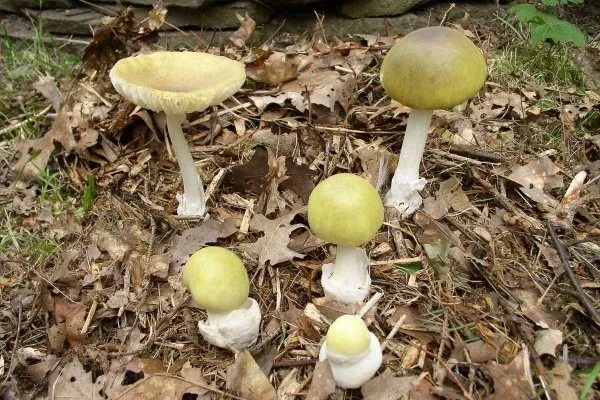
The most poisonous mushroom, the consumption of which ends in death in 90% of cases.
Fly agarics
Description. Young fly agarics have an egg-shaped cap, tightly pressed to the stem. Then it opens, flattens, and is covered in white flakes.
Where and when does it grow? It is found in spruce and pine forests—coniferous forests. Less commonly, in mixed forests. It grows primarily in the north and west of the Rostov region. Fruiting occurs from August to October.
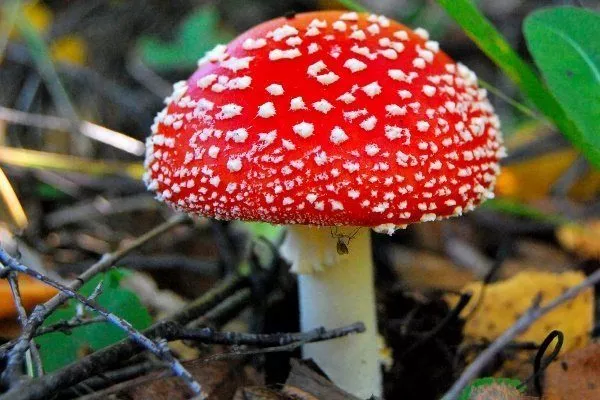
Varieties. There are two types of fly agaric found in the Rostov region:
- Royal. It has a brownish cap with a darkened center. The diameter is 7-20 cm. The stem is white and 9-20 cm tall. The base is thickened, and there is a "skirt" under the cap. The flesh is brownish and odorless. The royal fly agaric is rarely found in deciduous forests, more often in birch forests.
- Red. The cap is 8-20 cm. Initially spherical, it flattens with age. It is bright red-orange in color. The sticky, shiny cap is covered with white, warty flakes. The stem is white, thin, and up to 20 cm tall.
Who can be confused with? Fly agarics have a distinctive appearance – they are easily distinguished by their bright caps, covered with white flakes.
Sulphur-yellow rowan
Description. This rowan is also called the sulfur rowan. The caps, 3-8 cm in diameter, have inward-turned margins. The cap color ranges from dirty white to brownish. The white flesh has a starchy aroma and taste. Greenish-yellow gills are fused to the stem. The stems are long, up to 11 cm.
Where and when does it grow? They grow in sandy and mossy soils. They are most common in coniferous forests, but they can also be found in fields, meadows, gardens, and parks. They bear fruit from late August until frost.
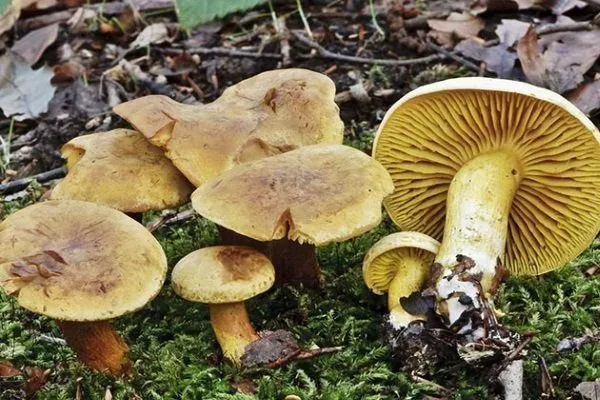
Who can be confused with? The sulfur rowan has a bitter taste, and the flesh smells of hydrogen sulfide - these characteristics help distinguish the poisonous mushroom from the conditionally edible rowan.
Gymnopilus flamboyantus (poisonous fire moth)
Description. Gymnopyle penetrating can be found in the forests of the Rostov region. The fruiting body ranges from 3 to 11 cm. The caps are convex or flat with a central tubercle. The cap color is yellow, red, or rusty-brown. The flesh is white or yellow. The stems are cylindrical, thickened at the base, and often curved.
Where and when does it grow? It grows on stumps and fallen coniferous trees. Fruiting usually lasts from August to November.
Who can be confused with? Gymnopiles are inedible; they all have bitter flesh. They are often confused with honey mushrooms by inexperienced mushroom pickers.
A specialist explains the challenges of identifying gymnopyli. How to distinguish winter mushrooms from fireflies:
The Rostov region doesn't spoil mushroom pickers with a wide variety and abundance of edible mushrooms. However, with favorable weather and knowledge of mushroom-growing areas, you can reap a handsome harvest. The key is to avoid confusing edible species with inedible and poisonous mushrooms, which are always plentiful in the southern regions.