
The false white mushroom, also known as the gall, hare, bitter or bitter mushroom, is often confused with everyone's favorite boletus, especially for novice mushroom pickers. It resembles the porcini mushroom in appearance and even belongs to the same family. However, it is considered inedible due to its very bitter taste. To avoid mistakes, you need to be able to recognize the bitterling among other mushrooms.
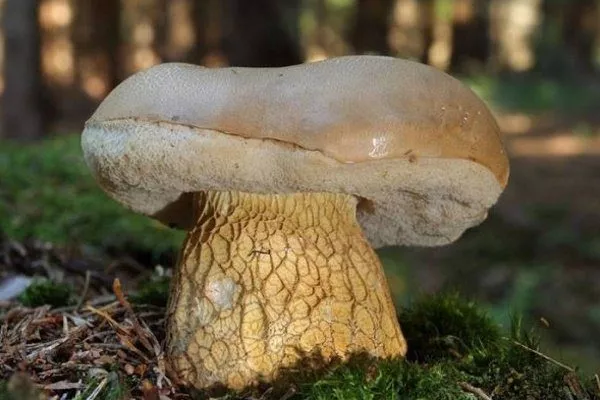
Description of the mushroom
The tubular mushroom belongs to the genus Tylopilus in the Boletaceae family. It has a large cap (4 to 15 cm in diameter), is pleasant to the touch, and is hemispherical in shape, eventually widening and becoming flatter. The cap's color can vary. The most common shades are:
- yellow-brown;
- light brownish;
- dark brown;
- ocher;
- grayish brown;
- chestnut.
The cap is dry and velvety to the touch, slightly pubescent, and becomes smooth as the mushroom matures. In damp weather, the surface becomes slightly sticky. The flesh is white, changing color when cut after exposure to air. It has no odor (unlike valuable mushroom varieties), but it has a strong bitter taste and is almost never worm-eaten.
False white is quite attractive in appearance: strong and clean. Insects and pests avoid it.
The stipe of the gall mushroom is strong and heavy, 4-12 cm high and up to 3 cm thick. It is swollen at the base and has a yellowish, ocher, or brown color. A distinct dark mesh appears at the top. A tubular layer of white tubes, which later turn pink, grows attached to the stipe. The spore powder has the same hue. The spores are elliptical and colorless.
The chemical composition of the gall mushroom includes:
- fiber;
- proteins;
- carbohydrates;
- minerals;
- vitamins.
Edibility, benefits and harms
The bitter mushroom contains the alkaloid muscarine, which is found in fly agarics and other poisonous mushrooms. However, the dose is too small to cause serious harm or dangerous poisoning. The false white bitter mushroom is conditionally edible. In Vietnam, for example, it is considered a delicacy, but is not popular in our country. However, in the Volga region, the custom of serving bitter mushrooms at funerals, as a ritual, has persisted.
The bitterling is not poisonous, but is generally not eaten due to its bitter taste and the presence of toxic substances. Even a single mushroom, properly soaked, steamed, and salted, can ruin an entire pot of soup. Cooking doesn't always improve the flavor. The bitterness can be masked with vinegar, generous amounts of spices, and prolonged soaking. Some mushroom pickers take advantage of this and eat the bitterling. This should be done correctly, following these guidelines:
- Only the caps of young mushrooms are included in the dish.
- They are pre-boiled (30-40 minutes) or soaked in water for 2 days, changing the liquid twice a day.
- After this, the product is used for pickling or marinating. It is not recommended to use it for soup or stew.
- ✓ Mandatory pre-boiling for at least 30 minutes to reduce toxicity.
- ✓ Use only young caps, as they contain fewer toxins.
- ✓ Avoid eating mushrooms collected in contaminated areas.
In any case, a dish containing bitterling mushrooms will not be beneficial. Symptoms of poisoning may appear a few days after consumption: weakness, dizziness, vomiting, and pale skin. The higher the concentration of harmful substances, the more unpleasant consequences will be caused by consuming bitterling mushrooms, including liver dysfunction and problems with bile secretion. Even without eating the mushroom, simply tasting it on your tongue while picking it, there is a risk of mild poisoning. Those who regularly consume bitterling mushrooms can develop cirrhosis of the liver.
The main danger of the gall mushroom is the toxins it contains. These accumulate in the pulp, enter the body, and damage the liver.
Fungus research in Europe
Opinions on the benefits and harms of the bitterling mushroom are divided. Research into the biologically active compounds found in the false white mushroom has been conducted in Europe. French scientists tested them for various beneficial properties. The following medicinal properties of the bitterling mushroom were identified:
- antibacterial;
- choleretic;
- immunity boosting;
- antitumor and others.
Furthermore, European scientists conducted experiments proving the effect of gall mushroom components on cancer cell growth—it slows it down. However, this knowledge has not been widely disseminated internationally.
How to distinguish a false porcini mushroom?
The gall mushroom is not considered valuable in Russia, and mushroom pickers avoid it, preferring the more well-known and delicious Boletaceae varieties. To avoid confusing the false white mushroom with the true boletus or birch boletus, it's important to remember their key differences:
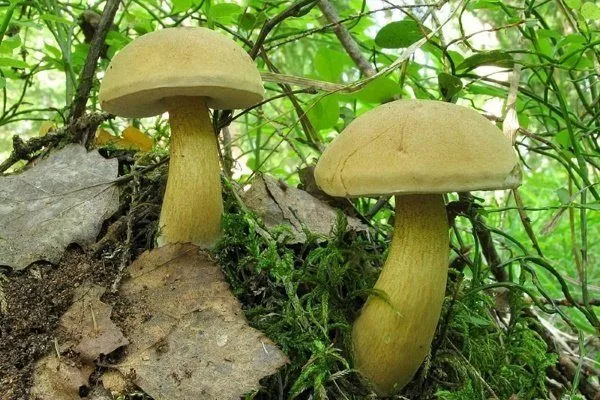
- in the false one the cut site darkens and takes on a pinkish-brown hue, in the white one the color does not change, in the birch bolete it turns pink;
- the tubular layer of the bitterling is also pink or white, while the white one has a gray or yellow tint;
- Unlike birch boletes, bitterling boletes do not have scales on their stems;
- Pests bypass it, so the false mushroom does not become wormy;
- the mesh on the legs of boletus mushrooms is lighter than the main color, while in false representatives it is darker;
- If you try the bitter on your tongue (its pulp), you will feel a strong bitterness and burning sensation;
- False whites can grow on stumps or exposed tree roots.
An experienced mushroom picker will tell you how to distinguish a gall mushroom from a porcini mushroom (or birch bolete) by appearance:
Where and when do bitterlings grow?
The distribution range of bitter mushrooms is quite wide, like that of their edible cousins, the birch bolete and the porcini bolete. They are found in the forests of Europe, Asia, and North America. In Russia, they are found in the Caucasus, Western, and Eastern Siberia. The bitterling grows in temperate climates, in coniferous, mixed, and deciduous forests. It is undemanding and forms mycorrhiza with many tree species.
False whites typically grow singly or in pairs, but can also form small colonies (5-10 individuals). They prefer sandy soils and can grow on rotten wood, such as stumps and trunks, especially during dry periods.
The fruiting period of the gall mushroom varies depending on the growing region:
- Fertility begins throughout the forest zone in June-July (usually in the middle of the summer season) and ends in September-October.
- Where autumn arrives early, the lifespan of mushrooms decreases, but only slightly. After mid-October, you won't find them anymore.
Growing
Many valuable mushrooms are grown in artificially created conditions, such as boletus, birch boletus, and aspen boletus. While not edible, they can also be grown in garden beds and later used for pharmaceutical purposes. However, this does not apply to the bitter mushroom. There is no point in intentionally cultivating this mushroom, and only gourmets or inexperienced mushroom pickers would be able to gather this mushroom in the forest for table use. Even without a decent harvest, it's not worth paying attention to the bitter mushroom.
Beginner mushroom hunters are advised to avoid the false porcini mushroom. It's difficult to prepare, carries a risk of poisoning, and its strong, unpleasant flavor will discourage anyone from eating it. These mushrooms are easily confused with the porcini mushroom due to the shape of their caps and the birch bolete due to its color. They are found in the same places. However, some striking differences can help you identify the inedible false porcini mushroom and avoid bringing this dubious trophy home from the forest.
I'm sharing my experience: I was poisoned by a false porcini mushroom—I didn't eat the mushroom itself, I spat it out because it was bitter. But I did eat the other normal mushrooms from that fry-up, and only afterward did I realize I should have thrown the whole thing away. Then I read that poisoning from false porcini mushrooms can take up to a week to manifest. I didn't believe it, so I didn't even take any sorbents. Then, on the sixth day, I started feeling really unwell: stomach pains, nausea, and a fever. I even considered calling an ambulance, but thankfully, I started to recover a day later. I advise everyone to take sorbents beforehand if they find themselves in a similar situation, without waiting for the effects. And if you feel really unwell, call an ambulance—only a doctor can properly assess the severity of your condition. Wishing everyone good health and safety!
Thank you for sharing your experience.