
The valuable birch bolete is one of the most popular mushrooms in our country. It grows in deciduous forests, most often in birch groves, hence the name. While boletes are recognizable in appearance, not everyone can tell them apart due to the many varieties, each with a different appearance. Common names for the birch bolete include: birch bolete, blackhead, and obabok.
Description and characteristics of the mushroom
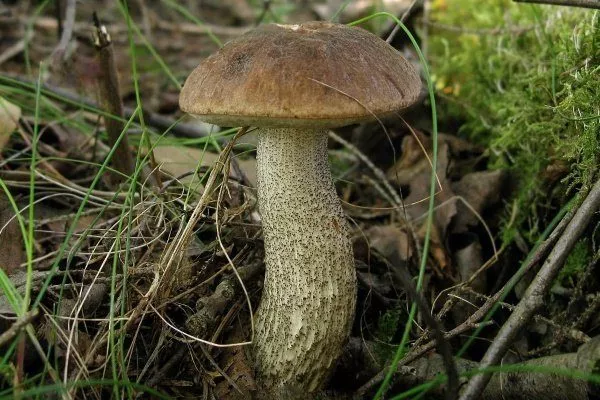
The birch bolete belongs to the genus Lecycinum (or obabok) of the Boletaceae family, which includes not only the birch bolete but also the aspen bolete. Forming mycorrhiza with birch trees, it is typically found near these trees. Its distinctive appearance distinguishes the birch bolete from other mushrooms:
- The caps are convex, matte, and dry. Diameter up to 15 cm.
- The cap's color varies from gray to black. A variety of the mushroom has a white cap.
- In young specimens the cap is white underneath, but with age it acquires a grey-brown hue.
- The stem of the birch bolete is light-colored and slightly thickened (up to 3 cm thick). It reaches 15-17 cm in height and has longitudinal dark scales.
- The mushroom's flesh is white and rarely changes color when broken. Young specimens are firm and tender inside; as they mature, the flesh becomes loose.
Chemical composition of the birch bolete
The birch bolete's nutritional value stems from its high content of vitamins, fiber, easily digestible proteins, and carbohydrates, which it obtains through its interaction with the tree's roots. Its nutritional qualities make it similar to meat. It also contains a full range of essential amino acids. Its mineral content is comparable to, but slightly inferior to, the porcini mushroom.
The mushroom contains vitamins C, PP, E, B1 and B2 and minerals such as:
- potassium - the most;
- manganese – 37% of the daily value;
- calcium – 18% of the daily value;
- phosphorus;
- sodium;
- magnesium;
- iron.
The dense, fleshy part of the birch bolete is a source of lean dietary fiber. Its value lies in its well-balanced protein content.
The nutritional value of the birch bolete is as follows:
- per 100 g of product – about 20 kcal;
- water – 90.1 g;
- fiber – 5.1 g;
- proteins – 2.3 g;
- carbohydrates – 1.2 g;
- fats – 0.9 g.
The value of the birch boletus
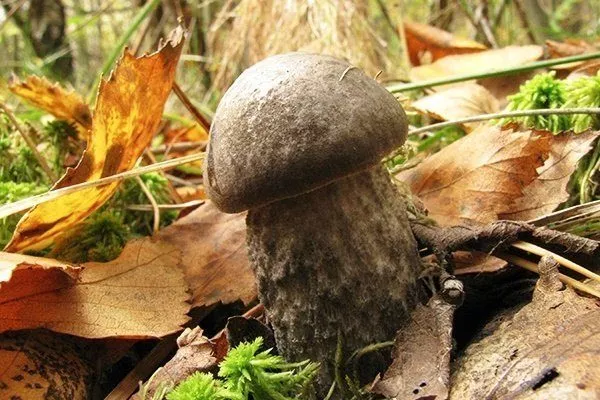
In terms of value, the birch bolete is second only to the boletus, the "king of mushrooms." It is eaten in any form: boiled, fried, dried, or pickled. Obabki mushrooms keep well over the winter when dried or salted. These preserves can be used to make sauces, pie fillings, and simple snacks. It's best to pick young mushrooms from the forest, especially for pickling.
The birch bolete is a rare example of a mushroom that is beneficial for everyone. In rare cases, intolerance to mushrooms may occur, in which case it is not recommended to eat the bolete. For others, it is beneficial. The dietary fiber in the pulp acts as an absorbent when it enters the stomach, collecting all harmful particles from digested food and eliminating them naturally. Due to its high potassium and phosphorus content, the mushroom is beneficial because it improves kidney and adrenal function and regulates blood sugar levels.
The benefits of obabok are as follows:
- Cleanses from toxins.
- Good for the skin.
- Normalizes the functioning of internal organs (liver and kidneys).
- Improves the structure of enzymes.
- Enriches with useful elements.
It can be eaten while on a diet. The birch bolete, like any mushroom, is a good meat substitute. However, it's best to make soups with it, fry it less frequently, and avoid eating it salted. An ideal dietary option is a mushroom pie, stew, or bolete sauce used as a supplement to other dishes.
Types of mushrooms and their growth
Boletus boletus is a common mushroom with several varieties. There are four main varieties: common, black, white, or marsh, and pink-turning. Other varieties are less popular. They are grouped together or considered close relatives of the common boletus and its relatives (mentioned above). This is because they differ in appearance, distribution, and even taste.
| Object | Cap diameter (cm) | Cap color | Leg height (cm) |
|---|---|---|---|
| Common birch bolete | up to 15 | from light gray to dark brown | 15-17 |
| Black birch bolete | less than usual | brown, darkens with age | about 12 |
| White birch bolete | not specified | almost white, with white scales | not specified |
| Pinking birch bolete | not specified | from gray-brown to brown | not specified |
| Grey birch bolete | not specified | olive-brown or brown-gray | not specified |
| Ash-gray obabok | not specified | light brown, darkening | not specified |
| Chess-shaped birch bolete | up to 15 | yellow-brown | not specified |
| Hardy birch bolete | 6-15 | from gray-brown to ocher or reddish-brown | not specified |
| Multicolored obabok | not specified | mottled, mouse-colored | not specified |
Common birch bolete
The most valuable (from a culinary perspective) representative of the species and the best in flavor. It possesses all the qualities of an edible mushroom. Its appearance is classic for the birch bolete: the stem is strong, sometimes thickened at the base, and the cap is smooth, brown, and hemispherical. It is uniformly colored, ranging from light gray to dark brown. The color depends on growing conditions and the tree species with which the mycorrhiza forms, which is not necessarily birch.
The mushroom grows at forest edges, in clearings, in birch groves, and among young trees. It typically prefers mixed forests, and in some years, the yield is high, resulting in abundant numbers. The birch bolete can often be found in spruce stands interspersed with birch trees. Mushroom pickers "hunt" for the common birch bolete from early summer until late fall.
Black birch bolete
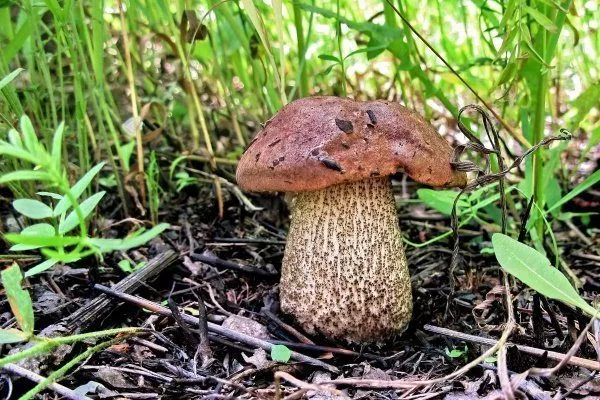
Another name for this mushroom is the blackhead. It has a darker, brown cap, smaller in diameter than the common cap. With age, the cap becomes even darker. Its surface is dry, but after rain it becomes slimy. The stem is about 12 cm long, with dark scales appearing on it. The flesh is firm, taking on a bluish tint when cut. The tubes are large, dirty white or gray.
Blackheads are a rarer species of mushroom compared to their relatives. They prefer to grow in damp places: along the edges of swamps, in pine forests, in dense grass, and even in birch forests. They grow from August to November, making them a late-ripening mushroom. In terms of taste, blackheads are comparable to the common birch bolete. Finding them in the forest is a mushroom picker's delight.
White (marsh) birch bolete
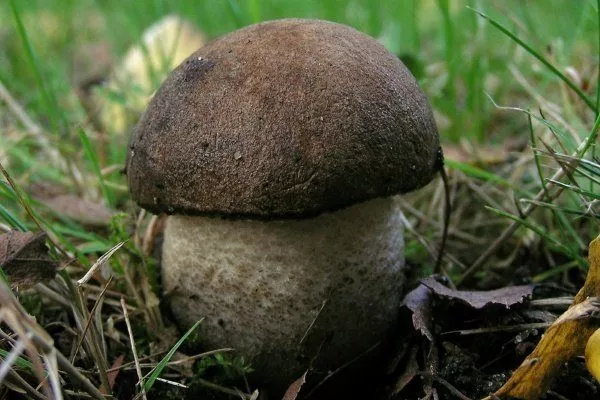
This mushroom is native to marshy areas, mossy, shaded forests, and flooded birch groves. Hence the name, "marsh mushroom." It differs from its relatives in appearance by its light, almost white cap. In young specimens, it is hemispherical in shape, becoming more spreading with age but not fully open. White scales appear on the cap, which darken as it dries.
The skin and flesh may have a greenish tint, and the spore powder is ochre. The stem turns blue downwards. The flesh is loose and breaks easily. It has no strong odor or color. In terms of flavor, the marsh bolete is inferior to the common birch bolete—it is more watery and unappealing. This mushroom is common, but doesn't produce much. Mushroom pickers find the marsh bolete from midsummer until October.
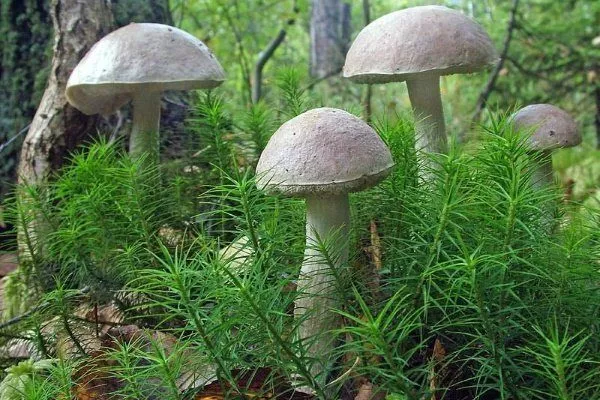
Pinking birch bolete
The pink or oxidizing version of the trumpet mushroom differs from its relatives by its short, thin stem, which tends to curve toward the sun. The cap is cushion-shaped, and the skin ranges from gray-brown to brown. The tubular layer is whitish, turning a dirty gray with age. When cut, the flesh does not darken like other varieties, but rather turns slightly pink, taking on a brick-pink hue. Hence the name.
The pinking species is found in northern forests, primarily in autumn. It grows in marshy areas and damp birch forests. Typically, the mushrooms are found in groups, growing separately. They form mycorrhiza with birch trees. Pink scaly-sided mushrooms are rare, preferring mossy peatlands or dense grassy thickets. Mushroom pickers can find them along the cranberry trail: around lakes, drying bogs, and in damp forest depressions.
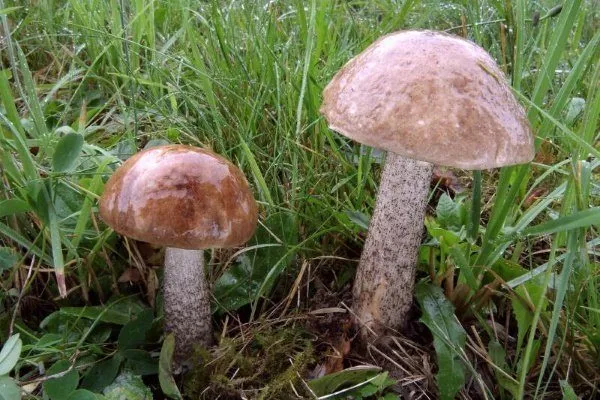
Grey birch bolete
Another name for this mushroom is the elm mushroom or the hornbeam mushroom. This mushroom, common in the Caucasus, forms mycorrhiza with hornbeams, trees in the birch family. However, it can also be found under other deciduous trees, such as hazel, poplar, and birch. It bears fruit from June to October. In appearance, it is not much different from the common birch bolete.
The hornbeam cap is olive-brown or brownish-gray, with curled edges. Its surface is velvety and uneven. The skin of mature mushrooms sometimes shrinks, revealing the cap flesh and the porous layer. The mushroom's pores are very small, angularly rounded in shape. On the stem, the flesh is fibrous and white, but when cut, it turns pinkish-purple, then gray, to almost black.
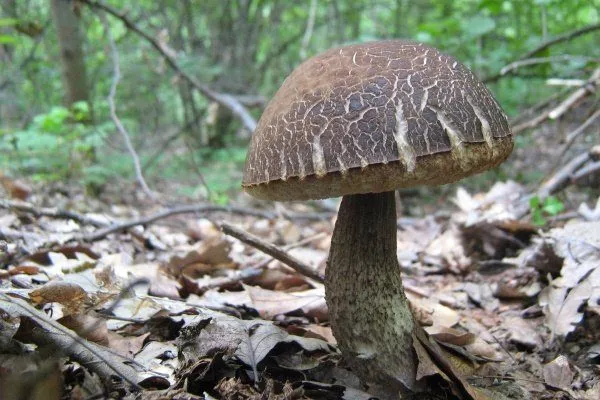
Ash-gray obabok
This species of boletus gets its name from the color of the tubular layer at the base of the cap. When cut, the flesh turns pink, and the base turns blue or green. The cap's skin is light brown, becoming darker as the mushroom matures. The surface is smooth and convex. The stem is long and thin, whitish in color, but with loose dark scales. The ash-gray boletus is edible, but its flavor is mediocre. It bears fruit in the fall.
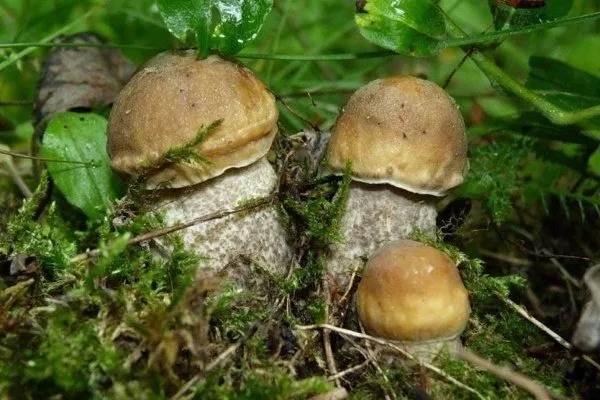
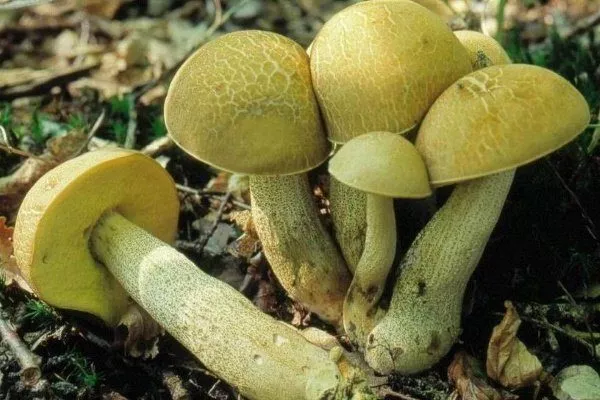
Checkered or blackening birch bolete
This member of the genus Obabki is found in beech forests or oak groves, forming mycorrhiza with these trees. It is common in the Caucasus. The cap is yellow-brown, the tubular layer and spore powder are lemon-yellow. When young, the cap is hemispherical, later becoming cushion-shaped with a blunt edge. Its diameter is up to 15 cm. When cut, the flesh becomes dark (purple), later turning black. The stem is cylindrical or club-shaped, thickened at the base.
Hardy birch bolete
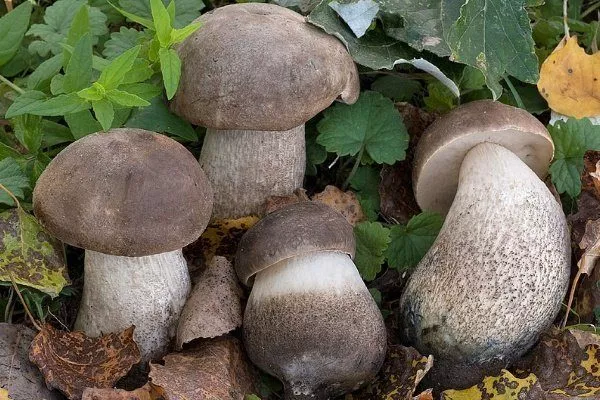
The obabok mushroom is a tough, hard, poplar-like mushroom. It gets its name from its tough flesh, which positively impacts its flavor. When broken, the flesh turns red and blue (at the top and bottom of the stem, respectively). The cap is 6-15 cm in diameter. Initially, it is hemispherical, later convex, and sometimes with a depressed center in mature mushrooms. The skin is slightly pubescent when young, but becomes matte and smooth. The cap color is highly variable. In young mushrooms, the color is the same as the flesh, but the hue ranges from gray-brown to ocher or reddish-brown.
The hard boletus grows in mixed forests, forming a symbiotic relationship with aspen and poplar. It is found singly or in sparse groups. It prefers calcareous and sandy soils, as well as loam. This rare species of boletus should be sought in summer (from July) and autumn (fruiting continues until mid-November). Recently, the hard boletus has been encountered more and more frequently and in ever-increasing quantities.
Multicolored obabok
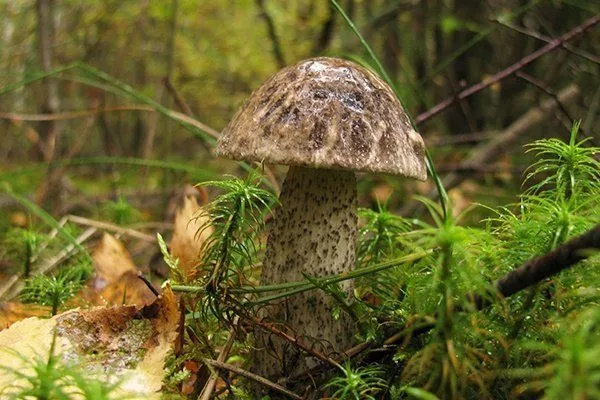
The cap of this variety of birch bolete is variegated, mouse-colored, and appears cross-hatched. The white flesh is tinged pink when cut, and turquoise on the stem. The pores of the tubular layer are creamy. The stem length depends on the height of the moss above which the mushroom must rise. It is light and thickened. A blue tint may appear at the bottom of the stem. The scales are gray. This multicolored variety resembles the common birch bolete, also bears fruit, and is found in the southern latitudes of our country. However, this type of bolete is not popular with mushroom pickers, as it is difficult to prepare and not very palatable.
Where and when to collect boletus mushrooms?
The distribution range of boletus mushrooms is quite wide. They are found throughout the country. They prefer to grow in deciduous and deciduous-coniferous forests, birch groves, and can also be found in parks and forest edges in young growth. Their favorite places are the edges of clearings in mossy forests and the edges of ravines. They prefer calcareous soils, but are also found in other areas.
Birch boletes love warmth and, as a rule, grow where the soil is well warmed by the sun.
The best time to pick boletes is throughout the summer, from late May to October. The common birch bolete is found until the first frost. They ripen at the same time as porcini mushrooms, perhaps a little earlier. Some species (depending on their habitat) appear first and last longer.
Boletus mushrooms are renowned for their rapid growth. In a single day, they can gain up to 4 cm and 10 g in weight. However, after 5-6 days, they begin to senescent. Therefore, it's recommended to pick young specimens; they are tasty, crisp, and generally worm-free. Mature mushrooms are more fluffy.
Similar mushrooms
All boletes have a distinctive appearance, regardless of color or growing location. However, when picking mushrooms, be careful, especially if you spot a pinkish or blackened variety. There's a risk of confusing these boletes with their inedible "lookalikes," the most common of which is the gall mushroom. There are also other lookalikes that can be easily substituted for the bolete due to inexperience.
Gall mushroom
A conditionally edible mushroom known as bitterlingIt is called a false double of such representatives of the Boletaceae as the birch bolete, white and the aspen boletus. This mushroom resembles the birch boletus in its cap shape (hemispherical), which can be light or dark brown, gray, grayish-brown, dark brown, or yellow-brown in color. The stem is dense, fleshy, and swollen at the base. However, instead of longitudinal scales, reminiscent of the birch coloring of the aspen boletus, the gall boletus has veins, like blood vessels.
Other characteristics of the bitterling that should alert the mushroom picker:
- The mushroom's tubular layer turns red when cut, while the tubes initially have a yellowish tint. The fruiting body is attractive. Insects, slugs, and worms do not prey on the mushroom.
- The cap's surface is typically velvety, while that of the babooshka mushroom is smooth. In high humidity, the roughness softens when touched. If this doesn't happen, you're looking at an inedible lookalike.
The gall mushroom is not poisonous, but it produces a strong bitterness when cooked, which only intensifies. It's impossible to eliminate this bitterness by boiling or frying; the unpleasant taste can only be neutralized by generous amounts of spices and a long soak in vinegar. In terms of nutritional value, the bitter mushroom is significantly inferior to the birch bolete. Although a single consumption of this mushroom does not cause serious poisoning, it's best to avoid it. The main rule when encountering this "birch bolete" is: "If in doubt, don't eat it!"
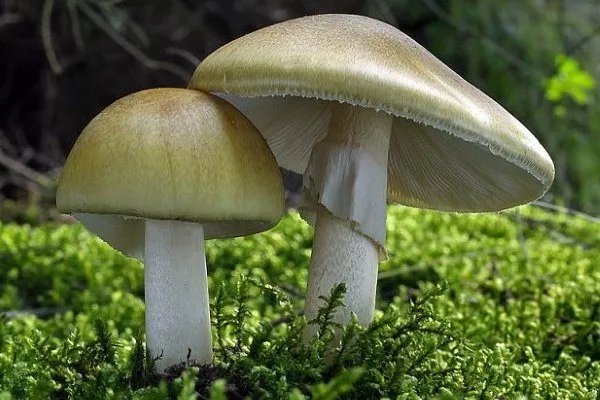
Death cap
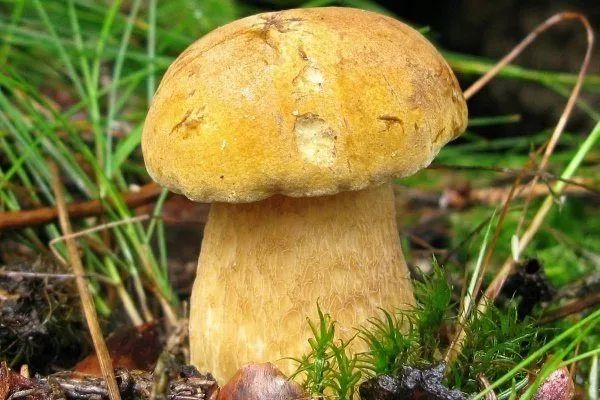
This extremely poisonous member of the Amanita genus isn't a tubular mushroom like the birch bolete, but sometimes grows in the same habitat: in coniferous, deciduous, and broadleaf forests under birch, beech, aspen, and oak trees—and at the same time, from July to October (until the first frost). It's quite rare. There's a risk of confusing the toadstool, especially when young, with the scaly-sided ...
- Its cap is flat-convex and beautifully shaped. It can be white or brownish-olive in color, turning gray with age. It is darker in the middle and shiny. When damp, it becomes slimy.
- The toadstool's stem has a distinctive sac—a ring—but it's not very pronounced in young mushrooms. The stem reaches 12 cm in length.
- The flesh is thin, light, and has no strong odor. It also doesn't change color.
The main difference from the birch bolete is the gills under the cap. At any age, these gills remain white and clearly visible, while boletes lack gills under the cap. Furthermore, the birch bolete lacks the so-called volva at the base—a membrane half-buried in the soil. It's important to pay attention to these features to avoid confusing the edible bolete with the poisonous toadstool. The latter is dangerous because even its spores and mycelium are dangerous. A mere 1 gram of raw mushroom per 1 kg of body weight is enough to cause fatal poisoning.
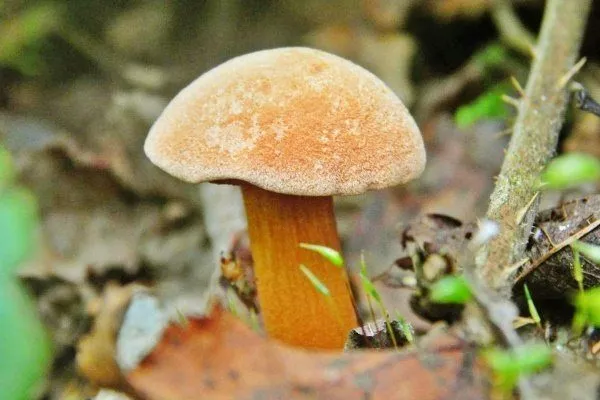
Pepper mushroom
Close relative boletus mushroomsThe boletus, also known as the butter mushroom, belongs to the Boletaceae family. It grows alongside birch boletes, forming mycorrhiza with birch. Fruiting occurs from July to November. The pepper mushroom has a brown, rounded-convex cap, reminiscent of the birch bolete. Its rounded-convex shape, up to 6 cm in diameter, and a dry, velvety surface can be mistaken for a young boletus. The stem of the lookalike is thin and yellow. It turns red when cut. The smell is not strong, but the taste is pungent—if you lick the pepper mushroom, you'll immediately know it's not a birch bolete.
The pepper mushroom is not poisonous, but it is inedible due to its sharp, bitter taste, reminiscent of pepper. It can be used as a spicy condiment, but if one accidentally ends up in a soup or stew, the dish will be irreparably ruined. To avoid this, carefully examine the fruiting body. How can you tell the difference between a pepper mushroom and a birch bolete?
- The birch bolete has a light stem with dark scales, while the double has one color - rusty, yellow, and matches the color of the cap.
- Obabki mushrooms don't have the brightly colored spongy substance of pepper mushrooms. Instead, the layer under their cap consists of small, reddish-brown tubes filled with powder. If you press on them, a red liquid will ooze out.
The difference between the birch boletus and the aspen boletus
Another mushroom that looks alike to the birch bolete is the aspen bolete, a member of the same genus and even group. It is an edible member of the Boletaceae family, growing under aspen trees. It is very similar in appearance to the birch bolete and is just as valuable. If you happen to confuse the two species, you won't be disappointed. Aspen boletes rarely become wormy, unlike the loose, watery birch bolete, which prefers damp forests. The flesh of aspen boletes is less porous and firm. The stem breaks apart easily. When cooked, aspen boletes emit a pleasant, bright aroma and are ideal for frying.
The distinctive feature of the aspen mushroom – a bright red cap – is not typical for all species:
- For example, the gray-brown aspen mushroom forms mycorrhiza with birch; due to its cap, it can easily be confused with the common aspen mushroom, especially if it has a yellow-brown tint.
- The white aspen mushroom is a cream-colored mushroom that grows in pine forests. It can easily be confused with the marsh aspen mushroom.
- Depending on where they grow, both birch and aspen mushrooms can have the same cap color – chestnut-brown.
Aspen mushrooms are generally more robust than birch boletes. This applies to both their massive stem and cap, which in young mushrooms is not spread out but rather spherical, pressed against the stem. The underside of the cap of the aspen mushroom is loose and soft and tends to soften when cooked, which is not the case with the aspen bolete. The main difference between these two mushrooms is that the flesh of the aspen mushroom turns purple or blue when cut. The flesh of the birch bolete, on the other hand, does not change color, only turning slightly pink.
Growing boletus mushrooms yourself
You can grow the renowned birch bolete yourself, on your own plot or in a designated area, not only for personal consumption but also for sale. It's a profitable and low-maintenance endeavor. Moreover, compared to other mushrooms, birch boletes are renowned for their high yields. All you need to do is properly tend the bed. The best time to plant mushrooms is in May and June.
The most difficult part is obtaining the mushroom mycelium. Birch boletes are distinguished by their spores being difficult to separate from the pulp. Knowing this, producers of ready-made mycelium sell ready-to-plant birch bolete substrate. This saves the would-be farmer time. A 60 ml packet costs only about 200 rubles. If you can't obtain ready-made mycelium for planting, you need to prepare a mixture that will precipitate the mature spores.
How do you germinate mushrooms naturally? First, you need to collect the spores. They're found in the mushroom flesh, which should be separated from the cap, minced, and placed in a container of water. Here's the process:
- Dry yeast is added to the mixture – a nutrient medium for the reproduction of spores.
- The liquid is left to infuse for a week. Then the foam is skimmed off the surface, the water (the middle part) is drained, and the sediment—the spores—is diluted in a new portion of water. The ratio is 1:100.
- This liquid is poured over the roots of the birch tree, which must first be opened.
- The area is moistened again.
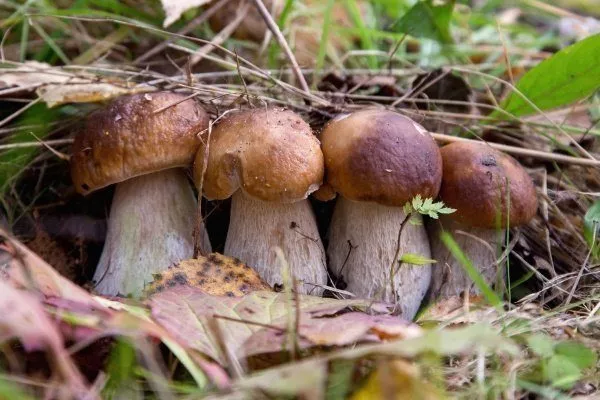
The key to growing mushrooms is maintaining the recommended humidity level. Regularly mist the soil with a spray bottle, simulating a mushroom rain. It's best to water in the afternoon to prevent the sun's rays from drying out the soil. It's a good idea to have several low-growing plants near the planting to protect the area from direct UV rays.
The technology for growing boletus mushrooms is to create conditions that are as similar as possible to their natural growth environment.
If you have ready-made mycelium, you can plant it in pre-prepared holes according to the package instructions. Don't overdo it; 3-4 holes per seed are sufficient. They are typically 20 cm deep and 10 cm in diameter. They are placed around the circumference of a tree (birch), preferably a mature one, at least 5 years old. It's best to have several trees, perhaps mixed with other species.
How to germinate mushrooms in holes:
- Birch sawdust (or soil with a high peat content) is placed into the prepared holes, followed by forest humus. Then, a small piece of composted mycelium is added—1/3 of a package per hole, if the product is prepared.
- Each hole is filled and compacted.
- The holes are watered generously—at least a liter of water. You can add fertilizer or use watering products containing microorganisms.
- The soil around the plantings also needs to be moistened.
- To maintain moisture, the planting is covered with a layer of straw, moss, or leaves, which is constantly watered. The planting should be watered at least once a week, with at least three buckets of water poured under each hole during this period.
- When cold weather sets in, replace the straw with leaves or moss. It is recommended to cover the area within a 2-meter radius (at least during the first winter) with insulating material, including both the holes themselves and the tree roots. Remove the covering layer when the weather first warms.
Planted seeds will produce their first harvest only after a year. After that, active fruiting will occur for 5-7 years. During this time, the planting can be expanded and new holes can be dug. The harvested yield depends on the growing conditions. It's also important to choose the right mushroom variety for the plot. Their natural habitat and weather conditions should be similar to those of the artificially created ones.
The advantage of growing your own boletus mushrooms is the opportunity to harvest young ones. They are tastier and firmer than mature specimens, which become softer with age, and are perfect for any dish—pickles, soups, and stews. Harvesting them early will prevent them from spoiling in the garden, losing their valuable flavor, and being attacked by worms, slugs, and other harmful insects.
The birch bolete is a delicious mushroom that mushroom pickers enjoy hunting for. It's delicious in any dish, has no known contraindications, and is renowned for its excellent flavor. Those who enjoy this mushroom can even grow it themselves. If you have a birch tree in or near your garden, you can plant several beds of pre-prepared mycelium around it and wait for the results to appear the following season.