
The honey fungus group—this is the common name—includes mushrooms belonging to various genera and families. Most of these species grow on dead wood, stumps, or tree trunks. Experienced mushroom pickers believe that all varieties of honey fungus are harmless and edible, but this isn't entirely true.
Description and characteristics of the honey mushroom
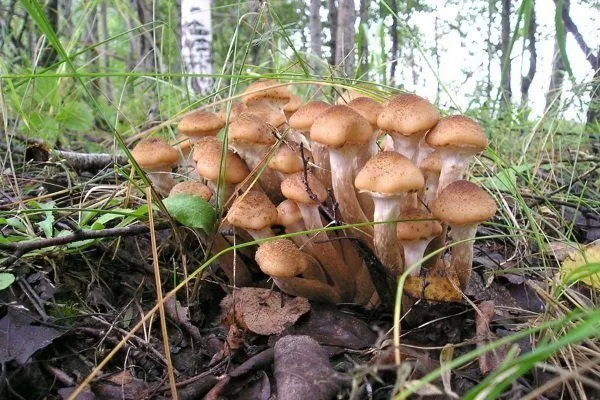
Honey mushrooms are among the most well-known agaric mushrooms. Mushroom pickers begin their search at the end of the mushroom season (in the fall). The small, round-capped fruiting bodies are visible from afar, as they grow on natural elevations such as stumps and driftwood. Honey mushrooms gather in close-knit groups; it's extremely rare to encounter a solitary mushroom. They typically parasitize trees, infecting about 200 species, as well as shrubs and even herbaceous plants.
The appearance of honey mushrooms is characteristic:
- The stem is thin with a special membranous ring in the middle.
- The cap is shaped like an umbrella, with scales.
- The cap's color depends on the substrate where the mushroom grows. Honey mushrooms growing on poplar, mulberry, and white acacia have a coppery-yellow hue; those growing on conifers have a reddish hue; those growing on oak trees have a brown hue; and those growing on elderberries have a dark gray hue.
- The gills under the cap are a pleasant yellowish-white or cream color.
Chemical composition of the mushroom
Honey mushrooms have a high water content (up to 90% on average), which ensures their low calorie content. The remaining 10% is made up of protein (4%), fiber (2%), minerals (1.5%), carbohydrates (1.5%), and fat (1%). The nutritional value of the mushroom—per 100 g of product in grams—is as follows:
- dietary fiber – 5.1;
- proteins – 2.2;
- fats – 1.2;
- carbohydrates – 0.5;
- disaccharides and monosaccharides – 0.5;
- ash – 0.5.
The chemical composition of honey mushrooms includes essential amino acids and organic acids, antioxidants, and microelements. These include:
- vitamins A, B, C, E;
- potassium – 400 mg per 100 g;
- iron;
- magnesium;
- calcium;
- phosphorus;
- sodium and others.
The benefits and harms of honey mushrooms
The mushroom's rich and balanced composition determines its health benefits. Fresh fruiting bodies are a source of vitamins and protein. Protein is the building block for the brain and muscles, and the concentration of this substance in honey mushrooms is comparable to that of meat. The action of amino acids boosts immunity and improves oxygen supply. Unsaturated fatty acids regulate metabolic processes, enhancing brain activity and repairing damaged DNA.
Iron is responsible for the formation of hemoglobin and the delivery of nutrients to organs. Briefly cooked mushrooms are beneficial for those suffering from anemia. Potassium and magnesium promote stable heart function. Ascorbic acid prevents tissue breakdown, combats toxins, improves skin condition, and reduces bleeding.
Some species of honey mushrooms have been found to contain the anticancer substance flammulin. Others contain antibacterial compounds. These compounds inhibit the growth of harmful organisms, such as Staphylococcus aureus. Therefore, folk medicine uses honey mushrooms as natural antibiotics. The beta-glucans they contain are included in medications that prevent the development of cancer, hypertension, and diabetes.
In alternative medicine, an alcohol tincture of honey mushrooms is used to remove warts, and mushrooms are also used as a natural laxative (especially autumn ones).
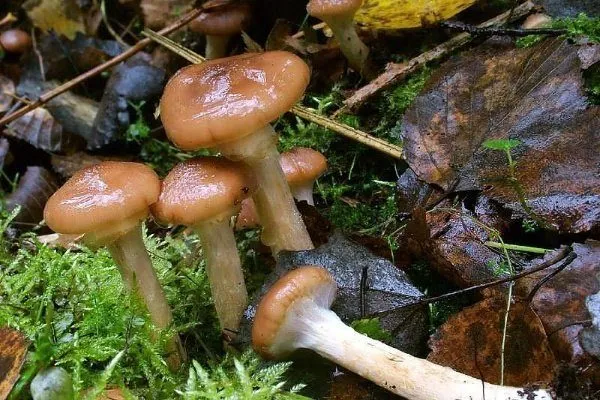
Honey mushrooms are consumed in different forms, and each has its own benefits:
- Dried mushrooms have a longer shelf life and are higher in calories. They lose some of their nutritional properties. The same can be said for fried honey mushrooms.
- Pickled ones contain much less nutrients, but the mucus they contain has a positive effect on the stomach, and the fat-like organic substance lecithin prevents the formation of cholesterol.
- The best way to preserve the biochemical composition of honey mushrooms is to boil them and then freeze them. But freezing must be done quickly.
| Element | Content per 100 g | Daily intake |
|---|---|---|
| Potassium | 400 mg | 16% |
| Phosphorus | 45 mg | 6% |
| Iron | 0.8 mg | 6% |
| Magnesium | 20 mg | 5% |
| Calcium | 5 mg | 0.5% |
There are no contraindications to eating honey mushrooms as such. However, certain categories of people should observe restrictions. These include:
- people suffering from gastrointestinal diseases;
- having renal failure;
- children under 5-7 years old (due to the fact that mushrooms are a difficult product to digest);
- hypertensive patients.
You should also approach mushroom picking with caution. There are many varieties of honey mushrooms, including false varieties. Experienced mushroom pickers can easily distinguish them, but novice mushroom hunters risk their health by adding a specimen they doubt is edible. Following basic safety rules while picking will protect you from unforeseen circumstances.
Varieties of honey mushrooms
Both experienced mushroom pickers and those less experienced in the field group members of various genera (Armillaria—honey fungus and more) and different mushroom families under the general name "honey mushroom": Tricholomeae (tricholomeae), Physalacriaceae, Strophariaceae, and others. Thirty-four species have been named, of which only 22 have been studied. There's no systematic approach, although all honey fungi are similar in appearance. The name "honey mushroom" comes from the Latin word for "bracelet," indicating the mushrooms' specific growth habit. However, some honey fungi grow in meadows rather than on tree stumps, confusing mushroom pickers.
More is known about the edible members of the genus Honey Fungus than the inedible ones. The most common of them are grouped into subspecies, based on growth time and appearance:
- autumn or real;
- spring;
- summer;
- winter;
- thick-legged
- yellow-red and others.
| View | Fruiting season | Substrate type | Cap diameter |
|---|---|---|---|
| Autumn | August-November | Deciduous stumps | 4-10 cm |
| Summer | March-November | Rotten wood | 3-6 cm |
| Winter | September-December | Willow, poplar | 2-10 cm |
| Meadow | May-October | Soil | 2-5 cm |
Autumn honey fungus
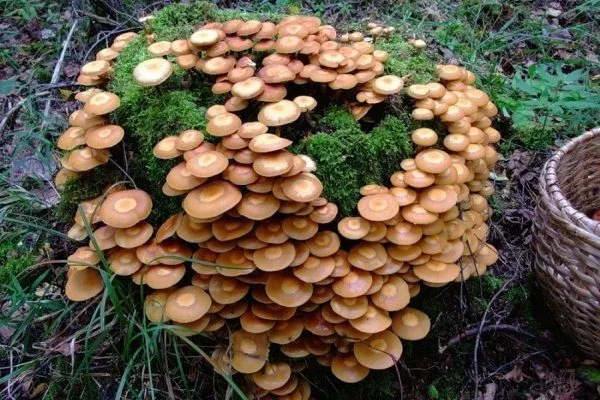
The most recognizable member of the honey fungus genus. It has a convex cap that opens with age. Its diameter is 4-10 cm, rarely reaching 17 cm. The skin color varies, from honey-brown to a dirty marsh color. It is darkened in the center. The cap surface is covered with scales (they disappear during active growth). The mushrooms' stipes are solid, up to 10 cm long. The surface is light.
Young caps are firm, their flesh whitish, but this becomes thinner with age. The insides of the stems are fibrous and coarse. Edible autumn honey mushrooms have a pleasant aroma. The gills under the cap are sparse and fused to the stem. In young specimens, they are beige, whitish, or flesh-colored, but as they mature, they darken slightly, sometimes becoming covered with brown spots.
Autumn honey mushrooms germinate in damp forests—birch, aspen, elm, and other types—on dead wood and stumps left over from logging. They form clusters, and sometimes the fruiting bodies are fused together by stalks. The mushroom harvest period is from August until the first frost (November-December). Honey mushrooms thrive at temperatures above 10°C (50°F), and fruit in large numbers in September (the first half of the month), when the thermometer reads 10°C (50°F)-15°C (50°F-59°F).
Summer honey fungus
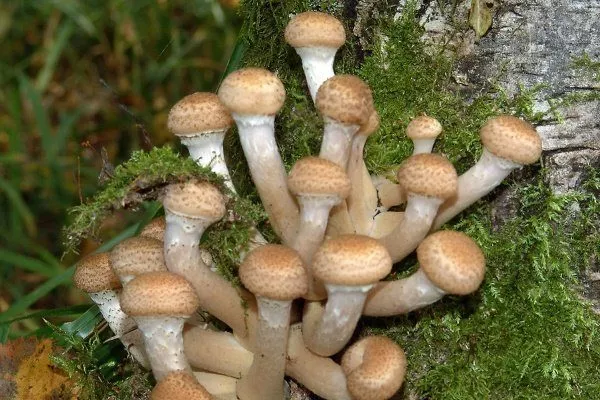
This species is sometimes called the Govorushka or Linden mushroom. This variety, which bears fruit from March to November, is typically the one picked by mushroom pickers. The Govorushka mushroom is smaller in size than the autumn honey fungus: the cap averages 6 cm in diameter and the stem is 7 cm long. The cap is flat with a prominent, wide tubercle in the middle. Its color changes depending on the weather: when dry, it is matte, honey-yellow, while when damp, it is brownish and translucent. The edges of the cap are darker and grooved. The skin is smooth.
The mushroom's flesh is watery and thin, yellowish, and darker at the stem. It has a fresh woody scent. The gills are dense, up to 6 mm wide, and brownish. A narrow, pronounced ring on the stem can be stained by fallen spores, which are ochre-brown. Below the ring are dark scales. The summer honey fungus grows in forests, forming large colonies. Its favorite habitat is living trees with obvious damage and rotten stumps. It is found on deciduous trees, sometimes on spruce.
Winter honey fungus
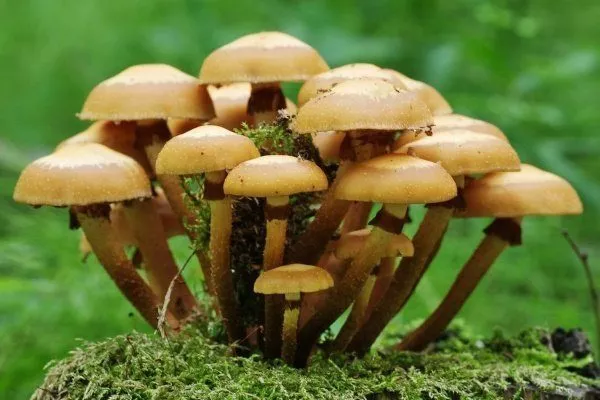
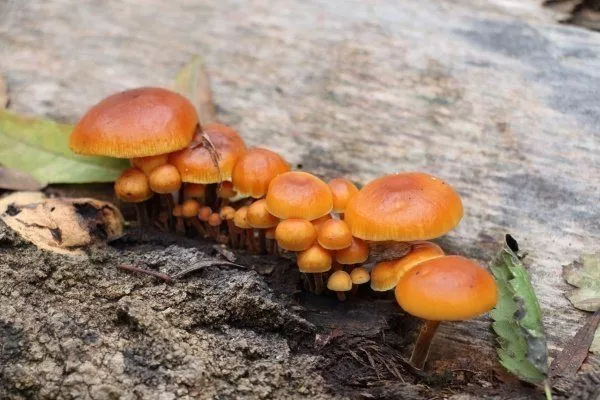
A rare mushroom that can be found under the snow. This species of honey fungus produces fruit in the colder months, from autumn to spring, appearing during thaws. It prefers dead deciduous trees such as willow, poplar, and others. It can appear in parks and gardens within city limits, or on stream banks. The winter honey fungus typically grows in the northern temperate zone. Like other species, it grows in groups.
The flat cap of the mushroom is up to 10 cm in diameter, orange or yellow in color, and flat in shape. Young mushrooms have a lighter hue at the edges and a darker center. The stem is dense, tubular, and a characteristic velvety brown color. It is yellowish-brown at the top. Length is up to 7 cm, without remnants of spathes. Gills are sparse, adnate, and sometimes shortened.
Spring honey fungus
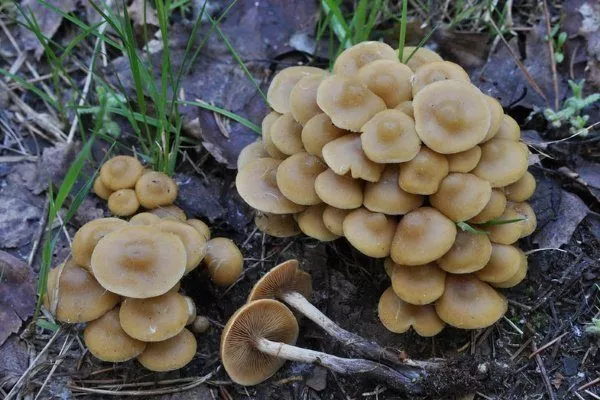
An edible mushroom, also known as the Collybia arborescens. It also grows on rotting wood or litter, preferring oak, pine, and other tree species. The fruiting period of the spring honey fungus is from May to October, peaking in the summer months (June-July). The fruiting bodies are small: the cap ranges from 1 to 7 cm in diameter, the stem up to 9 cm long, thin, flexible, and widening at the base.
The cap is reddish-brown and prone to fading. In older mushrooms, the edges are curled. Its shape changes with age: convex in young mushrooms, later becoming broadly convex. The mushroom flesh is white or yellowish. The gills are fused to the stem and are white, sometimes pinkish or yellowish. The spore powder is white or cream. The spores are smooth, uncolored, and teardrop-shaped.
Thick-legged honey fungus
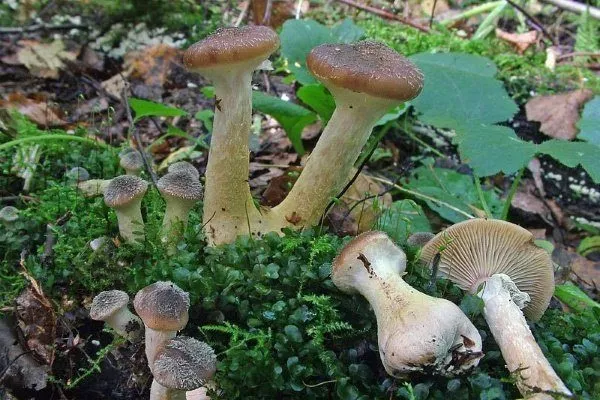
A variety of honey fungus, belonging to the same genus and species as the true honey fungus. It has a broadly conical cap, 3-10 cm in diameter, with drooping margins. In young specimens, its color varies from pale brown to dark brown and pink, later turning yellow-brown. The cap's skin is covered with numerous grayish, conical scales. Near the edge, they are almost flat.
The stem of the honey fungus is strong and cylindrical, with a club-shaped thickening at the base. Young mushrooms have a "skirt," but as they grow, this disappears, leaving only the remains of a yellowish-hued covering visible.
The thick-legged honey fungus has whitish flesh with an unpleasant odor and astringent taste, reminiscent of Camembert cheese. However, the mushroom is considered edible. It is collected from August to November, finding clusters of mushrooms in decaying leaves or on tree stumps. The preferred woods are spruce, beech, ash, and fir.
Yellow-red honey fungus
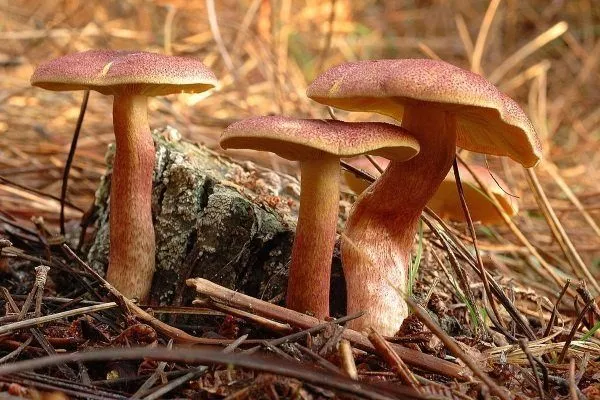
Belongs to the Trichomycetes family, hence the alternative name: Yellow-red Tricholoma (or Pine Honey Fungus). It grows in coniferous forests on dead wood (especially pine). Fruiting bodies are clustered. In central Russia, the period of mass fruiting begins in the second half of July and continues until September. They can be found until November.
A distinctive feature of the yellow-red rowan is the color of the cap. It is dry, velvety, and covered with small purple scales. The skin itself is orange-yellow. The cap diameter is 5-15 cm and flat (convex in young mushrooms). The gills and flesh are bright yellow. The mushroom is dense in the cap and fibrous in the stem. The taste is mild, slightly bitter, and the smell is sour, reminiscent of rotten wood.
Slimy honey fungus
This member of the genus Honey Fungus is widespread in Europe, found in broadleaf forests. Its preferred wood is beech, especially weakened trees. It also grows on maple and hornbeam; it nests in groups, covering the thick branches of living trees. The harvest season for these mushrooms is throughout the summer, from May to September. Compared to other honey fungi, this species is little known.
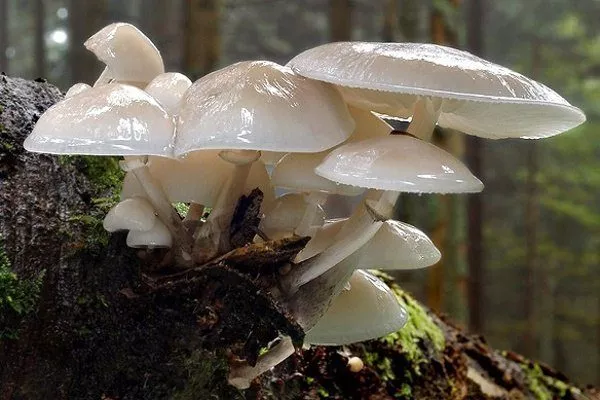
The cap of the slimy honey fungus is convex. As the name suggests, it is slimy, hemispherical, white, cream, or light gray, with a brownish center. The diameter is up to 10 cm. The stem is thin, 2-8 cm long, often curved and cylindrical, and has a club-shaped thickening and a thick ring at the base. Brownish flakes form on the surface beneath this ring. Slime appears on the stem below the "skirt." The flesh is dense and yellowish. The spore powder is pale cream.
Meadow honey fungus
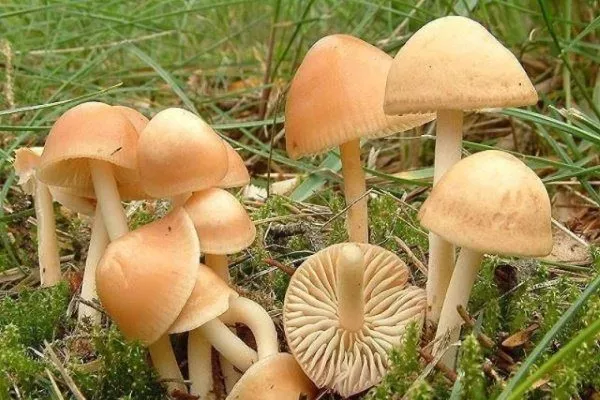
This mushroom species belongs to the genus Nyuzhnyales. Synonyms include: Nyuzhnyales, meadow mushroom, and clove mushroom. Edible, only the caps are suitable for eating, as the stems are too tough, especially in mature specimens. Meadow mushrooms are small, with caps reaching 5 cm in diameter and stems averaging 2-5 cm in length. Each fruiting body weighs on average 1 gram.
The cap of the meadow mushroom is flat with a blunt tubercle, reddish-brown or yellow. In dry conditions or in windy weather, it takes on a light cream hue. It also has the property of glowing in the dark, like phosphorus.
The cap margins are almost transparent, torn, and uneven. The gills are sparse, up to 6 mm wide, fused in young mushrooms, and become loose with age. The stem is thin and sinuous, solid, and fibrous. It is the same color as the cap.
The main difference from other types of honey fungus is its habitat. Meadow honey fungus is found in open areas, gathering in groups to form "fairy circles." They prefer the soils of forest clearings, meadows, gardens, ravines, and roadsides. Meadow honey fungus is found throughout the world, from Europe to Africa. They are resistant to severe drought, and regenerate with rainwater. Provided the temperature is warm, this type of honey fungus is harvested from spring to fall (May-June, September-October).
Doubles of honey mushrooms
Like many mushrooms, honey mushrooms have lookalikes, including poisonous ones, which must be distinguished to avoid poisoning. They grow in the same forests and at the same time (summer and fall), and also gather in large colonies, preferring to settle on dead wood and stumps.
Poisonous twins are found in all varieties of honey mushrooms, but in some countries, certain lookalikes are classified as edible. If a forager is unsure, it's best to avoid these "unknowns." But know your enemy.
The most famous types of false honey fungus:
- poppy;
- brick red;
- sulfur yellow.
Poppy false honey fungus
Another name for this mushroom is the gray-plate mushroom. It is an autumn mushroom that grows from late summer to mid-autumn. The cap is convex, with a veil covering the underside. With age, the cap straightens, reaching a diameter of 8 cm. The color changes from pale yellow to a rusty brown, reminiscent of poppy seeds. The skin is lighter along the edges. The cap surface is smooth and becomes sticky in the rain. When the fruit grows in a humid environment, the skin takes on a light brown color. The gills under the cap are fused to the stem.
The poppy mushroom differs from the true mushroom in its long, thin stem. It can be either curved or straight. The stem is more reddish near the base, and yellow closer to the cap. Furthermore, the gray-laminated mushroom lacks the characteristic feature of all honey mushrooms—a membranous ring. More precisely, it does have one, but it quickly disappears. This can be confusing for an inexperienced mushroom picker. But that's not a problem: the poppy mushroom is considered conditionally edible. In appearance and taste, it resembles the summer honey mushroom.
Brick-red false honey fungus
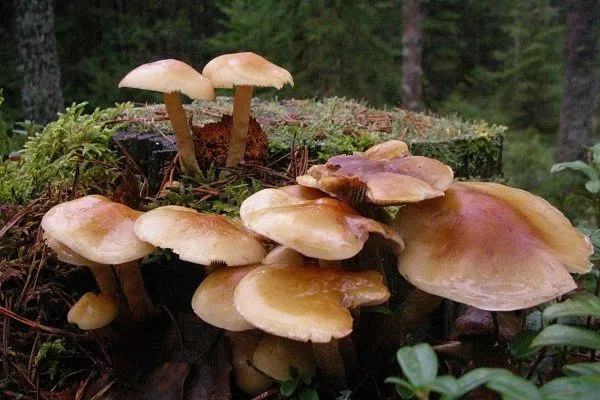
This mushroom is considered conditionally edible or even inedible due to its unpleasant taste. It is very bitter and requires long boiling. However, reports of its toxicity are contradictory, and in some countries, such as Japan and the United States, this member of the honey fungus genus is eagerly collected. Externally, it has a larger cap, reaching 10 cm or more in diameter. With age, the cap changes from convex to flat. Its color is reddish-brown, but can be lighter or darker. The mushrooms are odorless.
Brick-red honey mushrooms grow in large clusters on dead wood. They thrive in deciduous and coniferous forests, but can also be found in mountains or plains. They grow year-round except for the cold winter months. Unlike true honey mushrooms, the inside of the cap is covered with a web-like covering. This disappears over time, although remnants may still dangle from the edges. Another distinctive feature is that the stems of the mushrooms are hollow inside.
Sulphur-yellow false honey fungus
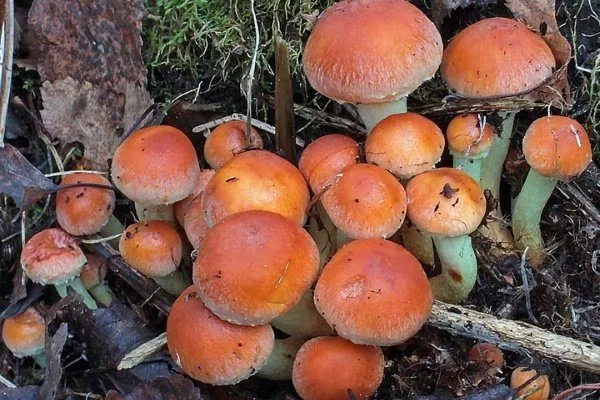
A poisonous lookalike of the honey fungus, the honey fungus is pale yellow, sulfur-yellow, or grayish in color. The center of the cap is darker than the edges. The gills underneath may have a greenish tint. The mushroom is small, with a cap diameter of 2 to 7 cm and a stem up to 10 cm long. The cap is bell-shaped when young, but as the mushroom matures, it becomes spreading. The stem is fibrous. The flesh is whitish or the same color as the cap.
The false honey fungus is found in deciduous forests, rarely in coniferous forests. The mushrooms grow in large groups, and colonies can contain up to 50 fruiting bodies. Many of them are fused together by their stalks. The false honey fungus is easily distinguished from the true mushroom by the sharp, unpleasant odor emanating from its interior. Furthermore, the false honey fungus lacks the characteristic scales, and its gills are sulfur-yellow, not beige or cream like edible mushrooms.
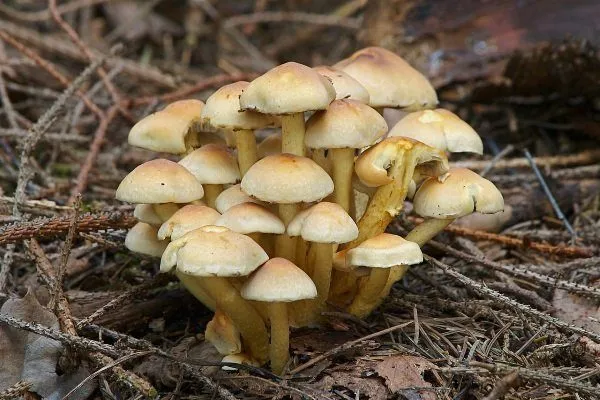
To avoid confusing honey fungus with its inedible counterpart, pay attention to the mushroom's growth characteristics:
- True ones are found on wood (except meadow ones), and false ones can grow on the ground.
- The leathery ring on the stem is the main sign of edibility.
- False species have caps with a provocative coloring. They are greenish-gray, red, and the gills are darker.
- The stem and cap of true honey mushrooms are covered with scales. False honey mushrooms do not.
- As a rule, the legs of the doubles are thin and hollow inside.
- The doubles give off an unpleasant earthy smell.
How to collect honey mushrooms?
These mushrooms grow in large clusters, and such a foray usually results in a basketful. Furthermore, honey mushrooms can be collected almost year-round – depending on the variety, they bear fruit from spring to late fall, and even in winter (except during severe frosts). When choosing a harvest time, you should look for the species that are common during those months:
- From May to June, meadow honey mushrooms actively bear fruit;
- from August to October-November – summer and autumn;
- Winter ones are found throughout the autumn, from September to December.
- Select a suitable forest area that is at least 30 years old.
- Find stumps or dead wood with last year’s mycelium
- Inspect the area within a radius of 50-100 m from the found families
- Cut the mushrooms with a sharp knife, leaving 1-2 cm of stem.
- Sort the crop directly during harvesting
Collection plan
Forests where honey fungi grow can be any kind: mixed, coniferous, beech, etc. However, they are generally not found in young stands. The ideal habitat for honey fungi is a damp forest 30 years or older. Meadow honey fungi can also be found in plantings, but in open clearings and forest edges. A distinctive feature of these mushrooms is their constancy. If they appear near a rotten stump or fallen tree, they will appear there regularly. The family can be found in the same place the following year.
The best time to pick honey mushrooms is in the morning. After the cool of the night, they are more resilient to transport.
How to grow honey mushrooms yourself?
Many mushroom lovers try grow it yourself At home. Honey mushrooms are a unique mushroom crop, more suitable for artificial cultivation than others. The process is accessible to everyone and is fascinating. Honey mushrooms will yield generous harvests almost all year round.
Honey mushrooms are easy to grow. Winter and summer varieties are best for planting and propagating. The necessary conditions are easy to create in a summer cottage, vegetable garden, or even at home—on a balcony or in a basement.
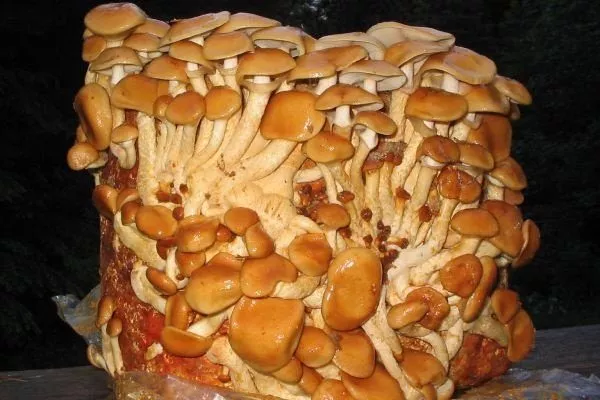
The technology for growing honey mushrooms depends on the choice of seed material. Mycelium or fruiting bodies can be used for planting, and both methods are minimally invasive. To obtain mycelium, you can try finding a piece of rotten wood in the forest and germinating mushrooms from it. The process is as follows:
- Divide the rotten wood into equal pieces, which will serve as future grafting material. The pieces are approximately 2 x 2 cm in size.
- These beams are inserted into the finished timber, a kind of bed. Holes are first made in the sides of the beams, matching the size of the pieces of grafting material.
- After planting, the blocks are covered with moss, and then the entire bed is wrapped in plastic. This will ensure the required temperature and humidity levels are maintained.
To develop fruiting bodies from whole mushrooms, it's necessary to select suitable specimens for planting. To do this, cut off the caps of older mushrooms (approximately 8 cm in diameter), soak them in water, and then mash them without straining them after 24 hours. The resulting mixture should have a mushy consistency. Next, follow these steps:
- Strain the pulp through two layers of cheesecloth.
- Collect the seed material in a glass container.
- Pour this liquid onto the wood (on logs or stumps).
- The beds or improvised beds should have small depressions where the spores collect.
- After planting, the holes are covered with sawdust or wet moss.
There are several ways to grow mushrooms at home or in your garden. The following are suitable for growing honey mushrooms:
- in greenhouses;
- in the basement on sacks;
- on logs;
- on a stump;
- in banks.
| Growing method | The first harvest date | Yield per unit area |
|---|---|---|
| On the stumps | 6-12 months | 2-4 kg/stump |
| In the basement | 2-3 months | 3-5 kg/bag |
| In banks | 1.5-2 months | 0.5-1 kg/jar |
Growing on logs and stumps
This technique is suitable for growing honey mushrooms both indoors, provided the required temperature (10-25 degrees Celsius) is maintained, and outdoors. The log should be deciduous, fresh, not rotted, with bark, and moist. If it is dry, it should be soaked in water for 2-3 days. Optimal log sizes are 30-50 cm long and 20-50 cm in diameter. The prepared logs are planted in a tub, dug into a hole previously dug in a suitable area, or left in a darkened room.
If a rotten stump is available (for example, from a tree cut down on the site), the mycelium can be planted in it.
How to plant mushrooms? Make holes in logs or stumps, 4 cm long and about 1 cm wide, spaced 10-15 cm apart. Place the mycelium on wooden sticks in these holes, then cover the log with plastic film. Poke several holes in the film to allow air circulation. If you maintain a temperature of around 20 degrees Celsius, the log will become covered with mycelium in 3-4 months. Moistened stumps can be kept in a greenhouse, where humidity levels are easily controlled.
Growing honey mushrooms in the basement
If you plan to grow honey mushrooms in a basement, it should be maintained at a comfortable temperature year-round. The mycelium is planted in bags with soil. Straw, leaves, sunflower seed husks, or wood shavings can be used for sowing. The plant components are pre-soaked in hot water for 10-12 hours. This is necessary to disinfect the soil from mold and pests. Once the soil has cooled, the prepared mycelium is added and mixed.
The mixture should be placed in sturdy polyethylene bags, each holding between 5 and 50 kg. The bags should be placed on racks in the basement or hung above the floor, and humidity and a comfortable temperature (14-16 degrees Celsius) should be maintained. After three days, small holes, 5-6 cm long, are cut in the bags. The first fruiting bodies will appear within two weeks. Honey mushrooms exhibit a remarkable ability to reproduce in artificial conditions and produce high yields.
Growing in jars
This method requires no plot or extra space. Mushrooms are planted directly in jars filled with soil or a substrate made from sawdust and bran (in a 3:1 ratio). The mixture is then soaked in boiling water for 24 hours (to sterilize), then in warm water, lightly squeezed, and compacted. The mycelium is planted in a depression made with a clean stick or pencil all the way to the bottom of the jar. After planting, the container is sealed with a lid with holes and covered with wet gauze or cotton wool to maintain humidity.
The jars with the seedlings are placed in a dark, warm place, and the cotton wool is misted periodically. After 30 days, the mycelium will germinate, and after another two weeks (or three at most), the first fruiting bodies will become visible. Once the mushrooms have sprouted, the jar should be placed on a windowsill, shaded from the sun. The mushrooms should sprout up to the lid, then remove it. The neck of the jar is wrapped in a wide strip of cardboard, which will support the growing mushrooms. The harvest is cut, the stems are pulled out, and after the required two weeks, new fruit will appear.
Growing honey mushrooms isn't difficult. Unlike other mushrooms, the first shoots appear much earlier. For example, you have to wait a whole year for porcini mushrooms and birch boletes to sprout. A large family of mushrooms can grow in a small plot (a liter jar or a tree stump). This is another pleasant bonus of growing honey mushrooms at home. The tasty fruiting bodies are then used for pickling, drying, marinating, and frying. And from the wide variety of honey mushrooms, of which there are many species, you can choose any you like.