
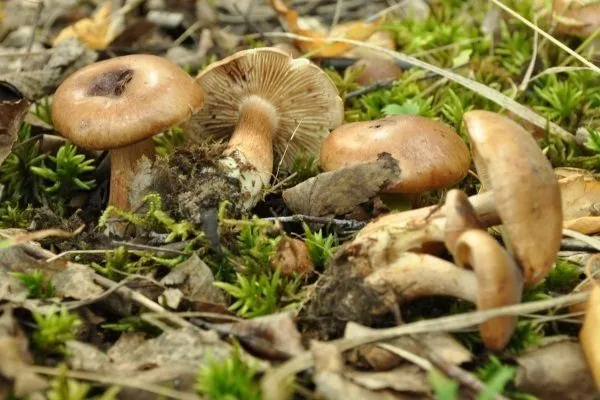
The poplar mushroom (Tricholoma populinum) is a conditionally edible mushroom from the Tricholoideae family. It's not as popular as aspen mushrooms, saffron milk caps, boletus, and other trophies of the "silent hunt," but it's no less delicious.
Description of the poplar
The poplar mushroom belongs to the group of agaric mushrooms. It reproduces by spores. Its main distinguishing feature is its distinctive aroma. If you smell a poplar mushroom, it's like smelling fresh flour—this aroma makes it incredibly delicious when pickled or salted.
Mushroom pickers value young mushrooms. Unlike older mushrooms, their caps are unopened, and most importantly, they are virtually worm-free. However, because the young mushrooms are hidden in the soil, they require extensive cleaning and washing before processing. How to recognize a rowan mushroom:
- Hat shape. Young mushrooms have a hemispherical cap. As they mature, the cap opens. At first, it's convex, then becomes depressed and covered with cracks. Long-lived caps reach 18 cm in diameter. Old caps have uneven, cracked edges. They are fleshy and, if it rains, slippery.
- Color. The gills are thin and dense, white or cream-colored. Over time, their color changes, becoming pinkish-brown. Older gills may develop reddish spots. The cap ranges in color from yellow-brown to gray- and red-brown. Removing the cap's skin reveals slightly reddish flesh underneath.
- Pulp. Fleshy and white. The taste is starchy and sweet.
- LegThe length is usually 3-6 cm, but can reach 12 cm. The diameter is 1-4 cm. The shape is cylindrical. The smooth and fibrous stem has a flocculent, scaly coating.
When and where does it grow?
Poplar mushrooms have spread almost worldwide. They can be found throughout almost all of Russia, from the southern regions to the Far East. They also grow abundantly throughout Europe, and are familiar to residents of North America. This hardy and undemanding mushroom can even be found in Central Asia.
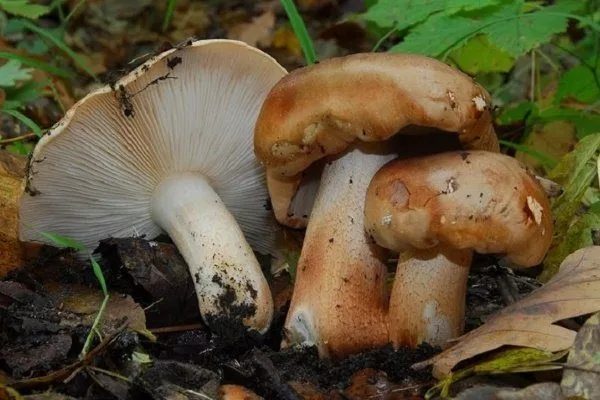
Poplar mushrooms can be harvested from mid-August to October. What's so special about this mushroom is its prolific production. One of its names, "row mushroom," is due to its habit of growing in clusters, or rows. It doesn't require a coniferous forest to thrive; it thrives in the most challenging conditions. Where can you find poplar mushroom families?
- landing strips along roads;
- parks that contain poplar groves;
- deciduous forest;
- aspen and hazel groves.
Features of the growth of the poplar:
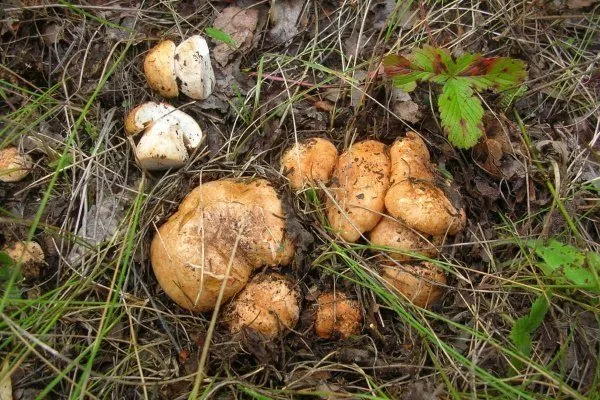
- It almost never grows alone. If a mushroom picker finds one sandpiper, there's a 99% chance there are at least a few more nearby.
- They love to hide in the soil and under leaves – you need to be extremely alert and attentive to spot their prey.
- Prefer sandy soils.
Varieties of the poplar
| Name | Cap diameter (cm) | Leg height (cm) | Color of the plates | Fruiting season |
|---|---|---|---|---|
| Grey sandpiper | 5-12 | 3-8 | white and cream | August-October |
| Red Sandpiper | 6-15 | 4-10 | pinkish-brown | August-September |
| Greenfinch | 4-10 | 2-6 | yellowish-green | September-October |
The sandwort is a variety of the common rowan. It has a multitude of common names, but they mostly stem from its habit of growing near poplars. It is also known as:
- poplar (poplar) rowan;
- poplar;
- poplar;
- sandpiper;
- sandstone;
- under-fuel;
- spoiled;
- frostbite.
Sandpipers prefer steppe regions. The most common sandpiper species are:
- grey;
- red;
- greenfinches.
The names of the varieties of poplar mushrooms reflect the color of their caps. The bright hues stand out against the pale flesh. The gray sandpipers are the hardest to find—they easily hide among the fallen leaves of poplar trees.
How to properly collect poplar grass?
To ensure your mushroom harvest is abundant and healthy, follow these collection guidelines:
- Avoid poplar trees growing along roadsides—they absorb exhaust fumes. Walk at least 1.5 km into the forest.
- Go mushroom picking on cool, clear days. It's best to have some rain the day before – then the "catch" will be more bountiful.
- Have a stick handy – sandpipers love to hide, so you'll have to rake away the leaves and top layer of soil.
- Don't forget that there are bound to be others nearby where one poplar tree grows. Sometimes you can even pick a whole basket of poplars in one place.
Inexperienced mushroom pickers often mistake the wavy-legged rowan for the poplar mushroom, which can cause digestive upset. To avoid this mistake, avoid looking for poplar mushrooms under conifers.
Watch the video – a trip to pick rowan mushrooms. An experienced mushroom picker will tell you how and where to find them, how to harvest them, and how to cook them deliciously:
The value of the mushroom
Poplar rowan is low in calories, and its chemical composition is similar to meat. It is rich in polyunsaturated fats, making it considered a dietary product. The calorie content of 100 g of the product is 24 kcal. Rowan contains:
- Water – 94.5%.
- Proteins – 3.66%.
- Fats – 0.77%.
- Carbohydrates – 1.56%.
- Vitamins A, C, B group, PP.
- Minerals – selenium, potassium, phosphorus.
- Organic acids. Rowan mushrooms contain a lot of citric, tartaric, and oxalic acids.
- Enzymes that break down fats and glycogens.
The poplar rowan is in demand in pharmaceuticals and cooking. It is low in calories, making it suitable for dietary use. Vegetarians value it as a source of protein.
Growing poplars
Poplar can be grown artificially. The key to growth is the right temperature. Fruiting bodies begin to grow only when the temperature drops to 15°C. There are two growing options: outdoors and indoors.
Growing outdoors
Growing mushrooms outdoors is technically easier. Preparation begins in May. The mushrooms are placed in boxes or bags with substrate and spread out on the beds. The following can be used as substrate:
- peat;
- land;
- soil for plants.
- ✓ The substrate must be free from pathogens and pests.
- ✓ The optimal substrate humidity should be 60-70%.
- ✓ The pH of the substrate should be between 6.0-7.0 for optimal mycelial growth.
For 5 kg of soil add:
- chalk – 100 g;
- water – 1 l;
- mycelium (vegetative body of mushrooms) – 50 g.
The further course of action:
- After mixing the mixture, place it into prepared containers.
- Sprinkle moist soil on top and cover with plastic wrap. Ideal conditions for mycelium include high humidity, air circulation, and a temperature of 20°C.
- Once the soil has become covered with mycelium, the film is removed. The substrate is placed in the shade. The first mushrooms will appear 5-6 weeks after planting.
Mushrooms are afraid of frost. Before frost sets in, cover the mushroom "garden" with straw, grass, and leaves.
Every time you harvest a new batch of mushrooms, water the soil. Or add some damp soil—that's even better.
Growing indoors
To grow a decent harvest of poplar trees indoors, special conditions are required:
- high humidity;
- temperature regime in the range of 12-15 °C;
- constant ventilation;
- natural light;
- substrate moistening;
- sprinkling the mycelium with damp soil.
The poplar mushroom is considered a delicious one, easy to find or grow yourself. It's also popular and in demand in many countries, making its cultivation profitable.