
The gray rowan, like its other edible relatives, has numerous beneficial properties and is widely used in cooking, folk medicine, and pharmacology. However, when consuming these mushrooms directly, to avoid dangerous consequences, it is important to collect and prepare them correctly.
Description of the mushroom
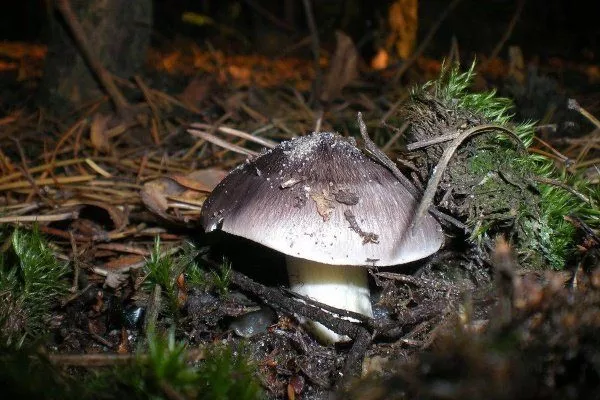
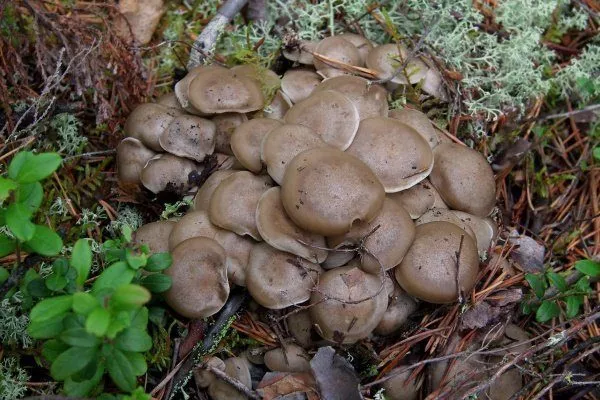
The gray row belongs to the agaric mushroom family Trichomycetes. It also goes by other names, including the pine mushroom, gray sandpiper, streaked row, and mouse mushroom. While it bears little resemblance to an edible mushroom, it has a pleasant aroma and taste. And picking it is easy, as it grows in clusters.
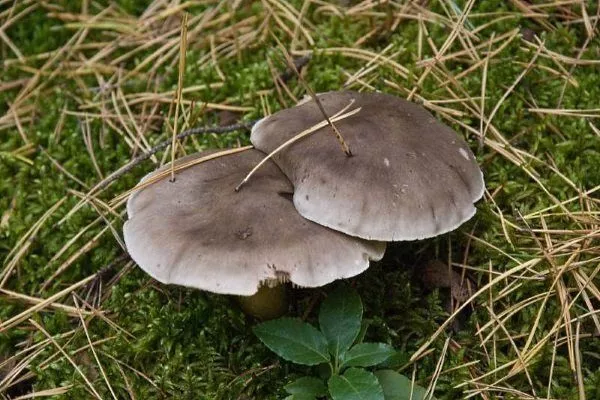
This mushroom grows quite large and fleshy. Its cap is smooth and rounded with a small protruding dome, ranging from 3 to 20 cm in diameter. As it matures, it becomes flat, with its edges curling upward. The gray color of the cap can have a variety of shades—greenish, olive, and purple—with a more intense color in the center. Beneath the cap are gills covered with a hymenium, a layer of spores through which the mushroom reproduces.
The thick, cylindrical, white stem is quite tall—up to 10 cm. It's typically firm in young mushrooms, becoming hollow in older ones. The white or grayish flesh may turn slightly yellow when cut.
The ryadovka mushroom has a rich chemical composition, containing a wealth of nutrients, yet is low in calories. Overall, these mushrooms can be considered a dietary dish, as 100 grams contain only 22 kcal. More than 90% of the mushroom's body is water, carbohydrates account for 3.26%, and proteins 3.9%. The remaining components (fat, ash, and fiber) account for about 2%.
The rowan composition includes:
- the main minerals necessary for humans are magnesium, sodium, potassium, phosphorus, calcium, manganese, zinc, copper, iron and selenium;
- vitamins A, C, K, PP, D2 and D7, betaine, group B.
This spore organism also contains glucose, natural steroids, phenolic compounds, flavonoids, and important amino acids.
Different types of mushrooms can be edible, conditionally edible, or poisonous. Unfortunately, most of these spore-forming organisms are bitter in taste and have a repulsive odor.
Dangerous qualities of the rowan
The grey rowan, well known to mushroom pickers, in addition to its positive properties, also has harmful qualities:
- mushrooms can accumulate toxic substances and heavy metals if collected in areas with polluted air and soil; overripe specimens are especially harmful and should not be collected;
- such a product is difficult to digest and absorb, and can cause fermentation and putrefaction processes in the digestive organs;
- Overeating it leads to increased gas accumulation, stomach pain, and a feeling of heaviness.
In addition, the mushroom is contraindicated for people with the following diseases:
- gastritis of the stomach;
- inflammatory processes and dyskinesia of the gallbladder (impaired motility);
- inflammation of the pancreas;
- other acute and chronic diseases of the digestive system.
Poisonous rows can cause real intoxication, accompanied by symptoms such as:
- weakness, pale skin, rapid heartbeat;
- nausea and vomiting;
- intestinal disorder;
- headaches and dizziness.
When harvesting rowan mushrooms, young mushrooms are selected and only the caps are taken, but even then, if the processing technology for the product is not followed, poisoning can occur.
Where and when do they grow?
There are approximately 100 species of Trichameleon mushrooms, and almost half of them grow in our country, including the gray Trichameleon. These mushrooms prefer calcareous and sandy soils with moss. They prefer a moderate climate, not characterized by extreme heat or cold, and are therefore found throughout the Northern and, to some extent, Southern Hemispheres. They most often form symbiotic relationships with conifers, especially pine, fir, and spruce, but also inhabit deciduous trees such as birch, oak, and beech.
Gray rowan mushrooms appear as early as spring, but fruiting generally begins in late summer and continues until the first frosts in November. Clusters of mushrooms, and less commonly, individual specimens, can be seen not only in forests and undergrowth, but also near human habitats, in parks, and gardens.
A characteristic feature of mushroom mycelium is its growth in colonies, which is where the mushroom gets its name. However, sometimes it grows not in rows, but in characteristic circles.
Varieties
Besides the gray rowan, this family also has other varieties. It's important to be able to distinguish them correctly to avoid accidentally picking a poisonous specimen and mistaking it for the pine mushroom.
Representatives of the Trichophyceae family can be divided into edible and inedible species.
Edible
| Name | Cap diameter (cm) | Leg height (cm) | Cap color | Edibility |
|---|---|---|---|---|
| Purple-legged rowan | 12-15 | 8 | gray-violet | edible |
| Yellow rowan | 3-5 | 1 | yellow with an olive tint | edible |
| Mongolian rowan | 6-20 | 10 | white | edible |
| May rowan | 4-6 | 9 | light beige | edible |
| Crowded rowan | 4-12 | 3-8 | gray, purple, brown | edible |
Edible mushrooms include:
1Purple-legged (violet) rowan
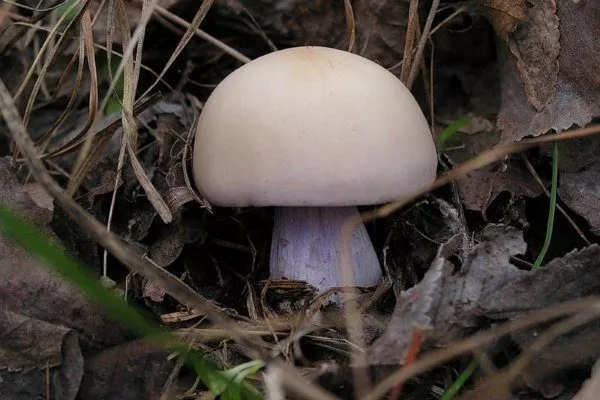
This edible mushroom has a grayish-purple cap reaching 12-15 cm in diameter. It is found in autumn in coniferous and mixed undergrowth and forest edges. The mushrooms have dense flesh, wide gills, and a stem about 2 cm thick and up to 8 cm tall. Its distinctive feature is a sweet floral aroma.
2Yellow rowan
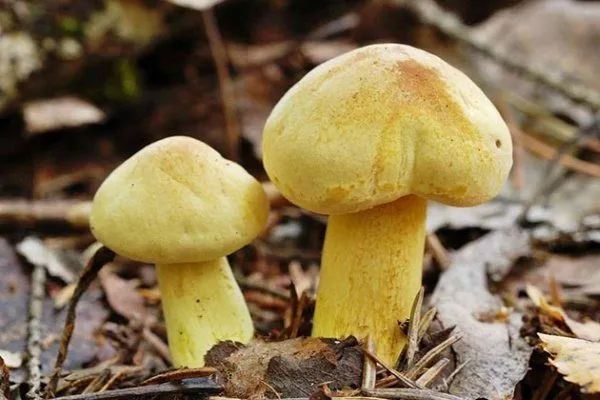
This is a rare small mushroom with a yellow, olive-green cap with a dark tubercle in the center and closely spaced gills of the same color. Mushroom pickers also call it "beautiful." The stem, just 1 cm tall, is covered with tiny brownish scales on top; it is hollow when cut, and the flesh is brown. The cap is yellow when broken. Despite its bitter taste, this mushroom is edible; its aroma is reminiscent of wood.
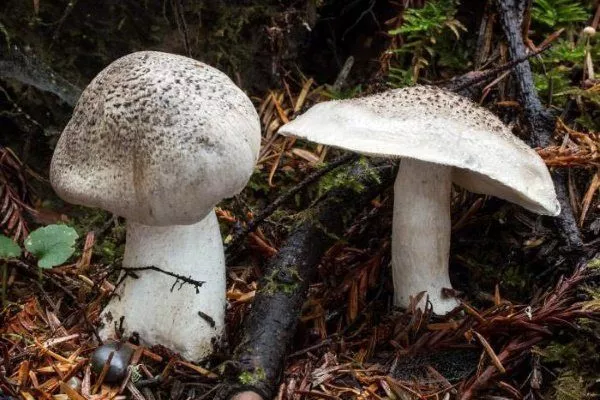
3Mongolian rowan
It resembles a boletus, if not for the gills. Young mushrooms are egg-shaped and white. Over time, the head becomes hemispherical and matte with a dirty coating. Its diameter ranges from 6 to 20 cm, and the stem can grow up to 10 cm. When broken, this mushroom has white flesh that smells like real mycelium. It is found in Central Asia, growing in steppe grass. This species is considered a valuable medicinal plant.
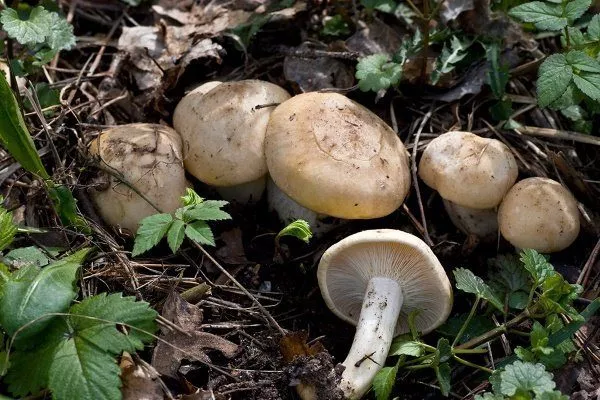
4May rowan (St. George's mushroom)
This small edible mushroom has a cap measuring 4-6 cm and a stem up to 9 cm tall. The light beige head whitens with age, and yellows in overripe specimens. It has dense gills, which also change color with age from white to yellow. The mushroom's flesh is white, fleshy, and has a floury aroma. The May variety grows throughout Russia.
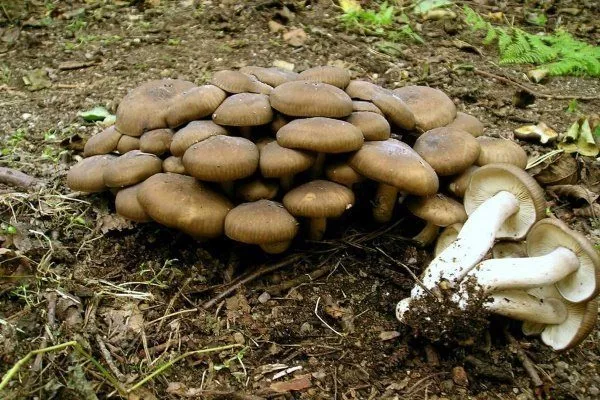
5Rowing crowded (grouped)
These mushrooms are uncommon and can be striking in the variety of shapes within a single cluster. The caps are typically round, concave, or prostrate, with a diameter of 4-12 cm. The skin on the caps can be scaly or smooth, and their color ranges from gray, purple, or brown. The stems are tuberous, straight, and thickened at the base, reaching 3-8 cm in height. Clusters of these mushrooms can be difficult to separate due to their fusion.
Read also about the conditionally edible mushroom – the poplar rowan – here.
Inedible
| Name | Cap diameter (cm) | Leg height (cm) | Cap color | Edibility |
|---|---|---|---|---|
| White rowan | 6-10 | 10 | gray-white | poisonous |
| Leopard (tiger) rowan | 4-12 | 15 | dirty white | poisonous |
| Pointed, mouse row | 3-5 | 15 | dark gray | poisonous |
Representatives that are unfit for consumption or poisonous are:
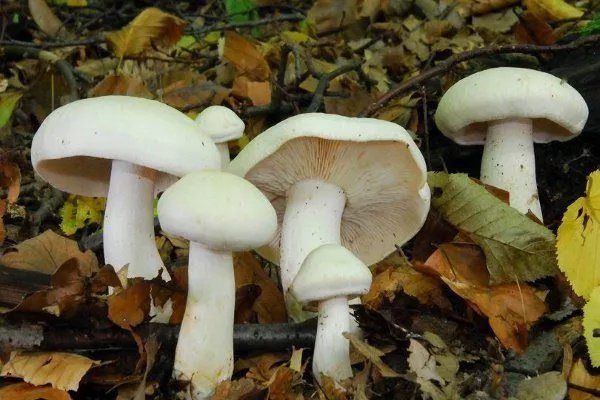
1White rowan
The mushroom has a dry, grayish-white cap measuring 6-10 cm, which becomes spotted with yellow over time. The stem is the same color, yellow-brown at the base, and can reach 10 cm in height. The unpleasant odor emanating from this false champignon, which can be found even in urban areas, is immediately off-putting.
Read more about white rowan Read on the pages of our website.
2Leopard (tiger) rowan
The dirty white cap, 4-12 cm in diameter, with darker gray flakes, can have a bluish or greenish tint. The stem grows up to 15 cm and resembles a club. The gray flesh has a rather pleasant aroma. This mushroom grows singly and in groups at the edges of forests. It is extremely dangerous, causing severe intoxication within 15 minutes of consumption.
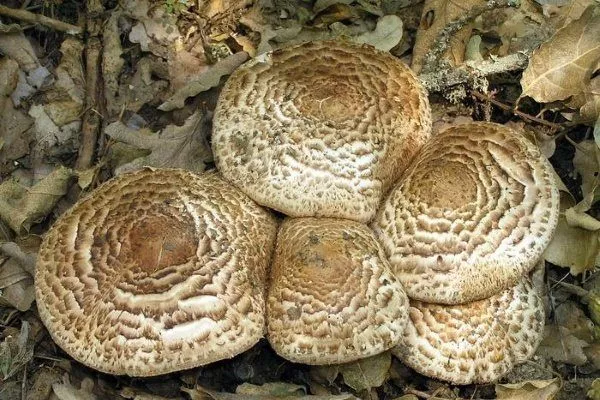
3Pointed, mouse row
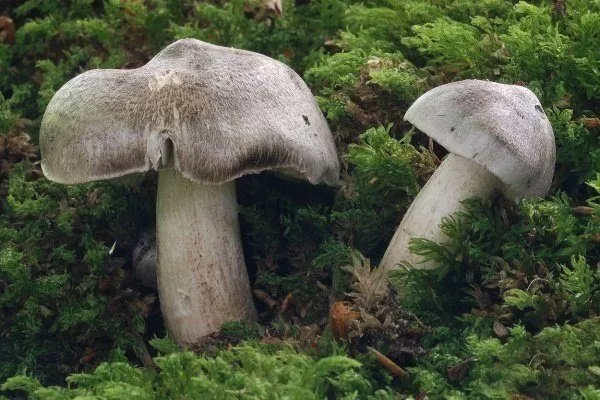
This poisonous mushroom is distinguished by its small cap (3-5 cm) in the shape of an open bell and a long, thin stem up to 15 cm tall. The cap is dark gray, while the stem can be pinkish or yellowish-white. The gills are dense, with yellow spots in overripe mushrooms. The spore-bearing organism has almost no odor, but its flesh has a pungent, acrid taste.
The mouse mushroom is very similar to the edible gray rowan mushroom. It can also be confused with the soap mushroom, which is distinguished by its distinctive smell of laundry soap.
Generally, poisonous mushrooms can be identified by their thin stems, gray gills, and distinctive bumps on the cap. Relying on smell to determine edibility is not practical – even pleasant-smelling mushrooms can be toxic.
What is the value of a mushroom when collecting or growing it?
The presence of biologically active substances in this mushroom makes it unique. Thanks to the presence of natural antioxidants, immunostimulants, and antibacterial substances such as clitocin and fomycin, the rowan mushroom has long been used in folk medicine to treat a wide variety of ailments. Not only in its preparations, but also in its ordinary consumption, can have a beneficial effect on the human body.
Mushrooms are used in many dietary supplements and some medications for the treatment of diabetes.
Different members of the Tricholoma family have their own distinctive beneficial properties that can be successfully utilized. The gray variety dissolves cholesterol deposits on vascular walls, while the yellow (terracotta) variety prevents fungal infections that affect nails, hair, and the epidermis when dermatophytes penetrate. If the body lacks vitamins A and D, the orange Tricholoma can be a good source.
From this we can conclude that it is profitable to collect rowan mushrooms and, even more so, to grow them for further sale.
Application and storage
Gray rowan mushrooms can be boiled, fried, salted, and pickled. Drying and subsequent cooking are also possible.
Freshly picked mushrooms can be stored in the refrigerator for no more than three days, but they can be frozen, which will preserve their beneficial properties for 5-6 months. Dried and canned rowan mushrooms can be used throughout the year.
Growing rowan on your own
Due to the mushroom's many beneficial properties, many are willing to cultivate it themselves. There are two main methods:
You can grow mushrooms on your own plot.
To do this, you'll need to choose a shaded location. You can plant in bags, boxes, or beds. The rowan spores begin to bear fruit at temperatures below 15°C. OFrom the heat, while the mycelium loves soil warmed up to 20 OC. You can harvest in autumn, spring and winter.
- ✓ Soil pH should be between 6.0-6.5 for optimal mycelial growth.
- ✓ The soil should contain sufficient organic matter, such as compost or humus.
After planting in the ground, the substrate should be covered to create an optimal humid climate. Once the mycelium begins to grow, it is covered with a 5-cm layer of moist soil or a special mixture (as for champignons). Young mushrooms usually appear after 20 days, and the covering is removed. If the soil is dry, moist soil should be added regularly.
In autumn, when the weather is cold, the temperature is below 5 OThe substrate is covered with canvas, and a 10 cm layer of straw or leaves is poured on top. The mushrooms are collected by twisting them out of the soil with the cap horizontally positioned.
Growing can be done in the basement, attic and other rooms.
The main condition is the appropriate temperature in the bags or boxes, but for this to happen, the room must be well lit and the mycelium must have access to fresh air; otherwise, the mushrooms will be undersized, have a small cap, and a thin stem.
Knowing the characteristics, properties, and appearance of the Tricholoma edulis allows you to grow it or harvest it periodically, creating not only healthy, tasty, and dietary dishes, but also treating certain ailments. However, the beneficial properties of this mushroom must be utilized correctly and with caution.