
Milk mushrooms are members of the Russulaceae (Russulaceae) family, the genus Lactarius (meaning that when the fragile fruiting body is broken, a milky juice flows), and the order Lamellate. In European countries, all varieties of milk mushrooms are considered inedible due to their bitter taste, and some consider them poisonous, but in Rus', milk mushrooms have always been the "king" of mushrooms. They are classified as conditionally edible and inedible.
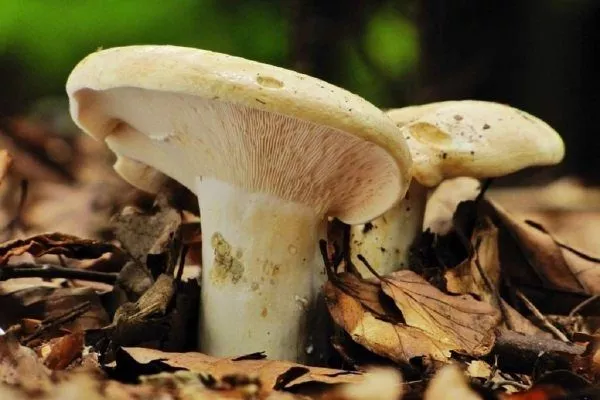
Description of appearance
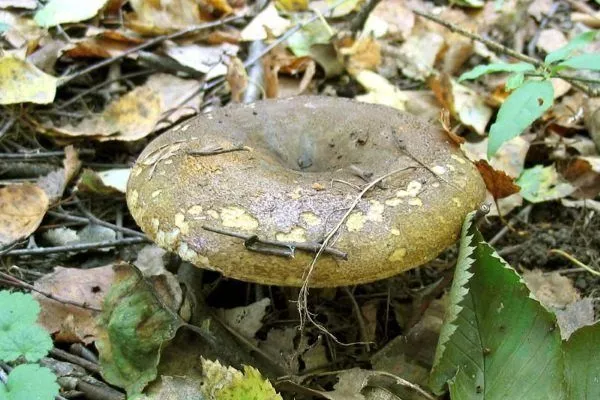
The cap of all species is fleshy, typically reaching 7-10 cm in size, rarely up to 20 cm. Initially, it is flat with a depressed center and curled, shaggy edges. Later, it takes on a funnel shape. The skin of the mushroom is slimy and sticky, with rare exceptions. Therefore, it is often covered with pine needles, blades of grass, and other natural debris. The stem is hollow and smooth. In some species, it thickens towards the bottom.
All types of milk mushrooms produce a milky white sap when broken; when exposed to air, it immediately coagulates and changes color. For some varieties, this is a characteristic feature by which they are identified. The sap is usually bitter or acrid in taste. The more pungent the sap, the longer the pre-soaking time required.
Nutritional value
Although most milk mushrooms are considered conditionally edible (they must be cooked or soaked before consumption; they are prohibited from being eaten fresh), they fall into all four categories of nutritional value. The first category includes the true milk mushroom. The second category includes the oak, blueing, aspen, and yellowing milk mushrooms. The third category includes the black milk mushroom, and the peppery and parchment milk mushrooms are in the fourth category.
Nutritional value of milk mushrooms
100 g of raw mushroom contains:
- protein - 1.8 g;
- fats - 0.8 g;
- carbohydrates - 1.1 g;
- fiber - 1.5;
- ash - 0.4 g;
- water - 88 g.
The energy value of 100 g of mushroom is only 18.8 kcal.
Mushrooms are rich in B vitamins—thiamine (B1), riboflavin (B2), and ascorbic acid (C), and contain a small concentration of niacin (vitamin PP). However, in terms of mineral content, milk mushrooms rank last among other mushrooms, as they contain virtually no macro- or micronutrients.
Where to find mushrooms?
Each milk mushroom has its own preferences for soil and forest, so their distribution range is vast. They are collected throughout European Russia, in the south of the country, and are also found in the Volga region, Transbaikalia, Siberia, the Urals, and the Far East. Each region has its own milk mushroom species, and in some areas, milk mushrooms are widely represented by different species. Some varieties thrive exclusively in oak groves, while others thrive in birch forests, coniferous forests, or deciduous forests. But all prefer well-drained soil. Therefore, if you enter a forest and the soil is dry or sandy, you won't find milk mushrooms. People usually go on a "quiet hunt" for milk mushrooms between July and September.
Varieties
There are several varieties of milk mushrooms, some of which are similar, so it is very important to correctly distinguish them from each other:
| Object | Cap diameter (cm) | Cap color | Features of milky juice |
|---|---|---|---|
| Real milk mushroom | 7-25 | Milky white | Turns yellow in the air |
| Parchment milk cap | Up to 10 | White, then turns yellow | Does not change color |
| Peppery milk mushroom | Up to 10 | White, then turns yellow | Turns blue in the air |
| Yellow milk mushroom | 10:30 | Bright yellow | Turns yellow in the air |
| Dog milk mushroom | Up to 10 | Yellow | Turns purple in the air |
| Glaucous milk cap | Up to 10 | Velvety white | Turns green in the air |
| Marsh milk mushroom | Up to 10 | Reddish, then yellow-brown | Turns yellow in the air |
| Redhead | Up to 10 | Orange-brown | Turns brown in the air |
| Watery-zone milk cap | Up to 10 | White | Turns yellow in the air |
| Oak saffron milk cap | Up to 10 | Yellow-orange | Not specified |
| Poplar milk cap | Up to 30 | Gray and white | Not specified |
| Bitter milk mushroom | Up to 10 | Red-brown | Not specified |
| Black milk mushroom | Up to 10 | Olive or black olive | Not specified |
Real milk mushroom
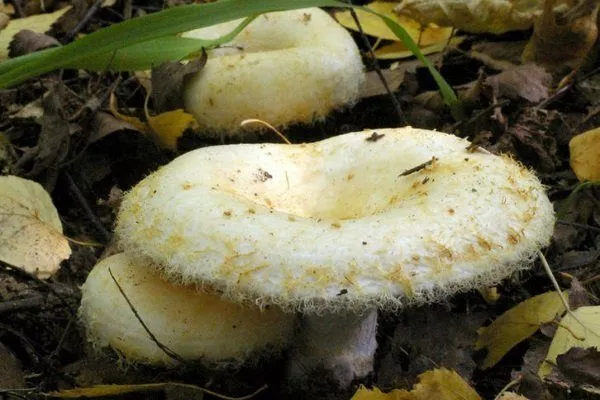
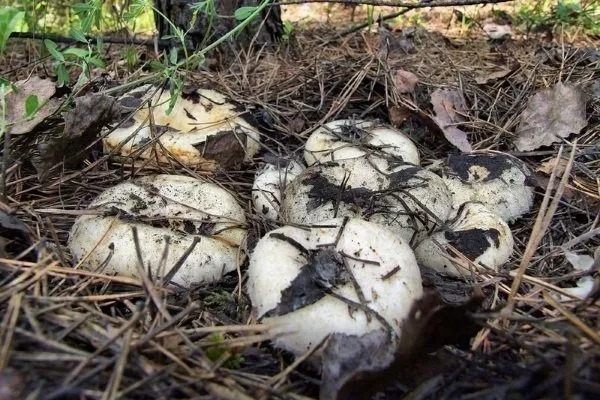
The most valuable member of this family. It has its own names in different regions—raw or white milk cap, pravsky or wet milk cap, or belyanka. The name reflects the mushroom's most distinctive feature, making it easily recognizable: the milky-white cap, reminiscent of marble. Another equally remarkable feature is the fluffy fringe that runs along the edges of the cap.
Milk mushrooms vary in size. Some have caps up to 25 cm in diameter, while others grow up to 9 cm. The mushroom stands on a small, cylindrical, and smooth stem, which is white or yellowish. The flesh has a fruity aroma, and the milky sap turns yellow when exposed to air. It prefers birch groves, and less commonly, mixed forests. Distributed throughout Russia, it appears from early June to September, and in the southern regions from August to September.
Parchment and pepper milk mushrooms
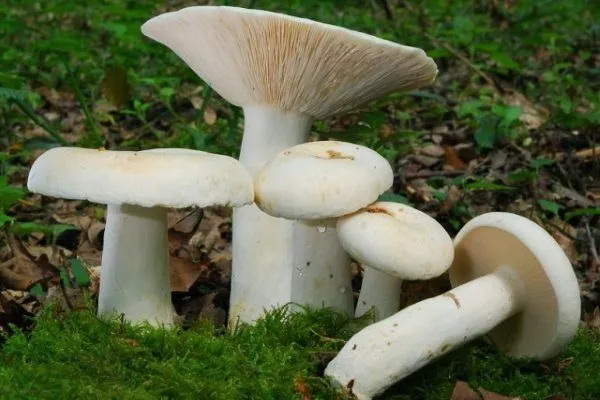
They are very similar in appearance. Both are considered conditionally edible, low-grade mushrooms. They are easily distinguished by the behavior of their milky juice when exposed to air. The milky juice of the parchment milky mushroom remains unchanged, while that of the peppery milky mushroom immediately turns blue. Furthermore, when cut open, the flesh of the peppery milky mushroom undergoes a similar metamorphosis, becoming bluish-blue.
The caps of young mushrooms are flat and slightly convex, but with age they take on a funnel shape. The white color gradually fades, giving way to a yellow hue. They are also distinguished by the height of the stem: the parchment mushroom's is longer (10 cm versus 6 cm) and tapering toward the bottom.
These species appear at the same time in summer and fall, preferring mixed forests. However, the peak harvest period is August–September. The peppery milk cap is most often found in birch and oak groves on well-drained clay soils in the temperate zone, while the parchment mushroom is found in mixed and coniferous forests.
Yellow milk mushroom
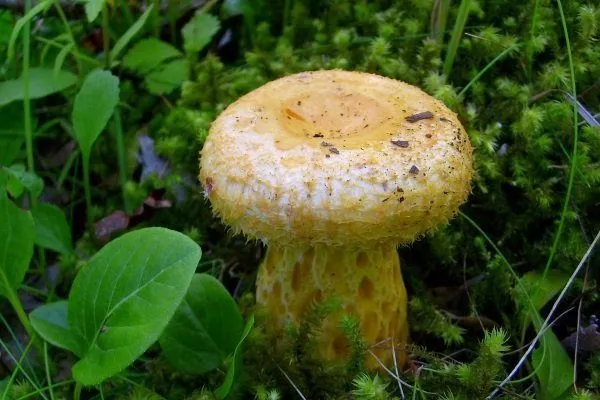
It grows in northern regions and has a distinctive appearance. Locals also call it "volnukhi" or "podskrebysh." People search for it in fir or spruce forests; occasionally, with great luck, it can be found in mixed forests. These bright yellow mushrooms with 10-centimeter caps are easily visible under dark plant litter. However, there are also record-breaking giants, whose caps grow up to 28-30 cm.
The cap is covered in hairs and is very slimy. The stem is short, sturdy, and the same color as the cap. When pressed, the flesh darkens. The milky sap, when exposed to air, turns yellowish and has a slight fruity scent.
Dog or blue milk mushroom
This conditionally edible mushroom hasn't gained much popularity among mushroom pickers. It's often classified as a toadstool and overlooked. This may be because milk mushrooms typically grow in clusters, while this variety prefers to grow alone. It can be found in damp places under willows and birches. The yellow cap is covered in hairs, and the milky sap turns purple or lilac when exposed to air. The mushroom's name is justified by pressing on the flesh. A "bruise" appears on the white surface where the pressure is applied.
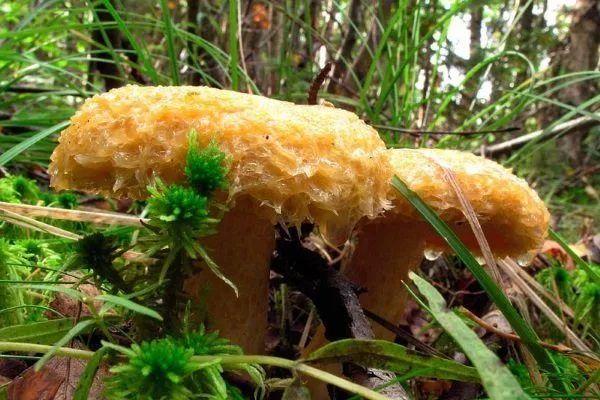
Glaucous milk cap
A weather-sensitive edible mushroom. Weather conditions greatly influence its flavor. The velvety-white, funnel-shaped cap can be seen on calcareous soils in deciduous forests. The milky sap coagulates very quickly in air and turns green. The flesh also turns green when cut and has a pleasant woody-honey aroma.
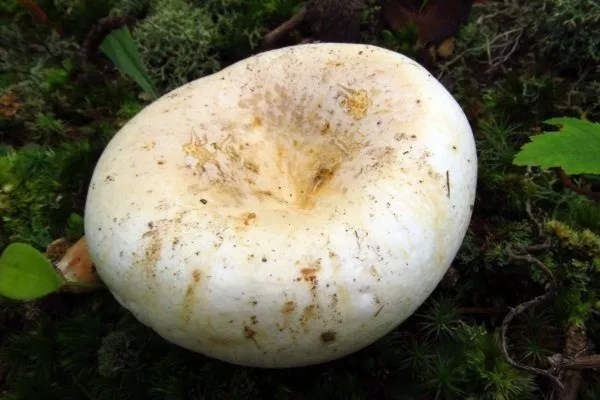
Marsh milk mushroom
The marsh milk cap grows in clumps, preferring lowlands and moist soils. It is harvested from early summer to late fall. The reddish caps with a central tubercle fade to a yellow-brown color over time. The stem is long and covered in fuzz. The milky sap turns yellow when exposed to air.
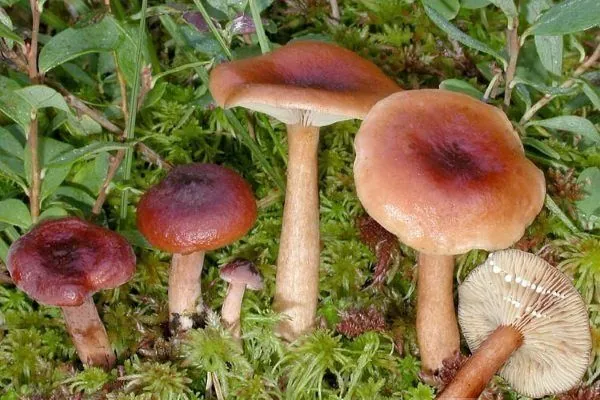
Red milk cap, milk cap or red milk cap
Unlike its "relatives," the red-headed mushroom has a dry, orange-brown cap covered in cracks. The milky sap of this mushroom is sweetish in taste; when exposed to air, it quickly turns brown and becomes viscous, reminiscent of molasses. This rare species is found in coniferous and deciduous forests from July to October.
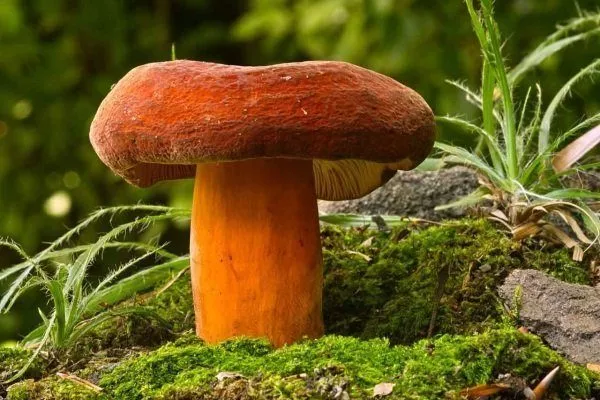
Watery-zone milk cap
This milk mushroom has shaggy, curled-up edges on its cap. It grows very densely. The cap's surface is covered with a small amount of mucus. The older the mushroom, the more funnel-shaped it becomes. The flesh has a strong, pleasant aroma. The milky juice quickly turns yellow when exposed to air. This type of milk mushroom is often confused with the white volnushka, although it is much larger in size than its "lookalike," the dry milk mushroom, and the violin milk mushroom. The latter are similar in appearance, but the former lacks the milky juice, and the latter lacks the shaggy edges.
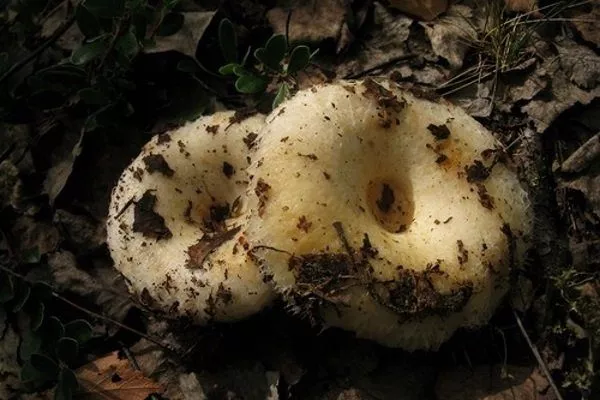
Read also about the milk cap (also known as the purple milk cap) – here.
Next, let's look at the mushrooms that cannot be recognized by the change in color of the milky juiceThey are distinguished by their appearance - the color of the cap and gills.
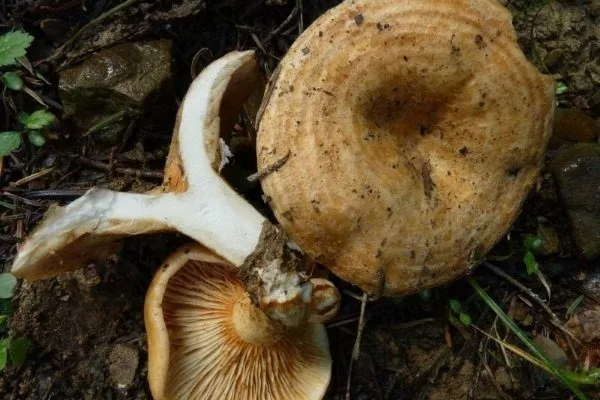
Oak saffron milk cap
This milk mushroom grows in oak and hazel groves. Its cap is a rich yellow-orange color, with brown rings visible on the surface. The mushroom matures in the soil and emerges above the surface fully mature in September. Therefore, its cap is constantly covered with debris.
Poplar or aspen milk cap
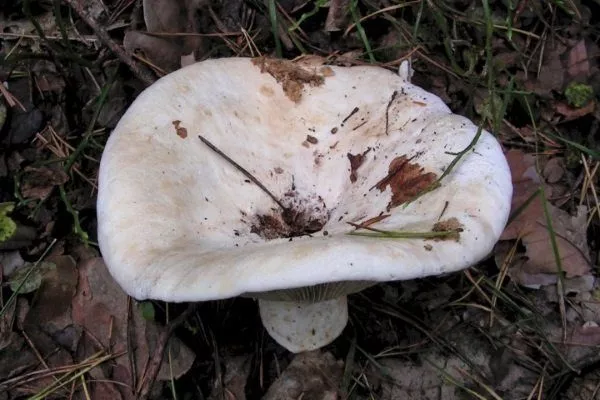
They are harvested from July to September under poplar and aspen trees. This species is quite rare, but easily recognizable. The cap of the milk mushroom resembles a large, deep plate (30 cm in diameter). After rain, water usually collects in it; forest dwellers know this well and come specifically to these mushrooms for watering. Pink, watery rings are easily visible on the gray-white cap. A characteristic feature of the poplar milk mushroom is its pale pink gills.
Bitter milk mushroom or bitter milk mushroom
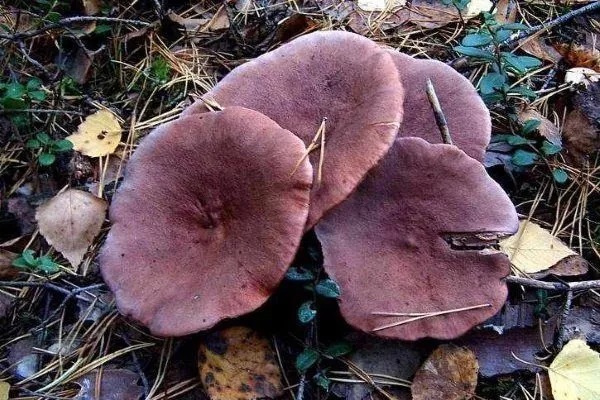
This milk mushroom has a reddish-brown cap (closer to brick red) and thrives in acidic coniferous soils. The intensity of the color depends on the lighting in its growing environment. When young, the cap resembles a bell, but with age, it takes on a funnel shape. The flesh smells like tree resin. The mushrooms appear in mid-summer and delight mushroom pickers until mid-October. They live up to their name—their flesh is pungent and bitter.
Black milk mushroom
It appears in birch groves in August and September. It is also popularly known as the black mushroom, black chernukha, or gypsy mushroom. However, the cap is not actually black, but a rich olive or black-olive color. If you look closely, you can see concentric zones on the surface.
Benefits of mushrooms
Milk mushrooms are rich in protein, so they are often consumed by vegetarians. Moreover, plant protein is better absorbed by the body. They remove waste, toxins, and cholesterol from the body, and prevent vascular blockages. They also alleviate tuberculosis and kidney stones.
Peppery milk mushrooms have a negative effect on the development of tuberculosis bacteria, inhibiting them. An extract made from this species has antifungal and antibacterial properties.
Experts believe that when salted, milk mushrooms produce chemical compounds that help fight inflammation and multiple sclerosis.
Harmful effects of mushrooms
Milk mushrooms are not recommended for children, and adults should consume them in moderation. Raw milk mushrooms are prohibited, as they contain substances harmful to the human body and can cause poisoning. People with digestive, liver, and kidney problems should consume them with caution. They are also contraindicated for those suffering from diarrhea.
How to collect milk mushrooms?
Mushrooms love to hide under fallen leaves and pine needles. Therefore, when going on a "silent" hunt, be sure to bring a stick. It will be handy for sifting through natural debris. Experienced mushroom pickers can also locate mushrooms by smell, as milk mushrooms have a fragrant scent from a distance. Mushrooms are found in low grass, carefully cutting off the stem with a knife. Once you find one, be sure to thoroughly inspect the surrounding area.
Unfortunately, milk mushrooms have poisonous lookalikes that are dangerous to humans. If you have any doubts about a mushroom's edibility, don't cut it; leave it in place. Black milk mushrooms also contain toxic substances. However, with proper cooking and soaking, the mushroom becomes harmless.
What mushrooms can milk mushrooms be confused with?
Despite the many varieties, milk mushrooms are difficult to confuse. However, they do have a couple of lookalikes, some of which can be poisonous.
- The first double is violin. It's significantly inferior in nutritional value to the true milk mushroom, but it's edible. A keen mushroom picker can easily distinguish between the two species. The violin mushroom lacks a fringe along the edge of its cap; the gills are denser and thicker, and darker than the cap. If doubts remain, the behavior of the milky sap will dot the i's. In the violin mushroom, it doesn't change color immediately when exposed to air, but rather after a long period of time. When the sap dries, it turns red, while in the milky mushroom, the sap changes instantly.
Other lookalike mushrooms are inedible mushrooms that, when consumed, cause poisoning due to the large amounts of toxins they accumulate. The camphor milk cap and the golden-yellow milk cap resemble the milk cap. - Camphor milkweed When young, it has a strong, distinctive, unpleasant odor, reminiscent of camphor; with age, this gives way to a light coconut aroma. The red cap grows to 12 cm, the edge of the cap dries out, droops, and becomes covered with scales. The mushroom grows in acidic coniferous soils, preferring rotting litter or wood.
- Yellow-golden milkcap Grows under chestnut and oak trees. The convex cap gradually becomes depressed. The cap is covered with dark spots, unlike milk mushrooms, which typically have rings. The milky sap quickly turns yellow when exposed to air. Some sources classify it as a poisonous mushroom.
How to grow milk mushrooms yourself?
Milk mushrooms are grown at home in two ways:
- From purchased mycelium — it's placed in a prepared substrate. The first harvest occurs a year later, and the mycelium produces mushrooms for five years.
- From self-collected spores — They first grow mycelium from them, and then plant them. This method is more cost-effective than the first, but the results are unpredictable, since growing mycelium from spores on your own is difficult.
- ✓ The presence of young trees (birch, willow, poplar, hazel) up to 4 years old.
- ✓ Protection from direct sunlight.
- ✓ The soil should be disinfected with lime solution and fertilized with peat.
Preparing for sowing
First, select a site for the mycelium. It should contain young trees—birch, willow, poplar, or hazel—that are no more than four years old. It should also be protected from direct sunlight. The soil is disinfected with a lime solution (50 g of lime dissolved in 10 liters of water) by watering it, and fertilized with peat.
Prepare the substrate. It consists of:
- from sterilized wood sawdust (they are boiled);
- disinfected soil;
- Made from forest moss and fallen leaves. They are collected from areas where milk mushrooms grow.
- Disinfect the soil with lime solution.
- Fertilize the soil with peat.
- Prepare a substrate from sterilized sawdust, disinfected soil, forest moss and fallen leaves.
Seeds are sown outdoors from May to October. When grown indoors, mycelium is planted year-round.
Sowing
Dig holes near the tree roots and fill them halfway with the prepared substrate. Spread the mycelium over the entire surface and fill the hole completely. Compact the soil and cover with fallen leaves and moss.
Indoors, the prepared substrate is mixed with mycelium and filled into bags, on which cuts are made in a checkerboard pattern.
After planting, the plantation is watered regularly. In hot weather, at least 30 liters of water are poured under each tree. For the winter, the mycelium is covered with leaves and moss.
The room temperature is initially maintained at +20 C, and as soon as the first mushroom shoots appear, it is reduced to +15 C. The mushrooms are provided with good lighting and a humidity of 90-95%.
Milk mushrooms are considered valuable commercial mushrooms. They are used not only for cooking but also in folk medicine. Infusions and elixirs are made from them, using young mushrooms for these purposes. Some healers use the milky juice to remove warts.