
Morels (Morchella) are a genus of mushrooms in the Morchella family, which belong to the class of ascomycetes or ascomycetes. The mushroom has a porous body, which is important distinguish from lines, which are poisonous. The article covers their appearance, how to distinguish morels from other mushrooms, their benefits and harms, as well as how to use and grow them.
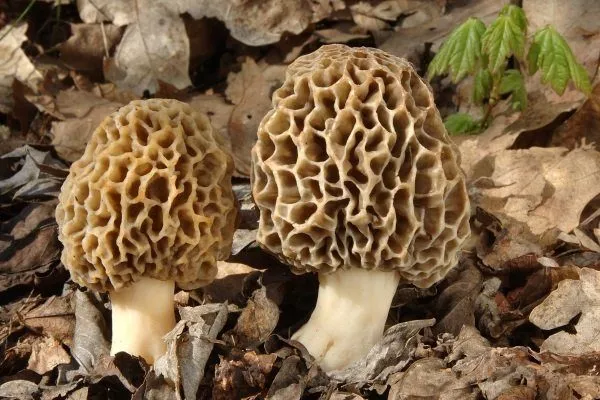
Appearance of the mushroom
The morel cap is ovoid-round, yellow-brown in color. Its main characteristic appearance is its honeycomb structure, seemingly covered in a honeycomb mesh, and its hollow interior. The cap is attached to the stem at the base. The stem is cylindrical, slightly widened at the base, and can range in color from yellow-brown to white. The morel flesh is crisp, white, and has a persistent mushroom aroma and pleasant flavor.
How to distinguish a morel from a gyromitra?
The mushrooms are very similar in appearance, but only upon closer inspection of individual specimens can one discern the differences. The morels are darker in color, and their caps are irregularly shaped, covered with numerous irregular folds, resembling a walnut shell. Their stems are short, not always visible from beneath the cap, and the mushrooms are not hollow inside. Their appearance is somewhat awkward.
Morel is a deadly mushroom!
Mushroom varieties: description and when to collect
The two most common species in nature are:
- Morel (Morchella esculenta);
- Conical morel (Morchella conica).
| Name | Hat shape | Cap color | Leg height (cm) | Cap diameter (cm) | Fruiting period | Place of growth |
|---|---|---|---|---|---|---|
| Morel mushroom | Ovoid | Brown, ocher-brownish, gray-whitish | 3-10 | 3-8 | April-May | Broadleaf, mixed forests, forest edges, mossy and sandy areas |
| Conical morel | Conical | Olive-brown, reddish-brown | 3-6 | 3-5 | April-May | Sandy soil, clearings, among bushes |
| Thick-legged morel | Cylindrical, oval | Gray-yellow | Up to 17 | Up to 8 | April-May | Forests with poplars, hornbeams, and ash trees |
| Steppe morel | Spherical | Gray-brown | Up to 2 | 2-15 | April-June | Dry steppes |
| Semi-free morel | Conical | Yellow-gray-brown | 4-15 | — | May | Tall grass, nettles, forests with birches, lindens, aspens, oaks |
| Morel mushroom | Elongated | Olive brown | Up to 30 | 4-10 | April-June | Mountains, mixed forests |
Morel mushroom
It's easily recognizable by its wrinkled cap, which resembles shriveled dried fruit or crumpled parchment paper. It's covered in numerous cells and separated by deep, honeycomb-like partitions. These cells often provide shelter for various small creatures, such as snails, ants, and worms, and also trap natural debris. Therefore, the cap should be thoroughly washed before consumption.
The true morel's cap is shaped like an elongated egg, reaching 3-8 cm in diameter. It is brown, ochre-brown, or grayish-white in color. The cap is hollow inside, its margins tightly fused with the stem.
The stem is cylindrical. It is smooth and slightly folded, hollow inside. In young mushrooms, the stem is white, but with age it acquires a yellowish tint. The stem is 3 to 10 cm high and 3 to 5 cm in diameter. The flesh is white and crisp. Morels have a different aroma depending on when they are harvested. If picked in April, the mushrooms are watery and smell of meltwater; in May, they become firm and acquire a pleasant mushroom aroma and flavor.
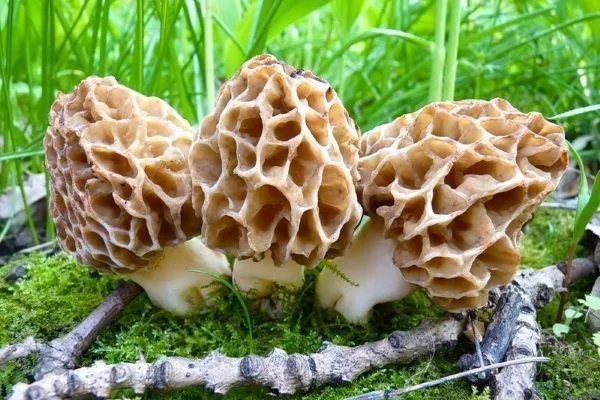
The morel grows in broadleaf and mixed forests, forest edges, mossy and sandy areas, and clearings. Experienced mushroom pickers will definitely check old burn sites, look for them at the roots of fallen birches and hollow willows, and on the southern slopes of steep ravines.
Conical morel
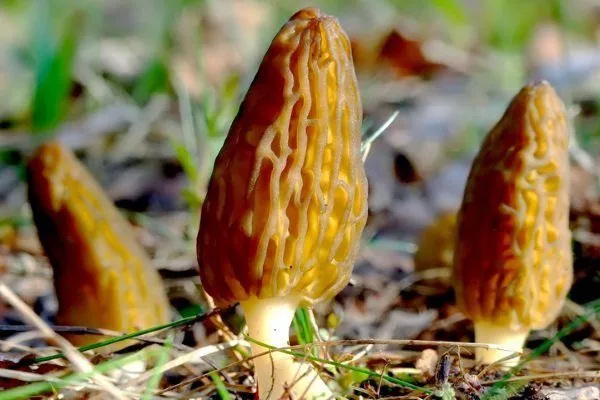
The cap differs from the real mushroom in its shape. It is conical, 3-5 cm in diameter and 3-6 cm in height. The olive-brown or reddish-brown cap has a honeycomb-like surface. Its edges are also fused to the stem, which is covered with longitudinal grooves. The stem is waxy, hollow inside, and the flesh is thin and brittle.
The conical morel is a medicinal plant that grows throughout forested areas, including tundra and mountains. It prefers sandy soil and is often found in clearings and among shrubs. Like other morels, it bears fruit in the spring, from early April to mid-May.
Rarely found morels
Rarer varieties include:
Thick-legged morel (Morchella crassipes)
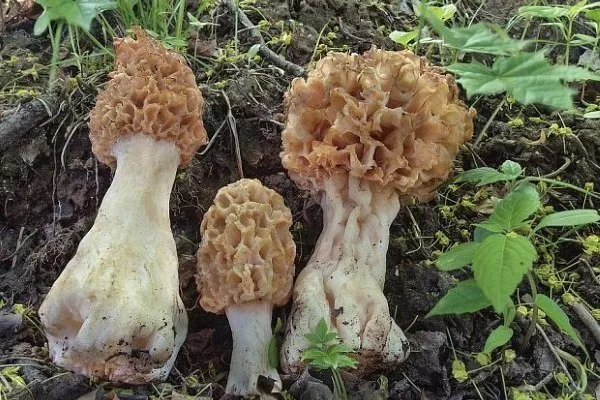
The largest member of the morel family. Its mounded stem can reach 17 cm in height and 8 cm in diameter. If you measure the mushroom's height including the cap, it is approximately 23 cm. This giant mushroom has a gray-yellow cap and a pale yellow stem.
The cap can be cylindrical or oval in shape; in mature mushrooms, the edges of the cap may be fused to the stem. Some experts believe this is a larger variety of the common morel.
It grows in forests populated by poplars, hornbeams, and ash trees. The first fruits can be found as early as early spring, depending on the weather, in early April or May. They grow in groups, but can also be found singly.
Steppe morel (Morchella steppicola)
It grows in dry steppes. It has a spherical, gray-brown cap 2-15 cm in diameter and a miniature stem, no more than 2 cm in height. There are also mushrooms of this species that lack a stem altogether. However, it can weigh up to 2 kg.
The flesh is light, even white, and quite elastic. Found in wormwood steppes, it begins bearing fruit in April and can even be found in June. It is recommended to cut these mushrooms with a knife to preserve the mycelium.
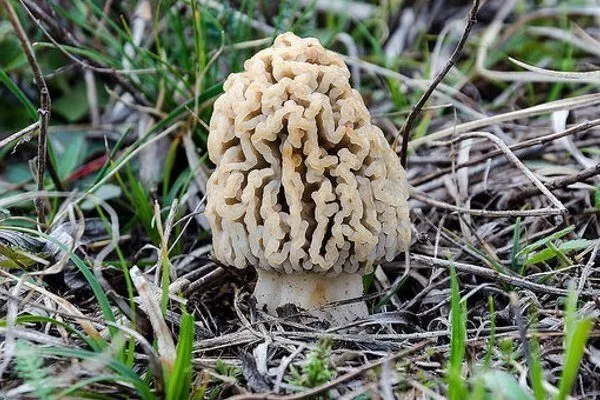
Morel semilibera (Morchella semilibera)
It has a conical cap, but it is not fused to the stem. The yellow-gray-brown cap has a honeycomb surface, with diamond-shaped cells. The flesh of the fruiting body is hollow, has an unpleasant aroma, and is yellowish or white in color. The mushroom can reach 15 cm in height, but smaller specimens, 4-6 cm, are more common.
The mushroom grows in tall grass, nettles, and in forests with birch, linden, aspen, and oak trees. Fruiting peaks in May. However, this species is extremely rare.
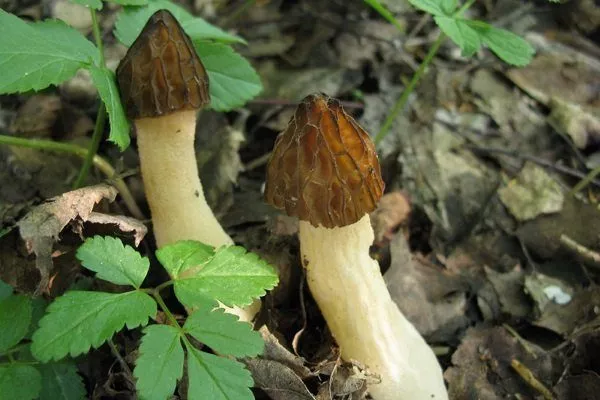
Morel (Morchella elata)
The rarest species. The cap is elongated and olive-brown. It darkens with age. The cells are triangular and clearly visible. The cap is 4–10 cm tall. The stem is white in young mushrooms and yellowish in mature ones. It is very similar in appearance to the conical morel, but darker in color and much larger, reaching up to 30 cm.
It is usually found in the mountains, but sometimes grows in mixed forests. It bears fruit in April-May, and sometimes even in June.
All of them belong to the third category of conditionally edible mushrooms, which means that they must be heat-treated before consumption—boiled in several waters or scalded.
Why is this necessary? Morels contain a toxic substance called gyromitrin, the concentration of which varies depending on the mushroom's growing location and weather conditions. This toxin quickly dissolves in hot water, rendering the mushrooms harmless. It also breaks down during drying, so this is the only way to preserve them for future use. Dried morels are ready to eat after three months.
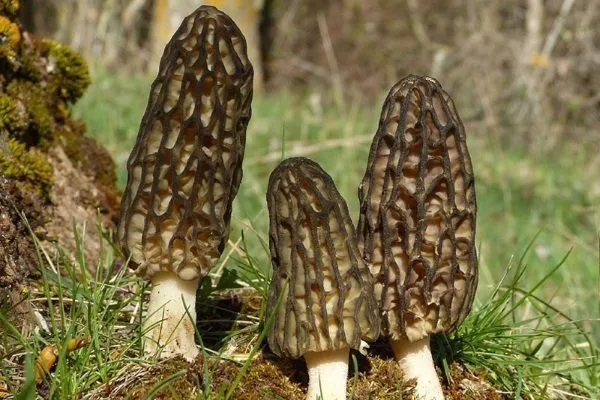
The third category includes mushrooms that have low nutritional value and are inferior in taste to mushrooms of the first and second categories.
Nutritional value of morels
The nutritional value of morels is only 20 kcal per 100 g.
Fresh mushroom (100 g) contains:
- 2.9 g protein;
- 2 g carbohydrate;
- 0.4 g fat.
The main share is water - 92 g, and the composition also includes dietary fiber - 0.7 g. Of the minerals, it contains potassium, magnesium, calcium, phosphorus, sodium, iron and vitamins C, B1, B2, PP, D.
Morels are the first spring mushrooms, collected in April – May.
Why is a mushroom valuable to a mushroom grower?
This mushroom is quite profitable to harvest in the forest or grow, not only for personal consumption but also for commercial use. They are highly sought after for the creation of medicinal products and dietary supplements. The mushrooms contain the polysaccharide FD4, which affects the lens, preventing it from clouding and improving vision. Pharmacists have developed numerous medications based on morels. They are also excellent blood and lymph purifiers. Their use is effective for blood and immune system disorders. This is why morels are so valuable.
Harm
Morels, when properly prepared, are harmless. All varieties of morels should be boiled, then discarded and not eaten. Inexperienced mushroom pickers can easily confuse morels with gyromitra, which are poisonous mushrooms due to their toxins.
How to pick morels?
Once you find a morel, don't rush to pull it out completely. To ensure the mycelium continues to grow next year, you should leave part of the stem in place. Therefore, the stem is cut off at ground level.
Is it possible to grow morels at home?
Morels are delicious mushrooms considered a delicacy in European countries. Therefore, many attempts have been made to cultivate them at home.
German mushroom pickers suggested simply sowing morel pieces in the soil and covering them with ash. In the fall, they cover the area with straw or leaves, and in the spring, they find mushrooms. It was also noted that morels grow well in places where fallen, rotting apples remain. Therefore, the French create beds on which they scatter mushroom pieces. In the fall, they water the soil with apple pomace. The harvest is harvested in the spring.
Morel mushroom mycelium can be purchased at a specialty store and planted in your garden. Morels are planted in the spring. To do this, select a "mushroom" spot near deciduous trees. The spot should be shaded. Remove 15 cm of the top layer from the selected spot.
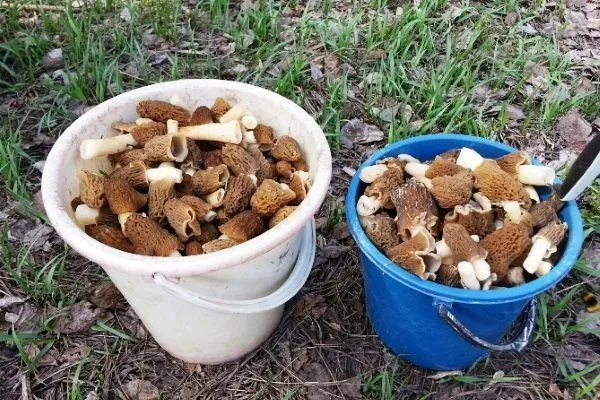
Prepare the soil mixture:
- 3 parts sawdust;
- 1 part leaves;
- 1 part wood ash;
- 6 parts garden soil.
All ingredients are mixed and poured into the prepared hole, then watered. The mycelium is spread on top of the soil and covered with the removed soil. Water again and cover the bed with leaves. In the summer, it is tended, kept from drying out, and fertilized with wood ash. In the fall, it is covered with natural materials such as straw, branches, or leaves. In the spring, after the snow melts, the cover is removed. The first mushrooms will appear within two weeks. The mycelium fruiting lasts for 3-5 years.
Application and processing
Dried morels are used to make mushroom powder, which is a natural flavoring agent. It is added to various dishes. Dried mushrooms absorb moisture quickly, so they are stored in paper bags or cardboard boxes in a dry place to prevent mold. They are not salted or pickled.
Morel processing:
- mushrooms are cleaned and washed thoroughly;
- soak in water for 1 hour;
- boil in water for 30 minutes;
- rinse with hot water;
- The mushroom is ready for use or consumption.
Morels are the first mushrooms of spring, and despite their modest nutritional value, they are very tasty. They should not be consumed by people with intolerances, children under 12, pregnant or breastfeeding women, or those with severe cardiovascular disease.