
The boletus is a mushroom that, as you might expect, grows under oak trees in deciduous forests. It's very similar to the boletus, but also has some differences. The boletus family includes not only the edible boletus species, but also the notorious satanic mushroom, which poses a serious risk to humans.
Other names of the mushroom
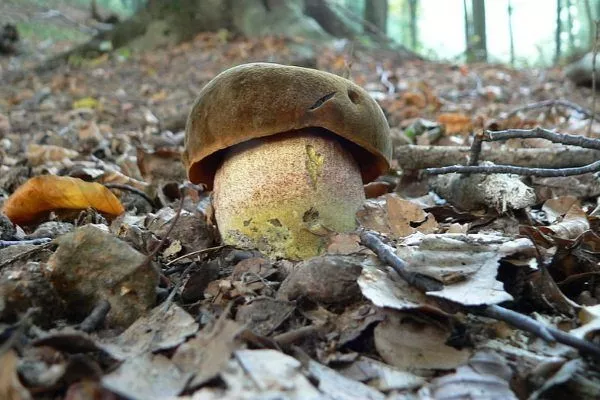
The mushroom stem is covered with a dark mesh, which distinguishes it from the common boletus. The boletus is a brownish color with varying shades, which is why it is also called:
- olive-brown oakwood;
- oak grouse;
- oak mushroom;
- dirty brown boletus.
Description and characteristics of the oak mushroom. What does the mushroom look like?
The mushroom itself is delicious and has a pleasant aroma, but it's important not to confuse it with other, less tasty and less nutritious mushrooms. To do this, familiarize yourself with its appearance.
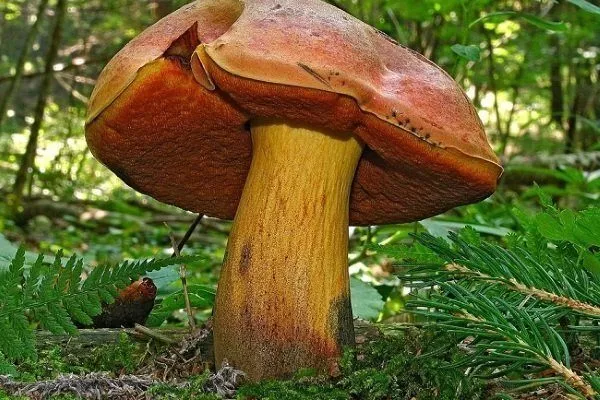
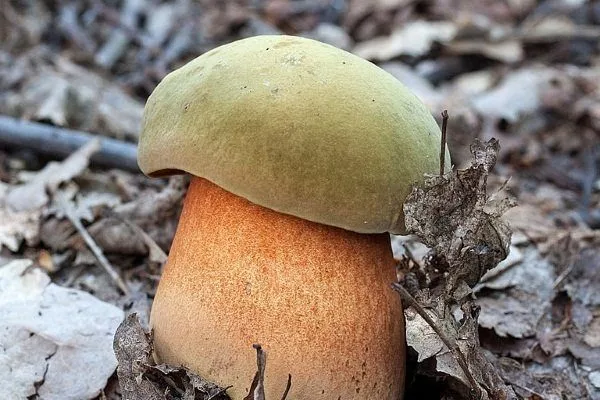
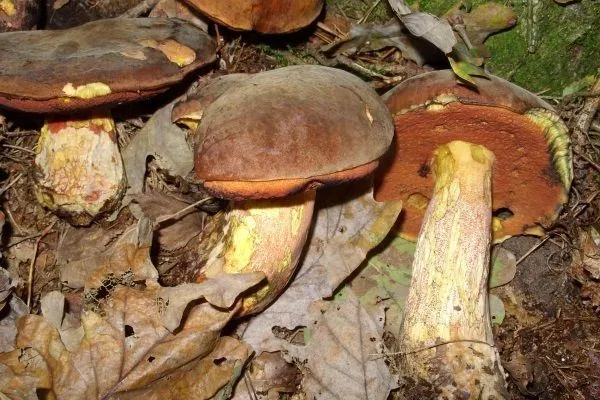
hat The cap is large, reaching 20 centimeters in diameter. It has a massive, fleshy, hemispherical shape. It is practically unattached to the stem, almost as if it were placed on it. Over time, it opens up and becomes pillow-like. The top is velvety and comes in a variety of colors: yellow-brown, gray-brown, and dark orange. The cap's coloring is uneven. The flesh is yellow, turning blue-green where broken.
Leg A fairly thick, massive, club-shaped mushroom, up to 12 centimeters tall. The stem is yellow beneath the cap, becoming darker lower down, and dark orange at the base. The mushroom's distinguishing feature is the mesh covering the stem; the flesh is red.
Pulp Yellow in color, turning blue when pressed hard or exposed to air when cut. The taste and aroma are pleasant, but not pronounced.
Field characteristics of edible oak boletus
- ✓ Velvety cap without mucus
- ✓ Mesh pattern on the stem (not scales)
- ✓ The flesh turns blue evenly without red spots
- ✓ No pungent odor
If you consume oak mushrooms together with alcoholic beverages, severe poisoning is possible.
When and where can you find the mushroom?
The mushroom grows on limestone soil, where the sun warms the ground well; they can often be found near:
- birch trees;
- oak;
- fir.
The oak mushroom harvesting season starts from May to June, then they disappear and emerge from the ground again in August and until September.
Collection calendar
- May-June: the first waves in the oak groves
- July: A break in dry weather
- August-September: Massive growth after rains
- October: single specimens until frost
Varieties
The common oak tree also has varieties that are identical in composition to the original, but have a different appearance and size.
Speckled oakweed
The spotted oak mushroom is an edible mushroom with a pleasant taste and aroma.
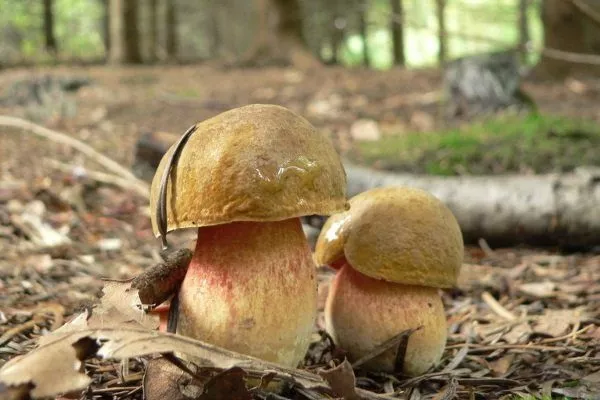
hat Velvety, can be brown, dark blue, chestnut, or brown, darkening with the slightest pressure. The shape is cushion-shaped or hemispherical.
Leg It reaches 16 centimeters in height and has a red-yellow hue, covered with dots or a kind of mesh.
Pulp Bright yellow or orange in color, it eventually takes on a bluish tint where it's broken or cut. It doesn't have a strong flavor or aroma.
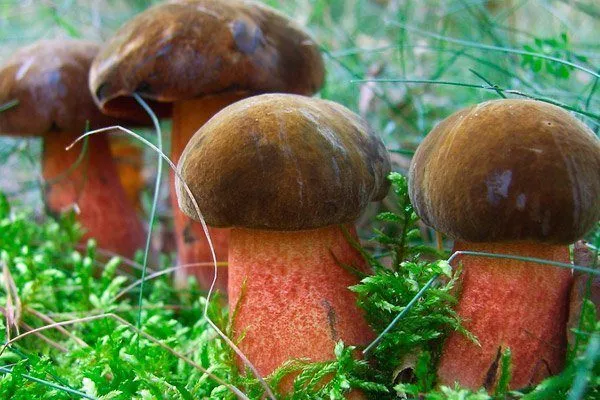
Doubles. The Satan's mushroom (poisonous) has flesh that turns red when broken and only then takes on a bluish tint. The yellow boletus is distinguished by its completely yellow stem and is found only in Western Europe. The Kele's boletus is a very rare mushroom species, growing only in calcareous soil.
When and where can I meet you? The mushroom grows from May to October:
- in Siberia;
- in the Caucasus;
- Far East;
- European part of Russia.
Occasionally found in Leningrad, in coniferous and deciduous forests, on marshy and acidic soils near spruce, fir, and oak.
Olive brown
An edible mushroom belonging to the genus Boletus, the taste and aroma are not pronounced.
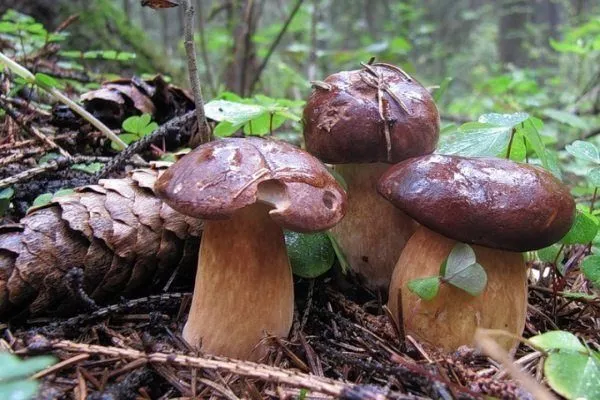
hat Convex, 20 centimeters in diameter, rarely flat. The cap is brown with an olive tint, sometimes with a yellow-brown tint. The brim of the cap is reddish, and the tubular base is burgundy.
Leg 12 centimeters high, the color is the same as the cap.
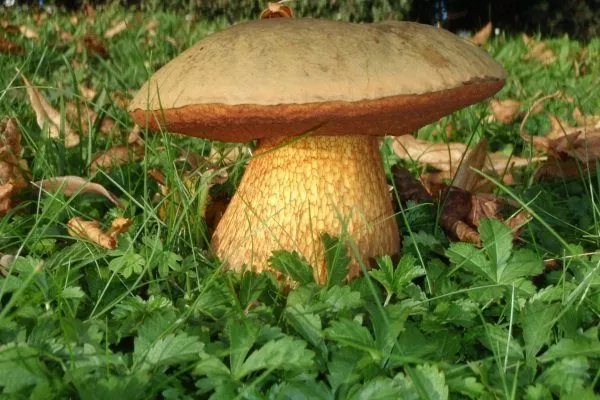
Pulp Fleshy, turns green where broken. It has a pleasant, subtle flavor and aroma.
When and where can I meet you? The olive-brown oak bolete is most commonly found in deciduous and mixed forests in lowlands. It typically grows near or under oak trees, hence its name. It blooms from July to September.
What can be confused with the common oak tree?
The common oak mushroom is somewhat similar to other mushrooms, both poisonous and edible. Before placing a mushroom in your basket, it's important to inspect it to ensure it won't pose a health risk.
The oak mushroom can be confused with the following mushrooms:
- spotted oak boletus (edible mushroom);
- pink-golden oak boletus (edible after heat treatment, but poisonous when raw);
- Satan's mushroom (poisonous even after heat treatment).
Comparison table of doubles
| Sign | Edible boletus | Satanic mushroom |
|---|---|---|
| Smell | Neutral | Rotten onions |
| Change in pulp | It turns blue immediately | Turns red → turns blue |
| Leg | Net | Stains |
This mushroom species is not common, but if you're not an expert on mushrooms, it's best to avoid picking them. While it won't be fatal, it can lead to serious poisoning.
Processing and application
To eat oak mushrooms, they should be soaked for half a day, changing the water every 1-2 hours. Then, they are boiled, and only then can they be cooked according to your favorite recipe. Although these mushrooms contain few toxins, they are still destroyed during cooking. If they are not properly cooked, they can cause gastrointestinal problems.
Pre-treatment technology
- ✓ Soak for 12 hours with water changes
- ✓ Initial boiling for 15 minutes
- ✓ Draining the first decoction
- ✓ Re-cook for 20 minutes
Oak mushrooms can be pickled, and if you add a little citric acid to the jar, the mushroom will retain its color even during long-term storage.
You can also boil boletus mushrooms first, then fry them, seasoning them with your favorite sauce. They can also be used to make soups, sauces, and dressings, as well as side dishes. Even when cooked, boletus mushrooms retain their nutritional value, retaining a pleasant aroma and flavor.
Value in medicine
In folk medicine, oak mushrooms have become renowned as a remedy against malignant tumors. Since ancient times, lotions and balms have been made from these mushrooms. When applied, they reduce fatigue, alleviate depression, calm the nerves, and eliminate exhaustion.
The benefits and nutritional value of oak mushrooms
All edible mushrooms contain a variety of beneficial acids, vitamins, and microelements. The oak boletus is no exception, also containing numerous beneficial substances. Its main components are zinc, magnesium, and iron, which have restorative properties, along with other beneficial substances.
Zinc – is beneficial for the proper functioning of the gastrointestinal tract. This micronutrient accumulates in the pancreas, plays a role in digestion, and promotes the proper absorption of nutrients.
Copper – restores cells, improves metabolism, forms hormones and improves blood circulation.
Iron – normalizes hemoglobin levels in the blood. Regular intake of oak moss, even in minimal quantities, replenishes the body's need for essential components.
Amino acids – are able to improve mental and visual memory, add energy, vigor and strength, increase mental activity, and also prevent the development of atherosclerosis.
Beta-glucans – contained in common oak mushrooms in large quantities have a positive effect on the human immune system.
Contraindications and harm
Generally, oak mushrooms are harmless to humans. It's important to collect them correctly, not to confuse them with the poisonous satanic mushroom, as they are similar in appearance. The main difference is the unpleasant, pungent odor, and the poisonous mushroom's cap is greenish.
Mushrooms are a specific food, containing a large amount of chitin. They undoubtedly provide health benefits, but it's important to understand that children under 12 years of age don't yet have the enzymes needed to properly digest them. Therefore, avoid feeding mushroom-containing foods to children to avoid any unpleasant side effects. People with allergies should also avoid mushrooms.
Growing mushrooms
Many mushroom lovers or simply gardeners want to have edible and tasty mushrooms in their garden, but few know where to start or how this process actually happens.
There are two ways to grow oak trees:
- extensive;
- intensive.
Extensive
The first method of mushroom cultivation, which mimics natural conditions as closely as possible, offers a better chance of a bountiful harvest. This method doesn't require any special equipment or skills. The only downside is that it's dependent on weather conditions and climate: if the weather is poor, the mushrooms will bear fruit less efficiently and more slowly.
Oak mushrooms should be grown near deciduous trees, preferably near an oak tree. The plantation where the oak mushrooms will grow should be protected from the sun, meaning it should not be exposed to direct sunlight. Remove a 20-centimeter layer of soil around the tree, approximately one square meter. This area should be thoroughly watered, then sprinkled with soil prepared as follows:
- mix peat;
- leaves from a tree;
- sawdust;
- horse manure.
Mix everything with soil and arrange it around the trunk. Sprinkle the mycelium with dry soil on top, then cover with the original soil removed earlier and water it with a drip. During the hot summer months, the soil should be watered periodically, and in winter, insulate it with moss, fallen leaves, and straw. This type of planting can be started in the spring or summer; if everything is done correctly, the first harvest can be harvested within six months.
Care schedule for the extensive method
- March-April: soil preparation
- May: mycelium sowing
- June-August: watering twice a week
- September-October: harvest
- November-February: insulation with a 15 cm layer
Intensive
The second method is more effective, as the mushrooms will produce fruit regardless of climate and weather conditions. The downside is some complexity and financial investment. The mycelium must be arranged so that it always maintains optimal humidity, temperature, and lighting.
The mycelium should be sown on previously prepared, healthy, and moist wood. It can be cut down four days before planting the mushrooms. Then, holes are cut and the mycelium is evenly distributed into them. Sowing the mycelium and harvesting the mushrooms can be done year-round, even in winter. The tree will bear fruit until the mycelium completely destroys it.
Although the oak mushroom is difficult to find in the forest, every mushroom picker should still add it to their basket and take it home. Everyone should try it, as it's not only delicious and aromatic, but also beneficial for the body, containing numerous vitamins and microelements. It will improve memory, boost immunity, and simply add energy and strength.