
One of the most beloved and recognizable mushrooms is the aspen boletus. Its vibrant cap resembles autumn leaves and can range in color from beige to vibrant orange. This mushroom is easy to spot among green grass. However, it's important to know that there are several varieties of aspen boletus, including the false aspen boletus. This is not a distinct species, but rather several members.
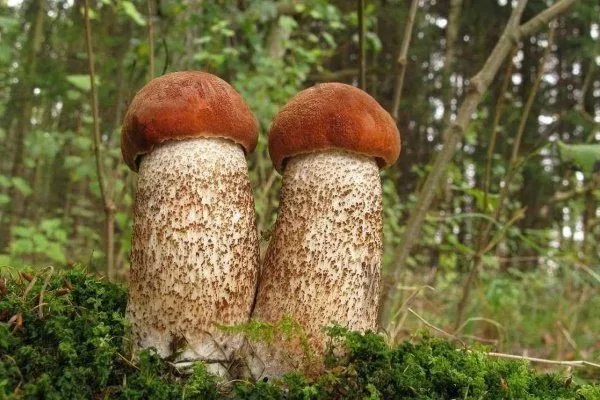
Varieties of false aspen mushroom
Many foragers, even experienced ones, have encountered false specimens of the aspen mushroom. As such, the mushroom has no true lookalike. What can confuse the edible aspen mushroom with?
- Bitterling or gall mushroom.
- Pepper mushroom.
Both resemble aspen mushrooms in appearance, but are not suitable for food due to their terrible taste.
Gall mushroom
The bitterling mushroom is considered a lookalike of several members of the Boletaceae family. It can be mistaken not only for the aspen mushroom, but also for the birch bolete or the boletus (it resembles them more closely). The cap color ranges from yellow-brown to dark brown. The stem is light (yellow, creamy-ocher). The stem also has a distinct reticulated pattern, with brown and even black stripes. The tubular layer of the bitterling mushroom is pinkish. When the flesh is cut, it immediately turns pink.
The gall mushroom grows in pine and deciduous forests, coexisting symbiotically with deciduous and coniferous trees. It prefers fertile, acidic soils enriched with pine needles and can grow on tree roots or rotten stumps, much like the red-headed bitterling. The bitterling also bears fruit at the same time—from June to October. These mushrooms are found singly or in small colonies.
The gall mushroom is a conditionally edible mushroom. It is not eaten due to its terrible bitter taste, which persists even after cooking (boiling, frying). Just one specimen can ruin an entire dish. The bitterness can be slightly mitigated by using vinegar and plenty of spices. If by mistake you end up with a bitterling instead of an aspen mushroom, your mushroom picking trip can be considered a failure. Mushroom pickers should be attentive and careful when examining their forest bounty.
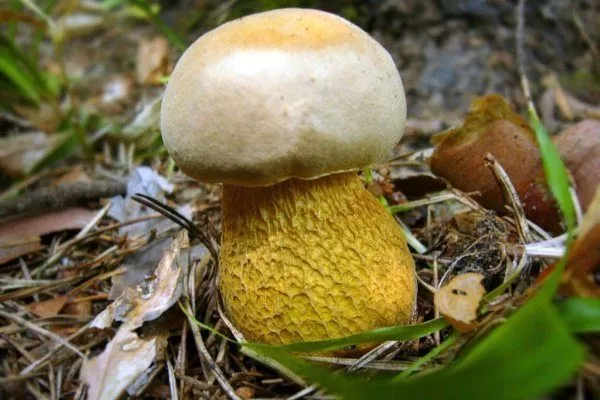
The gall mushroom has the following characteristics that are not typical of the aspen mushroom. These are worth paying attention to:
- It's always visually attractive. Worms, slugs, and other insects ignore it due to its repellent composition. Aspen mushrooms do, at least occasionally, become infested with worms.
- If you try to taste its pulp, you will immediately feel a strong burning sensation.
Bile mushrooms contain toxins, excessive consumption of which can damage the liver. In some cases, even after eating just one bitterling, a person experiences dizziness, nausea, and weakness. These are signs of poisoning. Bile mushrooms are not used for culinary purposes, so if you find one in the forest, it's best to avoid it.
Pepper mushroom
This tubular mushroom of the Boletaceae family is sometimes classified as a boletus, and sometimes as a boletus. It's not easily confused with the aspen mushroom due to the different stem structure (the pepper mushroom's is thinner), but the appearance (rounded and convex) and cap color are similar. The color ranges from copper-red to dark rust. The cap is smooth and velvety to the touch.
In our country, the pepper mushroom grows from July to October, preferring dry forests with small grasses, most often nesting under birch, spruce, and pine trees. It is even believed that the pepper mushroom is a parasite of the red fly agaric. Its habitat is similar to that of the aspen mushroom, and both species grow in the same places, so the risk of confusion remains.
Opinions on the edibility of the pepper mushroom are divided. Some scientific sources claim it is safe to eat. Only the hot pepper flavor deters mushroom pickers. Western biologists and chemists hold a different belief: the mushroom's flesh contains toxins that can accumulate in the body and damage liver cell structure. Potential complications from eating pepper mushrooms include the development of liver cancer and cirrhosis.
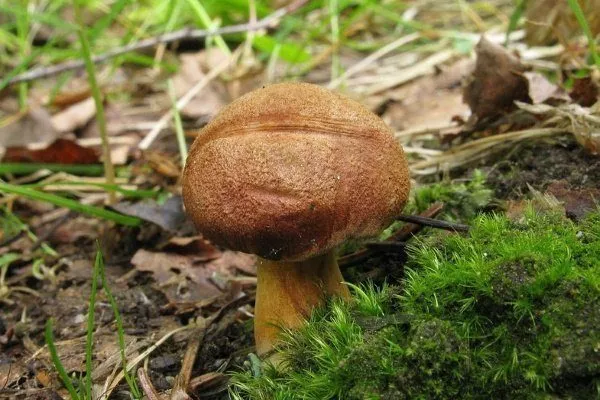
In our country, this aspen mushroom lookalike is considered conditionally edible. Its pungent flavor diminishes after prolonged cooking, but it is still generally avoided.
How to distinguish a real aspen mushroom from a false one?
With some knowledge and experience, you can easily learn to separate good mushrooms from bad ones. To do this, you need to know the characteristic features of the aspen mushroom and how it differs from false mushrooms:
- When broken, the flesh of the aspen mushroom turns blue, black, or remains white. The false aspen mushroom takes on pinkish or reddish hues.
- If you taste the flesh of a good aspen mushroom, you won't experience any burning or bitterness. This is precisely what pepper and gall mushrooms are famous for.
- The stem of a true aspen mushroom is strong, tall, and light-colored, with characteristic gray scales. The false aspen mushroom has a reddish or yellowish mesh. The peppered aspen mushroom's stem is too thin for a classic aspen mushroom.
Comparison table of key differences
| Criterion | Aspen mushroom | Gall mushroom | Pepper mushroom |
|---|---|---|---|
| Changes in the pulp on the cut | Turns blue/black | It turns pink | Turns red |
| The taste of raw pulp | Neutral | Bitter | Hot peppery |
| Leg | Dense, with grey scales | With a brown mesh | Thin, smooth |
| Insect damage | Often | Almost never | Rarely |
What does an edible aspen mushroom look like?
The general group of aspen mushrooms includes several species of the genus Leccinum, distinguished by their striking appearance, namely, a sturdy, light-colored stem and a vibrant cap. Aspen mushrooms vary depending on their age, location, and growing conditions, which can be confusing for those who enjoy the "silent hunt." There's a risk of confusing edible redheads with their lookalikes.
The following types of edible aspen mushrooms are known:
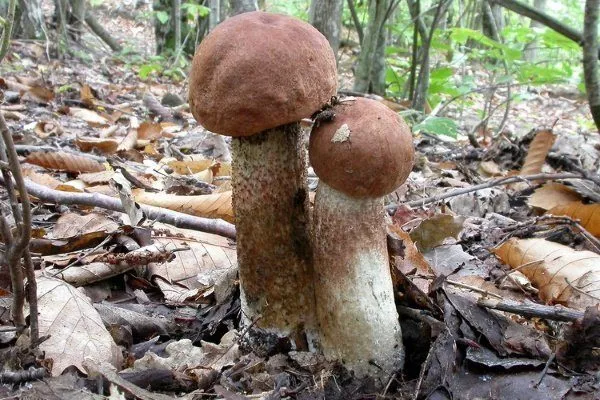
- RedA classic species of aspen mushroom. Its cap is bright red or orange, less commonly yellow-red (if the mushroom grows in mixed forests) or grayish (if it grows under poplars). The cap diameter is 4-15 cm. The stem is dense, white, with longitudinal fibrous scales. The spores are spindle-shaped and brownish.
- Oak. Externally, it's not much different from the red aspen mushroom. The cap's skin is chestnut-brown, and the stem scales are reddish-brown. It forms a symbiotic relationship with oak trees and grows in forests of the northern temperate zone.
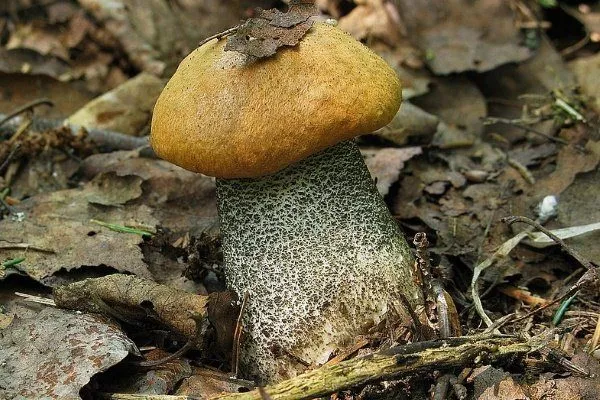
- Yellow-brown or multi-colored. It forms mycorrhiza with birch and grows in mixed forests and pine forests. The caps of young specimens are hemispherical, later becoming cushion-shaped. Their color is yellow-brown or brown-orange.
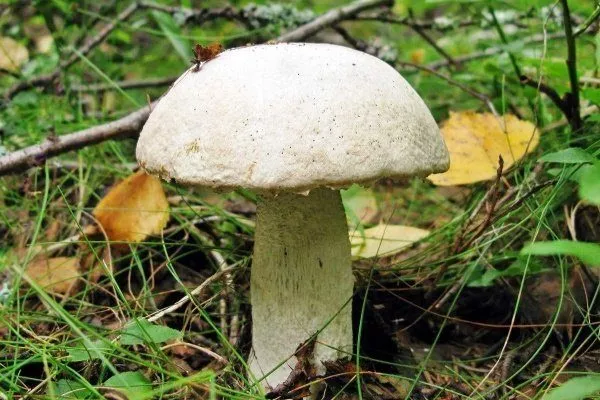
- White. One of the most unusual species of aspen mushroom. Its stem and cap are creamy, almost white. The cap can have a pink, brownish, or blue-greenish tint, turning slightly yellow with age. The stem sometimes takes on a bluish tint at the base. This mushroom grows in damp forests.
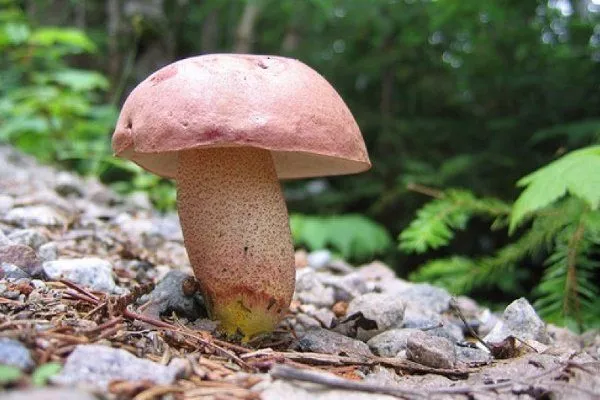
- Painted-legged. It differs from its relatives by its more convex, wide cap and the distinctive pinkish color of its scaly stems. The tubular layer can also have a pink tint. It is found in dry oak and oak-pine forests, and under birch trees.
Checklist for identifying edible species
- ✓ Presence of scales on the leg (except for the colored legged species).
- ✓ Change in pulp color to blue/black when broken.
- ✓ Absence of bitter or pungent taste in raw pulp.
- ✓ Compliance with the description of one of the 5 main types.
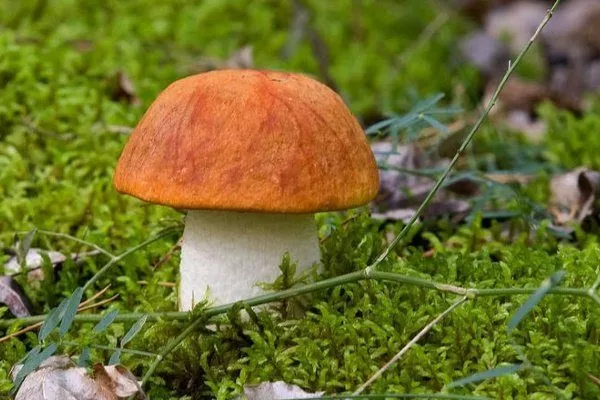
Red aspen mushroom
Oak aspen mushroom
Yellow-brown aspen mushroom
White aspen mushroom
Painted-legged aspen mushroom
Due to its varied coloration, other mushrooms with similar appearances can be mistaken for the aspen boletus. At best, the red cap can be confused with other members of the Boletaceae family—the birch boletus, the porcini boletus, and the oak boletus. Sometimes, they deviate from their classic appearance and don't resemble themselves. If the boletus is a member of the Boletaceae family, this poses no danger, as all are edible, although the oak boletus requires cooking.
Reviews of boletus picking
To me, all tubular mushrooms are delicious. There are tons of varieties of boletus, birch boletus, and porcini mushrooms. Netted, speckled, pine, fir, spruce, birch, oak, chestnut, and aspen boletus. Several varieties of butter mushrooms. There are also tasty, gilled varieties, such as honey fungus. Another mushroom, the cow mushroom, is what we call it in Siberia, but it's scientifically different. The dense brown color on the cut turns dark brown, almost black, when cooked with other mushrooms. To me, the pepper mushroom visually resembles one of the boletus mushrooms; it's a shame there's no cross-section or photo of the tubes. Boletus mushrooms often have yellowish-green tubes, and when cut, they turn blue, and if you touch them, they turn blue or green. I've heard that boletus mushrooms are used to poison hundreds of thousands of people. I myself found a false boletus for the first time three years ago. It's called Satan's mushroom and some others.
In short, when you're sorting through mushrooms at home, if in doubt, it's best to throw them out, or at least when you find them. Incidentally, for many years I believed that none of the Balet's mushrooms were poisonous, but I still threw out some when in doubt. In Siberia, there are false porcini mushrooms that are edible and even very tasty; the cap is usually smooth, yellow, red, orange, and in the Kemerovo region, where I lived, there were no other porcini mushrooms except false ones.
Or maybe it's just that the soil is mostly clay with a thin layer of black soil. The forest is made up of birch, aspen, spruce, fir, and cedar. And another question: birch and pine mushrooms seem to have white flesh, but I've only picked and eaten mushrooms that have flesh that changes color when cut, just like the moss mushroom. I picked those in the Novosibirsk region. What kind of mushroom is this?
By recognizing genuine aspen mushrooms—regardless of the color of their cap, stem, or habitat—any mushroom picker will be able to find a truly valuable trophy in the forest, rather than a mushroom with dubious taste that could also be harmful to health. Knowing what a good mushroom should and shouldn't look like will help a fan of the "silent hunt" avoid making mistakes.