
Primorsky Krai is a true mushroom Klondike. Starting in April, mushrooms are everywhere. They grow in all the coastal forests, in parks, along the roads—they're plentiful, and among them are many rare, unique species found only in Primorsky Krai.
Edible and conditionally edible mushrooms
Experts estimate that approximately 800 species of mushrooms grow in Primorsky Krai, but only 300 of them are edible. Mushrooms are classified as:
- Edible They can even be eaten raw; they don't contain any poisons. However, the risk of poisoning remains—the mushroom absorbs toxins from its environment like a sponge. Therefore, harvesting should only be done in ecologically clean areas, away from industrial zones.
- Conditionally edible. They can be eaten only after special processing.
In Primorsky Krai, mushrooms grow not only in forests and outside the city. Residents of Vladivostok encounter mushrooms without even venturing into nature—edible varieties grow in yards, parks, and playgrounds:
White mushroom
Description. Porcini mushrooms Also known as boletus, babki, or korovki, this mushroom is a large, fleshy mushroom with a brownish cap. The cap reaches 10-20 cm in diameter. The stem is thicker at the bottom, with a distinct mesh at its base. The flesh of the cap and stem is white. The flesh color does not change after drying.
Varieties. Many varieties of boletus also grow in Primorsky Krai, including:
- Oak. The velvety, coffee-colored cap is 8-25 cm in diameter. The cap is convex and becomes cracked with age.
- Pine. 8-20 cm cap. Color: initially whitish, then brownish-red.
- Pink boletus. This boletus has a pink cap reaching 16 cm in diameter. The flesh is pale yellow, turning blue when broken. The tubular body is bright yellow.
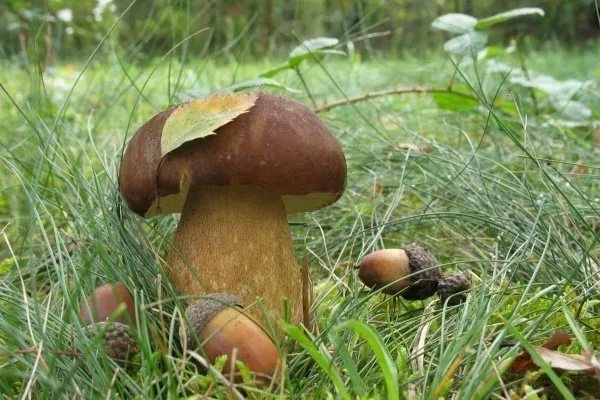
White oak mushroom
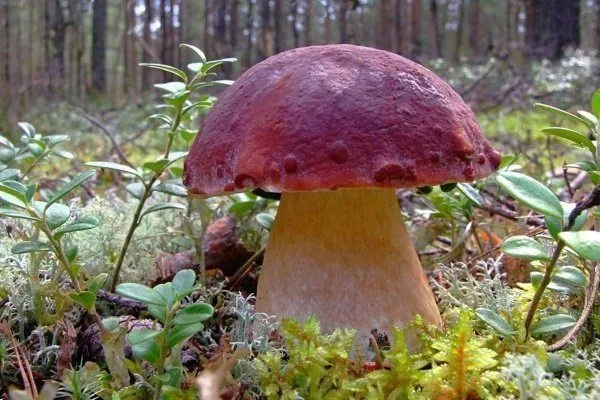
Pine porcini mushroom
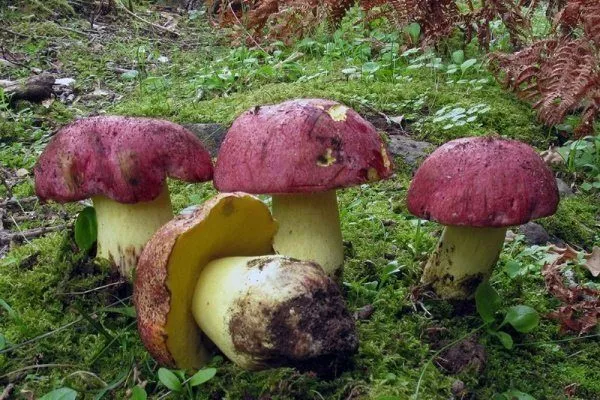
Pink boletus
Where and when does it grow? Boletus mushrooms grow in the south of Primorye.
| Parameter | Oak | Pine | Pink boletus |
|---|---|---|---|
| Cap diameter | 8-25 cm | 8-20 cm | up to 16 cm |
| The color of the pulp when cut | It doesn't change | It doesn't change | It turns blue |
| Shelf life (hours) | 24 | 18 | 12 |
There are plenty of porcini mushrooms in the Yakovlevsky district. Fruiting peaks in late summer. They thrive in oak and birch forests and don't disdain shrubs.
Doubles. The boletus' appearance is recognizable from afar. There are few mushrooms in the forest that resemble it. The gall boletus and satanic mushroom, but only an inexperienced mushroom picker can confuse them with the “king of mushrooms”.
Aspen mushroom
DescriptionThe redhead is another name for the aspen mushroom. The most well-known aspen mushroom is the red one. It has a brick-red cap 5-30 cm in diameter, initially hemispherical, then cushion-shaped. The sturdy cylindrical stems, up to 20 cm tall, are covered with scales. The flesh darkens when cut.
Varieties. In Primorsky Krai you can find edible aspen mushrooms:
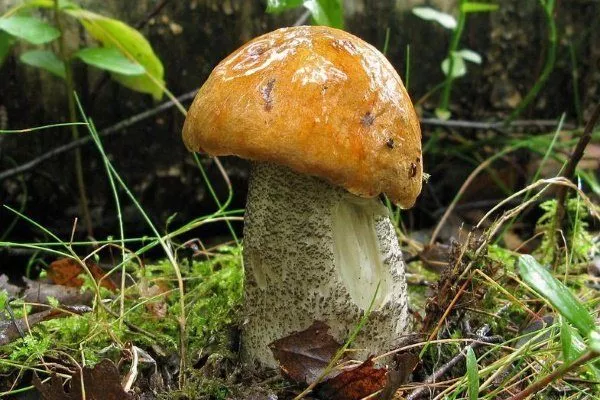
- Oak. The cap is 5-15 cm, brick-red or brownish, and velvety. The skin extends noticeably beyond the edges of the cap.
- Yellow-brown. The cap is yellowish-gray and red. When broken, the flesh turns purple, then bluish-black.
- Pine. Dark crimson cap 8-15 cm in diameter.
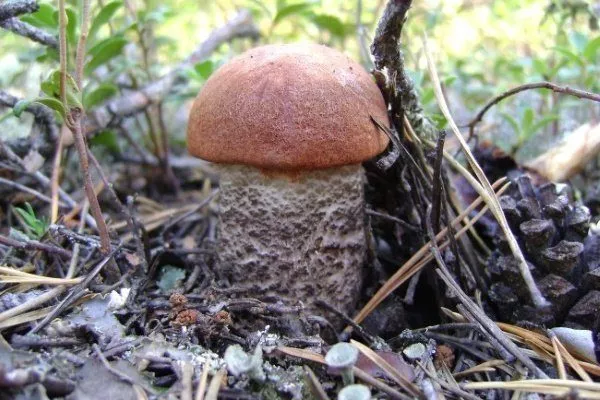
Oak aspen mushroom
Yellow-brown aspen mushroom
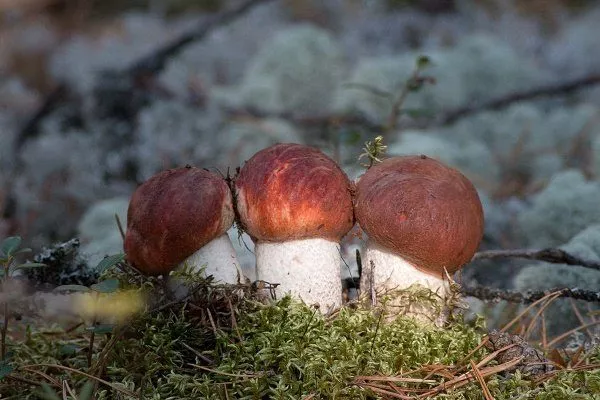
Pine aspen mushroom
Where and when does it grow? It grows most often in aspen forests.
It prefers moist soils and bears fruit from June until frost. In Primorye, aspen mushrooms are rarely found in forests, but they are a frequent visitor to aspen forests in the continental region.
Doubles. False aspen mushroom Known as the bitterling mushroom, it is a mushroom with a bitter taste. It is easily recognized by its pinkish flesh.
Aspen mushrooms are a healthy product; they absorb heavy metals and radionuclides that enter our bodies with food and from the atmosphere.
Birch boletus
Description. U birch boletus A cushion-shaped, dark-brown cap, 4-12 cm in diameter, reaching a maximum of 18 cm. It has a long, strong stem. The stem is cylindrical and 6-10 cm high.
Varieties. The following varieties of boletus (another name for birch boletus) can be found in coastal forests:
- OrdinaryThe brown cap is 4-12 cm in diameter. The flesh is white, and the stem is 6-9 cm long, thickened at the base. It grows throughout the Far East, in some places extremely abundantly.
- Pinking. The cap is nutty-brown, 5-10 cm. The flesh of the cap and stem turns pink when cut.
- White. The cap is white, only 2-4 cm in diameter. The stem is white, 9-12 cm high, and greenish at the base.
- Black-brownIt resembles a boletus, but the stem is darker. The cap is 5-16 cm in diameter, initially pinkish-brown. Then it turns dark brown.
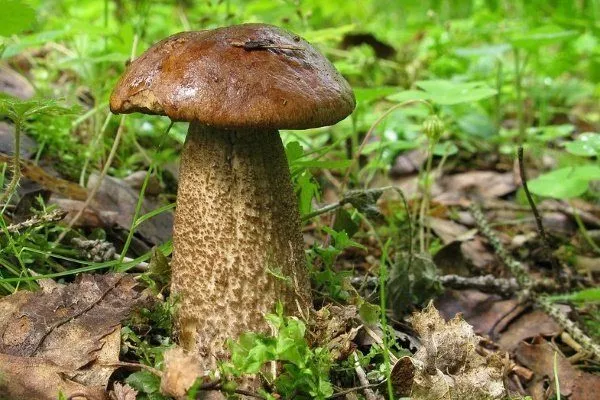
Common birch bolete
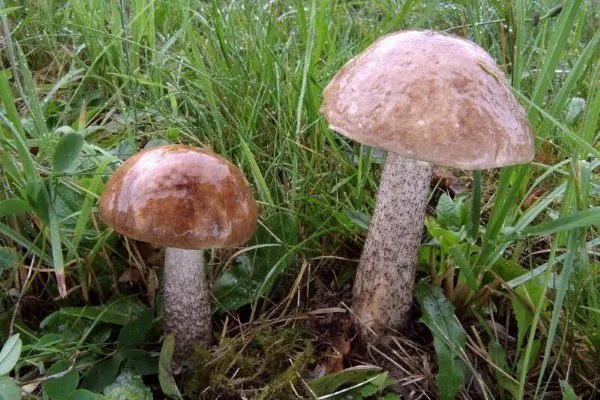
Pinking birch bolete
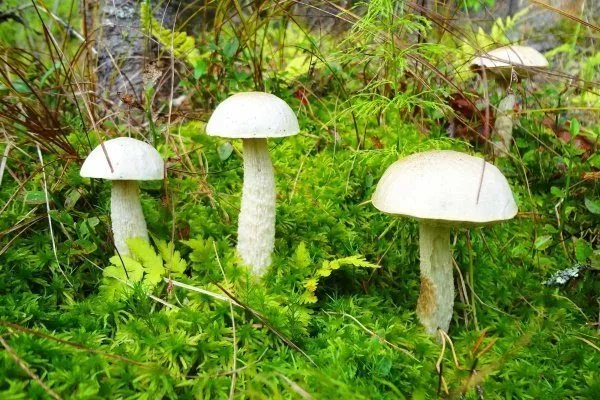
White birch bolete
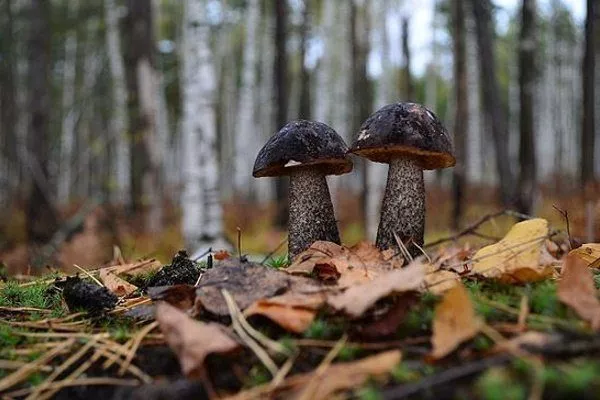
Black-brown birch bolete
Where and when does it grow? It grows most often under birch trees, but can also be found in coniferous forests. For boletus mushrooms, it's recommended to head to Putyatin Island in Peter the Great Bay. They grow from summer to October and prefer rainy weather.
Doubles. False birch bolete or bitter mushroom. The inedible version is usually recognized by its bitter taste.
Rows
DescriptionEven in less mushroom-rich regions, Tricholoma agaricas aren't in demand, let alone coastal forests rich in all manner of mushrooms. Tricholoma agaricas are numerous and varied, growing in clusters—rows, hence their name. They can be edible, inedible, or poisonous. These small, lamellar mushrooms, somewhat similar to Russula, are tasty and aromatic.
Varieties. In Primorye, the most common types of mushrooms are:
- Gray. A versatile mushroom – it can be salted, fried, frozen, pickled, or eaten raw. It's very tasty, despite being classified as a Category 4 edible mushroom. The cap is light to dark gray. It has a small tubercle in the center. The diameter is 4-12 cm. The stem is cylindrical, white and yellow, and up to 10-12 cm tall.
- Pink (violet). The large, fleshy cap is pinkish-brown, 4-15 cm in diameter. The shape ranges from cushion-shaped at first to spreading. The edges are jagged and cracked. The stems are massive, up to 12 cm tall. The flesh turns pink when broken. They grow in Primorye primarily in deciduous and mixed forests. Harvest: September-October.
- Fused. The cap is 3-6 cm, initially convex, then slightly depressed, with wavy edges. The color is white, pale brown. The stem is up to 8 cm, thin, and hollow. This rowan has a pleasant scent.
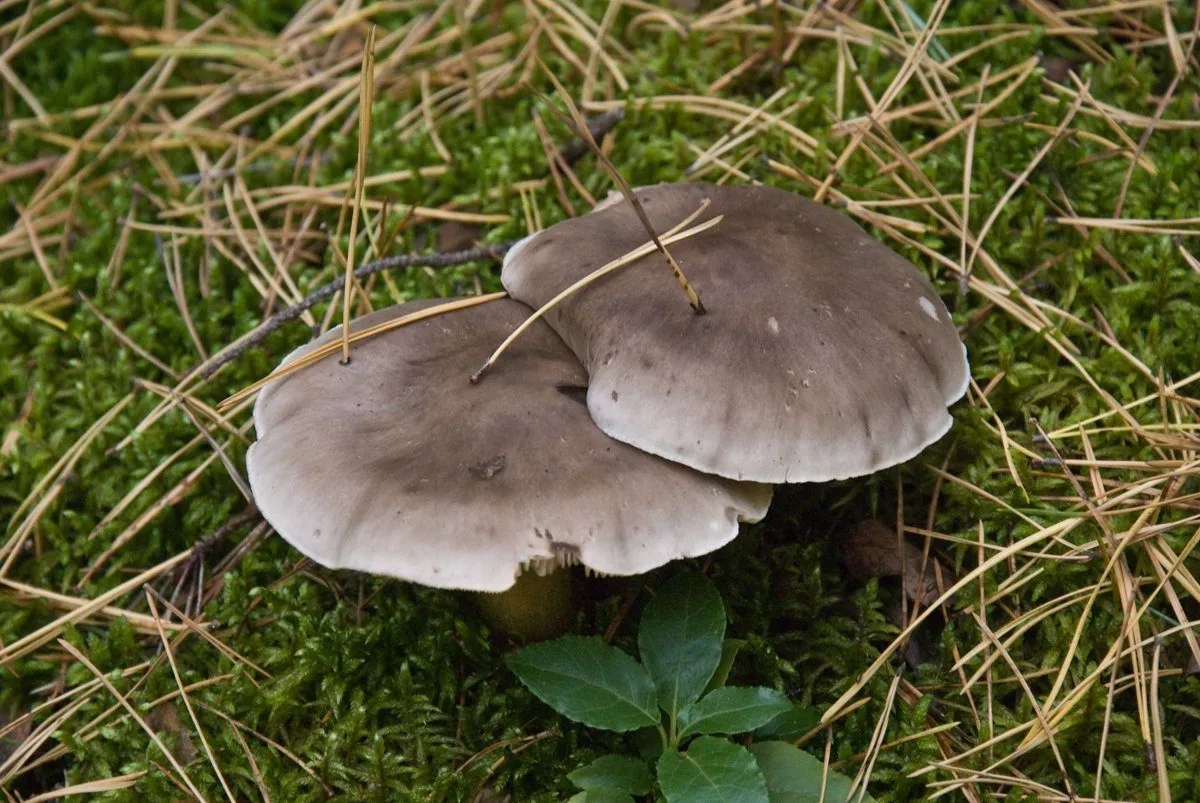
Gray rowan
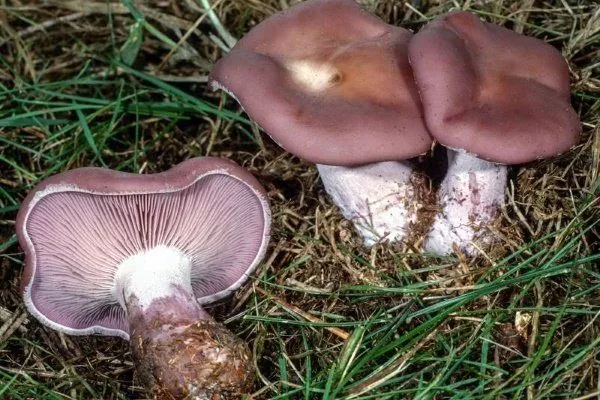
Pink rowan
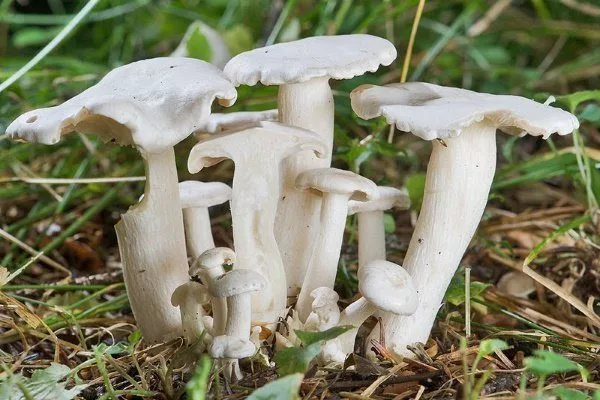
Rowing fused
Tricholomas are unpopular due to their resemblance to inedible and poisonous species—their fragile bodies with dull-colored, lamellar caps inspire neither appetite nor trust in mushroom pickers. Furthermore, they must be boiled before eating.
Where and when does it grow? They prefer deciduous forests, especially oak forests. They also grow in coniferous forests. The time of fruiting depends on the local climate. They usually bear fruit in large numbers in the autumn months, towards the end of the mushroom season. The gray rowan grows in the temperate latitudes of the region in September and October. It grows in pine forests and mixed forests.
Pink rowan mushrooms are most often found in deciduous and mixed forests. They are harvested in September and October. Connate rowan mushrooms are found in damp deciduous forests.
Doubles. Can be confused with poisonous rows - sulfur-yellow, white, brown, leopard.
Raincoat
DescriptionA spherical mushroom body. The stem and cap are one unit. Size varies depending on the puffball variety. The flesh is usually white. When young, the mushroom is very tasty. The skin is fragile and separates from the flesh. As it grows, the flesh dries out—spores spill out when pressed.
Varieties. In Primorsky Krai they are growing raincoats:
- Spiky. The mushroom body is 3-6 cm. Color: brownish-gray. The pseudopod is thick. The body is covered with spines and warts. The flesh is initially white, later turning yellow and brown.
- Pear-shaped. The fruiting body is pear-shaped, up to 4.5 cm in height and up to 3.5 cm in diameter.
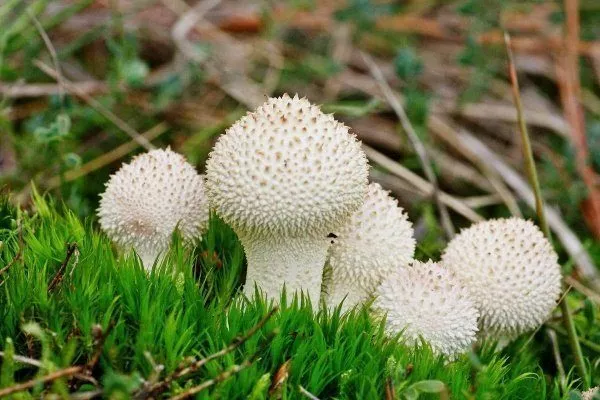
Prickly puffball
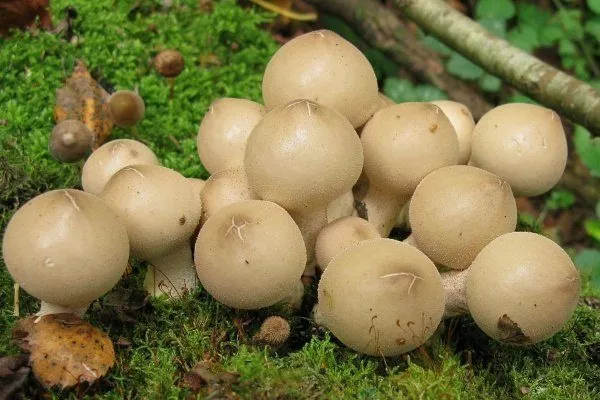
Pear-shaped puffball
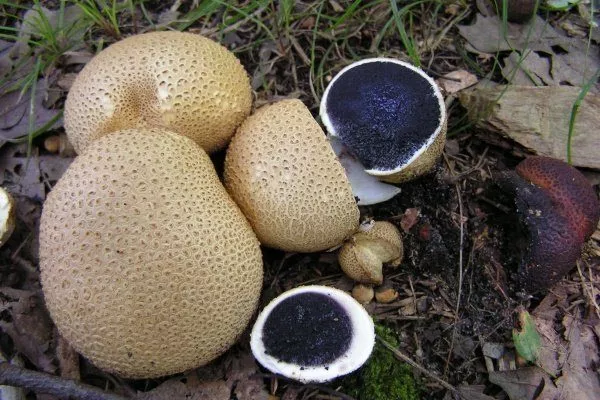
The puffball has a poisonous analogue - the false puffball.
Where and when does it grow? In Primorye, puffballs grow everywhere, in all parts of the region. The pear-shaped puffball prefers to grow on tree trunks and stumps—in forests of all types. The spiny puffball is also found outside forests.
Doubles. Puffballs have a poisonous analogue—the false puffball. It's easily distinguished by its dark purple flesh. Young white fly agarics also resemble puffballs; they can be distinguished by their cut—fly agarics have gills and a separate stem.
Russula
DescriptionRussulas are the most numerous edible mushrooms, accounting for 45% of all mushrooms. They vary widely in cap color and taste. Only a few are edible, and most are bitter. Inedible russulas have red caps. They are a lamellar mushroom with a white stem. Russulas reach 10 cm in height and diameter.
Varieties. In Primorye, where mushrooms are abundant, russula mushrooms are as widely avoided as rowan mushrooms near Ryazan or Yaroslavl. Common russula species include:
- Blue and yellow. A pickling mushroom with a cap 8-15 cm in diameter, depressed in the center. The color is lilac at the edges, pale ocher in the center. The gills are densely white. The stem is 5-12 m tall and loose. The taste is bland. Grows from June to September. It prefers oak and birch forests.
- Browning herringDark and pinkish-purple in color. Grows in mixed forests until autumn.
- Like. The cap is bright purple. Sometimes it has cream spots. An excellent pickling mushroom.
- GreenishThe fleshy cap is pale green and almost spherical. It prefers pine, oak, and mixed forests.
- Green. The cap is greenish in color with ribbed, striped edges. It grows in August and September.
- Yellow. A yellowish cap with a smooth brim, 6-8 cm in diameter. The white flesh turns gray when cut. Grows in August, often under birch trees.
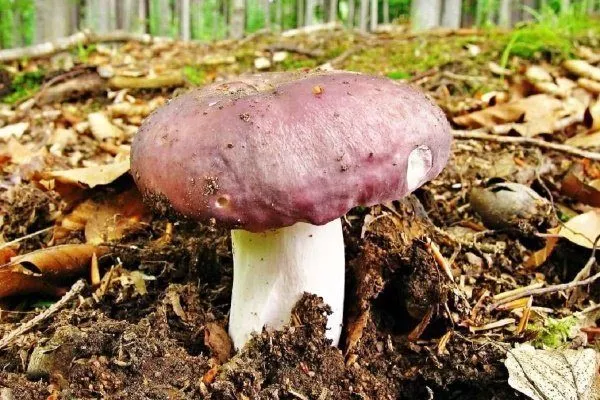
Blue-yellow russula
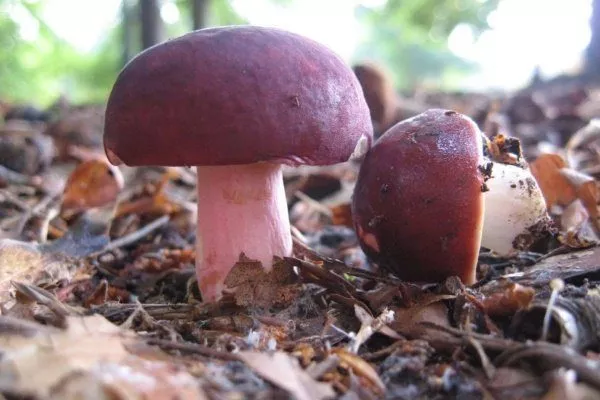
Russula russula
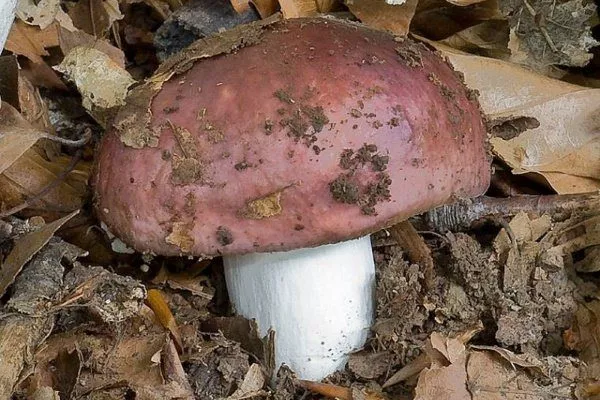
Russula lycaensis
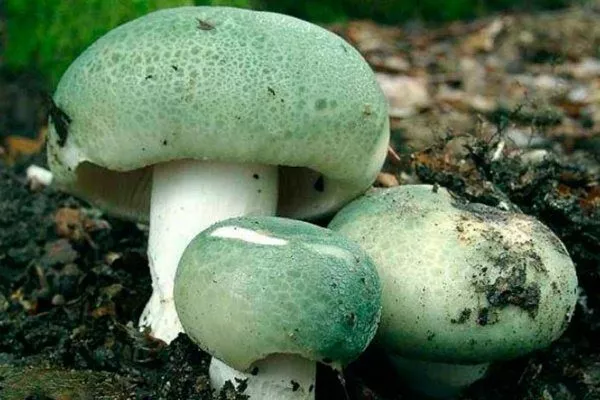
Russula viridans
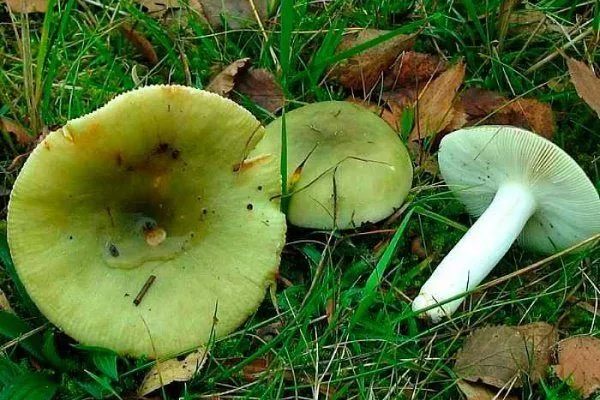
Green russula
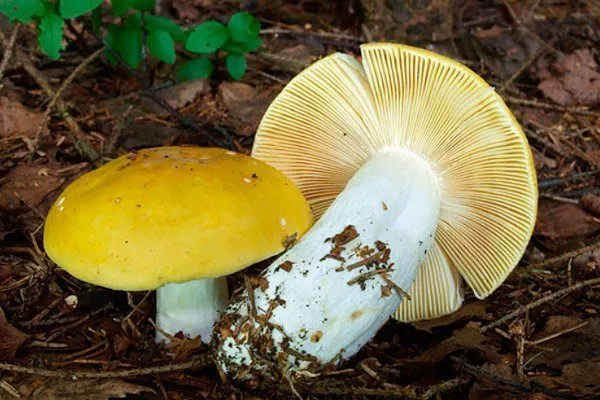
Yellow Russula
And these are far from all the types of russula that grow in this mushroom-rich region; golden russula, olive russula, and many others also grow here.
Where and when does it grow? Russula mushrooms, or blue mushrooms, grow in all the forests of Primorsky Krai. This unpretentious mushroom grows in both coniferous and deciduous forests, preferring pine, spruce, oak, and alder. It grows from July to October, depending on the climate.
Doubles. They can be confused with toadstools if their caps are similar in color. You can distinguish toadstools by their "skirt" and the egg-shaped thickening at the base of their thin stem. Among the inedible russulas are varieties with brightly colored caps, such as red and purple.
Volnushki
Description. A classic pickling mushroom. Firm and squat, with a pink cap. Its edge is fringed, and the pink surface has concentric zones. The cap is depressed in the middle. The gills are cream-colored. Milky juice oozes when broken. The cap diameter is 6-12 cm, the stem height is 5-7 cm. The stem is pinkish and hollow. The taste is spicy.
Where and when does it grow? It grows in birch, spruce, and cedar-deciduous forests. Fruiting season is August-September. Milk thistles grow throughout Primorye; you can find them in forests and on islands.
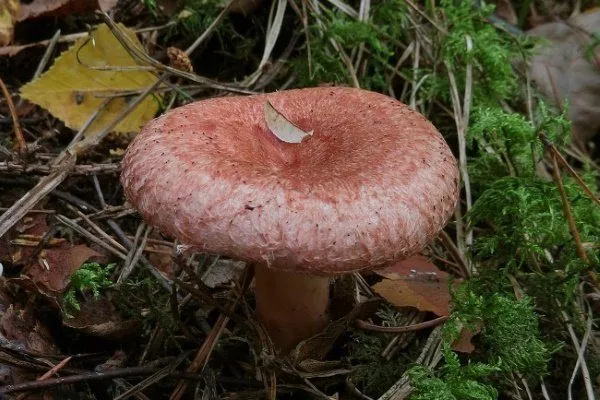
Doubles. There are no poisonous lookalikes. The pink and fluffy milkweed cannot be confused with anything, except perhaps with some of the milkweeds, which are bitter but not poisonous.
St. George's mushroom
DescriptionIt is also known as the May mushroom, Calocybe, or May rowan. The stem is 4-8 cm high and no more than 1 cm thick. The cap is brownish-gray, with dark brown stripes running along it. The cap diameter is 3-7 cm. The flesh is white and dense, with a floury aroma. A mushroom for gourmets.
Where and when does it grow? In Primorye, the May mushroom grows primarily under elm trees. It's most abundant in the southern Primorsky Krai. It's harvested in late spring and early summer. Appearing in May, it disappears before summer.
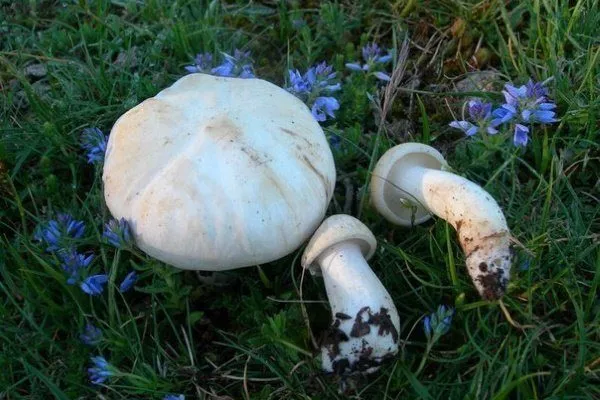
Doubles. The May mushroom has no doubles.
Gladysh
DescriptionThe cap is 7-13 cm. Slimy, initially convex, then flattened with curled edges. The color is lilac-gray with concentric rings. As it fades, it becomes pale ocher. The gills are cream-colored. At the break, there is a white milky sap that dries to a gray-green. The stipe is slimy, swollen, 4-10 cm in height. It has a pungent taste. Used for pickling.
Where and when does it grow? Fruiting season begins in September. It grows in spruce and fir-spruce forests throughout Primorsky Krai.
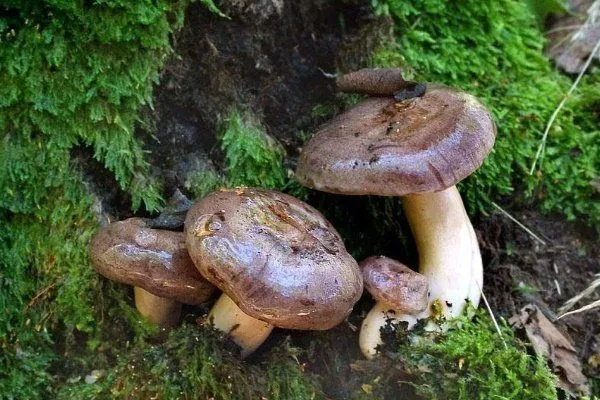
Doubles. The smooth-tailed scaly ...
Mushroom noodles
Description. The hedgehog mushroom, or hedgehog comb mushroom, is an unusual mushroom consisting of fleshy, layered fruiting bodies of a creamy white color. The "noodles"—the fruiting bodies—grow in tiers. The upper part is felted, with hanging spines beneath. The fruiting body is hemispherical in shape. It reaches 15 cm in height and 15-20 cm in diameter. It can also take on a fan-shaped, rounded, or irregularly curved shape. Its taste is reminiscent of seafood.
Mushroom noodles are listed in the Red Book of Threatened Species. The mushroom is highly prized on the market. Today, it is cultivated in Russia, China, and France, but farmed specimens are inferior to their wild counterparts in both taste and nutritional value.
Where and when does it grow? A rare saprotrophic fungus in nature. It grows on tree trunks. It prefers deciduous trees such as oak, birch, and beech. It grows on living and dead plants. It thrives in moisture and warmth, which is why it grows in Primorye. It is practically never found in the European part of Russia. It also grows in the Caucasus and Crimea.
Doubles. This unique mushroom cannot be confused with anything else in the forest.
The video shows a rare mushroom—the mushroom noodle. To see it in person, you'll have to travel to Primorsky Krai:
Chanterelles
DescriptionA distinctive mushroom with orange caps and dark circles. The fruiting body is squat and sturdy, with cap edges initially curled and then straightened. The cap diameter is 3-12 cm. When cut, it exudes a milky sap.
Varieties. In the forests of Primorsky Krai, in addition to the Japanese saffron milk cap, you can find the Japanese saffron milk cap. In Russia, it grows only in Primorsky Krai. The cap is flat, 6-8 cm, depressed in the center, and the edges are folded under. It is funnel-shaped and pinkish in color, rarely orange or red. The brittle stem grows up to 7 cm in height.
Where and when does it grow? Fruiting occurs in large numbers in August and September. It thrives in pine and spruce forests. Saffron milk caps can be found throughout Primorye, and you can look for them in some of the most mushroom-rich areas: Putyatin Island, the Tavrichanka area, and the village of Blagovatnoye in the Khorolsky District.
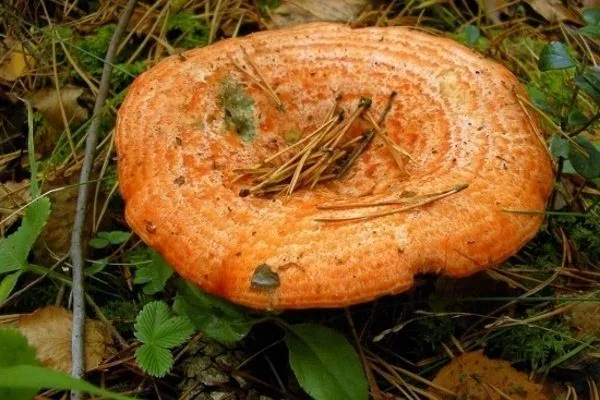
Doubles. Saffron milk caps are vaguely similar to the milk cap and various milk caps. However, saffron milk caps are so delicious and aromatic, and don't require long soaking. Saffron milk caps are the fastest pickling mushroom.
Dung beetles
DescriptionA bell-shaped cap covered with large scales. The flesh is thin and fragile. Mushroom pickers are not interested in it; many consider it poisonous.
Where and when does it grow? It is characterized by rapid growth. It can grow in a matter of hours. It grows anywhere—in forests, plantings, parks, and landfills—but prefers manured soils. Fruiting season is May–October.
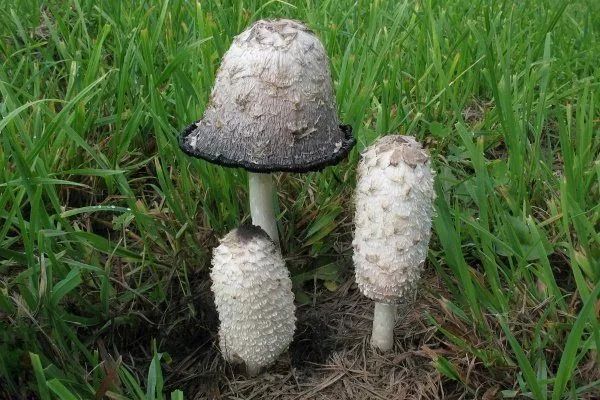
In Russia dung beetles They were considered "filthy" mushrooms. They weren't eaten—fortunately, mushrooms were plentiful in Rus'—but healers used them to make cures for drunkenness. But in Europe, dung beetles are revered—they're considered a delicacy.
Doubles. There are no poisonous look-alikes, but there are many inedible dung beetles – the hairy, snow-white, house, woodpecker and others.
Milk mushrooms
DescriptionThe true milk mushroom is also called the raw or wet milk mushroom. The sunken caps are creamy white and 10-20 cm in diameter. The flesh is dense and fleshy. The stem is dense, whitish, 3-5 cm in height. Milk mushrooms – masters of camouflage, they are difficult to find under leaves and needles.
Varieties. Among the edible milk mushrooms of Primorye:
- Fir. Dense yellow flesh. The cap is up to 15 cm in diameter. The edge is felt-fringed. The cap is cream-colored, with ochre concentric zones.
- PurpleThe funnel-shaped, depressed cap is yellow and covered with scales. The flesh is white. The milky juice, when it flows out, turns purple.
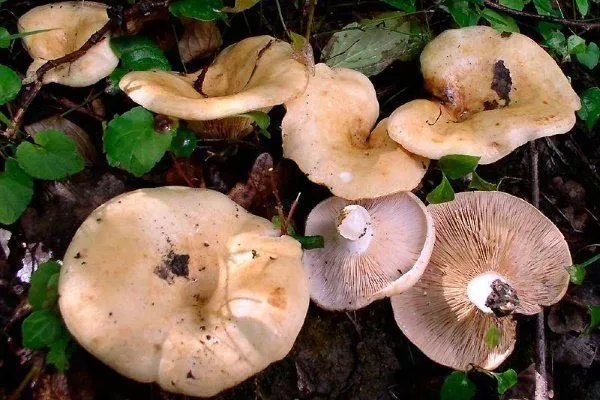
Fir milk cap
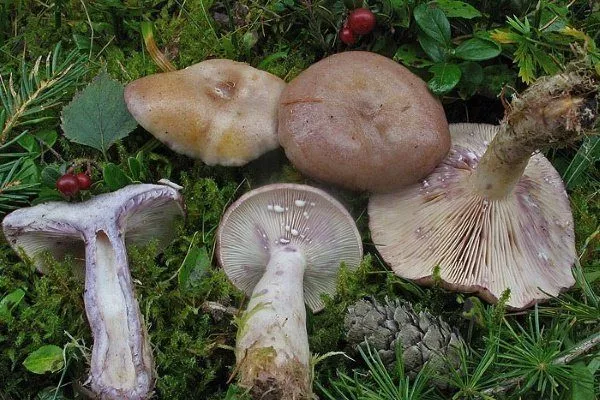
Purple milk cap
Where and when does it grow? It grows in birch, coniferous, and mixed forests. Mushroom pickers say there are plenty of milk mushrooms near the village of Oleniy. The harvest continues from summer until late fall.
Doubles. Sometimes milk mushrooms are confused with conditionally edible varieties - pepper, camphor, felt and golden-yellow.
Butterlets
DescriptionThe true butter mushroom is also known as the late, yellow, and autumn butter mushroom. It has a sticky, chocolate-brown, conical cap. The cap diameter is 3-10 cm, and the stems are up to 2.5 cm high. The stems are lemon-yellow. This mushroom is very tasty and cooks quickly.
Varieties. The Primorsky Krai is rich in butter mushrooms; in addition to the real butter mushroom, you can also find the following types of butter mushrooms:
- Siberian. Not the tastiest of the butter mushrooms. The cap is slimy, olive-yellow, 4-10 cm in diameter. The stems are curved and warty.
- Cedar weepingA very tasty specimen. The cap is 10-12 cm in diameter. Its color is ochre, and the flesh is also ochre. The stem is yellow, warty, and 6-8 cm in height.
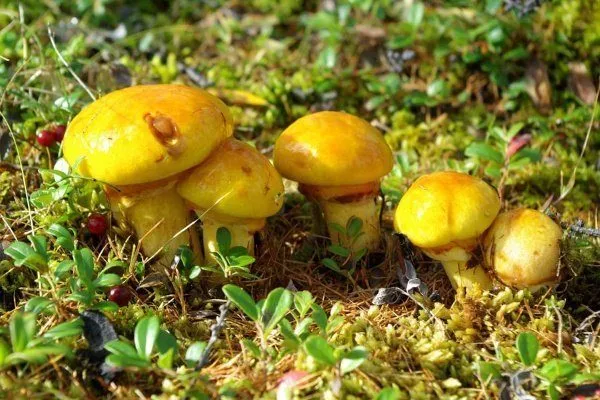
Siberian butter mushroom
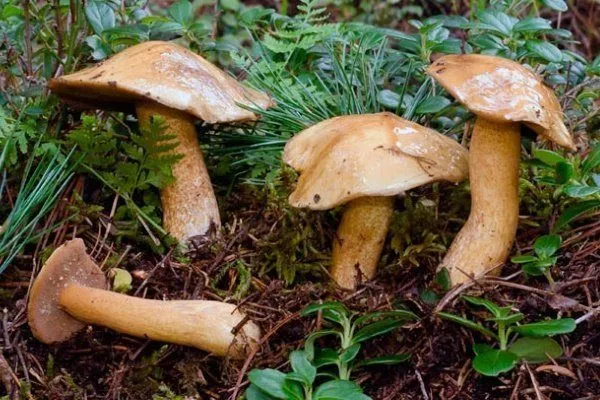
Cedar butter mushroom
Where and when does it grow? Harvesting begins in June and continues until the end of September. It prefers pine forests and is found in deciduous forests.
Doubles. They're sometimes confused with boletus mushrooms, which also have bright yellow stems and tubular layers. However, this isn't a serious mistake, as boletus mushrooms are edible.
Chanterelles
DescriptionThe true chanterelle (common chanterelle) has a single mushroom body—the cap and stem are one unit. The color is bright yellow. The cap diameter is 5-12 cm. Chanterelles are prized for their taste.
Varieties.In Primorye, in addition to the true chanterelle, several other varieties of this mushroom grow:
- Humpbacked foxThe cap is small, 2-5 cm in diameter. When young, the mushroom is T-shaped, becoming funnel-shaped with age. It has a sharp tubercle in the center, and the edges are wavy. The cap is grayish-blue in color. The gray flesh turns red when broken.
- Chanterelle turning yellowThe hat measures 2-5 cm in diameter. It has a deep funnel shape and a rolled, carved brim. Its color is yellow-brown.
- Speckled chanterelleThe fruiting body reaches 15-20 cm in height. It appears as an uneven pink stick. From this, a funnel-shaped mushroom emerges. Its cap is 5-12 cm in diameter and is ochre-orange in color. The cap has brownish-red spots.
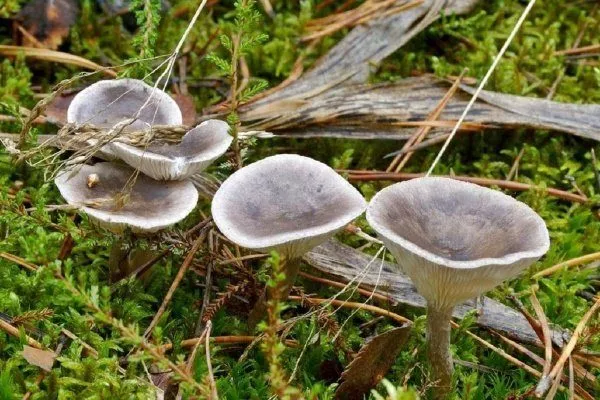
Humpbacked fox
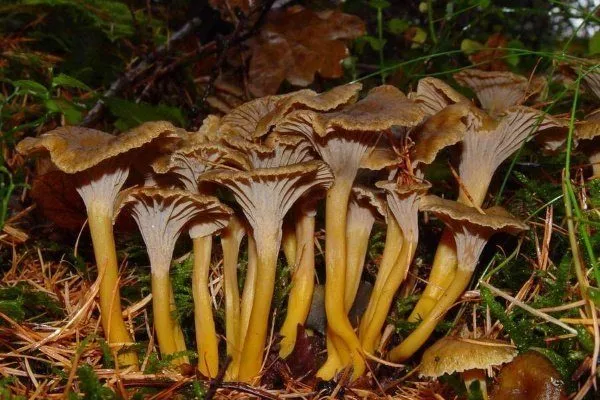
Chanterelle turning yellow
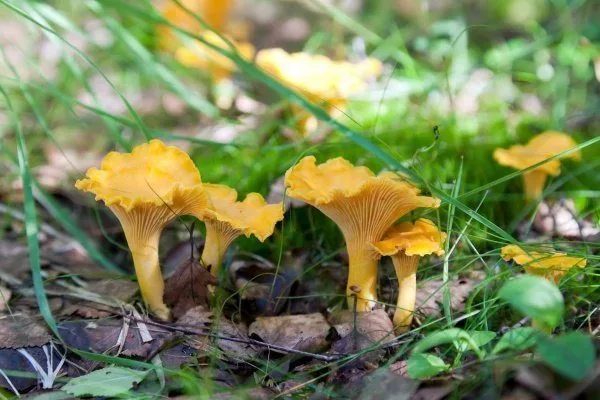
Variegated chanterelle
Where and when does it grow? Fruiting occurs throughout the summer and continues until October. The peak harvest period is August-September. Chanterelles prefer moist areas and grow in large clumps. Mushroom pickers recommend looking for chanterelles in spruce and cedar forests in southern Primorye.
U chanterelles They have a remarkable feature: they are resistant to worms.
Doubles. The false chanterelle is an inedible mushroom with a bright yellow color. It can be distinguished by its color and poor taste.
Honey mushrooms
DescriptionThe true honey fungus, or autumn honey fungus, has a small cap—3-6 cm. The stems are thin, 7-10 cm tall. The lower part of the stem has dark scales. It has a "skirt." Young honey fungus has a tubercle on the cap. The cap is wood-toned, pale brown.
Varieties. In Primorye, you can find both the autumn and spring honey fungus. It has a hemispherical, ochre-colored cap that opens up with age.
Where and when does it grow? Honey mushrooms They grow throughout the forests of Primorye. You don't have to travel far to find them—they're found in the Vladivostok area. People go to Varyag, Sedanka, and Sadgorod to pick them, and they can be found in the forests of Shamora and on the islands. They grow primarily on deciduous trees, on rotten and damaged trunks. Autumn mushrooms bear fruit in September-October, and spring mushrooms from July to September.
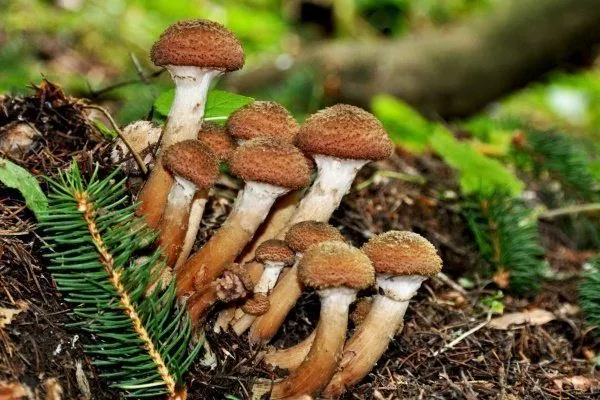
Doubles. It can be confused with the poisonous sulfur-yellow mushroom and the false honey fungus, which can be distinguished by its lack of scales and excessively bright coloring. Inedible species can be identified by the foul smell of spoiled sauerkraut.
Morels
DescriptionThe true morel is a spring mushroom, not suitable for pickling. It's not in demand even in areas less prone to mushrooms than Primorye. The honeycomb cap is 3-6 cm tall and hollow inside. It's 2-4 cm wide and pale brown in color. The white cylindrical stem is 2-5 cm tall. Gourmets love morels for their rich mushroom flavor and aroma. Morels have virtually no flesh—they're brittle, hollow, and cartilaginous.
Varieties. In Primorye, in addition to the true morel, there are the following varieties:
- Conical. It is distinguished by its elongated, conical cap, which is 3-6 cm high and brownish-gray in color.
- Curly. The cap diameter is 2-3 cm. The color is yellowish-cream. The stem is ribbed, thickened at the bottom.
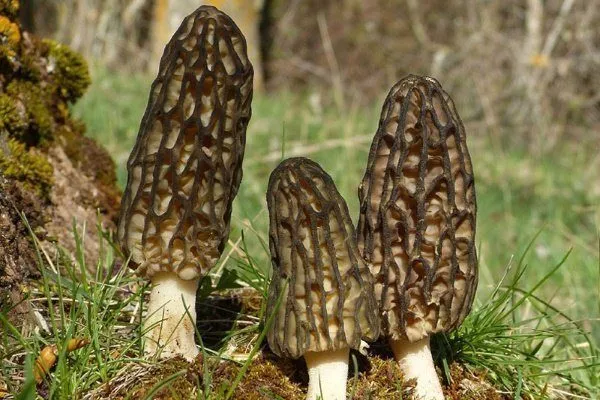
Conical morel
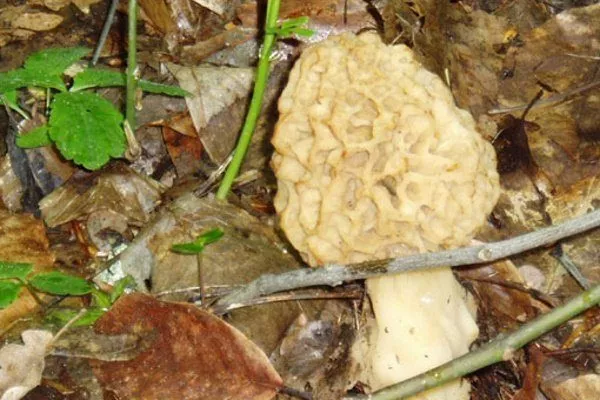
Curly Morel
Where and when does it grow? It grows in May and early June, and may even appear in April. It prefers coniferous and broadleaf forests and oak groves.
Doubles. False morels are easily identified by their unpleasant odor. They smell like rotten meat. Their cap is slimy and bell-shaped. It's 5 cm tall and dark olive in color. Morels are also often confused with gyromitra. Read on to learn the difference. here.
flywheel
Description. Boletus mushrooms They are often confused with butter mushrooms due to their yellow stems and tubular layer. They have convex caps with brownish hues. The caps are velvety to the touch and sticky in damp weather. The stems are smooth or slightly wrinkled, and their length varies depending on the habitat.
Varieties. Moss mushrooms grow in Primorye:
- Larch. The cap is 8-16 cm in diameter. The color is ochre-brown, with curled edges. The white flesh turns blue when broken. It grows in larch and mixed forests. In the Far East, it is harvested for mushrooms. Fruiting occurs in August-September.
- GreenVery similar to the butter mushroom. The cap is chocolate-colored. The diameter of the cap is 3-12 cm. It grows in oak, mixed, and coniferous forests in the autumn.
- Motley. Also similar to the butter mushroom. The cap is 4-8 cm in diameter. It is initially grayish-pink, then brown. It grows in coniferous and broadleaf forests. Fruiting occurs in August.
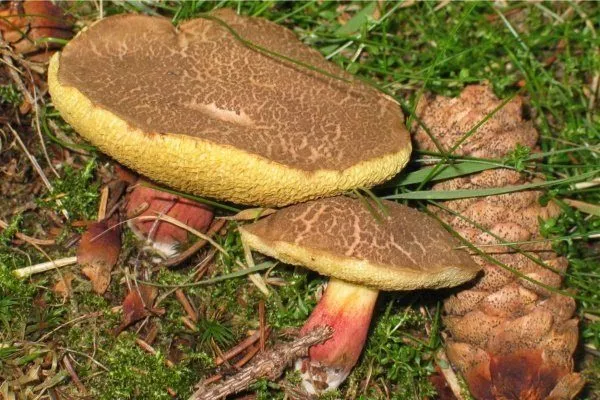
Larch boletus
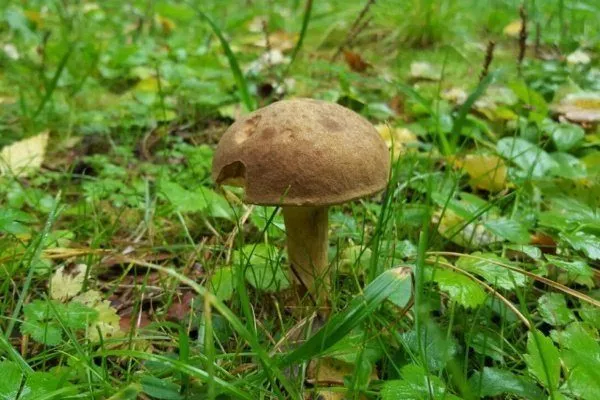
Green boletus
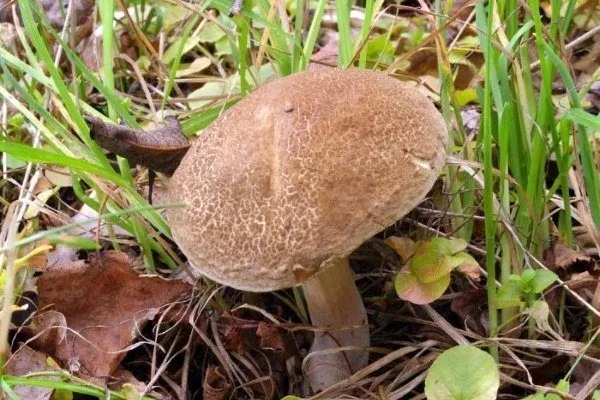
Variegated boletus
Where and when does it grow? Boletus mushrooms grow in the same places as butter mushrooms—in sandy soils. They are found in marshy areas, primarily in southern Primorye. The boletus mushroom gets its name from its tendency to grow in moss. This mushroom has a wide range of habitats, growing in temperate latitudes, tundra, and alpine zones.
Doubles. There are no poisonous analogs. False boletes are conditionally edible mushrooms. These include the chestnut bolete, the parasitic bolete, and the pepper bolete. They can also be confused with the panther fly agaric.
Umbrellas
DescriptionAn unsightly but quite tasty mushroom from the champignon family. It has a dome-shaped cap and a thin stem. The mushroom is lamellar, and the cap color varies depending on the variety—there are umbels with white and brownish caps. A common feature is the presence of scales on the caps.
Varieties. Umbrellas There are many of them in any forests, in Primorye you can find:
- Blushing. Its cap is 5-10 cm in diameter. It is ovoid and bell-shaped. The color is grayish-brown. The cap is covered with large flakes. The thin stem reaches 25 cm in height and turns red when touched.
- Motley. The cap, covered in flake-like scales, reaches 40 cm in diameter. There is a tubercle in the center of the cap.
- Maiden. The thick, fleshy cap is pale brown in color, 8-12 cm in diameter. Initially spherical, then spreading. It has a thin, velvety edge.
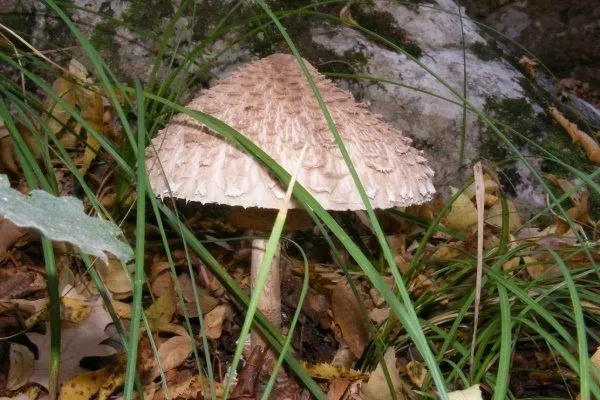
Reddening parasol mushroom
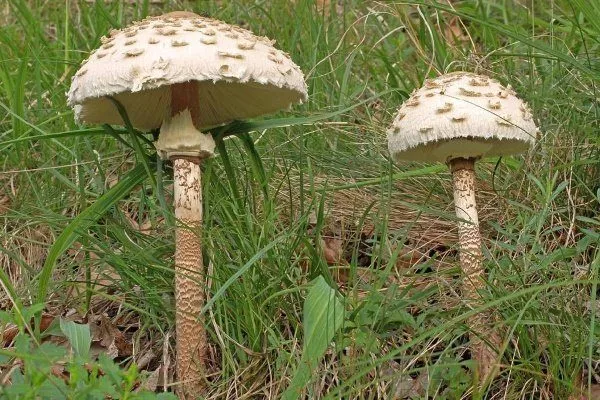
Parasol mushroom
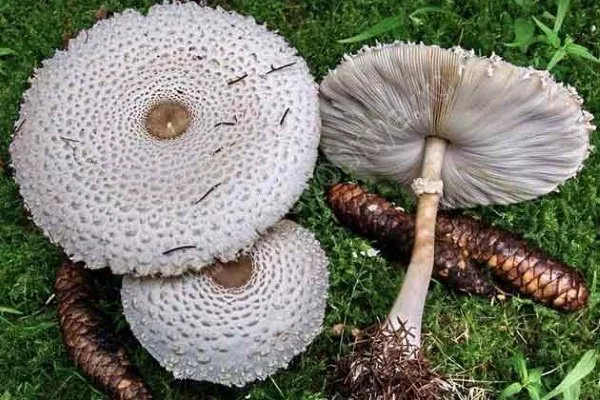
Maiden umbrella mushroom
Where and when does it grow? Fruiting occurs from June to October. It grows in forests, plantations, pastures, and meadows. Mushroom pickers are generally uninterested in it, although it has a pleasant flavor.
Doubles. This agaric mushroom can be confused with the poisonous Chlorophyllum, also known as the dark brown or lead-slag mushroom. The parasol also resembles the stinking fly agaric.
Valuy
DescriptionThe russula has a strong, plate-like cap. It is initially spherical, then opens, but the edges are curved inward. The diameter is 5-14 cm and the mushroom is light brown. The stem is hollow, white, and 5-15 cm in height. In wet weather, the cap is covered with mucus.
Where and when does it grow? It bears fruit from early summer until October. It prefers to grow in birch forests, under pine and oak trees. Valui mushrooms are bitter, so they are soaked or boiled before consumption.
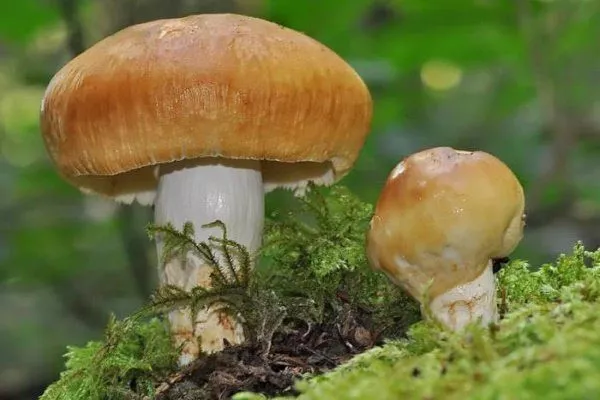
Valui, or gobies, are classified as a food category 4 mushroom, and the mushroom itself is considered conditionally edible. In fact, it's a delicious mushroom—it just needs to be prepared properly. Salted and pickled valui make a delicious appetizer.
Doubles. None. There is a false russula, which is called the "horseradish mushroom" due to its characteristic smell.
Boletinus
DescriptionBoletinus is a genus of mushrooms in the Suillus family. They have dry, velvety caps. The surface is often pubescent or fibrous-scaly, and cracks. The hollow stipe has a velvety-scaly surface. The tubular layer consists of radially arranged tubes, sometimes turning into gills. A characteristic feature is the membranous veil, which remains on the cap or stipe as a ring.
Varieties. Boletinus species growing in coastal forests:
- Prominent. Similar to a fly agaric, but without the gills. The cap is 7-12 cm, slimy, and brick-red. Edible, but not particularly tasty.
- Asiatic. This unusual mushroom grows in southern Primorye. The cap is 4-10 cm, purple, and felt-like. The flesh is yellow. The flavor is average.
- Half-leggedThe yellow cap is 5-9 cm in diameter. It grows in larch and mixed forests. A mushroom of little value.
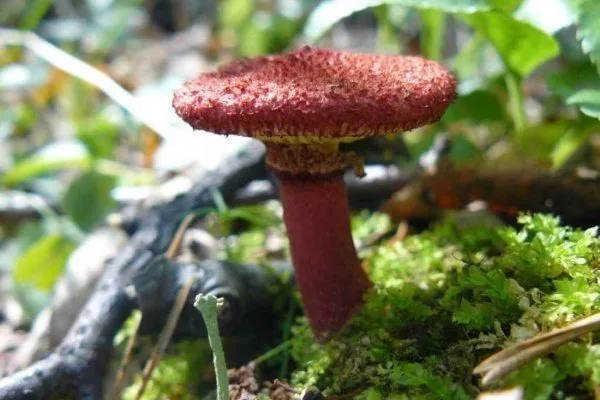
Boletinus spectabilis
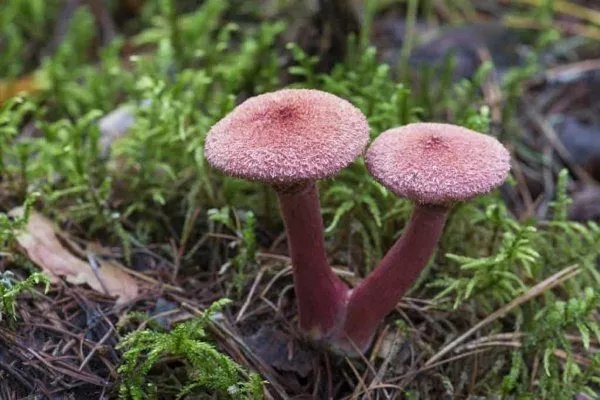
Boletinus asiatica
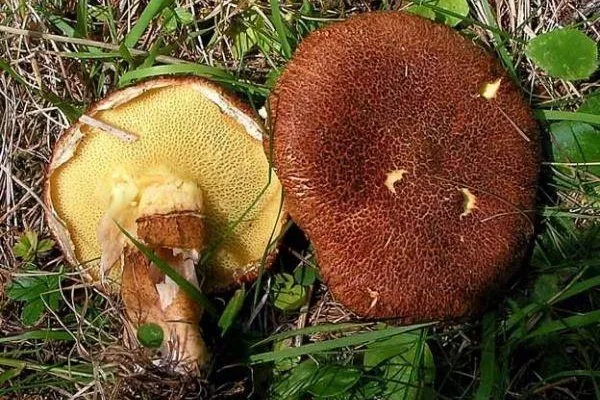
Boletinus polypeduncle
Where and when does it grow? Boletinus spp. grows in damp forests and marshy areas. The Asian boletinus grows in larch forests. Fruiting occurs in August-September.
Doubles. There are no poisonous look-alikes.
White butterfly
DescriptionThe white mushroom is used only for pickling. It has a pungent flavor. Another name is the white volnushka (white wave). The cap is 4-7 cm in diameter. The shaggy edges are curled inward. The center is depressed, and the cap is salmon-ocher in color. The gills are salmon-cream. The juice is white and milky. The stem is short, up to 2 cm.
Where and when does it grow? It prefers to grow under young birch trees, but also grows in deciduous forests and shrubs. Fruiting period is August-September.
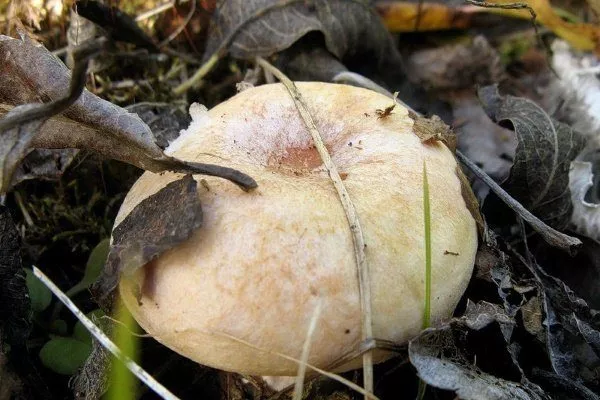
Doubles. The white butterfly has no inedible or poisonous counterparts.
Golden scalycap
DescriptionThis honey fungus, similar to a honey fungus, belongs to the genus Scalycaps. The cap is broadly bell-shaped, becoming flattened and rounded as it matures. The diameter is 5-18 cm, and the color is rusty yellow and dirty gold. The cap's surface is covered with flaky scales. The gills, fused to the stem, are initially light-colored, turning brown as they mature. The flesh is whitish-yellow. The stem is up to 10 cm in height.
Where and when does it grow? It grows in large colonies on the trunks of deciduous trees and can also grow near trees. It bears fruit earlier in Primorsky Krai than in other regions of Russia—from May to September.
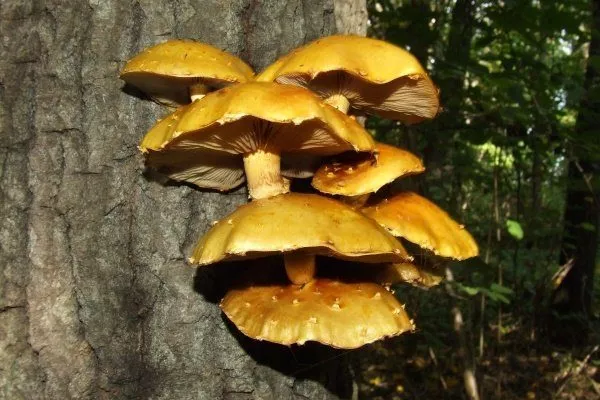
The caps of golden scaly mushrooms are covered in mucus, which is very beneficial for the human body – it restores energy balance, boosts immunity, and helps with intellectual exhaustion.
Doubles. The scaly-cap has no poisonous look-alikes or similar species.
Oyster mushrooms
DescriptionThe common oyster mushroom is the most common variety. It is also known as the oyster mushroom. The asymmetrical, fan-shaped cap reaches 3-25 cm in diameter and is colored grayish. The stem is hard, 3-12 cm long. Only the cap is used for food.
Varieties. In Primorye, in addition to the oyster mushroom, you can also find the lung oyster mushroom. It has a light cap, with whitish-gray hues, turning yellow as it grows. It is fan-shaped, 4-8 cm in diameter, and has a grayish-white flesh. It has a pleasant, subtle aroma. The gills are thick and sparse, white in color.
Where and when does it grow? It grows in any forests, plantations, and parks. It grows on stumps, old trees, and can also grow on living trees. It is especially common on willow, poplar, walnut, and aspen. It bears fruit from April to November.
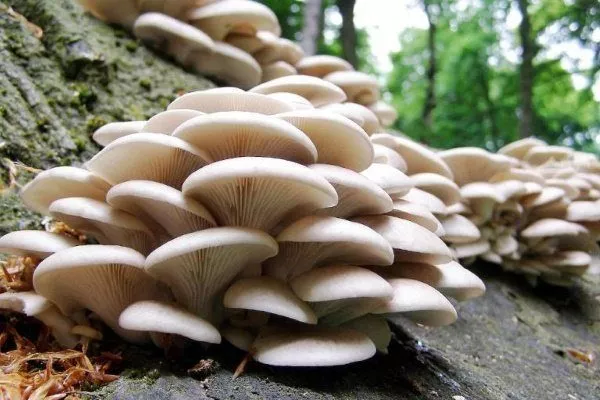
Doubles. There are no poisonous analogues, but there are inedible mushrooms that look similar to oyster mushrooms: the orange oyster mushroom and the wolf's saw mushroom.
Tinder fungi
Description. Tinder fungi – parasites that feed on the sap of trees, living or dead. Few of these species are edible, and most grow in the forests of Primorye. All polypores have prostrate caps. Some mushrooms have stalks and some do not.
Varieties. Several edible tinder fungi grow in Primorye:
- Scaly. The caps reach 5-30 cm in diameter and 0.5-6 cm in thickness. Initially round, they become kidney-shaped as they grow. The cap is ochre or cream-colored, covered with brownish scales.
- Sulphur yellowThe mushroom body is loose, 10-40 cm in diameter. The cap is up to 6 cm thick. The fruiting body is sulfur-yellow, semicircular or shapeless.
- Liver mushroomThe fruiting body is 10-30 cm in diameter and up to 6 cm thick. It is a fleshy, dense mushroom, sessile, with a short stem. Its shape, structure, and coloring resemble those of an ox tongue.
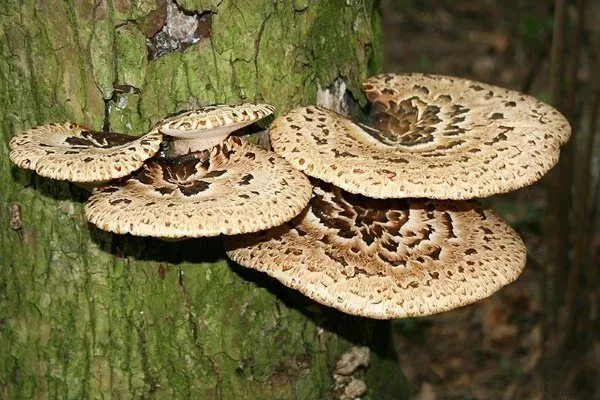
Scaly tinder fungus
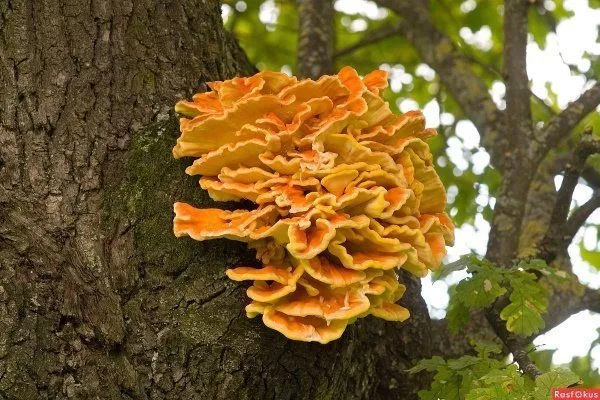
Sulphur-yellow tinder fungus
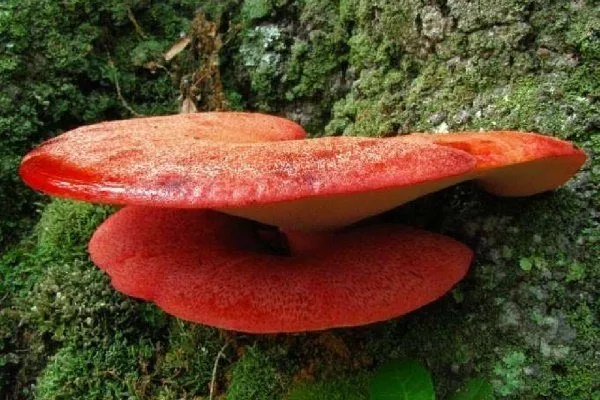
Liver fungus
Where and when does it grow? Edible tinder fungi bear fruit all summer long. Growth begins in May and continues until September. They grow on tree trunks, less commonly on the ground. They are found everywhere. Many tinder fungi continue to grow throughout the year, even after the cold weather sets in.
Doubles. It is difficult to confuse them with inedible tinder fungi due to their hard flesh and bitter taste, and tinder fungi have no poisonous analogues.
Oak trees
Description. U oak tree The common oak boletus has a large cap—5-20 cm in diameter. Initially hemispherical, it opens up as it grows, becoming cushion-shaped. The cap is velvety to the touch and comes in yellowish-brown, grayish-brown, and other shades. The flesh is yellow, turning blue when broken. The stipe of the common oak boletus is 5-17 cm tall and usually reddish.
Boletus mushrooms are not used in folk medicine, but scientists use these mushrooms to produce an antibiotic called boletol.
Varieties. The Kele oak boletus is also found in Primorsky Krai. Its cap is uniformly convex, 5-15 cm in diameter, and brown or yellowish-brown in color. The velvety cap becomes slimy in high humidity. The stem is yellowish and scaly.
Where and when does it grow? Oak trees prefer deciduous forests, typically growing under oak, beech, and hornbeam trees. The fruiting period is May–October.
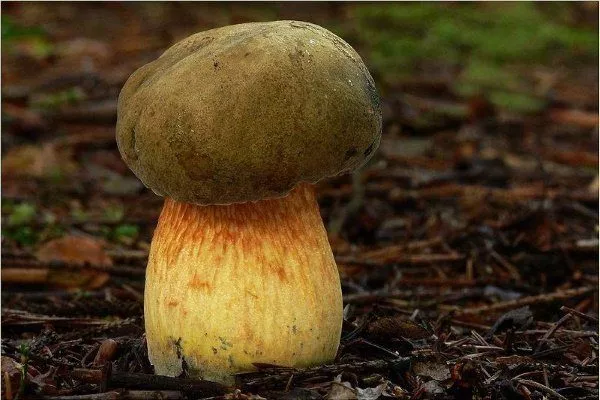
Doubles. The oak mushrooms resemble the satanic mushroom, which is easily recognized by its reddish stem.
The royal mushroom
DescriptionIt is also known as Caesar's Amanita or Caesar's Amanita. The hemispherical orange or red cap reaches 10-18 cm in diameter. With age, the cap becomes convex or flattened. The cap flesh is fleshy and light yellow. There is no distinctive aroma or mushroom flavor. The yellow-orange stem is 8-10 cm tall. The stem has a tuberous thickening. Old mushrooms emit an unpleasant hydrogen sulfide odor.
Where and when does it grow? It grows abundantly throughout the Primorsky Krai, but mushroom pickers are hesitant to collect it, as it resembles young fly agarics too much. Fruiting occurs from June to mid-October. It grows in copses and in the border zones between meadows and deciduous forests. It often grows under oak and chestnut trees, and less commonly under birch, hazel, and coniferous forests.
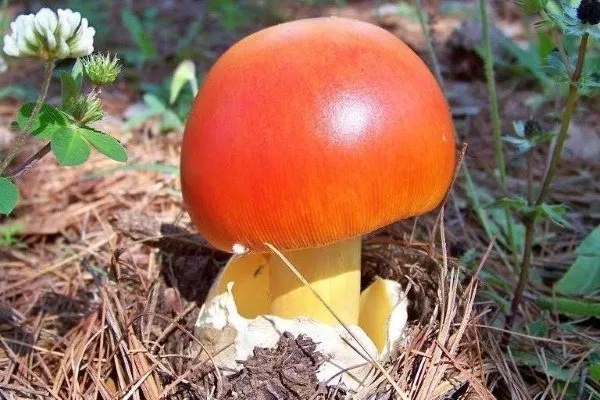
Doubles. Often confused with the red fly agaric, the Caesarean mushroom does not have white growths on its cap.
Mushroom spots in Primorsky Krai
To ensure a successful mushroom picking trip, you need to know the best places to pick mushrooms—the areas where specific species are found. Experienced mushroom pickers have discovered the best places to go:
- Yakovlevsky District – is unanimously considered one of the most productive for mushrooms.
- Khorolsky district. Near the village of Blagovatnoye, as well as the Tavrichanka area.
- Putyatin Island, what's in Peter the Great Bay.
You can successfully “hunt” in any forests or on islands.
| Location | Predominant species | Peak fruiting |
|---|---|---|
| Yakovlevsky District | White, birch boletus | August-September |
| Putyatin Island | Saffron milk caps, milk mushrooms | September |
| Botanical Garden | Oyster mushrooms, honey mushrooms | June-October |
For edible mushrooms, you can go to Varyag, Shamor, Sputnik, Okeanskaya, Sadgorod, Sedanka, Patrokl, and the Botanical Garden area.
Avoid searching for mushrooms in swampy, sunlit areas. Also, don't count on brightly lit clearings—mushrooms don't like excess ultraviolet light.
In Primorye, rare mushrooms need to be looked for under certain trees – they are especially common under oak, alder, elm, and fir.
Mushroom season in Primorsky Krai
Primorye is a large territory with varied natural and climatic conditions, so the mushroom season varies in different parts of the region:
- Mushroom picking in Primorye can be done for at least 6 months.
- In the southern part of the region, the mushroom-picking season lasts eight months. Here, the mushroom season begins in late April, with early spring morels and gyromitra appearing first. Here, in the south of the region, are the most edible species and the largest number of rare mushrooms. The "quiet hunting" season ends in November. The peak harvest occurs in August and September.
- In the northern part of Primorye, the mushroom season is compressed to two months. The last mushrooms are picked here in August.
- In the mountains, in the upper forest belt, mushrooms disappear faster than below.
In the southern part of Primorye, the most mushrooms are found in oak, birch, and cedar forests growing on southern slopes. In the north, they are found in deciduous forests and birch forests, while in the west, pine forests are abundant.
The number of mushrooms and the time of their appearance depend on weather conditions. Conditions for the largest harvests occur in years with drought at the beginning of the growing season. When rain finally arrives in August and September, mushroom growth is especially luxuriant.
Poisonous and inedible mushrooms
No matter what forest you venture into, there are always plenty of inedible mushrooms. Firstly, mushroom pickers have no use for them, unless some herbalist picks some fly agarics for tinctures. Secondly, inedible and poisonous species outnumber edible ones in nature. To avoid picking poisonous mushrooms during your "silent hunt," carefully examine their appearance.
Death cap
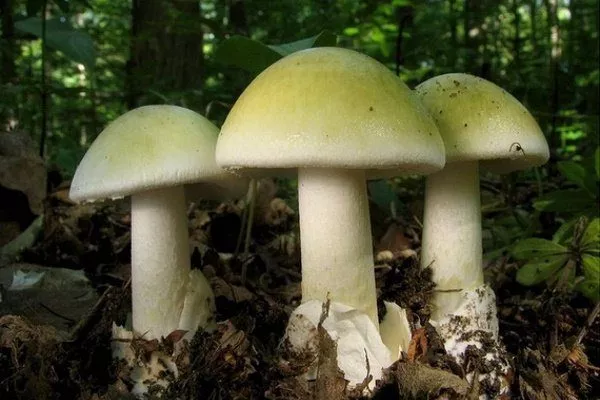
DescriptionThe cap is yellowish-green or olive-gray, 5-10 cm in diameter, and uniform or brownish in color in the center. Convex at first, it becomes prostrate with age. The stem is thin, reaching 6-10 cm in height and up to 1 cm in thickness. The stem has a ring, above which the stem is white. The lower part of the stem has dirty, zigzag stripes. At the bottom of the stem is an ovoid thickening. The flesh is white and has a pleasant mushroom scent.
Where and when does it grow? It prefers oak, beech, and hornbeam groves, and also grows in mixed forests. It prefers humus-rich soils.
Who can be confused with? The most poisonous mushroom. Eating even a single piece has a 90% chance of death. To identify a death cap, you need to know its external characteristics:
- there is a thickening at the bottom of the leg;
- there is a film ring on the top of the leg;
- the gills are white - by this, toadstools can be distinguished from champignons, which should have pink or brown gills;
- Unlike russula, toadstools have a moire pattern on their stems.
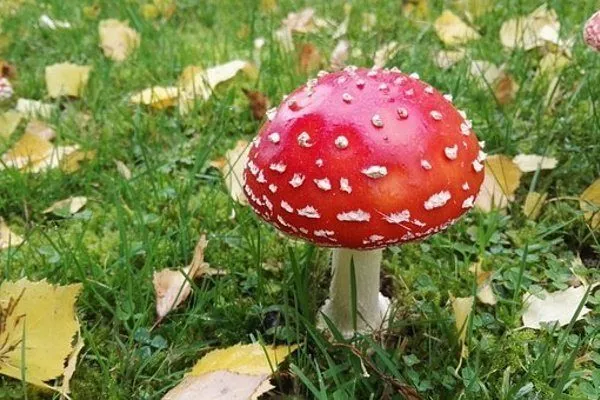
Red fly agaric
DescriptionThe cap, 8-12 cm in diameter, is bright orange or red. White warty growths line the top. The cream-colored stem reaches 12-15 cm in height. Young fly agarics, "hatching" from the filmy covering, tear it—some of the film remains on the cap, some on the stem. With age, the coloring becomes more vibrant.
Where and when does it grow? It grows in birch, mixed, and coniferous forests. Fruiting begins in July.
Who can be confused with? The red fly agaric is unmistakable, except perhaps when young—while its coloring is dull—with some other agaric mushroom. Inexperienced mushroom pickers often mistake the fly agaric for a fly agaric and discard it, such as the Caesar's mushroom.
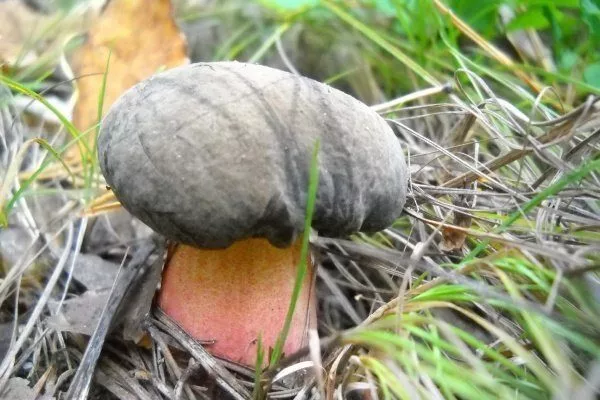
Boletus spp.
DescriptionIt is also known as the beautiful boletus or the inedible boletus. Its cap is light brown, sometimes olive-brown or grayish-brown. It is often wrinkled, and in young specimens, it is fibrous. Initially, the cap is semicircular, then convex, with a wavy edge. The cap diameter is 4-15 cm. The tubular layer is lemon-yellow, turning blue at the cut. The stem is barrel-shaped, later cylindrical. The stem is yellow on top, carmine-red below.
Where and when does it grow? Grows from July to October. It grows in coniferous forests and mountains, most often in spruce forests, less often in deciduous forests.
Who can be confused with? It has a bitter taste and no distinctive odor. It resembles the common oak mushroom. It can be distinguished by the color of the tubular portion and the taste of the flesh. It is also similar to the devil's mushroom, which is itself poisonous.
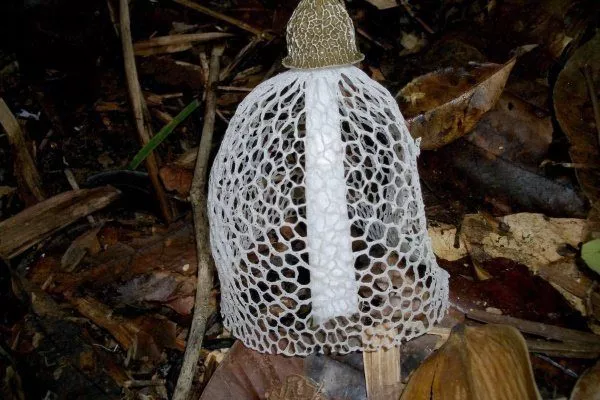
The Lady with the Veil
DescriptionThe young body is tuberous, enclosed in a two-layered shell. The outer shell is membranous, beneath which lies a gelatinous body. After breaking through the shell, a stalk emerges, topped with a sticky, cap-like substance. The cap-like tip is olive green. The stalk is hollow. A mesh-like "cover" descends from beneath the cap. The mushroom emits a carrion-like odor, attracting flies—they are needed to disperse the spores.
Where and when does it grow? It grows in deciduous and mixed forests. Its growing season is summer and autumn.
Who can be confused with? There's nothing similar among edible mushrooms. The main thing to know is that the veil mushroom is poisonous. It's said that in China, this mushroom is grown as a vegetable.
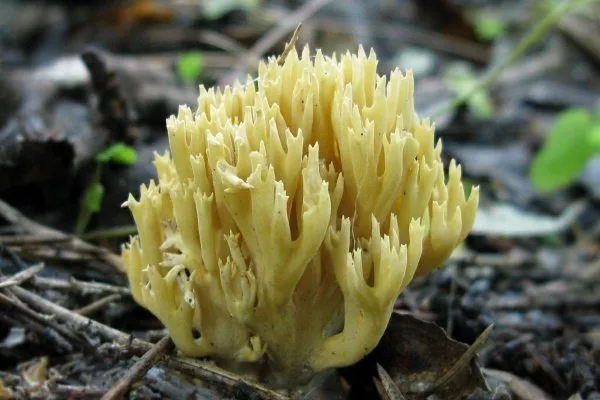
Coral mushroom
DescriptionThe Coral Mushroom, or Obtuse Horned Mushroom, looks just like a coral. This unusual mushroom has a branched fruiting body, 10-15 cm tall and 10-13 cm wide. The color is brownish-cream or ochre-brown. The branches are densely packed, with blunt ends. It has a short, thick stem. The white flesh has a bitter taste that persists no matter how it's processed. Its appearance resembles coral, hence the name.
Where and when does it grow? It grows most often in oak groves, less commonly in mixed forests. Its growth season is August-September. In addition to the blunt horn mushroom, several other varieties of coral mushroom grow in Primorye:
- Spruce hornbeamThe mushroom's body reaches 2-6 cm in height and is yellowish-brown in color. It has a short stalk, up to 2.5 cm long. The yellow and pale flesh has a bitter taste. It grows in August-September in coniferous and mixed forests.
- Horned BeautifulHeight: 8-15 cm. Branched, ochre-pink body. Thick stem, whitish at the base. Bitter white flesh.
Who can be confused with? These inedible mushrooms are easy to recognize—they have no edible counterparts. They are inedible due to their ineradicable bitter taste.
Redmouth
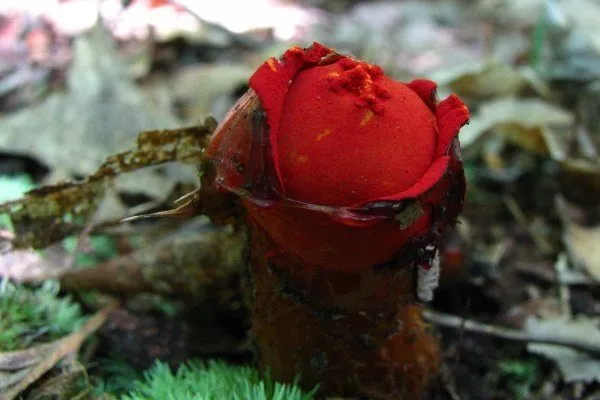
DescriptionThe Vermilion Red Puffball is an inedible mushroom from the Pseudo-Puffball family. Recognizable by its bright red coloring, young mushrooms are covered in a gelatinous substance. It grows in North America and in Russia only in the southern Primorsky Krai. The diameter of the rounded body is 1-2 cm. The early stages of development occur underground. The stem is up to 4 cm long, porous, and encased in a gelatinous shell.
Krasnostka is a rare mushroom, listed in the Red Book of Primorsky Krai in 2001.
Where and when does it grow? A very rare mushroom, found in southern Primorye, in oak forests.
Who can be confused with? There is no similarity with other mushrooms.
Purple Boletus
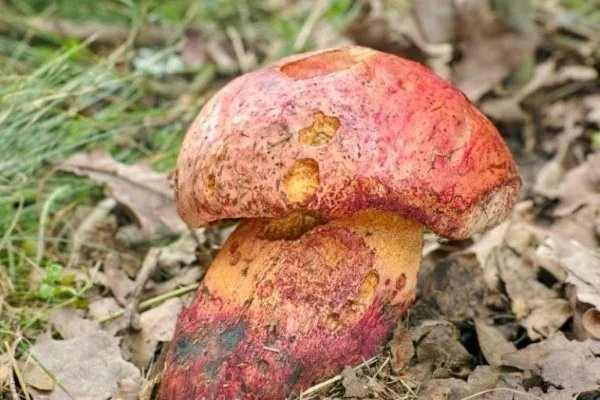
DescriptionThe purple boletus has a velvety cap approximately 11 cm in diameter. The cap is pinkish to purple in color and cushion-shaped. The stem is also purple, and the upper part is ochre. The underside of the stem is mesh-like. The tubular layer is lemon-yellow. The stem reaches 7 cm in length, with a club-shaped thickening at the base. The flesh is lemon-yellow, turning black when damaged.
Where and when does it grow? Found in all forests of Primorye, both coniferous and deciduous. Prefers hilly and mountainous areas. Fruiting season: June-September.
Who can be confused with? There's a chance it could be confused with the edible boletus. It also resembles the Satan's mushroom and other boletes with similar coloring.
Pepper butterdish
DescriptionIt is often called the pepper mushroom or pepper boletus. It has a very pungent taste, so it is not suitable for consumption. However, it is not poisonous. The height of the boletus is 2-5 cm. The color of the rounded, convex cap is copper-red, rusty. The cap is velvety to the touch. The sulfur-yellow flesh reddens when cut. The scent is subtle. The stem is 4-8 cm long, usually curved.
Where and when does it grow? It grows in deciduous and dry coniferous forests. Fruiting period is June through late autumn.
Who can be confused with? It can be confused with members of the genus Butter. The peppery butter mushroom differs from the edible butter mushrooms in its pungent taste and the red color of its tubular layer. The peppery butter mushroom lacks a ring on its stem.
Fiberglass
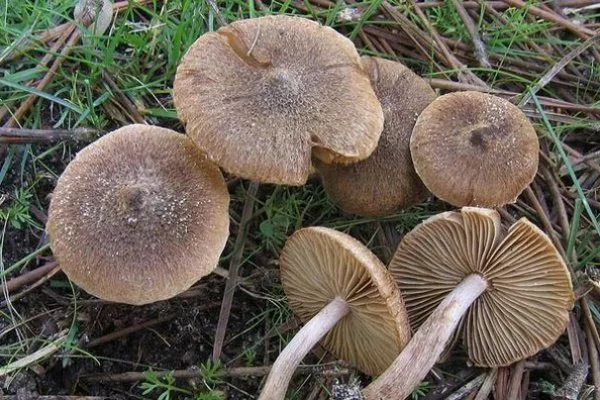
DescriptionThe cap of the fiber mushroom is 1-3.5 cm in diameter. In young mushrooms, the cap is bell-shaped, but with age it opens and becomes flat with a pointed tubercle in the center. It is brown in color. The flesh is whitish, unchanged when cut. It has an unpleasant odor. The gills are clay-brown in color. The stem is 2-4 cm long and thin – up to 0.5 cm thick.
Where and when does it grow? A rare mushroom, in Russia it grows in Eastern Siberia, in the Primorsky Krai. It prefers coniferous forests and swamps of the subarctic zone. It often grows among moss.
Who can be confused with? The scaly-sided mushroom can be confused with the gray rowan mushroom. They have similar conical caps with radial cracks. The scaly-sided mushroom also resembles honey mushrooms, but unlike honey mushrooms, it lacks a ring.
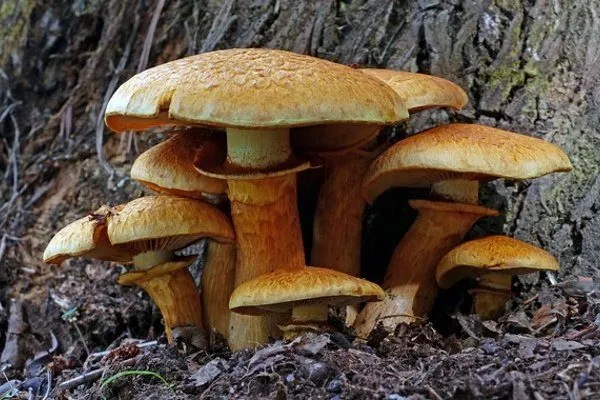
Gymnopilus spectabilis
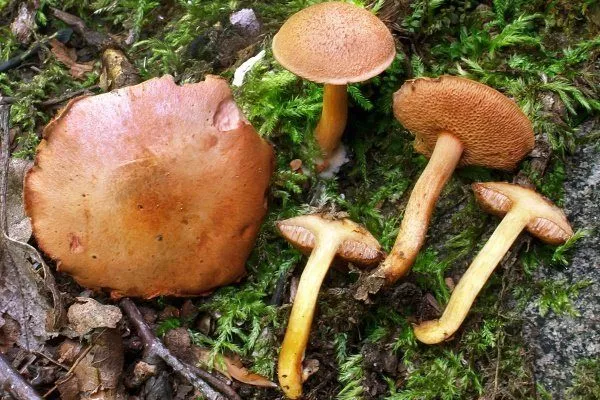
DescriptionThe orange-ochre cap is lamellar, 6-10 cm in diameter. The cap is ring-shaped and convex. The gills are yellow, later turning brown. The stem is 1 cm thick and 3-4 m long. The stem has a membranous, cobwebby ring. It smells like bitter almonds and has a bitter taste. The firm yellow flesh darkens immediately upon cutting.
Where and when does it grow? It grows on living alder trees, less commonly on stumps and dead wood of other deciduous trees. It appears in late June and continues until early October.
Who can be confused with? Similar to other Gymnopylus species.
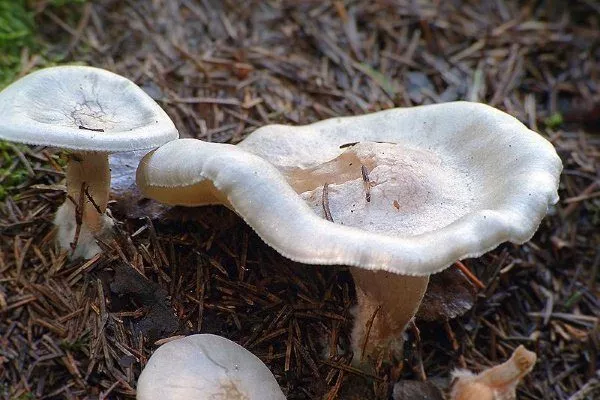
Poisonous talkers
DescriptionAmong the many talkers, there are edible, inedible, and poisonous ones. The reddish talker is a poisonous agaric mushroom with a cream-colored or reddish-red cap. The cap diameter is 2-5 cm, and the stem height is 2-4 cm.
Where and when does it grow? It grows in forests, parks, gardens, and ditches. Its growth period is from late summer to autumn.
Who can be confused with? It can easily be confused with other talkers – grey, orange, goblet-shaped.
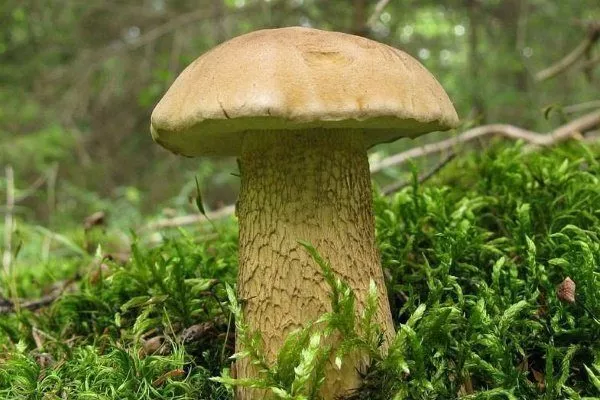
Gall mushroom
DescriptionIt is also known as the bitterling or false boletus. The stem reaches 9 cm in height and is no more than 2 cm thick. The cap is 5-12 cm in diameter, pillow-like, and chestnut-brown or light brown in color. The edges of the mushroom are pale. The stem is the same color as the cap.
Where and when does it grow? Prefers to grow in oak and coniferous forests.
Who can be confused with? In appearance it is similar to the porcini mushroom. Distinguish gall mushroom You can tell from the boletus by its bitter taste and by the flesh, which turns pink when cut.
False Valuy
DescriptionThe cap is spherical and convex. The margins curve inward, wrapping around the stem. The cap is yellowish-brown. The gills range in color from white to dark brown. The stem reaches 12 cm in height.
Where and when does it grow? They grow in deciduous and coniferous forests of Primorye. They are found both singly and in groups. Fruiting begins in summer and continues until the end of November.
Who can be confused with? It can be confused with the edible horseradish mushroom. The easiest way to recognize the false horseradish mushroom is by its distinctive odor, which is why it is called the "horseradish mushroom."
This video shows the most popular mushrooms in Primorsky Krai – just take a look at the mushrooms we've already covered:
Primorsky Krai, especially its southern part, is known for its abundance and diversity of mushrooms. Along with edible species, hundreds of inedible varieties grow in Primorsky Krai—familiarize yourself with their characteristics before heading into the forest. Knowing the appearance of mushrooms will help you avoid mistakes and stay healthy.