
Chanterelle mushrooms grow in coniferous and mixed forests. There are over 60 known species. Chanterelles are not only edible but also used in folk medicine. It's impossible to find parasite-infested mushrooms in forests: chanterelles contain chitinmannose, a substance that paralyzes worms and dissolves their eggs.
General characteristics of mushrooms
Chanterelles are edible mushrooms. There are 60 species of the Chanterelle family, most of which are edible and also used for medicinal purposes.
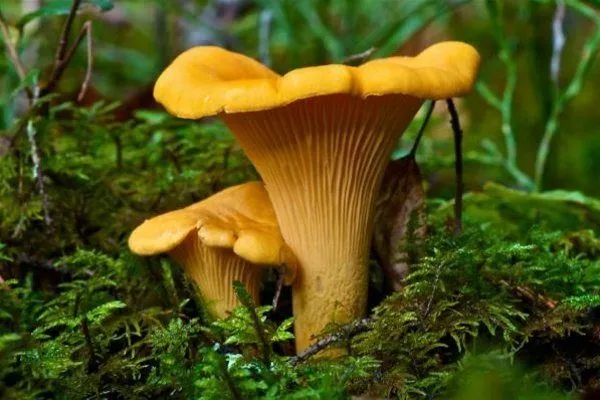
Chanterelles are unique in their appearance, lacking a distinct cap. The cap is almost completely fused with the stem. They resemble an inside-out umbrella.
The chanterelle mushroom's body color ranges from light yellow to deep orange. The cap is smooth, with wavy edges and a depressed center. Its diameter can reach 12 cm. The stem tapers toward the bottom. The mushroom has a slightly sour aroma.
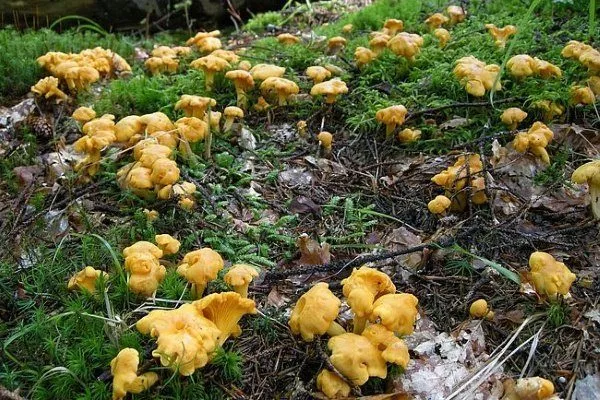
Chanterelles bear fruit in large numbers, usually growing in clusters. They are found from June to October in all forested areas of Russia. They grow in especially large quantities after heavy rainfall.
Their vibrant color makes them quite easy to find. Furthermore, edible chanterelles typically grow in large clusters, so heading into the forest after a rainstorm can guarantee a bountiful harvest.
The most common variety of this mushroom is the common chanterelle.
| A type of chanterelle | Color | Cap diameter (cm) | Peculiarities |
|---|---|---|---|
| Ordinary | Bright yellow | 5-12 | The edges are wavy, the flesh is dense |
| Tubular | Yellow-brown | 2-6 | Funnel-shaped, hollow stem |
| Gray | Gray-black | 3-8 | Without a distinct taste, a rare species |
| Cinnabar red | Red-orange | 1-4 | Grows in deciduous forests of the United States |
The most common types of chanterelles are the true chanterelle, the common chanterelle, and the tubular chanterelle.
Chanterelles contain:
- amino acids;
- chitinmannose;
- vitamins A, B1, B2, C, E;
- zinc;
- calcium;
- potassium;
- chromium;
- iron;
- cobalt;
- trametonolinic acid.
The chanterelle also has a lookalike—a conditionally edible mushroom, though not recommended for consumption. To distinguish the true chanterelle from the false, pay attention to the following characteristics:
- edible species always grow in groups;
- when you press on the flesh, the chanterelle changes its color, but the false chanterelle retains its original color;
- edible mushrooms have a thicker stem;
- Inedible chanterelles have an unpleasant, repulsive smell and bad taste.
Edible chanterelles are not only suitable for cooking: they are also used to treat various illnesses.
Places of growth
Chanterelles grow in mixed and coniferous forests, as well as birch groves. Clusters of these mushrooms most often appear in areas with high humidity: in moss, a litter of pine needles or fallen leaves, or near rotted trees.
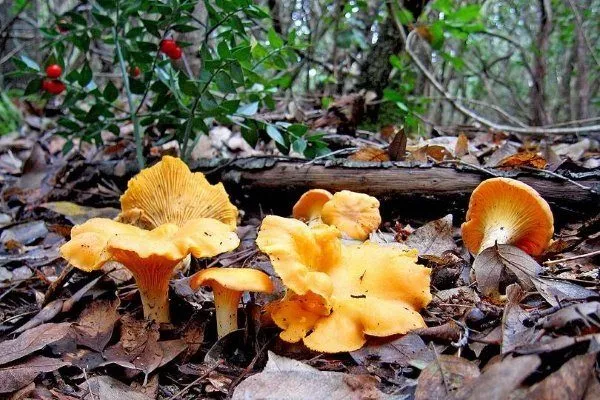
During periods of heavy rain, chanterelles do not rot, and during drought they do not dry out, but simply stop growing.
Only undamaged chanterelles, free of mold and spots, should be harvested. Also, avoid wilted, flabby, or dried-out specimens.
Chanterelles are easy to transport: they can be placed in bags without worrying about their integrity.
The beneficial and harmful properties of chanterelles
These mushrooms are characterized by a rich composition, which determines their valuable properties. Chanterelles possess the following properties:
- cleanse the liver of parasites and normalize its function;
- help improve a person’s condition in the presence of hepatitis;
- effectively fight infections such as bronchitis, tonsillitis, and furunculosis;
- promote weight loss;
- eliminate irritability;
- improve vision;
- reduce blood cholesterol levels;
- improve thyroid function;
- boost immunity;
- normalize blood pressure;
- suppress the growth of cancer cells;
- strengthen blood vessels;
- affect the formation of elastin and collagen;
- regulate blood glucose concentrations;
- promote the breakdown and digestion of food;
- protect the body from stress;
- remove toxins from the body;
- normalize heart rhythm;
- improve joint mobility.
For medicinal purposes, chanterelles are consumed in powder form or fresh: mushrooms that are boiled or fried lose most of their valuable properties.
Despite the benefits of chanterelles, certain groups of people should avoid eating them. Contraindications to their consumption include:
- periods of pregnancy and breastfeeding;
- individual intolerance to mushrooms;
- children under 7 years of age.
Those with gastrointestinal conditions should exercise particular caution when eating mushrooms, as chanterelles are difficult to digest. Those with kidney disease should also limit their consumption of chanterelles and other mushrooms.
Although most chanterelles are edible, they can still pose a health risk if collected near active industrial facilities or major highways. In such areas, they accumulate large amounts of heavy metals and other harmful substances.
Methods for growing chanterelles at home
Chanterelles can be grown at home for both personal consumption and for subsequent sale. To grow mushrooms in your garden, you need to create growing conditions as close to natural as possible.
Selection of planting material
You can purchase ready-made mycelium at a specialty store. Another option is to collect planting material in the forest. Mushroom caps are suitable for this purpose. Soak them in a container with sweetened water and leave for 10-20 hours. Add sugar at a ratio of 100 g per 1 liter of liquid.
Step-by-step preparation of spores
- Collect overripe caps (8-12 cm in diameter)
- Soak in rainwater for 18 hours
- Strain through 3 layers of cheesecloth
- Let the solution stand for 48 hours at +15°C
- Pour off the top layer, leaving the sediment with spores
After the specified time has passed, crush the chanterelle caps by hand directly in the water. Strain the resulting liquid. Keep both the solution and the pulp—both will be useful during the planting process.
Next, select a site beneath a tree. It should be of the same species as the tree from which the seed was collected. Remove a layer of soil around it (15 cm deep, 1.5 m in diameter). This area should be watered beforehand with oak bark infusion—this will help eliminate microorganisms in the soil that can destroy fungal spores.
Two to three hours after treating the soil with the decoction, water the area with a decoction containing chanterelle spores. Place the remaining slurry of chanterelle caps on exposed areas of the tree's roots.
Fill the hole with the removed soil and carefully water the trunk. Water moderately and regularly.
You can expect a harvest next year, in the summer.
During the winter, the area enriched with chanterelle spores should be covered with a layer of hay or dry branches.
Growing chanterelles using mycelium
Chanterelles can also be grown and propagated using mycelium, which is the small vegetative bodies of mushrooms. This method is considered the most reliable, although the wait for the first harvest will be longer. Mycelium can be purchased at a store or collected from the forest.
It's necessary to take a soil sample from the area closest to the mushroom growing site. This is best done in mid-spring or late summer.
It's necessary to dig out several layers of soil (one shovel blade wide and 15 cm thick). Each lump of soil must be transported very carefully to avoid damaging the mycelial threads.
After this, the soil fragments containing the mushroom threads are divided into 5-10 pieces, and each piece is placed in a separate box or plastic bag. They should not be covered to ensure constant oxygen penetration to the mycelium.
Containers with soil should be stored in a cool place all year round. This extended period will make the mycelium more viable. Microorganisms capable of destroying the spores will be destroyed during this time.
The mycelium can germinate for 15 months, so it is important not to overexpose it.
A year later, in June, you can begin planting. Dig 20-cm-deep holes around the tree in the area and fill them with dry soil containing mycelium, compacting them firmly.
After planting, water the area immediately. Each hole should receive at least a liter of water, and the soil around them should receive at least 10 liters.
During the cold season, areas with planted mycelium should be covered with leaves, dry branches, and pine needles.
There is no intensive method for growing chanterelles (in a greenhouse), as these mushrooms require natural temperatures and the presence of tree roots in close proximity.
If your plot doesn't have the trees that chanterelles prefer to grow near, you should plant some saplings first. You can dig up a young tree near a chanterelle colony in the forest, capturing the soil containing the mushrooms.
The use of chanterelles in cooking and medicine
Chanterelles are suitable not only for preparing various dishes based on them, but also for making medicines.
Chanterelles in different dishes
Chanterelles have excellent taste qualities, so they are included in various dishes.
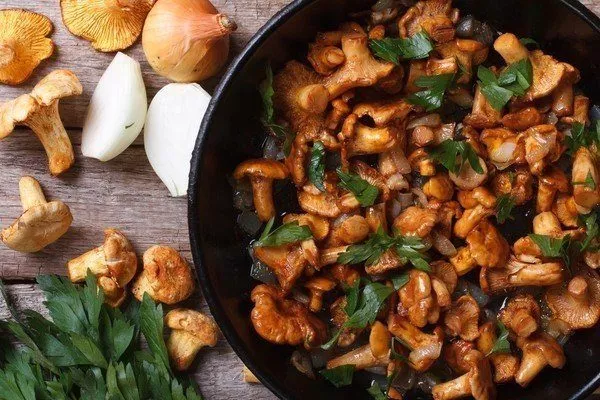
Before cooking, the mushrooms are processed: they are thoroughly washed and then dried. Afterwards, the roots are cut off, the soil is scraped off, and any broken edges of the caps are trimmed.
Chanterelles can be stored in the refrigerator for no longer than 2 days, as they spoil quickly.
| Processing method | Temperature | Chitin mannose losses | Shelf life |
|---|---|---|---|
| Drying (natural) | 30-40°C | 5% | 12 months |
| Freezing | -18°C | 15% | 6 months |
| Pickling | 100°C | 90% | 9 months |
| Frying | 120-150°C | 85% | 3 days |
Under no circumstances should they be placed in plastic bags, as the mushrooms will suffocate in them and become moldy.
These mushrooms are used to prepare the following delicious dishes:
- mushroom soup;
- vegetables baked in the oven with chanterelles;
- pie with cheese and mushroom filling;
- pilaf with chanterelles;
- fried potatoes with mushrooms;
- spaghetti with mushrooms;
- creamy sauces with pieces of chanterelles;
- buckwheat porridge with fried chanterelles;
- omelette with mushrooms.
Chanterelles can also be pickled for the winter and frozen. Keep in mind that fresh-frozen mushrooms can be stored in the freezer for no longer than six months. Dried mushrooms in powder form can be stored for up to a year.
The use of chanterelles in the manufacture of medicines
Due to their medicinal properties, chanterelles are also used to prepare remedies for various ailments.
Most often, the following medicinal compositions are prepared based on these mushrooms:
- Antihelminthic tincture. To cleanse the body of parasites, prepare the following remedy: dry chanterelle mushrooms and grind them into a powder. Take three tablespoons of this powder and pour 300 ml of vodka over it. Let the mixture steep for three weeks in a cool, dark place, shaking the bottle periodically. Take 20 ml of the tincture in the evening. Treatment duration: 14 days.
- A remedy for improving vision. To prepare, take 10 grams of dry chanterelle powder and two cups of water. Pour boiling water over the powder and place in a double boiler. Simmer for 15 minutes, remove from heat, and let steep for an hour. There's no need to strain the finished decoction. Take it cooled three times daily before meals, one dessert spoon at a time. Over the course of one treatment, you should drink about 3 liters of the mushroom decoction.
- A liver cleanse decoction. To prepare, take a tablespoon of fresh, chopped mushrooms. Pour one and a half cups of boiling water over the mushrooms. Place the mixture over low heat and simmer for 20 minutes. Remove from heat and let steep for 4 hours. Strain before use. Take one tablespoon 4-5 times daily, 40 minutes before or one hour after meals.
- Chanterelles are recommended for those who want to lose weight. To do this, add dried mushroom powder to your diet. Take one teaspoon twice daily with water.
Before using chanterelles for therapeutic purposes, you should consult a doctor to ensure there are no contraindications.
Chanterelle mushrooms grow in forests. They can also be grown on your own plot of land as a home farm, but only extensively; they don't grow in greenhouses. Chanterelles can be used to prepare a variety of dishes and medicinal compositions for various ailments.