
The puffball mushroom belongs to the Agaricaceae family, although it was previously classified as a puffball. Several varieties of puffball mushrooms are known. This mushroom is widespread. Puffball mushrooms contain many beneficial elements and are edible.
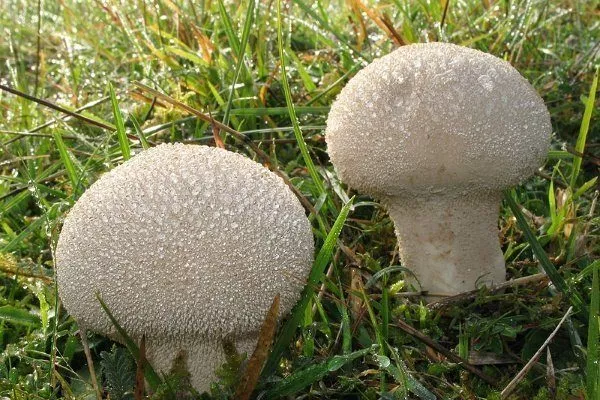
General characteristics of the mushroom
The puffball mushroom is known by many names: devil's apple, wolf's tobacco, hare's potato, and powder puffball. There are several varieties of this mushroom, most of which are edible. When eating puffballs, keep in mind that only young mushrooms with white, firm flesh are suitable for eating. As they age, the flesh becomes filled with spore powder, and the puffball loses not only its nutritional properties but also its flavor.
The puffball mushroom belongs to the agaric family. This mushroom is characterized by the following external features:
- spherical or pear-shaped fruit body;
- thick skin, on which thorns are often observed;
- lack of division into cap and stem;
- white and elastic pulp.
The mushroom ages very quickly. When this happens, the flesh turns yellow, loses its elasticity, and becomes sticky. Later, it darkens, wrinkles, and becomes filled with spore powder.
Types of raincoats
Edible varieties of puffballs include:
- Pear-shapedThe mushroom is small: up to 5.5 cm in length and width. As its name suggests, the puffball's fruiting body is pear-shaped. The outer layer is white, with cracks or scales on the surface.
- SpikyThis variety of puffball mushroom has a hemispherical fruiting body. The false stem is prominent. A raised tubercle forms on the top. It also has small spines that easily separate from the cap. When the mushroom is young, its skin is white. As it matures, it turns grayish-brown.
- GiantThis type of puffball is characterized by its spherical shape. When the mushroom matures, its shell splits. The giant puffball is white or grayish-yellow in color. It is large, reaching up to 50 cm in width. It can weigh up to 7 kg.
- Brown (umber)The puffball mushroom is spherical in shape, ranging from 1 to 6 cm in diameter and up to 8 cm in height. When young, the mushroom is white, but as it matures, it acquires brown tones. The brown puffball mushroom's cap is covered with needle-like spines.
Comparison table of edible puffball species
| View | Dimensions (cm) | Form | Surface features | Flesh color (young/mature) |
|---|---|---|---|---|
| Pear-shaped | up to 5.5×5.5 | Pear-shaped | Cracks or scales | White/olive brown |
| Spiky | 2-6 in diameter | Hemispherical | Easily detachable spikes | White/gray-brown |
| Giant | up to 50 in diameter | Spherical | Cracking | White/gray-yellow |
| Brown | 1-6×8 | Spherical | Needle-like spines | White/brown |
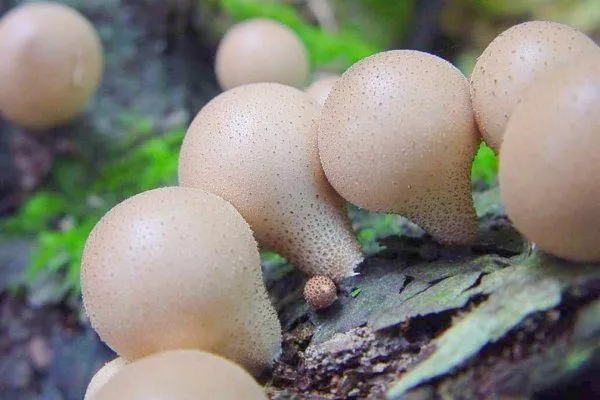
Pear-shaped puffball mushroom
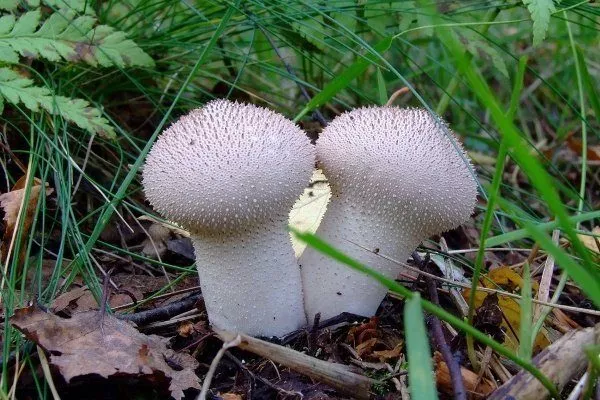
Prickly puffball mushroom
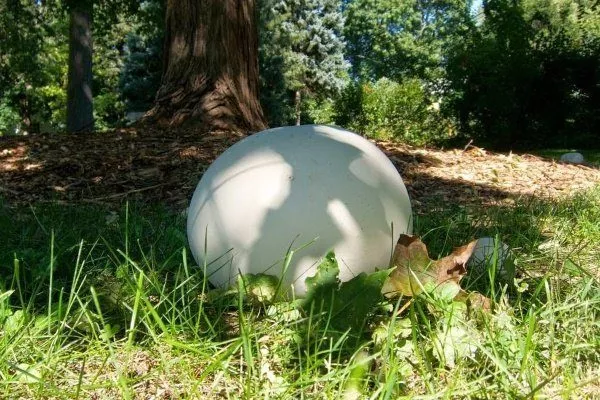
Giant puffball mushroom
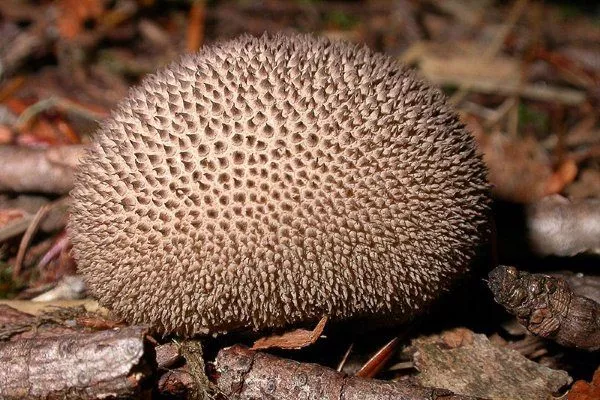
Brown puffball mushroom
False puffballs, which are inedible, are also common. Unlike edible mushrooms, false puffballs of this type have a flattened, rounded shape and are gray or brownish in color.
Places and time of growth
The puffball mushroom is widespread on all continents, with the possible exception of Antarctica. It grows everywhere: not only in forests, but also in meadows, clearings, gardens, and along roadsides.
Some types of mushrooms can only be found in forests, others – in clearings and meadows.
Mushrooms collected along roadsides or near industrial plants should not be consumed: puffballs have a special absorbent capacity and actively absorb various toxins.
Puffballs begin to grow in mid-May and do not disappear until October.
Methods for growing puffballs at home
Puffballs are used to make various medicinal and cleansing products. They are also widely used in cooking. You can grow this mushroom at home and be confident in its purity and benefits.
To create a puffball plantation in your garden, you need to prepare the mushroom mycelium. This can be purchased ready-made, or you can prepare a solution containing the spores. To do this, finely chop ripe puffballs, place them in cold water, and leave for several days, stirring constantly. The water containing the mushroom spores will become the basis for growing the puffballs.
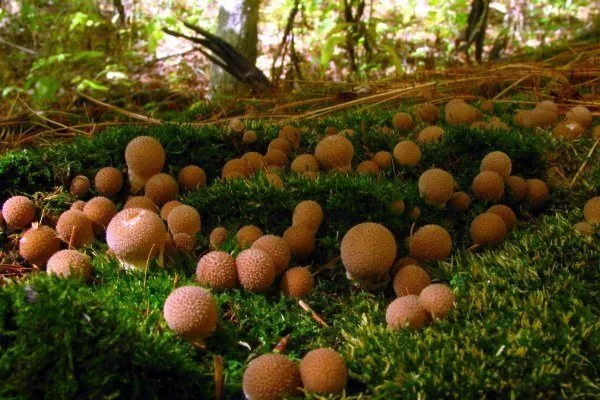
To plant mushrooms in your garden, you should:
- Dig a trench 30 cm deep and 2 m wide. The area for planting puffball mycelium should be in a shaded area, under trees or a canopy.
- Pour a leaf mixture—poplar, aspen, and birch leaves—into the trench. Place tree branches on top, the same ones from which the leaves were previously placed in the ground. This layer should be no more than 2 cm thick.
- Compact the layers tightly. The layer thickness should be 20 cm. Water everything thoroughly.
- Add a 5 cm layer of soil on top.
- Spread the seed mycelium over the entire area of the trench, water it drip by drip, and cover with branches.
The bed containing the planted mycelium should be watered periodically. A slight excess of moisture in the soil is acceptable.
When the bed is overgrown with mycelium, it should be mulched with leaves left over from last year.
You can expect the first harvest of puffballs a year after planting the mycelium.
Useful properties of puffball
Puffballs contain many beneficial substances, including amino acids, enzymes, iron, potassium, iodine, and sodium.
The ubiquitous puffball mushroom has valuable health benefits. Specifically, these mushrooms:
- absorb heavy metal salts, radionuclides and toxins, removing these dangerous compounds from the body;
- fight bacteria and pathogenic fungal microorganisms;
- have antitumor activity, suppress the growth of malignant neoplasms;
- have a positive effect on the functioning of the gastrointestinal tract;
- improve the functioning of the cardiovascular system;
- stop bleeding;
- fight kidney diseases;
- strengthen the immune system.
Microelement content in 100 g of fresh puffballs
| Substance | Quantity | % of daily value |
|---|---|---|
| Potassium | 350-400 mg | 14-16% |
| Iron | 1.2-1.7 mg | 8-11% |
| Phosphorus | 120-150 mg | 15-18% |
| Zinc | 0.8-1.2 mg | 7-10% |
| Iodine | 5-7 mcg | 3-5% |
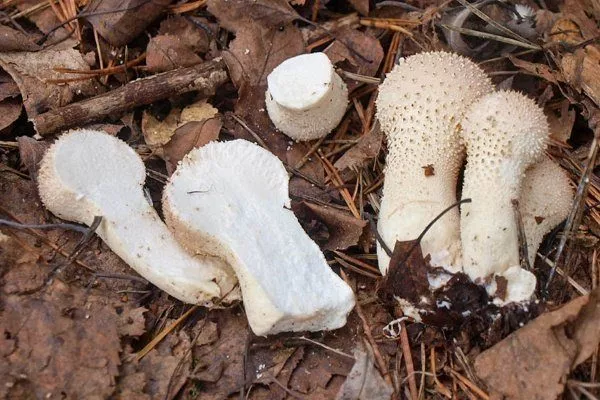
The fruiting body of the puffball contains a natural antibiotic that suppresses the activity of the tuberculosis bacillus.
Culinary uses of the mushroom
Young puffballs collected in unpolluted areas are edible. These mushrooms can be fried, stewed, baked, pickled, and salted, and added to various dishes.
Young puffballs don't require pre-boiling; doing so will only prolong the cooking time. To prepare puffballs, simply peel them and cut the flesh into bite-size pieces.
The following dishes can be prepared from these mushrooms:
- Mushrooms with saucePrepared mushrooms should be rolled in flour and lightly salted, then fried in vegetable oil until tender. For a more unique twist, you can add a sauce. To make it, take two bell peppers, finely chop them, add chopped capers, pickles, and green onions. Add mayonnaise, fresh lemon juice, and a splash of soy sauce.
- Dried mushroomsClean the mushrooms and remove the tough skin. Cut them into several pieces if the mushrooms are large. Dry the puffballs by laying them out in the sun. They can also be dried in the oven or over the stove, threaded on strings. Use the dried mushrooms as a topping. Soup with dried puffballs is especially delicious.
- Mushrooms in sour creamTo prepare this delicately flavored dish, take 500 g of young puffballs, 200 g of sour cream, 300 g of potatoes, and 2 onions. Peel and boil the potatoes in salted water. Rinse and clean the mushrooms, then fry them in oil for 25 minutes. Peel and chop the onion, then fry it separately. Combine the mushrooms and onion, season with salt and ground black pepper, and fry for another 15 minutes. Add the sour cream 5 minutes before the mushrooms are done. Mix thoroughly again and let the ingredients simmer over low heat.
The collected puffballs need to be prepared as soon as possible – they, like other types of mushrooms, do not keep well.
Use of puffball for medicinal purposes
Mushrooms can also be used to prepare various medicinal remedies. The most common folk medicine recipes include:
- TinctureTo prepare the infusion, take enough puffballs to half-fill a half-liter bottle. Fill the remaining container with vodka. Let the infusion steep for 40 days. Take a teaspoon before bed. Puffball tincture is effective for kidney, liver, and stomach ailments. Alcohol-based tincture of the mushrooms is also used to treat cancer.
- PowderPuffballs should be dried in the sun, then ground into powder. The resulting solution is used to disinfect open wounds. Simply sprinkle it on the affected areas. Puffball powder can also be used to treat a runny nose: gently inhale it into the nostrils.
- A remedy for external use in skin diseasesTo prepare it, mix vodka and regular water in a 1:1 ratio. Pour the resulting liquid into a container (e.g., a 1-liter jar) filled with mushrooms. Pack the puffballs tightly to break down their structure. Let the mixture steep in a cool, dark place for 14 days, after which add 10 drops of lavender or tea tree essential oil.
Collection calendar for medicinal purposes
- May-June: young mushrooms for tinctures (maximum active substances)
- July-August: mature specimens for powder (abundance of spores)
- September: late harvest for external use (dense pulp)
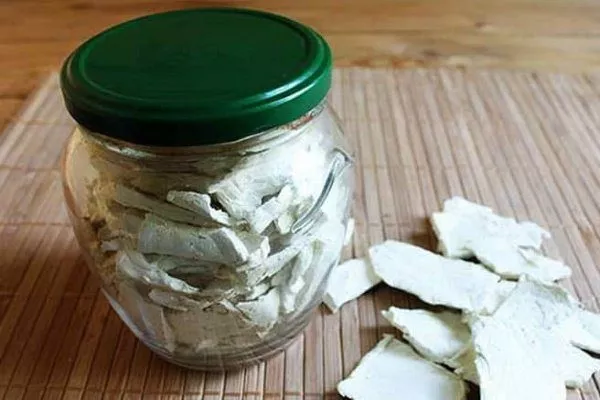
Before you begin preparing medicinal mixtures, you need to carefully sort through the mushrooms and make sure there are no false puffballs among them.
Contraindications
It is not recommended to use the puffball as food or as raw material for the preparation of medicinal compositions in case of intolerance to the components that make up its composition, as well as during pregnancy and lactation, and under the age of 7 years.
It is not recommended to consume puffballs for those who suffer from severe kidney pathologies.
Puffball mushrooms are ubiquitous. They can be found not only in forests but also in clearings and along roadsides. When foraging for these mushrooms, it's important to be able to distinguish edible ones from false ones. Puffballs can be used to prepare various dishes, as well as medicinal preparations.