
The boletus is an edible mushroom belonging to the Boletaceae family. It is so named because its fruiting bodies grow in moss. The boletus resembles the porcini mushroom in appearance and is edible.
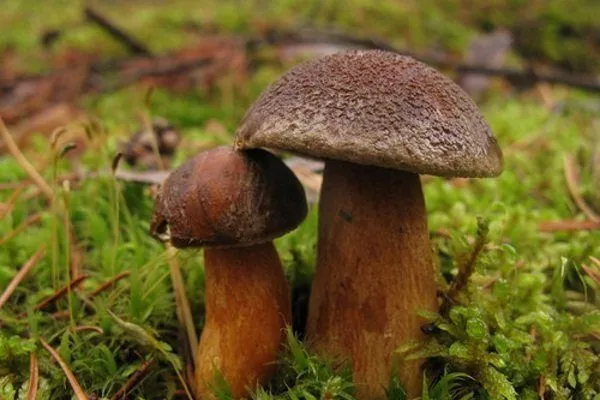
General characteristics of the mushroom
The boletus mushroom is a member of the Boletaceae family. There are several varieties of this mushroom, each with slightly different appearances.
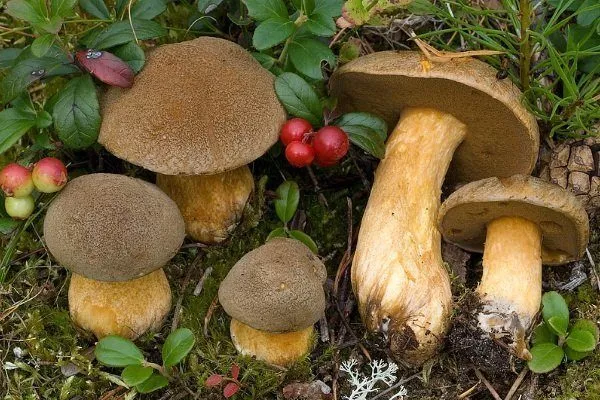
The mushroom has a hemispherical cap, reaching 10 cm in diameter. As the mushroom matures, its surface becomes cracked. A distinctive feature of the boletus mushroom is the blue color of the flesh when cut.
The color of the upper part varies from light golden to bright red. The surface feels velvety and dry to the touch. The lower part is smooth or slightly wrinkled.
These mushrooms contain many valuable substances: essential oils, amino acids, B vitamins, phosphorus, copper, potassium, and urea. 100 grams of boletus mushrooms contain the daily requirement of zinc and copper, which the body requires.
There are 18 known species of boletus, 8 of which grow in Russia.
Types of boletus
Edible species of this mushroom are:
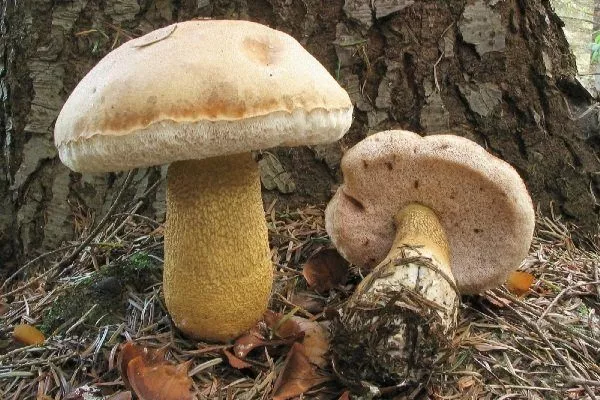
- Polish mushroom (also known as chestnut mushroom)This is an edible mushroom, and what's more, it's considered one of the most delicious in Europe. It's quite large: the cap can measure 12-15 cm in circumference. Its surface is brown. The flesh of the Polish mushroom is aromatic and has a pleasant flavor.
- Half-golden boletusThis is a conditionally edible mushroom. This species is not very common. The distinguishing feature of the half-golden boletus is the gray-yellow hue of the fruiting body.
- VelvetIts cap is spherical. As the mushroom matures, it becomes more spherical. The color ranges from brown to reddish-brown. The stem length ranges from 4 to 12 cm.
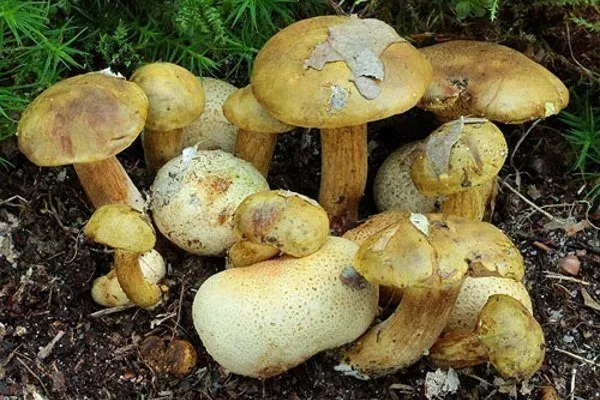
- Yellow-brownIt is also known as the yellow-brown butter mushroom, sand boletus, and marsh boletus. The cap is semicircular, with downward-curving edges. The cap size varies from 5 to 14 cm in diameter. The surface of a young mushroom is velvety; as it matures, cracks and scales appear. As it matures, the cap takes on a gray-orange or yellow-gray color. Small yellow tubes appear on the underside of the cap. The flesh is firm and almost tasteless.
- Red boletusThe mushroom cap reaches 9 cm in diameter. It is fleshy and fibrous. The flesh has a yellowish tint, turning blue when cut. The stem is long and smooth, averaging 10 cm in length.
- Green flywheelThe top of this mushroom is golden-brown and up to 10 cm in diameter. The stem is cylindrical, widening toward the base. The flesh is dense, white, and has a distinct mushroom aroma.
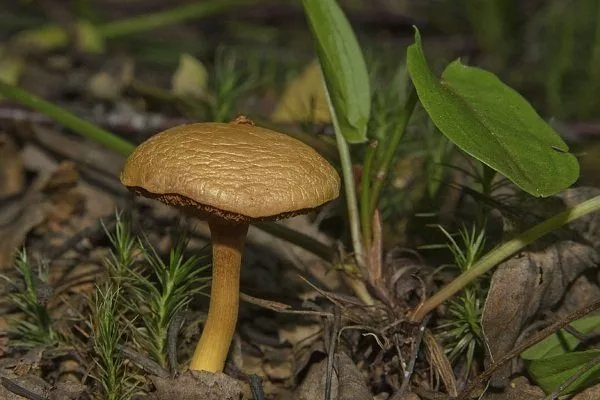
- Variegated (or cracked) flywheelA distinctive feature of this mushroom is the presence of a network of cracks on the cap. Its diameter reaches 3-7 cm. The color varies from gray to burgundy. The stem is club-shaped.
| View | Cap diameter (cm) | Cap color | Features of the pulp | Harvest season |
|---|---|---|---|---|
| Polish mushroom | 12-15 | Brown | Fragrant, dense | June-November |
| Velvet | 4-12 | Red-brown | Yellowish, turns blue when cut | July-September |
| Yellow-brown | 5-14 | Yellow-gray | Tough, tasteless | August-October |
| Green | Up to 10 | Golden brown | White, with a mushroom smell | May-October |
| Cracked | 3-7 | From gray to burgundy | Yellowish, turns blue when cut | July-September |
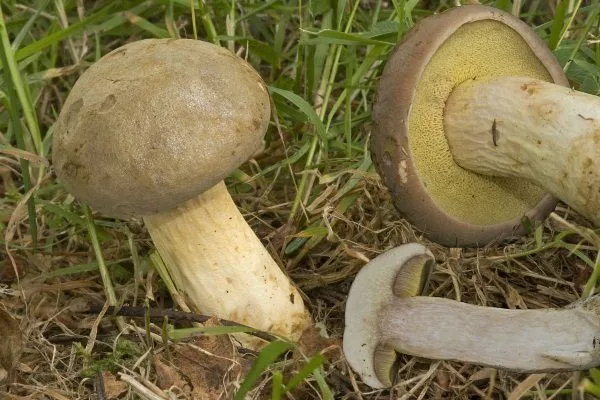
Polish mushroom
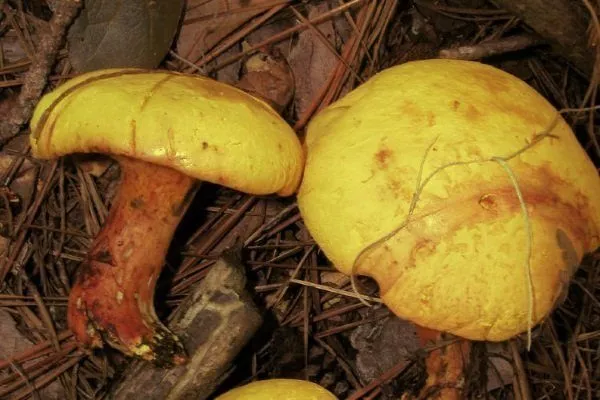
Half-golden boletus
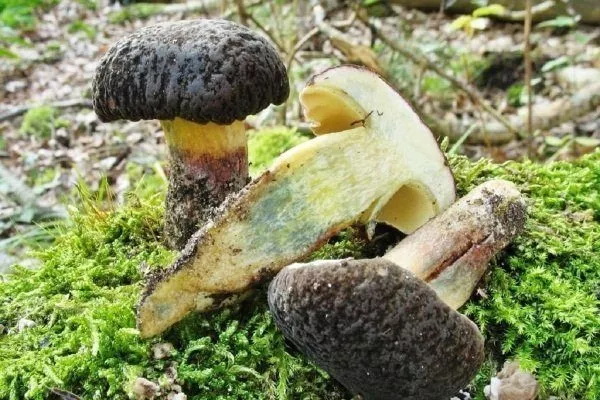
Velvet flywheel
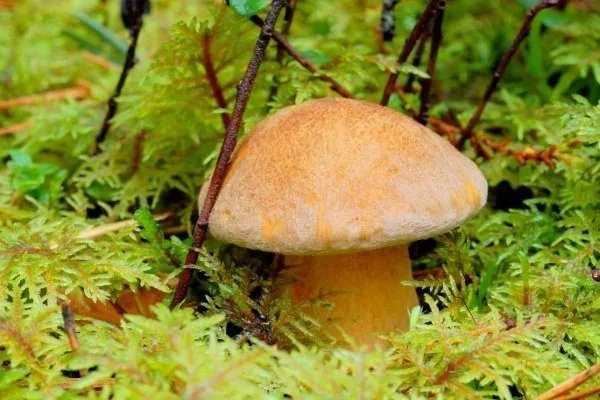
Yellow-brown flywheel
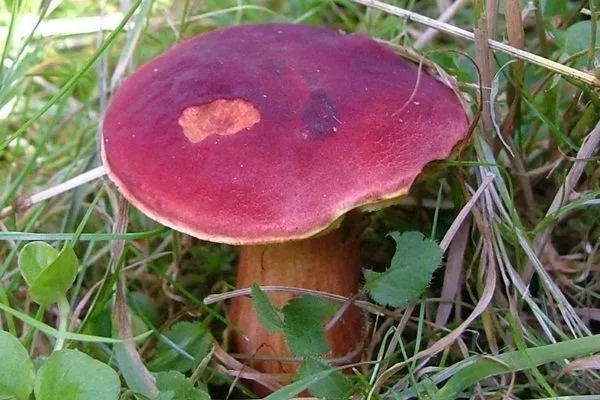
Red boletus
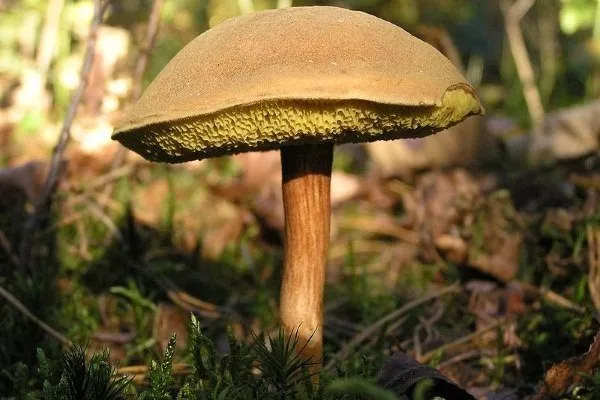
Green flywheel
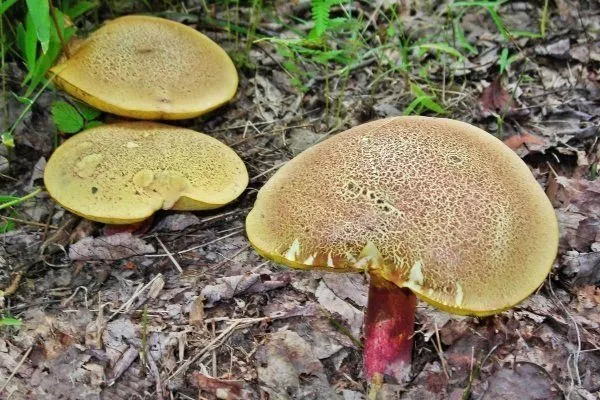
Cracked flywheel
Among this species of mushrooms, there are also inedible varieties. These include:
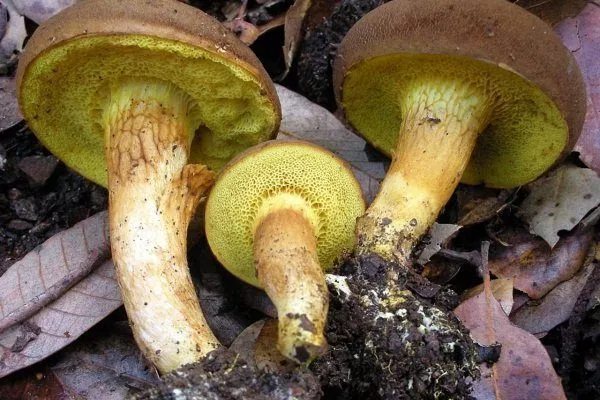
- Parasitic flywheelThis mushroom can be confused with young green boletus mushrooms. It is small in size, while edible varieties are wider and taller. Its cap reaches no more than 5 cm in diameter. The mushroom is not poisonous, but it is also not suitable for consumption.
- Gall mushroomIt can be confused with the birch bolete or the boletus. It has a characteristic bitter taste. It is not poisonous, but is not edible.
- Pepper mushroomThis species of boletus has a convex cap up to 7 cm in diameter. It is light brown in color and has a spicy, peppery flavor. The pepper mushroom is a poisonous variety of boletus.
Parasitic flywheel
Gall fly agaric
Pepper flywheel
To distinguish an edible boletus from a false one, remember that the latter is smaller in size than the edible mushroom and lacks the characteristic mushroom odor. In fact, it has no odor at all.
Another sign that helps distinguish edible boletus from inedible boletus is that when you cut an edible boletus, the cut surface will turn blue. Inedible boletus mushrooms do not change color when cut.
Places and time of growth
Different mushroom species grow in different places. For example, the Polish mushroom is found in Siberia and the North Caucasus. It prefers coniferous forests, growing on sandy soils.
The red boletus can be found in the Far East. This mushroom species can also be found in North African countries and in deciduous forests in Europe.
Green boletus grows everywhere, in forests with deciduous and coniferous trees.
The half-golden boletus can be found in the forests of the Caucasus and the Far East.
Mushrooms begin actively growing in July and finish fruiting in September, but these timings vary for different boletus species. For example, the Polish boletus is harvested from June to November, while the red boletus is harvested in August and September.
Technology for growing boletus at home
To reap a bountiful harvest without leaving home, you can plant boletus mycelium in your garden. A mushroom bed won't take up much space. Choose a shady spot. The trench into which you plant the mycelium should be about 30 cm deep.
The substrate for the mushroom bed can be found in the forest. It should contain branches, humus, and leaves. It's best to use soil from where the boletus mushrooms grew.
Mushroom Bed Preparation Checklist
- ✓ Choose a shaded area with moist soil.
- ✓ Dig a trench 30 cm deep.
- ✓ Fill with forest substrate (branches, leaves, humus).
- ✓ Use soil from places where boletus grows.
- ✓ Provide daily watering for the first 60 days.
The soil collected from the forest should be placed in a prepared trench. Afterwards, the collected mature boletus mushrooms should be soaked in clean, cold water. Let them soak for 24 hours.
After the specified time, mash the mushrooms with your hands to form a paste. Add a little water and pour the mixture into the trench, which should have been filled with nutrient-rich material (leaves, humus, branches). This will create an artificial mycelium. Sprinkle the mycelium with about 5 cm of soil.
During the first two months, the mushroom beds need to be watered generously to prevent the mycelium from dying due to drought. The first boletus mushrooms will appear one year after the mycelium is sown.
If you're growing a type of boletus such as the Polish boletus, it's best to grow it in its natural habitat rather than in soil. This means oak, beech, pine, or hornbeam trees should be growing near the planting site.
You can also grow boletus mushrooms on stumps. In this case, sow the mycelium near the stumps. Cover the crops with straw.
Useful properties of the mushroom
The fly agaric has the following beneficial properties:
- facilitates the work of the gastrointestinal tract: the fly agaric contains enzymes that help improve the digestion process;
- stimulates the functions of the thyroid gland;
- reduces the risk of developing atherosclerosis;
- improves vision;
- removes toxins from the body;
- maintains body tone;
- promotes the restoration of nerve cells;
- strengthens hair and nails, improves skin condition;
- promotes the elimination of harmful toxic substances from the body;
- helps reduce the severity of inflammatory processes, since the fly agaric contains a special substance that acts as a natural antibiotic;
- Maintains strong teeth and bones as it contains calcium.
Boletus mushrooms are low in calories but nutritious, so they can be eaten even if you have extra pounds.
Despite all the beneficial properties of mushrooms, boletus mushrooms should not be consumed by people suffering from gastrointestinal diseases, liver diseases, or urolithiasis.
How and what to cook from boletus mushrooms?
When processing harvested boletus mushrooms, remember that they darken when exposed to air after being peeled. Therefore, they should be immersed in water with a solution of citric acid (2 g per liter) and salt (1 teaspoon per liter).
These mushrooms can be pickled, salted, fried, or added to various dishes. Boletus mushrooms have a distinct mushroom flavor and aroma. The entire mushroom, including the cap and the underside, is used in dishes.
The boletus mushroom goes well with meat, chicken, cabbage, pumpkin, and cream.
Popular dishes made from such mushrooms are:
Pickled boletus mushrooms
| Ingredient | Quantity | Alternative |
|---|---|---|
| Salt | 1 tablespoon | Sea salt |
| Sugar | 1 tablespoon | Honey (2 teaspoons) |
| Vinegar 9% | 1 tablespoon | Lemon juice (2 tablespoons) |
| Bay leaf | 2 pcs | Currant leaves |
| Carnation | 3 buds | Coriander (1/2 teaspoon) |
Clean and rinse the mushrooms thoroughly. Place them in a deep saucepan, cover with water, and bring to a boil. Simmer for 15 minutes over low heat, then drain the mushrooms in a colander.
While the water is draining, prepare the marinade. Add a tablespoon of sugar and salt to a liter of water, then add two bay leaves, a couple of cloves of garlic, and a few cloves. Bring to a boil, then add a tablespoon of vinegar.
Without turning off the heat, add the mushrooms to the marinade and simmer for 5 minutes. Arrange the mushrooms in sterilized jars. The liquid should cover the mushrooms. Roll up the jars. Store the marinated mushrooms in a cool place.
Stewed boletus mushrooms
To prepare this flavorful dish, take a kilogram of mushrooms, an onion, and 200 grams of sour cream. Boil the mushrooms in a heavy-bottomed pan for 1.5 hours, then fry.
A few minutes before the mushrooms are done, add chopped onion, salt, and pepper. Then, add sour cream and a little water.
Once the sauce has thickened, the dish is ready. It can be served as a sauce for cereals or pasta.
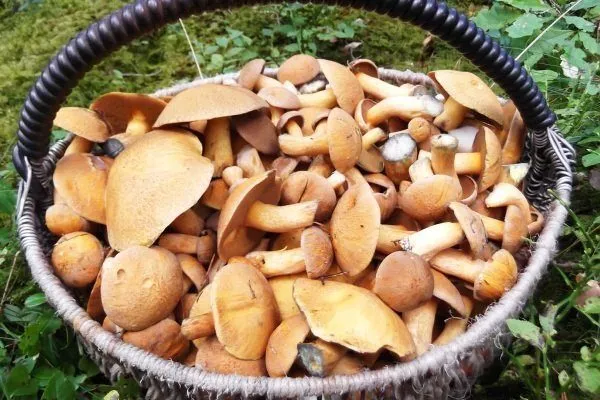
Fried mushrooms for the winter
This is a different preparation from the usual pickled or salted mushrooms. To prepare, you'll need a kilogram of boletus mushrooms, 250 ml of vegetable oil, and salt and pepper to taste.
Clean and wash the mushrooms, then boil them twice for 15 minutes, changing the water and rinsing them after each boil. Heat a frying pan with vegetable oil, add the sliced mushrooms, cover, and simmer for half an hour. Then remove the lid and simmer for another 15 minutes until the liquid has completely evaporated. Add salt and pepper.
Place the cooked mushrooms in sterilized jars, pour the remaining oil from the frying pan to a height of 2 cm, and seal. Store the prepared mushrooms for up to 6 months.
Boletus mushrooms with honey
This is a very unusual dish with a pleasant sweet and sour flavor. To prepare it, you'll need 1.5 kg of mushrooms, 2 tablespoons of honey, 2 cloves of garlic, 2 tablespoons of mustard and vinegar, 50 g of vegetable oil, and parsley.
Clean and wash the boletus mushrooms, then dice them. Chop the herbs, press the garlic, then add the honey, vinegar, mustard, and sliced mushrooms. Mix thoroughly, then refrigerate for 3 hours.
Heat vegetable oil in a frying pan and add the entire mixture along with the marinade. Simmer over low heat for 45 minutes. This dish goes well with boiled potatoes.
Mushroom soup
You can cook it with either meat broth or vegetables. Process the mushrooms (300 g) and trim the stems. Chop the boletus mushrooms. Peel and chop the onion, 3 potatoes, and a bunch of green onions.
Fry the mushrooms for 8-10 minutes, then add the onion and fry for another 4-5 minutes. Place the contents of the pan in boiling water or broth, season with salt, add 2 tablespoons of pearl barley, and cook for 10 minutes over medium heat. Then add the potatoes to all the ingredients and cook for 15 minutes.
Next, add the chopped herbs, turn off the heat, and let the soup simmer, covered, for 10 minutes. Serve with sour cream.
Salad with boletus mushrooms
To prepare the salad, boil 3-4 potatoes in their skins and chop them. Also chop an apple, 300 g of marinated mushrooms, and 150 g of ham. Mix together, add chopped celery and parsley. Season with vegetable oil and vinegar, and add salt and ground black pepper if desired.
The boletus mushroom is common on every continent. It has several species, most of which are edible. Boletus mushrooms can be used in a variety of dishes and can also be preserved for the winter. Growing boletus mushrooms at home is easy.