
Ukraine's climate is ideal for the growth of many edible mushroom species. Many enthusiasts prefer to collect them themselves, but mushroom hunting requires information not only about the species but also about the locations and times of their occurrence in the country.
Porcini mushrooms
| Name | Leg height (cm) | Cap diameter (cm) | Time of growth |
|---|---|---|---|
| White mushroom | 10-25 | 5-25 | May-November |
| Oyster mushroom | 5-20 | 5-20 | September-December |
| Volnushka | 1-10 | 1-10 | August-September |
| Talker | 5-22 | 5-22 | July-October |
| Milk mushroom | 5-25 | 5-25 | July-September |
| Raincoat | 20-50 | 20-50 | May-November |
| Dubovik | 5-25 | 5-25 | May-September |
| Fox | 10 | 10 | June-November |
| Meadow honey fungus | 4-11 | 3-9 | May-October |
| May mushroom | 7 | 10 | May-July |
| Butter dish | 4-10 | 15 | June-November |
| flywheel | 3-11 | 4-12 | May-October |
| Dung beetle | 5-20 | 5-20 | July-October |
| Cobweb | 8 | 10 | August-September |
| Birch boletus | 3 | 4-12 | July-October |
| Aspen mushroom | 15 | 5:30 | June-October |
| Polish mushroom | 5-12 | 20 | July-October |
| Ryzhik | 3-8 | 3-8 | July-December |
| Rowing | 5-12 | 6-17 | October-December |
| Morel | 15 | 8 | April-June |
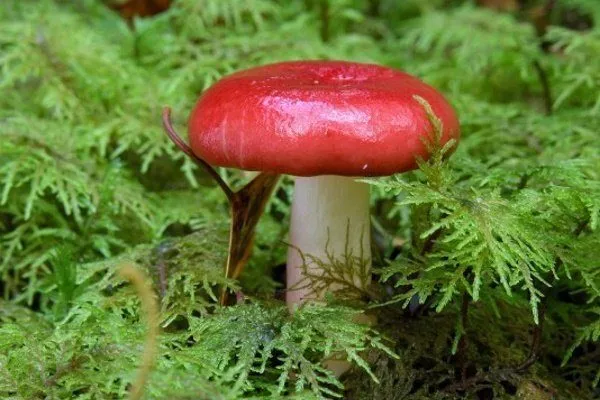
| Russula | 12 | 5-16 | July-September |
| Truffle | 1-10 | 1-10 | Winter-Summer |
| Chaga | 5-20 | 5-20 | All year round |
| Champignon | 5-15 | 5-15 | May-October |
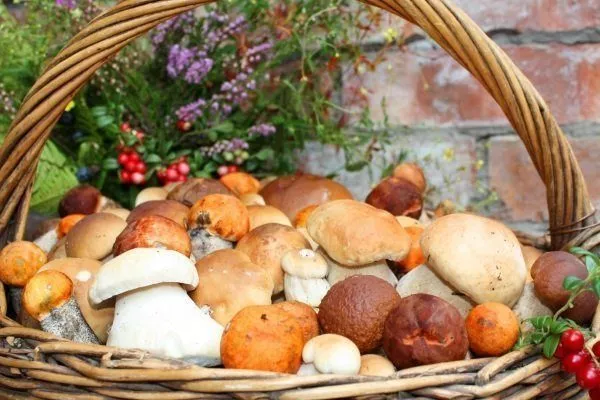
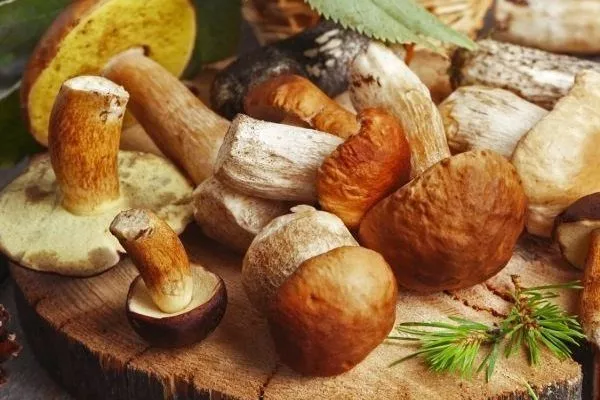
Description. U porcini mushroom (boletus) The flesh has a remarkable feature: it remains perfectly white when fried, stewed, or dried. This tubular mushroom has a stem that can reach up to 25 cm in height (10-12 cm on average) and about 10 cm in thickness. It has a barrel-shaped form. As it grows, it can acquire a cylindrical (narrowed or widened) shape, but the base always remains slightly thick. The surface of the stem is white, sometimes with a brownish or reddish tint.
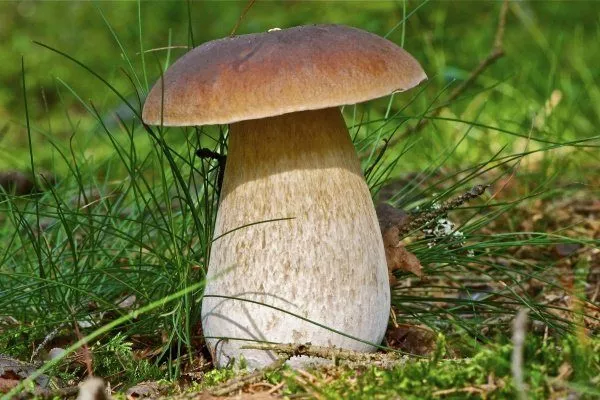
Time to grow. The season for the active emergence of porcini mushrooms is extremely variable and depends on the growing location. Porcini mushrooms begin to grow in May, and the abundant mushroom production ends in November (in warmer regions of Ukraine). In northern regions, porcini mushrooms appear from June until September, with the mass harvest beginning in the second half of August.
Double - gall mushroom.
Oyster mushrooms
Description. Oyster mushroom – a fairly massive mushroom with a grayish-brown or gray cap, ranging from 5 to 20 centimeters in diameter. The stem is very tough and, due to its density, is generally not eaten. This mushroom grows in a cluster, sometimes containing up to 30 mushrooms, weighing up to three kilograms.
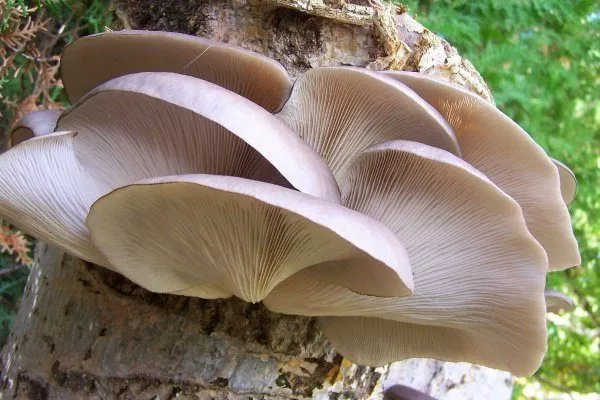
Time to grow. From the end of September to the end of December, as this variety does not tolerate high temperatures.
Doubles They don't grow in Ukraine.
Volnushki
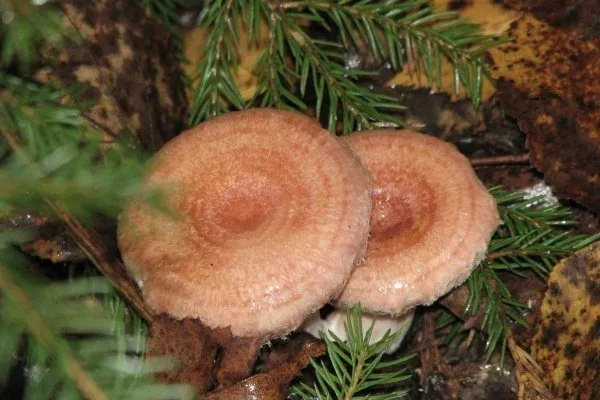
Description. Their cap ranges from 1 to 10 cm in width, initially convex and then concave, but always with inward-turned edges. The entire cap is covered with dense hairs, hanging from the ends in rather long tufts, giving the mushroom a charming appearance. However, as the mushroom ages, these tufts become almost invisible. The cap is pale pink, sometimes with a white sheen, but more often yellow or grayish. The stem is also somewhat paler than the cap and generally more or less yellowish. It is dense but smooth, reaching no more than 5 cm in height.
Time to grow. The mushroom usually appears from the end of August to the end of September.
Doubles:
- pink wave;
- white milk mushroom.
Talkers
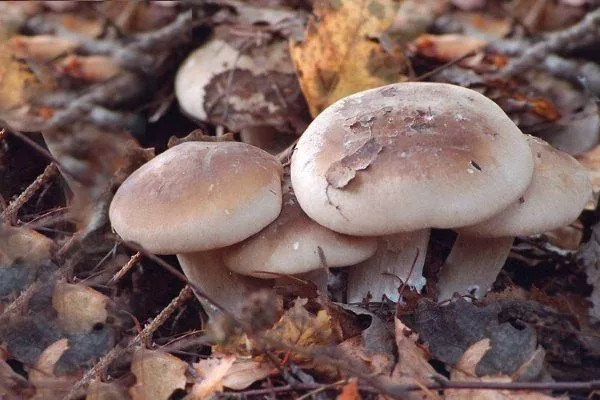
Description. Talker The cap is matte, rust-colored, or pale yellow, and measures 5-22 cm in diameter. It may sometimes have brown or rusty spots. The cap is fleshy and bell-shaped. The stiff stem, composed of numerous fibers, can reach up to 15 cm in height, is cylindrical, and becomes much narrower at the base than at the top. The coloring is generally the same as the cap, but may be slightly lighter. The stem is darker at the base.
Time to grow. The mushroom begins to grow in early July and does not stop until mid-October.
Doubles:
- giant talker;
- whitish talker.
Milk mushrooms
Description. Milk mushroom The cap is 5-25 cm in diameter. It is usually yellow, but can be brown or slightly golden, often with small scales. When young, it is slightly convex, then gradually straightens out or becomes concave. The edges are usually curled under. It is smooth to the touch, but can be slippery and sticky in wet weather. Its stem, 5-12 cm tall, has characteristic bright yellow pits or indentations, is sticky, very strong, but hollow.
Time to grow. The most optimal time for these representatives is July, August and September.
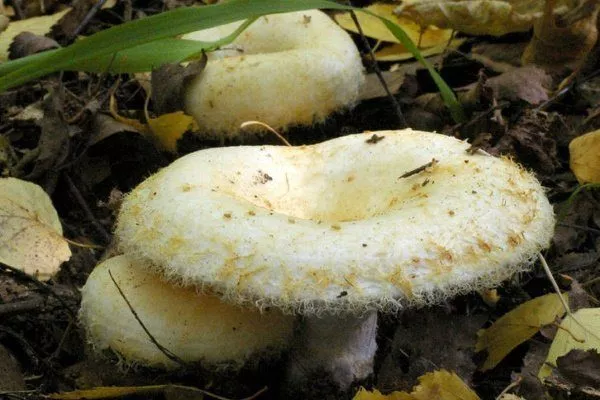
Doubles milk mushrooms do not have this due to their structural features.
Raincoats
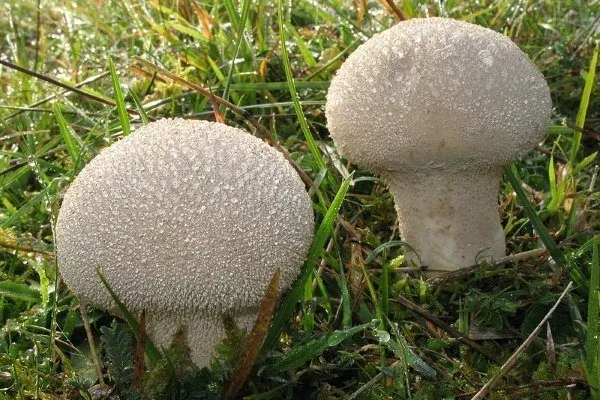
Description. The fruiting body is very large, spherical and flattened, 20-50 cm in diameter and weighing up to 10 kg. The outer shell is white and smooth, falling off with age. The inner shell is papery; in mature mushrooms, it is yellowish-brown, breaking into irregular fragments to release the spores. The young flesh is white, firm, with a very pleasant taste and aroma. As it ripens, it turns yellowish-olive and finally brownish-brown.
Time to grow. Grows from late May to early November.
Doubles There is none in Ukraine.
Oak trees
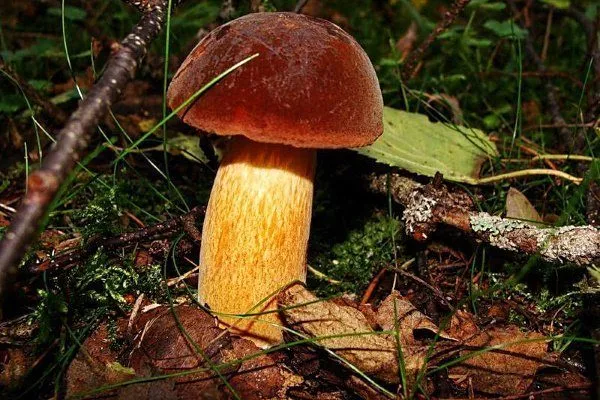
Description. The boletus cap reaches up to 25 cm in diameter and can range in shades of brown, from blackish-brown to light olive. Pressing it sometimes leaves dark spots. It is usually hemispherical in shape, but occasionally can be almost flattened. It feels velvety to the touch, but in damp weather or after rain, it becomes sticky and slippery.
The stem can reach 5 to 17 centimeters in height. It is typically dark orange, red, or brown. A small cluster of greenish spots may be present at the base. The club-shaped stem makes it easy to recognize, and the characteristic tuberous thickenings and mesh-like patterns along its entire length make the mushroom truly unique. The flesh is yellow and turns blue when exposed to air.
Time to grow. From the end of May until the beginning of September.
Doubles No.
Chanterelles
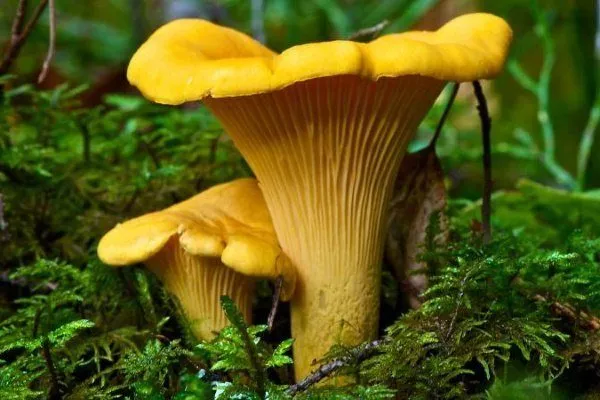
Description. hat common chanterelle Chanterelles reach approximately 10 centimeters in diameter. They have a yellow or orange hue and an irregular shape. They can be either concave or convex, funnel-shaped or spreading. The stem is up to 10 cm tall, solid and thick, usually fused with the cap and similar in color to it. It widens from bottom to top. The flesh of chanterelles is white, dense, and very fleshy, sometimes containing more fiber. It turns slightly red when pressed.
Time to grow. From the beginning of summer until the very end of autumn.
Double - false fox.
Meadow honey mushrooms
Description. The cap (3-9 cm in diameter) is ochre, reddish-brown, or yellowish. In dry weather, it fades to light brown or cream, and in damp weather, it becomes sticky and clinging. It is hemispherical in shape with a small central tubercle, which over time becomes slightly convex or almost flattened. The edges are uneven and ribbed, almost transparent, and paler than the center. The stem of these mushrooms is 4-11 cm tall, thin and sinuous, cylindrical, and tapers slightly from bottom to top.
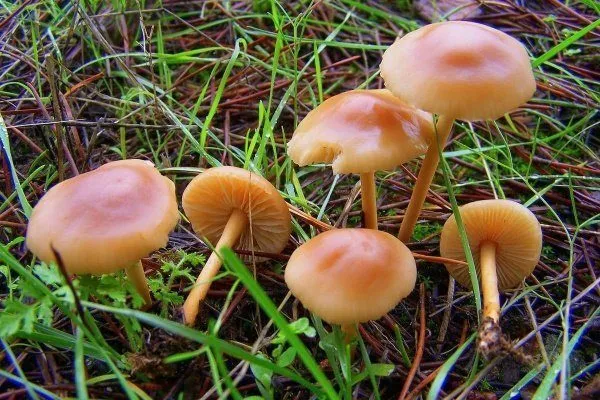
Time to grow. From the end of May to mid-October.
Doubles:
- young poisonous whitish talker;
- forest-loving collybia.
May mushrooms
Description. The cap of the May mushroom can reach 10 cm in diameter. Young mushrooms typically have a spherical cap, but as the May mushroom matures, it opens up, becoming flatter. The cap surface is usually white or shades of yellow. The stem is thick and relatively short, reaching about 7 cm in height. The stem surface is smooth. The color varies from white to cream. The flesh within the stem is dense and white.
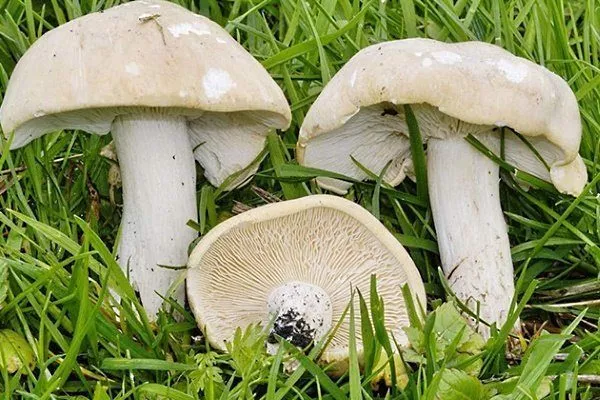
Time to grow. From mid-May to the end of July.
Double - white rowan.
Butterlets
Description. The cap of young mushrooms is hemispherical, sometimes conical. As it matures, it straightens out and typically takes on a cushion-like shape. The cap's maximum diameter is 15 cm. The flesh of butter mushrooms is firm but soft. Its color is whitish or yellowish, and in some species, the cut may change, turning red or blue. The stem of butter mushrooms is cylindrical. Its average diameter is 1 to 3.5 cm and its height is 4 to 10 cm. Its color is whitish with a dark underside or matches the cap's color.
Time to grow. Some species sometimes appear as late as April, but the first boletus mushrooms can generally be harvested in June. The second flush coincides with the July linden blossom season. The third flush begins in August and continues until October-November.
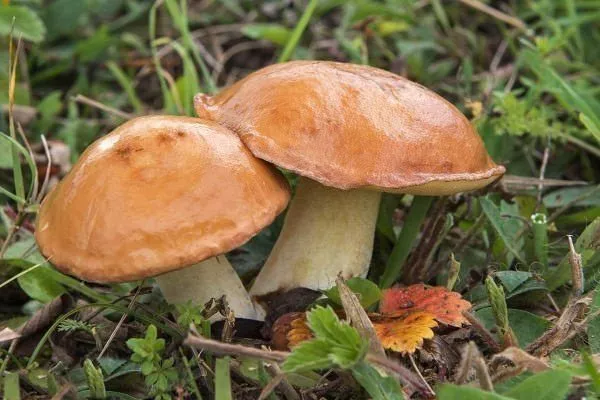
According to popular belief, the appearance of butter mushrooms coincides with the flowering of pine trees.
Double - pepper mushroom.
Boletus mushrooms
Description. The cap is 4-12 cm in diameter, usually greenish-gray or olive, but can be slightly brown. It is slightly convex and velvety to the touch. The stem is 3-11 cm tall, cylindrical, widening from bottom to top, and can have a brownish mesh. The flesh is white, with a slight bluish tint when cut.
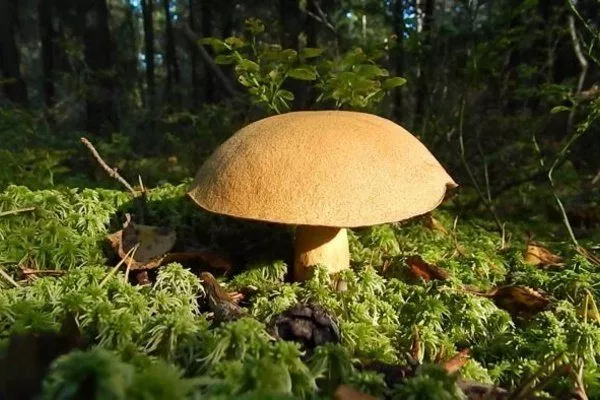
Time to grow. From mid-May to early October.
Double - green-variegated boletus.
Dung beetles
Description. The mushroom cap appears to be covered in a distinctive lace—the so-called fringe. The thin walls of the cap are externally distinguished by a snow-white hue. When picking, pay special attention to the inner gills of the cap. They should be milky white. Even the slightest darkening is a sign of an old mushroom. Eating such mushrooms is not recommended, as it can cause severe poisoning. The entire surface is covered with dung beetle - white, silky to the touch when young.
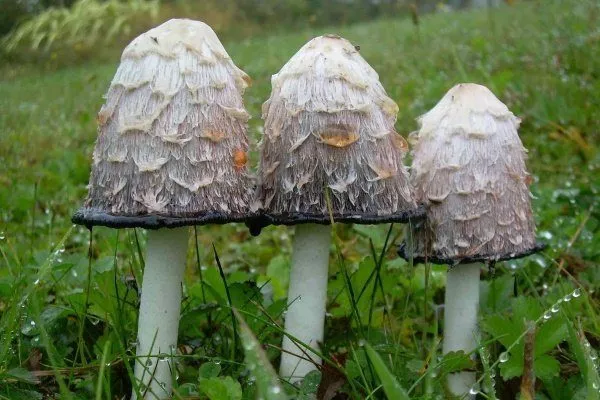
Time to grow. From July to October.
Double - death cap.
Cobwebs
Description. The cap is up to 10 cm in diameter. In young mushrooms, it is dark red, reddish-brown, or ocher-brown with an olive tint. The flesh is bluish, thick in the center. The stem is up to 8 cm tall, with a tuberous swelling at the bottom. The stem surface is white with a purple tint, with a whitish annular stripe.
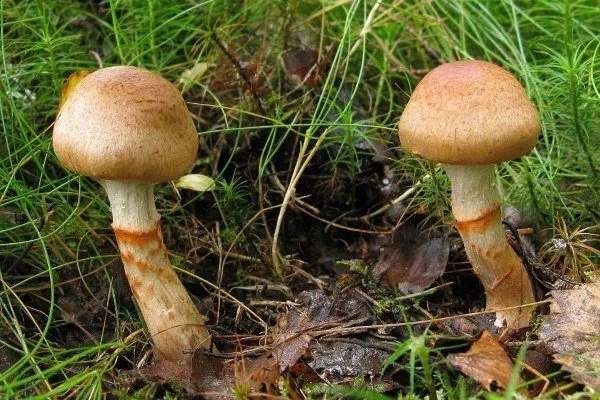
Time to grow. From August to the end of September.
Double - purple cobweb.
Birch boletes
Description. hat birch boletus The stem ranges from 4 to 12 centimeters in diameter. Its color can be gray, brown, or brownish, sometimes almost black. Its shape resembles a swollen cushion. The white or grayish stem rarely exceeds 3 cm in diameter, is scaled, and tapers from bottom to top.
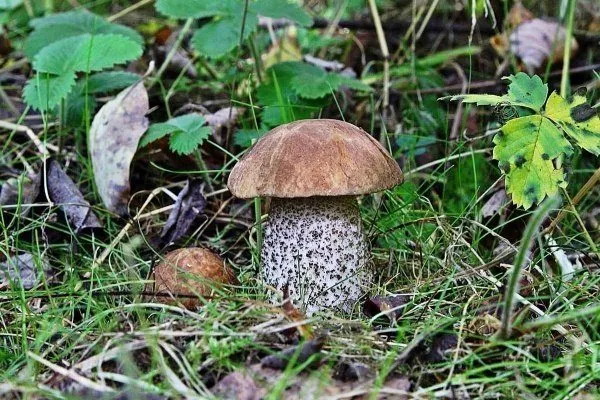
Time to grow. From mid-summer to mid-autumn.
Double - gall mushroom.
Aspen mushrooms
Description. The aspen mushroom cap ranges from 5 to 30 centimeters in diameter and is brown with hints of red or orange. It is hemispherical in shape and easily detaches from the stem. The cap skin is difficult to remove, leaving only bits of flesh. The stem is up to 15 cm tall and is solid gray or off-white. The flesh is firm and dense, firm in young mushrooms and soft and slightly crumbly in older ones.
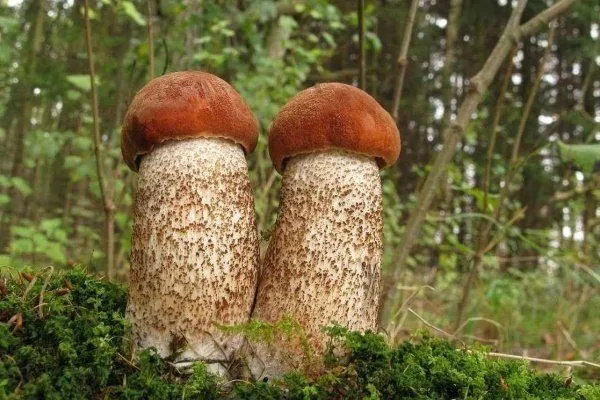
Time to grow. Appears in June and disappears in October.
Doubles No.
Polish mushrooms
Description. When describing the Polish mushroom, special attention should be paid to its cap. It is large (up to 20 cm in diameter), ranging from dark or bright brown to chestnut-brown, initially convex with inward-curving edges, then flattened, bare, smooth, and dry, becoming slimy or sticky in damp weather. The tubes and pores are uniformly colored, dirty yellow with a greenish tint, turning blue when pressed. The flesh of young mushrooms is white and firm, while that of mature mushrooms is pale yellow, dense, and fleshy.
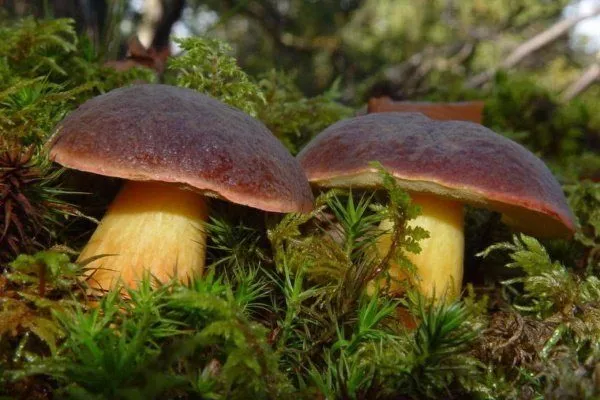
Time to grow. From mid-July to the end of October.
Doubles The Polish mushroom is not found in Ukraine.
Chanterelles
Description. The stem, 3-8 cm tall, is the same color as the cap, very brittle, and cylindrical. When young, it is solid, becoming almost hollow with age. The flesh is orange, but where broken and when exposed to air, like the milky sap, it quickly changes color to red, and then to greenish. It has a pleasant taste and a fruity aroma.
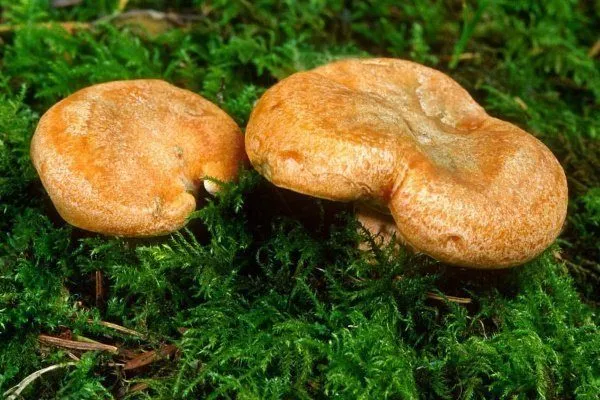
Time to grow. They appear in the middle of summer and continue to delight until the very beginning of winter.
Double - milky.
Rows
Description. The cap is 6-17 cm in diameter, yellow-red, with reddish scales, and convex. Over time, it becomes almost flat. It feels velvety and dry to the touch. The stem of the yellow-red rowan mushroom is 5-12 cm tall, hollow and curved, with fibrous scales along its entire length and a noticeable thickening at the very base. It is similar in color to the cap.
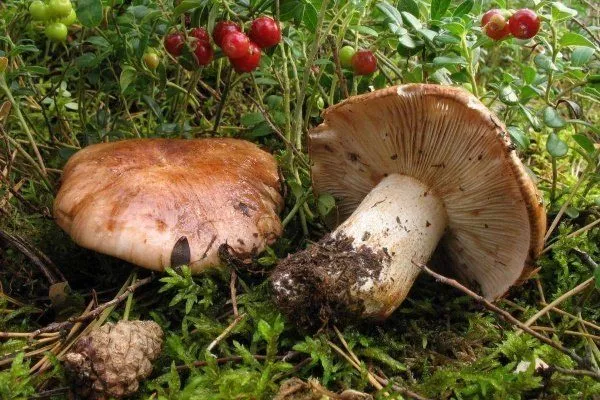
Time to grow. Mainly in the cold season, when there are no other mushrooms.
Double - mouse row.
Morels
Description. The cap reaches up to 8 cm in diameter, is broadly bell-shaped, and adheres to the stem, as if placed on it. It has free edges, is longitudinally wrinkled, yellowish-brown or ochre-brown on top, and smooth and whitish underneath. The stem of the morel cap can reach up to 15 cm in length, is cylindrical, and slightly widens toward the base. It is white at the very top, and yellowish below, with bran-like scales encircling the stem. The flesh of the cap is thin, waxy, and has no distinctive odor or taste.
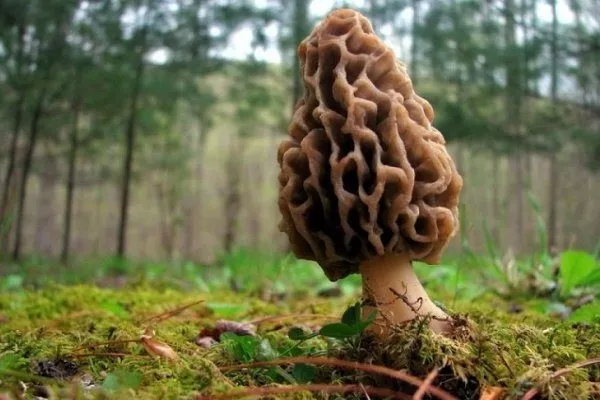
Time to grow. From mid-April to early summer.
Doubles –morels. How to distinguish morels from morels – read here.
Russula
Description. The cap diameter of these mushrooms ranges from 5 to 16 cm. Their caps come in a rainbow of colors. Their shape also changes depending on the mushroom's age: young specimens have a hemispherical cap, while older specimens have a more spreading cap. The cap is fleshy, often with numerous cracks. The skin is quite dense and thick, practically inseparable from the flesh. The stems reach up to 12 cm in height.
Time to grow. From mid-July to early September.
Doubles:
- greenish representatives of the death cap;
- black russula;
- Russula mealy;
- ochre russula.
Truffles
Description. A medium-sized truffle is almost identical to a nut, but some can be as large as a potato tuber, weighing over 1 kg. The mushrooms themselves resemble potatoes in appearance. The peridium (outer layer) covering the truffles has a smooth surface. Sometimes, numerous microcracks or characteristic multifaceted warts are noted.
Truffles have a distinct marbled texture in cross-section. This is formed by the alternating light and dark "veins" that contain spore sacs of varying shapes. The flesh of the mushrooms can vary in color: white, black, gray, or brown. This coloring depends on the specific truffle species.
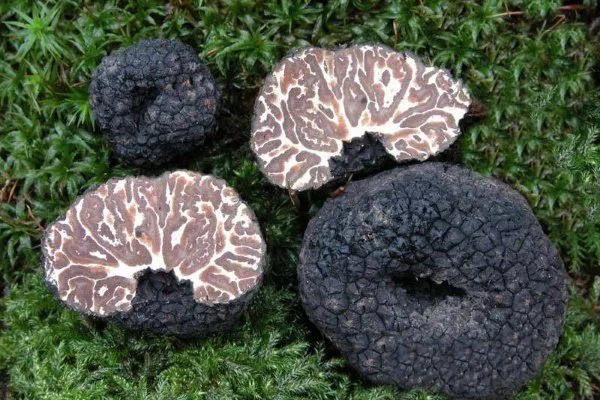
Time to grow. The best time to look for truffles is in winter and summer.
Doubles They don't grow in Ukraine.
Chaga
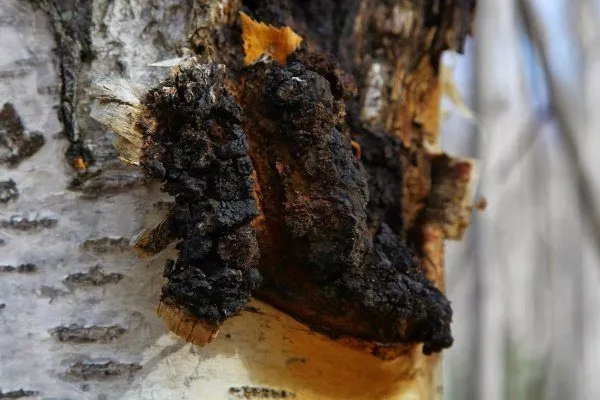
Description. Black, irregularly comb-shaped growths form on the tree trunk. Veins (not completely colored) are visible within the growths throughout the mushroom's body. Chaga is dark brown. The flesh near the trunk is brown with a reddish tint.
Time to grow. Chaga It usually grows over several years, so it can be found in any season.
Doubles No.
Champignons
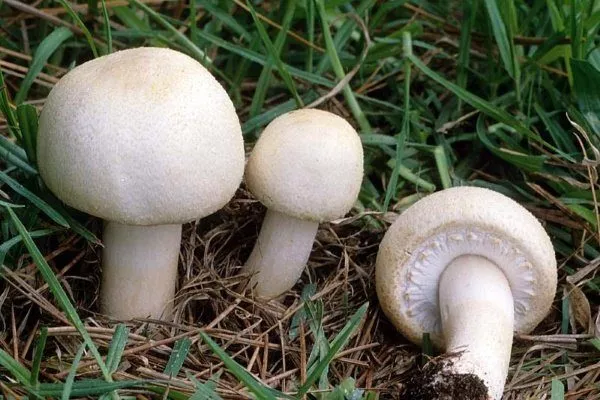
Description. The cap reaches up to 15 centimeters in diameter and is white or light brown in color. It is hemispherical in shape, but becomes spread out as the mushroom grows and develops. It feels velvety to the touch, and small growths are occasionally observed. The flesh is white, but turns pinker when broken or exposed to air.
Time to grow. From the end of May to mid-October.
Doubles:
- yellow-skinned champignon;
- flat-headed champignon;
- reddening champignon.
Mushroom places in Ukraine
Depending on the region, you can find a wide variety of representatives of the mushroom kingdom here.
- ✓ The presence of old trees, as many fungi form mycorrhiza with the roots of certain tree species.
- ✓ Soil moisture: Mushrooms grow best in moderately moist areas, avoiding both swampy and overly dry areas.
Vinnytsia
It's famous for its vast abundance of chanterelles, porcini mushrooms, and Polish mushrooms. Honey mushrooms and milk mushrooms are also available here.
Mushrooms grow in the area:
- the outskirts of Nemirov - the village of Vorobyovka, Dubmaslovka and other nearby villages;
- Black forest near Kalinovka;
- the outskirts of the village of Petrik.
Volyn
Volyn is the birthplace of giant porcini mushrooms. But the region is also rich in Polish mushrooms, russula, aspen mushrooms, and butter mushrooms.
Mushrooms grow here:
- in the Gorokhovsky district;
- near the Shatsky Lakes;
- villages of Shtun, Maslovets, Vorchin.
Dnieper
In the Dnipropetrovsk region, you can find butter mushrooms in clearings among conifers. Honey mushrooms and birch boletes are also found. Porcini mushrooms are also found, but much less frequently.
Here mushrooms grow in the area:
- rivers near Novomoskovsk - the village of Orlovshchina and others;
- village of Gvardeyskoye;
- Kirovsky, Shulgovka, Tsarichanka on the Orel River, Nikolaevka.
Zhitomir
The region is rich in honey mushrooms, oyster mushrooms, russula, birch boletes, and occasionally, porcini mushrooms. They grow near the villages of Slobodka, Vysoka Pech, Perlyavka, and Olievka.
Transcarpathia
If we are talking about Transcarpathia, then we are talking about porcini mushrooms, but sometimes you can also find birch boletes here.
Here mushrooms grow in the area:
- the vicinity of Lake Synevyr;
- village of Lumshory;
- villages of Dragovo, Vyshka, Kolochava;
- Svalyava – villages of Rodnikovaya Guta, Solochin;
- Mukachevo – the villages of Mikulintsy, Ilkivtsi, Schastlivoe, Krytoe.
You can even find truffles in the Transcarpathian forests. The key is to be extra vigilant and outsmart other mushroom pickers.
Carpathians
At least 50 species of mushrooms grow among the beech and coniferous forests, and among them, porcini mushrooms, aspen mushrooms, honey mushrooms, and russula mushrooms are abundant.
Mushrooms grow in the area:
- Beskyd mountain ranges - a massif between the Opir, Stryi and Mizunka rivers on the border of Lviv and Ivano-Frankivsk regions;
- the outskirts of the villages of Oriv, Tukhlya, Oryavchik and Grebennoye.
Kyiv
Near Kyiv, you'll find numerous forests that yield mushroom bounty year after year. The harvest includes chanterelles, porcini mushrooms, birch boletes, and porcini mushrooms.
Here they grow in the area of the villages:
- Lower Dubechnya;
- Klavdiev;
- Nikolaevka;
- Fenevichi;
- Old.
Lviv
In the forests, the most common mushrooms are aspen mushrooms, birch boletes, honey mushrooms and porcini mushrooms.
Mushrooms grow in the Starosambir, Turkovsky, and Skole districts. The largest number of mushrooms grows around:
- the villages of Dubina, Skhidnitsa and Slavskoye;
- the village of Likhobora near Mount Pikuy.
Poltava
Mushroom pickers most often come to the Poltava region for butter mushrooms.
List of regions rich in mushroom places:
- the outskirts of Kremenchug – Sosnovka;
- the villages of Ternovshchina and Krotenki;
- Khorolsky district - Musievka and Radki;
- Komsomolsk - Svetlogorsk;
- Globinsky district - Velbovka, Lyutenka, Bobrik;
- Shishatsky district - Yareski village;
- Poltava district – the outskirts of the village of Verkholy.
Smooth
In the Sarny district, porcini mushrooms, Polish mushrooms, and red-headed mushrooms grow.
There are also plenty of mushrooms in the vicinity of Nemovichi, Balashovka, Malynsk, Babin, and Karachun.
Sumy
They grow here honey mushrooms, porcini and Polish mushrooms, chanterelles, butter mushrooms, milk mushrooms.
List of regions rich in mushroom places:
- the vicinity of Lebedin (the village of Borovenki), Krasnopolye, Trostyanets;
- area of the villages of Mezhirich (Lebedinsky district), Volkovtsy and Tokari.
Ternopil
Here you can find:
- porcini mushrooms;
- honey mushrooms;
- aspen mushrooms;
- birch boletes;
- butter mushrooms;
- boletus mushrooms;
- aspen mushrooms.
List of regions rich in mushroom places:
- Dybshche, Dzvinyachka, Litvinov are the best places for picking mushrooms;
- in the villages of the Monastyrsky district - Krinitsa and Markova;
- in the villages of Shumsky district - Ilovitsa and Stozhok;
- Mshanetsky forests of Zborovsky district;
- Kremenets Mountains.
Kharkov
The Kharkiv region is famous for its rowan mushrooms, saffron milk caps, morels, chanterelles, and the king of mushrooms—porcini mushrooms. Occasionally, you can also find butter mushrooms here.
List of regions rich in mushroom places:
- village Mokhnach;
- villages of Vasishchevo, Andreevka, Sheludkovka;
- forest from Merefa to Zmiev;
- the vicinity of Russkaya Lozovaya;
- spruce forests near Korobovy Khutors.
Khmelnitsky
In the Khmelnytsky region there are hornbeam, oak and mixed forests, rich in chanterelles, birch boletes, honey mushrooms and butter mushrooms.
List of regions rich in mushroom places:
- forests of Slavuta, Shepetovsky, Letichevsky, Izyaslavsky and Dunaevetsky districts;
- pine forests in the north of the region;
- the vicinity of the villages of Lysogorka and Savintsy.
Cherkassy
The local forests are home to porcini and Polish mushrooms, russula, honey mushrooms and butter mushrooms.
List of regions rich in mushroom places:
- Buchatsky forestry located near Kanev;
- forest near Kopani;
- young coniferous forests in the vicinity of the village of Mezhdurechye.
Chernihiv
In the Chernihiv forests you can find Polish mushrooms, birch boletes, butter mushrooms, russula, goat mushrooms, umbrellas and porcini mushrooms.
List of regions rich in mushroom places:
- village of Evminka;
- the vicinity of Radichev and Oleshnya.
Chernivtsi
The porcini mushrooms here are of incredible size.
Mushroom pickers go to the villages for them:
- Sergius;
- Vizhenka;
- Green.
Mushroom seasons
The most productive mushroom season in Ukraine is autumn. However, the poorest harvest season is not winter, contrary to expectations, but the turning point between winter and early spring.
Spring mushroom season:
- March is the month when finding mushrooms in Ukraine is the most difficult. Mushroom supplies are tight.
- In April, the first mushrooms begin to appear. Morels and some other mushrooms mark the first mushroom season of the year.
- May is rich in May mushrooms and birch boletes, and also, depending on the temperature and humidity in the regions, in other spring-summer mushrooms.
Summer mushroom season:
- In the second half of June, porcini mushrooms, aspen mushrooms, butter mushrooms, and birch boletes appear. This month marks the beginning of the second Ukrainian mushroom season.
- July is a month with a wide variety of mushroom species, but not particularly abundant in terms of yield.
- August marks the beginning of the third mushroom season. It's the perfect month to head to the Ukrainian hinterlands for harvest.
It's important to remember that mushrooms thrive in warmth and moisture. Therefore, their mass appearance depends not so much on the time of year as on climatic conditions.
Autumn mushroom season:
- September is the peak of the third mushroom season. This month combines the still-warm summer air with autumn rains.
- In October, many mushroom pickers close the season. Autumn mushrooms It's still easy to find, but there's significantly less competition.
- November is a very interesting month for mushroom species. In November, you can find mushrooms from all four seasons at once.
Winter mushroom season:
- In December, the late remains of autumn mushrooms, as well as oyster mushrooms and winter honey mushrooms, hatch.
- January is a great time to look for winter mushrooms.
- The winter season ends in February. Only one type of mushroom can be found this month: the winter honey mushroom.
Ukraine is a country famous not only for its wheat but also for the enormous diversity of mushrooms that grow throughout its territory. It's important for Ukrainian mushroom pickers to know not only the species but also the mushroom regions and seasons. However, caution is essential: there are also false mushrooms growing here that are not edible.