
This mushroom grows throughout Russia and can be found everywhere, as it's the most common mushroom. Unfortunately, it's not edible, and some publications even claim it's poisonous. There are, however, some varieties that are permitted for consumption, but it can be very difficult to distinguish them.
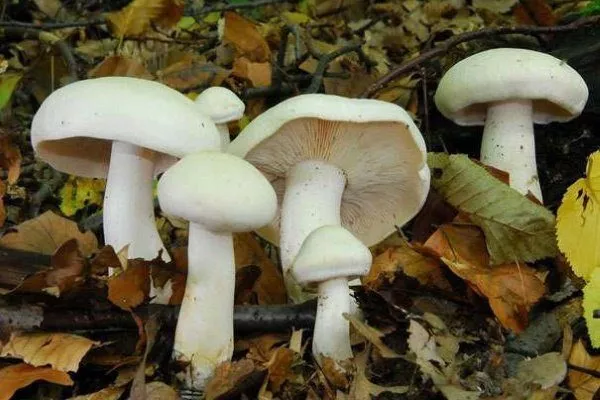
Description and characteristics of the mushroom
The mushroom is called a "triadovka" (a "row" mushroom) because it grows only in groups; it's impossible to find them singly. There are both poisonous and edible rows. The mushroom has a cap and stem, and its appearance is quite variable. There are over 15 varieties of rows in Russia, each with its own shape, size, and flavor.
- Hat. The mushroom cap is approximately 10 centimeters in diameter, though six-centimeter caps are rare. The cap has a grayish-white hue and feels dry and dull to the touch. If the mushroom is old, a yellow spot with speckles appears in the center of the cap. When young, the cap is convex, with slightly curled edges. As the mushroom ages, its surface becomes more spreading and convex.
- Leg. The stem is thick and the same color as the cap, but as it ages, it takes on a light brown hue underneath the cap. The stem can reach 10 centimeters in length, but some are as short as 5 centimeters.
- Records The white rows are wide and arranged next to each other. When young, they are white, but as the mushroom ages, they take on a yellow tint.
- Pulp The mushroom is dense, rich, and white. If you break it open, you'll see a pinkish hue inside. When young, it has no odor, but as it matures, it develops a rotten aroma, somewhat reminiscent of radish.
Chemical value of the mushroom
The white rowan has quite a large composition, here you can see the benefits it can bring to humans:
- Vitamin (A, B, C, D (2.7), K, PP and betaine.
- Potassium and calcium, phosphorus and iron, sodium and zinc, manganese.
- Lysine and threonine, alanine and phenylalanine.
- Acid (glutamic, aspartic, stearic).
- Ergosterol and phenols.
- Flavonoids and polysaccharides.
Based on research, scientists have found that the mushroom can kill pathogenic bacteria, eliminate or prevent viruses, reduce inflammation, and boost immunity. It is also recommended to use the mushroom in combination with other treatments for:
- diabetes mellitus;
- unstable blood pressure;
- arrhythmia;
- rheumatism;
- mental problems;
- diseases of the genitourinary system;
- cancer.
Edibility of the rowan
Most rowan mushrooms are inedible, but some can be eaten after boiling. It's virtually impossible to distinguish between edible and poisonous mushrooms on your own; only experienced mushroom pickers can do this. They share their experience on how to distinguish edible mushrooms from inedible ones: if the caps are smooth and beautifully white in good daylight, they are poisonous and should not be eaten.
- ✓ The presence of a color tint in the cap
- ✓ No unpleasant odor
- ✓ Smooth cap surface
Edible mushrooms always come in any shade of color—purple, pink, violet, yellow, and so on. Furthermore, bad rowan mushrooms have an unpleasant, specific odor, which can't be said about good mushrooms. Therefore, if you're unsure what kind of mushroom you're looking at, it's best to leave it alone and go pick other mushrooms.
People with the following conditions should not eat rowan mushrooms:
- low acidity;
- gallbladder problems;
- chronic gastrointestinal pathologies;
- pancreatitis;
- cholecystitis.
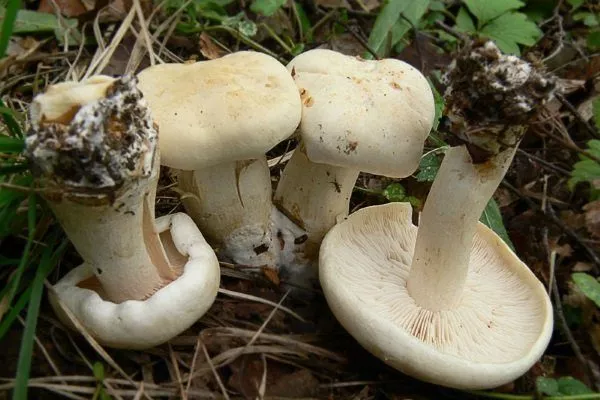
Symptoms of poisoning
A person may not be able to distinguish between an edible rowan and a poisonous one, and then poisoning occurs a couple of hours after consumption, which is expressed by the following symptoms:
- general malaise;
- nausea with vomiting;
- increased salivation;
- diarrhea;
- stomach pain.
If you notice even a few symptoms, you should immediately consult a doctor to have your stomach pumped and prescribe cleansing medications. Failure to seek help promptly can lead to hallucinations and other serious health problems.
Where and at what time do mushrooms grow?
White rowan mushrooms grow in acidic soils in mixed forests or dense deciduous forests, where birch and beech trees are abundant. They can also grow in parks, on the forest edge, and even in open, sunny clearings. These mushrooms are most abundant in the European part of Russia and in Primorye from July to October. Rowan mushrooms grow in a row or form a circle.
Similar mushrooms and their distinctive features
This mushroom can be confused with the edible champignon, but if you examine it closely and smell it, you can tell the difference. The gills are different: our mushroom's don't darken and have a distinctly unpleasant odor, while champignons have a pleasant mushroom aroma. The champignon also has a ring under the cap, which champignons lack.
| View | Edibility | Cap color | Smell | Peculiarities |
|---|---|---|---|---|
| White rowan | Inedible | Gray and white | Rotten aroma | Yellow spot with speckles on old mushrooms |
| Purple rowan | Edible | Purple, lilac-brown | Nice | Grows in large groups |
| Poplar rowan | Edible | Pinkish brown | Nice | Hemispherical cap shape |
| Gray rowan | Edible | Grey | Nice | It grows in pine forests |
| Scaly rowan | Edible | Dark brown | Fruit | Velvety cap with scales |
| Sulphur-yellow rowan | Inedible | Yellow-gray, rusty | Tar | Slightly toxic |
| Tiger rowan | Poisonous | Gray, gray-black, dirty white | Unpleasant | Covered with scales similar to a tiger's skin |
What mushrooms can be confused with the white rowan?
- With a stinking rowan, which smells like gas, is also not edible. Furthermore, it contains hallucinogens, which, when ingested, even when boiled or fried, can cause hearing and vision problems and even damage the nervous system.
- Earthy rowanIt's slightly smaller than the white rowan mushroom, and its cap has small scales. The mushroom smells like laundry soap when cut.
- Pointed rowan It is poisonous, has a pungent taste, and the ash-colored cap has a sharp tip.
- Purple rowan The cap is an edible mushroom, reaching a full 15 centimeters in diameter. Young mushrooms are purple, turning lilac-brown with age. The stem is smooth, 8 centimeters tall, and thickens under the cap. This mushroom species is quite common, and they grow in large groups (rows).
- Poplar rowan It has a hemispherical shape, becoming smoother with age. The mushroom is edible; its pinkish-brown cap grows up to 12 centimeters.
- Gray rowan. The cap of this edible mushroom is round, becoming flat and unsightly with age, reaching up to 12 centimeters in diameter. In older mushrooms, the skin may crack and take on a grayish tint. The grayish stem is up to 15 centimeters tall, smooth, and thickens under the cap. The gills are quite sparse, spaced widely apart, and turn gray or yellow with age. This mushroom species grows exclusively in pine forests.
- Scaly rowan This edible mushroom has a dark brown, convex cap. The conical cap is velvety, covered with small scales, and reaches 10 centimeters in diameter. The stem reaches 10 centimeters in height. The gills are sparse, cream-colored, and quite fleshy. The mushroom has a pleasant fruity aroma, but the taste is slightly bitter.
- Sulphur-yellow rowan This mushroom is inedible, but not highly poisonous or toxic. Eating it will only cause mild poisoning, and the symptoms will soon subside. Young mushrooms are yellow-gray in color, becoming rusty as they age. The cap grows to only 8 centimeters in diameter; when young, it is convex, but as it ages, it becomes flat with a dent in the center. The stem is up to 10 centimeters tall, thickening either at the base or, conversely, under the cap. The gills are quite sparse, the flesh has a tarry smell, and cooked mushrooms have a bitter taste.
- Tiger rowanThis mushroom is highly poisonous, but it can easily be mistaken for a proper mushroom. Its cap, reaching 12 centimeters in length, is spherical, becoming bell-shaped with age, and flattened in very old specimens. The skin can be gray, gray-black, or dirty white, covered with scales resembling tiger or leopard skin. The stem, reaching 15 centimeters in length, is white-rusty and straight. The gills are sparse and have a green tint. When the mushroom is ripe, beads of moisture appear on the cap. This type of mushroom can be found in coniferous and deciduous forests.
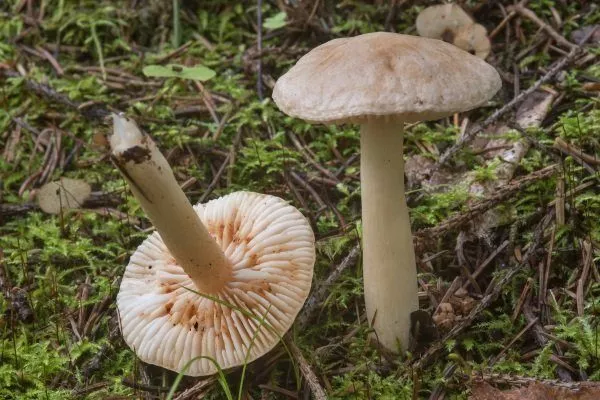
Inedible stinking rowan
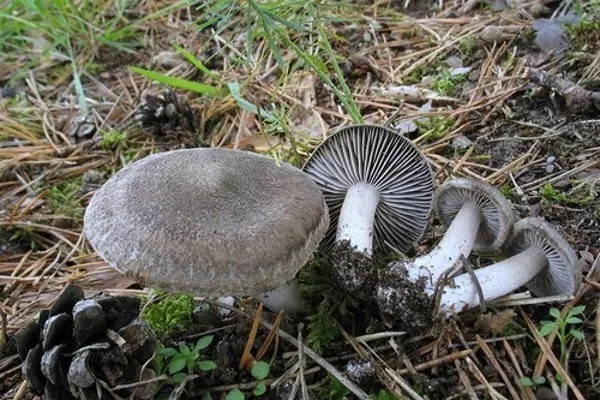
The earthy rowan has the smell of laundry soap.
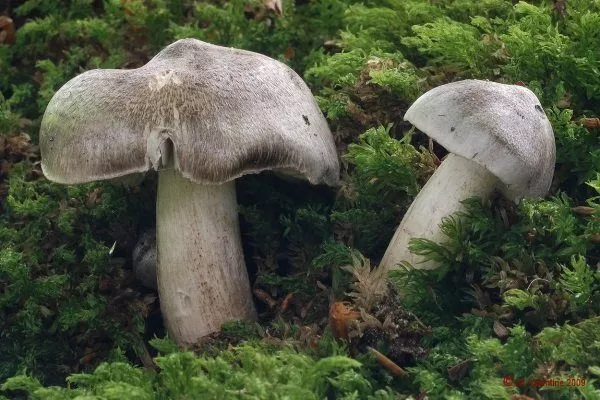
Poisonous pointed rowan
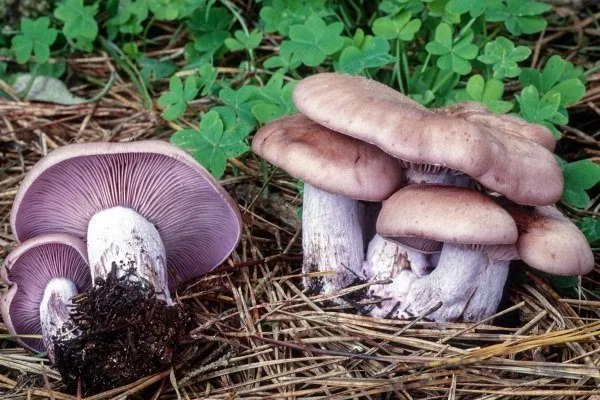
Edible purple rowan
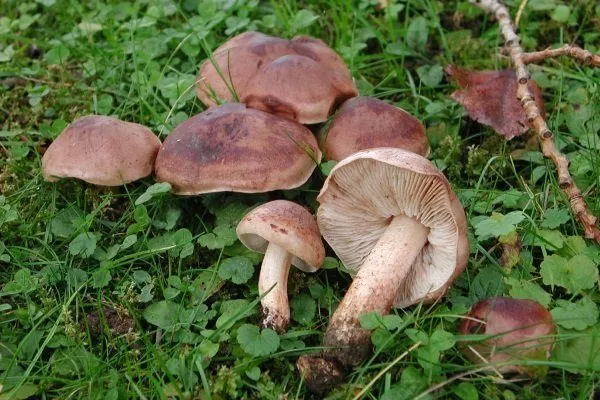
The poplar rowan is edible
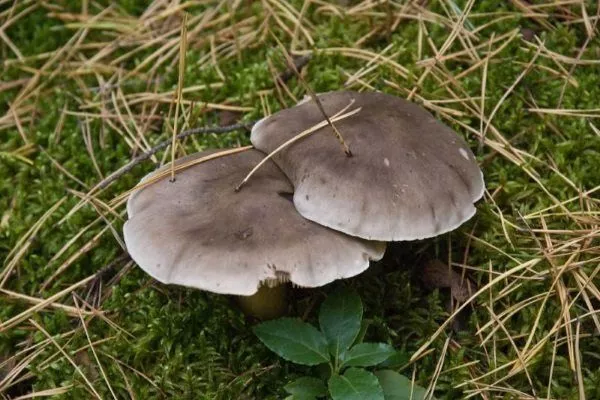
The grey rowan can be eaten
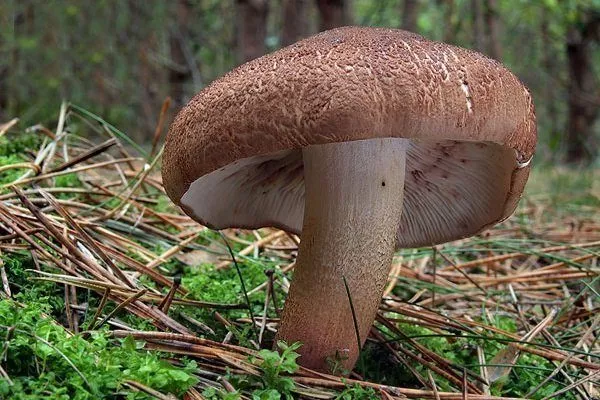
The scaly rowan has "scales" on its cap
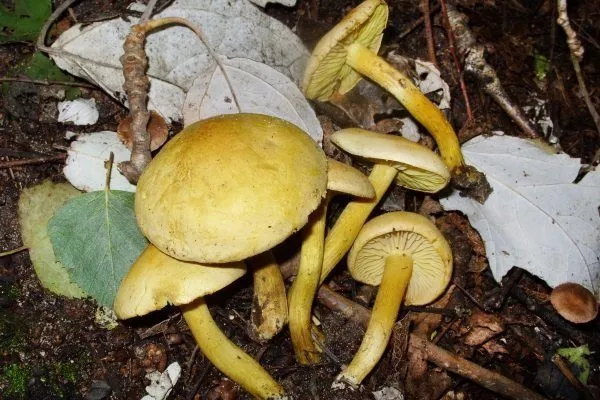
Inedible sulfur-yellow rowan
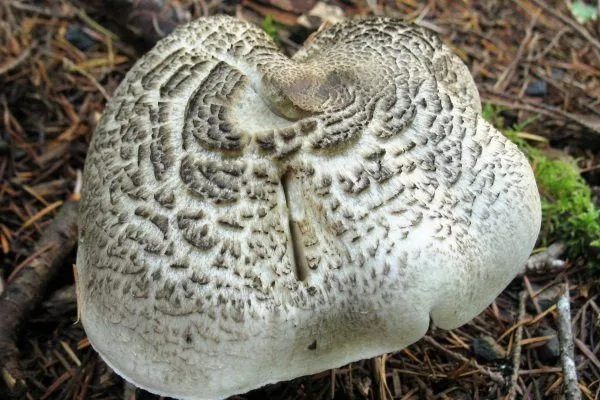
Poisonous tiger mushroom
Benefits and harms
Every mushroom can be harmful to the body to some degree, or beneficial. To understand this, it's important to understand and weigh the pros and cons.
Benefit. The mushroom known as the ryadovka is very beneficial for the body (if it's edible), as it has a positive effect on the gastrointestinal tract. These mushrooms also promote cell renewal and the elimination of waste and toxins.
Harm. Any mushroom, including the rowan, absorbs all dust, dirt, and metals. This mostly applies to older mushrooms, so if a mushroom is overgrown, it is not recommended for consumption. Avoid eating too many mushrooms, as they are heavy on the stomach and can cause flatulence, abdominal pain, and nausea.
Interesting information:
- In some countries, the rowan is considered a real delicacy; they are grown and sold for export;
- Powder obtained from rowan mushrooms is often used in cosmetology to get rid of acne.
Is it possible to grow rowan on your own?
Since mushrooms often have problems even in the field, growing them yourself can be quite challenging. The rowan mushroom is a finicky mushroom that requires proper care, making achieving good results very difficult, and in some cases, downright impossible. For planting edible rowan mushrooms, choose a moist, sheltered area.
The air temperature shouldn't exceed 15 degrees Celsius, and the soil temperature shouldn't exceed 20 degrees Celsius. Therefore, growing them outdoors isn't possible; greenhouses with a controlled temperature are needed for this. Mushrooms can be planted using either spores or mycelium.
How to plant with seeds (spores)?
The first step is to head out into the forest to pick a few mushrooms, being careful not to confuse edible mushrooms with poisonous ones. Choose young, healthy mushrooms free of rot, yellow spots, and worms. Cut off the mushroom caps and grind them into powder, as they contain many seeds. Then soak the mushrooms in potassium permanganate at a ratio of 1 gram per 9 liters of water. Leave for 5 hours.
Spores are planted in a mixture of horse manure, leaves, and pine needles, or on a mushroom substrate. The pre-soaked mixture is simply poured onto the bed and covered with the substrate. Planting occurs in the spring to ensure fruiting in the fall.
How to grow mycelium?
Mycelium seedlings can be obtained in several ways:
- Dig in the forest.
- Grow at home.
- Buy in a specialized store.
If you decide to dig up the mushrooms in the forest, it's easy. Simply find a clearing where the mushrooms grow and dig up the soil around them. A piece about 20 x 10 x 10 centimeters is sufficient. Then, plant this soil in the garden and fill it with substrate.
Buying mycelium is quite difficult, as it's rare on the market. Furthermore, there's a risk that the seller will sell you the wrong mycelium, or even dead, non-fruiting mycelium.
How to prepare and where can the mushroom be used?
This type of mushroom has antibiotic-like properties, so it is made into a tincture. However, this method has not been proven or clinically tested.
A quick and common method is to boil the mushrooms. Before boiling, rinse them thoroughly under running water, peel them, then rinse again and boil them in salted water. Cooking time is 20 minutes.
The ryadovka mushroom is a fairly common mushroom, but it has many varieties, both edible and poisonous. Therefore, it's crucial to either be an experienced mushroom picker or to take one with you to avoid poisoning. This type of mushroom can be grown in your own garden, but there's no guarantee of a positive outcome.