
The large oyster mushroom family (Pleurotus) is classified as agaric, meaning it has a stem (or stump) and a cap, and prefers to live on the ground near tree roots. Read more about this mushroom, its characteristics, and how to grow it at home below.
Appearance
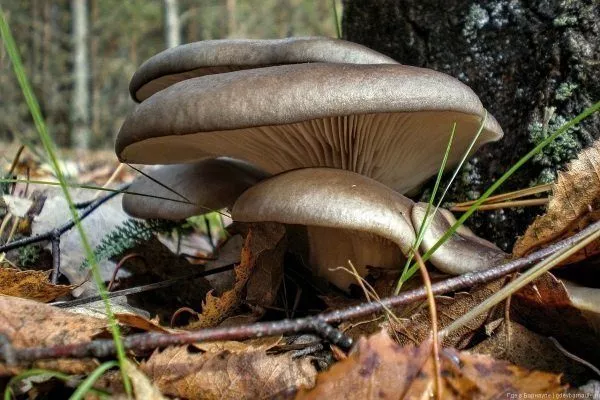
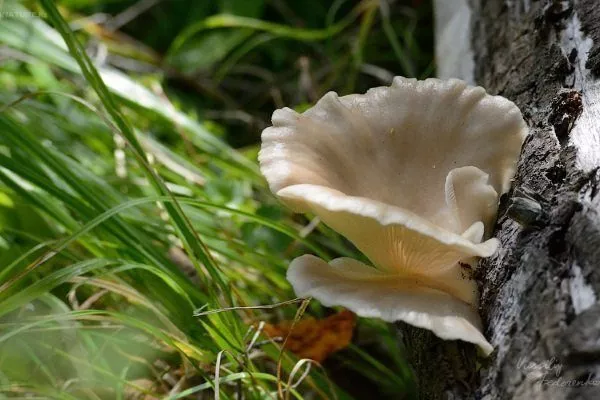
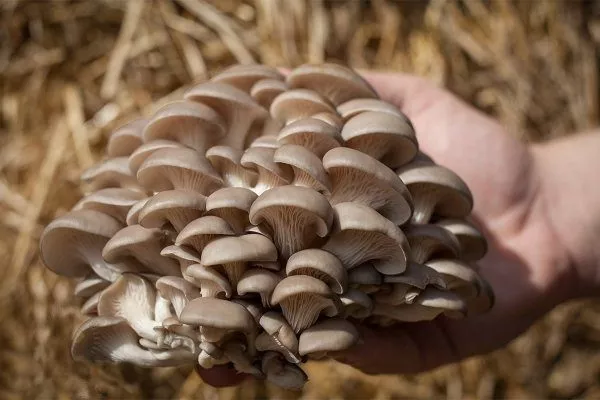
Oyster mushroom caps are smooth and come in a variety of colors. They typically reach 5-8 cm in diameter, but specimens up to 15 cm are also common. The underside is covered with sparse, thick plates containing pinkish spores.
The mushrooms have short, asymmetrical stems that taper toward the base. Some varieties may lack a stem. The stem is covered with fuzz near the base. The mushroom's flesh is white, does not darken when cut, and has no odor.
Nutritional value
In terms of nutritional value, they belong to Category 4. All members of this family are edible, but only five species are used as food; the rest have tough, fibrous flesh.
100 g of raw mushrooms contain:
- protein - 3.31 g;
- fats - 0.41 g;
- carbohydrates - 4.17 g;
- dietary fiber - 2.3 g;
- ash - 1.01 g;
- water - 88.8 g.
Energy value of 100 g of product is 34 kcal.
Oyster mushrooms are rich in vitamins B, PP, C, and D, as well as macro- and microelements: potassium, phosphorus, iron, copper, zinc, and selenium. Due to this rich composition, they are often used for medicinal purposes.
Moreover, oyster mushrooms, unlike other members of the fungal kingdom, do not accumulate toxins, making them safe for humans. They are contraindicated for people with allergies to them, or those with gastrointestinal, liver, or gallbladder conditions, as mushrooms are a heavy food.
Where to find oyster mushrooms?
Oyster mushrooms are undemanding when it comes to climate conditions; warmth and high humidity are key. They typically grow in deciduous forests in European Russia, the Caucasus, and Central Asia. They thrive on stumps, dead wood, and the trunks of weakened trees such as birch, aspen, linden, and poplar. In southern regions, they can be found on maple, elm, or hornbeam. They usually don't grow on healthy trees. Picking oyster mushrooms is a pleasure, as they grow in large clusters, and the basket fills quickly.
Types of oyster mushrooms
There are 9 main varieties of mushrooms:
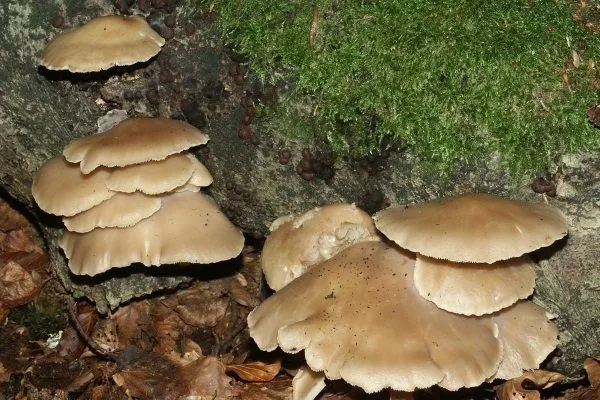
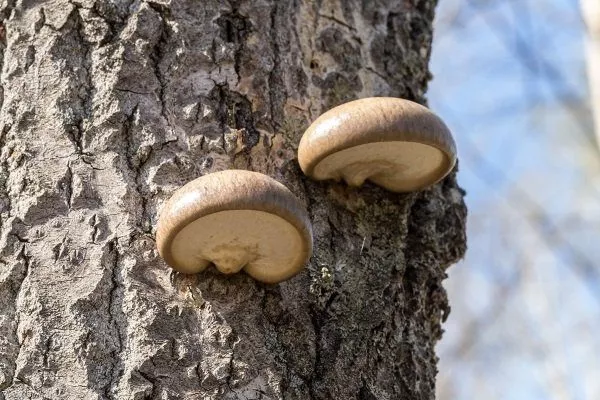
- Oyster mushroom — the oyster mushroom, popularly known as the podveshen, chinarik, or bun, is the most valuable and beneficial of all members of the family. The oyster mushroom's cap is grayish-yellow or brown, and resembles ears.
Young oyster mushrooms have a downward-curving margin. The cap can range in size from 5 to 25 cm, and a mycelial coating may be present on the smooth surface. The stipe is whitish, cylindrical in shape, and can reach 5 cm in length and 0.8-3 cm in diameter. The flesh is fairly dense and firm, but in overripe specimens it can be tough and fibrous.
People go hunting for them in June and collect them before frost sets in. They're easy to find on the stumps and trunks of deciduous trees. Oyster mushrooms can also be found on diseased trunks of birch, oak, aspen, and even rowan trees.
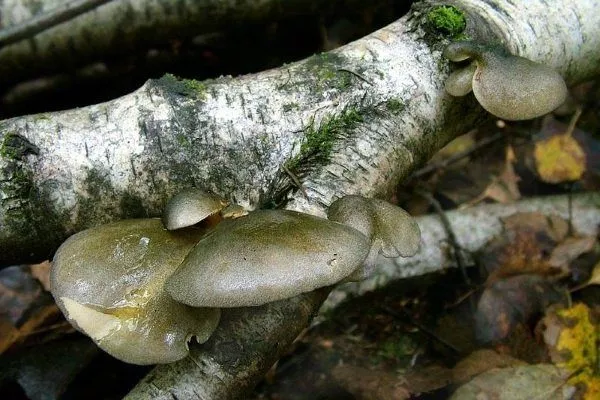
- Autumn oyster mushroom The willow pig mushroom (Pig's cap) replaces the oyster mushroom. Mushroom pickers go for it in September and October. They look for colonies on the stumps of maples, elms, poplars, lindens, and, less commonly, aspens. The pig mushroom has a one-sided, elongated cap that changes color depending on the mushroom's age. Initially, it is grayish-white, later turning a dirty yellow. The stem, if present, is very short, not exceeding 2.5 cm in length.
- Oak oyster mushroom — a less common but edible species that grows exclusively on oak trunks and stumps. They appear in July and August. The rounded cap does not exceed 10 cm in diameter.
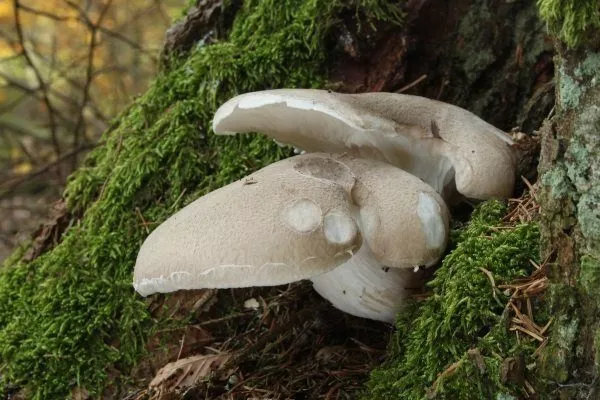
This species is easily recognized by the inverted cap edge, from which the remnants of a white veil hang. The surfaces of the stem and cap are covered with scales. The cap has a yellowish or creamy hue. The stem is velvety, grows up to 10 cm in size, and is cylindrical. The stem can be attached to the cap either centrally or laterally. The mushroom's flesh is slightly firm but has a pleasant aroma. - Oyster mushroom, or abundant mushroom – a record-breaker in productivity. This species has the largest colonies, hence the name "abundant," and the name "horn" comes from its resemblance to a shepherd's horn. The cap is funnel-shaped and white, darkening to a light brown over time. Its diameter ranges from 3 to 12 cm.
What's interesting is that the cap of young mushrooms curves downward at the edges, but over time it straightens out and even turns upward. The cap is attached to the stem at the side.
They go for them at the end of May and are collected until mid-August. But you'll have to search for them, as they prefer to nest in hard-to-reach places, windfalls, and deadfalls. They most often grow on maple and elm stumps. - Pulmonary (spring, beech or white oyster mushroom) — It is one of the most common edible representatives of the genus growing in natural conditions.
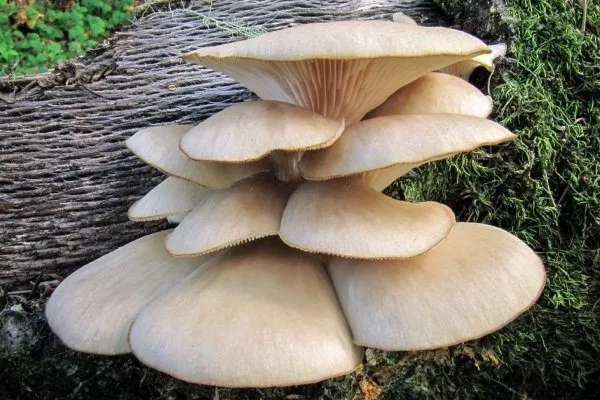
The cap is round, tongue-shaped or fan-shaped, averaging about 6 cm in size, though some mushrooms reach 15 cm. It is white or cream-colored, though mature mushrooms can have a yellow tint. The edges are slightly cracked and inverted, with the edges being much thinner than the center. The stem is white or grayish, reaching barely 2 cm in length, and covered with fine hairs at the base.
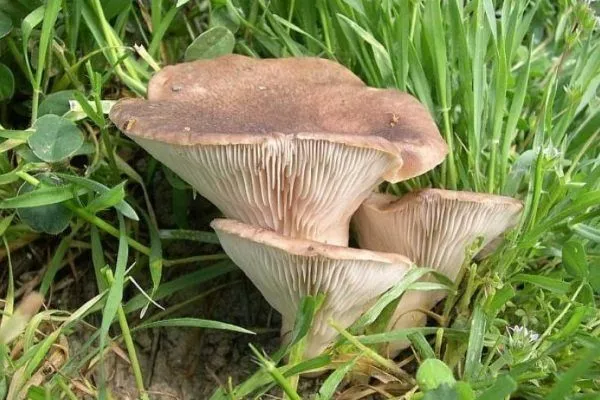
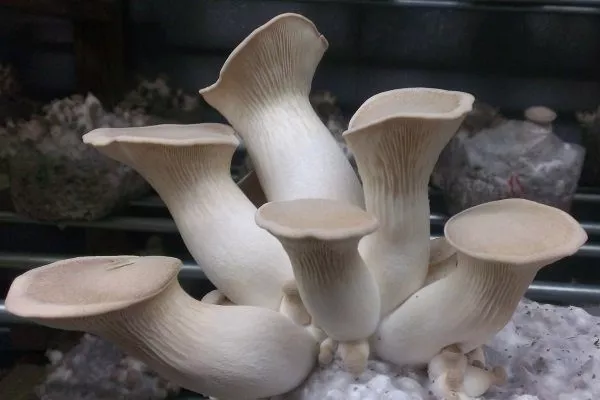
It grows on the rotting trunks of fallen deciduous trees. Seasonality ranges from early May to late September. Fruits are typically produced in clusters fused at the base of the stem; singly occurring specimens are rare. - Steppe (eryngii, king oyster mushroom). A valuable edible mushroom. The cap is oval or round in young specimens, but becomes flattened and even funnel-shaped with age. The surface is reddish-brown, covered with small scales. The cap can reach 13 cm in size. The stem is cylindrical, white, ranging from 2 to 5 cm. The flesh is white, with a brownish or pinkish tint also permitted.
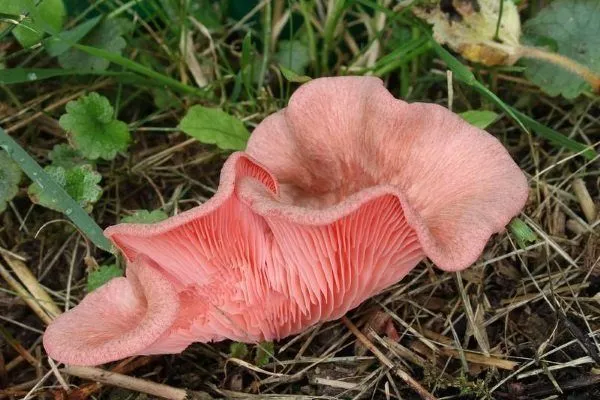
It is widespread in Central Europe and Western Asia. It bears fruit exclusively in the spring months. - Pink (flamingo). An edible mushroom. The caps of young specimens of this species are a beautiful pink, powdery, or grayish-pink color. With age, the cap fades. It can reach 5 cm in size. The stem is whitish-pink, short, slightly curved, and small, no more than 2 cm. The flesh has a pleasant aroma, a buttery flavor, and a whitish-pink hue. It is common in countries with subtropical and tropical climates.
- Covered or covered. Due to its tough flesh, it is considered an inedible mushroom. It gets its name from the distinctive film that covers the hymenophore plates.
In young specimens, the cap resembles a bud, but as it grows, it begins to encircle the tree trunk, taking on the shape of an open fan. The cap's surface is smooth and slightly sticky, with moist radial stripes. The fruiting body is grayish-brown. The stem is almost invisible. The flesh is whitish, smells like a raw potato when cut, and has a rubbery consistency.
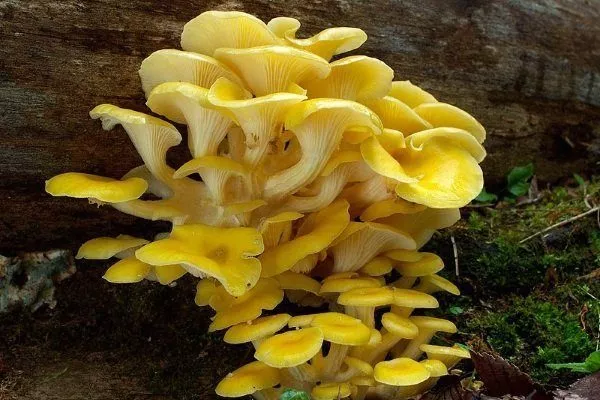
The mushrooms grow singly and begin to bear fruit from late April to late June. They can be found on dead, fallen aspen trees in mixed and deciduous forests. They are native to Denmark, Sweden, Latvia, Ireland, and other countries in Central and Northern Europe. - Cap (ilmak, golden). A rare edible mushroom with a distinctive aroma and pleasant flavor. The cap is corymbose, can reach up to 10 cm in size, and is typically lemon-yellow in young specimens, fading to a pale shade in mature mushrooms and even turning completely white. The stem is creamy and up to 9 cm in height. It grows in clusters, some of which can contain up to 80 mushrooms, and nests on dry elm branches.
Fruiting occurs from May to October. It is widespread throughout Asia and North America, and in Russia, it can be found in the forests of Eastern Siberia, the Far East, and the Primorsky Krai.
| Variety | Cap color | Hat size (cm) | Fruiting temperature (°C) | Seasonality |
|---|---|---|---|---|
| Ordinary | Grayish-yellow or brown | 5-25 | 15-25 | June - frosts |
| Autumn | Gray-white, later dirty yellow | 3-12 | 10-15 | September – October |
| Oak | Yellowish or creamy | Up to 10 | 15-20 | July – August |
| Horn-shaped | White, later light brown | 3-12 | 15-25 | Late May – mid-August |
| Pulmonary | White or cream, later yellow | 6-15 | 15-25 | May - September |
| Steppe | Red-brown | Up to 13 | 15-25 | Spring months |
| Pink | Pink, powdery or grayish pink | Up to 5 | 20-30 | — |
| Covered | Gray-brown | — | — | April - June |
| Hat | Yellow-lemon, later white | Up to 10 | 15-25 | May - October |
Similarities between oyster mushrooms and other mushrooms
There are no poisonous mushrooms in our country that look similar to oyster mushrooms. However, there are some mushrooms that are considered inedible and are easily confused with oyster mushrooms.
For example, inexperienced mushroom pickers may confuse the oyster mushroom with the wolfsbane. This is a bitter mushroom, completely inedible due to its taste. Its cap is small and has a distinct yellow-red hue. The stems are fused at the base and resemble roof tiles. It has a characteristic odor of rotten cabbage.
Benefits of mushrooms
Oyster mushrooms are a beneficial mushroom. It's no wonder that folk medicine often includes recipes for remedies based on them. The mushroom helps with iron deficiency anemia and cardiovascular diseases. It boosts the body's immune system, and its optimal content of vitamins D and E promotes bone development.
Mushrooms remove radioactive elements and some antibiotics from the body, and are recommended for people with benign and malignant tumors. Those looking to lose weight should also consider this product. It's rich in protein, and its fats and carbohydrates are gentle on your figure.
Harmful effects of mushrooms
Despite their numerous benefits, mushrooms should not be consumed by children under 5 years of age or the elderly. Pickled and salted mushrooms are contraindicated for people with a history of kidney disease.
People with liver or gallbladder disease should avoid fried oyster mushrooms. Other mushroom lovers should remember that moderation is key to their health benefits.
How to collect oyster mushrooms?
When you go oyster mushroom hunting, be sure to bring a knife. They're cut off in groups. Don't be stingy and leave the young mushrooms in place; without their older companions, they'll die anyway.
It's best to eat mushrooms whose caps are no more than 10 cm in diameter; old stems are unsuitable for cooking. They are tasteless and tough.
Is it possible to grow this type of mushroom yourself?
Oyster mushrooms are easy-to-grow mushrooms, so they are cultivated all over the world. They don't require exorbitant expenses to create optimal growing conditions and produce a generous harvest. One kilogram of mycelium yields up to 4 kg of mushrooms. They are grown indoors or outdoors.
Mycelium is purchased from a specialized store. High-quality seed material is white with orange and red specks. The temperature of the mycelium packaging should not exceed 20°C. After purchase, it is stored in a cool place (3–4°C).
As a rule, the following rules for storing mycelium are followed:
- Store for no more than a month at an average temperature of 0°C to -2°C;
- no more than 2 weeks at an average temperature from 0°C to +2°C;
- no more than 3 days at an average temperature from +15°C to +18°C;
- no more than one day at an average temperature from +20°C to +24°C.
Methods of growing mushrooms
Oyster mushrooms can be grown in two main farming methods: intensive and extensive.
Intensive growing method in bags
This is a method of growing in artificial conditions.
Preparing for landing
The main rule when working with mushrooms is sterility. The room is disinfected with chlorine-containing substances beforehand, and the tools are cleaned with alcohol. The mushroom grower wears gloves during all work.
The mycelium is removed from the refrigerator and allowed to warm up to room temperature, and then crushed.
For every 1 kg of mycelium, you need 10 kg of soil. For this, use barley or wheat straw, sawdust from deciduous trees, or corn parts (chopped stems, leaves, and cobs are used). The material must be of high quality and free from signs of rot and mold.
Once the substrate has been selected, it's time to disinfect it. Wet or dry substrates are treated with steam, but the most popular heat treatment method is boiling them in water for two hours. After this time, the substrate is placed under pressure and cooled to 25°C. The pressed mass is cut into 4-5 cm pieces.
Mycelium should only be planted in moist soil. You can determine whether the substrate is suitable based on its moisture content by squeezing it into a ball. If it springs back and no water leaks out, it has the right amount of moisture.
Planting mushrooms
To plant the mycelium, you'll need bags. You can buy bags that hold 10 liters or 5 liters of soil. They can be filled in two ways:
- Place the substrate and mycelium on a sterile surface and mix thoroughly. Immediately fill the bags with the mixture.
- Or, layer the components. First, add 6 cm of soil, then 0.5 cm of mycelium, and continue alternating in the same order until the bag is full.
The bags are tied and cuts (1-2 cm) are made on them over the entire surface of the bag in a checkerboard pattern at a distance of 15 cm from each other.
The bags are hung or arranged in such a way that air can freely reach them from all sides.
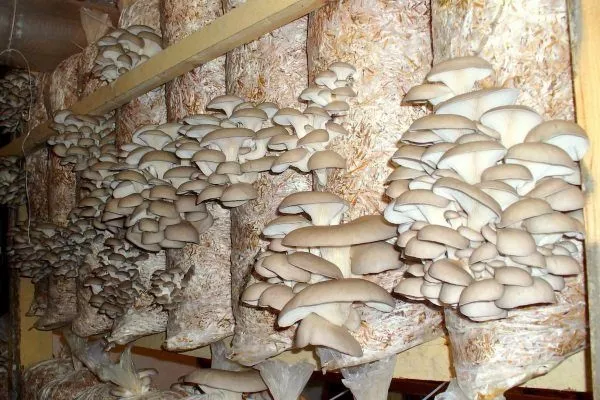
Now the mushroom grower's main task is to create optimal conditions for mycelium growth indoors. Humidity is maintained at 70-80%, the air temperature should not exceed 25°C (77°F), and the inside of the bag should remain at 30°C (86°F), otherwise the mycelium will die. Fans are used to lower the temperature; ventilation is prohibited at this stage. Wet cleaning is performed daily.
After 3-4 days, you can see white, thin threads of mycelium in the cuts, which after 20 days will grow inside the entire bag, and a mushroom aroma will appear in the room.
Next comes the fruiting phase. The bags are moved to another room, away from living areas, as the mushroom spores are a strong allergen. This creates new conditions for the oyster mushrooms to grow. Humidity is increased to 90-95%, and the temperature is lowered to 10-15°C. The mushrooms are given 10-12 hours of daylight. To maintain high humidity, humidifiers are used, and the walls and floor are misted, but water should not come into contact with the bags.
Once the caps appear, they are sprayed daily from above. At this stage, pay close attention to ventilation, which should be provided every 6-8 hours. Otherwise, the mushrooms will begin to rot.
The first oyster mushroom harvest is collected after 1.5 months. The mushrooms are completely removed from the soil, ensuring that no part of the stem remains. This can become a breeding ground for pathogens, which is undesirable. The mycelium produces up to four consecutive harvests. The second wave of mushroom growth begins 2-3 weeks after the first harvest.
After the mycelium has fruited, it is disposed of or used as fertilizer.
Oyster mushroom yields in open ground depend on weather conditions and are significantly lower than those grown indoors. However, the mycelium can fruit for up to five years in one location.
Extensive cultivation method
This method of growing mushrooms in a natural environment.
The mycelium is grafted onto aspen, birch, linden, willow, or poplar logs. To do this, the logs are thoroughly moistened with water and several deep cuts are made on the surface. The oyster mushroom mycelium is inserted into these cuts and covered with moss or tree bark.
The prepared logs are carefully dug into the designated area on the site. It should be shaded, well-ventilated, and protected from direct sunlight.
The "planted" logs are watered thoroughly and covered with plastic wrap. If hot weather sets in, they are watered daily. The first harvest will begin within 1.5-2 months. The mycelium also fruits up to four times per season, provided it is watered regularly.
After fruiting has finished, the logs are left in place and kept moist. With this care, mushrooms will continue to appear the following year.
At what temperature do oyster mushrooms grow?
Artificially cultivated species of mushroom strains are conventionally divided according to the ripening time of the fruiting bodies:
- Winter variety of oyster mushroom It was bred from frost-resistant species; these varieties can bear fruit at temperatures of 4-15°C. They are recognizable by their gray or blue caps.
- Summer variety was imported from Florida. They fruit at temperatures of 15-25°C. The fruiting body is delicate and fragile.
- All-season strains They were developed from the pulmonary oyster mushroom. They fruit at temperatures of 6-28°C. They are recognizable by the various variations of gray color of their caps.
Why are oyster mushrooms grown?
Oyster mushrooms are primarily used in cooking. The caps and stems are cooked separately, as they require different cooking times.
In folk medicine, the mushroom is used to make a variety of decoctions, infusions, and extracts that have anti-inflammatory and bactericidal properties.
Oyster mushrooms are also used in cosmetology, making facial masks with them. They have a beneficial effect on the skin, soothing irritation and signs of fatigue, and nourishing it.
Oyster mushrooms, despite being classified as Category 4, are healthy and tasty, and the minimal costs of growing them in artificial conditions make them accessible to all segments of the population.