
Talkers belong to the Tricholomoideae family and the order Lamellate. Among them, there are edible, conditionally edible, and inedible species. Therefore, when going hunting for them, it's important to know them well.
Description of the mushroom
There are over 250 species of these mushrooms. All have a cap and a stem, but their shape, size, and color vary depending on the variety. Most talkers are classified as little-known edible and conditionally edible mushrooms; they fall into Category 4 nutritional value. Before eating, they must be boiled in water, and the first portion of the liquid is discarded.
The cap part of the mushroom
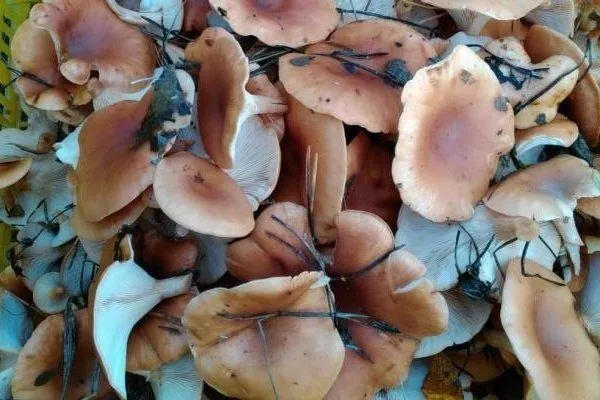
It doesn't grow to a large size, reaching an average diameter of 3-6 cm. In young mushrooms, it is hemispherical in shape, but with age, it flattens out and takes on a depressed shape.
The surface is smooth and dry under normal climatic conditions; during frequent rainfall, it may become covered with a slimy film. Sometimes, mold-like spots can be seen on the upper surface—these are remnants of mycelium. The color ranges from white to pinkish-brown and even ochre, depending on the species. The color tends to lighten toward the edges of the cap.
Records
The color of the gills also varies. They descend along the stalk and can be dense or sparse. They produce a white spore powder.
Leg
The height and diameter of this part of the mushroom's fruiting body also depends on the variety, but on average the height is 6-8 cm, and the diameter is 0.5-3 cm.
Pulp
White in color, dense in young specimens and loose in older mushrooms.
Spore powder
Pure white or creamy-white in color.
Nutritional value
100 g of raw product contains:
- proteins - 3.7 g;
- carbohydrates - 1.1 g;
- fats - 1.7 g.
The nutritional value of 100 g of the product is 34.5 kcal.
Contains B vitamins, minerals, plant fibers, and amino acids.
Where and when can you find mushrooms?
Talkers prefer coniferous forests—they especially like spruce and pine forests, as well as mixed forests where birch grows. They can be found at forest edges, in meadows, and in deciduous forests. The first mushrooms begin to appear as early as July, but the peak harvest period is August-September. They are collected until November. They are common in the European part of Russia, the Caucasus, Western Siberia, and the Far East.
Types of talkers
There are a huge number of varieties of talkers, it is impossible to list them all; of the best-known species, only the most popular can be highlighted.
| Name | Cap diameter (cm) | Leg height (cm) | Cap color |
|---|---|---|---|
| Bent or red | 20 | 15 | Reddish |
| Orange or kokoshka | 2-5 | 5 | Orange-ocher |
| Giant | 15-30 | 8 | White |
| Goblet-shaped | 3-8 | 10 | Gray-brown |
| Funnel-shaped | 10 | 8 | Light yellow or reddish |
| Smoky | 3-6 | 12 | Grey |
| Smoky white | 15-20 | 8 | Yellowish-whitish |
| Club-shaped | 4-8 | 3-6 | Dark gray |
| Fragrant | 6 | 5 | Yellowish-gray |
| Fragrant | 7 | 5 | Bluish-greenish |
| Winter | 5 | 4 | Smoky or olive brown |
| Snowy | 4 | 4 | Grayish-brown |
Bent or red
The most well-known member of this family, it often grows in large colonies in various forests. The reddish cap grows up to 20 cm. Its shape changes as it grows: in young mushrooms, it is convex, while in more mature ones, it is funnel-shaped, with slightly drooping edges that curl downward. The skin on the cap is smooth, yellowish-brown, but with age, it fades and becomes fawn with rusty spots. The yellowish stem is 15 cm long and no more than 3 cm thick. It is cylindrical in shape, thickening towards the bottom.
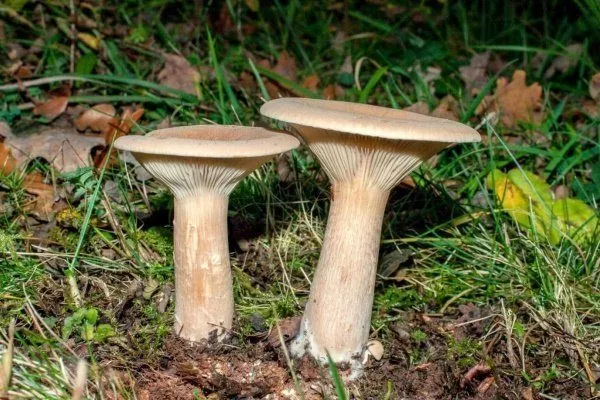
They grow in Germany, Poland, France, Spain, Italy, Russia, Belarus, and other temperate Northern Hemisphere countries. They begin fruiting actively from the first days of July, and the last mushrooms can be found even in October. Their favorite places are along path edges, in forest edges and grassy clearings, deep in deciduous, coniferous, or mixed forests, on a litter of fallen leaves or moss. They grow in arched clumps.
Orange or kokoshka
Another name for this mushroom is the false chanterelle. It resembles the true chanterelle, but has thin, dense flesh and a bright color.
The mushroom cap is small, 2-5 cm in diameter. Initially convex, it flattens with age, with spreading edges that curl slightly at the tips. The color is orange-ochre, fading to pale yellow, but the center remains bright yellow, and the edges become almost white.
The stem is cylindrical, up to 5 cm long, about 0.5 cm in diameter, yellow-orange, brighter than the cap.
It bears fruit from the beginning of August to the end of October, and can be found in coniferous and mixed forests, growing both singly and in groups.
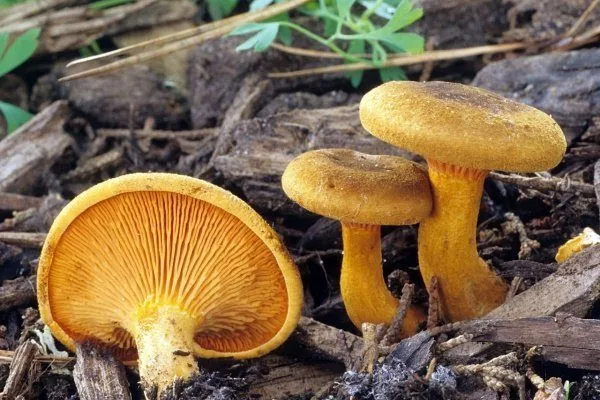
Only the caps of young coconuts are eaten, as their stems are tough, and old caps become tough and tasteless.
Giant
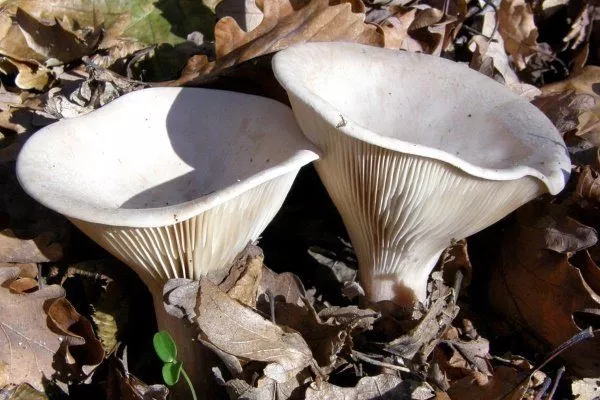
This mushroom holds the record for the largest cap and stem among other species. It is completely white. The cap typically grows to 15 cm, but it's not uncommon to see mushrooms with caps up to 30 cm long. Initially, it's convex, but then takes on a funnel shape with the edges curled downward. The stem is equally large, measuring 4 cm thick and 8 cm long. The flesh is white and firm, but has virtually no flavor or aroma.
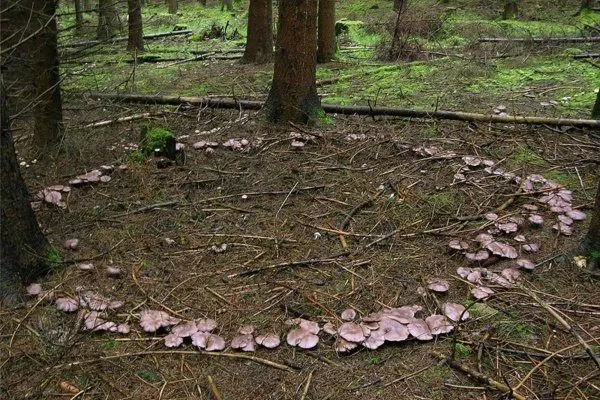
The giant talker can form "fairy circles," although this is believed to be the growth habit of mostly poisonous mushrooms. The mycelium, growing in the soil, spreads evenly in all directions, creating a ring-like area. Therefore, the mushrooms grow along the edge of the mycelium, arranged in a circle.
It grows in forest clearings in North America, Europe, and Russia. It bears fruit from late August to October, and can sometimes even be found in October.
Goblet-shaped
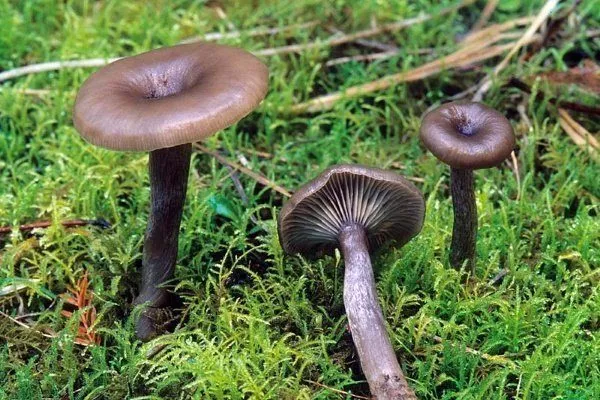
The most common mushroom in Russia, it thrives on rotten wood or forest litter. Mushroom pickers head into the forest in August and September to find it. The gray-brown cap is shaped like a cup or goblet, 3–8 cm in diameter. The stem is very thin, reaching a maximum thickness of 0.6 cm and a length of 10 cm. The flesh is watery and grayish-brown.
Funnel-shaped
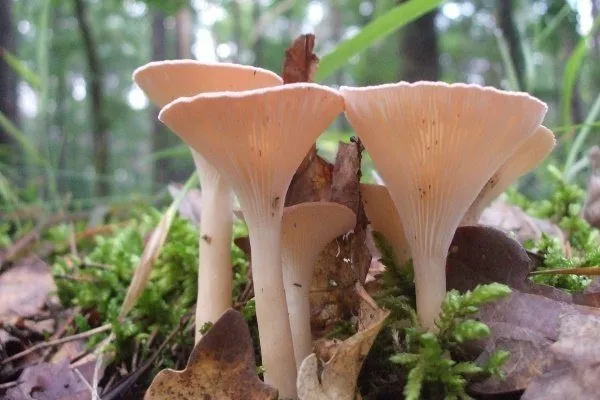
It grows both singly and in groups in forests, meadows, and pastures. The mushroom harvest occurs from July to October. The cap is small (10 cm in diameter). Initially, it is convex with a tubercle in the middle and incurved edges. Then, the mushroom gradually unfolds, forming a deep funnel with edges that curve outward.
The cap is thin, light yellow or reddish in color. The stem, which is the same color as the cap, is medium in length, not exceeding 8 cm. The base has a slight thickening with white hairs. The flesh, also with almond notes, is white and loose. The hymenophore gills are closely spaced, extending strongly down the stem.
The species is widespread in the European part of Russia, Western Siberia, the North Caucasus, and most European countries.
Smoky
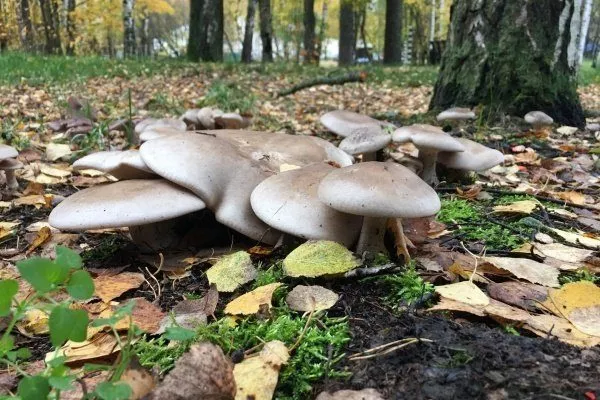
The mushroom is found in spruce and pine forests from late summer until November. It grows in clumps. The cap resembles a gray cushion. Young mushrooms may have a grayish-white coating on the surface, which is easily removed. The stem grows up to 12 cm long and 2-3 cm in diameter. There is a slight thickening at the base.
The pulp is white, has a floral-fruity aroma, fleshy, soft in young mushrooms, more fibrous and tough in mature ones.
Although the smoky talker is considered a conditionally edible mushroom, its consumption can cause serious harm to the gastrointestinal tract, as the mushroom contains nebularin, a cytotoxic substance.
Smoky white
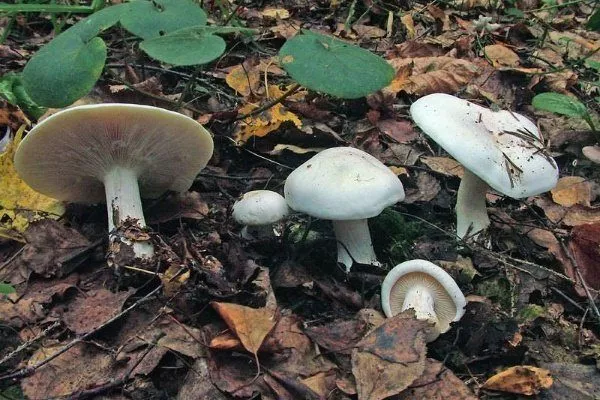
It differs slightly from its cousin, the smoky talker. The cap of this species reaches up to 20 cm in diameter, but is usually no more than 15 cm. In young mushrooms, it is hemispherical, convex with a curled edge; with age, it becomes convex and spreading. It is fleshy and thick, and its color is yellowish-whitish or dirty white, and can be gray in dry weather.
The stem is thick, can grow up to 8 cm in length, 1-3 cm in diameter, club-shaped, widening towards the base over time, grayish, almost white.
The pulp is fleshy, dense, and has a characteristic fruity aroma.
Fruiting occurs from early September to November, with peak fruiting in September. It is found in coniferous and mixed forests.
This species has some similarities with the poisonous white rowan, which can be distinguished by its unpleasant aroma.
Club-shaped
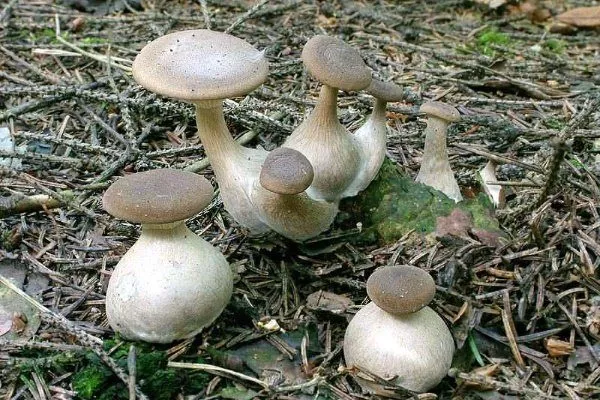
An unusual mushroom, resembling an exotic pitcher plant. It grows in forests on coniferous litter. The convex, dark gray cap straightens as the mushroom grows, reaching 4-8 cm in diameter. The stem is strongly swollen at the base, resembling an inverted club, and is 3-6 cm long.
The flesh is ash-gray in color, but very pleasant to the taste, with a distinct mushroom aroma. The mushrooms grow in clusters, often fused at the stems. They grow in coniferous forests from July to October, and are sometimes found in deciduous and mixed forests.
Fragrant
This mushroom is considered conditionally edible and is eaten pickled or boiled (boil for at least 10 minutes). It grows in coniferous and mixed forests but is quite rare. The active fruiting period runs from the first half of September to the first half of October. The cap is small, up to 6 cm in diameter, initially convex, later becoming concave with a drooping edge. It is yellowish-gray or pale ochre in color. The stem is the same color as the cap, thin, and can reach 5 cm in length, cylindrical in shape. The flesh is thin, watery, and whitish.
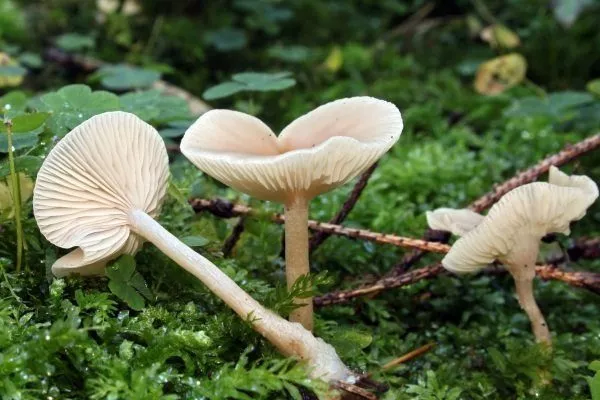
There is a similarity with the fragrant talker, but it differs from it in the yellowish color of the cap.
Fragrant
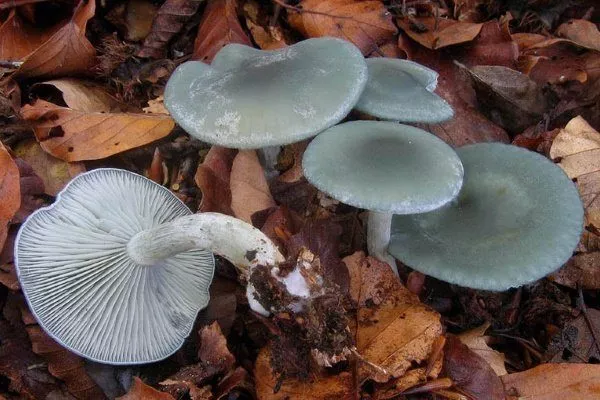
It's rarely collected, despite being a very aromatic mushroom with an aniseed scent. However, due to its strange bluish-green color, many mushroom pickers consider it poisonous. The cap is small—no more than 7 cm long—flat, with a knob in the middle. It's an unattractive bluish-greenish color, turning grayish-yellow with age.
The cylindrical stem is colored like the cap. It reaches 5 cm in length. The gills on the underside of the cap are pale green. The flesh is fleshy, but the color is off-putting to mushroom pickers—it's pale gray with a green tint. Even boiling the mushrooms doesn't change the color.
Abundant fruiting occurs from the first ten days of August to the second half of October. It grows in deciduous, coniferous, and mixed forests of Western Siberia, Central and Eastern Europe, and the European part of the Russian Federation.
Winter
The mushroom grows in the European part of the former Soviet Union and can also be found in the Caucasus, the Far East, Western Europe, South America, and North Africa. Fruiting season is late autumn.
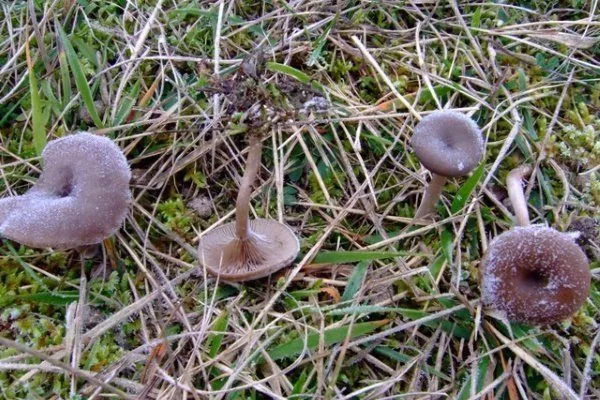
The convex cap reaches 5 cm in diameter, later becoming depressed. The margins are thin and slightly curved, and the cap is smoky or olive-brown in color. The cylindrical stem reaches 4 cm in height and matches the cap's color.
Snowy
Some mushroom pickers claim that the snow gossip is an edible mushroom, but officially it is classified as conditionally edible.
The cap is up to 4 cm in diameter, initially convex with curved edges, becoming sunken over time. It is smooth and grayish-brown in color, sometimes grayish-brown, with the center being darker than the edges. The stem is thin, up to 4 cm long, cylindrical, and light in color.
The mushroom flesh is dense, hard at the stem, and may be odorless or have a faint cucumber flavor.
The fruiting period is short - from the beginning to the end of May, it lives in light spruce or coniferous forests, and is not found every year.
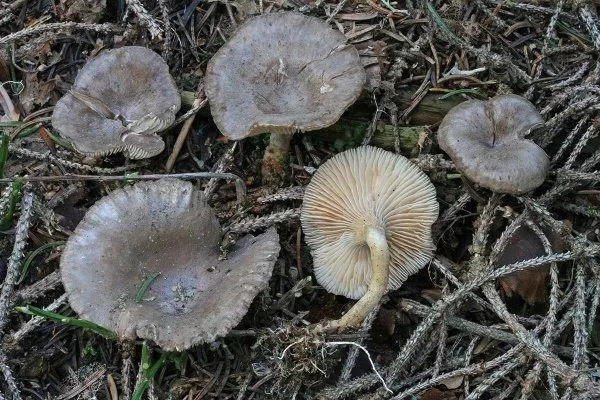
What mushrooms can be confused with poisonous varieties?
There are a number of varieties of talkers that are poisonous and deadly to humans. It's important to be able to distinguish them from the edible varieties.
Waxy talker
This mushroom has a dirty white cap, watery circles with a tubercle in the middle are visible on its surface, the funnel is not as deep as that of the funnel-shaped talker, and the poisonous mushroom does not have a pleasant smell.
This toxic mushroom should also be distinguished from the edible scaly-cap mushroom. The cap differs from the scaly-cap mushroom in that it has a wide, hump-shaped protuberance in the center, and the edges are wavy, sometimes even fuzzy. The stem is slightly curved and fuzzy at the base.
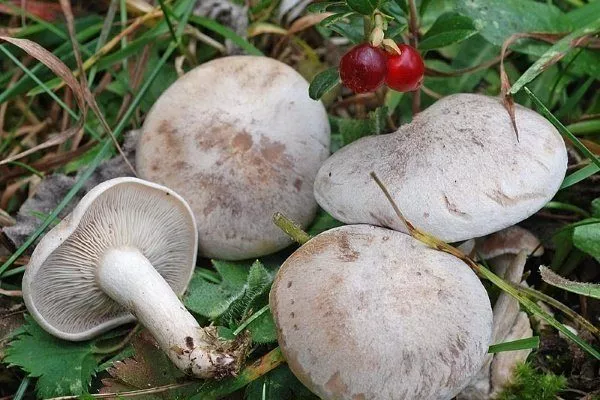
Brownish-yellow
The mushroom's cap can reach 10 cm in diameter, but specimens with caps measuring 3-6 cm are more common. The shape is convex, with a barely noticeable tubercle and a curved margin. When dry, small wet spots appear, a distinctive feature of the mushroom. The color ranges from yellowish-brown to yellowish-ocher, russet, and fading to cream, often with rusty spots.
The stem is up to 5 cm long, 0.5-1 cm in diameter, smooth, slightly tapering towards the base, yellow-ocher or pale-ocher in color.
It bears fruit from the beginning of July until the end of October and is found in coniferous and mixed forests in groups.
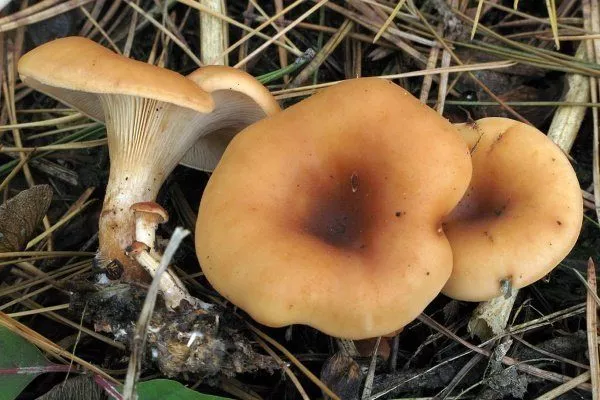
It is similar to the inverted talker, but since both mushrooms are classified as inedible, distinguishing them is not particularly important.
Inverted talker
The diameter of the mushroom cap can reach 10 cm, initially it is convex, over time it acquires a wide funnel-shaped form, the color is red, brick-rusty, sometimes with dark rusty spots.
The stem can reach up to 6 cm in length, is hard, and the color matches the color of the cap, but is slightly lighter.
It grows from the beginning of August to the end of October in coniferous forests, groups form rings or grow in a row.
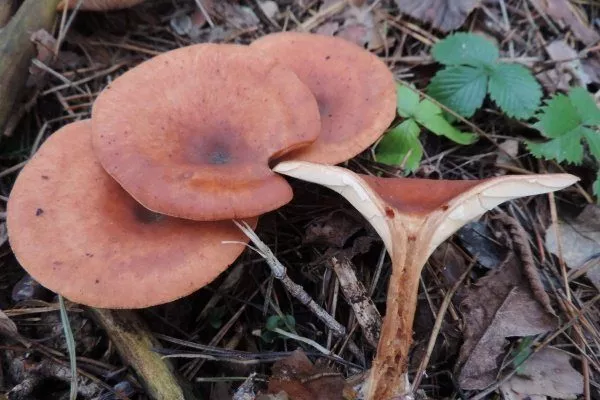
The inverted talker is considered poisonous due to the presence of toxins similar to muscarine.
Translucent talker
Uninitiated mushroom pickers may confuse it with other members of the genus. The cap is round, hazel or ochre in color; after rain, the surface becomes coated with a slimy film and sticky. The flesh is white and fleshy. The stem is cylindrical, approximately 3.5-4 cm long. Like the cap, it is colored ochre and brick-colored, darkening with age to a deep red or bright brick-colored.
It is found in coniferous and deciduous forests, likes to settle on infertile soils, and is distinguished by the fact that it grows in large groups.
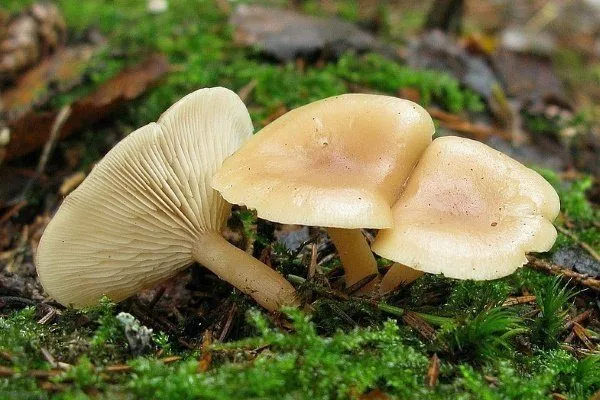
Pale or greyish in colour
Young mushrooms of this species are very similar in appearance to the winter talker. The cap is more knobbly than that of the winter talker, and pits develop over time. It reaches a maximum diameter of 5 cm. The stem is hollow and also slightly different in color from the winter talker—at first, it is grayish with a whitish bloom, then turns grayish-brown. The flesh is watery and odorless.
It grows in fallen oak or birch leaves, and some specimens are found in mixed and even coniferous forests. It grows solitarily, while most edible species grow in groups.
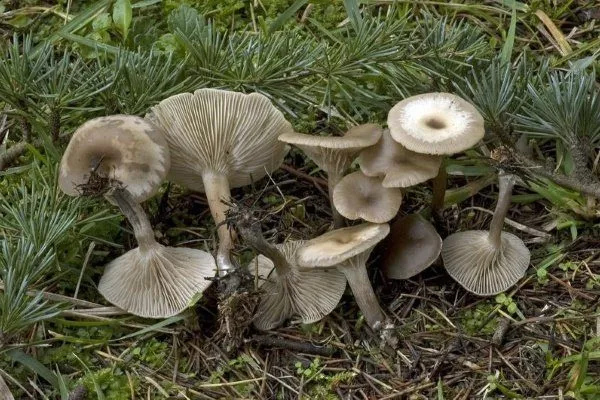
Whitish talker
A poisonous mushroom containing muscarine. The cap is small, only 1-4 cm in diameter, and flat. Its color varies between the center and the edges: pale red in the middle and pale gray at the edges.
The flesh has a deceptively pleasant aroma, reminiscent of tomato seedling leaves. The stem is light gray with a pinkish tint, becoming grayer toward the base. It grows in meadows, deciduous, mixed, and coniferous forests.
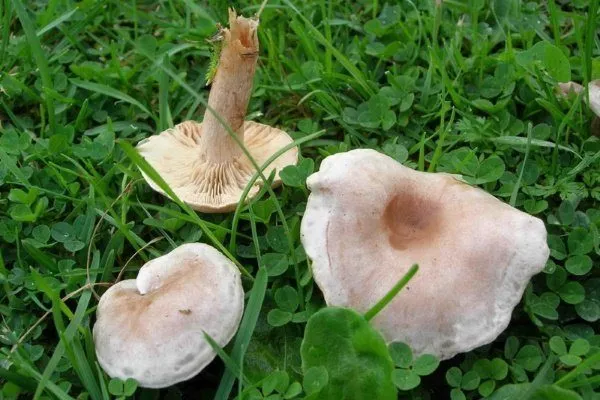
Reddish or furrowed
A deadly poisonous mushroom. The cap is small, no more than 4 cm in diameter. Its color can vary from powdery white to pinkish-brown. A light powdery coating and grayish spots are sometimes visible on the surface. The flesh is fleshy and has a pleasant, sweet aroma. The stem is thin and short, cylindrical. Young mushrooms have fibrous stems, while older ones are hollow.
It bears fruit from the second half of July until early November. It can be found in forest clearings and edges, and even in city parks.
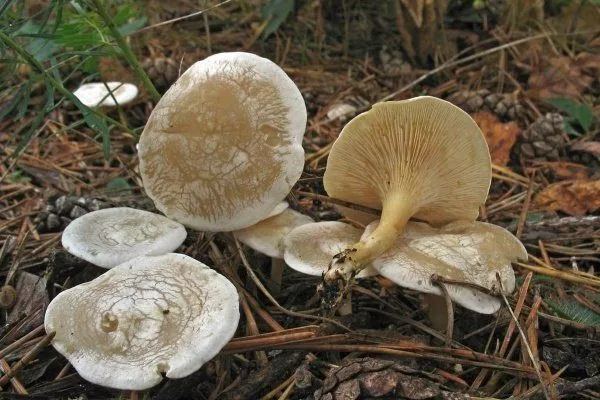
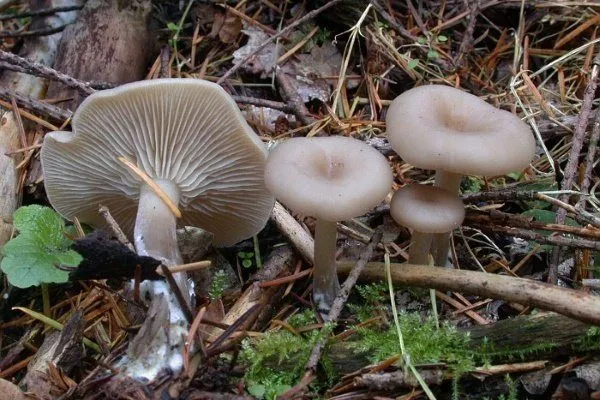
Low-smelling talker
The cap reaches up to 6 cm in diameter. Initially convex, it gradually opens up as it matures, becoming flat or funnel-shaped. It is beige, brown, or gray-brown in color and covered with a waxy coating.
The stem reaches up to 6 cm in length, is cylindrical or flattened, and is located centrally. Its color is slightly lighter than the cap.
It grows in winter in mixed and pine forests from December to January.
Leafy talker
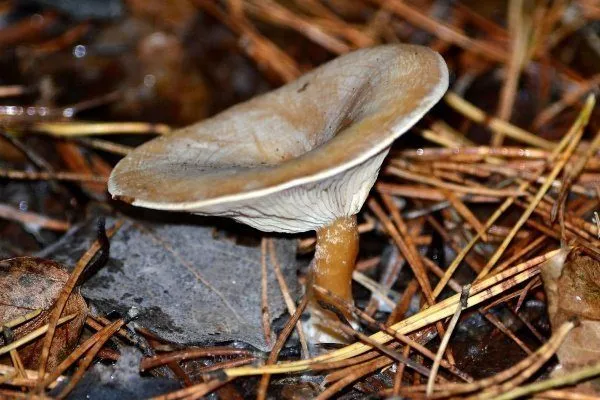
The mushroom's cap reaches 6-10 cm in diameter, initially convex with a curved edge and a noticeable tubercle, but over time it becomes tuberculate with a drooping, wavy edge. The color is white or cream.
The stem is quite long, reaching up to 8 cm, cylindrical in shape, and becomes hollow with age. It is whitish in young specimens and grayish-brown in older mushrooms. The flesh is fleshy, whitish, and has a sharp, spicy aroma.
It grows from September to November and likes to settle in birch and coniferous forests.
When picking mushrooms, follow this rule: if you are not sure whether a mushroom is edible, it is better to leave it where it is.
Poisoning by poisonous species of talkers
Symptoms of poisoning by muscarine, a toxin found in the flesh of poisonous mushrooms, appear within 3 hours. They include the following:
- Gastrointestinal dysfunction, severe nausea, vomiting, diarrhea, spasms in the stomach and intestines are the main symptoms;
- disruptions in the functioning of the cardiovascular system, they are accompanied by a sharp decrease in blood pressure, sinus bradycardia;
- increased sweating;
- increased salivation;
- difficulty breathing, bronchospasms and asthma.
The most dangerous mushroom in the talker family is considered to be the waxy talker. Its flesh has a deceptively pleasant taste and aroma. Often, symptoms of poisoning are asymptomatic. However, on the fifth day, the person dies from acute renal failure.
Benefits of mushrooms
Talkers are quite healthy mushrooms. They have the following qualities:
- increase human immunity;
- They have a beneficial effect on the digestive system, as they contain enzyme components. However, you shouldn't overindulge in mushroom dishes;
- used in the treatment of diseases of the respiratory system and bladder;
- destroy cholesterol plaques;
- They are used to prepare antibacterial ointments that are used to treat wounds;
- the caps of young representatives are rich in numerous micro- and macroelements;
- the pulp helps remove accumulated toxins;
- A decoction of talkers is used to relieve symptoms of tuberculosis.
Harmful effects of mushrooms
Edible talkers are harmless to humans. They are contraindicated only for those allergic to them. They should not be given to children or the elderly. They absorb toxins and harmful substances from the environment, so they should be collected in ecologically clean areas.
How to collect talkers?
Talking mushrooms are not very popular because they have poisonous lookalikes. They are mostly collected by experienced mushroom pickers. Beginners may have difficulty distinguishing the edible members of this large family.
The most common in Russia are the funnel-shaped and reddish talkers; they can be found in bushes, among trees, and in clearings. They grow in neat rows, sometimes forming "fairy circles."
Is it possible to grow this type of mushroom yourself?
This is an unpretentious mushroom. Therefore, they are grown in open ground near young trees. They quickly form mycorrhiza with them.
- ✓ The mycelium must be fresh, without signs of mold or drying out.
- ✓ The optimal soil temperature for planting is not below +10°C.
The mycelium is planted in late spring or early summer, after all danger of frost has passed. Three holes are dug near each tree—20 cm deep and 15 cm in diameter. Half-fill them with soil; you can use a general-purpose potting soil for indoor plants, which you can buy at a store. Spread the mycelium evenly over the soil and cover with soil, compacting it well. Cover the holes with pine needles, twigs, and leaves. Water the plantings carefully.
However, you can only enjoy the first harvest after a year; the mycelium bears fruit in one place for up to 5 years.
The talker mushroom is a tasty and healthy mushroom with a strong, pleasant aroma. However, due to its poisonous lookalikes, it is rarely collected, eaten, or preserved for future use. Furthermore, the mushroom plays a vital role in forest life, actively contributing to the formation of humus.
The most problematic, I think, is the mushroom. Since they're all in the family Ryadkovye, they're all very similar!
And there really are many poisonous look-alikes in different regions.
In different weather conditions, it is impossible to tell the difference.
Mushroom pickers - Seek out local experts!
Olya, you're a gem! I wish someone could tell me how mushrooms smell!
I suggest making it a rule!