
Chaga is a parasitic fungus that uses trees for survival. Also known as the "birch mushroom," chaga can be found not only on birch trees but also on other trees. The fungus is known for its complex beneficial properties, which is why it has found wide use in folk medicine.
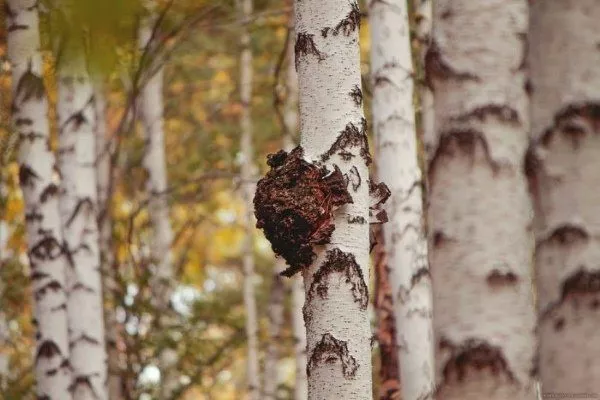
What does the birch mushroom chaga look like and where does it grow?
Chaga is classified as a polypore. This order includes species of fungi that reproduce by spores that are deposited in tree bark. The spores find damaged areas in the bark where they take root.
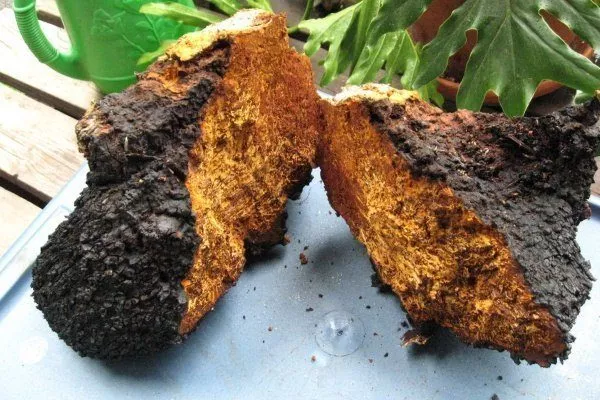
Chaga grows as a dark brown growth. However, its coloring is not uniform. The central part and the trunk become lighter. Yellowish veins form at the base of the mushroom. The structure of the tinder fungus is hard.
The average weight of one mushroom ranges from 2 to 5 kilograms, and the diameter ranges from 5-10 centimeters to half a meter.
| Characteristic | Young chaga | Old chaga |
|---|---|---|
| Surface color | Dark brown | Black with cracks |
| Pulp color | Light yellow | Dark brown |
| Texture | Dense, homogeneous | Loose, layered |
| Nutrient content | Maximum | Minimum |
| Location on the tree | Above 1.5 m from the ground | The lower part of the trunk |
In most cases, picking it from a tree with bare hands is virtually impossible—the mushroom's surface is soft only at the base. Therefore, special tools are used to cut the mushroom.
Chaga is most often found in the lower and middle parts of the tree trunk, near broken branches and knots. Once the spores penetrate the bark and take root, they begin to grow, destroying the tree by feeding on its sap. Therefore, this fungus is considered a parasite.
Chaga resembles flatbread-shaped fruiting bodies, each about 20 centimeters wide and 3 to 4 centimeters thick. The average growth period for a chaga mushroom is 10 years. Chaga gradually kills the tree it feeds on. Once the tree dries up, the chaga dies along with it.
Varieties
Chaga is an inedible mushroom. This species is classified by the type of tree it inhabits. Chaga grows on the trunks of:
- birch trees;
- aspen;
- alder.
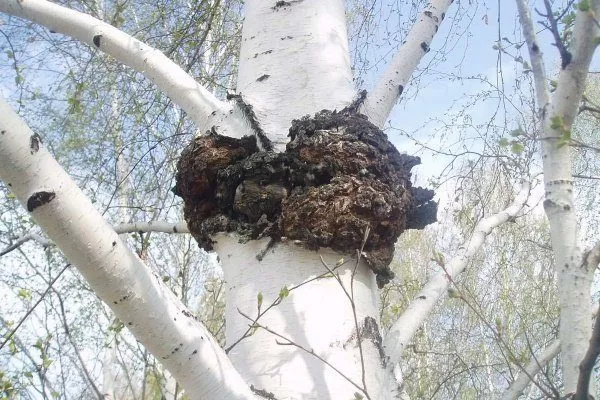
Chaga on birch
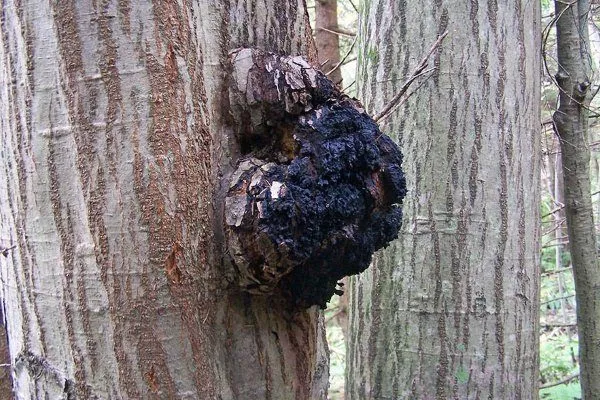
Chaga on aspen
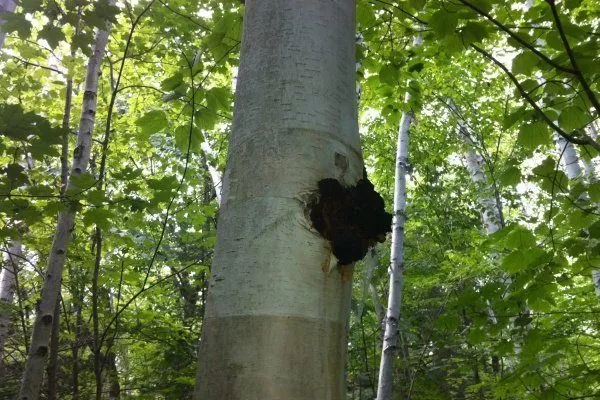
Chaga on alder
But of the listed varieties, only the chaga mushroom, which grows on birch trees, has beneficial properties. This is the reason the mushroom got its second name.
Based on shape and appearance, chaga is divided into standard and larch growths. The first type is the most common and is characteristic of the aforementioned tree species.
Larch chaga grows on the trunks of cedar and fir trees. Unlike standard chaga, this variety contains mycelium, which penetrates the wood and is responsible for the fungus's growth. Larch chaga coexists with the tree for several decades. This fungus can be identified by the following characteristics:
- unusual appearance, reminiscent of a hoof;
- the presence of a rough and bumpy surface;
- cracked crust.
Larch chaga is not an edible mushroom. However, unlike other varieties that do not grow on birch trees, this species can also be used for medicinal purposes.
When and how to collect?
Chaga can be harvested year-round. However, depending on the season, additional challenges may arise. For example, in summer, mushroom harvesting can be challenging, especially when finding the mushrooms under the dense foliage of trees. In winter, the main challenge is snowy conditions. Therefore, spring and fall are the best times to harvest chaga.
Mushroom composition also varies at different times of the year. According to experts, chaga contains the highest amount of nutrients in early spring and late fall.
Harvesting this type of mushroom requires a special tool. A thick knife or a small hatchet is the easiest way to do this. Harvesting chaga mushrooms requires considerable effort and time.
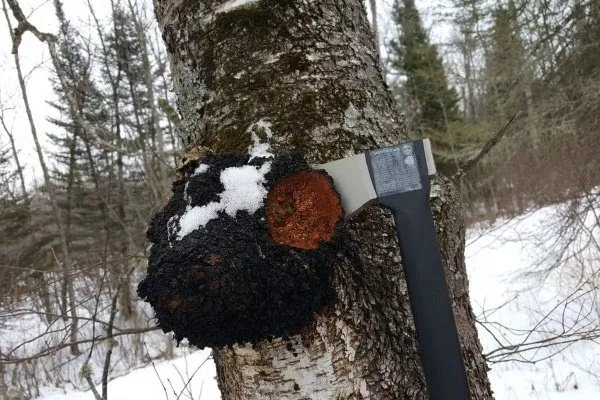
Inexperienced people often confuse the birch fungus with the tinder fungus, which also forms as a growth on birch trunks. The difference between them lies in color and appearance. The tinder fungus resembles a hoof and is lighter in color than the birch fungus. Chaga, on the other hand, is dark—its brown hue is more like black. Unlike chaga, the tinder fungus is easily separated from the tree trunk without any tools.
The higher the mushroom is located along the trunk from the ground, the more useful it is considered.Birch mushrooms should not be collected from dead trees. They contain minimal amounts of nutrients. It is also not recommended to use chaga mushrooms that grow close to the ground.
Birch groves are recommended for chaga hunting. Mushrooms grown close together are considered more beneficial.
If chaga is too old, it will also not be of much use for medicinal purposes.
You can tell if a birch chaga is old by two signs. First, check the color of the flesh—older mushrooms have a darker flesh than younger ones. Second, determine how firm the mushroom is. As it ages, chaga begins to lose its firmness and breaks under pressure.
The collection of birch mushrooms is carried out using the following technology:
- After finding chaga, it is necessary to cut it parallel to the trunk;
- the greatest amount of nutrients is contained in the upper part of the mushroom, so the cut should be made at the point where it connects to the tree;
- You should make careful movements so as not to damage the tree - after detaching the fungus, the cut site on the birch should be sprinkled with soil (this action promotes healing of the wound).
The further method of preparing the mushroom depends on the purposes for which it will be used.
You can learn more about the specifics of harvesting and preparing chaga mushrooms for medicinal purposes by watching this video:
Composition and medicinal properties
Chaga contains elements that, when combined, provide a therapeutic effect. The list of biologically active substances found in birch mushrooms includes:
- flavonoids;
- alkaloids;
- tannins;
- groups of organic acids.
Each of the elements in the chaga composition has an individual therapeutic effect:
- organic acids control and normalize the acid-base balance of the human body;
- flavonoids have anti-inflammatory, antispasmodic, diuretic and choleretic effects;
- phytoncides provide an antimicrobial effect;
- alkaloids have a beneficial effect on the heart muscle;
- tannins strengthen and restore the mucous membrane and skin (used for bleeding and inflammation);
- melanin stimulates metabolic processes and restores the body.
Chaga also contains minerals and trace elements. Among these, the most beneficial for human health are:
- magnesium – effective for diseases of bones, joints, teeth, heart, gastrointestinal tract, and nervous tissue;
- potassium – helps treat diseases of the blood, heart, kidneys, and has an antitoxic effect;
- iron – normalizes hematopoiesis and tissue respiration, the functioning of the liver and spleen, prevents anemia;
- manganese – strengthens bone tissue, improves the absorption of vitamins, relieves inflammation;
- copper – has a beneficial effect on hemoglobin, skin, hair, cellular respiration, oxygen supply, bone tissue formation, and the functioning of the nervous system.
Chaga also contains zinc, cobalt, nickel, silver and aluminum.
| Element | Concentration (mg/100g) | Therapeutic effect |
|---|---|---|
| Potassium | 41.7 | Regulation of water-salt balance |
| Magnesium | 1.9 | Neuroprotective effect |
| Iron | 0.3 | Stimulation of hematopoiesis |
| Manganese | 53.4 | Enzyme activation |
| Zinc | 28.4 | Immunomodulation |
Most of the elements found in birch mushrooms are beneficial for human health. Therefore, chaga is used not only in medicine but also in cosmetology.
Medicinal forms of the mushroom
Chaga is used in five medicinal forms:
- decoction;
- alcohol tincture;
- infusion;
- ointment;
- oil.
Each type of medicine is used to treat specific diseases.
Optimal shelf life
- Decoction: 72 hours at +4°C
- Alcohol tincture: 24 months in the dark
- Dry extract: 36 months in vacuum
- Oil emulsion: 14 days in the refrigerator
- Lyophilisate: 60 months in sealed packaging
Therefore, the method of preparing chaga is chosen depending on the purposes of its use.
For what diseases and how is chaga taken?
Chaga is used for:
- reduced immunity and poor metabolism;
- inflammation affecting the tissues of the oral cavity and gums;
- spasms;
- poor quality of functioning of the central nervous system;
- the need to slow down the development and growth of the tumor;
- stomach diseases (gastritis and ulcers);
- the presence of foci of inflammation;
- insomnia;
- weak cell regeneration;
- depression or nervous tension;
- accumulation of heavy metals in the body;
- high blood pressure;
- poor functioning of liver enzymes;
- treatment of skin diseases (eczema, acne, psoriasis);
- to reduce pain in arthritis, arthrosis, radiculitis.
Before making a chaga-based medicine, the mushroom must be properly prepared. After it's cut from the tree, it should be cut into small pieces and dried. You can speed up the process by using an oven.
The mushroom should be chopped as quickly as possible after cutting it from the tree, as it hardens quickly. Once the chaga pieces have dried, they should be placed in a glass jar or cloth bag. Birch chaga does not mix well with other materials.
Chaga retains its beneficial properties for two years. After this period, the mushroom can be discarded.
Decoction
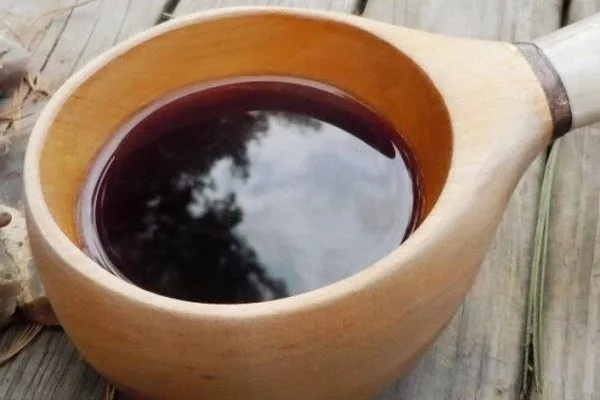
The most common medicinal preparation based on chaga is a decoction. For conditions affecting the larynx and respiratory system, inhalation with birch mushrooms for 5-7 minutes is recommended.
The decoction is prepared according to the following scheme:
- 100 grams of mushroom are placed in a container and filled with 1 liter of cold water;
- the mixture is left to infuse for 24 hours until the mushroom pieces soften;
- The substance is brought to boiling point, after which it is again left to settle for 24 hours.
The prepared decoction is used as a tea. To do this, dilute part of the mixture with boiling water and refrigerate the remaining mixture. Once prepared, the decoction retains its medicinal properties for four days, after which it begins to spoil. It is recommended to use it within two weeks. Drinking chaga tea reduces the risk of developing cancer.
Alcohol tincture
Chaga tincture is used in the treatment of cancer. In addition to the crushed mushroom, vodka is also required for preparation. The medicine is produced according to the following procedure:
- 100 grams of mushroom is placed in a container and filled with 1 liter of vodka;
- the mixture is placed in a cool place, away from sunlight;
- The substance is infused for two weeks, shaking it once a week, after which the tincture must be filtered.
Take 1 tablespoon 3 times daily before meals. The tincture can be diluted with 50 milliliters of warm water. The course of treatment is 10 days.
Infusion
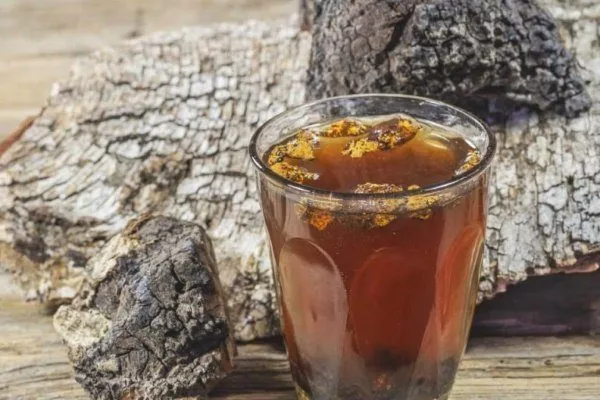
The infusion differs from the alcohol tincture not only by the absence of alcohol in the composition, but also by the method of preparation:
- the mushroom is washed and grated, after which it is soaked in water for 4 hours;
- Chaga is mixed with water in a ratio of 1 to 5;
- The substance is infused in a dark place for 2 days.
The infusion is strained and taken 30 minutes before meals. For chronic gastritis, the course duration is up to 6 months. Honey and mint may be added. For adenoma treatment, crushed burdock root is added to the mixture. If the infusion is needed for gum disease, it should be mixed with chamomile and used as a mouth rinse.
During the preparation process, additives can be used to enhance the medicinal effect. Chaga infusion is combined with rose hips, pine buds, St. John's wort, licorice, and yarrow.
Chaga extract can also be prepared using the infusion. To do this, the finished medicine must be mixed with Befungin. This preparation strengthens the body and, when combined with chaga, helps treat gastritis and stomach ulcers.
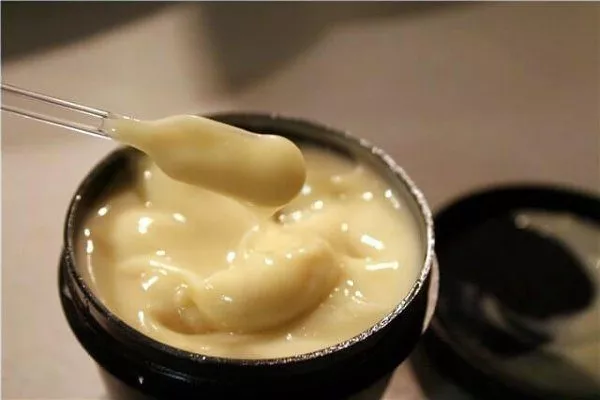
Ointment
To prepare the ointment, you'll first need to grind the mushroom into a powder. Only then can you begin making the medicine:
- mushroom powder is mixed with pork fat (it is recommended to use fresh fat);
- the ratio of chaga to fat is 1 to 1;
- the mixture is melted using a water bath and brought to a boil;
- the substance is placed in a jar, closed, and wrapped in a warm towel;
- The ointment is infused for 24 hours, after which it is stored in the refrigerator.
Instead of pork fat, it is permissible to use butters – solid fatty oils of vegetable origin.
Chaga ointment is used to treat skin cancer, uterine cancer, breast cancer, rectal cancer, lymph node cancer, and prostate cancer. It also helps treat leg swelling, normalize circulation, and strengthen vein and blood vessel walls.
Oil
To prepare chaga oil, you'll also need olive oil. The medicine is prepared according to the following instructions:
- chaga infusion is being prepared;
- 2.5 tablespoons of olive oil are mixed with 1 teaspoon of chaga infusion;
- The substance is infused in a cool, dark place for 24 hours.
Chaga contains pterins, which, when combined with olive oil, have an antitumor effect. Therefore, the medicine is used to treat various tumors, as well as skin conditions, prostate adenoma, and sinusitis. The ointment also relieves muscle and joint pain.
Contraindications and possible harm
Chaga has virtually no contraindications. This mushroom does not contain any substances that pose a serious threat to human health. However, in some cases, after taking chaga, the following may occur:
- intestinal disorders (medicines based on the mushroom act as a laxative);
- overload and excessive excitation of the nervous system (with prolonged use of decoctions and infusions);
- individual allergic reaction (if a person suffers from hay fever and atopic dermatitis).
Medicines containing chaga are not recommended for use in the following cases:
- problems with the nervous system;
- pregnancy and lactation;
- the use of antibacterial drugs;
- internal administration of glucose;
- chronic colitis and dysentery;
- alcohol consumption and smoking.
When treating with chaga, you should reduce the amount of fried and fatty foods in your diet to a minimum.
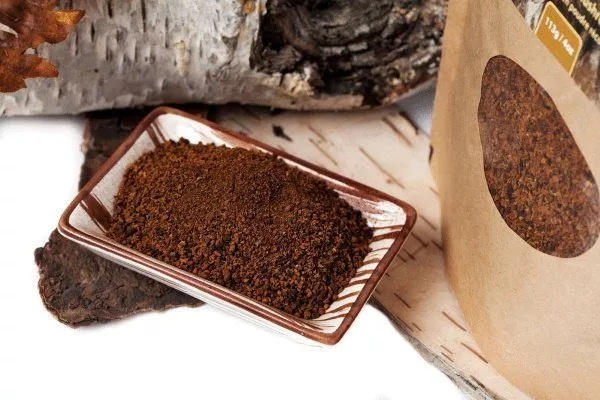
Chaga is a mushroom that contains numerous beneficial compounds for human health. However, if used incorrectly, its effects will be minimal. Therefore, before using chaga for treatment, it is essential to carefully study the instructions for preparing medicinal products containing it and consult with specialists.