
Crimean residents tirelessly venture to mushroom-growing areas in search of edible specimens. The Crimean peninsula offers not only a beautiful sea and numerous scenic spots, but also the opportunity to explore forests and mountainous areas in search of mushrooms. Below, we describe the edible and poisonous mushrooms found in the republic.
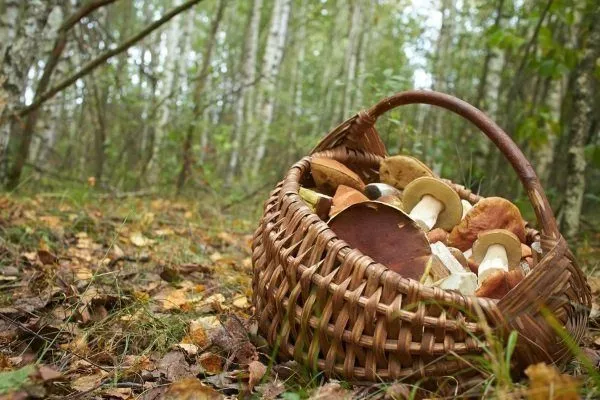
Edible mushrooms
Crimea is home to an incredible number of edible mushroom species and varieties. Each species deserves its own separate examination. The most common mushroom species are:
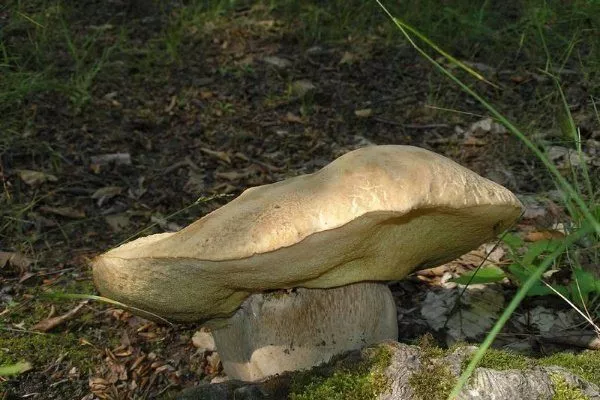
Oak trees
Description. Oak trees They are distinguished by their yellow-brown, sometimes grey-brown caps, which are cushion-shaped when young and spherical when mature.
Where and when does it grow? You can start collecting oak mushrooms as early as May, heading to deciduous oak groves. Popular places for collecting oak mushrooms include the Sevastopol area, as well as oak forests and the Crimean mountains. The picking season ends in June.
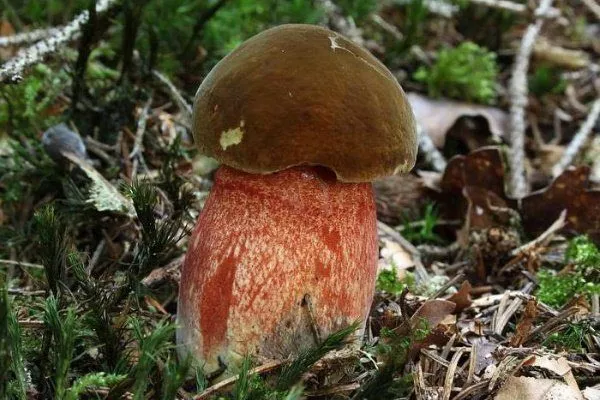
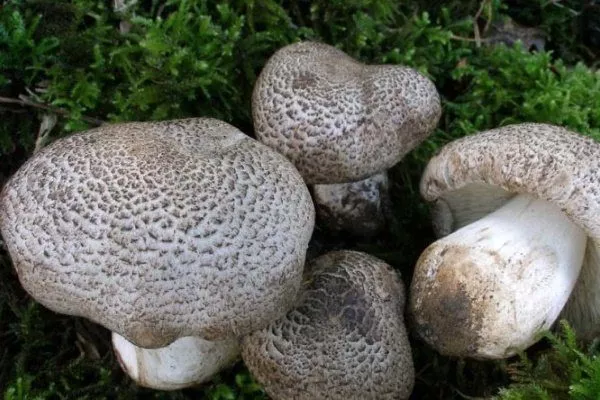
Varieties. The spotted oak boletus is also found. It has a hemispherical or cushion-shaped cap, 5-15 cm in diameter. It darkens when pressed. The cap can be chestnut-brown, reddish-brown, or blackish-brown. The stem can reach up to 10 cm in length. It grows from August to September in deciduous and coniferous forests.
Doubles. The speckled oak mushroom can be confused with the poisonous satanic mushroom.
Morels
Description. U morels The mushrooms have a honeycomb structure and ovoid-round caps, predominantly yellow-brown. The mushrooms are attached to the stem from below and are hollow inside. The cylindrical stems are slightly wider at the base and can be white, yellow-brown, or light yellow. The flesh is brittle and white. They are distinguished by their mushroom aroma and pleasant taste.
Where and when does it grow? Mushrooms growing in clusters are found in areas of forest fires, mixed and broadleaf forests. Fruiting bodies are collected starting in early March, in mossy ditches, clearings, or forest edges.
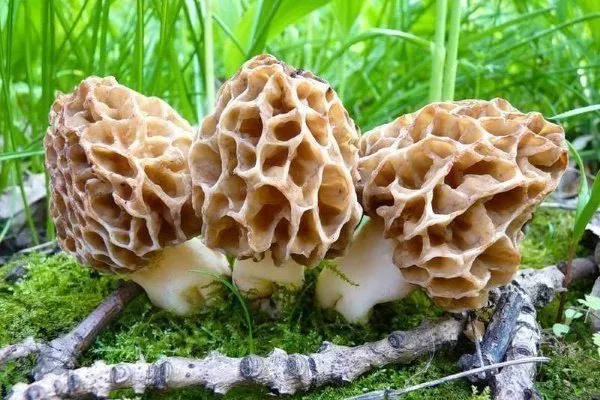
Varieties. Morel varieties native to this area include the common morel. This edible mushroom has a spherical brown cap, 8 cm in diameter, with large cells on the cap's surface.
Doubles. False morels have similar external characteristics, but their caps are dark olive in color and their smell is quite unpleasant.
Russula
Description. There are a large number of russula mushrooms. They differ only in the color of their caps, but they are similar in shape: straightened with slightly downward-curved edges, up to 10 cm in diameter.
Where and when does it grow? The russula harvest season begins in late August and lasts until the end of October. These mushrooms prefer deciduous and coniferous forests, swampy riverbanks, and young birch groves. Russula can be found in abundance in Belogorsk, near Stary Krym.
Varieties. There are a huge number of varieties of russula:
- Golden yellow. It is distinguished by its thin, fleshy texture and convex cap, up to 9 cm in diameter. The cap can be yellow, reddish-pink, dark red, or white. The stem is cylindrical or club-shaped, white in young mushrooms, and yellow-gray in mature specimens.
- Greenish. An edible mushroom with a hemispherical, later flattened, gray-green or dark green cap, up to 15 cm in diameter. The stem is white and cylindrical. The white flesh has a faint odor and a nutty flavor.
Mushroom Picker's Checklist: Basic Rules of Collection
- ✓ Collect only familiar types of mushrooms.
- ✓ Check each copy for duplicates.
- ✓ Use wicker baskets for collection (not plastic bags).
- ✓ Cut the mushrooms with a knife at the base of the stem.
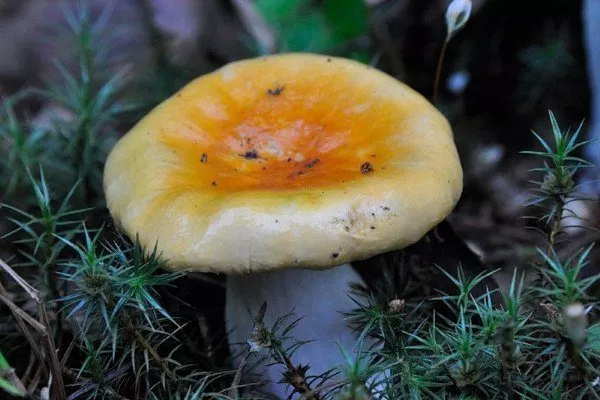
Golden-yellow russula
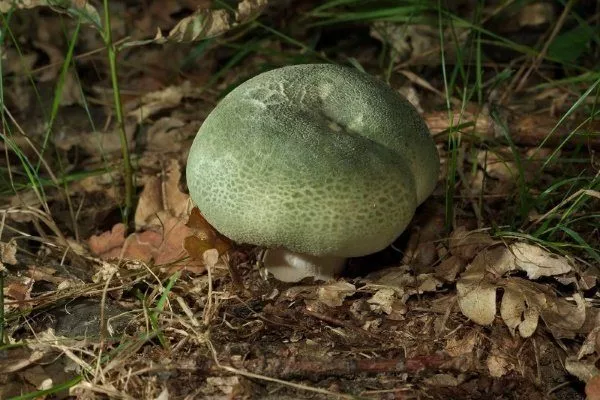
Russula viridans
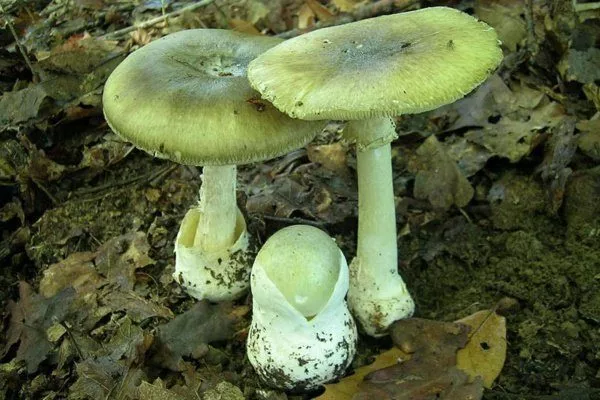
The green russula is often confused with the poisonous death cap.
Doubles. The greenish russula can be confused with the death cap, which is a dangerous mushroom.
Chanterelles
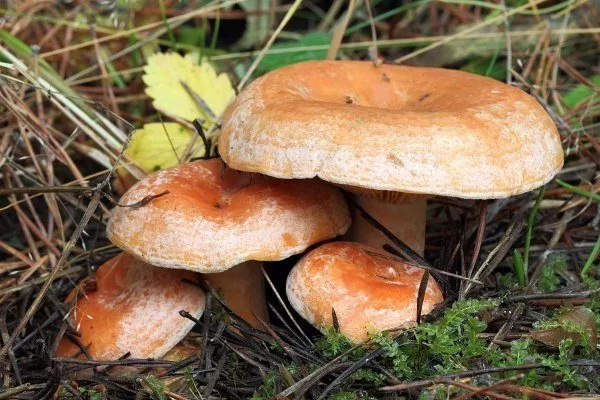
Description. Saffron milk caps are mushrooms with a surprisingly light yellow or orange cap, 5-18 cm in diameter. The cap is round. Blue-green or red milk caps are also found. The stem and cap are the same color. The hollow stem reaches up to 9 cm in height.
Where and when does it grow? Mushrooms grow from mid-July to October. In Crimea, they are found in the forests of the Rybachye and Southern coasts. They grow near coniferous trees, preferring pine and larch.
| Characteristic | Real saffron milk cap | Pink volnushka |
|---|---|---|
| Cap color | Bright orange | Pinkish with concentric circles |
| Milky juice | Orange, not pungent | White, caustic |
Doubles. The pink milk cap and the fragrant milk cap are considered to be the saffron milk cap's lookalikes.
Rows
Description. Tricholomas have a cap-and-stem structure, making them difficult to confuse with other mushrooms. The brown, white, green, yellow, or red cap can resemble a cone or bell when young. As it matures, the cap straightens, becoming flat and spreading. The cap diameter varies from 3 to 10 cm. The stipe does not exceed 10 cm in height.
Where and when does it grow? Ground mushrooms grow singly or in groups. These autumn mushrooms form mycorrhiza with coniferous trees. They are much more common near pine trees than under larch, spruce, and fir trees. Mushroom picking is recommended from late August to late October. The Kolchugino and Crimean Observatory area boasts numerous mushrooms. gray rows.
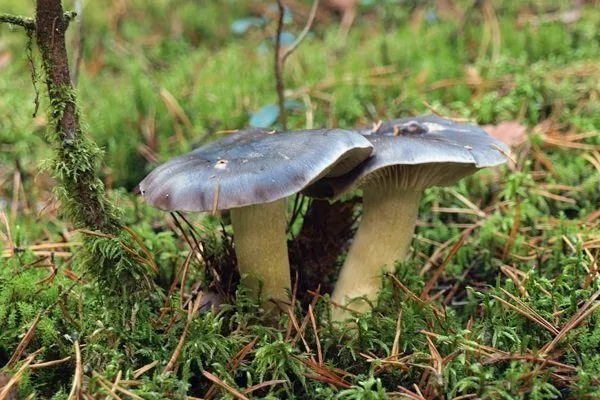
Varieties. A variety of this mushroom is the gray rowan (little mice). It is distinguished by its gray, rounded cap, which becomes flat and uneven as the mushroom matures. The gray stem with a yellow tint reaches up to 15 cm in height. The cap diameter is 4-12 cm.
Doubles. A poisonous mushroom with a convex cap and unrolled edges is considered a dangerous analogue of this mushroom. It has an unpleasant, floury odor and white flesh.
Dung beetles
Description. Dung beetles – mushrooms with a bell-shaped cap covered with small scales on the surface. The stem is thin, fragile, and hollow inside. When the mushroom matures, the cap dissolves, leaving a black mush or spot in its place, forming a ring.
Where and when does it grow? Ink beetles can be found in garden beds, near residential buildings, in city parks, and even in garbage dumps. They prefer fertile soils rich in plant debris.
Varieties. There are several types of dung beetles:
- Ordinary. Young mushrooms have a cylindrical cap with white scales. As they mature, the cap opens, taking on a bell-shaped form and reaching up to 3 cm in diameter. As they mature, it turns black.
- White. The bell-shaped cap, covered with white scales, reaches up to 10 cm in diameter. The mushroom itself can reach over 15 cm in height.
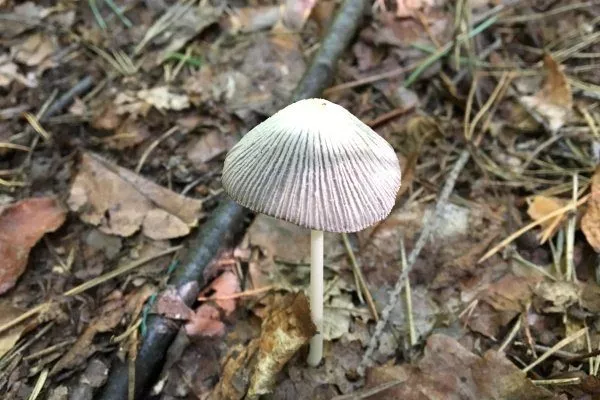
Common dung beetle mushroom
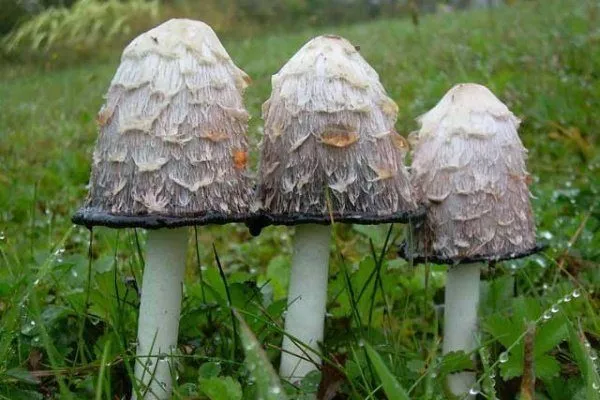
White dung mushroom
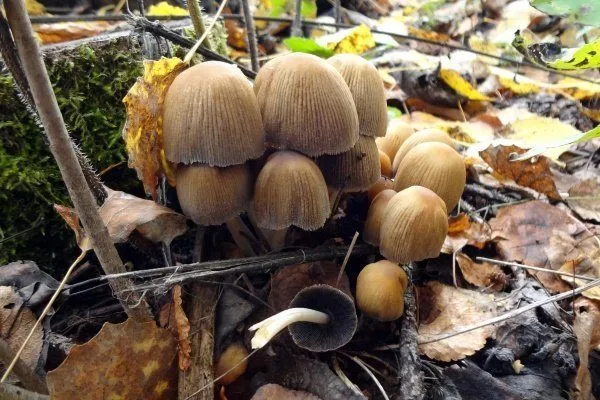
Flickering dung mushroom
Doubles. The dung cap is a mushroom that has no poisonous lookalikes. However, it is similar in appearance to the conditionally edible dung cap, the flickering dung cap.
Raincoat
Description. U raincoat A spherical or pear-shaped fruiting body with a closed structure. The mushroom has a thick skin and spines that fall off over time. When the puffball matures, chambers form inside it, containing spore powder. The white flesh is firm and minty, yet meaty.
Where and when does it grow? Mushroom picking is recommended as early as late summer; they grow until late fall, along roadsides and in mixed and coniferous forests. In Crimea, puffballs are sought in foothill areas and areas with rotting wood.
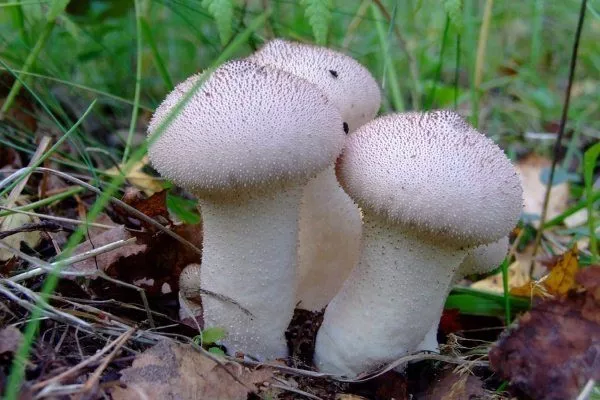
Doubles. The false puffball, with its spherical shape but tough flesh and skin, is an inedible lookalike of the common puffball.
Milk mushrooms
Description. Mushrooms have a flat-convex cap when young, which becomes funnel-shaped when mature. The cap of milk mushrooms can reach 5 to 20 cm in length. The cap sits on a short stalk, no more than 7 cm in height.
Where and when does it grow? Find milk mushrooms They can be found in mixed and coniferous forests, near birch groves, in clearings, forest edges, and clearings. They are most commonly found in the Simferopol, Bakhchisaray, and Belogorsk districts.
Varieties. Several varieties of milk mushrooms are found on the Crimean Peninsula:
- Oak. This edible mushroom contains bitter juice and therefore requires pre-cooking. The reddish-orange cap is concave in the center and has light-colored flesh. The cap diameter is up to 6 cm, and the stem height is up to 7 cm.
- Peppery. The cap is initially slightly convex, then becomes more funnel-shaped. The margins are slightly curved, then straighten out, becoming wavy. The skin is creamy or white, covered with reddish spots. The solid white stem reaches up to 8 cm in height.
- Dry. An edible mushroom with a smooth white surface. In young mushrooms, it has a slight blue tint. The cap diameter is up to 20 cm. The cap is initially convex with a small tubercle in the center and downward-curving edges. As it matures, the cap opens and splits in dry weather.
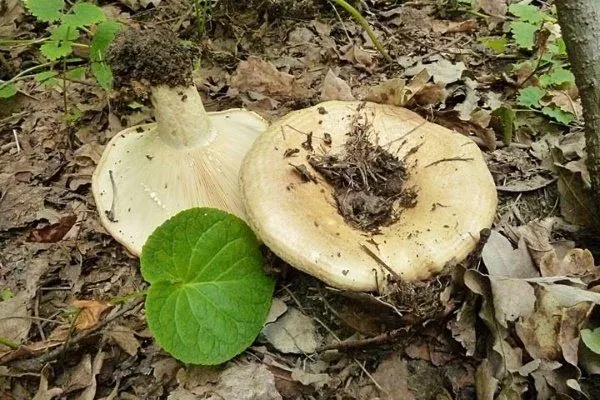
Oak milk mushroom
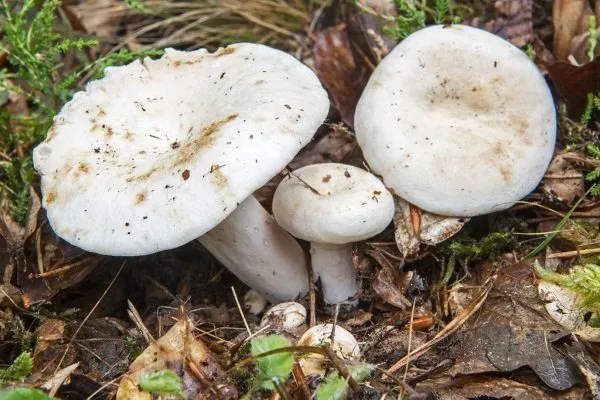
Pepper milk mushroom
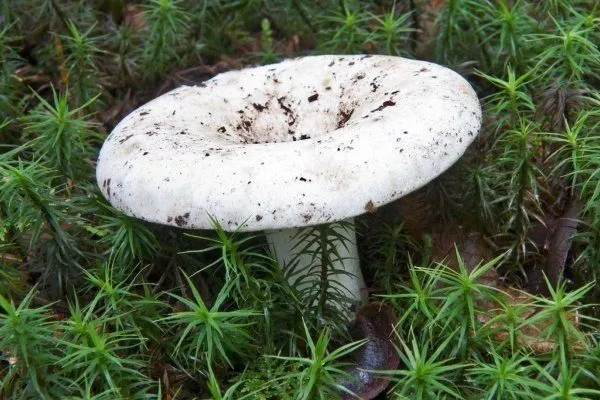
Dry milk mushroom
Doubles. Edible milk mushrooms can be confused with conditionally edible species: pepper milk mushrooms and oak milk mushrooms.
One-barrel
Description. The single-barrel mushroom is characterized by a funnel-shaped cap, reminiscent of a chanterelle. The cap is gray, brown, dark gray, and sometimes light gray. The fruiting body is firm and dense, 12-15 cm in diameter. The largest mushrooms have a stem no more than 2 cm in diameter, appearing to have no stem at all. The mushroom is sometimes pressed tightly to the soil.
Doubles. The one-barrel does not have poisonous look-alikes.
Where and when does it occur? Mushrooms thrive in moisture; they're rarely seen during dry summer months. They begin to grow after prolonged fog and heavy rains. They produce abundantly in the spring before the heat sets in and in the fall, when the evenings are cool. They are found in steppes near livestock farms, along roads, banks, and streams. They grow in clusters.
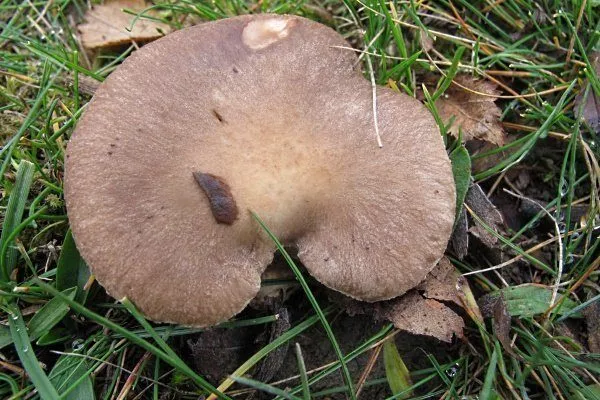
Aspen mushroom
Description. When young, the aspen mushroom has a hemispherical cap, which later becomes cushion-shaped, reaching up to 30 cm in diameter. The skin is dry, velvety, or felt-like. The club-shaped stem reaches up to 22 cm in height. The surface of the stem is covered with black or brown scales.
Where and when does it grow? Aspen mushrooms are found from late June to late October. They grow exclusively with partner trees, forming mycorrhiza. Mushrooms can be found under the following trees:
- poplars;
- oak trees;
- aspens;
- spruce trees;
- willows;
- beeches;
- birches.
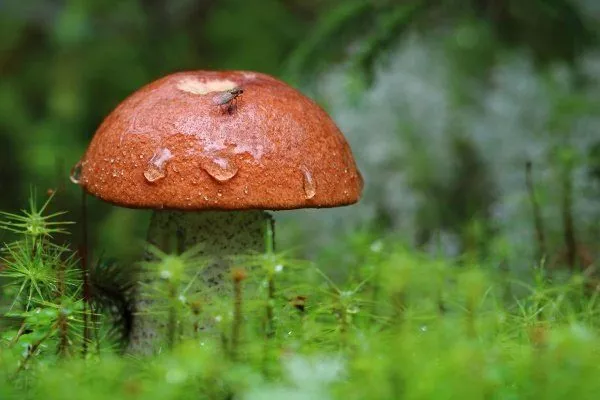
Varieties. There are several varieties of aspen mushrooms that differ only in the color of their caps: red, white, reddish-brown.
Doubles. False aspen mushroom They call it bitterling and pepper mushroom.
Birch boletus
Description. Young mushrooms have a white, hemispherical cap; as they mature, it becomes cushion-shaped and dark brown. The flesh is white and firm, darkening when broken or cut. The cap reaches up to 18 cm in diameter. The stem is cylindrical, white or gray, with dark gray longitudinal scales on the surface.
Where and when does it grow? Mushrooms grow both singly and in small groups from early May until mid-autumn. They thrive in any light deciduous and mixed forests with birch trees. They are often found at forest edges and open clearings.
Varieties. There are several varieties birch boletus:
- Swamp. It grows in moist soils and is distinguished by its light gray or light brown cap and loose flesh.
- Multicolored. A mushroom with an orange, light brown, or pinkish cap. The surface of the mushroom becomes slimy after rain. Boletus mushrooms have white stems, sometimes with gray scales.
- Ordinary. The cap is reddish or brownish. The stem is massive and dense, with gray scales located on the surface.
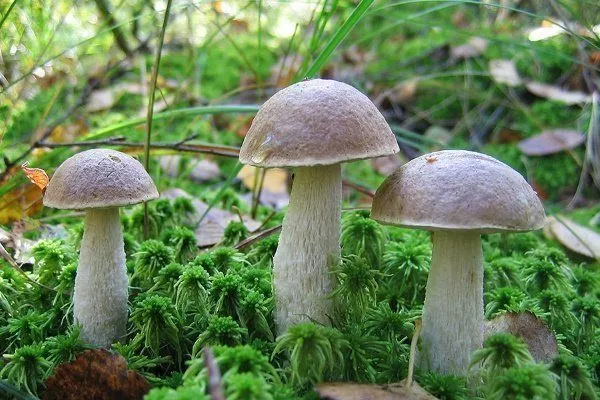
Marsh birch bolete
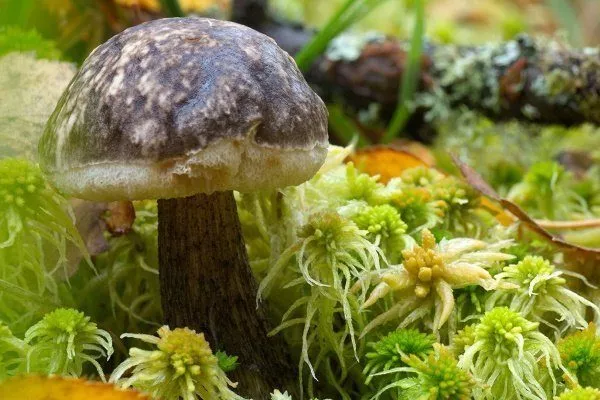
Birch boletus
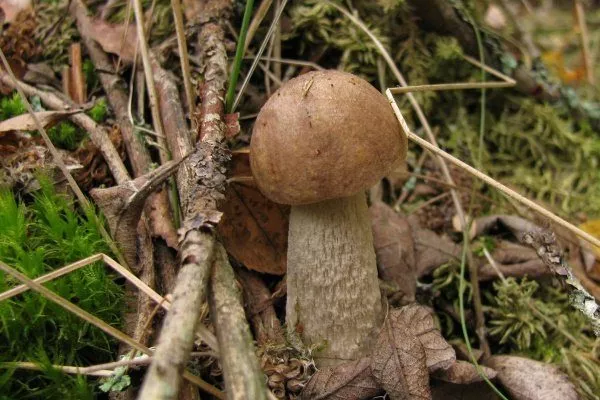
Common birch bolete
Doubles. The birch bolete's twins include gall mushroom, which has a grey or mottled stem and a white-grey cap.
Horned
Description. The horn mushroom is a fruiting body that grows vertically in branched tubes; it has neither a stalk nor a cap. It is simply impossible to confuse this mushroom with any other.
Varieties. The yellow hornbeam is a species of scaly-colored ...
Where and when does it grow? You can start searching for horned mushrooms as early as the end of August, heading to damp coniferous forests. The mushrooms thrive in lingonberry patches, rotten tree debris, moss, or bark.
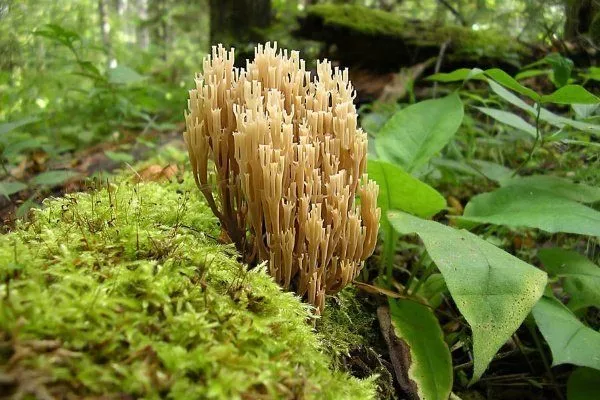
Doubles. The horned one has no doubles.
flywheel
Description. Young flywheel The cap is convex or semicircular with straight edges. Over time, the cap becomes cushion-shaped, reaching 4-20 cm in diameter. The surface of boletus mushrooms can be bare, velvety, sticky, or moist, sometimes covered with small scales. The color can vary, from chestnut, olive-yellow, brown, to lemon or dark yellow.
Where and when does it grow? Mushrooms grow solitarily. They thrive in forest clearings and edges, in mixed, deciduous, and coniferous forests, forming mycorrhiza with their partner trees. They can be found from early July to late October under linden, alder, chestnut, beech, spruce, hornbeam, and pine trees.
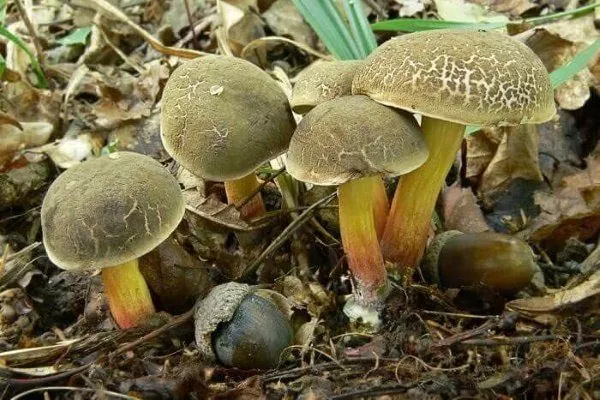
Doubles. Boletus mushrooms do not have poisonous look-alikes, but they are often inadvertently confused with pepper or gall mushrooms.
Butterlets
Description. Small and medium-sized mushrooms are found, resembling boletus mushrooms in appearance. When young, they are attractive due to their spherical or conical cap, which later straightens out, becoming cushion-shaped and reaching up to 15 cm in diameter. The mushroom has a cylindrical stem, up to 10 cm tall. The skin is shiny and sticky. The flesh is soft but firm.
Where and when does it grow? Butter mushrooms are found under coniferous trees, less commonly near birch and oak. Mushroom hunting is recommended from early summer to mid-October, especially in the Ai-Petrit area of Mount Demeredzhi. Butter mushrooms are also found in the Stroganov District and the village of Zelenogorskoye.
Varieties. There are several varieties of butter mushrooms found on the Crimean Peninsula:
- Ordinary. A mushroom with a cap that can be brownish-purple, reddish-brown, chocolate-brown, or yellowish-brown. The cap diameter reaches up to 12 cm, and the stem height is up to 11 cm.
- Grainy. The convex, rusty cap eventually takes on a cushion-shaped form, with a yellow-orange hue. The diameter ranges from 4 to 10 cm.
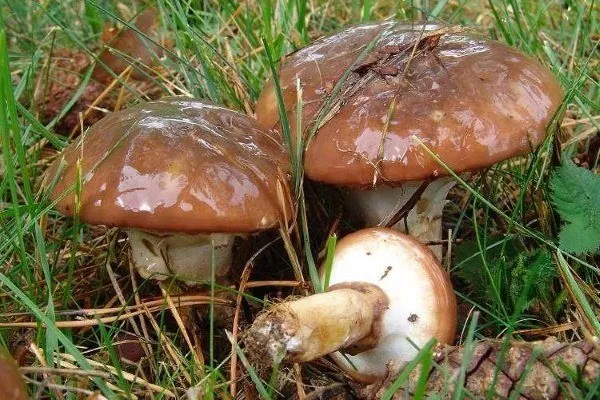
Common butter mushroom
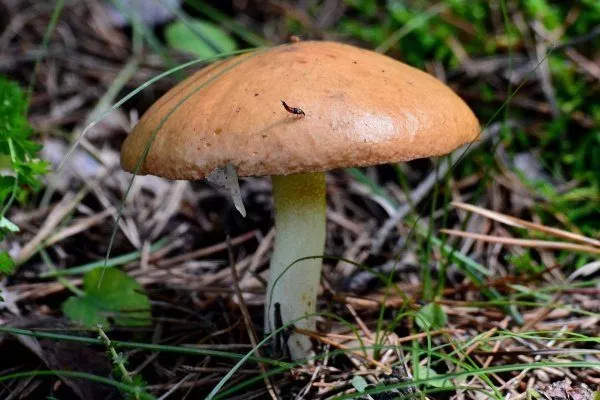
Granular butter mushroom
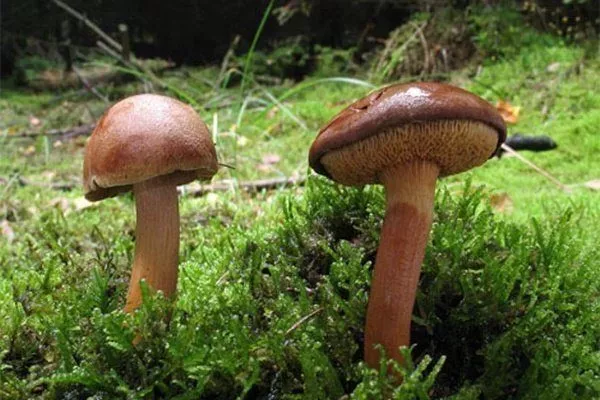
The pepper mushroom is a look-alike of the butter mushroom.
Doubles. The pepper mushroom, which has a convex cap with a smooth, shiny surface, is considered a look-alike.
Champignons
Description. Champignons are mushrooms with massive caps. Early on, they are rounded, later becoming flattened and spreading, reaching up to 10 cm in diameter. The caps can be brown, white, or brownish. They are characterized by a smooth surface and a smooth, dense stem.
Where and when does it grow? You can find champignons as early as April in forests, on the bark of rotting trees, in meadows and fields, and near residential areas. The mushrooms form ring-shaped colonies. The harvest period lasts until October.
Varieties. The following types of champignons are found:
- Ordinary. An edible mushroom with a white cap, 8-15 cm in diameter, hemispherical in shape, and strongly curved inward edges. The stem is straight.
- Field. Grows in forest clearings. It is distinguished by its bell-shaped form, up to 20 cm in diameter. The cap is white or cream-colored. The stem height is up to 10 cm.
- Forest. Young mushrooms have an ovoid-bell-shaped, brownish-brown cap, which over time becomes flat and spread out, reaching up to 10 cm in diameter.
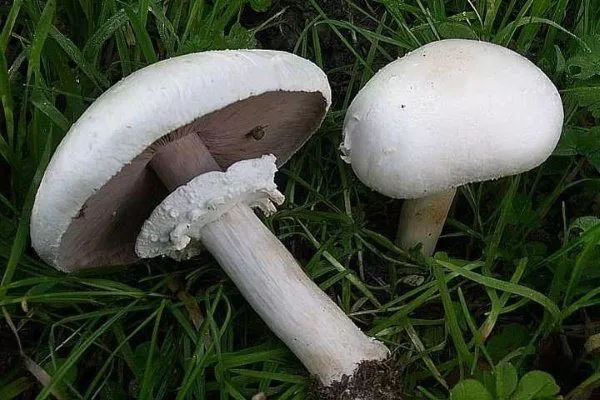
Common champignon
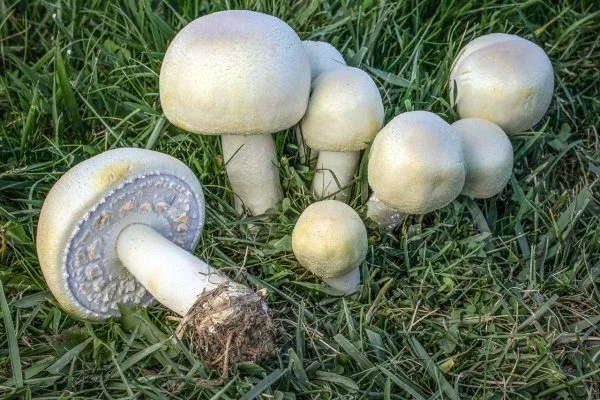
Field champignon
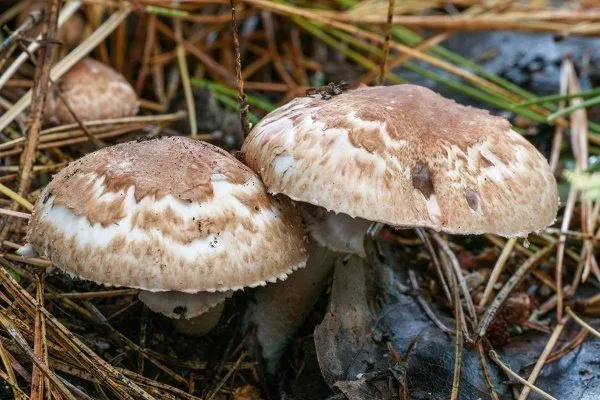
Forest champignon
Doubles. The false champignon's lookalike is the false champignon—a poisonous mushroom that produces light yellow spots when pressed. The false champignon's cap has a brown spot in the center.
Chanterelles
Description. These common mushrooms boast excellent flavor. They are very difficult to confuse with other mushrooms due to their unique appearance. Chanterelles have concave caps with wavy edges. Their color ranges from yellow to orange. The cap diameter is up to 10 cm.
Where and when does it grow? Chanterelles They grow from spring to late autumn. They're best found in forests, especially coniferous ones. A large harvest can be found in the area from Sevastopol to Bakhchisarai.
Varieties. There are a large number of chanterelles, but the following varieties are found in Crimea:
- Ordinary. The cap is light yellow or orange, 2-12 cm in diameter. The flesh is fleshy, yellow at the edges and white at the cut. It has a slightly sour taste when eaten.
- Gray. An edible mushroom with a cap with wavy edges and a depression in the center. The cap diameter is up to 6 cm. The flesh is firm. The cap is gray or brownish.
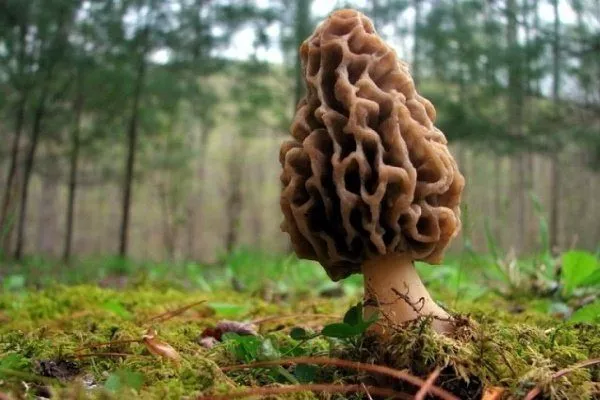
Common chanterelle
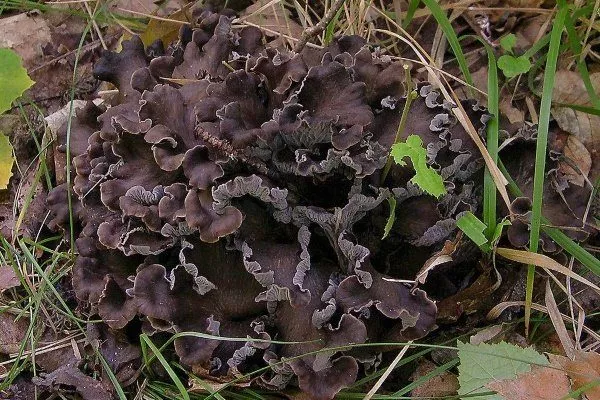
Gray fox
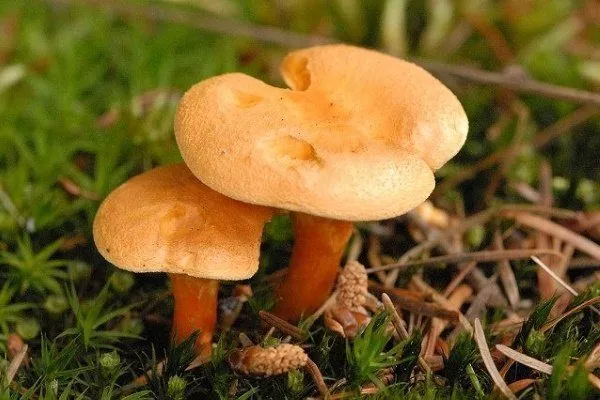
Chanterelles are similar to the orange talker
Doubles. In appearance, chanterelles are similar to the inedible orange talker and the poisonous olive omphalot.
Tinder fungi
Description. Tinder fungus – a mushroom with a light-brown or grayish-brown cap. The mushroom reaches a length of up to 50 cm. It consists of numerous branched stalks, each with a white cap. Young tinder funguses have a rounded cap; as they mature, it becomes flattened and convex.
Where and when does it grow? You can go for tinder fungi in mixed forests—the mushrooms grow on tree trunks and stumps. The harvest season begins in August and lasts until November.
Varieties. The following types of tinder fungi can be found on the Crimean Peninsula:
- Winter. The mushroom has a yellow-brown cap, predominantly flat-convex. The stem is gray-yellow and hard. It grows even in December.
- Umbrella. The cap diameter reaches up to 40 cm. The mushroom has flat, light-colored caps of a round shape – depressed in the center, collected into fruiting bodies.
- Sulphur yellow. The diameter of the yellow-orange fruiting bodies is close to 50 cm.
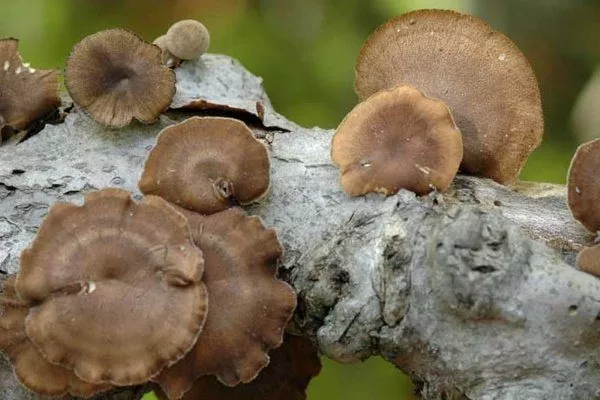
Winter tinder fungus
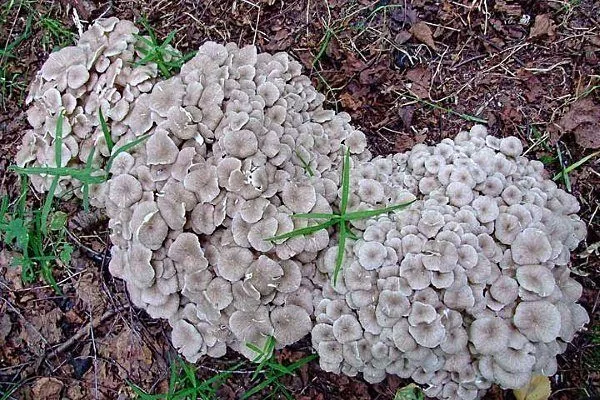
The umbrella polypore mushroom
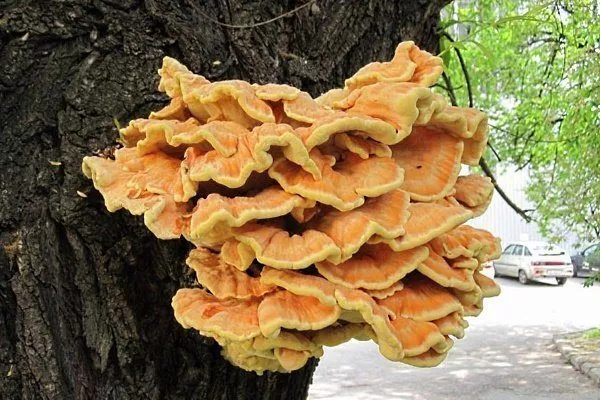
Sulphur-yellow tinder fungus
Doubles. The mushroom has a false look-alike with a rounded fruiting body, 20-26 cm in diameter. It can be distinguished from the edible mushroom by its matte, uneven, black or dark gray surface.
Caesar's mushroom
Description. The Caesar's cap mushroom (or Caesar's cap) is distinguished by its interesting shape and vibrant cap. When young, the cap is ovoid or semicircular, later flattening with velvety edges. Specimens with bright yellow or light red caps, 8-20 cm in diameter, are also found. The stem is light, almost white, 8-12 cm high and 2-3 cm in diameter. The cap flesh is fleshy, juicy, and yellow.
Doubles. Due to inexperience, the Caesarean mushroom is often confused with the red fly agaric. They are indeed very similar, but the Caesarean mushroom lacks the white spots on its cap.
Where and when does it occur? The Caesar's mushroom grows in light deciduous forests under old trees or at the border between forests and meadows. It grows alongside beeches, chestnuts, hazels, or birches, and less commonly, conifers.
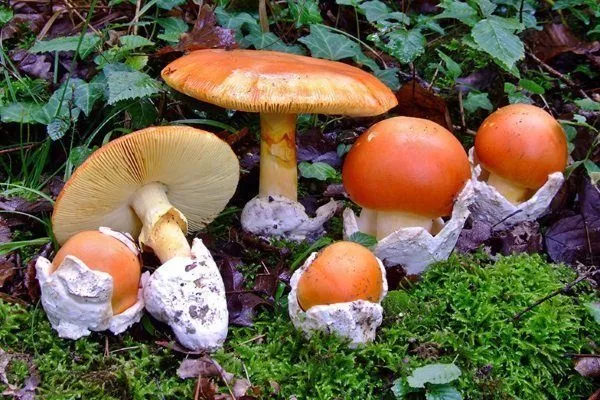
Honey mushrooms
Description. Mushrooms with cream-colored, reddish, and yellowish caps covered with fine scales. A distinctive feature is the thin, long stem, which reaches up to 15 cm in height. Depending on the mushroom's age, it can be light honey-colored, light beige, or dark brown.
Where and when does it grow? Honey mushrooms are harvested from early May until October. They thrive alongside shrubs and trees. They can be found in groups on old stumps in the forest, as well as in meadows and forest edges. Mushroom pickers can also venture into the steppe zone near the Donuzlav and Sasyk estuaries.
Varieties. The following species grow here: honey mushrooms:
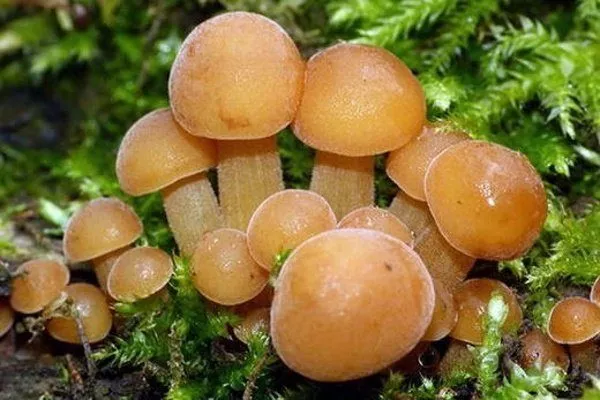
- Meadow. When young, the mushroom has a convex cap, which becomes firmer with age, its edges jagged. The mushroom has light-colored flesh, a pleasant flavor, and an almond or clove aroma.
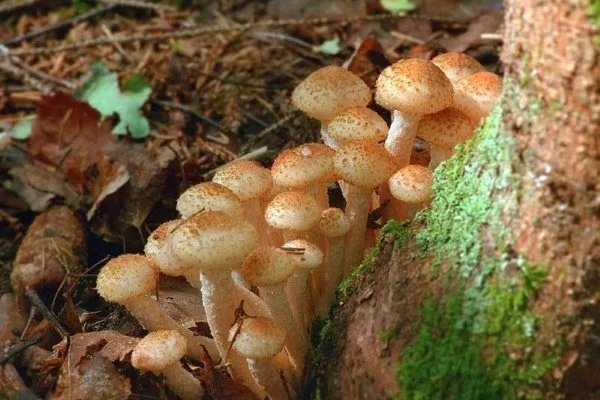
- Winter. This edible mushroom has a convex cap, 2-10 cm in diameter, and a stem up to 7 cm high. The caps are yellow, brown, or brownish-orange. The flesh is white, with a predominantly light yellow tint. The stem is up to 10 cm high.
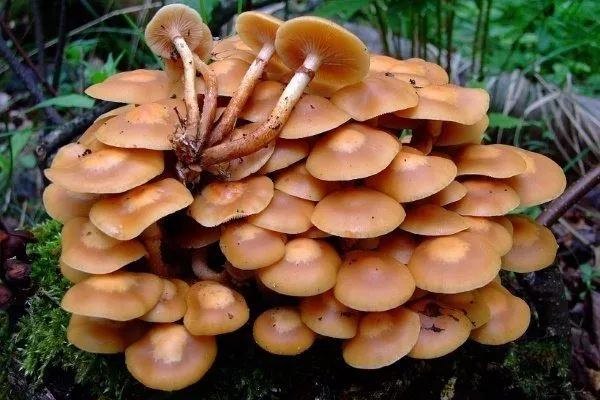
- Autumn. Growing singly or in groups, the autumn honey fungus grows on a tall stalk up to 10 cm tall. The cap diameter varies from 3 to 15 cm.
- Summer. An edible mushroom with a convex cap of a honey-yellow hue. The mushroom has dense, white flesh.
Calendar for collecting honey mushrooms in Crimea
- May-June: meadow honey mushrooms.
- July-August: summer honey mushrooms.
- September-October: autumn honey mushrooms.
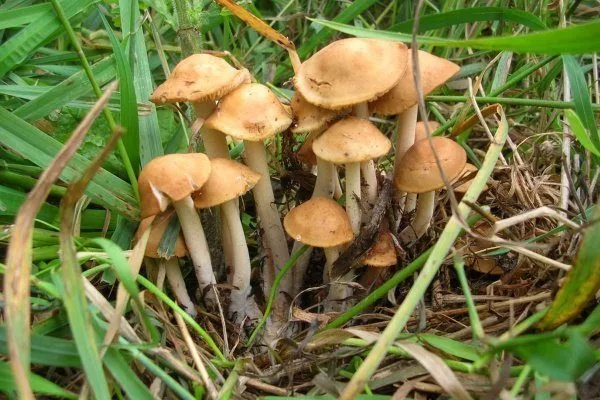
Meadow honey fungus
Winter honey fungus
Autumn honey fungus
Summer honey fungus
Doubles. There are false honey mushrooms with orange or brick-red caps.
Yellow Ramaria
Description. The fruiting body of the yellow ramaria reaches up to 20 cm in height and up to 15 cm in diameter. The fruiting body is predominantly yellow. Numerous dense, bush-like branches, cylindrical in shape, grow from the thick white stalk. The flesh is moist and dirty white. The mushroom has a pleasant aroma and a mild flavor.
Doubles. Ramaria lutea is similar in appearance to golden-yellow coral; they can only be distinguished under a microscope.
Where and when does it occur? Ramaria lutea grows singly and in groups, and grows in August-September on the ground in deciduous, mixed and coniferous forests.
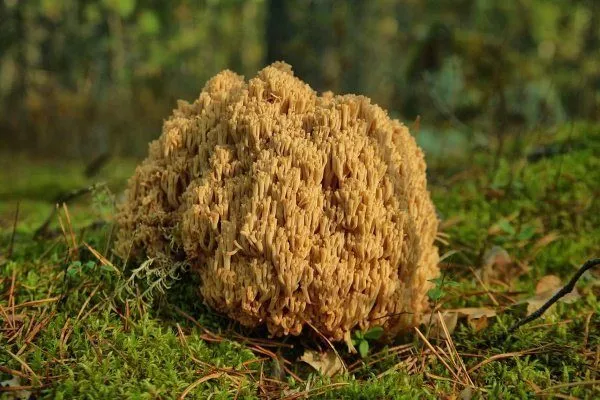
Mountain porcini mushroom
Description. They are distinguished by their large, fleshy caps, up to 20 cm in diameter. They can be completely white, but also the color of coffee with milk. The cap surface is smooth, and the underside is covered with gills with bridges. The flesh is white or creamy. It has a pleasant, starchy aroma.
Doubles. The smoky talker, found in the Crimean forests, is similar to it.
Where and when does it occur? Mountain porcini mushrooms grow in groups, typically under birch or pine trees. They prefer the soil of deciduous and coniferous forests. They grow from early summer to mid-October.
Poisonous
Poisonous mushrooms are also encountered on the Crimean Peninsula. Only go on a "silent hunt" if you know how to distinguish edible mushrooms from inedible ones.
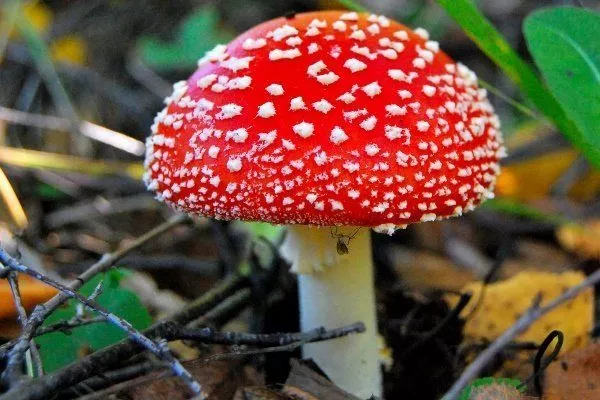
Fly agaric
Description. The red fly agaric is a poisonous mushroom whose appearance is instantly recognizable. The cap sits on a tall stalk, up to 2.5 cm thick. As it matures, the cap rises to a height of up to 20 cm. By this time, it transforms from a hemispherical shape into an umbrella-shaped one, reaching up to 20 cm in diameter. The red cap has characteristic white specks on its surface.
Varieties. The white fly agaric is a deadly poisonous mushroom, considered a close relative of the death cap, which is similar in appearance. It has a white cap when fully expanded, becoming flat at maturity, 10 cm in diameter. At the initial stage of growth, the cap is spherical. The stem is up to 12 cm high.
Who can be confused with? It is impossible to confuse the red fly agaric with any other mushroom.
Where does it grow and when? The red fly agaric grows in mixed forests with predominantly coniferous trees, on acidic soils. It begins bearing fruit from August to October.
Satanic mushroom
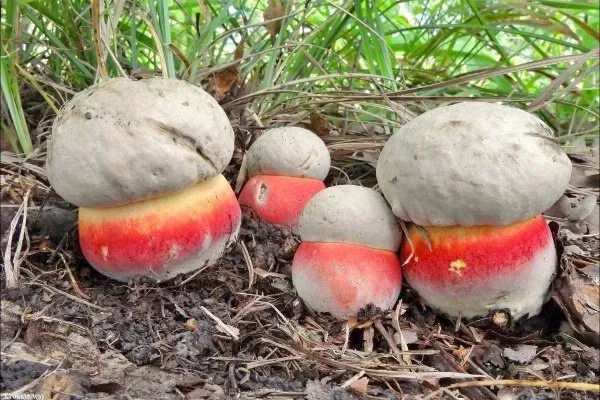
Description. Satanic mushroom – a poisonous specimen with predominantly white or slightly yellowish flesh. When broken, the flesh turns bluish or reddish. The fruiting bodies have a slightly spicy odor when young; mature mushrooms smell like rotten onions. They have a spherical or barrel-shaped stem, reddish-yellow at the top, reddish-orange at the bottom, and reddish in the middle.
Who can be confused with? The Satan's mushroom is similar to other boletus mushrooms, especially the first-class white mushroom.
Where does it grow and when? The mushroom grows in broadleaf forests with calcareous soils near chestnut, oak, hornbeam, and beech trees. Fruiting bodies ripen from June to September.
Cherry-brown silverfish
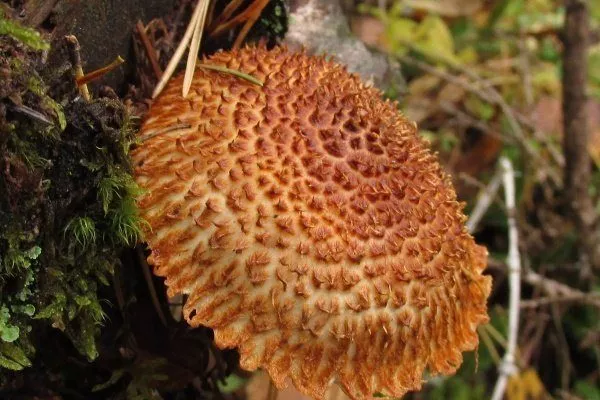
Description. The inedible Lepiota squamosus (red-brown silverfish) mushroom has a convex cap when young, which matures into a flat-convex cap, reaching 2-5 cm in diameter. The cap is whitish, covered with brownish-reddish scales. The stem is cylindrical, 4-8 cm in height. The surface is smooth, yellowish or slightly pinkish.
Who can be confused with? The cherry-brown silverfish can be confused with an edible specimen, the shield silverfish.
Where does it grow and when? The mushroom bears fruit from June to September-October. It is found in coniferous, mixed, and broadleaf forests, pastures, meadows, and vegetable gardens. It has an unpleasant radish odor and a disgusting taste.
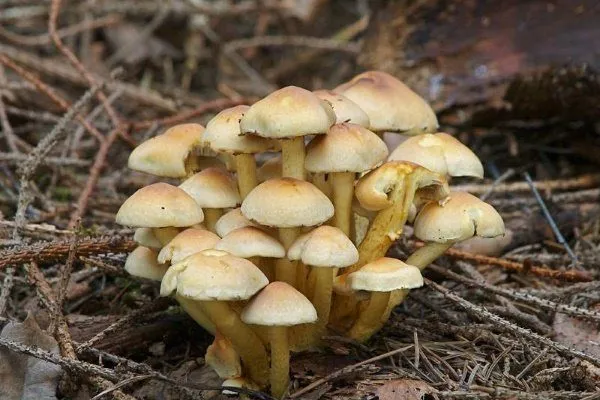
False honey fungus
Description. There are several varieties of false honey fungus. All are similar in appearance. They are small, gill-shaped mushrooms with a cap diameter of no more than 7 cm and a stem length of less than 10 cm.
Varieties. The following varieties of false honey mushrooms are found in Crimea:
- Sulphur yellow. Poisonous mushrooms growing in clumps have fused stems. Young mushrooms have a bell-shaped cap, which flattens with age but retains a distinctive central tubercle. The cap is no more than 5 cm in diameter and is sulfur-yellow or bright yellow-brown in color. It is distinguished by a cylindrical stem, often curved and the same color as the cap.
- Brick red. The bell-shaped, red-orange cap has a smooth surface and yellowish gills that turn black as they mature. The stem is thin, hollow, and usually slightly curved.
Who can be confused with? The mushroom is confused with the edible honey fungus.
Where does it grow and when? False honey fungi are found in forests where they infest spruce, aspen, and birch trees, settling in large clusters on stumps. Fruiting continues from early summer until late October.
Death cap
Description. A deadly poisonous mushroom with a grayish or greenish cap, up to 15 cm in diameter. It is shaped like a hemisphere, then opens and becomes flat. The mushroom has white flesh with a mild odor and taste.
Who can be confused with? Due to inexperience, death caps can be confused with champignons or russula.
Where does it grow and when? The death cap prefers to grow in fertile soils and light, mixed oak and beech forests. It bears fruit in early summer and can be found singly or in groups.
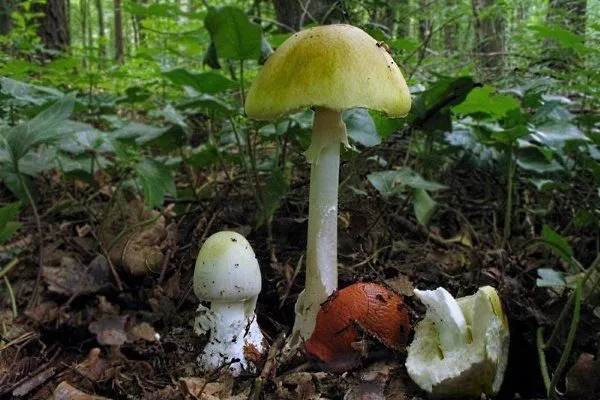
| Sign | Death cap | Champignon |
|---|---|---|
| Records | White, do not darken | Pink, then brown |
| Volvo | There is (a sac-like formation) | Absent |
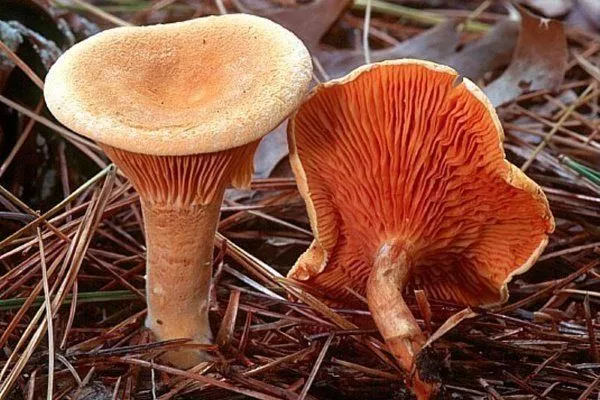
False chanterelle
Description. The false chanterelle is a poisonous mushroom with a golden or yellowish, convex, and occasionally funnel-shaped cap, 2-5 cm in diameter. The cap is darker in the center than at the edges. It is dominated by a thin, reddish stem with a characteristic orange tint.
Who can be confused with? False chanterelles are often confused with edible mushrooms. However, the main difference between these species is the cap margins: those of the false mushroom are jagged, while those of edible chanterelles are wavy.
Where does it grow and when? The false chanterelle grows in mixed forests. The fruiting bodies ripen in August and continue until late autumn.
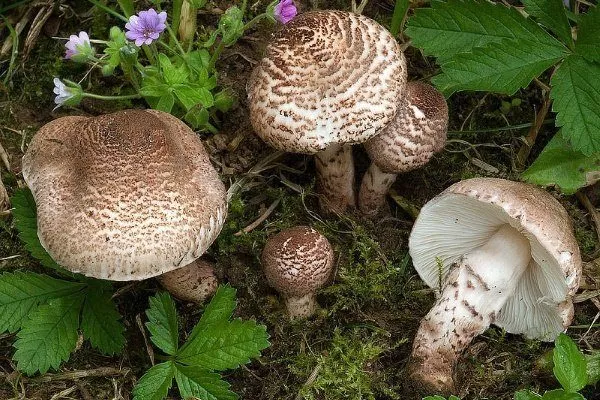
Lepiota rufosa
Description. A poisonous mushroom with a thin, fleshy cap covered with dark scales on top and gills on the underside. Initially, the cap is bell-shaped, then flattens with a characteristic dark bump in the center. The cap diameter is up to 7 cm. The thin, sometimes curved stem is white on top and dark red underneath.
Who can be confused with? In appearance it somewhat resembles the pink volnushka.
Where does it grow and when? Fruiting occurs from mid-June until the end of summer. It can be found singly or in groups in forest plantations, squares, gardens, and parks.
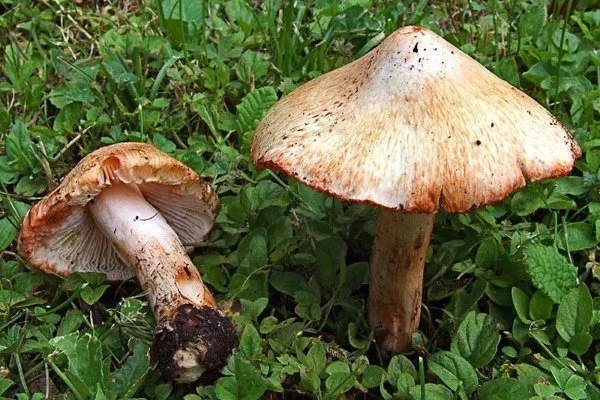
Patouillard fiber
Description. The Patouillard's Fiberwort is a deadly poisonous mushroom with a cap that is initially bell-shaped and later spreads out, with a distinctive tubercle in the center. It cracks in old age. Young mushrooms have a whitish cap that later turns reddish and straw-yellow. The stipe is dense, slightly swollen at the base, and reaches a length of up to 7 cm. The color matches the cap.
Who can be confused with? The poisonous mushroom is confused with some varieties of champignons and entolomas.
Where does it grow and when? The putaillar mushroom grows from May to October in coniferous and deciduous forests. It appears abundantly in August and September in areas where cap mushrooms, champignons, and other edible mushrooms grow.
Poisonous talkers
Description. Talker mushrooms come in a variety of colors. Young mushrooms have a hemispherical cap, which later becomes depressed. The fleshy, large cap reaches at least 10 cm in diameter. In normal weather, the mushroom's surface is smooth and dry. The club-shaped stem reaches up to 8 cm in height.
Varieties. The following types of poisonous talkers are found:
- Pale. The mushroom's cap is dirty white or grayish, sometimes with brown or gray spots. Young talochary mushrooms have a convex cap with smooth, inverted edges. As they mature, the cap becomes horizontally flat. The curved, cylindrical stem reaches up to 5 cm in height.
- Reddish. It is distinguished by its initially convex cap with inverted edges, then a flattened shape with a depression in the center. The surface of the cap when young is white, covered with frost. Unidentifiable reddish spots are often visible on the cap. The cylindrical stem reaches up to 4 cm in height. The mushroom has a mealy odor or the smell of recently cut wood.
- Waxy. A mushroom with a convex, then flat, and slightly concave, funnel-shaped cap, 3-8 cm in diameter. The cap's edges are twisted and tucked under. The color is whitish with a gray-cream tint and dark edges. Sometimes there are dirty pink spots on the surface. The stem color varies from whitish to dirty ochre. The shape is cylindrical, often curved. It has a woody, floral scent.
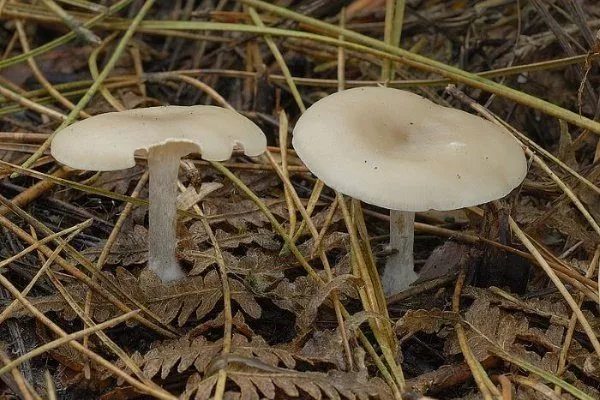
Poisonous pale talker
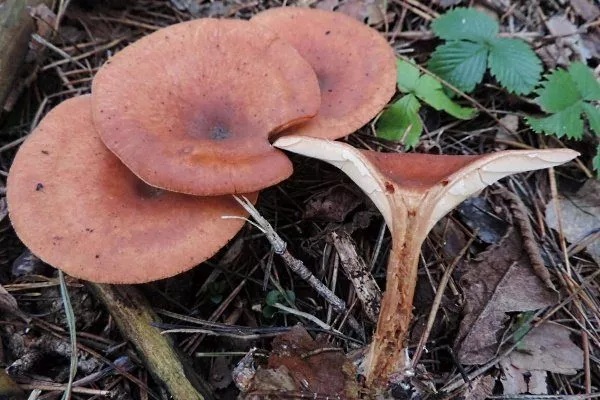
Poisonous red talker
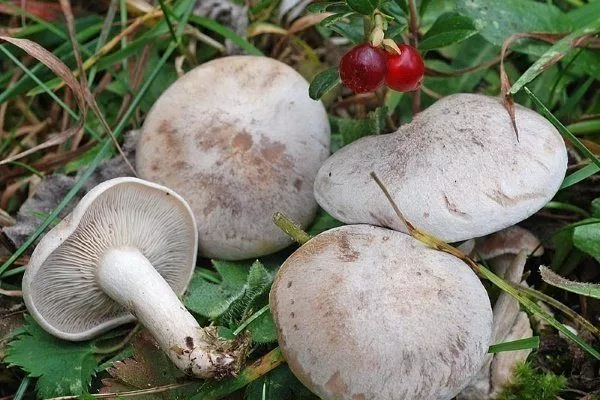
Poisonous waxy talker
Who can be confused with? The red talker can be confused with the edible meadow honey fungus.
Where does it grow and when? Poisonous talkers grow in coniferous and deciduous forests, most often under oak, spruce, pine, and beech trees. The fruiting season begins in summer and ends in late fall.
Tiger rowan
Description. The tiger rowan mushroom has a spherical cap, 4-10 cm in diameter. Gradually, the cap becomes more convex, then completely spreading with thin, downturned margins. Specimens with caps ranging from dirty white to silvery-bluish in color are found. The cap's surface is covered with small scales, radiating in flakes around the circumference. The cylindrical stem reaches up to 12 cm in height and 2-4 cm in diameter.
Who can be confused with? It has no edible counterparts.
Where does it grow and when? Tiger mushrooms grow in small colonies, forming a "fairy ring." They are rarely found alone. Their fruiting bodies form a symbiosis with coniferous trees and are occasionally found in mixed and deciduous forests. They prefer to form mycorrhiza with pine, beech, linden, spruce, and oak trees. They bear fruit from August until late October or early November.
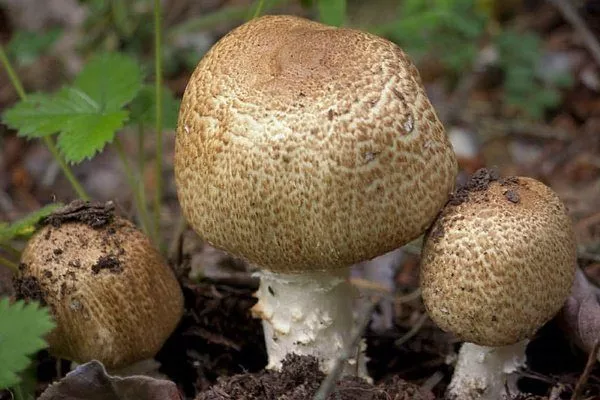
Champignon dark scale
Description. The dark-scaled button mushroom is characterized by a convex, pale brown cap with dark scales, 6-10 cm in diameter. It grows on a long, smooth white stem. The mushroom's gills are dense, pale, grayish-pink, and turn brown when mature. The flesh is white and remains unchanged when cut, although it may turn slightly yellow at the base of the stem.
Who can be confused with? The mushroom is often confused with the edible wild champignon with reddened flesh.
Where does it grow and when? This poisonous mushroom is extremely rare in autumn. It can be found growing on the soil in deciduous forests, on compost heaps, and in rotting straw.
The beginning of the mushroom season in Crimea
The mushroom season on the Crimean Peninsula begins in early spring and ends in late fall. During this period, mushroom pickers can stock up on a wide variety of mushroom species, each with distinct appearance, flavor, and aroma.
Crimea's mushroom spots
Large concentrations of mushrooms are found in the mountains. To find them, you'll have to ascend to approximately 500 meters above sea level. Mushrooms grow on the mown surfaces of the mountains. For example, you can harvest them on:
- the western slopes of the Crimean mountains, where the Ai-Petri yayla lies with the famous peaks of Ai-Petri and Roka;
- On Mount Demerdzhi you can probably find several types of mushrooms at once.
Mushroom varieties can also be found in Crimean forests. For example, near Alushta, where the village of Luchistoye is located, entire mushroom meadows can be found, as well as in the area of the city of Sevastopol.
In many areas of the Crimean Peninsula, various species of edible mushrooms grow, which are later consumed as food. However, poisonous specimens also grow here, and eating them can cause food poisoning. Therefore, when going mushroom picking, it's important to know the distinctive features of "good" and "bad" mushrooms.