
The Moscow region has always been known for its mushroom-growing spots. If you're willing, picking a basket of mushrooms, especially in warm and moderately rainy summers, isn't difficult. Prepare in advance – research which mushrooms are most abundant and where, plan your route, and off you go! Our recommendations will help you along the way.
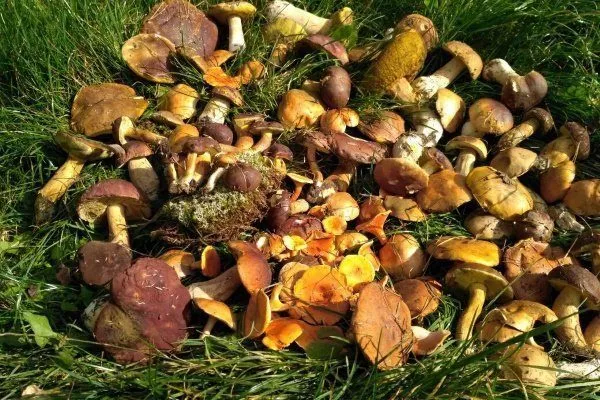
Mushroom picking spots in the Moscow region
The Moscow region boasts dozens of mushroom-picking spots, rich in a wide variety of species. Since the region stretches widely to both the south and north, there are mushroom spots in every district. The most popular mushroom-picking destinations in the Moscow region are:
- Ruzsky District – one of the richest mushroom regions. It boasts the cleanest environment. Mushrooms are diverse, but honey mushrooms grow most abundantly.
- Stupino district - many places with porcini mushrooms.
- Yegoryevsky district – near the villages of Savvino, Kostino, Shuvoye you can collect more than one basket of porcini mushrooms, birch boletes, aspen mushrooms, chanterelles, honey mushrooms, umbrella mushrooms and many others.
- Odintsovsky district: White mushrooms, honey mushrooms. They grow near the villages of Uspenskoye and Nazarievo.
- Klinsky District rich in white and butter mushrooms.
- Kolomensky districtThe forests in this area are rich in all types of mushrooms: porcini mushrooms, honey mushrooms, milk mushrooms, butter mushrooms, oyster mushrooms, birch boletes and russula, chanterelles and russula.
- Dmitrovsky District famous for its chanterelles, butter mushrooms, and birch boletes.
- Meshchersky District The mushroom patches near the town of Roshali are particularly notable. Chanterelles, porcini mushrooms, birch boletes, aspen boletes, butter mushrooms, and milk mushrooms are all common there.
- ✓ The presence of a variety of tree species in the forest, as different mushrooms prefer different types of forests.
- ✓ Soil moisture level, which is critical for the growth of most types of mushrooms.
To avoid getting confused by this mushroom diversity, it is worth studying the descriptions of edible mushrooms in a given area.
Edible mushrooms of the Moscow region
This area is rich in various species of edible mushrooms. The large forests and occasional rainfall during the summer and fall promote vigorous growth.
| Object | Cap diameter (cm) | Leg height (cm) | Fruiting season |
|---|---|---|---|
| White mushroom | 5-20 | 5-15 | July-September |
| Milk mushroom | 5-20 | 3-7 | June-September |
| Bittersweet | 3-8 | 3-5 | July-October |
| Common birch bolete | 5-15 | 10-20 | July-October |
| Aspen mushroom | 5-25 | 10-25 | July-October |
| Raincoat | 3-50 | 2-10 | July-September |
| Bruise | 5-15 | 5-10 | July-October |
| Oyster mushrooms | 5-15 | 1-3 | All year round |
| Edible russula | 5-10 | 3-7 | June-October |
| Honey mushrooms | 2-10 | 5-15 | June-October |
| Champignons | 5-15 | 5-10 | April-October |
| Volnushka | 5-15 | 3-6 | August-October |
| Violin | 10:30 | 5-10 | July-September |
| Rows | 5-10 | 5-10 | September-October |
| Fox | 2-10 | 3-7 | July-October |
| Morels | 3-10 | 5-10 | April-May |
| Morel cap | 3-10 | 5-10 | April-May |
| Ryzhik | 5-15 | 3-7 | August-September |
| hedgehog mushroom | 5-15 | 3-7 | July-September |
| Umbrellas | 10:30 | 10-25 | July-September |
| flywheel | 5-15 | 5-10 | July-October |
| White butterfly | 5-15 | 3-7 | July-September |
| Orange pezza | 2-5 | 1-3 | June-October |
White mushroom
Description. The most valuable of all wild mushrooms, it's classified as a first-category mushroom. It has a large, round cap, the diameter of which can reach the size of a dessert plate. The cap color ranges from lightest to darkest brown. The stem is thick and wide.
Where and when does it grow? It grows in deciduous, coniferous, and mixed forests. It prefers moderately warm and humid weather. It likes to "settle" in the same places for many years and decades. Fruiting begins in mid-July and lasts until the end of September. porcini mushroom Available in all districts of the region. One of the directions is Leningradskoye, towards Ruzino.
Varieties.Several types of porcini mushrooms grow in the Moscow region:
- Birch – has a light ochre, almost white cap. It grows in birch forests from early July to late September.
- Oak – distinguished by its long stem and grayish cap. The flesh is loose. Look for it in oak groves from July to the end of September.
- Borovoy. Grows among pine forests. The cap is dark (brown or almost black). The stem is short. Fruiting occurs from July to the end of August.
- Spruce – has a cap in shades of brown—reddish-brown, chestnut-brown. The stem is tall. It grows from late July to late September in spruce and mixed forests.
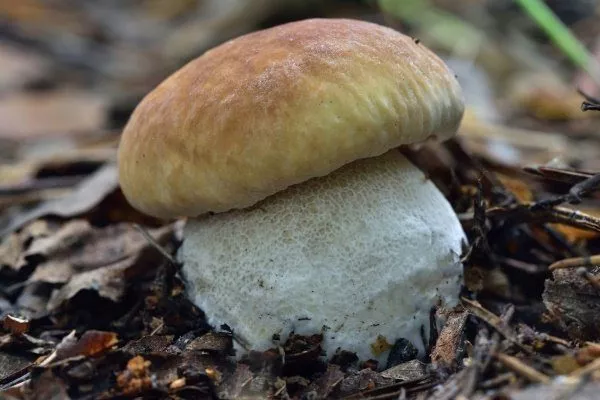
Birch porcini mushroom
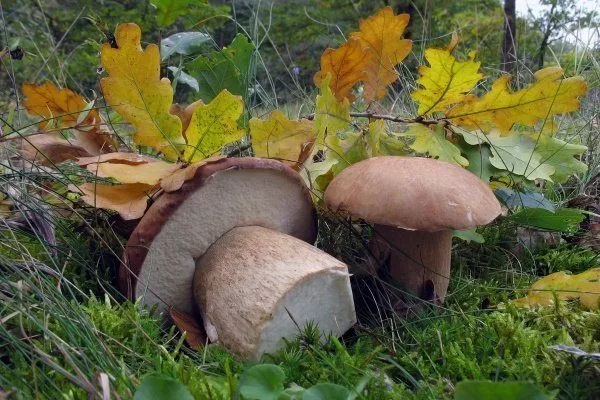
White oak mushroom
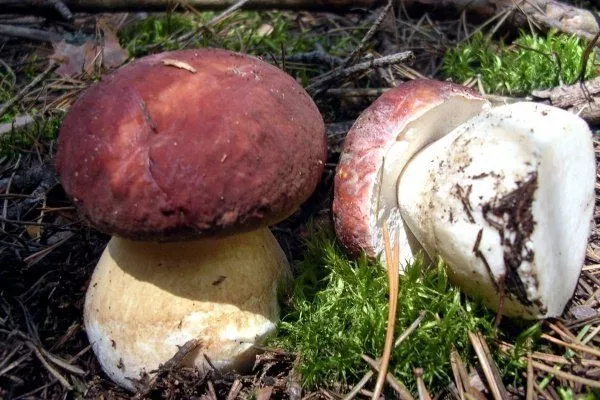
Boletus edulis
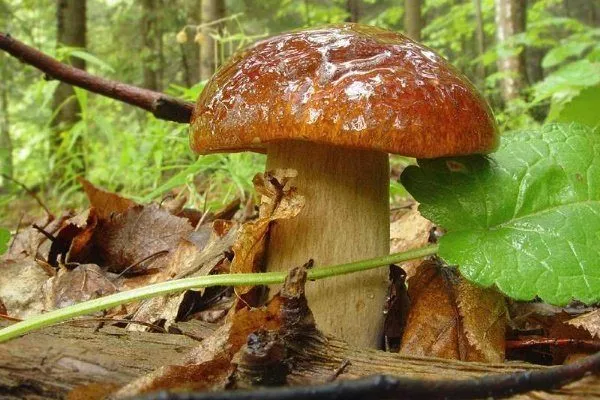
Spruce porcini mushroom
Doubles. It has an inedible double called gall mushroomIt differs from a true porcini mushroom by its bitter taste (it is not poisonous). If in doubt, you can lick the cut surface of the mushroom.
Milk mushroom
Description. The mushroom doesn't grow very tall. However, it can have a cap (fused with the stem) up to twenty centimeters in diameter. Such sizes are typical for overgrown and overripe mushrooms, which are not worth picking. The edges of the cap are wavy. The mushroom is yellowish or light gray in color.
Where and when does it grow? It prefers wooded areas with birch trees. It bears fruit from late June to September. Numerous milk mushrooms can be found in Kolomenskoye.
Varieties. Only a few species mature in this area. milk mushrooms, these include:
- Yellow – found in birch forests. Characterized by a large yellow cap with slightly curved margins. The stem is small and short, 2-3 cm thick.
- Blue (bluish) – a native of deciduous and coniferous forests. It has a hairy, yellowish cap and a hollow stem. A distinctive feature is the milky sap, which turns blue when cut.
- Oak – grows among oak groves. The cap is large and characteristically yellow-orange. The hollow, light-colored stem has spots.
- Aspen – can be found in large quantities in aspen forests. A dirty-white cap is characteristic of this variety of milk mushroom.
- Blackie. It has a distinctive cap – almost black (can be brown-olive) in color.
- Pepper – named for its characteristic bitter, peppery flavor. The cap is large and light-colored.
- Parchment. A wrinkled cap, a long stem and milky juice that does not turn blue in the air, but remains white – these are the characteristic features of this mushroom.
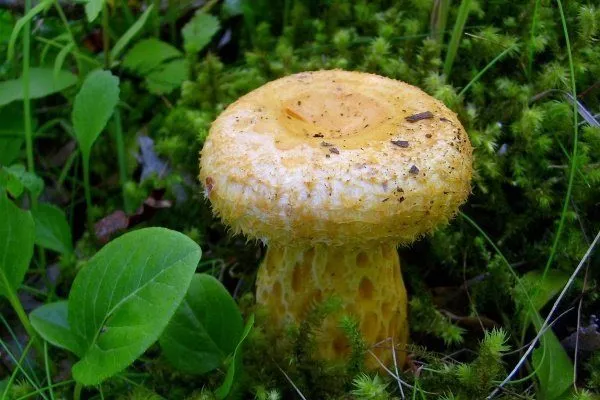
Yellow milk mushroom
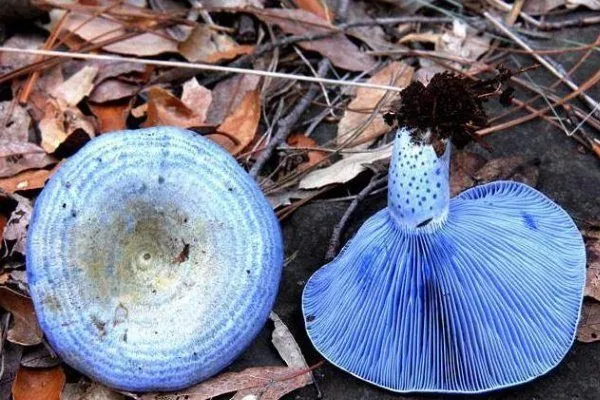
Blue milk mushroom
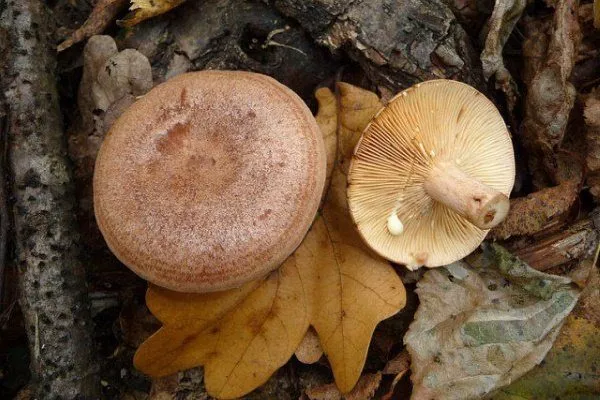
Oak milk mushroom
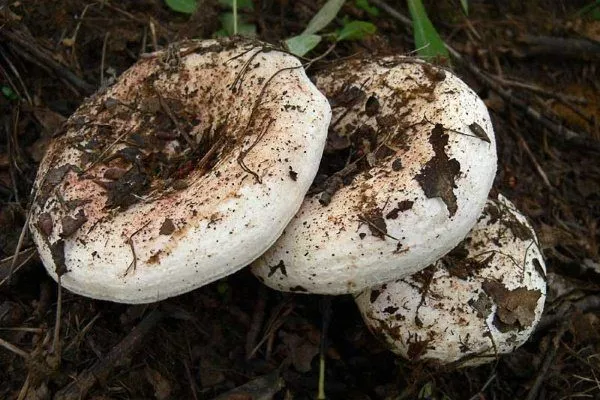
Aspen milk mushroom
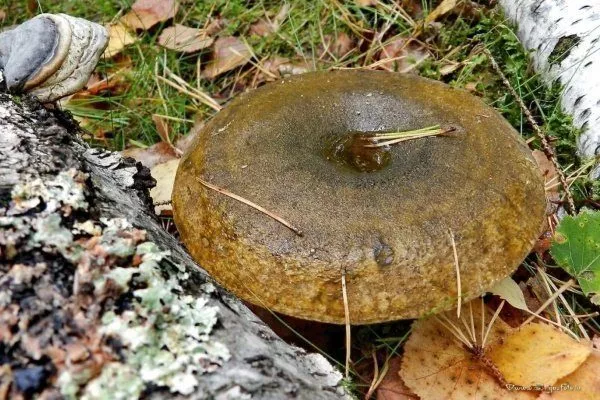
Black milk mushroom
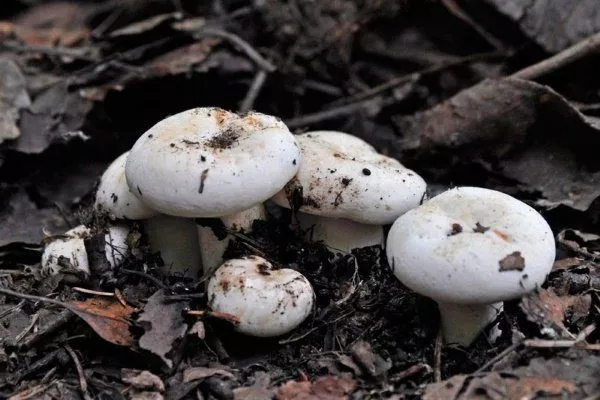
Peppery milk mushroom
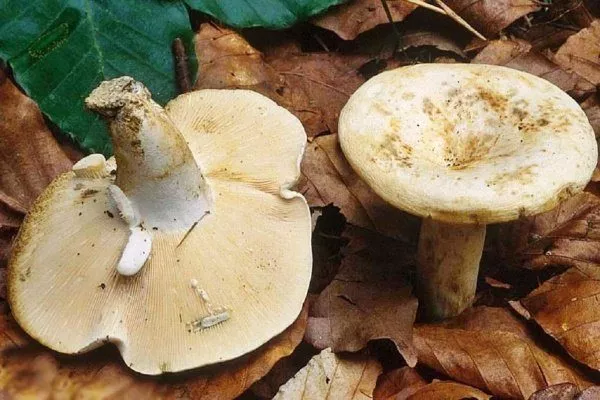
Parchment milk cap
Peculiarities. All milk mushrooms have a slightly bitter taste, some varieties more than others. Because of this, they are used exclusively for pickling, and always after several decoctions or soakings.
Bittersweet
Description. The cap is initially flat with a central tubercle, later taking on the shape of a wide funnel. The color is reddish with a brown tint. The stem is up to five centimeters long and hollow inside.
Where and when does it grow? In pine forests with high humidity, along the edges of swamps. Fruiting occurs from July to October during rainy summers. It is also found in areas where milk mushrooms grow (see above).
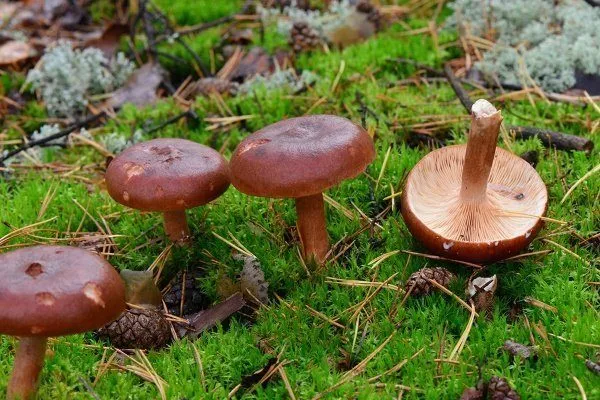
Doubles. In appearance, the bitterling resembles the camphor milkcap (an edible mushroom). However, given its pungent odor, there is still a difference.
Common birch bolete
Description. U birch boletus The cap is smooth, spherical in young mushrooms, and as it grows, it straightens out to form a large umbrella. The color is gray or brownish-gray. The stem is long, with small gray scales. The flesh of the stem is grayish or light beige.
Where and when does it grow? In any forested areas, near birch trees. Abundant fruiting occurs from July to October. The Lukhovitsky District (Beloomutsky Forests) is rich in birch boletes, as is the Chekhov District (Melikhovo). Another route is the Domodedovo direction (13 km beyond the Moscow Ring Road).
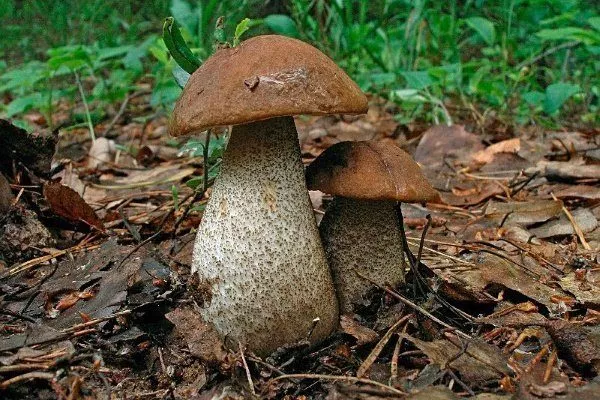
Doubles. It has an inedible double, which is called the false birch bolete or the gall mushroom.. It's not poisonous, but it has a very bitter taste. A characteristic feature is that it's never wormy (which is more than can be said about the true birch bolete).
Aspen mushroom
Description. The mushroom cap can range in color from reddish-orange to all shades of red, including brownish-red. Grayish-brown caps and, very rarely, whitish ones are also found. The stem is dense and white.
Where and when does it grow? They grow near aspen trees. This can be in deciduous or coniferous forests, as well as in forested parklands. They are a common sight in the Noginsk direction, near the village of Vorovskoy.
Varieties. In the forests near Moscow you can find 3 types of birch boletes:
- RedThe mushroom has a brightly colored cap, ranging from orange to brick red, with a diameter of five centimeters. Large "babaki" mushrooms, reaching 25 centimeters (usually completely worm-eaten), are common. The inner surface of the cap is finely porous and has no gills. The stem is long and dense, three to five centimeters thick. Depending on the mushroom's size, it can reach 25 cm.
- Yellow-brown (also known as red-brown). It differs in the color of the cap – it can be either yellowish or yellow-orange.
- White – a very rare species, therefore listed in the Red Book. It has a very light, almost white (or slightly creamy) cap.
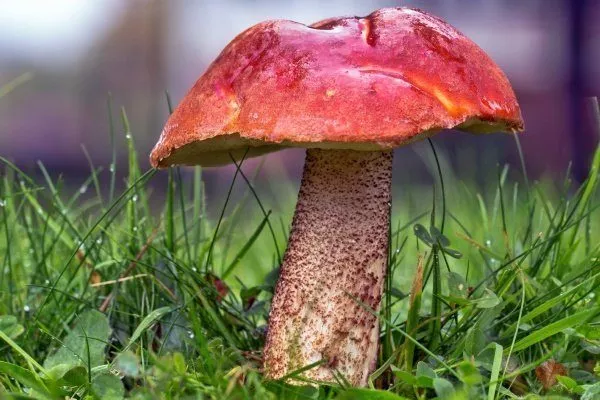
Red aspen mushroom
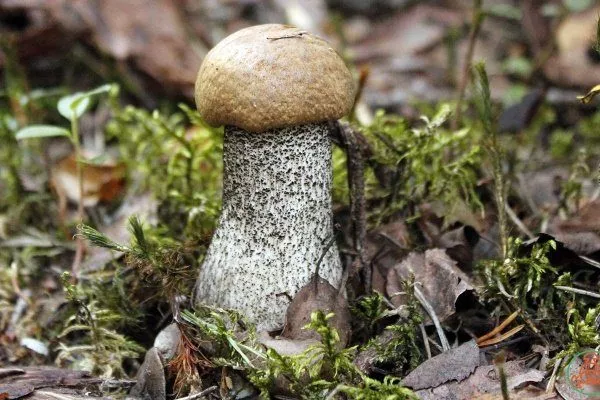
Yellow-brown aspen mushroom
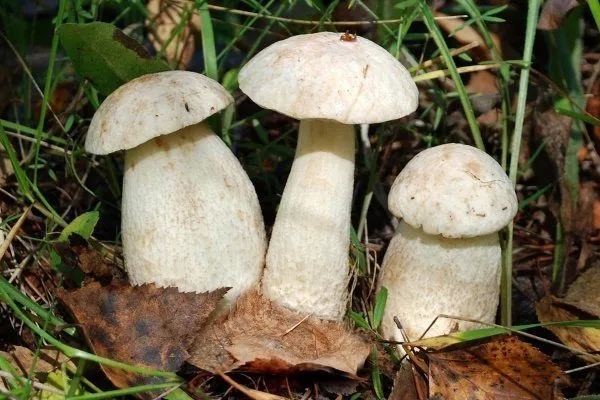
White aspen mushroom
Double. False aspen mushroom(also known as the bitterling) is an inedible look-alike mushroom.
Raincoat
Description. U raincoat A spherical body that transitions into a pseudostem. Color can vary from light (white, gray) to various shades of brown.
Where and when does it grow? It can be found among any forest trees. It prefers warm summers with moderate rainfall. It bears fruit from July to September. Specimens are found near the village of Shapkino, Kolomensky District.
Varieties. This mushroom grows in this area in the following forms:
- Giant – named for its size. The mushroom "ball" can reach fifty centimeters.
- Pear-shaped. A small pear-shaped mushroom – height 5 cm, ball diameter 3 cm.
- Pearl. The mushroom's head consists of small, individual "pearls." This mushroom grows no more than 10 cm in height.
- Umber. Covered with small, light-brown needles, the mushroom reaches 6-7 cm in height and no more than 6 cm in diameter.
- Spiky. Egg-shaped, with long spines, it prefers coniferous and deciduous trees and warm weather in midsummer.
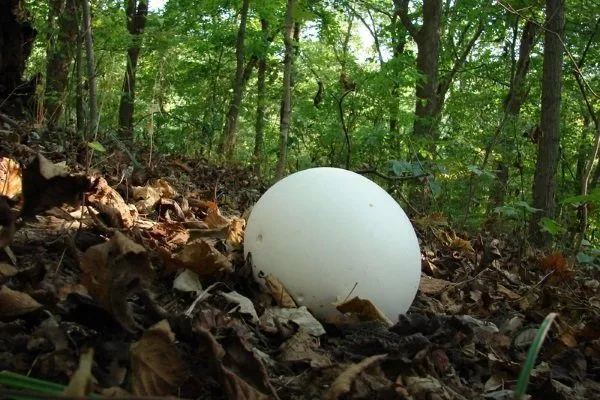
Giant puffball mushroom
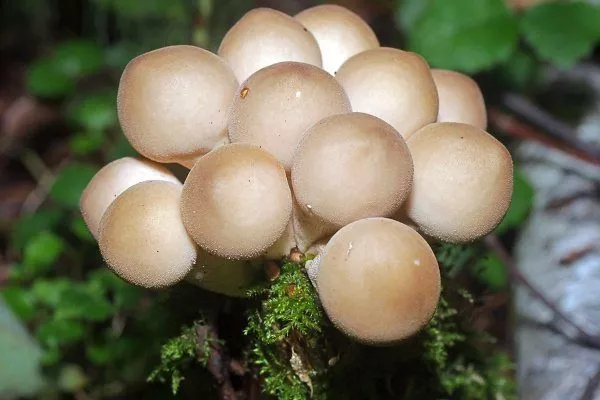
Pear-shaped puffball mushroom
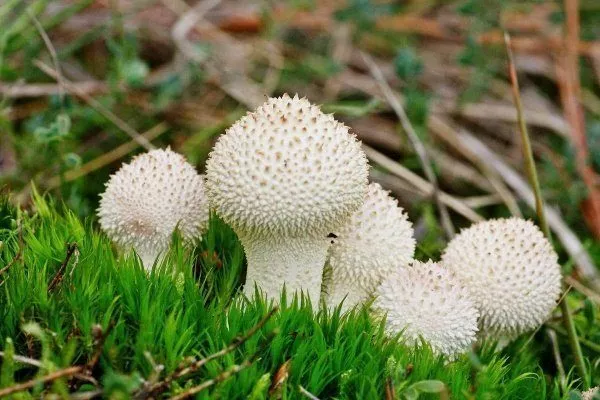
Pearl puffball mushroom
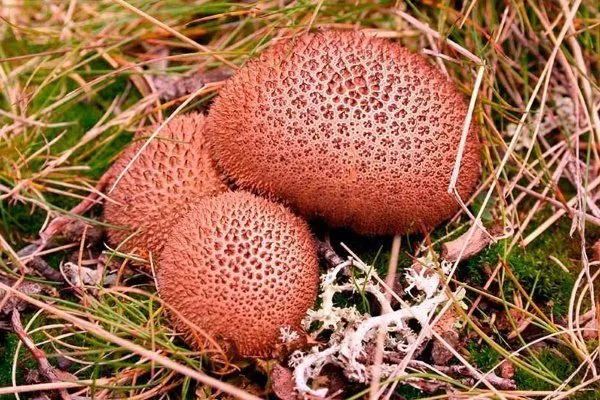
Umber puffball mushroom
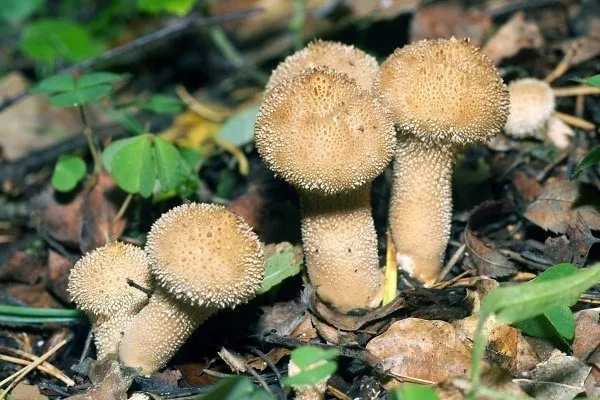
Prickly puffball
Bruise
Description. The cap is light brown and large in diameter (up to 15 cm). When pressed, the cap turns blue. The hollow stem also turns blue when touched. The stem is up to 10 cm tall.
Where and when does it grow? Can be found in oak or pine groves, on sandy soils. It bears fruit from July to the end of October. It is listed in the Red Book.
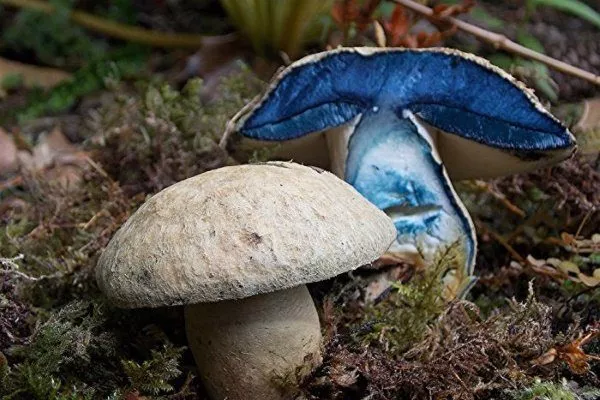
Oyster mushrooms
Description. Mushrooms that grow in colonies, often fused together. They resemble oysters in appearance. There are two types of these mushrooms. Light-colored ones are characterized by creamy, beige, and almost white shades. Gray-colored ones range from steel-gray to dark gray. The lamellar stem (sometimes virtually absent) merges into the cap. The caps are large and smooth. The mushroom has a pleasant aroma, and the mushroom itself is fleshy and juicy.
Where and when does it grow? They are most often found on stumps, trees, and dead wood in deciduous forests (much less common in coniferous forests). They are undemanding and can grow in both summer and fall, even during the winter thaw. They grow in large numbers around Kolodkino (Kolomensky District).
Varieties. Depending on the growing location, the following species can be found in the Moscow region oyster mushrooms:
- Autumn. The stem is slightly downy, and the cap is short, gray or grayish-brown. The cap can be up to 15 cm in size. It grows on deciduous trees and their stumps.
- Horn-shaped. Light-colored cap, wavy edges. White flesh. Grows only on deciduous trees. Prefers humid weather. In dry summers, it becomes smaller, and only isolated specimens emerge.
- Oak. They grow on oaks and elms. Fruiting season is July and August. The cap (and stem as well) are light-colored with dark scales. The flesh of the mushroom is light-colored.
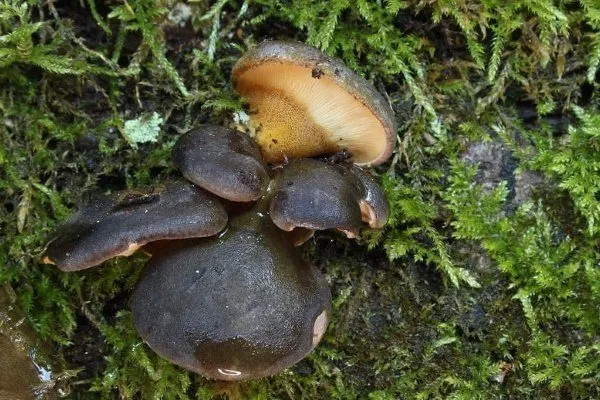
Autumn oyster mushroom
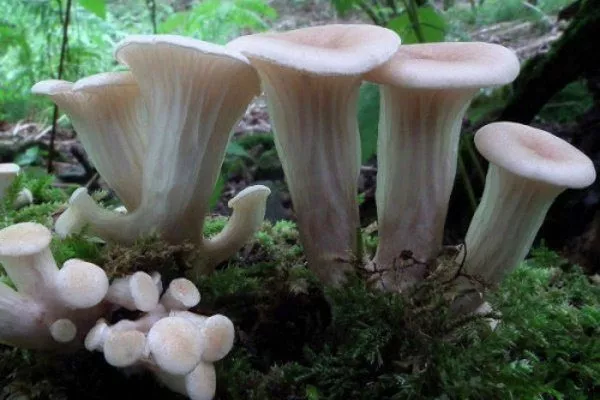
Oyster mushroom
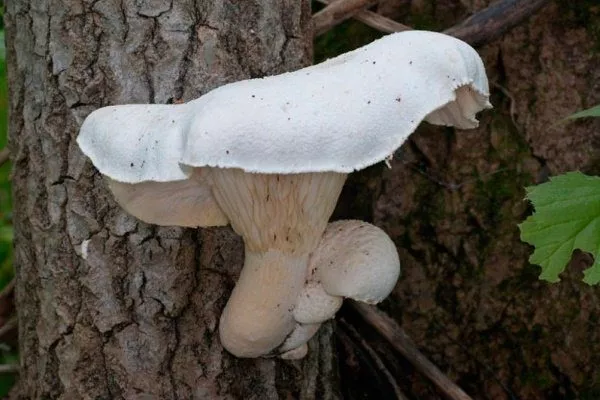
Oak oyster mushroom
Edible russula
Description. There are many types of russula, but they all share similarities. They have a dry cap, available in a variety of colors. The cap is slightly convex when young, becoming flatter with a central depression as it matures. The stem is white and hollow inside.
Where and when does it grow? It grows everywhere and in any weather, from June to October. Even in years with poor mushroom harvests, this mushroom can always be found. Russula mushrooms are often eaten by worms. The Yaroslavl region (near the village of Novovoronino) is rich in these mushrooms.
Varieties. Three types of russula are most common in this area:
- Golden. Found near swamps, it is distinguished by its bright yellow cap. It grows from early summer until the coldest weather. The cap is large, 5 to 10 cm, but the mushroom is not very tall, no more than 3 cm.
- Blue (blue one). It grows in August and September in coniferous forests. The cap has bluish hues (purple-blue, blue-green).
- Green. It grows among birch forests from August to October. The cap is greenish with small brown spots.
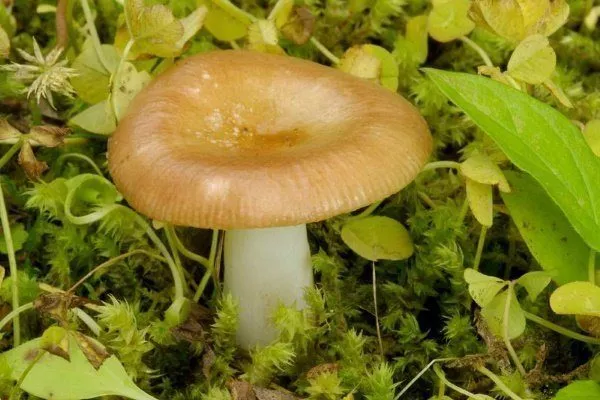
Golden russula
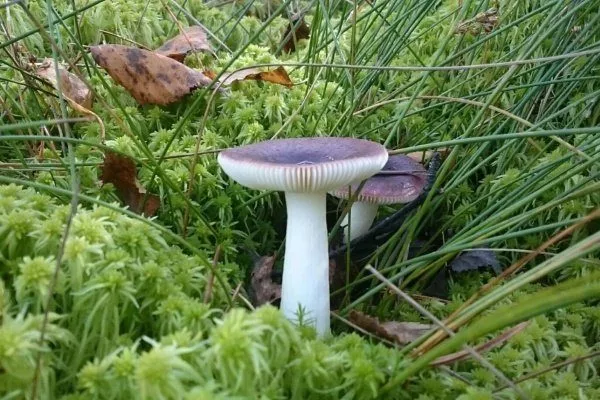
Blue russula
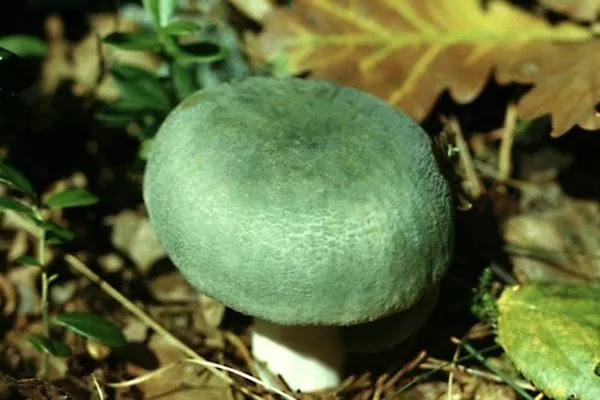
Green russula
Honey mushrooms
Description. Young mushrooms have a semicircular cap that becomes almost flat as they mature. The caps are dull in color, with muted shades ranging from yellowish to tawny. The caps are covered with small scales on top. The gills are light beige.
Where and when does it grow? They can be found exclusively on stumps or old fallen trees, from early summer until late fall. They grow in colonies, often with up to forty or more mushrooms growing from a single base. They are often found in the Lukhovitsky and Solnechnogorsk districts.
Varieties. The most common ones honey mushrooms:
- Summer. Grows in large colonies on deciduous trees. The cap is small in diameter (no more than 5 cm), convex, and has a tubercle. The color is a pleasant honey shade. The stem is thin and long.
- Autumn (real). It can grow on living trees, rotting ones, and stumps. It is widespread and ripens in late August or early September.
- Winter. It grows during thaws from autumn to early spring. It can be found on the wood of deciduous trees.
- Meadow. Unlike its relatives, it grows on the ground rather than on trees. It can be found in meadows, garden plots, forest edges, and even ditches. It grows in large colonies and "fairy rings."
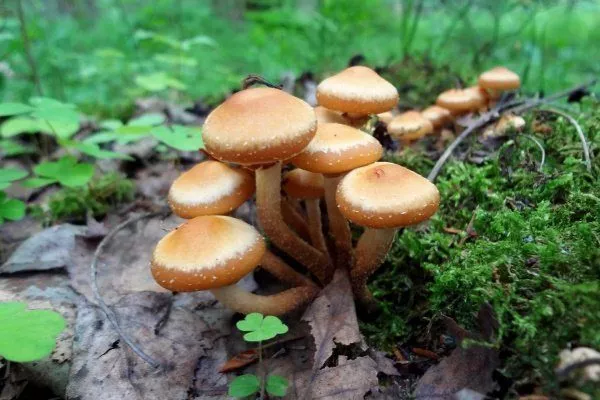
Summer honey fungus
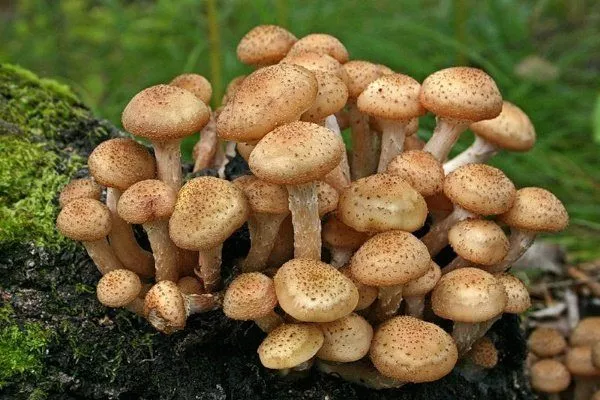
Autumn honey fungus
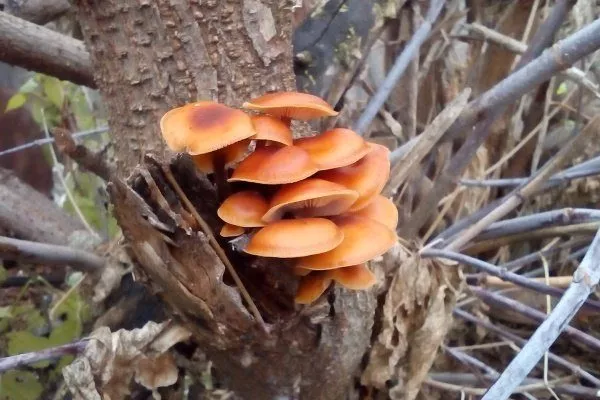
Winter honey fungus
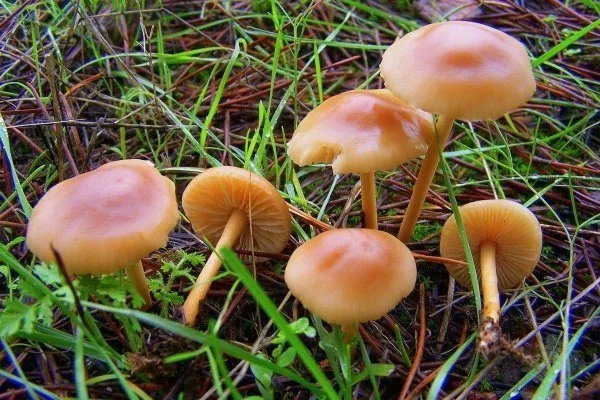
Meadow honey fungus
Doubles. False honey mushrooms always have brightly colored caps—yellow, brick-red. An important difference: the real ones have a leathery mushroom ring on the knife. The smell of "false" mushrooms is earthy, cellar-like, and musty. The real ones have a pleasant mushroom aroma. Another note: if a poisonous honey mushroom is placed in water, it will immediately turn blue or black.
Champignons
Description. The small, round cap of young champignons resembles a ball. As the mushroom grows, it flattens out. The surface is satiny and smooth. The color is white, with a slight grayish tint. The gills are pink. The stem is dense, with an obligatory mushroom ring in the center. The aroma of the mushroom has a subtle iodine scent.
Where and when does it grow? A must-have is soil rich in humus and manure. It doesn't like to grow in dense forests, preferring open areas (fields, meadows, vegetable gardens), as well as fertile soil near farms and livestock yards. It begins to grow with the onset of warm weather in spring and continues to grow until the first autumn frosts. It often appears in the Mytishchi district, near the village of Afanasovo. Another favorite place for champignons is Pavlovskaya Sloboda.
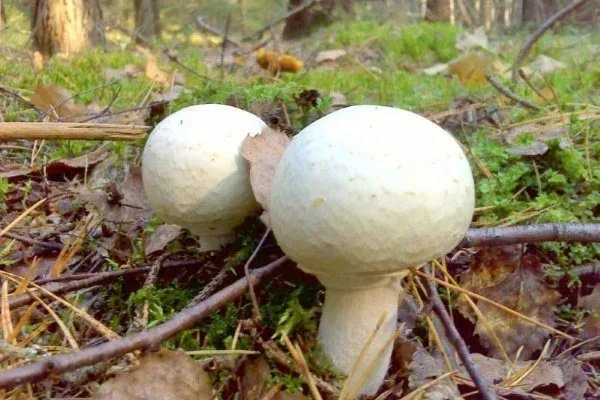
Varieties. Although there are several species of these mushrooms, they are not very common in the Moscow region. Only one type of champignon can be found here—the true champignon. It is quite large and has a dense, swollen stem at the base. The mushroom can reach up to ten centimeters in height, with a cap diameter of up to 15 cm.
Doubles. It is the pink color of the gills that distinguishes it from the death cap, where they are always pure white.
Volnushka
Description. The mushroom cap is initially convex, becoming flatter as it grows, but with a depression in the center. The cap is pinkish in color, with jagged red circles on the surface. The stem is short, initially dense, and becomes hollow as the mushroom matures. The cap is light in color, with a fluffy surface. White and pink varieties of the mushroom can be found.
Where and when does it grow? They thrive in deciduous areas where birch trees grow. They grow from August to October. They are found in the Kolomensky district (Shapkino village).
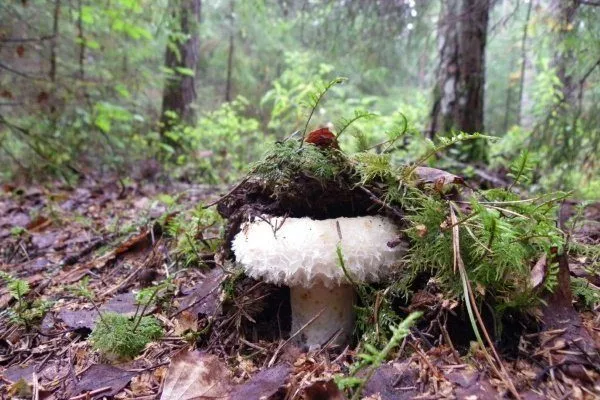
Varieties. You can find the pink volnushka (volzhanka) mushroom in the local forests. Its distinctive feature is that its cap changes color from pink to yellowish over time.
Doubles. Milk mushrooms, also known as lactarius, resemble true milk mushrooms. The only difference is the lack of pubescence around the edges of the cap. These mushrooms are not poisonous, but they require soaking and boiling and don't have the same flavor as true milk mushrooms.
Violin
Description. The cap is large (up to 30 cm), flat. It has a depression in the center, and the edges are curled inward. It may have brownish spots. The stem is cylindrical and firm. The flesh is dense and white, and the milky juice is very tart.
Where and when does it grow? Prefers mixed birch and coniferous forests. Grows in groups from July to September. Found in the northern Moscow region.
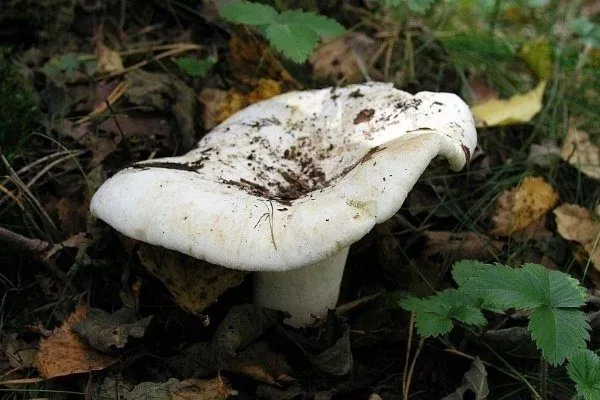
For more information about the violin, look for here.
Rows
Description. A lamellar mushroom. The caps are variable in color, initially spherical, and can become scaly. They have a floury, sometimes pungent, odor.
Where and when do they grow? They grow in mixed forests, most often from early autumn until frost sets in. They can be found in the Ruzsky District, near the village of Oreshek in the forested area.
Varieties. There are many varieties. But three species can be found in the forests near Moscow:
- Purple They are distinguished by the purple color of their cap among fallen and rotting leaves.
- Poplar are often found near poplars in parks.
- Gray They are distinguished by their grey cap and grow among pine trees.
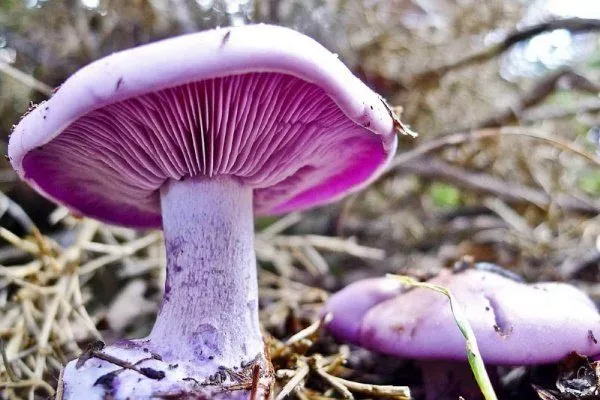
Purple rowan
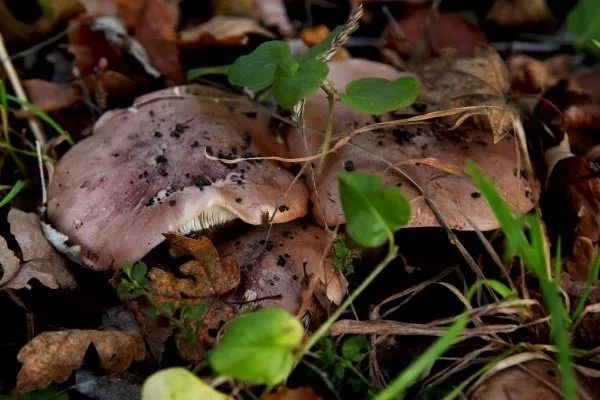
Poplar rowan
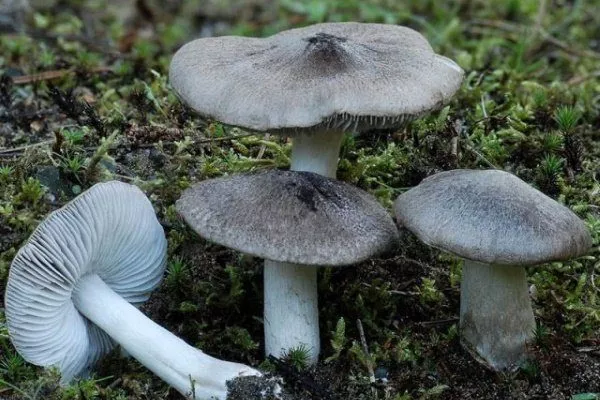
Gray rowan
Doubles. These mushrooms have many lookalikes. The purple ones can be confused with the purple cobweb cap. The gray ones can be confused with the toxic stringy rowan mushroom.
Fox
Description. The mushrooms are bright yellow-orange. Depending on the soil they grow in, the cap color can be brighter or paler. They grow in clusters, often several fused together. The edges of the cap (which is fused to the stem) are wavy and curl slightly inward.
Where and when does it grow? Chanterelles prefer mixed forests; colonies can be found in clearings among grass and fallen leaves, near pine trees. They mature from midsummer to late fall. They dislike drought. One of the richest places for chanterelles is the Ryazan direction, near the Chernaya station.
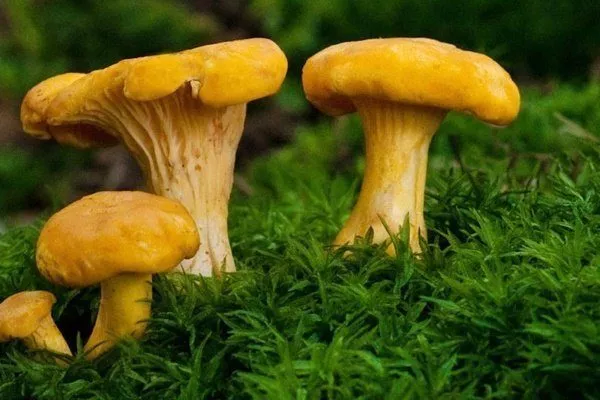
Doubles. There's one lookalike in this area—the false chanterelle. It's similar to the real thing, but lighter in color. It's not considered poisonous, but it can cause stomach upset.
Morels
Description. It has an unusual cap shaped like a wrinkled, elongated cap. The cap comes in a variety of colors, from yellowish to brown. The mushroom is very light, as it is hollow inside. The stem is practically fused with the cap. The color is white and yellowish.
Where and when does it grow? A spring mushroom that can be found immediately after the snow melts in mixed deciduous forests. They prefer to grow in clusters near old fire sites. The village of Aksakovo (Mytishchi District) has long been noted for its abundance of early morels.
Varieties. Two species of these unusual mushrooms can be found in local forests:
- Morels can be found in warm spring already in April in bright park meadows.
- Conical morels It is less common, and is mainly found in landfills, wastelands, and forest outskirts.
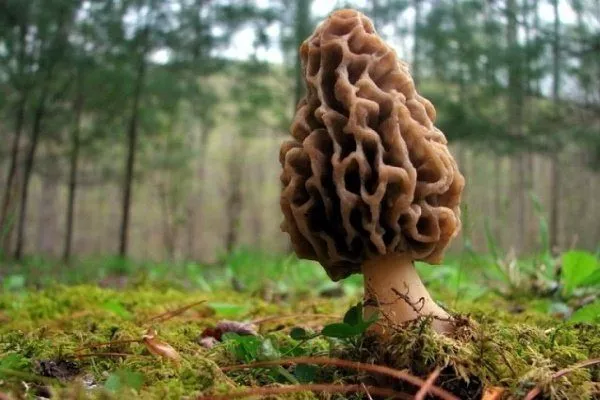
Morel mushroom
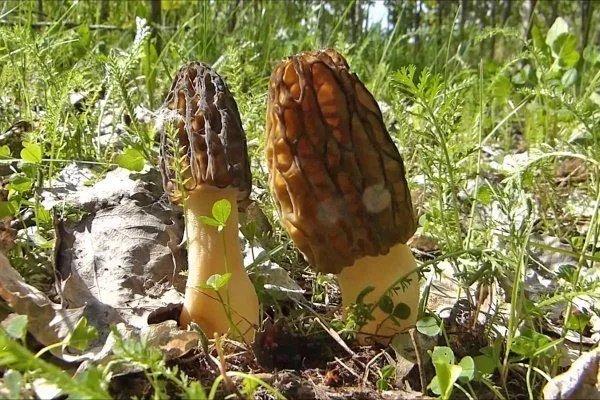
Conical morel mushroom
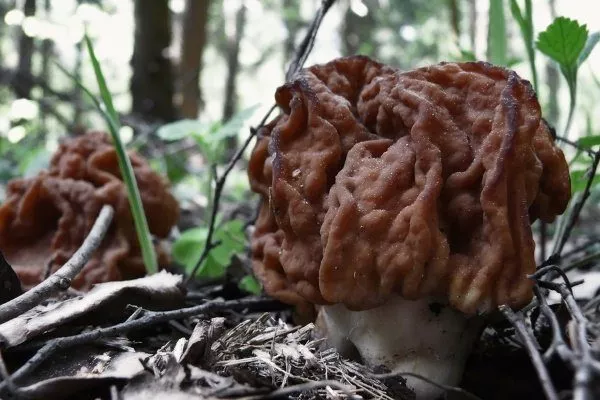
The edible morel mushroom can be confused with the inedible gyromitra.
Doubles. Morels can be confused with their lookalikes, gyromitra. Recently, it has been believed that gyromitra are not poisonous, but this is debatable. Old, overgrown mushrooms accumulate toxins and pose a health risk.
Morels are different from gyromitra. The cap of morels is cellular, while that of gyromitra is wavy and folded.
Morel cap
Description. The cap is bell-shaped with wavy folds. The color is brown, reddish-brown, and can be yellow. The stem is pubescent or scaly.
Where and when does it grow? In deciduous forests and linden alleys. Fruiting occurs in April-May. In warm weather, it produces a bountiful harvest. Does not tolerate excessive humidity.
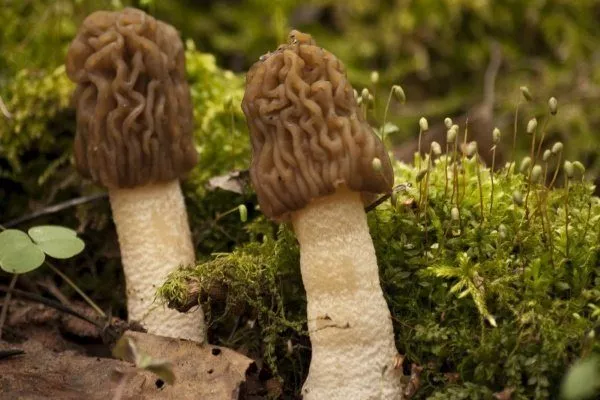
Varieties. There are two types of cap mushrooms, but only one is found in this area, called the conical cap mushroom. This mushroom has a cap shaped like a tapering cone.
Doubles. Morels, which some scientists consider inedible, can be considered doubles.
Ryzhik
Description. Belongs to the group of milk mushrooms (they contain a milky, caustic juice in their flesh, which loses its bitterness after cooking). This milky juice has an aromatic aroma, giving these mushrooms a distinctive flavor. The cap has characteristic spherical, reddish circles. The stem is white, hollow, and fragile.
Where and when does it grow? The most active fruiting period is from mid-August to late September in pine and spruce forests. It does not tolerate drought. Solnechnogorsk district, Firsanovka platform – numerous saffron milk cap meadows are located nearby.
Varieties. The two most common species in this area are:
- real saffron milk cap orange cap with dark concentric rings and spots;
- pine saffron milk cap has an orange-red cap;
- spruce saffron milk cap – is distinguished by a yellowish-greenish or bluish-green cap.
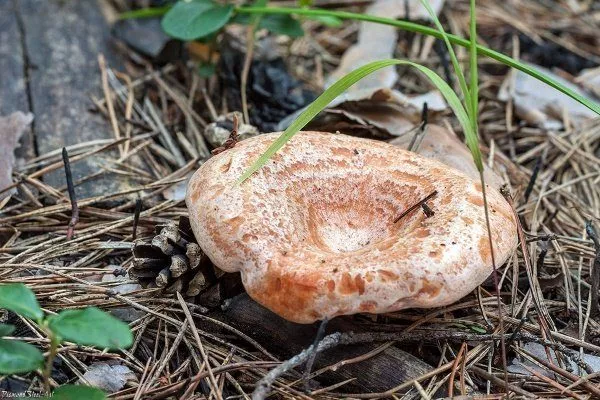
Real saffron milk cap
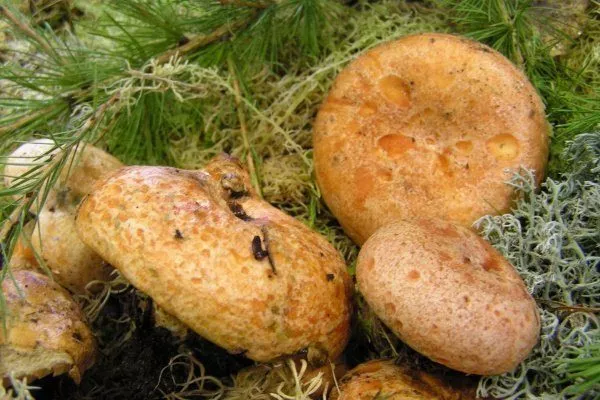
Pine saffron milk cap
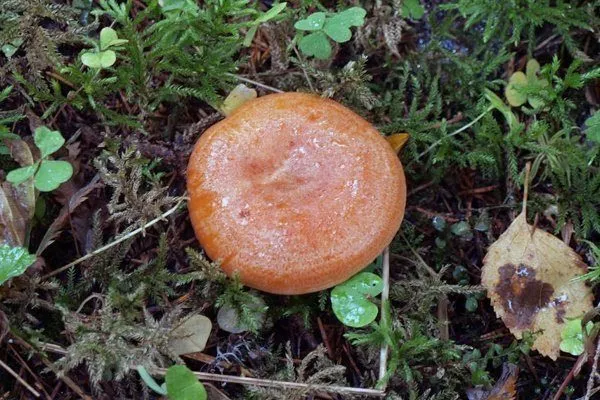
Spruce saffron milk cap
Doubles. True saffron milk caps have no lookalikes, but the saffron milk cap can be confused with the volnushka mushroom. Both are tasty and healthy.
Saffron milk caps are most delicious when they're small and young, with a cap diameter no larger than two to three centimeters. The larger the mushroom, the more likely it is to be infested with worms and become completely unfit for consumption.
hedgehog mushroom
Description. The slightly convex cap is pinkish-yellow or yellowish. Initially slightly convex, it becomes more concave in the middle with age. The stem is short, dense, and thick. The flesh has a pleasant aroma. It has short, dense spines.
Where and when does it grow? It grows in both deciduous and coniferous forests from mid-July to September. It prefers the northern regions of the region. It can grow not only singly, but also in groups, rows, and fairy circles.
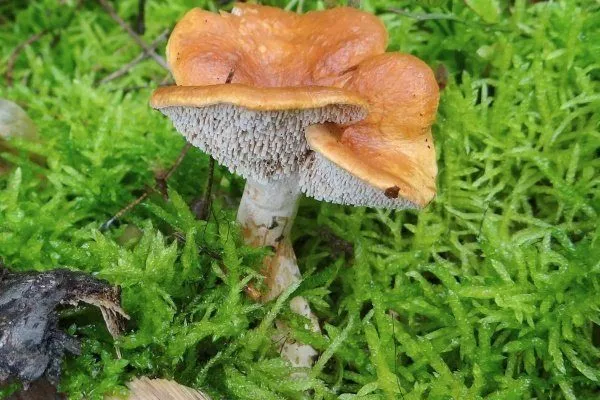
Varieties. Only one species is found in this area: the yellow hedgehog mushroom.
Doubles. Young mushrooms look like chanterelles.
Umbrellas
Description. A distinctive feature is its large cap (up to 25 cm in diameter). When young, the mushroom has an egg-shaped cap, which then opens like an inverted bell; as it matures, the cap takes on a flat shape. It is covered with scales. The stem is also covered with scales. The ring of the mushroom does not disappear as it grows.
Where and when does it grow? They grow anywhere there is fertile soil. They can be found in fields and forests, as well as in parks, squares, and lawns. They bear fruit from July to September. Numerous umbrellas have been spotted in the Noginsk district (along the Nosovikhinskoye Highway, near the village of Vorovskaya).
Varieties. There are 3 species found in local forests:
- White umbrella - It has a white cap and is small in size, no more than ten centimeters long.
- Variegated umbrella (large). It can grow anywhere where the soil is fertile. It is distinguished by its very large cap (up to thirty centimeters or more). It grows both singly and in groups.
- A reddening shaggy umbrella mushroom – differs from its relatives by the brownish color of its cap. It has a pleasant taste and aroma. It is highly prized by mushroom pickers.
Doubles. There are inedible lookalikes that can cause poisoning of varying severity:
- Crested umbrella (lepiota). It's similar in appearance to its edible cousins, but smaller. The cap is no more than 5 cm.
- Chestnut or red-brown lepiota (umbel). A deadly poisonous mushroom. It differs from edible mushrooms in that it is smaller. The mushroom ring disappears as the mushroom grows.
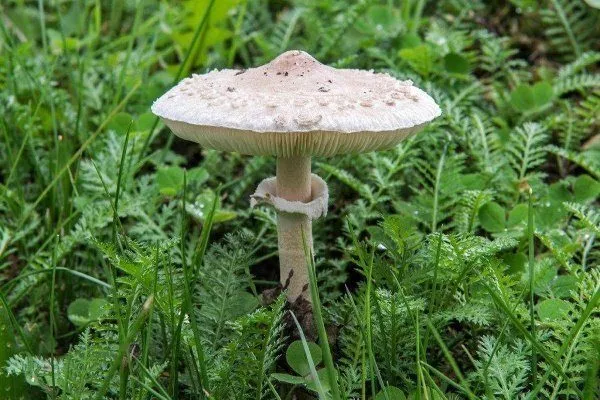
White parasol mushroom
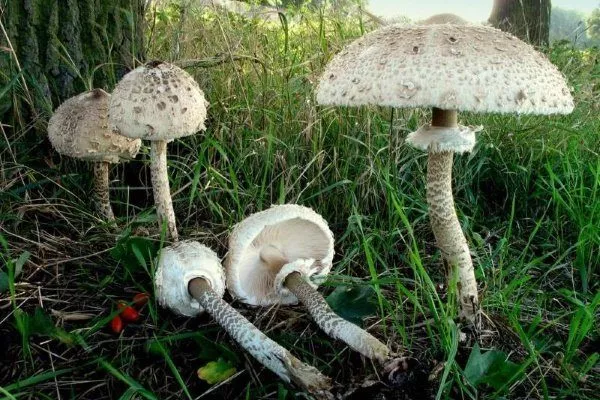
Variegated parasol mushroom
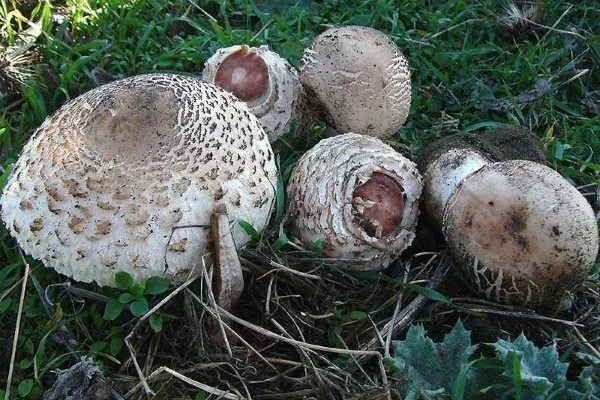
Reddening parasol mushroom
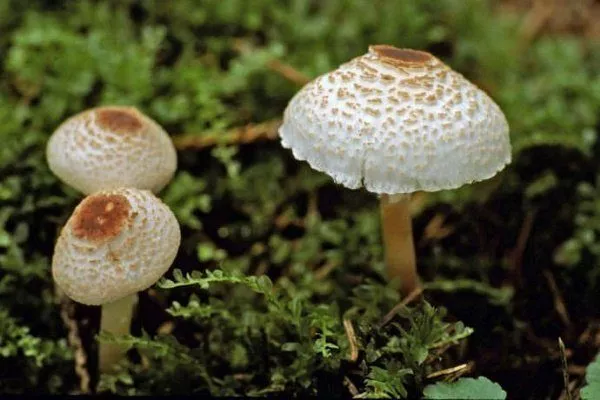
Inedible comb parasol
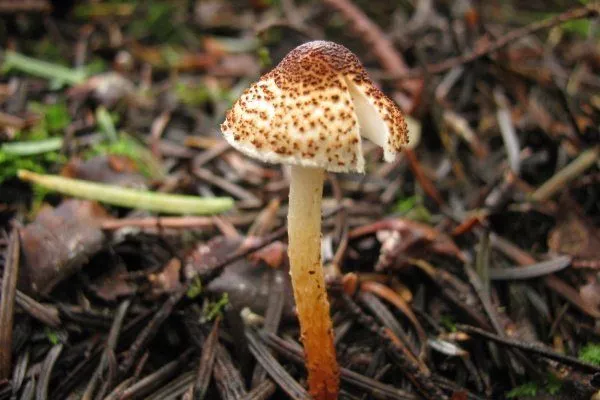
Inedible Chestnut Parasol
flywheel
Description. It has a dry, slightly velvety cap that may develop cracks with age. The stem is smooth, without a ring. The flesh is yellowish or reddish.
Where and when does it grow? It thrives in coniferous and deciduous-spruce forests. Fruiting occurs from July to October. Large quantities can be found in the Stupino district (Mikhnevo station).
Varieties. In the Moscow region you can find such species boletus mushrooms:
- Green boletus – distinguished by a cushion-shaped cap with greenish-brown or olive flowers. The flesh is yellowish or whitish.
- Mosscapular fissured variegated – distinguished by a swollen cap with numerous cracks. Found among deciduous trees.
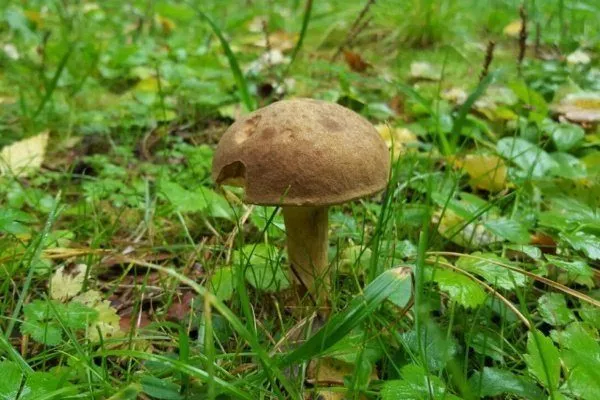
Green boletus mushroom
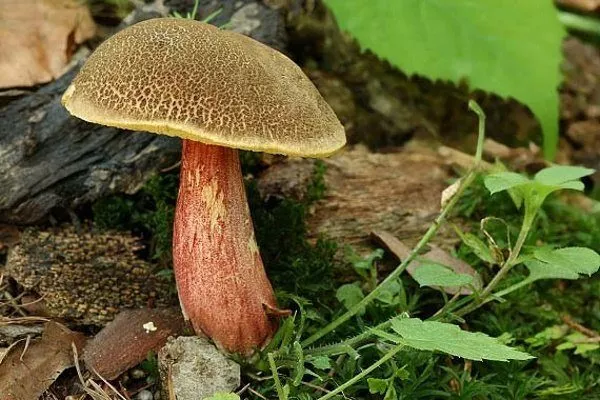
The fissured boletus mushroom
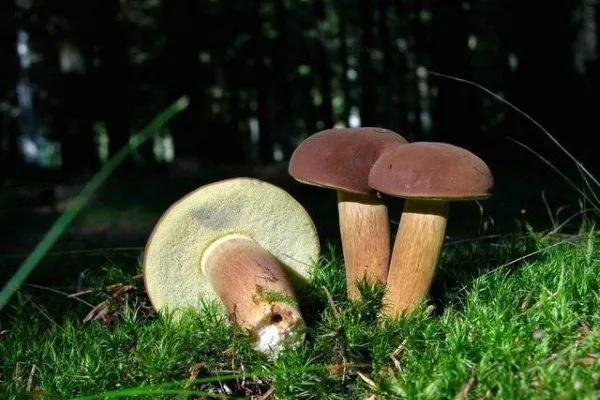
Chestnut boletus mushroom
Doubles. Similar to the boletus, the chestnut mushroom is harmless, but has a rather bitter taste, making any dish containing it immediately inedible.
White milkweed (white volnushka)
Description. Belongs to the Russula family. It has a light, slightly pinkish cap with an inward-turned, downy cream. There's a depression in the center.
Where and when does it grow? In mixed forests near birch trees in the northern part of the region. Fruiting occurs from late July to September. Found in large numbers in St. Isaac's Island.
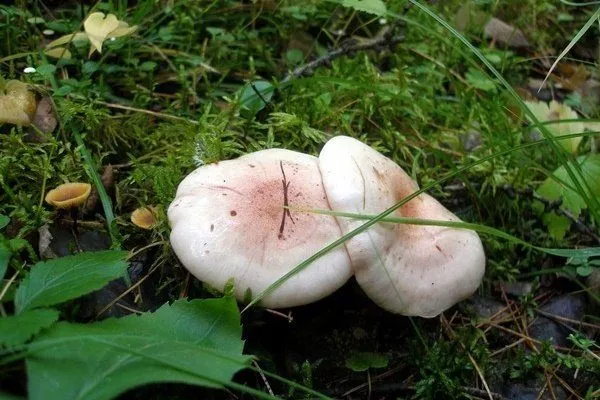
Varieties. The pink milk cap, distinguished by its pinkish cap, also belongs to this species. Both mushrooms are edible.
Orange Pezizas (Aleuri orange)
Description. Its appearance is unusual—an orange saucer-shaped cap, a short, elongated base, and a lack of mushroom flavor or odor. It's primarily used medicinally, but in cooking, it's often used as a garnish and raw (in salads).
Where and when does it grow? It grows everywhere, along roadsides and at forest edges, preferring sunny areas. Fruiting season runs from early summer to late autumn. Like morels, it can also grow among the ashes of fires.
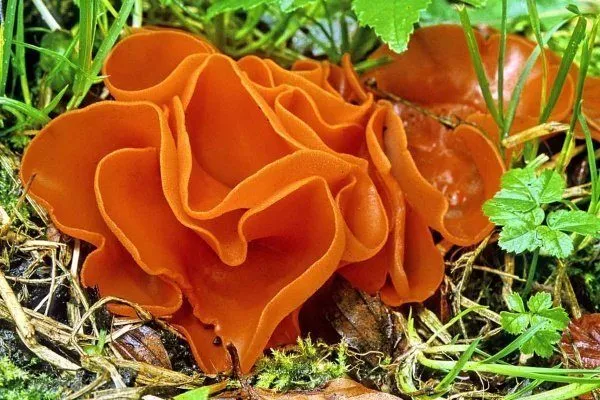
Varieties. There are three types of peciza growing in Russia, but in the Moscow region only the orange variety is edible.
Doubles. The orange peziza mushroom has a lookalike, the brown peziza mushroom. It is smaller in size and has brown fur around the edge of its cup-shaped cap. It is considered inedible, but is extremely rare.
Description of poisonous mushrooms in the Moscow region
The two most poisonous mushrooms are considered to be the fly agaric and the death cap. No antidote has yet been developed for them. Other mushrooms are considered inedible rather than poisonous. However, it is also advisable not to eat them due to the risk of food poisoning (though not fatal).
Poisonous mushrooms can be found anywhere, often alongside edible ones. Be careful!
Fly agarics
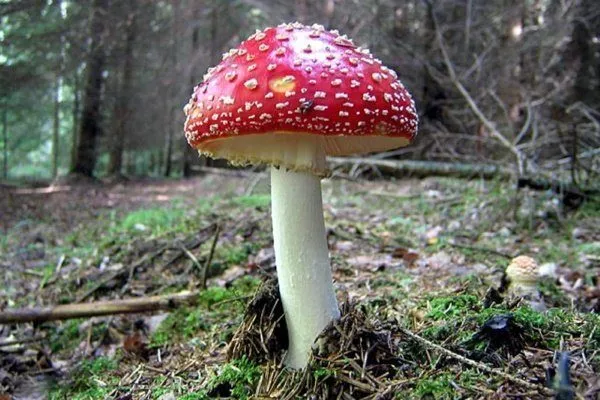
Description. The most poisonous mushrooms known to almost everyone. The red fly agaric is most common in the forests near Moscow. All these mushrooms have flat or bell-shaped caps of a bright red-orange color with white spots. The white stem widens toward the base and always has a mushroom ring that breaks and droops as the mushroom grows.
Where and when does it grow? It grows everywhere—in deciduous and mixed forests, as well as among spruce and birch trees. The growing season is from midsummer to mid-autumn.
Danger. There are a huge number of fly agaric species, some of which are considered conditionally edible. However, despite this, collecting and consuming these beautiful forest dwellers is not recommended. This is because they contain psychotropic and toxic substances (muscarine and muscimol).
Death cap
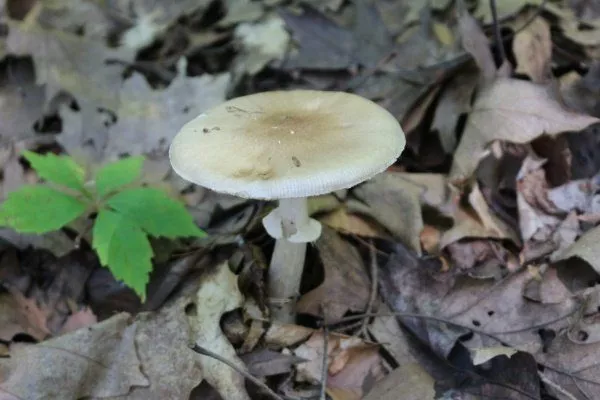
Description. One of the most poisonous mushrooms. Belongs to the fly agaric family. It has a greenish (or grayish, olive) cap. The flesh is white. It has a wide mushroom ring that disappears as the mushroom grows.
Where and when does it grow? Prefers deciduous forests (linden, oak). It is often found in suburban areas, near vegetable gardens and summer cottages. Growing and fruiting period is from July to mid-October.
Danger. There's a risk of confusing death caps with russula (due to their greenish caps) and russulas. White death caps can be confused with champignons (found in large numbers near the village of Pavlovskoye, Domodedovo Highway).
Satanic mushroom (also known as Satanic mushroom)
Description. When raw, it is poisonous, although the poisoning is considered mild (not fatal) and only causes severe stomach upset. The mushroom is similar in shape to the boletus (to which it belongs), with a round cap and a thick, wide stem. The stem is reddish-yellow, and the cap is light with a grayish tint.
Where and when does it grow? It prefers deciduous forests (linden and oak) with calcareous soils in the southern part of the region. Fruiting begins in June and lasts until October.
Danger. Only those with limited mushroom experience can confuse them with boletus. The mushroom's color is very different from that of its edible relatives.
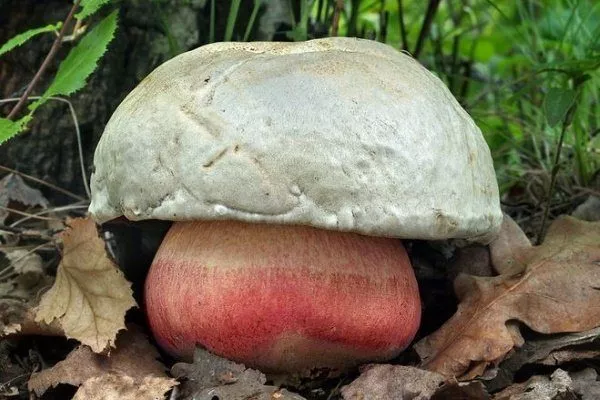
Read more about the Satanic mushroom here.
Entoloma vernalis
Description. It is considered a poisonous mushroom. Its appearance is distinguished by a wide, brown cap with drooping, conical edges. The stem is thin and lacks a mushroom ring. The base of the stem is thickened. The flesh is brittle, white, and has a characteristic moldy odor.
Where and when does it grow? Prefers deciduous forests, mixed (spruce-deciduous) with sandy soil. It can often be found in the first spring grass and in lawns. It grows from late May to mid-June.
Danger. Can be confused with May rowan.
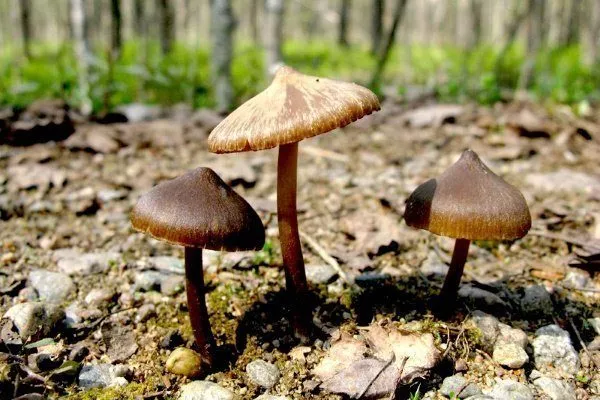
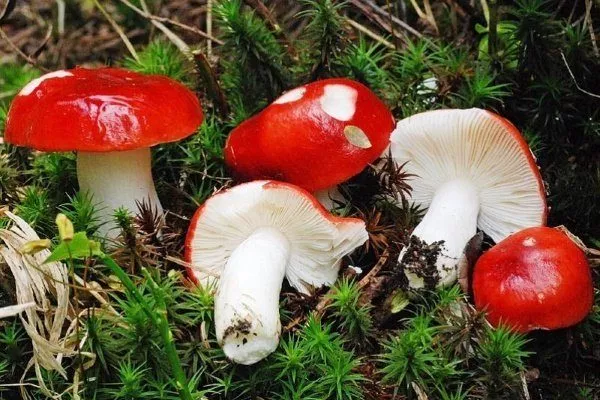
Russula emetica (caustic russula)
Description. Belongs to the fourth category of mushrooms (conditionally edible). It has a pink cap, which turns red as it ages. The underside of the cap has wide white gills. The stem is dry, hollow, and brittle.
Where and when does it grow? It prefers spruce forests and open clearings in mixed forests. It grows even in the leanest years for mushrooms, from mid-July until the end of the mushroom season (September-October).
Danger. It can be used as food, but only after boiling it twice and then rinsing it, to avoid poisoning by the substance muscarine, which is part of the mushroom.
Variegated champignon (flat-headed)
Description. This mushroom is considered mildly poisonous. It has a grayish cap with a smoky hue, covered with brown scales. Inside the cap are large, pink gills that turn brown as they mature. The stem is light-colored, hollow, and white, turning yellow and darker with age.
Where and when does it grow? It grows everywhere, in areas rich in humus and humus, in parks, near vegetable gardens, and on compost heaps. It bears fruit from mid-July to October.
Danger. To avoid poisoning, it is best not to use it as food or to boil it twice beforehand, draining the water each time.
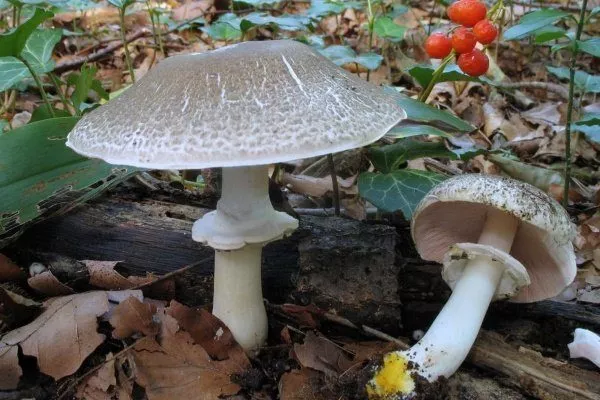
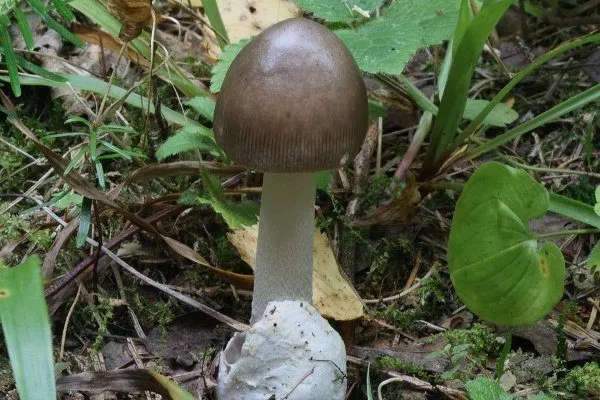
The float is grey
Description. Belongs to the Amanitae family, genus Amanita. It is classified as a conditionally edible mushroom, meaning it can be eaten. It has a rounded, bell-shaped cap. Its coloration ranges from grayish shades of purple to yellowish-brown. The stem is long, thin, and granular.
Where and when does it grow? It grows in pine forests and among deciduous stands. Fruiting period is from June to October.
Danger. Poisonous fly agarics (which can be confused with the fly agaric), especially mature and overgrown ones, may lack a mushroom ring. Therefore, if in doubt, it's best to avoid such a mushroom. Eating it raw is not recommended. Boiling is essential.
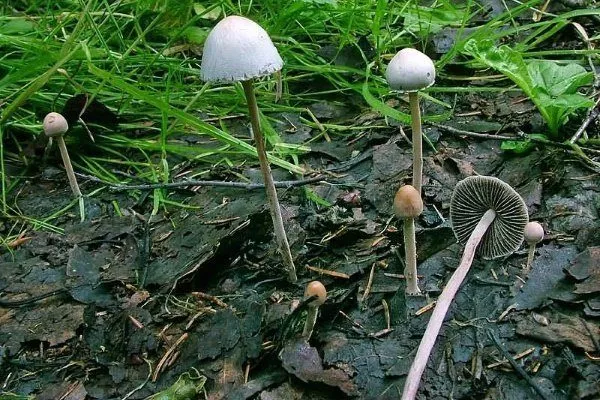
Panaeolus (bell-shaped or butterfly-shaped ink cap)
Description. This mushroom is classified as a poisonous hallucinogenic mushroom. It has a brownish-beige cap, ovoid, and slightly grooved. The stem is thin, hollow, and gray. The mushroom is no more than five centimeters tall. The flesh of the cap ranges from pale gray to brown.
Where and when does it grow? It grows from spring (April-May) until frost. It prefers well-fertilized soil rich in humus and sapropel, near farms and in river floodplains. It can be found in parks and garden plots.
Danger. There are no reported cases of death from this mushroom, but to maintain health, it is not worth taking risks.
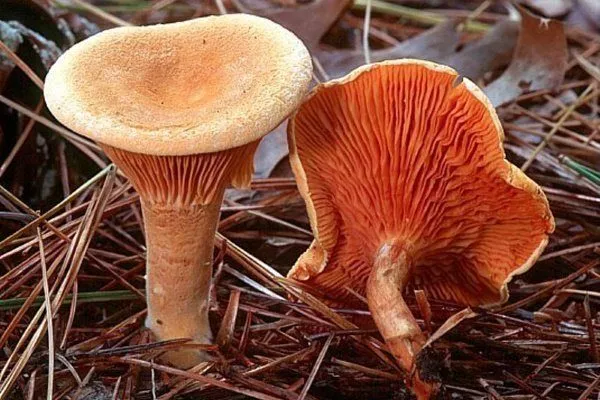
False chanterelle
Description. The cap is orange-beige. As the mushroom matures, the cap fades, turning pale yellow (the center remains bright yellow). The stem is brighter in color, and the flesh is firm.
Where and when does it grow? It prefers deciduous forests (linden and oak) with a few pine trees. Fruiting begins in July and lasts until early October.
Danger. Although it is called “false”, it does not pose a great danger to health.
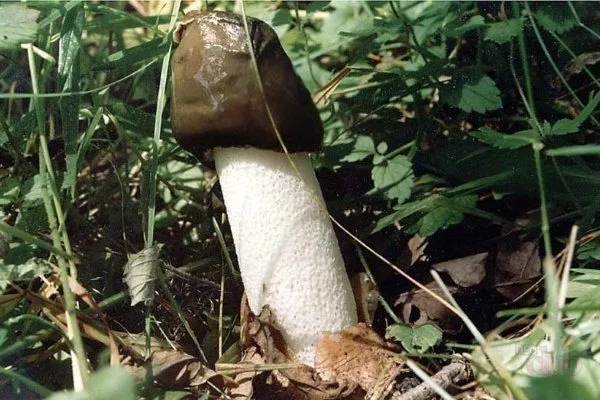
Common stinkhorn
Description. When young, the mushroom is a white egg. Initially, it resembles a puffball, but with a small amount of mucus. Then, the stem and cap emerge from the egg simultaneously.
Where and when does it grow? Most often in fertile soils, often among deciduous forests.
This mushroom is not typically used as food (although Western literature describes culinary recipes with it). However, in folk medicine, it is widely used to combat viral diseases and even tumors. Because of these qualities, it is successfully grown in garden plots. The mushroom propagates from roots planted in the garden. For more information about this mushroom, see here.
Glowing talker
Description. This mushroom belongs to the Trichomycetes family. The mushroom itself is small, with a light, grayish-brown cap with a depression in the center. The stem is thin, light-colored, and fused with the cap. At night, it emits a pale green light.
Where and when does it grow? It most often grows in parklands and deciduous forests. Fruiting period is from June to October.
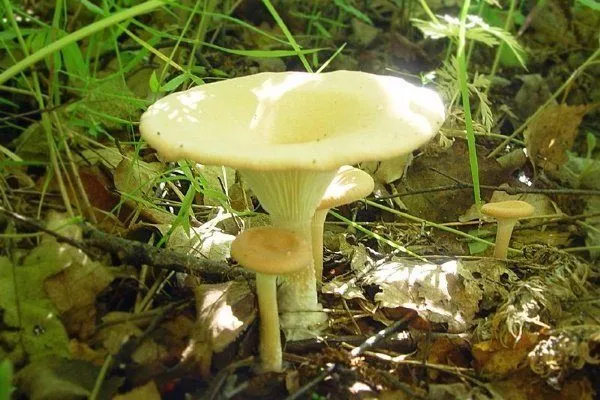
Danger. There are many varieties of this mushroom, both edible and poisonous. All talkers with a light whitish color are considered poisonous. Since this mushroom is not considered high-quality, it is best to avoid collecting and eating it.
After learning about mushroom species and their growing areas, remember that picking mushrooms near highways and industrial zones is highly discouraged. Choose the most environmentally friendly areas, pick only the mushrooms you know, and enjoy a peaceful mushroom hunt!