
The mushrooms in central Russia are countless. This arbitrary geographic region encompasses dozens of regions, each with its own mushroom-growing spots. The mushroom "assortment" depends on the nuances of climate, vegetation, soil, environmental conditions, and the level of civilization—the more industrial enterprises and cities, the smaller the mushroom harvest.
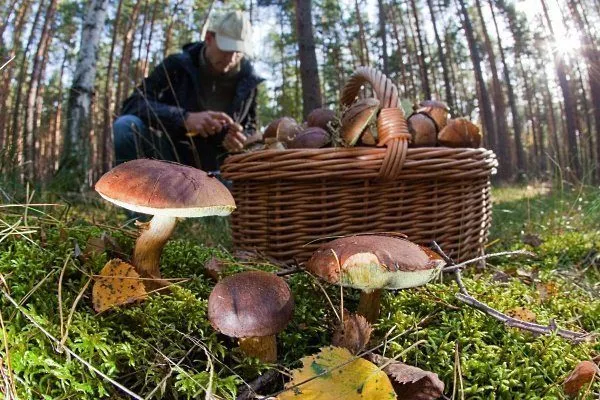
Edible mushrooms
IN edible category These mushrooms contain no toxic substances and can be safely used in various dishes, dried, salted, and pickled. Even raw, they pose no harm to humans.
| Name of the mushroom | Fruiting period | Preferred forests | Disease resistance | Economic value |
|---|---|---|---|---|
| White mushroom | June-October | All types of forests | High | High |
| Common chanterelle | June-September | Coniferous and mixed forests | High | Average |
| Larch butter mushroom | June-October | Larch forests | Average | Average |
| Real milk mushroom | July-September | Deciduous and mixed forests | Low | High |
| Aspen mushroom | June-October | Forests of different types | High | High |
White mushroom
Description. This is the ultimate trophy for any mushroom picker. A delicious mushroom that got its name from the fact that it retains its white color when dried. Appearance porcini mushroom (boletus):
- Hat. The cap's color varies greatly depending on growing conditions, ranging from light, almost white, to dark chocolate. The cap is initially hemispherical, then, as it straightens, it takes on a cushion-like shape. It is convex and fleshy, with a slightly velvety texture. The diameter is up to 25 cm.
- Leg. A robust plant, up to 20 cm tall. Thickness – up to 5 cm. Widened at the base. Color – white or light brown. The upper part has a mesh pattern. A significant portion of the stem is hidden in the soil.
- Pulp. Dense, white. The flesh remains colorless when broken. The aroma is faint, and the flavor has nutty notes.
- ✓ Disease resistance
- ✓ Economic value
- ✓ Fruiting period
- ✓ Preferred forest types
Varieties. In the central zone, pine and spruce boletus are practically absent. Here, boletus mushrooms are found;
- Oak. The cap is cushion-shaped and velvety to the touch. Its diameter is 8-25 cm. Its color varies from coffee to ochre. The stem is 7-25 cm long and cylindrical. It appears in May and grows until October. It prefers deciduous forests.
- Birch. The cap is initially cushion-shaped, later flattened. It reaches 15 cm in diameter. The stem is barrel-shaped and up to 12 cm in height. The smooth or wrinkled cap is colored pale yellow or ochre. It grows in birch groves and mixed forests.
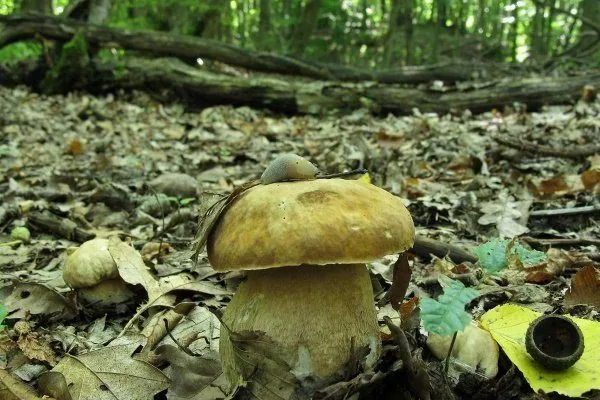
White oak mushroom
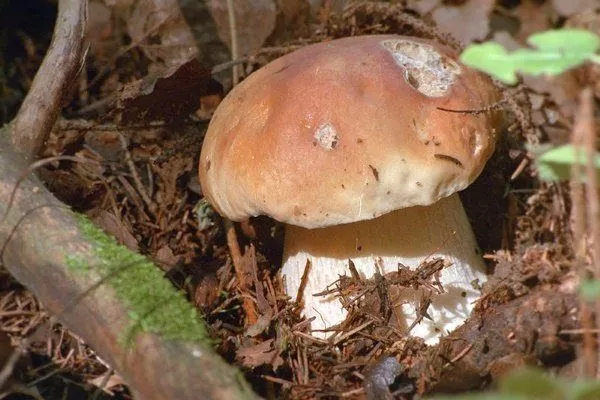
Birch porcini mushroom
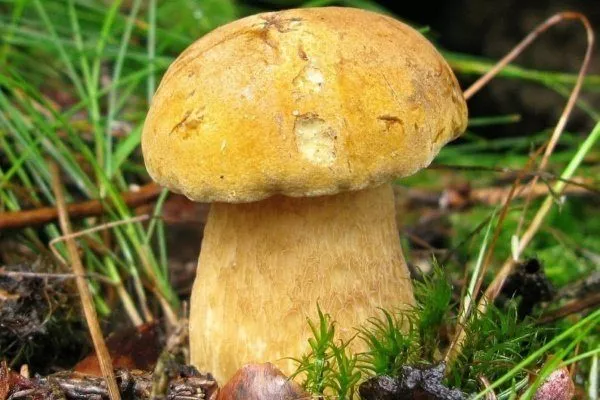
The porcini mushroom can be confused with the inedible gall mushroom.
Where and when does it grow? It grows in all types of forests. The fruiting period is from June to October. Initially, there are only a few boletus mushrooms, but the main harvest usually occurs during the second flush, in mid-July.
Mushroom flies are keen on porcini mushrooms, which is why July boletuses are extremely wormy.
Doubles. Inexperienced mushroom pickers may confuse this mushroom with the bitter mushroom, which, when young, somewhat resembles boletus. It's bitter and has a pinkish tubular layer, with the flesh turning pink when broken—by these characteristics, it's easy to distinguish it from the "king of mushrooms."
Common chanterelle
Description. The common chanterelle is one of the most popular mushrooms. It's tasty, distinctive, worm-free, and produces abundant fruit. External characteristics of the chanterelle:
- Hat. Yellow or orange. 4-6 cm in diameter, maximum 10 cm. Fleshy and smooth, with wavy, folded edges.
- Leg. Solid, similar in color to the cap, forming a single unit with it. Length 4-7 cm.
- Pulp. Firm and dense, the same color as the cap or slightly lighter. It smells slightly of dried fruit. When raw, it tastes sharp and sour.
Varieties. Several varieties of chanterelles grow in the forests of the central zone, but they are not in demand among mushroom pickers:
- TubularWith age, the cap takes on the appearance of an elongated funnel. Diameter: 1-4 cm. The flesh is firm, with a pleasant mushroom aroma. Color: light gray. The mushroom is inconspicuous and little known. It grows in damp, mossy forests. Fruiting: September-early October.
- Gray. The wavy cap is gray. Funnel-shaped. Diameter is 3-6 cm. There is no distinctive taste or odor. Grows in deciduous and mixed forests. Fruiting occurs from late July to September.
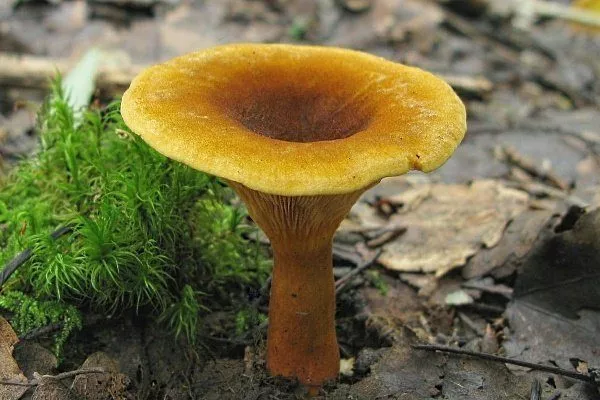
Chanterelle mushroom
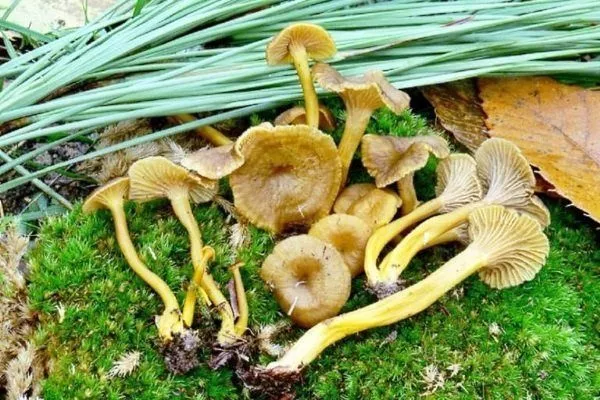
Trumpet chanterelle
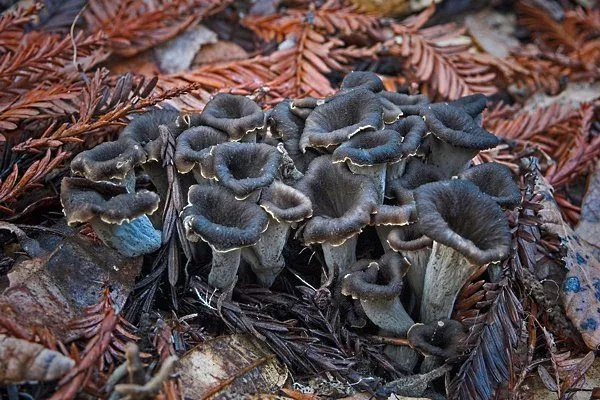
Gray chanterelle mushroom
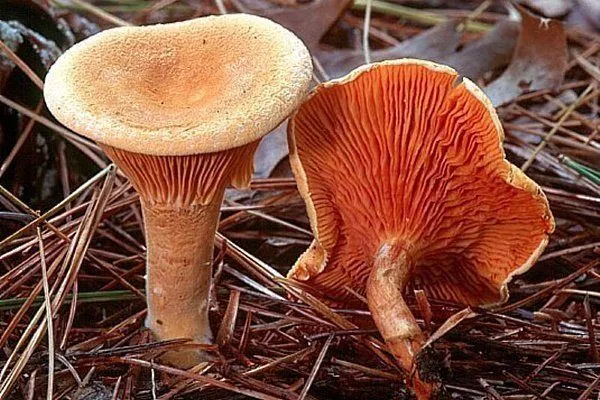
The common chanterelle can be confused with the poisonous false chanterelle.
Where and when does it grow? It's found everywhere—in coniferous and mixed forests. Harvesting begins in June and continues until September, with the peak harvest in July.
Doubles. Sometimes confused with the false chanterelle, the true chanterelle is easiest to distinguish from the false by where it grows. False chanterelles typically grow on rotting wood. They are not poisonous, but they have an unpleasant taste.
Larch butter mushroom
All butter mushrooms growing in the forests of the central Russian region can be roughly divided into two groups: pine and larch. The former constitute the majority, while the latter constitute three to four species. Almost all butter mushrooms are considered delicacies. Pine butter mushrooms form mycorrhiza with pine trees, while larch butter mushrooms form mycorrhiza with larch trees.
Description. The larch butter mushroom has a convex, pincushion-like cap. The cap diameter is 3-15 cm. Its surface is bare and smooth, covered in mucus. The color is yellow-brown, but can vary from lemon and orange hues to brown. The stem matches the cap's color. The top has a yellow or white ring. The flesh is yellow.
When you cut a ripe butter mushroom, the flesh gradually turns from yellow to pink, reddish-brown, or brown. But in young butter mushrooms, the color of the cut remains unchanged.
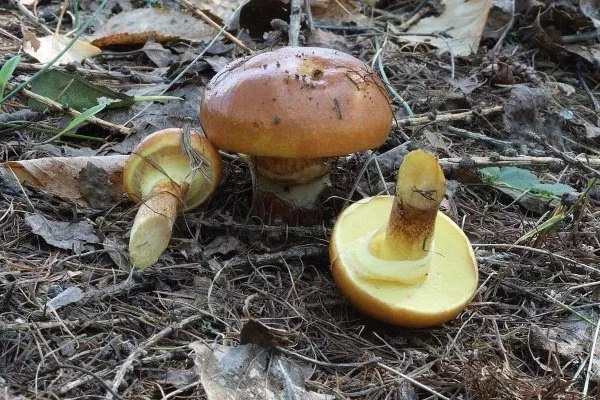
Varieties. Another larch boletus, the Clinton boletus (girdled boletus), can be found in the temperate zone. Its cap is a rich brick-cherry color, 5-15 cm in diameter. It has a faint aroma and flavor, but is quite pleasant. Its stem is long – 5-12 cm. It bears fruit from June to October in larch forests.
Where and when does it grow? It grows in larch forests. Fruiting occurs from mid-June to late October. Larch forests are found only in the northern European part of Russia, and this is where you should look for larch boletus. It also grows in artificial plantings, for example, in the Moscow region.
Doubles. There's no way to confuse butter mushrooms with anything, except perhaps with one of their fellow mushrooms or with boletus mushrooms, but they are all edible, so collecting butter mushrooms is one of the safest types of "silent hunting."
Late butter mushroom
Description. The late butter mushroom is also called the common or true butter mushroom. This species ranks first in flavor among all butter mushrooms.
Its external features:
- The cap is reddish-brown. In damp weather, it becomes very sticky. It is 5-10 cm in diameter, initially hemispherical, then opens up and becomes flat. The skin is easily removed.
- The stem is 5-10 cm tall and has a white ring that darkens with age. The stem above the ring is yellowish, and below it is brownish.
- The pulp is soft, yellowish, has a pleasant taste and smell.
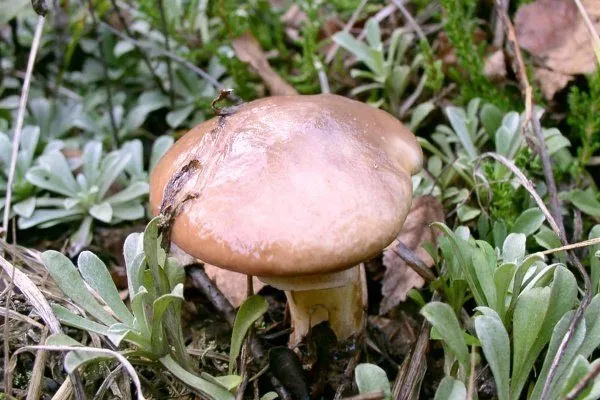
Where and when does it grow? It bears fruit from June to mid-October. It grows in bright pine forests. If the summer is hot, the boletus mushrooms are extremely worm-infested. They grow abundantly throughout the temperate zone—wherever suitable pine forests are found.
Doubles. There are no poisonous lookalikes. Late butter mushrooms resemble some boletuses. But since these mushrooms are edible, there is no danger in this resemblance.
Real milk mushroom
Description. It's also called the wet or white milk mushroom. Appearance features:
- The milk cap is white-yellowish, always covered with plant debris such as pine needles, grass, and leaves. The cap is initially flat, later becoming funnel-shaped. It reaches 7-25 cm in diameter. It is sticky and wet to the touch. The gills are dense, white or yellowish.
- The stem is hollow, white or yellowish in color, 3-9 cm in diameter, and cylindrical in shape.
- The white flesh has a dense yet brittle texture. When broken, a white, milky juice oozes, which is bitter in taste. It has a strong, fruity aroma.
Varieties. In the forests of the European part of Russia you can also find:
- Black milk mushroom. When properly prepared, this mushroom rivals the true milk mushroom in flavor. The cap is olive or olive-black, with visible concentric rings. The diameter is 7-15 cm, with a maximum diameter of 20 cm. The shape varies from flat to funnel-shaped. The brittle white flesh darkens when broken. The stem is usually hollow, 8 cm long. It grows from mid-July to late autumn in mixed and deciduous forests.
- Aspen milk mushroom. The cap is large and dirty white. It ranges from 10 to 25 cm in diameter and is round, saucer-shaped, or funnel-shaped. The firm white flesh exudes a milky sap. It has a strong fruity aroma. It grows locally in its favorite locations—under aspen and poplar trees, with which it forms mycorrhiza. It grows from August to late October.
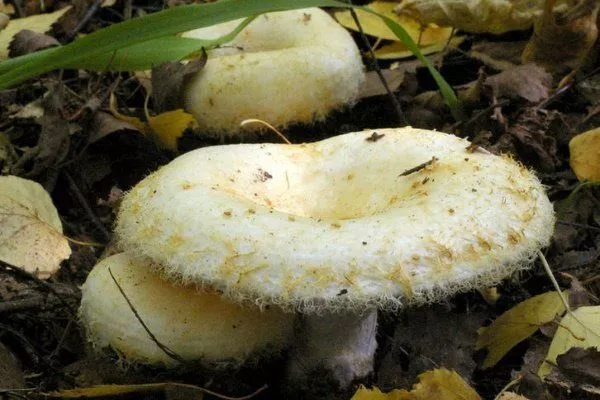
Real milk mushroom
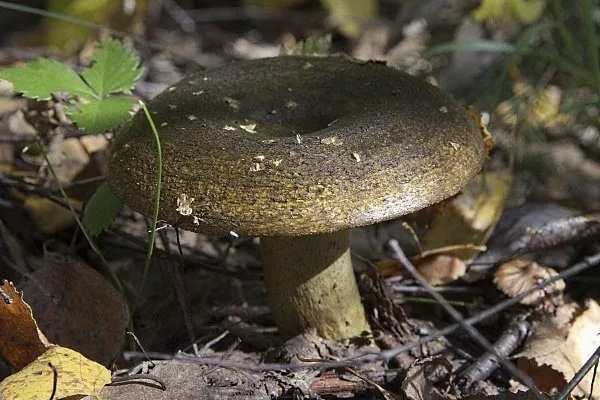
Black milk mushroom
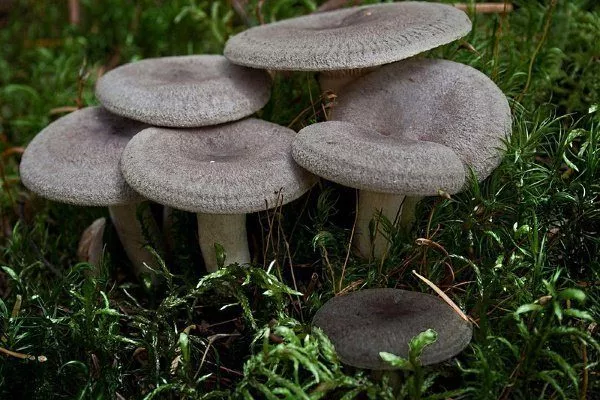
Aspen milk mushroom
Where and when does it grow? It grows in the Volga region and is found in small quantities throughout the central Russian region. Fruiting occurs from July to late September. It prefers deciduous and mixed forests. Milk mushrooms are abundant in Siberia and the Urals, but are rare in the central Russian region.
In Western Europe, the milk mushroom is considered inedible, but in Russia, it is the porcini mushroom's main rival, having been known since ancient times as the king of mushrooms. It has a caloric value higher than fatty meat! Its dry protein content reaches 35%.
Doubles. They can be confused with conditionally edible varieties of milk mushrooms. You can distinguish true milk mushrooms from pepper, camphor, felt, and golden-yellow varieties by their bitter taste.
Yellow-brown boletus
Description. Technically this mushroom is from the genus of boletus, but according to popular taxonomy it is considered fly agaric – because its cap is dry and velvety. Its external characteristics:
- Cap. Transforms from hemispherical to semi-prostrate. Diameter: 7-12 cm. Color varies from clayey to light brown.
- The stem is 5-10 cm tall and up to 2 cm thick. It is dirty yellow in color. The flesh of the stem is dense and tough.
- The flesh is thick and pale yellow. The flavor is mild, and the aroma is pleasantly mushroomy. It turns blue when broken.
Varieties. In the middle zone, besides the yellow-brown one, there are many varieties of boletus, but they are not in great demand among mushroom pickers:
- Green flywheel. The cap color ranges from olive-brown to yellowish-green. The diameter is 10 cm. The cap has loose, fleshy flesh, turning blue when broken. It has a mild but pleasant flavor and aroma. Fruiting occurs throughout the summer and into late autumn in all types of forests in central Russia.
- Red flywheel. The color varies from olive-brown to yellow-green. The diameter is up to 10 cm, the stem height is 10 cm. It is found everywhere – in forests of all types, but in small quantities.
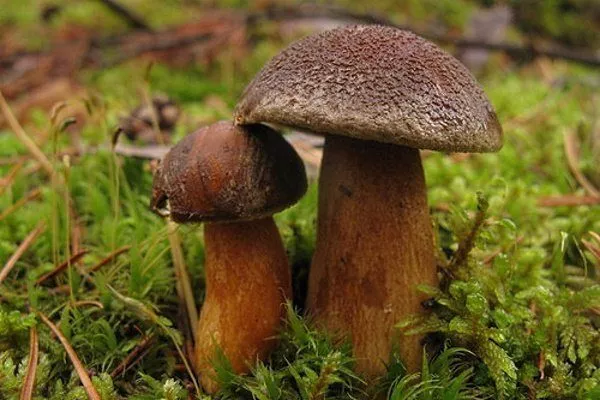
The yellow-brown boletus mushroom
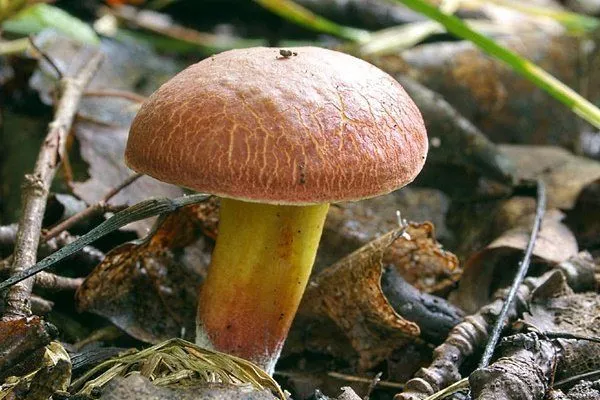
Green boletus mushroom
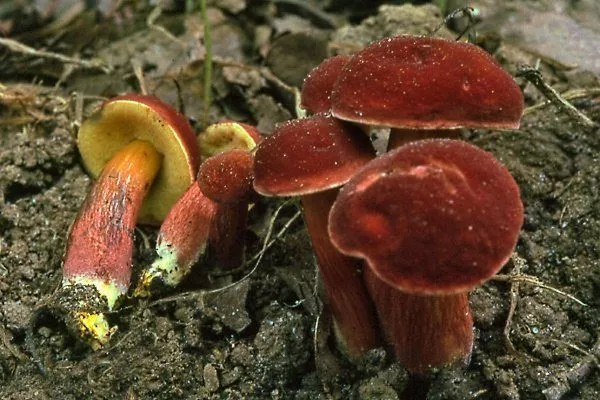
Red boletus mushroom
Where and when does it grow? They grow in mixed and pine forests. They form mycorrhiza with pine trees. They bear fruit from mid-July to October. They prefer acidic soils and high humidity.
Doubles. There are no poisonous lookalikes of boletus mushrooms—their bright yellow tubular layer makes them easy to distinguish from other mushrooms. They can be confused with the pink-legged boletus, a conditionally edible mushroom.
Aspen mushroom
Description. The name "aspen boletus" encompasses several varieties, but many mushroom pickers believe that the true aspen boletus, or redhead, is its popular name; it is a mushroom that is classified as "red aspen boletus." Here are its external characteristics:
- When young, the cap is spherical, seemingly stretched over a thick stem. As it grows, the cap opens, reaching 5-15 cm in diameter. The color is red-orange, brick-red.
- The stem is up to 10 cm tall. Cylindrical, white, covered with scales. Velvety to the touch.
- The flesh is white and firm. Once cut, it darkens immediately, becoming blue-black.
Varieties. The number of varieties is unclear. In the temperate zone, there are mushrooms also considered boletuses, including:
- Oak aspen mushroomThe cap is 5-15 cm, brick-red in color. Its shape is similar to that of the red aspen mushroom. The skin is velvety, extending beyond the cap's brim. It cracks in dry weather. The flesh turns blue when cut. It grows all summer, but, unlike its red counterpart, it prefers to form mycorrhiza with oak.
- Yellow-brown aspen mushroomThe cap is yellow-brown. The diameter is 10-20 cm. The stem is light, turning green-blue when cut. It has no distinctive odor or taste. It grows all summer until October. It often forms mycorrhiza with birch. It can be found in large numbers in the forests of the Moscow region, the Ulyanovsk region, and the Kaliningrad region, especially in September.
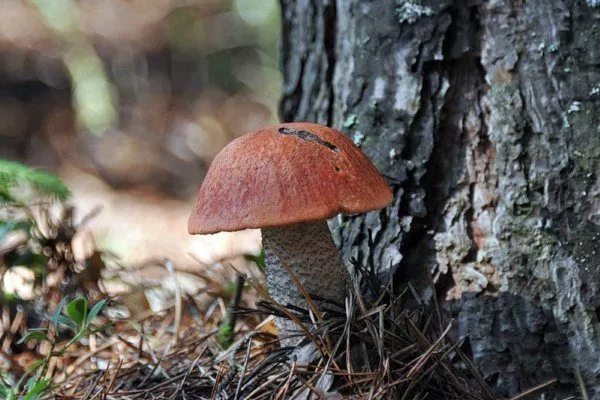
Oak aspen mushroom
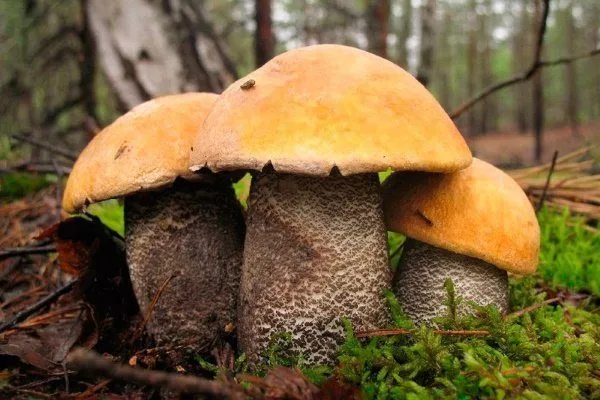
Yellow-brown aspen mushroom
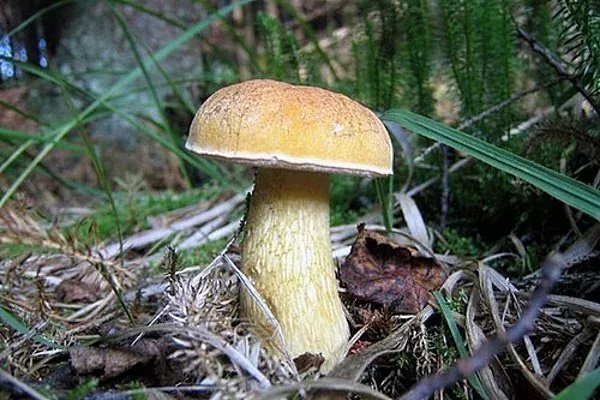
The edible aspen mushroom can easily be confused with the inedible false aspen mushroom.
Where and when does it grow? Fruiting occurs from June to October. It forms mycorrhiza with pine trees. It is found in various forest types, and is abundant in the Kaliningrad and Leningrad regions. It is one of the most common mushrooms.
Doubles. False aspen mushroom(or bitterling) has a bitter taste. It's also called the pepper mushroom—just lick the flesh to taste the difference. But it's best not to—you can tell the difference by its pinkish flesh.
Birch boletus
Description. Signs of the common birch bolete:
- The cap, reaching 15 cm in diameter, ranges from light gray to dark brown. Initially hemispherical, later becoming cushion-shaped. In damp weather, it becomes slimy.
- The stem is solid, cylindrical, reaching 15 cm in length and 3 cm in diameter. It is slightly wider at the base and covered with dark longitudinal scales.
- The flesh is white, slightly pinkish when broken. The aroma and taste are pleasantly mushroomy.
Varieties. In the central zone there are several other types of boletus, less popular and even unknown among mushroom pickers:
- White. It has a cushion-shaped cap that is cream, pinkish, or light gray. The diameter is 3-8 cm. The flesh is white, with a mild mushroom flavor. It bears fruit from July to October. It is found in damp areas. It is common, but does not produce abundant harvests.
- Multicolored. The cap is 7-12 cm in diameter and a grayish mouse color. The flesh turns pink when cut. Fruiting occurs from early summer to October. It is not common in central Russia; it prefers southern regions.
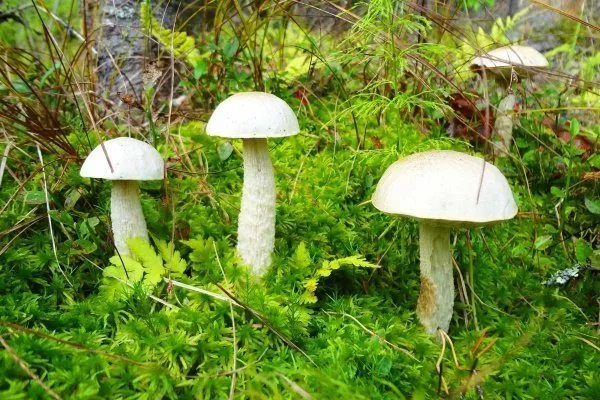
White birch bolete
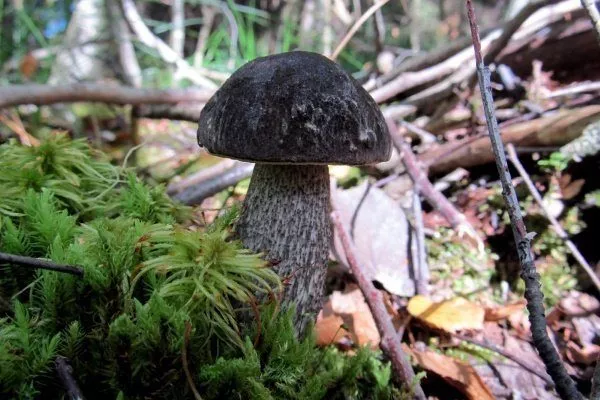
Birch boletus
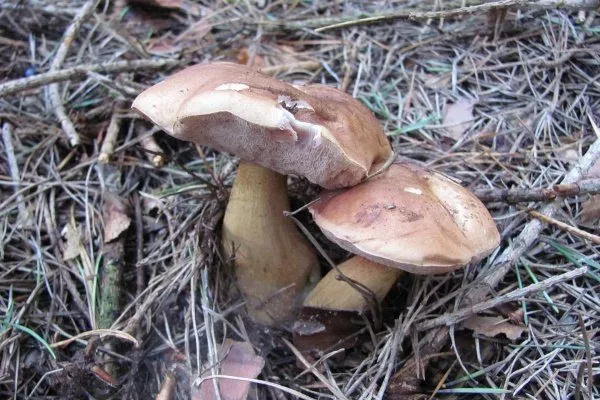
The birch bolete is often confused with the bitter gall mushroom.
Where and when does it grow? It bears fruit from early summer until November. It prefers deciduous forests and forms mycorrhiza with birch. Harvests can be extremely abundant—mushroom pickers literally carry off buckets of birch boletes. There are many birch boletes in the Moscow, Ulyanovsk, and Kaliningrad regions.
Many Western publications claim that only the caps of birch boletes are edible, while the stems are supposedly tough. This is untrue – the stems are very tasty and remain firm after cooking, while the caps acquire a gelatinous consistency.
Doubles. It can be confused with the gall mushroom. Besides its disgusting taste, it is distinguished by its pinkish tubular layer and tuberous stem. The mushroom is not poisonous, but it can spoil the flavor of dishes.
Common saffron milk cap
Description. Its second name is pine saffron milk cap. Its external characteristics:
- The cap is orange with concentric circles. The shape is initially rounded, then spreading or goblet-shaped. The cap is smooth and slightly sticky in wet weather.
- The stem is thick and short – 4-7 cm. It is smooth and even, and hollow inside. The stem thickness is 1-2 cm.
- The pulp crumbles, releasing a milky sap that slowly turns green in the sun. It smells fruity and has a sweet, tangy taste.
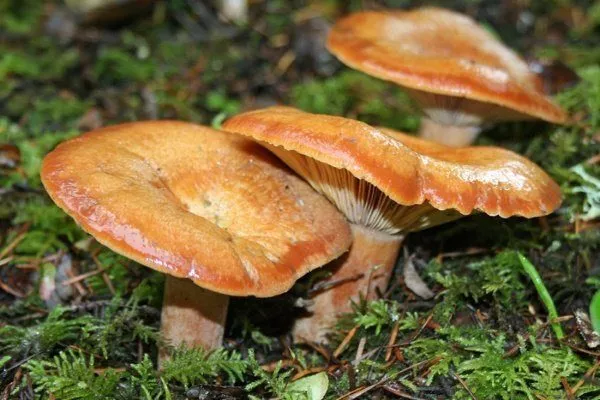
Varieties. Along with the common saffron milk cap, the spruce saffron milk cap is found in the forests of the central Russian region. It has a yellowish-green cap, 6-12 cm in diameter, with visible concentric zones. The flavor is more delicate than that of the common saffron milk cap. The dense orange flesh is brittle, first turning red when broken, then green. It is found from July to September in spruce forests and other forests.
Where and when does it grow? It is widespread throughout central Russia. It dislikes waterlogged soil, preferring sandy soils. It is harvested from mid-July to mid-October. Particularly abundant harvests of saffron milk caps are found in young pine and spruce forests.
The saffron milk cap is a record-breaker for digestibility. Therefore, pickled saffron milk caps are not just a snack, but a fully-fledged gastronomic treat. They are the only mushroom that is truly delicious raw.
Doubles. The saffron milk cap has no poisonous lookalikes. Such a distinctive and beautiful mushroom is nowhere else to be found in the forest. Inexperienced mushroom pickers confuse it with false saffron milk caps, which are mushrooms in the milk cap family.
Gray rowan
Description. The gray rowan is the most popular mushroom in its family. It is often called the streaky rowan. External characteristics:
- The cap is spreading. The color is grayish, changing shades to purple. The edges are wavy. The diameter reaches 12 cm. The shape is bell-shaped and hemispherical. The smooth surface of the cap is covered with radial fibers.
- The stem is white-gray, 10 cm tall, and quite thick – up to 2 cm wide. It develops deep in the litter.
- The flesh is dense, white-grayish, with a floury smell and taste.
Varieties. Along with the grey rowan mushrooms, other edible rowan mushrooms can be collected in the forests of the central Russian region:
- Violet. The cap, 5-15 cm in diameter, ranges in color from whitish to pinkish-brown. This autumn mushroom grows in clusters at forest edges in both coniferous and deciduous forests.
- Purple. The violet-purple cap reaches 7-15 cm in diameter. It has a strong floral scent. It grows late in autumn in various forest types.
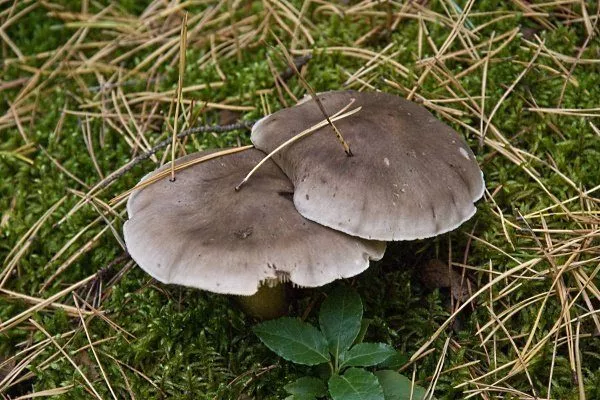
Gray rowan
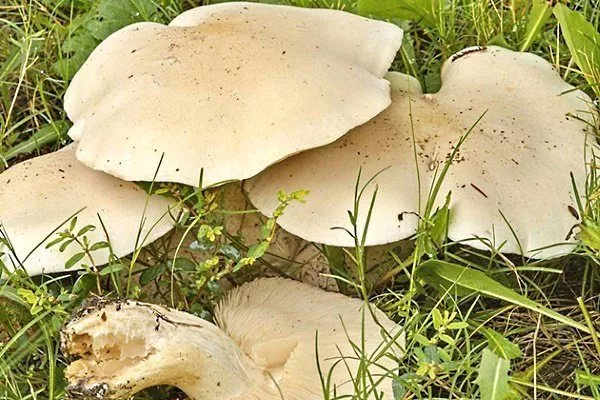
Violet rowan
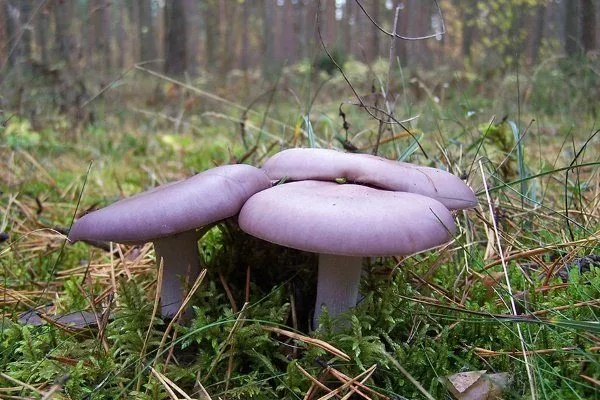
Purple rowan
Where and when does it grow? The gray rowan bears fruit when other mushrooms no longer grow. It grows until frost in coniferous and mixed forests, producing abundant harvests.
Doubles. It's easily confused with other Trichomycetes, some of which are poisonous. Therefore, only those who can accurately distinguish this mushroom from other Trichomycetes should begin collecting it.
Common champignon
Description. Champignons are the most famous of the artificially cultivated mushrooms, but they also grow in natural conditions.
- The cap is white. In young mushrooms, it is spherical, later becoming convex and spreading with a folded edge. The diameter is 8-10 cm, maximum 15 cm. The cap is dry and silky to the touch. In older mushrooms, it is brownish.
- The stem is 3-10 cm long, fibrous, smooth, and white. Diameter: 1-2 cm.
- The flesh is meaty and dense, with a pleasant mushroom aroma. It turns pink when cut.
Varieties. In the central Russian region, in addition to the common champignon, you can find:
- Forest champignon. The cap, 5-10 cm in diameter, is an indefinite brownish-pinkish hue. The cap surface is fibrous. The light flesh turns red when broken. Fruiting occurs in August-September. It grows in coniferous forests, forming mycorrhiza with spruce.
- Agaricus bisporusThe cap is light brown, 4-8 cm in diameter. The flesh is dense and juicy, turning pink when broken. It has a mushroomy aroma and a slightly sour taste.
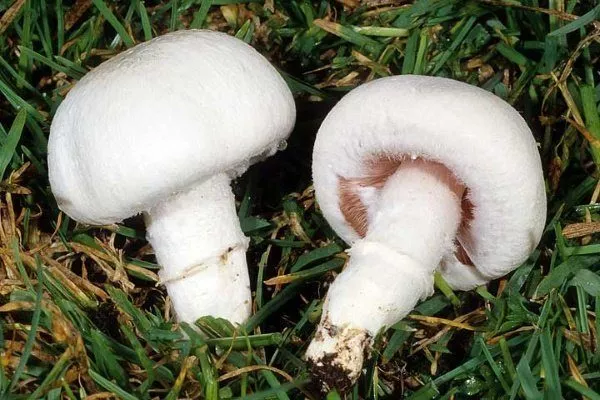
Common champignon
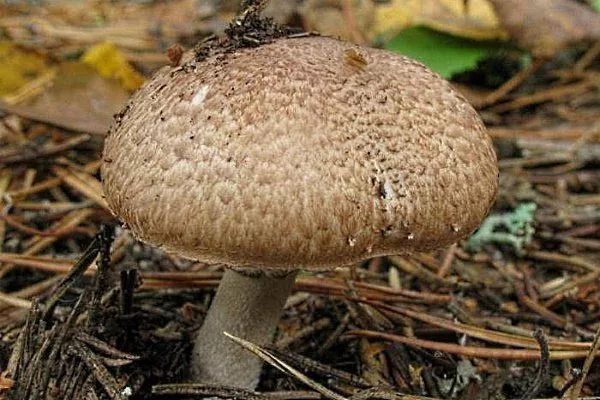
Forest champignon
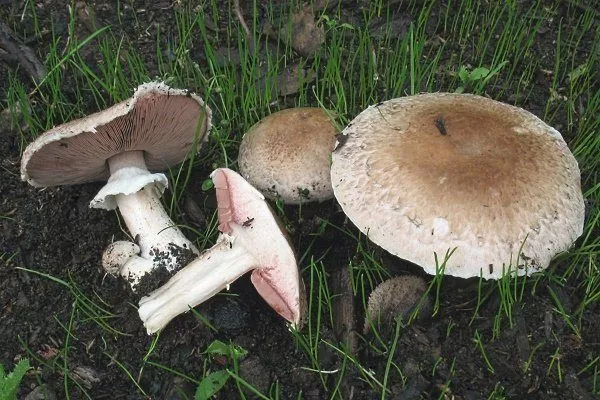
Agaricus bisporus
Where and when does it grow? Fruiting occurs from late May to late September. It thrives in fertile, humus-rich soils. It is found in meadows, pastures, gardens, and vegetable plots. It grows in clumps. It is widespread throughout the region. It prefers well-lit locations.
Doubles. It can be confused with the death cap. It differs from the poisonous mushroom by the color of its gills—they're pinkish. It can also be confused with the yellow-skinned button mushroom, which is poisonous.
A mushroom picker talks about steppe champignons and shows how to find them and how to distinguish them:
Marsh russula
Description. The caps are initially spherical, but with age they become spreading, flattened, funnel-shaped, or convex. The stem is cylindrical, smooth, and usually white.
Varieties. Among the countless number of russula mushrooms found in the forests of the middle zone, the most popular and widespread are the following types of russula mushrooms:
- Food. The cap is 6-12 cm in diameter and pale pink or dark red in color. The shape is flattened and convex. The dense flesh has a nutty flavor and a fruity aroma. It grows from summer to late fall in clearings and forest edges. It is an attractive forager. It grows abundantly in a variety of forests, both coniferous and mixed.
- SwampDiameter 7-12 cm. Color pink-red with an orange tint. The flesh is white, tasteless, and crumbly. Grows under coniferous trees.
- Green. The cap is light green, 8-15 cm in diameter. The flesh is white and thick, crumbly, with a pleasant, slightly tangy taste.
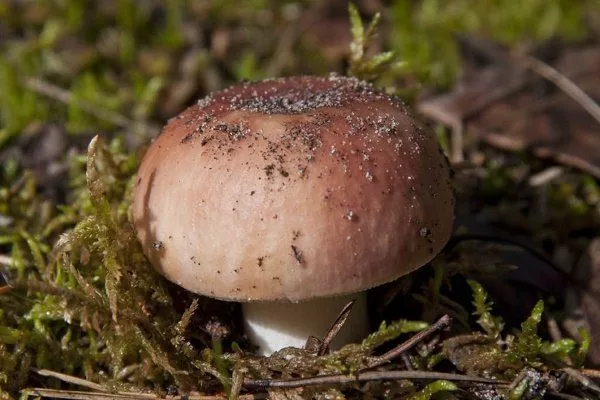
Edible russula
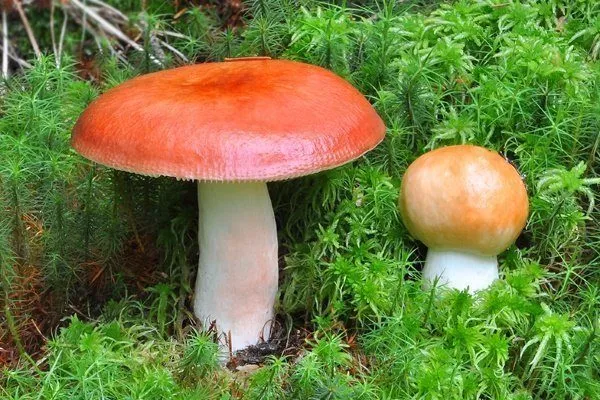
Marsh russula
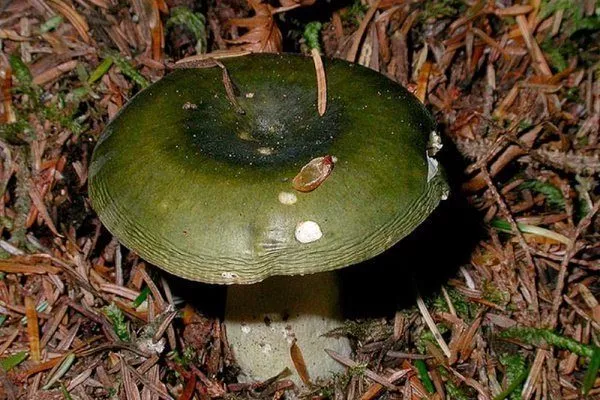
Green russula
Where and when does it grow? Russula mushrooms grow in forests of all types. This abundant and undemanding genus of mushrooms is found in abundance in temperate climates. They bloom from June to October.
Doubles. Often confused with death caps, russula can be distinguished by the lack of a ring—the "skirt"—that death caps always have.
Morel mushroom
Description. Morels Morels are distinguished by their porous body. They require extensive cooking before consumption. The true morel grows up to 15 cm in height. The mushroom is completely hollow. External characteristics:
- The cap is brown or gray-brown in color. The shape is round-spherical.
- The stem is yellowish or whitish in color, widened at the bottom, notched.
- The flesh is delicious, thin, and crisp. It has a pleasant aroma. Gourmets consider the morel one of the most delicious mushrooms.
Varieties. Among the edible morels of the middle zone:
- Morel cap. This mushroom has a small, cap-shaped cap, 2-5 cm tall. Its color is initially brownish and chocolate-colored, later turning yellowish-ocher. The thin, light flesh has a delicious aroma. It grows from mid-May in flooded soil among young linden and aspen trees. It is one of the most delicious morels.
- Conical morelThe conical cap is 4-8 cm tall. The color ranges from brown to earthy. The flesh is thin, without a distinct odor or flavor. It grows in early May and prefers aspen forests. It is less common than the true morel.
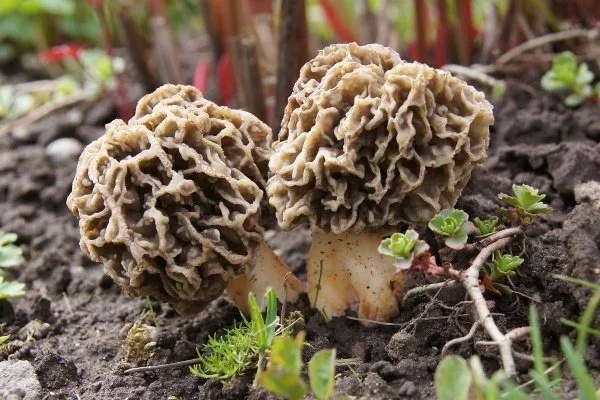
Morel mushroom
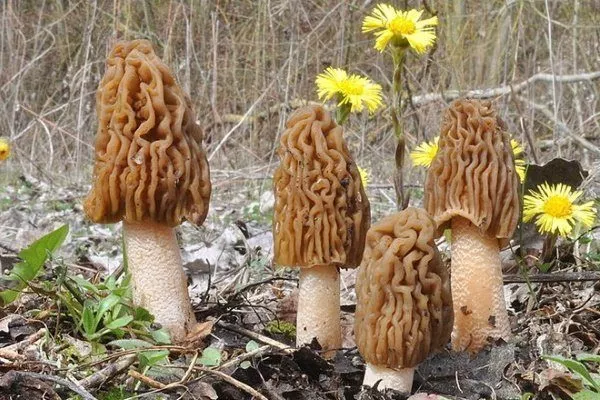
Morel cap
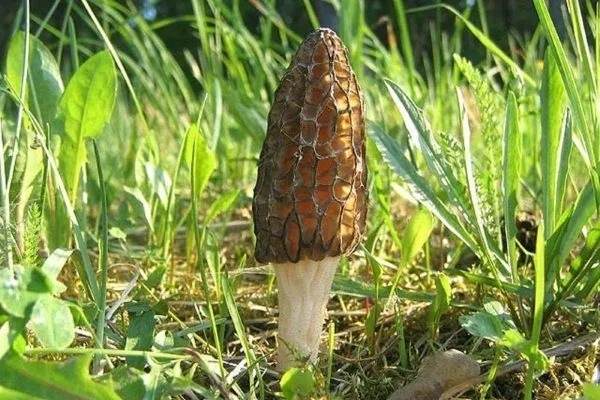
Conical morel
Where and when does it grow? They emerge in spring, in early May. They grow in parks, gardens, and forests. They always appear at the sites of forest fires, in the third or fourth year.
Doubles. It's hard to confuse it with the false morel—they have an unpleasant odor. They smell like rotten meat. It has a slimy, dark olive-colored cap.
Dubovik
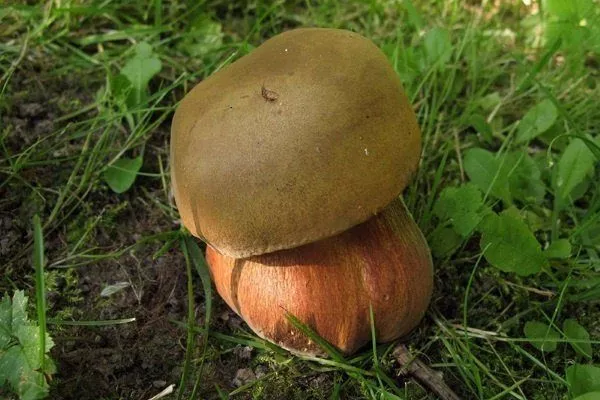
Description. The common oak boletus, or olive-brown boletus, grows in deciduous forests. It is often found in oak groves, where it forms mycorrhiza with oak trees. It is similar to the boletus. External characteristics oak tree:
- The cap is brown to light olive, darkening to dark brown with age. The diameter is 6-22 cm. The shape is hemispherical, sometimes almost prostrate. In wet weather, the cap is slippery.
- The stem is 5-17 cm tall. Color: reddish, dark orange, brown. Club-shaped. The red tubes turn blue when pressed.
- The yellow flesh turns blue when cut. It has a rich flavor and aroma.
Where and when does it grow? It bears fruit from May to September. In central Russia, it is found only in the Leningrad Region. Its primary habitats are in the Caucasus, Siberia, and the Far East. It thrives on calcareous soils near oaks and birches in well-drained areas.
Doubles. None.
Oyster mushrooms
Description. These mushrooms grow on substrates of dead plant debris, and in the wild, on trees. In terms of industrial production, they are second only to the champignon. Most popular oyster mushrooms grown in the central Russian region have an eccentric shape—the stem is attached to the cap laterally. The stem is often vestigial, tough, and inedible—it is not eaten.
Varieties. The most popular edible oyster mushrooms:
- Oyster. This oyster mushroom is widely cultivated for commercial use. In the wild, it bears fruit late, around October. The cap is funnel-shaped and ear-shaped. The color varies from light gray to dark gray. The caps grow, forming multi-tiered structures. The aroma is pleasant but faint. The white flesh loses its softness with age. It grows on dead trunks and on weak, diseased trees.
- Oak. The cap is semicircular in shape. Its color is grayish-white or brownish. Its diameter is 5-10 cm. It grows on any tree other than oak, but most commonly on spruce. Foreign sources classify oak oyster mushrooms as inedible.
- Pulmonary. A less valuable mushroom than the oyster mushroom, it appears in late May and bears fruit continuously until the end of September.
- Horn-shaped. The cap's color, 3-10 cm in diameter, varies with age, from white to grayish-ochre. The cap is funnel-shaped. The flesh is white, firm, and odorless, with no distinct flavor. It grows from May to September on stumps and dead wood of deciduous trees.
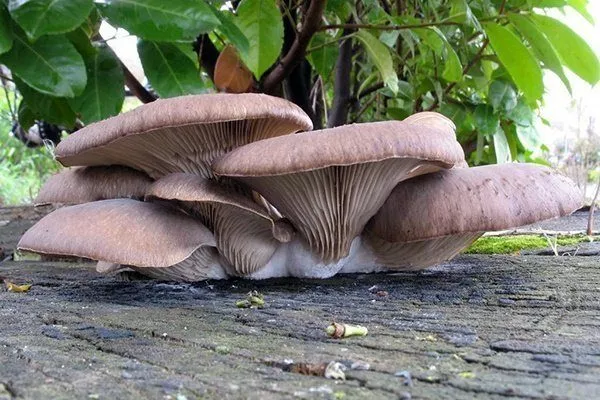
Oyster mushroom
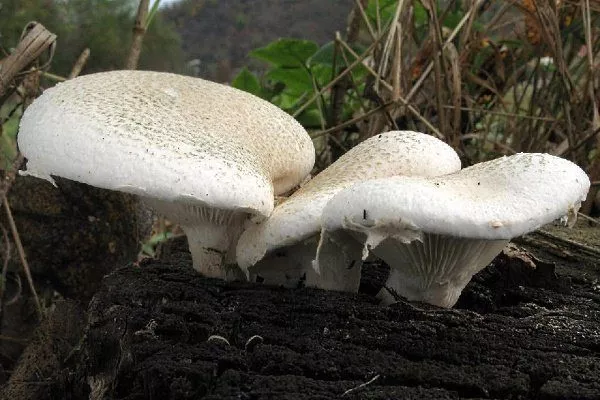
Oak oyster mushroom
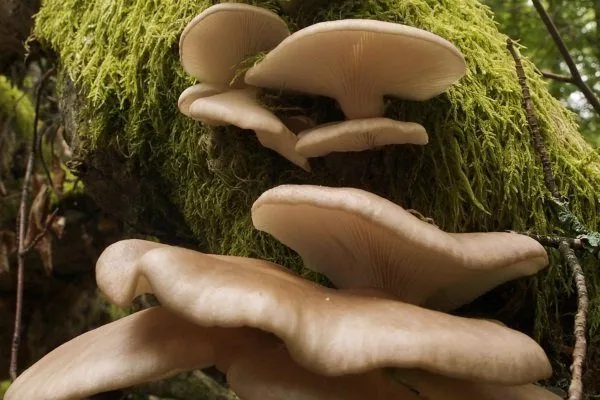
Oyster mushroom
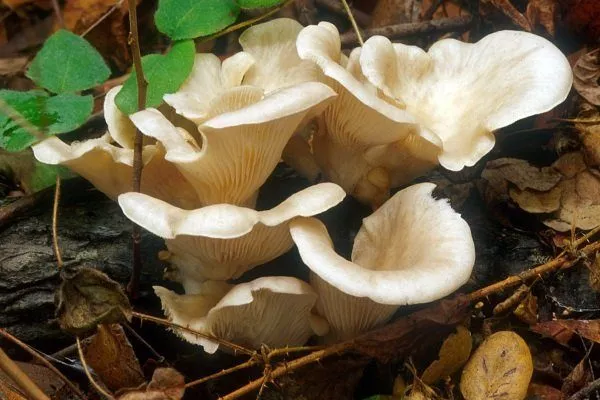
Oyster mushroom
Where and when does it grow? In temperate forests, different species of oyster mushrooms bear fruit simultaneously and successively from April to November. They grow wherever there are stumps, fallen trees, and dead wood. They prefer poplar, willow, walnut, and aspen.
Doubles. There are no poisonous analogues, only inedible ones – they can be easily recognized by their hard mushroom body, unpleasant smell and taste.
Volnushki
Description. A beautiful and distinctive mushroom used for pickling. It is soaked beforehand. External characteristics waves:
- The cap is 5-10 cm in diameter and pinkish in color. Concentric circles are visible on the surface, and a fringe appears along the edge. The brim of the cap is folded inward. The glabellae are initially white, turning yellow as they grow.
- The stem is cylindrical, 3-6 cm long, initially solid, then hollow. Color: pale pink.
- The flesh is white or light cream. It crumbles and has a faint, resinous odor. When cut, a pungent milky sap oozes.
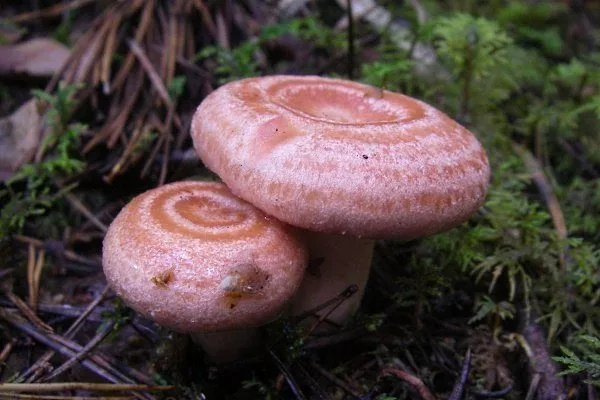
Varieties. The white milk cap also grows in temperate climates. It differs from the pink milk cap in the color of its cap—white when young, yellowish when old. The concentric zones on the cap are almost invisible. It has a pleasant, sweet scent. It grows from August to October, primarily in birch forests and marshy areas. During the harvest seasons, it can be found in birch forests in enormous quantities.
Where and when does it grow? Beginning to grow in midsummer, it bears fruit until October. It is found in all types of forests—deciduous and mixed. It prefers to form mycorrhiza with old birch trees. Milk thistles are abundant in the Kaliningrad region. They prefer northern latitudes, so large harvests of milk thistles are harvested in the north of the central Russian region.
In foreign catalogues, the volnushka is listed as an inedible mushroom, but in Russia it is highly respected – when soaked correctly, it makes an excellent pickle.
Doubles. It's impossible to confuse this mushroom with other mushrooms, except perhaps its relative, the white milk cap or the white milk cap. The pink milk cap and the white milk cap are very similar, especially if the former fades in the sun.
Dung beetle
Description. Dung beetles aren't of interest to our mushroom pickers, but gourmets prize them for their incomparable flavor. They are stewed immediately after harvesting to prevent them from spoiling. Dung beetles are not suitable for pickling or other preserves. External characteristics of the gray dung beetle:
- The cap is ovoid when young, later becoming bell-shaped. The surface is scaly and grayish-brown. The cap is 3-7 cm high and 2-5 cm wide.
- The stem is 10-20 cm long. It is white, hollow, and fibrous. There is no ring on the stem.
- The flesh is light-colored and thin. The flavor is subtle but pleasant, and when raw, it has almost no odor.
Dung beetles are prone to self-digestion—if picked, they quickly spoil. The caps turn into black slime. Therefore, dung beetles should be cooked immediately after picking.
Varieties. Dung beetles have many varieties, some less well-known than the gray dung beetle. In the temperate zone, dung beetles are also found:
- White. This dung beetle is delicious but unappetizing to look at. It has a white cap 5-12 cm tall with a dark bump in the center. It has a pleasant aroma and flavor. It grows abundantly from May until fall – in gardens, vegetable patches, dumps, garbage heaps, etc.
- ShimmeringRipens quickly in damp weather. Spoils quickly when cut. Boil for just 5 minutes. The cap is covered in shiny scales. The stem is thick, white, hollow, and long. Grows in spring on rotting trees. The flavor is worse than the white variety.
- Romagnesi. The cap is ovoid and gray. When opened, it becomes bell-shaped. The flesh is thin and light. The stem is up to 12 cm tall. It grows on roots and old wood.
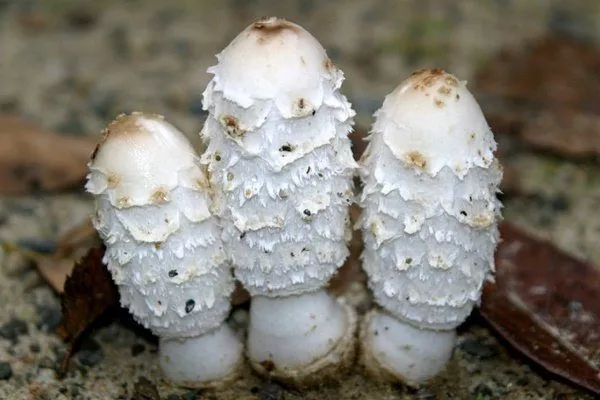
White dung mushroom
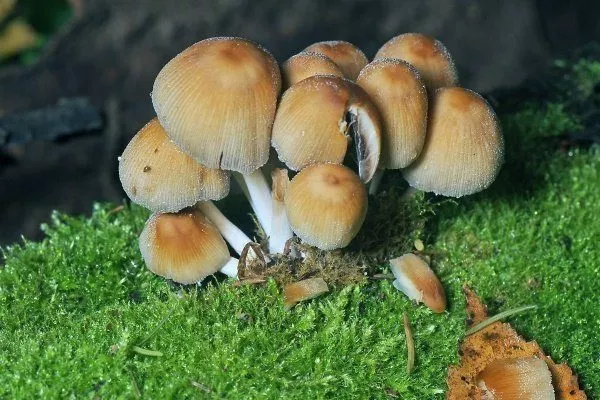
Flickering dung mushroom
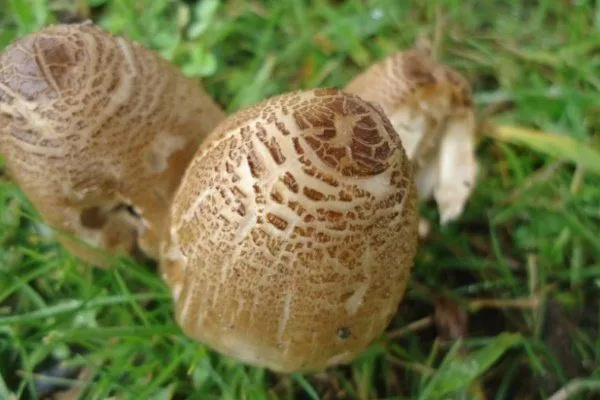
Dung beetle Romagnesi mushroom
Where and when does it grow? It bears fruit from spring through summer. It grows in fertile, manured soils and can be found on the stumps of deciduous trees, in garbage dumps, and in garden plots.
Doubles. There are no poisonous look-alikes.
Only young dung beetles are edible. Many sources indicate that this mushroom is incompatible with alcohol and can cause mild poisoning.
Raincoat
Description. All raincoats They are only edible when young. Once the mushroom is ripe, its flesh begins to spoil. The mushrooms are spherical or pear-shaped, with a short pseudostem. The mushroom body (cap) is covered with spiny growths. They are commonly called dust mushrooms, dust mushrooms, and tobacco mushrooms due to their ability to release spore powder into the air.
Varieties. Edible puffballs of the Central Russian region:
- Spiky. A hemispherical mushroom body with a pseudopod. The diameter is 2-4 cm. The pseudopod is 1-2 cm high. The mushroom body reaches 5-7 cm in height. Initially, the mushroom is white, then darkens to a grayish-brown. The flesh is white and firm, eventually turning yellow and flabby. It grows in forests of all types from May until late autumn.
- Pear-shaped. The mushroom body is pear-shaped. The stalk is false and can be completely hidden in the substrate or moss. The mushroom is 2-4 cm tall. The color is white, turning dirty brown with age. The surface is covered with spines. The thick skin peels off like the shell of a hard-boiled egg. It grows from July to September on mossy tree remains.
- Long-headed gobyA large mushroom, shaped like a club or a skittle. Height: 7-15 cm. Color ranges from white to brownish. It grows from July to mid-autumn in coniferous and mixed forests of central Russia.
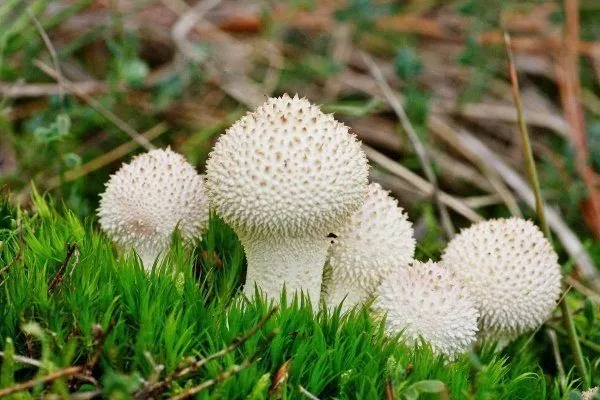
Prickly puffball mushroom
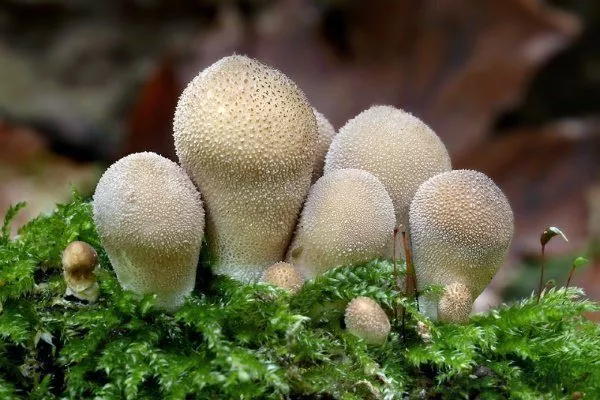
Pear-shaped puffball mushroom
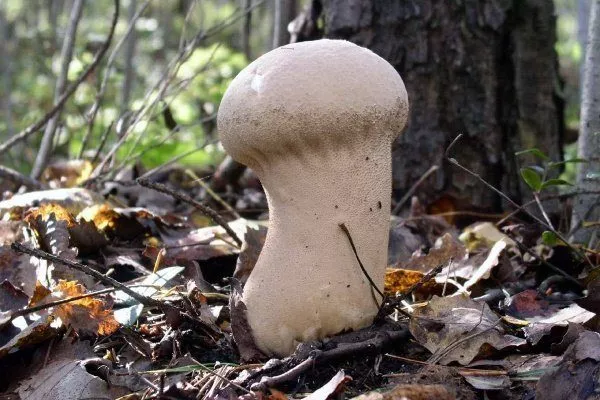
The oblong head mushroom
Where and when does it grow? They grow in the forests of central Russia. Fruiting occurs in late summer. They grow in clearings, steppes, and forest edges.
Doubles. It can be confused with the false puffball, which has a darker skin and purple flesh. Young fly agarics, before they develop a red cap, also resemble puffballs.
Umbrella
Description. The parasol mushroom is a member of the champignon family. It is one of the few mushrooms that, along with the porcini mushroom and the milk mushroom, has its own unique flavor. All parasol mushrooms have a domed cap and a thin stem. The cap diameter is 35-45 cm. The stems are long, up to 40 cm. The cap surface is dry and scaly. Some varieties are considered a delicacy.
Varieties. Edible umbrellas found in the middle zone:
- Motley. The cap is large – 15-30 cm in diameter, reaching a maximum of 40 cm. Initially, the cap is ovoid, then becomes flat-convex, spreading, with a tubercle in the middle. The flesh is thick and loose. It has a pleasant taste and aroma. The stem is up to 30 cm long. The stem is tough, brown, and thickened at the base. It grows from July to October. It grows everywhere – in forests, fields, along roads, in gardens, etc.
- WhiteIt is also called field or meadow cypress. Its diameter is 6-12 cm. The edge of the whitish or cream-colored cap is edged with flaky fibers. The stem is long, hollow, and sometimes curved. The white cyme has a slightly tart flavor. It grows from May until frost, and is especially fond of humus-rich soils.
- Blushing. Fleshy cap 10-20 cm. The cap is beige, brown towards the center.
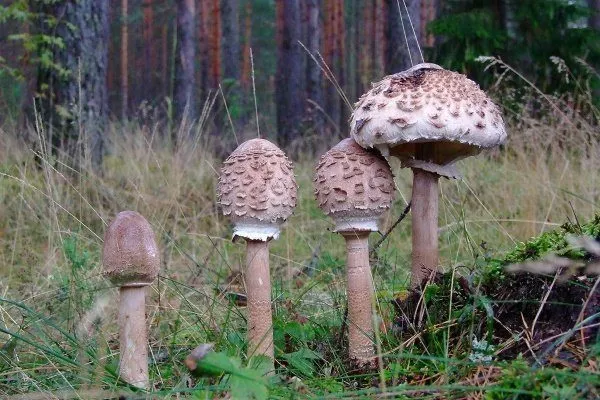
Parasol mushroom
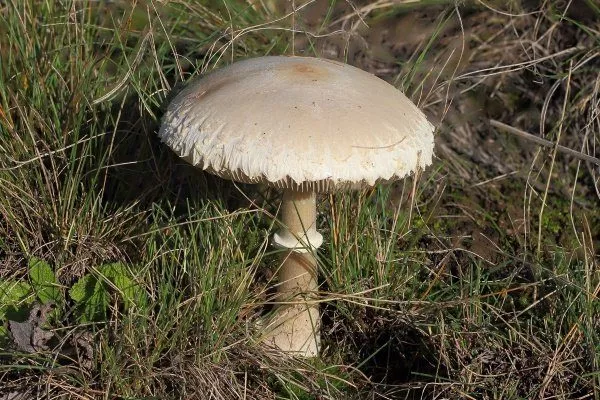
White parasol mushroom
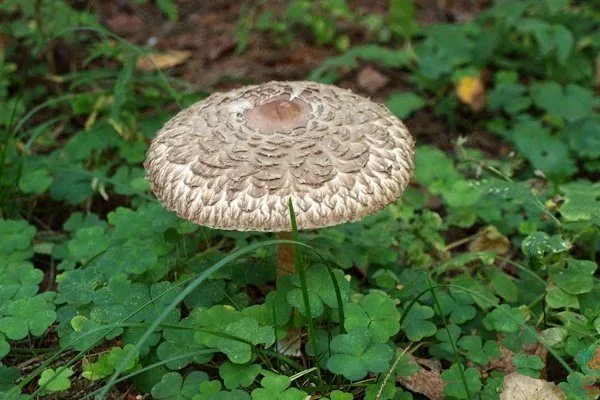
Reddening parasol mushroom
Where and when does it grow? They grow from June to November. The exact time of fruiting depends on the type of umbel. They are unfairly ignored by most mushroom pickers.
Doubles. Confused with poisonous lookalikes. Similar to Chlorophyllum slag and the stinking fly agaric.
Summer honey mushrooms
Description. The summer honey fungus is a mushroom that is good for cooking, but not suitable for preserving. External characteristics:
- The cap is yellowish-brown, 2-8 cm in diameter, and lighter in the center. Initially, the cap is convex, with a central hump. Later, it flattens out. In damp weather, it becomes sticky. The cap changes color with changing weather—in the rain, it is brownish and translucent, while on a sunny day, it is matte and honey-colored.
- The stem is 3-8 cm long and 0.5 cm thick. It is cylindrical, somewhat rigid, and may be curved. It is brown in color and has a brownish membranous ring.
- The flesh is thin, light brown in color. It has a pleasant taste and aroma.
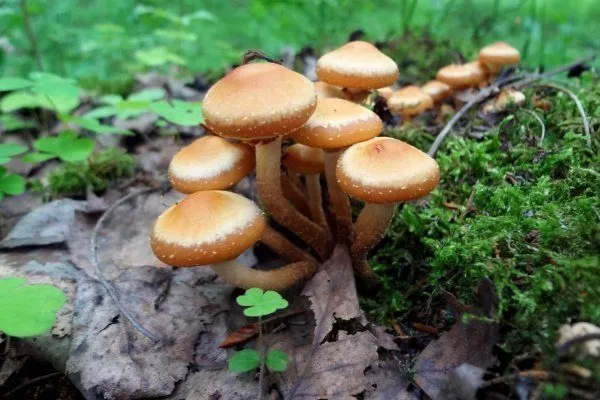
Where and when does it grow? It bears fruit from June to October. The peak harvest is in July and August. It grows on rotting tree trunks, stumps, and dead wood. It prefers birch trees. It occasionally grows on conifers. The harvest is extremely abundant.
Doubles. Summer honey fungus has many lookalikes, but the most dangerous is the sulfur-yellow mushroom. The false honey fungus is distinguished by its bright yellow color and lack of scales. It can also be confused with the marginated Galerina, which grows only on coniferous tree stumps. Therefore, when collecting summer honey fungus, avoid coniferous tree stumps and avoid collecting summer honey fungus in coniferous forests.
Autumn honey mushrooms
Description. This is the most productive of the honey mushrooms. Autumn honey mushrooms can be so abundant that harvesting them feels more like a harvest. This small mushroom is used in cooking and for preserving—it's dried and frozen. Its appearance:
- The cap, 5-10 cm in diameter, is gray-yellow or yellow-brown. Initially spherical, it becomes flat-convex with age. There is a tubercle in the center. The surface is covered with brown scales.
- The stem is 6-12 cm long and 0.5-2 cm in diameter. It has a tuberous thickening at the bottom and a white ring at the top.
- The white flesh is dense and crisp. It has a pleasant aroma and a slightly sour taste.
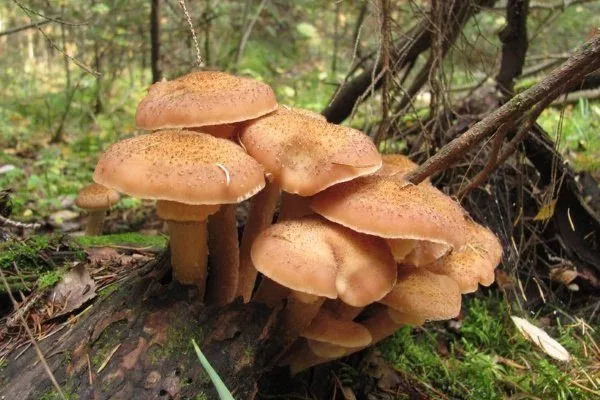
Where and when does it grow? Fruiting begins in late summer and continues until frost. Fruiting occurs in waves, lasting 15 days. There are one or two particularly heavy waves per season. The mushroom forms huge colonies with densely fused mushrooms. It grows on any tree—dead and living, coniferous and deciduous.
Doubles. It can be confused with the hairy scaly cap - it has increased scalyness, a bitter taste, and smells like radish.
Inedible mushrooms
There are approximately 150 species of poisonous mushrooms growing in the European part of Russia—approximately 3% of all species. Some mushrooms, if consumed, can have tragic, even fatal, consequences. Before heading out on a "silent hunt," it's important to research the information. signs of poisonous mushrooms, by which they can be distinguished from edible species.
Death cap
Description. The most poisonous mushroom in the world. Its danger lies in its close resemblance to that of some edible mushrooms. When young, the death cap resembles an egg wrapped in a membrane. You can distinguish the death cap by the following characteristics:
- The cap is hemispherical or flat. The color is olive with gray or greenish hues. The surface is fibrous, the margins are smooth. The cap size is 5-15 cm.
- The stem, with its moiré pattern, is cylindrical and thickened at the base. The color is the same as the cap or lighter. It is 2.5 cm thick and up to 15 cm tall. A membranous ring on the stem distinguishes the toadstool from edible agaric mushrooms.
- The flesh is white and almost odorless and tasteless. Only older toadstools emit an unpleasant, slightly sweet aroma.
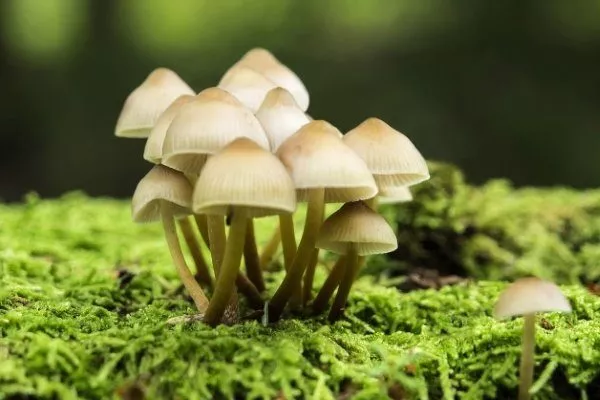
Where and when does it grow? It grows in mixed and deciduous forests. It prefers fertile soils, and grows near beech, oak, and hazel trees, forming a fungal root with them. This mushroom can grow abundantly in some forests, while in others, it may be very close or not be found at all. Fruiting is particularly abundant from late August until late autumn.
Who could it be confused with? The death cap is most often confused with russula, champignons, and greenfinches. It is especially similar to the green russula. You can distinguish the poisonous mushroom by the egg-shaped thickening at the base of the stem and the "skirt" on the stem.
Sulphur-yellow honey fungus
Description. This honey fungus grows on and near tree stumps, as well as on rotting wood. Signs of poisoning, ranging from vomiting to loss of consciousness, occur 1-6 hours after consumption. External signs of the sulfur-yellow honey fungus:
- The cap is 2-7 cm in diameter, initially bell-shaped, then spreading. The color is yellowish, yellow-brown, or sulfur-yellow. The edges of the cap are lighter, and there is a tubercle in the center.
- The stem is up to 10 cm long and 0.3-0.5 cm thick. It is smooth, fibrous, and hollow inside. Color: light yellow.
- The pulp is whitish or yellowish, bitter, and has a bad smell.
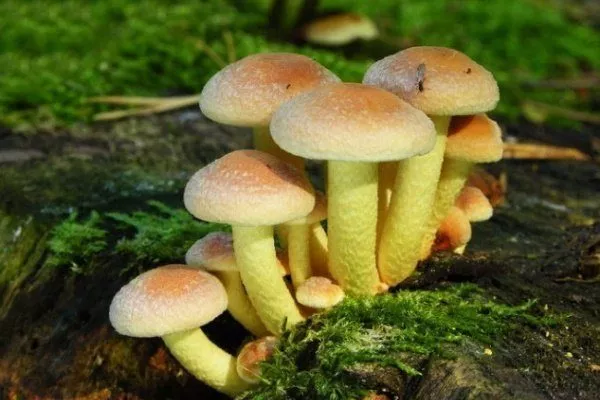
Where and when does it grow? Fruiting occurs from late May until late autumn. It grows on coniferous tree stumps in large clusters.
Who could it be confused with? Similar to edible honey mushrooms, the sulfur-yellow honey mushroom is easily identified by its greenish gills.
Porphyry fly agaric
Description. The mushroom's other name is the gray fly agaric. This poisonous mushroom can be identified by its unpleasant odor and taste, as well as its external characteristics:
- The cap is grayish-brown, up to 8 cm in diameter, and changes shape as the mushroom grows, from convex to prostrate. Later, the cap becomes brownish-gray with a purple tint. The gills are thin and white.
- The stem is up to 10 cm tall and 1 cm thick, often thickened at the base. It has a white or gray ring.
- The white flesh has a pungent and unpleasant odor.
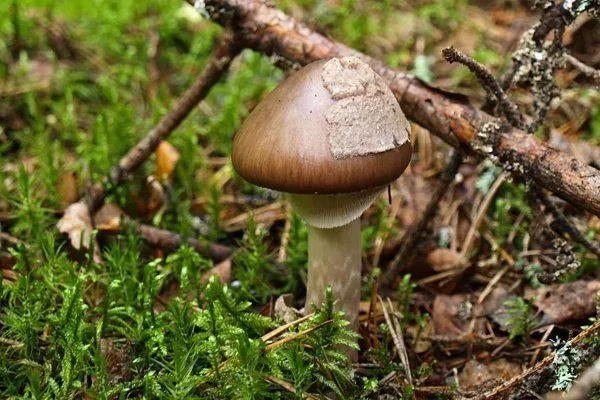
Where and when does it grow? It grows in coniferous forests, primarily found in pine forests. It grows alone, not in groups. Fruiting period is July–October. Habitat: from Kaliningrad to the Far East. It is found in central Russia on acidic soils in moist coniferous forests.
Who could it be confused with? If the gray fly agaric has a spreading cap, inexperienced mushroom pickers may mistake it for a russula. The poisonous mushroom can be identified by the ring on the stem—white or gray.
Red fly agaric
Description. A poisonous, psychotropic mushroom. The most colorful in any forest. It's easily recognized by its striking appearance:
- The red cap reaches 20 cm in diameter. Its shape ranges from spherical to flat-convex. The top of the cap is dotted with white or yellow warty growths. The color ranges from orange to bright red. The flakes on the cap are often washed off by rain on older mushrooms.
- The stem is up to 20 cm tall, widened at the base. Initially dense, it becomes hollow with age. The stem is white. There is a white ring on the stem.
- The flesh is white, with a yellowish tint beneath the skin. There is no odor.
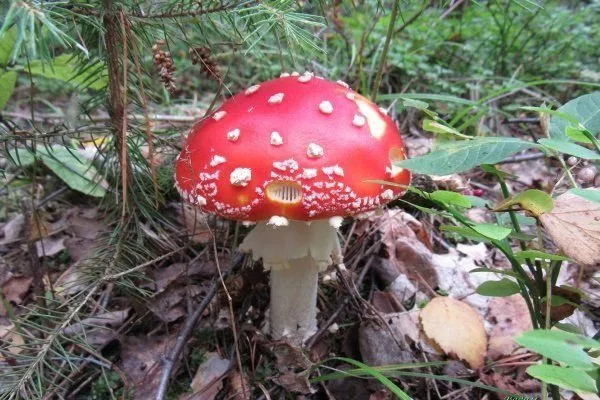
Where and when does it grow? It grows in forests of all types, but is most common in birch forests. It grows singly and in groups from June until frost.
Symptoms of fly agaric poisoning appear very quickly – 20-120 minutes after the mushroom enters the body.
Who could it be confused with? A mature mushroom is difficult to confuse with anything else. Unless the cap fades and the growths are washed away by rain, inexperienced mushroom pickers might mistake it for a russula. However, young fly agarics, with their light-colored, spherical caps, can be mistaken for champignons.
You can learn how to distinguish an edible mushroom from a poisonous one in the following video:
Cobweb
Description. There are numerous webcaps in their genus, with about 400 species. They look very similar to toadstools. Many have an unpleasant odor. Among the inedible varieties, the most deadly is the beautiful webcap:
- The cap is russet-orange or reddish-orange, 3-8 cm in diameter, conical or spreading-conical in shape, with a tubercle in the center. The cap surface is covered with small scales.
- The stem is cylindrical, 5-12 cm long. Thickness is 0.5-1 cm. Color is orange-brown.
- The flesh is orange-ochre. There is no taste. A radish-like aroma may be present.
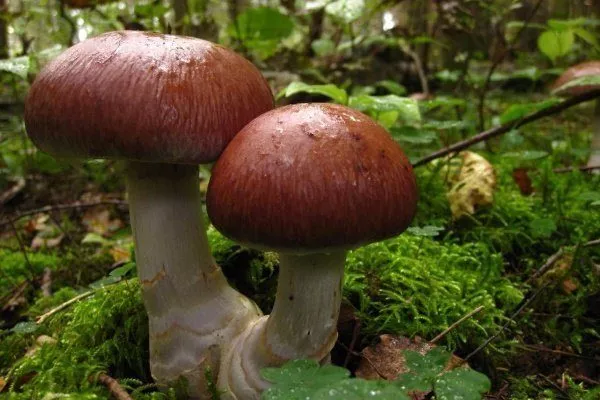
Where and when does it grow? Grows in moist coniferous forests, preferring moss and marshy soil.
Who can be confused with? Similar to edible cobweb caps, these mushrooms can only be collected by mushroom pickers who are thoroughly familiar with their varieties.
Piglet
Description. Since 1981, the slender pig mushroom has been classified as poisonous, having been reclassified from conditionally edible. However, many mushroom pickers still collect slender pig mushrooms and, after processing them in a special way, consume them by repeatedly boiling them in water. Experts strongly advise against eating any kind of pig mushroom.
External signs piglets:
- The cap is large, depressed in the center, and irregular in shape. Maximum diameter is 15 cm. Color is olive-brown, turning rusty in old age. The cap is dry and velvety to the touch, covered with tiny scales.
- The stem is short – up to 9 cm – and thick. Dense, cylindrical in shape.
- The flesh is thick and yellow. There is no distinctive odor. The taste is slightly bitter. It turns brown when cut.
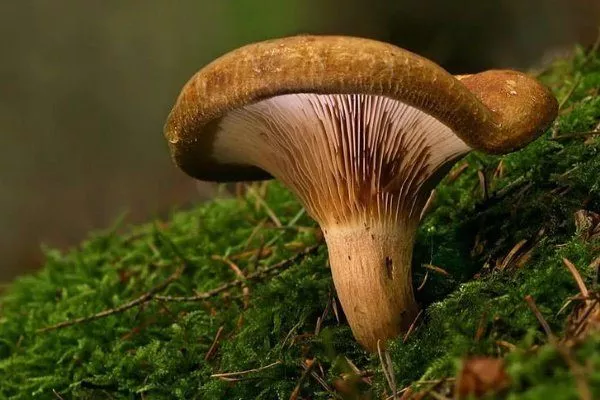
Where and when does it grow? Fruiting season: June to October. It prefers young birch and oak forests and shrubs. It grows near ravines, swamps, clearings, and mossy conifer trunks, and also likes to nest on upturned roots.
Who could it be confused with? It's often confused with milk mushrooms and russula. The thick pig mushroom, which is classified as conditionally edible, is also often confused with the thin pig mushroom. There's no consensus on the edibility of the thick pig mushroom. However, experts advise against eating it, as it accumulates muscarine, a poison that isn't destroyed even by cooking.
Mushroom places
Central Russia is a broad, unformalized concept. It's a conventional, non-geographical term, encompassing various regions and localities, depending on the source. Most regions of European Russia—Moscow, Ryazan, Tver, Leningrad, Tula, Lipetsk, and others—are considered part of the central zone. The central zone stretches from the border with Belarus to the Volga region, from Karelia to the Caucasus.
Given the vastness of the territory known as central Russia, or the Central Russian region, one could talk endlessly about its mushroom-picking spots. Detailed mushroom maps exist for each region, which are worth carefully studying before heading out on a "quiet hunt." Whether you go to Kaliningrad or Ryazan, there are mushroom spots everywhere.
Here are just a few examples:
- Karelia and Leningrad Oblast – have always been renowned for their abundant mushroom harvests. They're teeming with boletus, aspen mushrooms, moss caps, honey mushrooms, saffron milk caps, and other mushrooms. There's even a concept called "mushroom tourism" here. People from other parts of Russia travel to the Kaliningrad region specifically for mushroom picking. The Neman Lowland and the Krasnoznamensky and Nesterovsky logging enterprises are famous for their mushrooms.
- Ulyanovsk region. The Inzensky District is famous for its mushrooms, or more precisely, the Pazukhinsky Forest, which is rich in boletus, milk mushrooms, butter mushrooms, honey mushrooms, saffron milk caps, birch boletes, chanterelles, and aspen mushrooms.
- Moscow region. Here, people go mushroom picking to the Odintsovsky and Taldomsky districts, heading towards Zvenigorod. Chanterelles, porcini mushrooms, and other noble mushrooms are found there. And people come to the Sergiev Posad district for spring honey mushrooms.
- Bryansk region. Mushroom picking in the forests near the villages of Domashovo and Kokino is recommended. Mushrooms are plentiful in the Navlinsky, Suzemsky, and Zhukovsky districts.
- Smolensk region. Years of observation allow experienced mushroom pickers to identify the region's five most mushroom-rich districts: Monastyrshchinsky, Krasninsky, Velizhsky, Demidovsky, and Dukhovshchinsky. Honey mushrooms, chanterelles, and other boletuses abound here.
- Saratov Oblast. The Engels, Baltai, Saratov, Petrovsky, Tatishchevsky, and other mushrooms are famous here. Milk mushrooms, aspen mushrooms, butter mushrooms, volnushki (white milk mushrooms), chanterelles, saffron milk caps, and birch boletes grow here in abundance.
- Vladimir region. There's also a magnificent selection of mushrooms here, from boletus to volnushki. The mushroom-picking regions include Yuryev-Polsky, Muromsky, Gorokhovetsky, Vyaznikovsky, and Suzdalsky.
The richest regions in mushrooms in the central Russian region are considered to be Moscow, Kursk, Voronezh, Vladimir, Nizhny Novgorod, Tver, Ryazan and Kaliningrad region.
In every region of Central Russia, there are forests and copses where you can hunt for butter mushrooms, honey mushrooms, chanterelles, and other delicious mushrooms.
Mushroom calendar
You can go mushroom picking in the central Russian region as early as the end of April or the beginning of May, as soon as the first spring mushrooms appear – morels and gyromitraBut most mushroom pickers don't venture into the forest until June. The seasonality of mushroom growth by month is shown in Table 1.
Table 1
| Month | What is growing? |
| June | Butter mushrooms grow in pine forests, and birch boletes in birch groves. White milk mushrooms begin to grow in the second half of June and are harvested until late autumn. |
| July | In early July, saffron milk caps begin to grow, and by the second ten days, porcini mushrooms and russula mushrooms, which grow in any forest until the frosts, also appear. From the second half of July, milk mushrooms, black milk caps, pig mushrooms, and chanterelles can be found. |
| August | Boletus, milk mushrooms, saffron milk caps, birch boletes, white milk caps, russula, butter mushrooms, and other mushrooms are growing vigorously. The first honey mushrooms appear in early August, followed by white milk caps and volnushki mushrooms in mid-August. |
| September | Summer mushroom growth continues. Many mushrooms stop growing in the second half of September, but honey mushrooms, milk mushrooms, white mushrooms, pig mushrooms, birch boletes, and white milk mushrooms are abundant. |
| October | The end of the mushroom season. As soon as the temperature drops to 4-5 degrees Celsius, you can put away the baskets. The last mushrooms to hunt for in October are honey mushrooms. Saffron milk caps, russula, and white milk caps can also be found under the leaves. |
Central Russia has long been famous for its mushroom traditions—locals know a thing or two about mushrooms and how to preserve them. If you want to join the countless army of mushroom pickers, follow the most important safety rule: never put unfamiliar or questionable mushrooms in your basket.