
Volnushki mushrooms belong to the Russulaceae family. They are healthy, have excellent flavor, and are suitable for pickling and preparing various dishes. For culinary purposes, it's best to use young mushrooms, as they develop a bitter, milky juice as they age.
General characteristics of the mushroom and its types
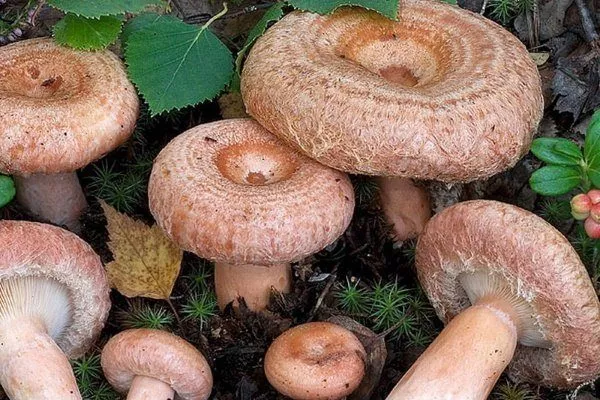
There are several varieties of this mushroom, but they all look roughly the same. The cap of the milk mushroom is typically convex when young and flattened when mature. The cap has a depression in the center. The diameter ranges from 4 to 12 cm.
The stem is strong and firm, turning pale pink as it develops. The gills are dense, tapering at the edges.
In most European countries, the milk cap mushroom is considered conditionally edible due to its thick, oily juice with a slightly bitter taste. Because of this characteristic, the milk cap mushroom is not particularly popular in Europe.
In Russia, this mushroom is popular and beloved by many precisely because of its distinctive, piquant flavor. Dishes made with it don't have an unpleasant aftertaste if properly prepared.
This mushroom is widespread. The largest colonies of milkweed are found in forests where birch trees grow. It is with these trees that milkweed forms a fungal root. They support each other throughout their life cycle.
Volnushki mushrooms appear in forests by midsummer. If the weather is warm and rainy, you can expect a harvest of volnushki mushrooms as early as June.
The most famous varieties of volnushki are the following:
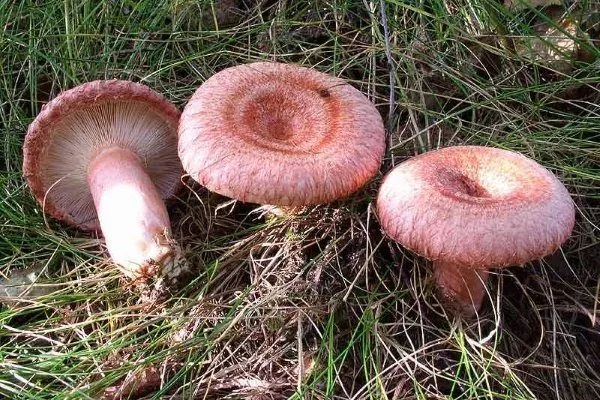
- PinkThis mushroom grows to a particularly large size. It has a pinkish color. The cap of the pink volnushka can reach 15 cm in diameter. It grows very quickly and reaches an impressive size in 3-4 days.
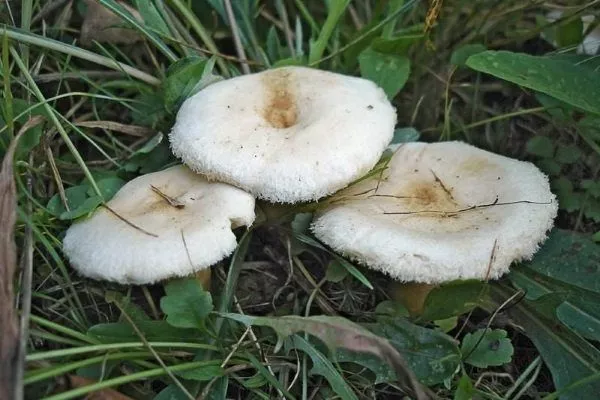
- WhitesThis type of milk cap is slightly smaller than the pink variety. The cap diameter ranges from 4 to 10 cm and is creamy white. Old white milk caps turn yellow and become brittle.
White volnushka (white milkweed)
There are also look-alikes of the milk mushrooms - mushrooms that have an external resemblance to this species.
| Type of volnushka | Cap diameter (cm) | Color | Peculiarities |
|---|---|---|---|
| Pink | 4-15 | Pink with concentric circles | Fast growing (3-4 days to maturity) |
| White | 4-10 | White-cream, turns yellow with age | Fragility in older specimens |
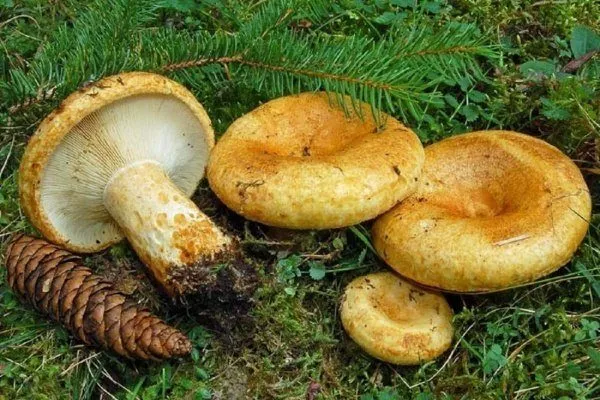
| Yellow | 5-12 | Yellow-ocher | Firmer flesh |
These include the pale and common milkcaps, the brown and brownish milkcaps, and are considered edible.
Inedible counterparts of the milk cap include the sticky milk cap, the spiny milk cap, and the liver milk cap.
Places of growth
Volnushki mushrooms are widespread across Eurasia, and are especially common in Russia. They often grow in clusters near birch trees.
This mushroom can also be found in deciduous forests, but in mixed forests it is much less common.
The most common period for the appearance of these mushrooms is from the end of July to the end of August.
The beneficial and harmful properties of milk mushrooms
Volnushki mushrooms, like many other types of mushrooms, contain a large number of valuable substances that make them beneficial for human health.
The composition of the volnushka includes:
- vitamin A;
- vitamin B6;
- vitamin C;
- folic acid;
- glucose;
- fructose;
- lecithin;
- nicotinic acid;
- magnesium;
- iron;
- calcium.
Yellow volnushka (volnukha)
The following are among the beneficial properties of volnushki:
- improving the functioning of the cardiovascular system;
- strengthening the immune system;
- preventing the accumulation of cholesterol in the blood;
- stimulation of metabolic processes in the body;
- improving brain function;
- cleansing and strengthening blood vessels;
- toning the body;
- strengthening the nervous system;
- providing a powerful anti-inflammatory effect;
- quick feeling of satiety, fight against hunger;
- improving the condition of the skin and hair;
- normalization of heart rhythm;
- joint health;
- preventing the development of cancerous tumors;
- prevention of stress and nervous tension.
Volnushki mushrooms contain a large amount of amino acids, which are completely absorbed by the body.
Volnushki mushrooms, like other varieties of mushrooms, contain components that make them difficult to digest. Therefore, they should not be consumed by those suffering from acute gastrointestinal diseases, pancreatitis, or cholecystitis. Volnushki mushrooms are also not recommended for children under 7 years of age, as well as pregnant and breastfeeding women.
People who have had gallbladder removal surgery should not eat this type of mushroom.
Methods for growing milk cap mushrooms at home
You can grow milk cap mushrooms yourself, indoors or in your own garden plot.
Pink volnushka
Methods for obtaining mycelium
Mycelium is used to grow this type of mushroom. It can be obtained in the following ways:
- collect overgrown mushrooms in the forest, chop finely, and dry in a shaded area for 24 hours;
- Collect overripe mushrooms in the forest, cut them, cover with cold water, leave for a day, stirring the contents from time to time with a wooden stick.
Rules for planting mycelium on a site
Once you have the planting material, you need to prepare the land. The soil should be tilled and organic fertilizer added. Place the prepared planting material into deep furrows.
Sprinkle the top of the material with sawdust, then a thick layer of leaves, straw, or hay. No need to water the plantings.
Volnushki should be planted in a place that is well lit by sunlight.
Work schedule
- April-May: harvesting mycelium (collecting overripe mushrooms)
- End of May: site preparation (digging, adding organic matter)
- Early June: planting mycelium
- July-August: control humidity (do not water!)
- September next year: first harvest
Humidity levels should be low.
Harvesting is not recommended during the first year after planting: it's better to wait until the mushrooms are fully ripe, which will allow for additional plantings. Mushrooms can be harvested starting in the second year.
Unlike oyster mushrooms or champignons, you can only harvest milk mushrooms once a year, although you can harvest them from the same plot several times.
Culinary uses of milk mushrooms
Volnushki mushrooms can be used to prepare a variety of delicious dishes. They can also be salted and pickled, making excellent preserves.
Because they contain a bitter, oily juice, it's important to prepare milk mushrooms properly. Follow these guidelines:
- If the mushrooms do not taste too bitter or pungent, there is no need to soak them for too long;
- When boiling mushrooms, you need to drain the first water and continue cooking them, pouring in a new portion of liquid and first rinsing the milk mushrooms with cool water;
- When cooking milk mushrooms, do not use containers made of tin, copper or cast iron;
- The volnushki mushrooms should be cut with a stainless steel knife.
- ✓ Soaking: 24 hours with 4 water changes
- ✓ Primary boiling: 20 minutes with mandatory draining of the first broth
- ✓ Pickling: use only glass/enameled containers
- ✓ Marinating: the acidity of the marinade should not be less than 1.2% vinegar essence
- ✓ Storage: at +1…+4°C for no more than 12 months
To remove the bitter juice from milk mushrooms, soak them in cold water and leave them for 24 hours. During this time, change the water four times.
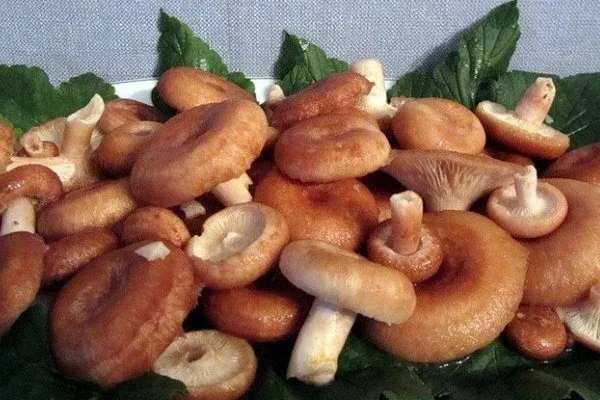
Pickled volnushki
To marinate mushrooms, you should use this recipe:
- Take 1 kg of mushrooms, one carrot and one onion, a tablespoon of sugar and vinegar, 3 cloves of garlic, 2 tablespoons of salt, 2 bay leaves, 4 cloves and a pinch of peppercorns.
- Wash the mushrooms and remove the hairs from the skin.
- Leave small mushrooms whole, separate the stems from the caps of large mushrooms.
- Place the mushrooms in a container of boiling water. Add a tablespoon of salt per liter of water.
- Cook the volnushki for 20 minutes, skimming off any foam.
- Discard the boiled mushrooms in a colander.
- Cut the onion and carrot into rings, and cut each garlic clove in half lengthwise.
- Prepare the marinade by dissolving the specified amount of salt and sugar in a liter of water, add chopped vegetables and spices.
- Bring the marinade to a boil. When it does, add vinegar and pour in the mushrooms.
- Boil for 15 minutes.
- Place the mushrooms and marinade into sterilized jars and seal. It's best to store marinated milk mushrooms in the refrigerator.
Salted volnushki
Mushrooms can be cold-pickled. This method preserves all the valuable nutrients and vitamins found in these mushrooms. For pickling, you'll need:
- 1 kg of volnushki;
- head of garlic;
- 5-8 bay leaves;
- dill stems;
- currant, cherry and horseradish leaves.
Prepare the mushrooms: soak them in cold water for 12 hours, changing the water every 2 hours, then clean them of any debris. Separate the stems from the caps.
Peel the garlic and cut into small slices. Place salt in the bottom of glass jars and layer with dill leaves and stems. Place some of the mushrooms on this layer, season with salt and pepper, and add the garlic slices and bay leaf. Layer another layer of mushrooms, spices, and garlic in the same manner. Top with the dill leaves.
Place the jars under pressure. Once the mushrooms release their juices and sink to the bottom (this will take several days), refrigerate the jars. After a month, the salted milk mushrooms can be eaten as a stand-alone dish or as an ingredient in appetizers, salads, and soups.
Fried volnushki
To prepare, you need a kilogram of mushrooms, 2 medium-sized onions, a teaspoon of ground pepper and 1.5 tablespoons of salt.
To prepare fried mushrooms you need to:
- Rinse the mushrooms in cold water and clean.
- Boil the volnushki mushrooms in salted water, drain in a colander and let dry.
- Peel and finely chop the onion.
- Heat oil in a frying pan, fry the onion for 5 minutes, then add the small diced milk caps.
- Add salt and pepper.
- Fry mushrooms and onions for another 7-10 minutes.
When serving fried volnushki mushrooms, you can sprinkle them with finely chopped herbs, although many prefer to eat them without any additives to preserve the full flavor of this wild mushroom.
Volnushki mushrooms have a distinctive, slightly bitter taste, which is why they are considered unfit for consumption in most European countries. However, in Russia, these mushrooms are a favorite: they are salted, pickled, fried, and used in various dishes. To achieve a good flavor, volnushki mushrooms should be soaked beforehand.