
The Kaliningrad region is a stunningly beautiful region, renowned for its mushroom-growing spots. Mushroom pickers are spoiled for choice here—the wide variety of mushrooms allows for a truly enjoyable hunting experience. Thanks to favorable climate conditions, mushroom farming is widely practiced in the region. In addition to the well-known champignons and oyster mushrooms, other edible mushrooms in demand can be successfully grown in this area.
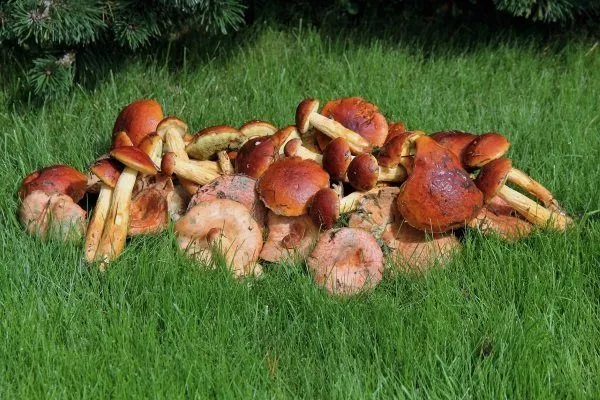
Forest lands of the Kaliningrad region
All forested areas of the Kaliningrad region, consisting of several hundred plots, are divided into four large zones, distinguished by their relief, soils, and the mushrooms that grow there:
- Neman LowlandIt is characterized by podzolic, peat-bog and silt-bog soils.
- Two forestry enterprises – Baltic and CuronianThe sea is nearby, so the soil here is sandy. Because of the coastal winds, trees do not grow well here. Mushrooms are found mainly in pine forests.
- Forestry enterprises - Krasnoznamensky and NesterovskyThe terrain is varied, with hills and boulders. Mushrooms grow particularly well here.
- All other forests are classified as zone 4. Hornbeam, spruce, birch, ash, and oak trees grow here. Consequently, the mushroom harvest can be varied.
The beginning of the mushroom season
In the forests of Russia's westernmost region, the mushroom season begins in late July or early August. Everything depends on the weather. When the heat subsides, rain begins, and humidity rises, mushrooms begin to grow. Oyster mushrooms, butter mushrooms, russula, chanterelles, aspen mushrooms, porcini mushrooms, and birch boletes are the first to appear.
Fines have been introduced in the Kaliningrad region for improperly cutting mushrooms. It is prohibited to pull mushrooms with their myceliums, or to turn over moss and forest litter. Destroying overripe mushrooms is also prohibited. The fine ranges from 2,000 to 3,000 rubles.
When planning a "silent hunt," mushroom pickers should consider the "mushroom calendar"—each species has its own fruiting period. Some mushrooms begin growing in April-May, others grow at the height of the season, and still others grow until frost.
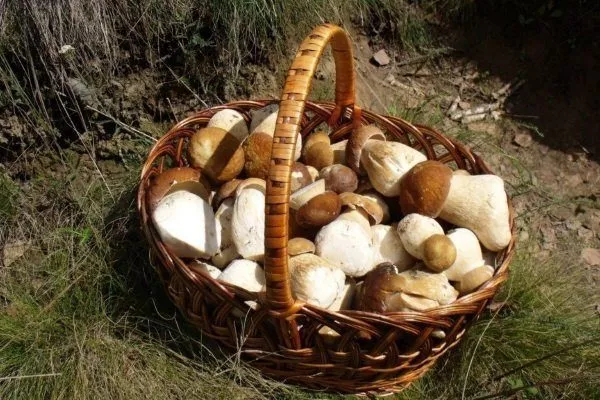
Edible mushrooms
Most mushrooms are very selective in their habitat. Each species prefers specific soils and trees. The Kaliningrad region boasts several dozen edible mushrooms, distinguished by their excellent taste and nutritional value.
| Name of the mushroom | Fruiting period | Preferred soils | Doubles |
|---|---|---|---|
| White mushroom | June-October | Light forest, birch forests, pine forests | Bile mushroom, Satan's mushroom |
| Aspen mushroom | June - first frosts | Mixed forests, birch forests | Bitterling |
| Birch boletus | Summer-October | Edges, outskirts of fields | False birch bolete |
| Chanterelles | August-September | Pine forests | Volnushka, milkies |
| Chanterelles | June-November | Damp terrain, pine, spruce, oak trees | False chanterelle |
White mushroom
Description. The most delicious mushroom in the forest. The thick stem is thickened at the base. The brown cap is large—a mature boletus can reach 7-30 cm in diameter. The color ranges from almost white to dark brown. The cap's hue depends on growing conditions.
Where and when does it grow? White mushroom Prefers light forests – look for them in birch and pine forests, heather thickets, and spruce groves. Boletus mushrooms can be found at forest edges, along paths, and in clearings. They grow singly in summer, but in clusters as autumn approaches. In the Kaliningrad region, they grow in Shipovsky Forest near Kaliningrad, as well as near the villages of Polessk, Bolshoe Selo, Kosmodemyansky, and Shepetovka. They are also abundant in the Sovetskoye Forestry, near Lake Vishtynetskoye. The fruiting period is June to October.
Doubles. The boletus is often confused with the gall mushroom, and less often with the satanic mushroom.
Growing. It lends itself to artificial cultivation. It is grown in areas with trees or indoors. The planting material—spores or mycelium—can be collected from the forest. Read more about growing boletus mushrooms. here.
A mushroom picker gathers porcini mushrooms on the Curonian Spit, sharing the growing characteristics of boletus mushrooms. You'll learn about the varieties and lookalikes of this most delicious mushroom, as well as other interesting facts:
Aspen mushroom
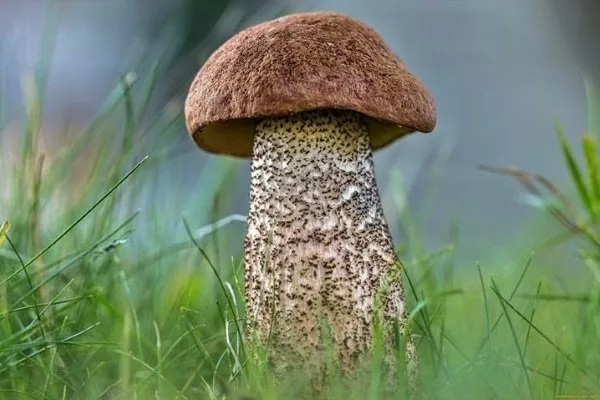
Description. The bright orange caps of aspen mushrooms, commonly known as redheads, are more visible than any other mushroom in any forest. The cap diameter is 5-20 cm. The long cylindrical stem is covered with black scales.
Where and when does it grow? They grow in mixed forests, birch groves, and blueberry patches. They like to nest along trails. Aspen mushrooms are best found near the villages of Chekhovo and Shepetovka, where these noble mushrooms thrive in the woodlands. They are also abundant 3 km from the village of Dobroe. Head toward Dobrinskoye, following the "Rossiyanka" gardening community as a guide. They grow from June until the first frost.
Doubles. False double – bitterling, also known as the pepper mushroom. It is not poisonous, but it is inedible due to its bitter taste.
Growing. Mushrooms can be grown using mycelium, fruiting bodies, or mushroom caps from which spores are harvested. You can collect the caps and mushrooms yourself, while mycelium can be purchased at a specialty store.
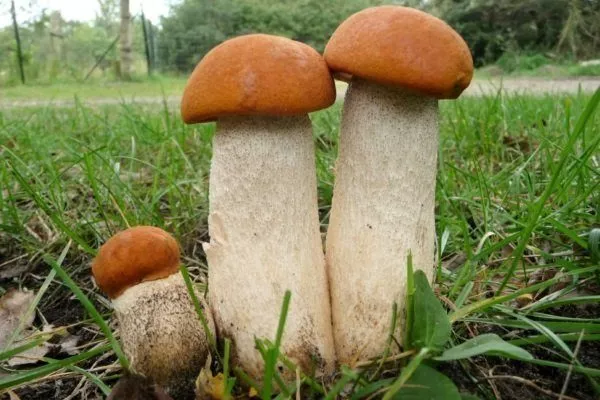
Birch boletus
Description. The cap of a mature mushroom is dark brown. The diameter is up to 18 cm. The stem is cylindrical, up to 15 cm long.
Where and when do they grow? They thrive in forest edges, field margins, and thinned birch groves. In the Kaliningrad region, birch boletes grow during the rye earing period and the rowan blossom season. Large bolete crops have been observed near the Sovetskoye forestry. Mushroom pickers also seek them near the village of Shepetovka. They appear in the summer, when the bird cherry blossoms, and grow until October.
Doubles. There is a poisonous lookalike – the false birch bolete, which can be distinguished by nuances of appearance.
Growing. Artificial cultivation is possible. Mycelium or spores are used for sowing; they are quite difficult to separate from the pulp, so mushroom growers prepare a special mixture.
Chanterelles
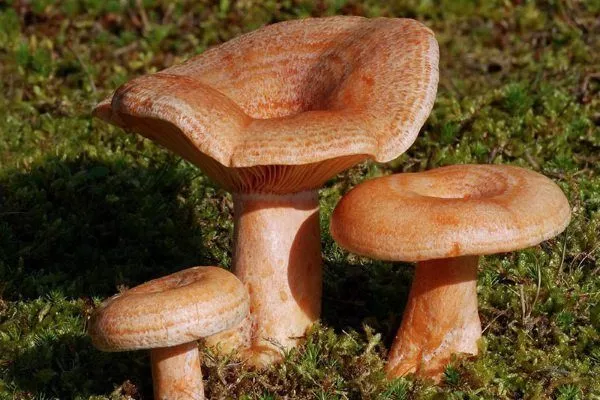
Description. It has an orange cap with dark concentric zones and a strong, stocky body. The cap diameter is 3-12 cm. Milky sap oozes from the break. The stem is hollow and up to 9 cm high.
Where and when do they grow? The mushroom prefers pine forests. It grows on hillsides, on the slopes of ravines, and in spruce forests. The best places to look for saffron milk caps are in the forests of the Baltic and Curonian forestries – these sandstones are ideal for these red mushrooms. They can be found in summer, but the peak fruiting season occurs in August and September.
Doubles. The redhead can be confused with the pink one. volnushka Or with milk caps—large and aromatic. They're not poisonous, but not as tasty or aromatic as saffron milk caps and require a long soaking.
Growing. Saffron milk caps are grown outdoors only—they require natural conditions. For sowing, you can use prepared mycelium or caps. They are sown dry—cut pieces are inserted into moist soil—or soaked—a yeast-based solution is poured under the trees.
Chanterelles
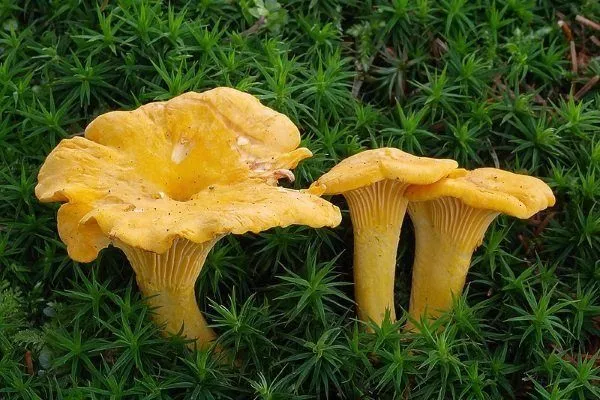
Description. Chanterelles have a cap and stem that are one unit. Their color ranges from orange to pale yellow. The cap diameter is 5-12 cm. The edges are wavy. The shape is like an inverted umbrella.
Where and when do they grow? Chanterelles They prefer damp areas. They grow in groups near pines, spruces, and oaks. According to experienced mushroom pickers, the best places to look for chanterelles are in Vzmorye and near Povarovka. They appear in early June and bear fruit until mid-October, and in favorable weather, until November.
Doubles. There are dozens of species of chanterelles. Not all of them are edible. A lookalike is the false chanterelle. Despite its resemblance, it belongs to a different family. It grows primarily on tree stumps.
Growing. It grows under conifers, oak, and beech. Sowing is done in two ways: by planting mycelium or spores. When using spores, the caps of overripe chanterelles are used. The first option is to scatter pieces of the caps under the trees. The second option is to pre-soak the caps and then water the areas under the trees with the mushroom solution.
Milk mushrooms
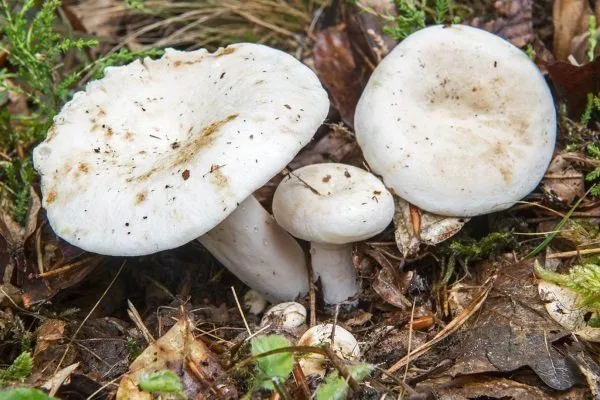
Description. There are several varieties of milk mushrooms. In the Kaliningrad region, there are many white and black milk mushrooms. The former has a milky-white or yellowish cap with curled edges. The latter has an almost black cap, and the gills are dirty green. A milky juice oozes when broken.
Where does it grow and when? They prefer birch forests. They grow at forest edges, in clearings, and in clearings. They can also grow in coniferous and mixed forests. Milk mushrooms are best found in the western part of the Kaliningrad region. Particularly bountiful harvests occur near the settlements of Kumachevo, Kruglovo, and the Baltic Spit. It is also recommended to look for milk mushrooms in the Ladushkinsky forest.
Doubles. There are many conditionally edible varieties of milk mushrooms. They look similar to edible ones, but have a bitter taste. These include peppery, camphor, golden-yellow, and felt milk mushrooms (violin).
Growing. The mushroom is very moisture-loving. It's important for the mycelium to take root. Ideal conditions must be created for the mycelium—it can be purchased at a specialty store. You can also grow your own mycelium from mushroom spores found in the forest.
Morels
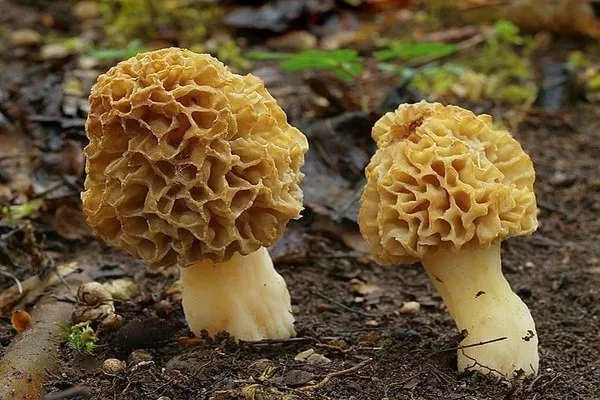
DescriptionThis conditionally edible mushroom has an unusual cap with honeycomb-like cells. The edges of the cap are fused to the stem. The cap is ochre-yellow to light brown. The mushroom has no gills. The cylindrical stem is up to 8 cm long.
Where does it grow and when? This ubiquitous mushroom grows in deciduous, coniferous, and mixed forests. It prefers fertile soils rich in humus and lime. Look for it in sandy and mossy areas, forest edges, roadside areas, and clearings. It's a spring mushroom, so you can find it as early as April.
Doubles. A lookalike is the false morel (gouty, stinking). Despite its rotten-meat smell, it is edible. The French consider it a delicacy.
Growing. Morels can be grown artificially. They are sown by scattering pieces of mushrooms collected in the forest, under trees, or in garden beds. The crops are then watered with the water used to wash the mushrooms—this contains the spores.
Lines
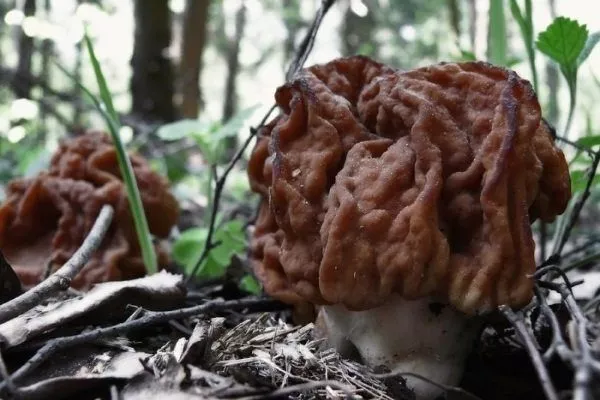
Description. This mushroom is deadly poisonous when raw. However, dried or specially heat-treated, it is edible. It has a short, hollow stem, almost hidden beneath its irregularly shaped, dark-brown cap.
Where does it grow and when? The spring mushroom begins to grow in April, when the lungwort blooms. It is often found in pine forests and grows everywhere—in forests, parks, and treeless areas.
Doubles. There are many varieties. The most common is the morel. There are no poisonous lookalikes; this mushroom itself can cause poisoning if prepared improperly.
Growing. Gyromitra, like morels, can be grown in garden plots. They thrive in light, sandy soils. Sowing involves scattering the crushed fruiting bodies over the beds. You can soak the caps and then pour the water over the planting site.
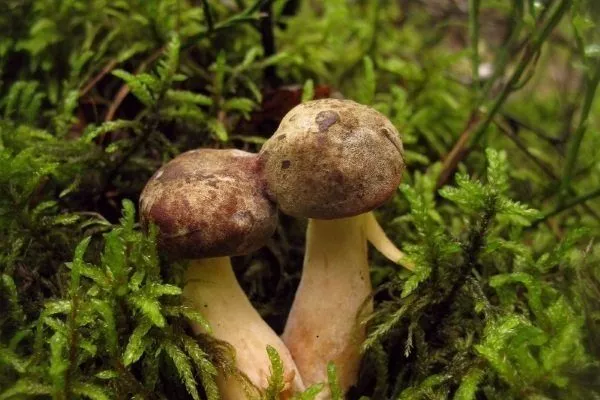
flywheel
Description. In the Kaliningrad region, of the 18 species of boletus, two are commonly found: the green and the chestnut. The green boletus has a convex, scaly cap, greenish or olive in color. The chestnut boletus has a dark brown cap, also covered in scales.
Where does it grow and when? Boletus mushrooms They grow in sandy soils. During dry periods, they can be found in swampy pine forests. They prefer thickets of both coniferous and deciduous trees. They like to settle at forest edges, clearings, and along roadsides. According to mushroom pickers, boletus mushrooms are especially abundant near the airport, beyond the village of Arslanovo, and in the woods near the flour mill. They bear fruit from July to October.
If you collect boletus mushrooms, make sure there is no mold on their caps – it is very dangerous for the body.
Doubles. There are no poisonous boletes. However, there is a false bolete, which is considered conditionally edible. Some sources classify it as inedible. The chestnut mushroom, which resembles the bolete, also retains its bitterness when cooked.
Growing. You can grow them yourself by sowing spores from fresh mushrooms. Find good, ripe mushrooms in the forest and break the caps into pieces, leaving the stems attached. The planting material is then placed in the soil. Another option is to grow boletus mushrooms on a tree stump. To do this, insert the mycelium into drilled holes.
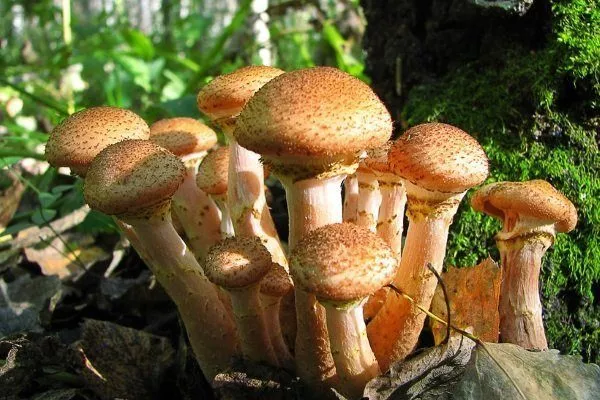
Honey mushrooms
Description. This is a small mushroom. The cap is only 3-6 cm in diameter. The stem is up to 7 cm high. The bottom of the stem is covered with dark scales. It has a "skirt." Young mushrooms have a tubercle in the center.
Where does it grow and when? They prefer to grow on deciduous trees, choosing rotten and damaged trunks. Honey mushrooms are easy to find in the Kaliningrad region. They can be found near the villages of Udelny, Duvaney, Baltika, and Austerlitz. They can also be found beyond the villages of Iglino and Arslanovo, and elsewhere. Summer honey mushrooms begin to bear fruit in June. Autumn mushrooms grow from September to mid-October.
Doubles. The summer honey fungus has many lookalikes, the most dangerous of which is the poisonous sulfur-yellow mushroom. The autumn honey fungus also has a poisonous lookalike—it has a bright yellow stem and cap. The mushroom's surface is scaleless.
Growing. This prolific mushroom can be successfully cultivated. Spores are collected from the caps of mature mushrooms. The crushed pieces are soaked in water, which is then poured onto stumps or pieces of wood. Read more about growing honey mushrooms on a farm. Here.
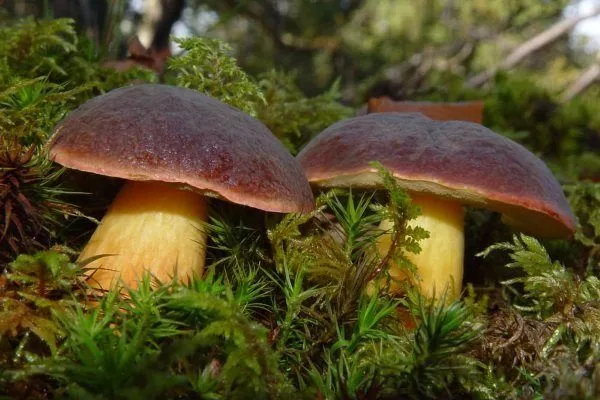
Polish mushroom
Description. It resembles a porcini mushroom. The cap is chestnut-brown, dark brown, or chocolate-brown. The tubular layer resembles a honeycomb. The cap surface is dry and smooth, becoming sticky in rainy weather. The stem is cylindrical. The mushroom turns blue when broken.
Where does it grow and when? It likes to nest under conifers. Sometimes it grows under oaks and chestnuts. It prefers sandy soils. It bears fruit from midsummer to November. This mushroom delights mushroom pickers when porcini mushrooms and butter mushrooms have run out. In the Kaliningrad region, it grows in sandstone areas. They are abundant in the area between Slavsk and Sovetsk.
Doubles. There are no particularly similar or poisonous lookalikes. The only thing you could confuse the Polish mushroom with the Satanic mushroom is the scaly-spotted mushroom. But they have little in common, so confusion is almost impossible.
Growing. The easiest way to grow Polish mushrooms is to sow a special mycelium mixture into the substrate. You can also propagate the mushroom by spores or by transferring the mycelium.
Butterlets
Description. A valuable mushroom that grows in well-lit areas. Small in size, it resembles a boletus mushroom in appearance. The cap is initially hemispherical or conical, then flattens out. The maximum diameter is 15 cm. It has a sticky, film-like skin. The color ranges from ochre to chocolate brown.
Where does it grow and when? The first mushrooms appear with the pine blossoms. A second harvest follows the linden blossoms. The mushrooms are most abundant in clearings, hills, along forest paths, and in young pine stands where there is plenty of grass. Abundant boletus harvests have been observed near the airport, in the forest near the flour mill, and in the forested area beyond the village of Blagovar.
Doubles. There are poisonous lookalikes. They can be confused with the pepper mushroom and the marginated galerina.
Growing. The mushroom is in demand, so cultivating it artificially makes sense. Laboratory-produced mycelium can be purchased for seeding, but mushroom growers prefer to harvest spores from overripe wild mushrooms. There is no cost-effective indoor cultivation technology, so butter mushrooms are grown in large areas with coniferous plantings.
Russula
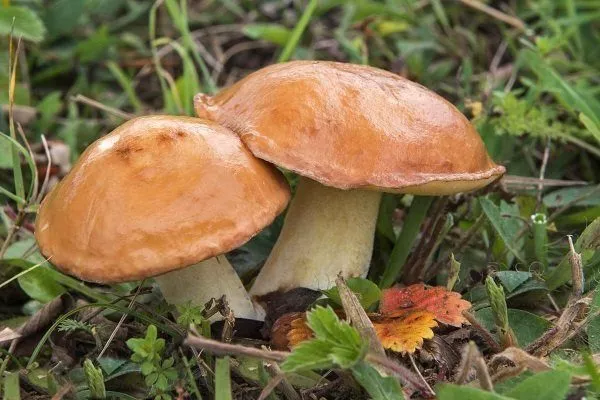
Description. Small russula mushrooms have a hemispherical cap. As they grow, it opens up, becoming flat or funnel-shaped. The diameter is up to 15 cm. The color ranges from brownish-green to a fiery red. The color depends on the variety of russula, of which there are about three dozen. The stem is white and cylindrical.
Where does it grow and when? They are undemanding in terms of growing conditions. They are found in abundance in spruce, aspen, and pine forests, and on the edges of swamps. Growth begins in late spring, and mass fruiting occurs in late summer. Russula mushrooms can be found throughout almost the entire region; this mushroom accounts for 45% of all mushrooms found.
Doubles. Of the thirty russula species, about 10 have a bitter taste. Among the inedible ones are the acrid, pungent, blood-red, and birch russulas. They are not considered poisonous, but are not suitable for consumption.
Growing. They grow both naturally and indoors in containers. They are propagated by spreading dry mycelium mixed with soil. They require drip irrigation.
Goat
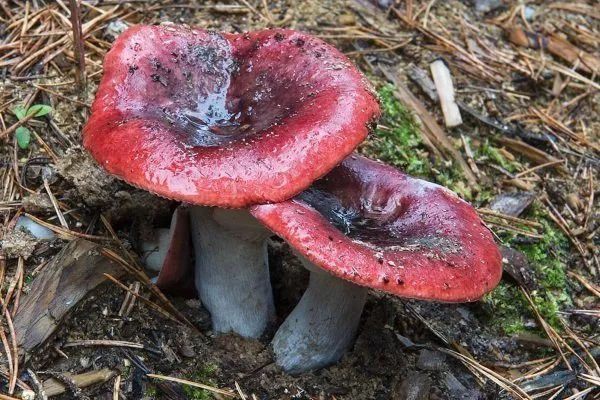
Description. The mushroom is nondescript in appearance. The cap is light brown or reddish-yellow. The stem is thin and crooked, the same shade. The cap, initially convex, flattens as it grows. In damp weather, it becomes slimy. It turns blue when broken.
Where does it grow and when? It grows until frost. It prefers moist areas—damp pine forests, roadside areas, and the edges of swamps.
Doubles. There are no false representatives, so you can collect it without fear. It might be confused with the pepper mushroom, which is inedible and belongs to the genus Boletus.
Growing. The seed material for goat's tongue—mycelium—is usually planted from September to April in boxes filled with substrate. In May, it is transplanted into the ground.
Gladysh
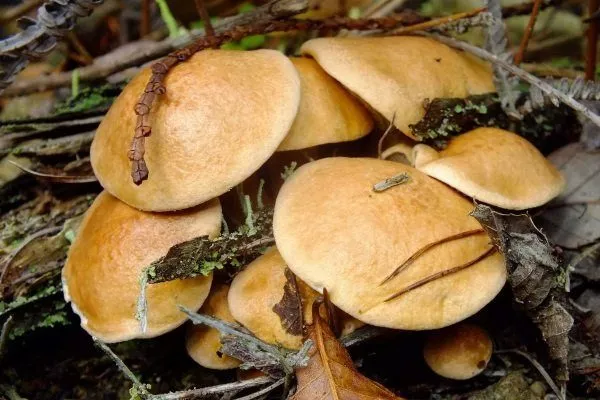
Description. A conditionally edible mushroom. Also known as the common milkcap. Its cap is initially purple-gray with concentric zones, which become grayish-reddish as it matures, and the rings disappear. It exudes a milky sap when broken. The stem is hollow and swollen.
Where does it grow and when? It grows from August to October throughout spruce and mixed forests in the region. The mushroom thrives in alder forests, which is why it's often called the alder mushroom.
Doubles. It has no toxic counterparts or analogues.
Growing. The smooth mushroom, being conditionally edible, is only suitable for pickling. It's not considered a particularly valuable mushroom, so it's not cultivated artificially. If desired, it can, of course, be propagated using mycelium or spores.
Valuy
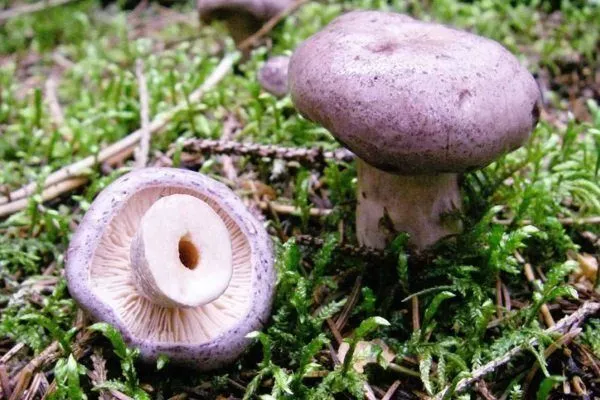
Description. A mushroom of the Russulaceae family. The robust cap is shiny and slippery in wet weather. It is nearly spherical in shape and reaches 14 cm in diameter. Its color is light brown. The stem is 5-15 cm long.
Where does it grow and when? Grows from midsummer to early October. Prefers forests with high humidity. It thrives in birch and pine forests, and under oak trees. It's not particularly popular with mushroom pickers, as it requires special handling. It grows everywhere.
Doubles. There are no poisonous lookalikes. But there is the false russula. Its pungent, distinctive smell has earned it the nickname "horseradish mushroom."
Growing. Many mushroom pickers avoid russulas—they're an acquired taste. They're not yet cultivated artificially, although the caps—salted and pickled—are delicious.
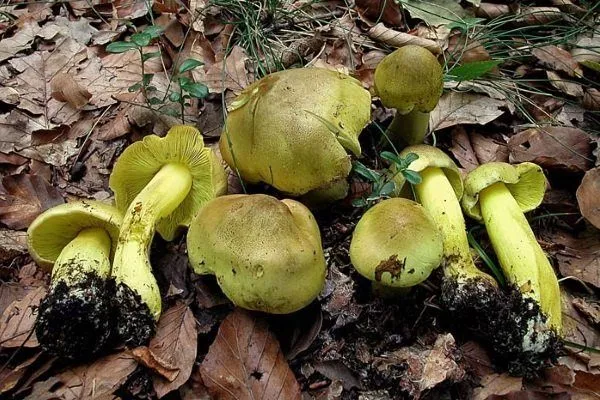
Greenfinch
Description. The conditionally edible greenfinch retains its greenish hue even after cooking. The cap is 4-12 cm in diameter and darkens as it ripens. The thickened stem is slightly lighter than the cap. Height: 3-5 cm.
Where does it grow and when? In the Kaliningrad region, it's abundant in all dry pine forests with sandy soils. It prefers coniferous trees. Only the caps are visible; the stems are sunken in the soil. Fruiting occurs from mid-August to November. When there are no more mushrooms left, you can go for greenfinches. Look for them near the airport and the flour mill—they often grow where butter mushrooms and porcini mushrooms produce fruit.
Doubles. They can be confused with other rowan mushrooms. For example, the sulfur-yellow rowan mushroom, which can be distinguished by its unpleasant odor.
Growing. Growing greenfinches requires no less effort and resources than growing button mushrooms, butter mushrooms, aspen mushrooms, and other valuable mushrooms. This is why cultivating most conditionally edible mushrooms is not cost-effective.
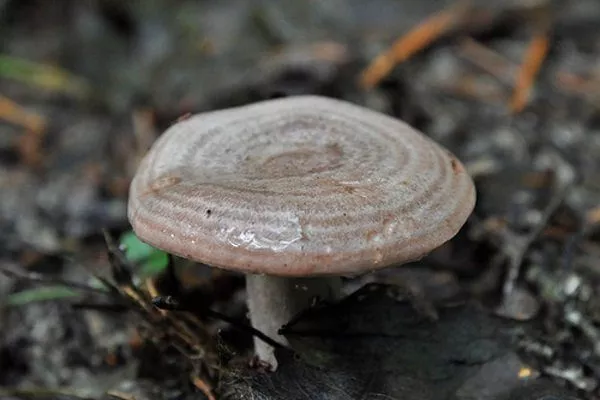
Serushka
Description. The cap is lilac-gray with concentric zones. The stem is hollow, almost the same color as the cap. A milky sap oozes from the fracture.
Where does it grow and when? They grow in groups. Look for them in mixed forests, aspen and birch groves. They prefer bright, boggy areas. They like to grow along roadsides, in clearings, meadows, and forest edges. People rarely go specifically for milkweed, but if you go to the Vishtynets Lake area—in an oak-deciduous forest—you're sure to encounter quite a few milkweeds.
Doubles. There are no poisonous doubles in nature.
Growing. The mushroom requires a long soaking period—several days. Like most conditionally edible mushrooms, it is of no interest for artificial cultivation.
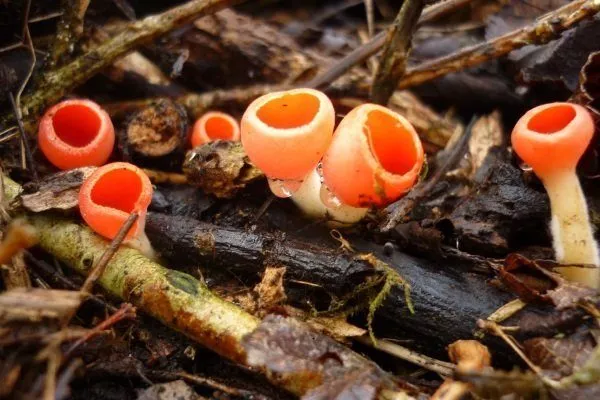
Sarcoscypha
Description. Sarcoscypha austriaca reaches 6 cm in diameter. The mushroom is initially cup-shaped, then saucer-shaped. The interior is red and matte, while the exterior is mealy and whitish.
Where does it grow and when? Fruiting season begins in April and continues through early June. During warm autumns, a second flush of growth may occur. It grows in deciduous and mixed forests, as well as in parks. It grows on branches, moss, and rotting wood, particularly on linden, maple, willow, oak, and birch. It is one of the first mushrooms to appear on the Curonian Spit.
Doubles. Similar to its fellow sacrascifers – Austrian, Dudley, Western.
Growing. The flesh has no distinctive taste or aroma. Its palatability is poor. Most mushroom pickers ignore this mushroom. There's even less interest in cultivating it artificially.
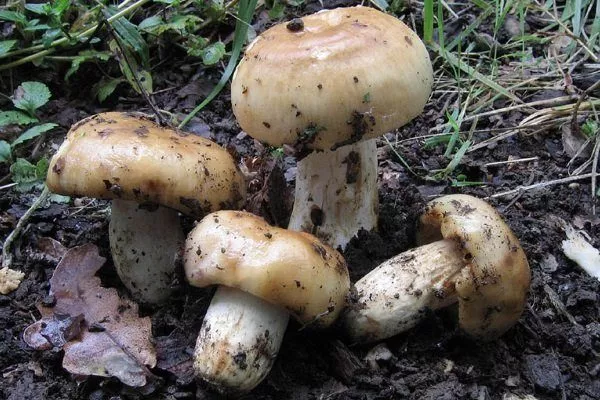
White butterflies
Description. A conditionally edible, lamellar mushroom from the genus Lactarius. It is a variety of the milky-white mushroom. The cap is yellowish-white. The fluffy edges are curved inward. It grows in clusters. The white stem is 3-6 cm tall.
Where does it grow and when? They prefer deciduous and mixed forests. They are found along country roads, in meadows, and forest edges. They thrive in the presence of nearby birch trees. Fruiting occurs from early August to early October. Throughout the region, they are best found in birch groves.
Doubles. Thanks to their distinctive appearance, confusion is difficult. The white mushroom resembles only the milky-white mushroom, but the latter has a distinctly pink color. And confusion won't be costly—the milky-white mushroom is also edible.
Growing. Mass production of white mushrooms is not practiced. However, if desired, you can grow the mushroom in your own backyard. The sowing process is no different from planting other mushrooms – using mycelium or spores from mushrooms collected in the forest.
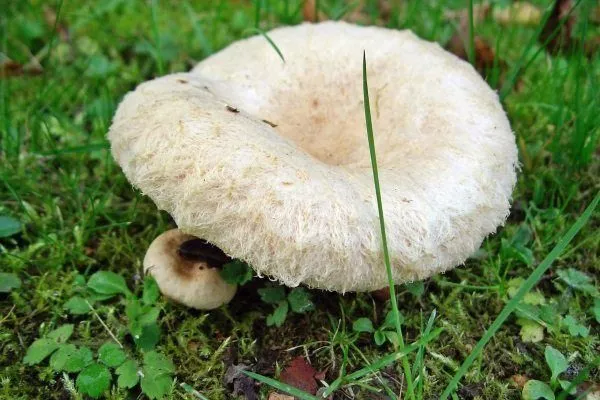
hedgehog mushroom
Description. hedgehog mushroom Little known and unpopular among mushroom pickers, it has a bitter taste and resembles a chanterelle in appearance. There are dozens of species of hedgehog mushrooms. Their distinguishing feature is the "spines" on the underside of the cap.
Where does it grow and when? It grows in all types of forests. It nests on wood, both living and dead. It prefers birch, oak, and beech. It thrives in high humidity and a warm climate. It grows from mid-autumn until frost. In the Kaliningrad region, it's not popular; people rarely go specifically to pick hedgehog mushrooms. Mushroom pickers usually don't include them in their baskets.
Doubles. Even experienced mushroom pickers can be overwhelmed by the diversity of hedgehog mushrooms. However, there are no poisonous species among them.
Growing. Belongs to the fourth food category. It is of no interest for mass production. It is also not in demand among amateur mushroom growers.
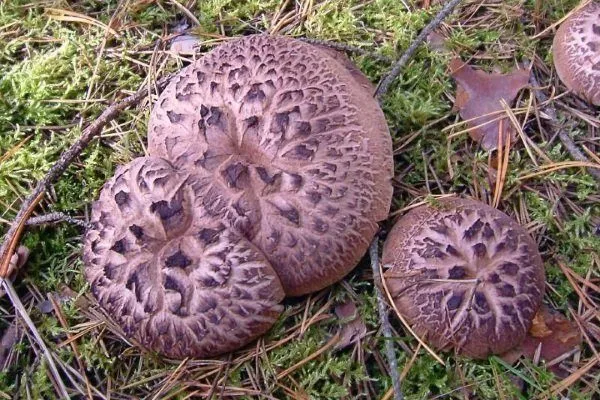
Poisonous mushrooms
Along with edible mushrooms, the forests of the Kaliningrad region harbor many poisonous ones. The most dangerous aspect of mushroom picking is misidentifying the species.
In just one month of last mushroom season, 25 people were poisoned. The main cause of poisoning was a failure to recognize mushrooms. The second cause was improper preparation of conditionally edible varieties.
Inedible mushrooms are only half the problem—they'll ruin your soup, and the worst they can do is upset your stomach. Poisonous varieties, however, can be fatal. Since they often disguise themselves as edible mushrooms, it's important to know how to spot them.
- Call an ambulance immediately.
- Before the doctors arrive, flush the stomach.
- Take activated charcoal or another sorbent.
- Ensure plenty of fluids.
- Save the remaining mushrooms for analysis.
Death cap
Description. The death cap is a deadly mushroom. It is the most poisonous in the world. The cap, 5-14 cm in diameter, can range in color from grayish and greenish to olive. It is flat or hemispherical in shape. The brim is smooth. The juicy white flesh does not change color when damaged. It has a slightly sweet taste – do not try it! It has no distinct odor. A distinctive feature is the upper part of the stem crowned with a membranous ring. The lower part, where it thickens, also has a membranous layer. The lower sac-like "skirt" is white or greenish and is 3-5 cm wide.
When and where does it grow? It grows both singly and in groups. It can be found in any forest—it's undemanding when it comes to growing conditions, although it prefers fertile, sunny soil. Fruiting begins in late summer.
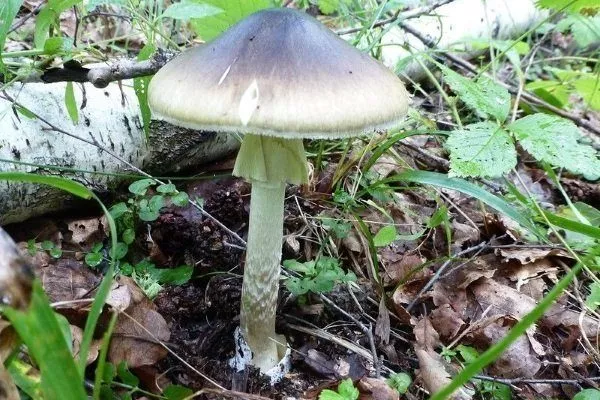
Only the death cap has membranous rings. These are the only way to identify this terrifying mushroom and avoid danger.
Who can be confused with? Death caps can be confused with champignons, green and greenish russulas. The reason for this confusion is the similarity in color.
Fly agaric
Description. Fly agaric The red fly agaric is the most conspicuous poisonous mushroom found in the forests of our western borders. It's easily distinguished by its brightly colored cap—ranging from yellow to bright red—and its white, scaly specks.
Where does it grow and when? They grow everywhere – in any forest. The fruiting period begins in July.
Who can be confused with? The red fly agaric is almost unmistakable. There is, however, a similar mushroom, the Caesar mushroom, but it grows in the Caucasus. Fly agarics growing in local forests are unlikely to find their way into a mushroom picker's basket. The red fly agaric isn't the only one of its kind; there are also the stinking fly agaric and the death cap. The latter is similar in color to the death cap.
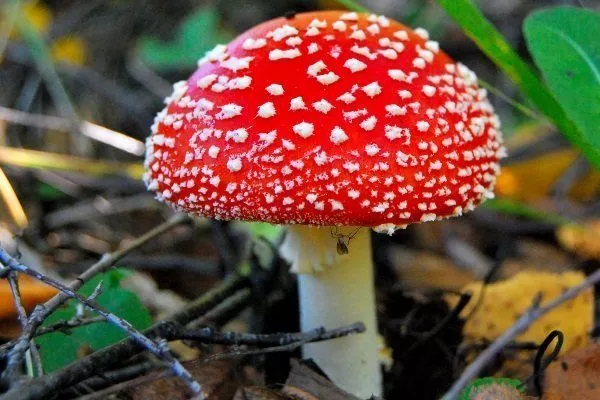
Satanic mushroom
Description. The cap is initially grayish, then greenish. The diameter is 10-25 cm. The yellow tubular layer turns green as it ripens. The massive stem is reddish-brown, shaped like a turnip. The flesh turns blue when broken.
Where does it grow and when? Satanic mushroom Prefers calcareous soils. It grows in mixed forests. It is usually found under linden, chestnut, and hazel trees. It can be found from mid-June to the end of September.
Who can be confused with? It can be confused with the porcini mushroom—if you're completely unfamiliar with mushrooms. Mushroom pickers usually recognize the devil's mushroom by its reddish stem. In some countries, it's collected and, after being specially processed, eaten. But there are enough edible mushrooms in the Kaliningrad forests to risk your health.
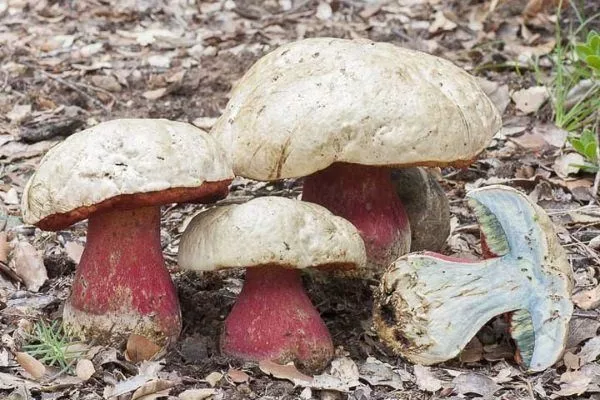
Gall mushroom
Description. The bitterling is poisonous and has a bitter taste that cannot be removed by any treatment. It has a rounded cap with brownish hues, 4-15 cm in diameter. The caps are often lighter, like those of boletus mushrooms. The tubular layer is white, but turns pink over time. The stem is 3-13 cm long and covered with a dense network of brownish fibers.
Where does it grow and when? Grows in all types of forests. It prefers to grow under oaks, birches, and conifers. Appearing in early summer, it can be found in the forest until October. It prefers rotten stumps and tree roots. It grows in groups of 10-15, rarely singly.
Who can be confused with? Young mushrooms are easily confused with boletus. They are often called "false white mushrooms." They are distinguished by their bitter taste and the color of their flesh—it turns pink when broken. The mortality rate is 85%.
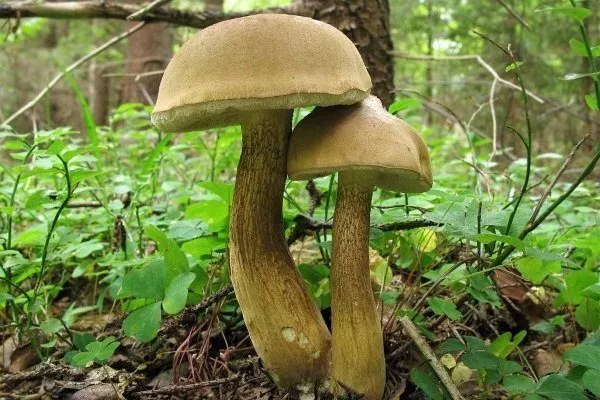
False champignon
Description. Unlike edible button mushrooms, false button mushrooms smell like iodine or carbolic acid. If you break the flesh, it turns yellow. The caps of false button mushrooms are silky and finely scaled. The gills are initially white, turning pink as they ripen. The white, hollow stems are swollen at the base.
Where does it grow and when? It appears in mid-summer. This unpretentious mushroom is found everywhere—in forests of all types, in parks, near houses, in fields, and meadows.
Who can be confused with? False button mushrooms come in several varieties—flat-capped, reddish-brown, and yellow-skinned. To distinguish them from true button mushrooms, simply press on the flesh—it turns yellow, and the stem section turns bright yellow. If you press on the flesh of an edible mushroom, it turns red or pink. When immersed in hot water, a false button mushroom turns yellow, and the iodine smell intensifies.
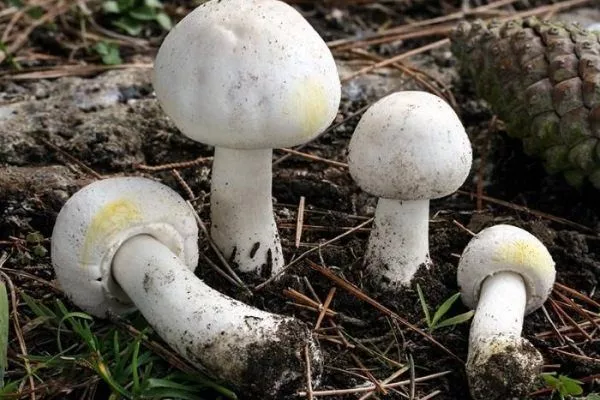
Pigs
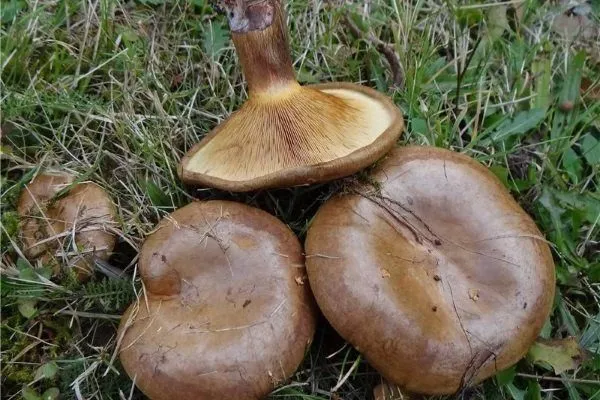
Description. Previously considered a conditionally edible mushroom, the pig mushroom is now classified as poisonous. It turns out the mushroom can accumulate a poison called muscarine, which is not destroyed by heat. After numerous poisonings, pig mushrooms were declared toxic.
Where does it grow and when? It prefers to nest on uprooted tree roots. It rarely grows alone, but rather in groups. It prefers moist soil. It grows from July to October. If you encounter a pig in the forests of the Kaliningrad region, just pass it by.
Who can be confused with? There's no antidote for pig mushrooms. They can be confused with russula or milk mushrooms, and people may simply not know that pig mushrooms are poisonous.
The Kaliningrad Region is a land rich in mushrooms of all kinds. Mushroom tourism thrives here, and during the quiet season, markets are overflowing with the bounty of the forest. Nevertheless, demand for mushroom products is steadily growing. Mushrooms not only have excellent taste but are also a generous source of protein, vitamins, and minerals. This makes their cultivation an extremely profitable venture.