
Pig's tongue mushrooms are a highly controversial species. They were once eaten and considered safe, but today mycologists are urging mushroom pickers to stop picking them. This mushroom is dangerous and toxic, capable of accumulating harmful chemical compounds and heavy metals that pose a health risk, and should therefore be avoided.
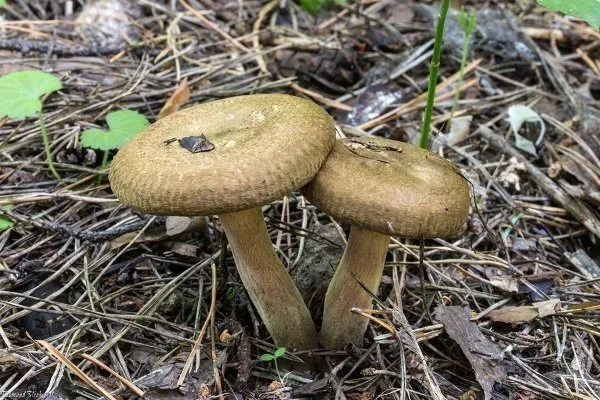
General characteristics of the mushroom
These are agaric mushrooms belonging to the family Pig's cap. There are several species of these mushrooms, each with its own characteristics. Pig's caps get their name from the dark, dirt-like spots that appear on their surface when touched.
Externally, the pig mushroom is a small mushroom with a thick cap, the size of which can vary from 10 to 20 cm. During the early development period, pig mushrooms are convex, but as they grow, they become smooth and then funnel-shaped.
Mature mushrooms have wavy, inverted cap edges. The pig's foot is small, reaching up to 10 cm in length. The flesh is dense, creamy, and odorless.
Young pig mushrooms are olive-green in color, while older ones are gray-brown. They feel dry and smooth to the touch. In damp weather, the surface of the mushrooms becomes covered with a sticky film.
These mushrooms typically grow in clusters; individual specimens are rare. In summer, these mushrooms are often attacked by worms, especially the poisonous species.
There are currently 10 known species of pigs. Not all of them are poisonous, but all contain harmful substances in certain quantities.
Types
There are the following types of pigs:
- Thick (or felt)This mushroom species has a velvety cap with a brown, reddish-brown, or pistachio color. The cap diameter varies from 15 to 20 cm. The stem is short, curved, and brown. The mushroom has thick, tough flesh that darkens when cut. The thick pig mushroom has no odor and a slightly bitter taste. This variety belongs to the group of conditionally edible mushrooms. Scientists point to the anti-tumor properties of this mushroom, as well as its ability to act as a natural antibiotic. The thick pig mushroom is tasteless, so deliberately collecting it for consumption is not advisable.
- Thin pigThe cap of this mushroom variety ranges from 5 to 15 cm in diameter. It is fleshy and convex, and can be light olive or greenish-beige in color. The cap is depressed in the center. The stem of the slender pig mushroom is cylindrical, 1-2 cm thick. The flesh is thick, pleasantly aromatic, and slightly sour in taste. The slender pig mushroom is considered a poisonous mushroom. This variety is often infested with worms.
- AlderThe mushroom grows on the bark of aspen and alder. The cap has a shallow funnel, its edges are downward-facing and slightly wavy. It is brown in color, with a yellow or reddish tint. The alder pig mushroom does not emit a distinctive odor. This species is considered poisonous.
- AuricularThis mushroom has a hard cap up to 12 cm in diameter. Its shape resembles a shell or a fan. The edges of the cap are uneven—wavy or jagged. A characteristic feature of the eared pig is the pleasant pine aroma emanating from it. This mushroom species is classified as conditionally edible.
| View | Edibility | Cap color | Cap diameter (cm) | Peculiarities |
|---|---|---|---|---|
| Thick (felt) | Conditionally edible | Brown, reddish-brown, pistachio | 15-20 | Antitumor properties, natural antibiotic |
| Thin | Poisonous | Light olive, greenish beige | 5-15 | Often affected by worms |
| Alder | Poisonous | Brown with a yellow or reddish tint | — | It grows on the bark of aspen and alder |
| Auricular | Conditionally edible | — | Up to 12 | Pleasant pine aroma |
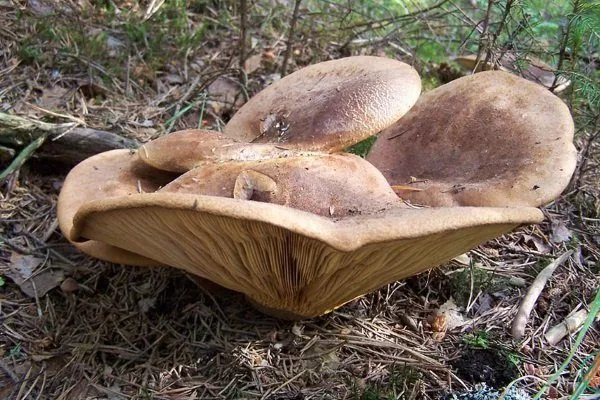
Fat pig
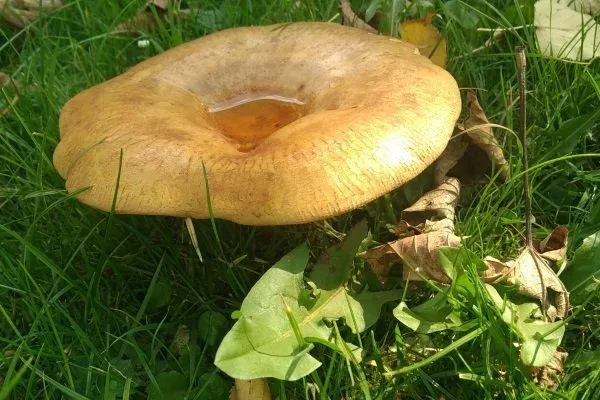
Thin pig
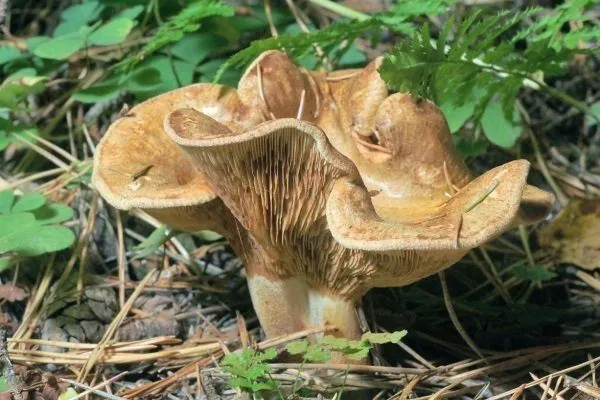
Alder pig
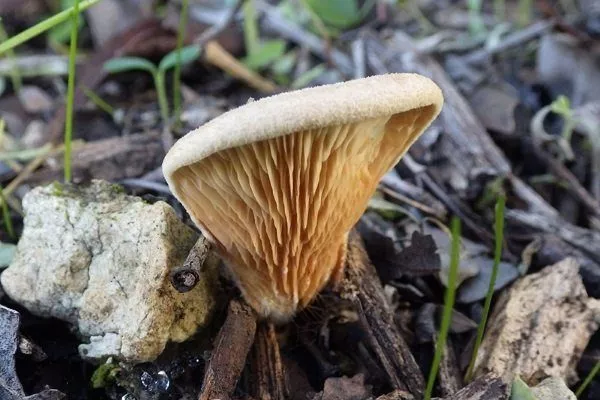
Eared pig
Although some species of pig mushrooms are considered conditionally edible, they are not recommended for consumption due to the toxic substances they contain. Furthermore, all species of this mushroom have the ability to accumulate radiation.
In Russia, the most common types of pigs are two: thin and thick.
Places where pigs grow
These mushrooms can be found everywhere, but their most common habitats are deciduous and coniferous forests, as well as forest edges and the edges of swamps. They are often found near areas where shrubs, birches, and oaks grow.
The pig mushroom can also be seen on the roots of uprooted trees, and some species even grow on bark. Sometimes this mushroom is found in abandoned anthills.
This mushroom prefers moisture and thrives in moist soils. It grows in clusters in summer and fall, from July to October. They are especially numerous in autumn. It produces frequent and abundant harvests.
Why is the pig mushroom considered a poisonous mushroom?
Not long ago, the pig mushroom wasn't considered dangerous and was a favorite pastime for picking and cooking. Today, this issue is approached with caution, with some species considered inedible and harmful, while others are considered poisonous.
The fact is that pigs contain a toxic, dangerous substance – muscarine, which does not break down under any method of heat treatment and is not eliminated from the body.
Scientists have also proven that these mushrooms contain antigens that stimulate the production of blood antigens. These antigens attack blood cells, including red blood cells. When antigens accumulate, serious illnesses develop. One such serious condition is hemolytic anemia.
Pigweed can damage the renal glomeruli and cause the development of renal failure.
In case of severe poisoning by these mushrooms, there is a risk of death.
Pig mushrooms are capable of accumulating harmful chemical compounds and heavy metals, including copper and radioactive cesium. The concentration of these elements in the mushroom's body is quite high and can be many times higher than their concentration in the soil in which it grows. This ability to accumulate harmful substances is explained by the pig mushroom's spongy structure, which traps hazardous elements within.
Considering all the dangers posed by the pig mushroom, this mushroom was removed from the list of edible mushrooms in 1981. It was also added to the list of poisonous products of the fourth hazard category.
Signs of poisoning can appear within a few hours of consuming the mushrooms, if a large portion was consumed at once, or several years later if they were consumed regularly. Therefore, it's important to avoid those who claim that pig mushrooms are perfectly edible, and the key is to cook them properly. The consequences in this case can be unpredictable.
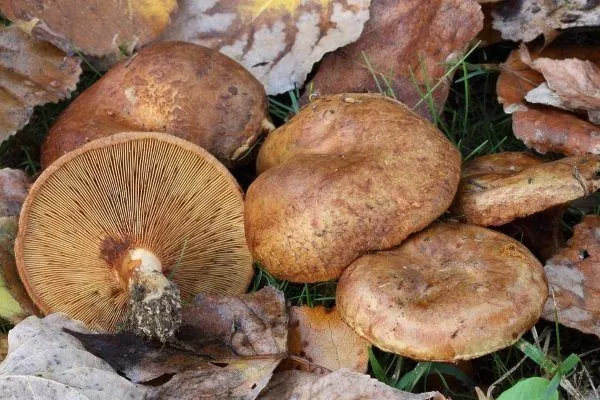
It is important to note that the following are particularly vulnerable to pigs:
- children under 12 years of age;
- people suffering from pancreatic diseases;
- people suffering from diseases of the gastrointestinal tract.
- ✓ No worms
- ✓ Pleasant smell
- ✓ No bitter taste
- ✓ Does not grow on tree bark
Before your next trip to the forest, it's worth looking at images of the piglet to avoid putting it in a basket.
Symptoms of pig poisoning and first aid
The severity of symptoms of poisoning from the substances contained in these mushrooms depends on the individual's immune system. If a person is hypersensitive to the components of pig mushrooms, characteristic symptoms will appear 1-3 hours after consumption.
If the poisoning has mild degree, then you can count on a successful outcome.
The following symptoms are characteristic of mild poisoning:
- abdominal pain that is not constant in nature or location;
- diarrhea;
- nausea, vomiting;
- lower back pain;
- cold hands and feet.
Poisoning is accompanied by severe dehydration.
With this degree of poisoning, if measures are taken in a timely manner, the symptoms of poisoning subside within 2-3 days.
Moderate degree of poisoning In addition to the symptoms mentioned above, pigs are also characterized by the development of liver and kidney failure.
At severe intoxication Cardiovascular failure also develops, and the possibility of organic brain damage from poisons cannot be ruled out.
More severe degrees of poisoning are expressed in the appearance of symptoms such as increased heart rate, respiratory distress, profuse sweating, profuse salivation, pale skin, hallucinations and delirium.
At the first sign of pig poisoning, call an ambulance as soon as possible. Until emergency services arrive, to quickly flush the toxins from the body, have the victim drink as much warm water as possible with salt or potassium permanganate dissolved in it. Afterward, induce vomiting several times.
Since poisoning is a toxic-allergic reaction, after gastric lavage, the poisoned person should be given an antihistamine (Suprastin, Tavegil).
It is not recommended to give the victim medications to stop vomiting or diarrhea.
The poisoned person must be hospitalized, regardless of the severity of the poisoning.
At the hospital, the patient undergoes gastric and intestinal lavage. If intoxication symptoms progress, the intestinal tract is flushed with saline solution.

If necessary, the following procedures are prescribed:
- blood purification;
- hemodialysis if renal failure has been diagnosed;
- restoration of water-salt balance in the body;
- taking medications to restore the functioning of the cardiovascular system.
Pig mushrooms are currently classified as harmful to the body. Some species of these mushrooms are poisonous. Avoid picking and eating them, as severe poisoning can be fatal.