
If a body of water is empty of fish, you can stock it with them. Fish are not only a valuable commodity but also a source of sporting interest, recreation, and pleasure. By stocking fish, you can not only sell them as a commodity but also trade fishing rights. However, when stocking fish, it's important to know many rules and requirements.
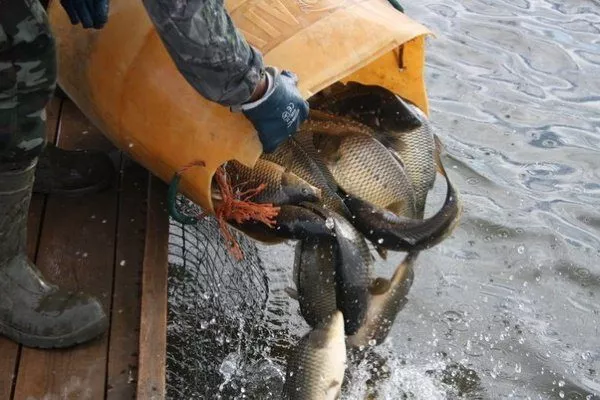
What is stocking and why is it needed?
Stocking a pond is the introduction of fish for the purpose of breeding. In addition to producing commercial fish, stocking ponds can be done for the following purposes:
- improvement of the pond ecosystem;
- organization of sports, recreational or business fishing;
- decorativeness.
- ✓ Consider the species' tolerance to water temperature fluctuations.
- ✓ Pay attention to the compatibility of fish species in the same body of water.
- ✓ Consider water quality and oxygen content requirements.
Fish were once so abundant in natural reservoirs that they could easily provide food year-round. Over time, humans, driven by profit, have significantly depleted not only ponds, rivers, and lakes, but also seas and oceans. Today, catching fish in a natural reservoir is difficult—they may be completely gone. Artificial fish stocking helps remedy this situation.
How does stocking take place?
Fish can be introduced into a pond (natural or artificial) at any stage of growth. The following can be used for stocking:
- fry;
- yearlings;
- yearlings;
- adults.
The best time to introduce fish is after the spring flood. During this period, the water contains the most nutrients and food. Experts recommend introducing juvenile fish only after mosquitoes appear—this will provide plenty of live food in the form of mosquito larvae.
Non-competitive species feeding on different types of food are typically used for stocking. Furthermore, fish can be selected so that they coexist well and maintain a favorable balance of aquatic organisms in the pond. For example, carp are often stocked with wild carp, tench, and crucian carp. To control the number of harmful fish in the pond, such as gudgeon, roach, and minnows, pike are added as "cleaning fish." To prevent harmful algae from overgrowing the pond, grass carp are introduced.
Features of stocking an artificial reservoir with fish
An artificial pond in which fish are intended to be bred must be properly placed:
- The location should be chosen so that part of the pond is shaded in summer and part is sunny. This will prevent excessive photosynthesis and algae blooms.
- You can't allow the entire water surface to be in the shade - this will cause a drop in temperature and reduce fish activity.
A certain temperature regime must be maintained in the pond:
- The introduction of cold-resistant fish species – pike, catfish, trout – can be done at 0-2°C.
- Heat-loving fish - carp, perch, tench, are introduced at a temperature of 5-10°C.
You can stock ponds with fish from early spring until late fall. The key is to avoid large daily temperature fluctuations, otherwise the fish will become stressed.
Selecting fish depending on the purpose of the reservoir:
- If a decorative pond is being populated with fish, the most colorful and picturesque fish species are selected for population.
- For a pond where fishing is planned, medium-sized fish are suitable - carp, crucian carp, pike, grass carp and other species suitable for spinning fishing.
- To grow commercial fish, the pond is stocked with the main fish species and auxiliary ones that maintain a favorable balance in the reservoir.
Transportation of planting material
Fish for stocking are transported in compliance with the following conditions:
- The container in which the fish will be transported is filled with water from the body of water to be stocked. If this is not possible, water is taken from another natural body of water—a pond or lake. However, water from wells, taps, and springs is prohibited, as it lacks oxygen and may suffocate the fish during transport.
- If a long journey is ahead, the water temperature must be maintained using ice – it is placed in a container with water, wrapped in burlap.
If the temperature balance is disturbed, then when the fish are released into the pond, they may become stressed and simply die due to temperature shock.
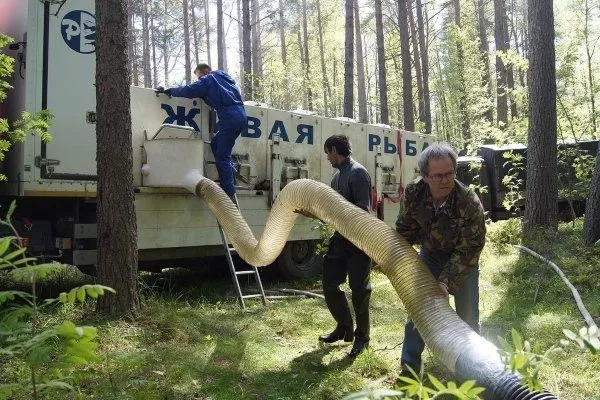
Who can be accommodated?
The choice of fish for stocking ponds depends on the pond's purpose, its intended goals, and the owner's personal preferences. Today, you can order virtually any type of fish from specialized pond stocking companies.
| Type of fish | Water temperature, °C | Oxygen requirements, mg/L |
|---|---|---|
| Trout | 14-20 | ≥5 |
| Carp | 5-10 | ≥4 |
| Catfish | 0-2 | ≥3 |
Before introducing any fish species, it's important to create suitable conditions. Some fish are very demanding regarding water quality, purity, and oxygen levels. Let's look at the fish species that are especially popular for stocking ponds.
Silver carp
| Name | Average weight, kg | Water temperature, °C | Nutrition |
|---|---|---|---|
| Silver carp | 20-30 | 20-25 | Phytoplankton |
| Bighead carp | 20-30 | 20-25 | Phytoplankton, zooplankton |
| Hybrid silver carp | 20-30 | 20-25 | Phytoplankton |
This is a herbivorous freshwater fish from the carp family, which is valued for its rapid growth and tasty meat. Silver carp – a natural meliorator. Adult fish, by eating phytoplankton, cleanse water bodies. Silver carp are large fish, growing up to 1 m in length and weighing 20-30 kg. Silver carp are recommended for stocking:
- White. This fish's head accounts for up to 20% of its body weight. It feeds on phytoplankton.
- Motley. This silver carp has an even larger head, accounting for almost half its body weight. In addition to phytoplankton, it also feeds on zooplankton, making the bighead carp's meat superior in taste to other species.
- Hybrid. The head occupies 15-20% of the body and is characterized by particularly rapid growth.
Silver carp is the only freshwater fish that contains cholesterol-lowering fat. There's even a silver carp diet, which involves eating 1 kg of fish per day to lower blood pressure and cholesterol.
Yearlings weighing 5 grams or more are suitable for stocking. The stocking rate is 20 to 150 fish per hectare.
It is recommended to grow silver carp alongside grass carp in carp ponds. Growing these fish alongside carp significantly increases pond productivity.
White amur
Grass carp are often called "grass carp," and they are indeed members of the carp family. They are characterized by rapid growth—approximately 10 cm per year. Large fish reach 1 m 20 cm in length and weigh 30-32 kg. This fish is profitable because it quickly gains marketable weight:
- 2 years – 800 g;
- 3 years – 1500 g;
- 4 years – 3200 g.
Grass carp are herbivorous, feeding on aquatic and terrestrial vegetation. If there isn't enough grass in a pond, more is added. Juveniles feed on bloodworms and crustaceans, and as they mature, they switch to a plant-based diet.
By destroying grass, white amur prevents mosquito breeding, which creates comfort for people relaxing near a body of water or fishing.
Grass carp eat their own weight in grass daily. If the water warms up to 25-30°C, they eat even more. However, when the water temperature drops below 10°C, grass carp stop eating altogether.
Advantages breeding of white amur:
- rapid weight gain;
- tasty and nutritious meat;
- undemanding to oxygen content;
- resistance to infectious diseases;
- purifies water.
It's important to note that the grass carp's "improvement" abilities only become apparent in its third year in the pond. The recommended stocking rate is 500 yearlings per hectare.
Trout
| Name | Average weight, kg | Water temperature, °C | Nutrition |
|---|---|---|---|
| Rainbow trout | 1-2 | 14-20 | Small fish, rodents, chicks |
| Lake trout | 1-2 | 14-20 | Small fish, rodents, chicks |
| Golden trout | 1-2 | 14-20 | Small fish, rodents, chicks |
Trout is a prized member of the salmon family. This freshwater fish has light pink flesh and a laterally flattened body, giving it a slightly flat appearance. Trout boasts delicious meat and is a prized trophy for anglers. Trout fishing is a special type of sport fishing, popular in many countries.
Trout are schooling predators. They feed on small fish, rodents, and chicks. In the wild, the typical size of a brook trout is 25-35 cm and weighs 400-1600 g. Some specimens reach 0.5 m in length and weigh 1-2 kg, with record-breaking specimens reaching 5-6 kg.
Three types of trout are usually bred in ponds:
- rainbow;
- lake;
- golden.
When farmed, trout can easily grow to 6-8 kg. To achieve these figures, breeders feed the fish special compound feed.
Trout are demanding when it comes to water quality – it should be cold, clean, and flowing, with a temperature of 14-20°C. The pond should have shaded areas, as trout dislike brightly lit areas.
Trout require air, so they periodically surface to gulp it. If the pond freezes over in winter and there's no outlet, the trout may die. Trout are recommended to be stocked in the summer. The recommended stocking rate is 500 yearlings per hectare.
Crucian carp
| Name | Average weight, kg | Water temperature, °C | Nutrition |
|---|---|---|---|
| Golden crucian carp | 3 | 5-10 | Bloodworms, crustaceans |
| Silver crucian carp | 2 | 5-10 | Bloodworms, crustaceans |
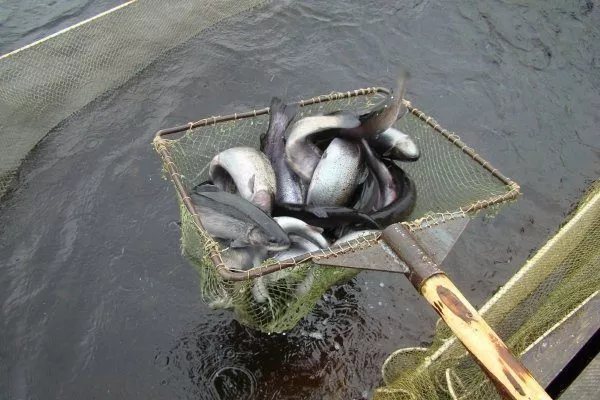
Crucian carp belong to the carp family. This fish is very common in Russian waters. Crucian carp are a tempting fishing target and an excellent culinary product. Two species of crucian carp are particularly popular—golden and silver—and are commonly used for stocking.
Crucian carp are undemanding in terms of water requirements. They can live in bodies of stagnant water with minimal oxygen levels. They are resilient to harsh winter conditions, overwintering buried in the mud. In the wild, crucian carp grow up to 50 cm in length and weigh up to 3 kg, while silver carp grow up to 40 cm in length and weigh up to 2 kg. Unlike carp, crucian carp lack barbels. This is the most resilient and undemanding fish, found everywhere—in ponds, lakes, peat quarries, and mud pits.
When artificially bred, crucian carp do not grow to such sizes, but they are attractive:
- vitality;
- undemanding to environmental conditions;
- unpretentiousness to food.
If crucian carp are raised from fry, they can reach 250-300 g in two years. However, fingerlings are typically used for stocking. The stocking rate is 20 fingerlings per 25 square meters. Before introducing fingerlings into the pond, allow the water to settle and become saturated with microflora and fauna, which will provide a nutrient-rich environment for the crucian carp.
You can learn more about breeding crucian carp at home Here.
Carp
| Name | Average weight, kg | Water temperature, °C | Nutrition |
|---|---|---|---|
| Scaly carp | 1.25-1.5 | 5-10 | Omnivorous |
| Mirror carp | 1.25-1.5 | 5-10 | Shellfish, cereals |
Carp is an omnivorous freshwater fish, highly sought after by consumers for its tender, tasty meat. It's a bit bony in places, but this drawback pales in comparison to its many advantages. This fish eats a lot and grows quickly. It eats whatever it can find—reed shoots, fish and frog eggs, worms, crustaceans, and insects. They can even eat their own young. Weight vs. age:
- fingerlings – 250 g;
- two-year-olds – 450 g.
Commercial carp weigh 1250-1500 g and reach a length of 39-41 cm. They can inhabit both fresh and brackish water. Carp is a domesticated form of the wild carp, which it surpasses in hardiness and fertility. Any of the existing carp varieties can be used for stocking:
- Scaly. Their entire body is covered in scales. They are highly adaptive, omnivorous, and undemanding.
- Mirror. The body is covered with large scales, but only in isolated areas—near the dorsal fin, tail, and sides. It is more demanding in its diet, preferring shellfish and grains.
There is also naked carp - without scales at all, and framed carp - it has one or two rows of scales on the back and belly.
It is recommended to stock water bodies with fish:
- Larvae – 10-70 thousand per 1 ha.
- Yearlings - 50-150 pieces per 1 hectare.
- Two-year-olds – 600 pieces per 1 ha.
Sterlet
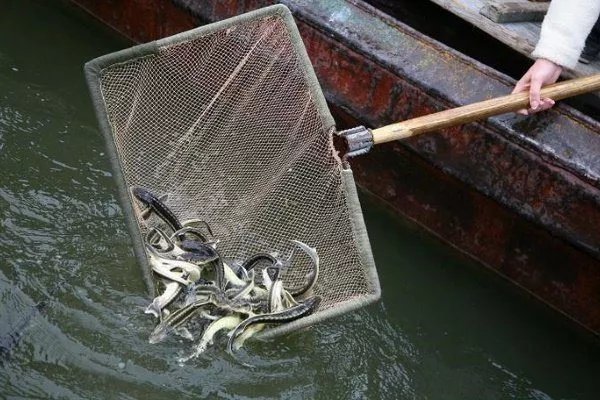
The sterlet is a valuable commercial fish of the sturgeon family. It is an attractive candidate for artificial breeding. Adults reach a marketable weight of 0.5-2 kg and a body length of 40-60 cm. Individual specimens can grow to 6-7 kg or more.
During the day, sterlet lie on the bottom, and come to shallow waters at dusk to feed. They feed actively only during the warm season, until mid-October. Then, gathering in schools, they retreat to wintering pits.
Sterlet is considered the tastiest of all sturgeons. Compared to sturgeon, they mature relatively early – they can reproduce as early as 8 years old, and males mature at 4-5 years.
At sterlet breeding Its water quality requirements should be taken into account. It requires clean, cool, fast-flowing, oxygen-rich water. Even minor contamination (chemicals, household waste, fertilizers, etc.) can cause damage to the fish. Sterlet are also very demanding regarding temperature. Water should be maintained at 20-21°C. Oxygen saturation should be at least 5 mg/L.
The stocking density of two-year-old sterlets is 1500-2500 pieces per 1 ha.
Black carp
The black amur is a rare fish imported from the Far East. It reaches a length of 130 cm and weighs up to 50 kg. It is a member of the carp family, distinguished by its dark back.
Juvenile black carp feed on zooplankton, and later on, insect larvae. In their second year, they feed on mollusks. This is their favorite food, but they can also consume other aquatic organisms, and when bred, they thrive on compound feed. However, when fed compound feed, the fish's fat percentage increases and they grow more slowly. Sexual maturity occurs between 6 and 8 years of age, when they weigh up to 18 kg.
This large fish is particularly attractive for sport fishing. Young-of-the-year fish are raised in polyculture with herbivorous fish and carp. The stocking density of black amur is 50,000 young-of-the-year fish per hectare.
Catfish
The common catfish, also known as the river or European catfish, is, after the beluga, the largest freshwater fish. Catfish A scaleless predator, its meat is fatty and delicious. It's one of the most coveted trophies for any fisherman.
The catfish reaches a length of up to 5 meters and weighs up to 350 kg. They can weigh even more, reaching up to 500 kg. This predator feeds on fish, frogs, and other amphibians. Catfish perform sanitary functions in bodies of water. The ponds where catfish live are known for their clean and fresh water.
Catfish are a wonderful fishing target. They are often stocked into reservoirs for sport or recreational fishing.
It is recommended to stock catfish in waters containing crucian carp, perch, and roach. The recommended stocking rate is 30-50 fish per hectare.
Loach
The loach has an elongated, scaly body, slightly compressed laterally. It reaches 15-30 cm in length. In water bodies, the loach feeds on processed food scraps, effectively performing sanitary functions. Loach, released into a pond, serves as a natural "barometer" - before the rain, the fish repeatedly float to the surface.
The loach is unpretentious and can live in the dirtiest or most swampy water. However, poor water quality negatively impacts its growth and reproduction. The ideal habitat for loach breeding is a clean, artificial pond.
Loaches are not kept in ponds with crucian carp, tench, and carp, as they eat their eggs. They are also not bred in ponds with predators; if there are pike in the pond, they will eat all the loaches, as they are a tasty prey.
Loaches are voracious eaters. They feed on larvae, bottom-dwelling mollusks, worms, bloodworms, and raw meat. They hibernate during the winter. To prevent the fish from suffocating during the winter, holes are cut in the ice.
Pike
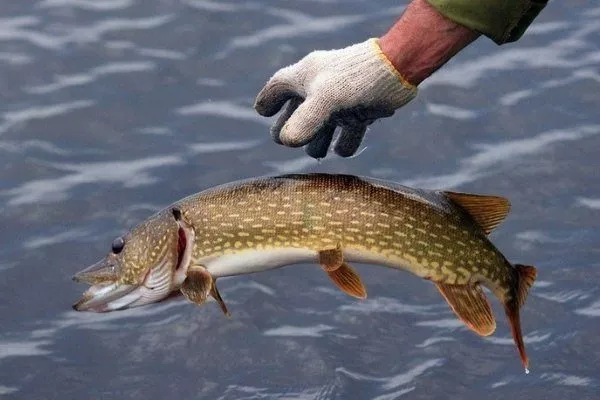
Pike – a freshwater predatory fish. The common pike is found in Russia and is a commercial fish, a pond cleaner, and a popular sport fish. Pike grow up to 1.5 meters in length and weigh a maximum of 35 kg. Specimens longer than 1 meter and heavier than 8 kg are rare in the wild.
The gray-green body is torpedo-shaped. The pike is aggressive and voracious, feeding on small fish such as crucian carp, roach, and rotan, as well as worms, mice, and even waterfowl. Stocking pike is beneficial in waters that are not susceptible to freezing, filled with trash fish.
A dead fish pond is one in which fish die in winter due to a lack of oxygen.
Recommended pike stocking rate:
- for yearlings – 10-20 pieces per 1 ha;
- for larvae – 150-300 pieces per 1 ha.
Buffalo
This fish is native to America. In the early 1970s, three species of buffalo were introduced to the USSR: largemouth, smallmouth, and black buffalo. All are similar in appearance to carp. Buffalo, like carp, grow quickly. They are large fish, reaching 45 kg.
When reared in artificial ponds, they feed on large zooplankton. If the pond is rich in natural food, yearlings grow to 200-500 g, and two-year-olds weigh 1,500-2,000 g.
Culinary experts claim that buffalo is tastier than carp. Its omnivorous nature, early maturation, and undemanding nature make it a promising fish for fish farmers. It is recommended to stock ponds at a rate of 1,000-1,500 yearlings per hectare.
Zander
This predatory commercial fish is valued for its lean, nutritious meat and delicate taste. Zander Prefers warm, clear waters. It has an elongated, dirty-green body, spiny fins, and a powerful, toothy jaw.
If the young are well-fed and eat the fry of other fish, they can grow to 800 g within a year. Pike-perch require 3.3 kg of fish to reach 1 kg of weight—less than pike and perch. Kuban pike-perch grow particularly quickly, reaching sexual maturity at 3-5 years. Fish living in northern climates grow longer.
It is recommended to stock pike perch in reservoirs where there are a lot of trash fish, such as roach, minnow, etc. Stocking is recommended at a rate of 10,000 to 100,000 larvae per hectare.
Sturgeon
Sturgeon is a valuable freshwater fish. It has an elongated body and a long, pointed head. There are two types of sturgeon: Russian and Siberian. The latter has a higher survival rate, making it more profitable to breed. However, Siberian sturgeon have a lower growth rate than Russian sturgeon.
This fish requires ideal conditions: clean water, high oxygen levels, and a favorable water temperature. In summer, 18-25°C, but not above 30°C; in winter, 10-11°C.
In the wild, sturgeons grow up to 2 meters long and weigh up to 200 kg. In ponds, they serve as excellent biological cleaners, feeding on invertebrates, larvae, frogs, and the like.
Difficulties sturgeon breeding:
- Sturgeon are sensitive to fungal infections affecting their gills. There is also a high mortality rate among fry. A single fish can infect all inhabitants of a reservoir.
- For sturgeon to grow and reproduce, their diet must contain 80% protein. Feeding a plant-based diet will negatively impact their reproductive capacity.
- Females become sexually mature only at the age of 10-20 years.
What to feed the new inhabitants of the pond?
Before getting fish, you should calculate the cost of feeding them and assess your capabilities—different fish species require different food. If you're raising fish to market size, you'll need to regularly feed them the appropriate food.
Features of feeding fish after stocking:
- The feeding regime depends on the season. In summer, fish need more food, in winter - less, and some fish species even hibernate.
- The quantity and composition of food depends on the type of fish and the reservoir. Ponds have one schedule, while fenced ponds and cages have a different one. Natural ponds have plenty of natural food, so feeding requirements are less stringent.
The feeding regime and diet depend on the type of fish:
| Type of fish | Feeding Features |
| Carp | The daily feed rate depends on the individual's weight and water temperature. Carp weighing up to 500 g receive a feed equivalent to 100% of their body weight, while those over 500 g receive only 3%. Juveniles are fed pelleted feed placed in feeders. Juveniles are fed hourly. The frequency of feedings decreases as they grow. |
| Salmon | They are fed marine and freshwater fish, meat scraps, dry skim milk, fishmeal, and krill meal. Special compound feeds are used for fry and juveniles. |
| Catfish | They are fed a special feed mixture supplemented with calcium. The fry are fed every 3 hours, then reduced to 4 times a day. The warmer the water, the more food they require. |
| Sturgeons | Feed them high-fat feeds. Fry are fed at two-hour intervals, while adult sturgeons are fed 4-6 times. |
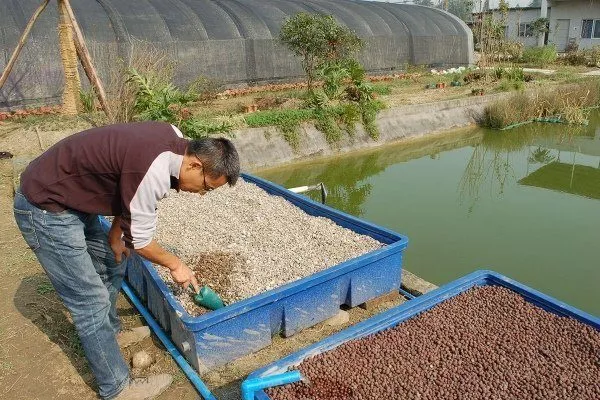
In order for fish in an artificial pond to grow and reproduce, they need to receive the following in their feed:
- Squirrels. Protein should make up 30-60% of the total dry feed weight. Protein is especially important for young animals. A lack of protein leads to slow growth and illness.
- Fats. The main source of energy. A deficiency of fatty acids slows growth, and the percentage of protein and fat in fish meat decreases. Fat requirements vary by fish species; for example, carp require 1% of their body weight.
- Carbohydrates. They should make up no more than 25% of the total feed. In many fish, an excess of carbohydrates causes slow growth and increases the fat content of the meat.
- Minerals. While fish can absorb chlorine, phosphorus, and calcium from the water, the rest must be supplied through food. A lack of minerals slows growth and can even lead to the death of young fish.
- Vitamins. Fish need vitamins A for metabolism, D for bone formation, E for caviar formation, and B for protein absorption.
How much does stocking cost?
Raising fry from eggs is a laborious undertaking, but only experienced fish farms with the necessary resources can handle it. Those wishing to stock a pond should contact a company that provides fish stocking services. These companies offer clients a choice of:
- Different types of fish – carp, silver carp, trout, perch and others.
- Fish of various ages—larvae, fry, yearlings, two-year-olds, and older fish. Adults may be needed, for example, for fishing trips.
- Transportation and release of fish using special technologies that eliminate stress.
Such companies guarantee clients that the introduced fish are healthy and prepared to adapt to their new environment.
Stocking costs vary depending on the fish species. Transportation and introduction are identical. For example, stocking carp costs 200 rubles per kg of live weight. Crucian carp costs approximately 500 rubles per kg, grass carp – 350 rubles, silver carp – 250 rubles, and catfish – 500 rubles.
As we can see, stocking fish requires considerable investment, so before ordering such a service, you need to carefully calculate the costs and potential profit.
Benefits and risks
Start-up costs depend on the type of fish farming. If you have a natural pond, the costs will be 10-20 times lower than those for an artificial pond with a closed-loop water supply system. In the latter case, costs will be around half a million rubles or more.
If, for example, you raise carp in a natural pond, your main costs will be related to feed, which costs around 20 rubles per kilogram (for trout and salmon, it's an order of magnitude more). You'll also need to spend money on fry, transportation, insurance, and so on. And carp will only reach marketable weight in 2-3 years—and that's fast; other fish take even longer to grow.
So, to make a profit, you will have to wait several years, and during this time you will have to spend money on keeping the fish.
Additional income can be generated by offering paid fishing services, renting out fishing rods, etc.
The profitability of a fish business, with established sales, is around 10%. Fish business owners face many risks on the path to profitability:
- Problems with the law. Many administrative barriers must be overcome. Leasing a pond requires approval from local authorities, which involves bureaucratic procedures.
- The products do not have a long shelf life. Once a fish is caught, it needs to be sold immediately. To prevent it from spoiling, it's often necessary to sell it in bulk at a reduced price.
- Infectious diseases of fish. Livestock may decrease or even die due to various diseases, such as worms, rubella, etc. Individual animals need to be tested to monitor their health and, if necessary, given feed containing antibiotics and immunoprotectors.
Fish farming can be a very profitable business if you invest in its development and organize everything correctly. Overlook something, and instead of profits, you'll be counting losses.
The pike is falling!!!!!
Firstly, carp, crucian carp, and grass carp are NOT caught with spinning rods. Secondly, a fishing pond in a garden plot is usually intended for fishing with a float rod, as it's impossible to afford a 100-square-meter lake that won't generate any profit due to the need to hire a ton of workers.
And who's going to buy fry and/or adult fish? They'll probably just catch a bunch of them in the lake and release them into the pond. And you're absolutely right about the care and species!