
Pike perch is a predatory fish with tasty, dietary meat. It is very demanding of water quality and has a good appetite. In terms of voracity, pike perch is second only to pikePike perch is prized for its delicious, dietary meat—very pleasant to the taste. It has an excellent, tender texture, is white in color, and has a pleasant aroma.
Description and characteristics
Almost all perch-like fish are predators. The pike perch is no exception. It is a natural-born hunter, and it hunts with enthusiasm. Pike perch are both active and patient – capable of lying in wait for hours, waiting for prey. If you look, for example, at perch, one may doubt – is this a predator?
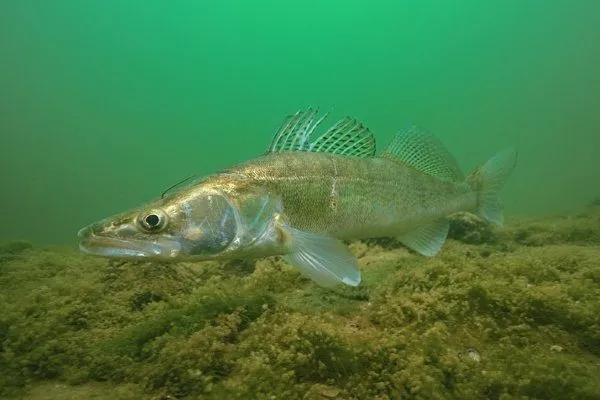
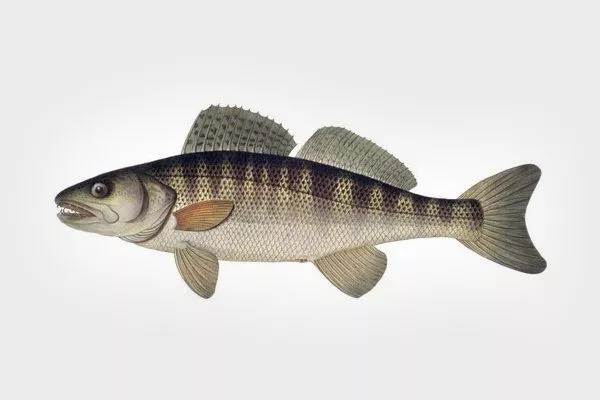
But looking at the pike perch, such doubts arise – it has all the characteristics of a carnivorous fish:
- the head is flat and elongated, in the mouth there are several rows of small and sharp teeth;
- there are large, closely set fangs;
- the body is elongated, flattened from the sides;
- the mouth line is shifted beyond the far border of the eyes - to open the mouth wide;
- small, dense scales of the ctenoid type (the posterior edge is provided with teeth or spines);
- the front fin on the back has hard rays;
- The gill cover has sharp serrations.
- the dorsal fins are separated by a gap or touch each other;
- the first dorsal fin has spiny rays, on the second, only the first rays are spiny, the rest are soft;
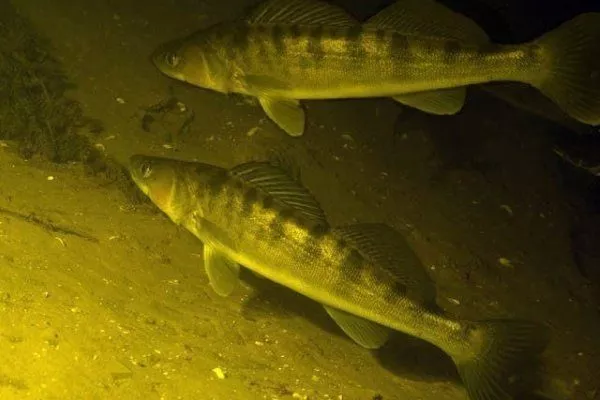
- the back is colored greenish-gray, the belly is white, on the sides there are transverse stripes of brown-black color (8, 10 or more);
- dorsal and caudal fins - with membranes, dotted with dark spots;
- the color of the pectoral, pelvic and anal fins is pale yellow;
- eyes - large and bulging;
The pike perch's eyes can rotate, so when hunting it is able to see in all directions - ahead and behind, below and above.
The maximum weight of the common pike perch is 20 kg. It reaches 1 m 30 cm in length.
Where does pike perch live?
Pike perch do not tolerate oxygen deficiency well—this characteristic determines the habitat of this predatory fish. Pike perch also dislike waters with high levels of suspended solids, methane, and pollutants.
Ideal water for zander:
- running water;
- hard bottom;
- many keys and springs;
- no algae;
- there are steep pits with uneven bottoms;
- depth more than 3 m.
The common pike perch is found mainly in deep freshwater bodies of water – lakes, rivers, reservoirs.
Pike perch habitats in Russia:
- the north of central Russia – Leningrad, Pskov and Nizhny Novgorod regions;
- Southern Black Earth Region – Voronezh, Tambov, Belgorod, Rostov, Kursk and Lipetsk regions;
- Eastern Volga region – Penza, Kirov, Ulyanovsk, Saratov, Samara regions and Mordovia.
This predator is not afraid of low temperatures and can be found in the northwest of the country – in the Neva, Lake Ladoga, Lake Sumozero, and Lake Sandal. Besides the Baltic basin, pike perch inhabits the rivers and tributaries of the Black and Caspian Seas. The Ural River delimits its eastern range. Pike perch are also found in reservoirs such as the Saratov, Sheksna, Rybinsk, and others.
The pike-perch is a sedentary fish. It prefers moderate depths of 25-40 meters. It prefers clean bottoms, such as rocky, pebble, or sandy bottoms. The pike-perch's habitat:
- Caspian Sea. Most pike perch are found in the central and southern parts of the Caspian Sea;
- Black Sea. In the northwest, in the Crimea region, near the deltas of the Southern Bug and Dniester.
Types of pike perch and its "relatives"
Pike perch is not a species, but a genus consisting of individual species. In Russia, there are two freshwater species and one saltwater species:
- Pike perch (Sander lucioperca) – belongs to the perch family, species – ray-finned.
- Volga pike perchAnother name for this fish is zander. It's practically indistinguishable from the common pike-perch except for its size. The zander is a small fish, growing to no more than half a meter in length. Its maximum weight is 2,300 g. It's considered a rare species. Catching and keeping it is prohibited by law.
- NauticalA small predatory fish, up to 50 cm in length. Weight: up to 2000 g. Habitat: Caspian Sea, western Black Sea. Does not enter fresh water.
External signs:
- light gray color;
- There are 12-13 transverse stripes on the body.
Caspian pike-perch have standard dorsal fins with gaps. Black Sea pike-perch have no gaps; the fins touch.
Outside of Russia, there are also fish from the pike-perch family:
- Canadian. Found in freshwater rivers and lakes across North America, the Canadian walleye has a yellowish-green body covered with dark spots. This fish can completely blend in with the bottom, earning it the nickname "sand walleye." The maximum weight is 3-4 kg, but the majority of the population is comprised of individuals weighing 1-2 kg. Lifespan: 17-18 years.
- Light-finnedIt lives in waters of Canada and the United States. Its distinguishing feature is its delicate golden fins. Its sides are chestnut and amber-lemon shades. This coloring has earned this fish the nickname "yellow walleye." Its back is dark, with brown hues. Its maximum weight is 10-11 kg. Its length is over a meter.
What does pike perch eat?
Pike perch prey on all kinds of fish, including roach, gudgeon, sabrefish, sprat, gobies, bleak, and young carp and bream. This predator is extremely demanding of water quality—it won't be found in turbid or swampy waters—but it's not picky about its food. Fish is a favorite, but not the only, component of its diet. Pike perch will eat any organism—anything crawling, lying, or swimming can be eaten.
Besides fish, pike perch eats:
- crayfish;
- dead eels;
- insects and worms;
- frogs;
- sometimes it even eats its own offspring.
Pike perch prefer small, narrow fish to feed on, matching their mouths. They find it difficult to eat larger fish, so they're reluctant to catch species like bream. In summer, this predator feeds close to the shore and can often be found on sandbanks. Feeding time for pike perch is about half an hour, and they hunt before dawn and after sunset.
Small pike-perch eat worms and bottom-dwelling creatures, and only with age do they become real predators.
When and how does it spawn?
As soon as winter ends and the ice melts, the predator begins to prepare for spawning by eating a lot. It moves to shallow water to hunt for fry. Sometimes, zander swim upstream for a long time in search of prey. This is the best time to catch large fish.
Before spawning, smaller pike-perch stick together. Larger fish prefer to remain solitary. After a good feeding, the fish head to the spawning grounds. They move slowly, continuing their hunt along the way. Preparation for spawning lasts 3-4 weeks.
Water temperature influences spawning time. The optimal temperature is 10-18°C. In the south of the country, spawning begins in April, and in the central zone, in May-June. Females lay their eggs late in the evening or at night.
Spawning
Before spawning, pike-perch seek out a secluded nesting site. From deeper waters, they migrate to shallows, bays, creeks, and channels. Lake and saltwater fish also come here to spawn. Pike-perch nest in areas with abundant grass and snags. The fish—male and female—work together to build the nest. It is 5-10 cm deep, oval in shape, and up to 60 cm long.
The number of eggs laid depends on the female's size. Specimens weighing 7-8 kg can lay 300,000 eggs at a time. Pike-perch eggs are small, measuring 1 mm in diameter. Fertilization involves one to three males. Males not involved in fertilization also participate in spawning, but their role is to guard the offspring until they hatch. There is also a guard male, responsible for cleaning the clutch of silt and aerating the water.
Once the fry hatch, spawning is complete, and the adult fish return to deep water. The growth of the fry depends on the amount of food in the reservoir. Under favorable conditions, the fry grow to 20-22 cm by winter; if food is scarce, they grow to 10 cm. After the onset of cold weather, the growth of the young of the year ceases.
Is it possible to catch zander and if so, how?
Zander fishing is prohibited in most regions. In 2019, fishing was only possible in the Veselovskoye and Proletarskoye Reservoirs on the Manych River, and only during the non-spawning season. The fishing limit for the entire Don River restricted area is two fish per day, with a combined weight of no more than 5 kg. Below, we'll discuss zander fishing in compliance with the aforementioned laws.
Zander are cautious and secretive predators, especially large ones. You won't catch them with a large, brightly colored spoon. They're best caught with live bait or a rig rigged with small whitefish.
Although zander is a dawn fish, it can also be caught during the day. At night and at dawn, it approaches the shore to hunt in the shallows. Here, zander swallow all sorts of small fish. During the day, the predator retreats to pits, from where it can make short forays in search of prey.
You need to catch zander at a certain time:
- At dawn – before the sun has risen. As soon as the sun rises, fishing can stop.
- After sunset. Fishing is best until midnight.
When the fish are biting, the pike perch comes close to the shore and may even jump out of the water.
Unlike pike, zander don't sit in ambush all the time; they're active. They're caught from the bottom, only coming to the surface to hunt for small fish. The optimal time for fishing is late winter and after the spawning season has ceased. However, zander fishing isn't currently available everywhere; there are official bans on zander fishing in most regions.
Equipment
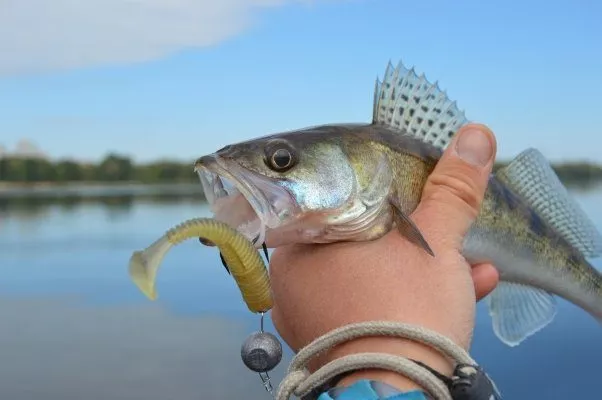
To catch pike perch, natural and artificial baits are used: live bait, wobblers, spoons, and jig heads.
To deceive the predator, fishermen often tie several hooks (3-5) on 30-cm leaders above the spoon. Small white twisters are attached to them, and tassels of feathers or thread can also be attached. The zander, thinking the spoon is chasing the hooks, outruns the "competitor" and attacks the hooks.
Fishing by season
Zander feed year-round, so there's a chance to catch one in any season. The key is to approach fishing wisely and take into account the bite patterns specific to each season. Zander fishing techniques depending on the season are listed in Table 1.
Table 1
| Time of year | Fishing method |
| Winter | They bite well on a tip-up with live bait. Zander can also be caught from the ice using a balance bait shaped like a small fish. If used correctly, the rig realistically imitates the movement of a small fish. Zander respond best to yellow, gold, and red lures. In winter, the predator is sedentary and responds well to large jigs baited with sprat. Zander aren't afraid of noise, so you can safely drill holes in the ice. |
| Spring (before spawning) | During this time, the best time to catch zander is with a spinning rod rigged with a spoon. A polyurethane bait can also be used. Shore jigging is also consistently effective. In spring, the predator actively hunts for fry, emerging from its deep burrows. When the feeding frenzy begins, catching zander is easy; the key is finding them. |
| Summer (after spawning) | Fish should be sought in all layers of the reservoir. Wobblers are best for this purpose. The optimal length is 3-6 cm. Wobblers with good buoyancy and diving ability should be used. In summer, predatory fish seek out areas with varying depths. Pike-perch often hang out near breakwaters or bridge piers, under dams and rapids. In summer, the best time to catch them is at dawn. |
| Autumn | At this time, zander choose the quietest and deepest areas. The bottom is rocky, pebbly, or sandy. In the fall, they avoid silt. In the fall, zander respond best to bottom fishing and dead bait. The optimal bite time is September to mid-October. |
Zander can be caught year-round, as long as the water is still fresh, using a bottom fishing rod. This tackle consists of a short rod (up to 3 m), a spinning reel, and a sinker up to 60 g. The fishing line used is 0.25 mm thick, up to 100 m long. Besides live bait, you can also use fatty leeches, a bunch of worms, a piece of fish, or a frog.
Fishing out
The zander's bite is not particularly sharp, similar to that of a pike. To land this predator, you need to hook it firmly—sharply and forcefully. Most often, hooking occurs through the jaw or mouth, but swallowing is rare.
The pike-perch doesn't resist for long. Immediately after hooking, a violent reaction occurs—the fish spins around, twitches violently, and shakes its head, trying to break free. When trying to move the pike-perch, it hits the bottom. When brought to the shore, the fish begins to thrash—but only briefly. Just half-pulling its body out is enough to calm the trapped predator.
When removing the pike perch from the hook, you need to be careful - it is easy to get injured on the sharp gill covers and fin rays.
A pike perch brought to shore barely struggles. If left on the shore, it falls asleep in minutes.
What is the difference between zander and pike perch?
The zander is very similar to the pike-perch. The coloring, horizontal stripes, and structure are practically identical. You can distinguish the zander from the pike-perch by the following characteristics:
- The zander has darker transverse stripes and more regular outlines.
- He has no fangs, all his teeth are straight.
- The head is wider and shorter.
- The scales are larger.
Catching zander is punishable by law, as this fish species is listed in the Red Book of Russia.
The economic importance of pike perch
Pike-perch has almost no bones—a major advantage that few freshwater fish can boast. Pike-perch has one drawback: it's difficult to clean due to the tightly packed scales.
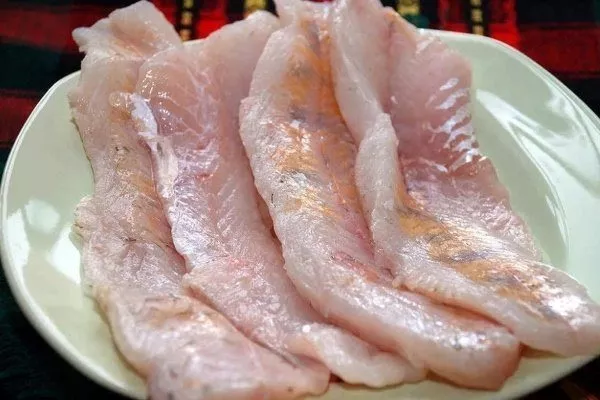
Characteristics of pike perch meat:
- Protein in 100 g is more than 18 g, fat - 1.1 g, water - 80 g.
- Contains 20 amino acids, 50% of which are essential and not produced by the human body.
- Carbohydrates are absent, and fats are minimal. 75% of the fats are mono- and polyunsaturated fatty acids.
- Caloric content is low, only 84 kcal per 100 g.
- Rich in vitamins and minerals. Contains vitamins A, B1, B2, C, PP, E, phosphorus, calcium, magnesium, and iron.
Pike perch meat is healthy to eat regularly, it helps:
- improving brain function;
- lowering sugar and cholesterol levels;
- reduction of blood viscosity;
- normalization of the gastrointestinal tract;
- improving the condition of the skin, hair, and nails;
- normalization of metabolic processes.
Thanks to the quality of its meat, pike perch is considered a valuable commercial fish. Or rather, it used to be. Today, its catch has declined significantly due to declining numbers. Pollution also contributes to the population decline—pike perch do not tolerate dirty and turbid water. Poachers have also contributed to this decline, mercilessly catching the fish in any quantity and at any time of year.
Pike perch is of great interest to sport fishermen. However, it can only be caught in two places: the Veselovskoye and Proletarskoye reservoirs on the Manych River, and only outside the spawning season.
Breeding pike perch in captivity
Pike perch is a predator, meaning it can only be bred in open ponds as a supplementary species. The main prey is a herbivorous fish—carp or silver carpAnd the pike perch becomes an orderly – it destroys the sick and trash fish, maintaining the health of the population.
Only freshwater pike perch can be bred, as the marine species requires salt water.
Pike perch is a good object for artificial breeding:
- it grows quickly;
- gains a lot of weight;
- It is resistant to diseases, so it does not cause any special problems.
Capture of breeders for breeding (before spawning)
Pike perch are sensitive to mechanical stress, so they must be caught with extreme care. If you handle a fish from water with a temperature above 10 degrees Celsius, it may die within 3-4 days.
Spring-caught fish spawn poorly in captivity, requiring maturation stimulation with special injections. It is recommended that breeders stock up during the fall and winter.
Manufacturers' excerpt
For captive breeding, broodstock weighing 1.5 kg is recommended. This is the optimal choice, as larger specimens are less adaptable to captive environments. Fish farms are advised to maintain their own broodstock.
In summer, breeders are kept in nursery ponds and fed fresh fish. A pike-perch's daily food requirement is 2% of its body weight. In winter, breeders are transferred to flow-through wintering ponds. The forage fish in such ponds constitute 20% of the predator's body weight. Pike-perch's primary food source includes perch, ruff, young-of-the-year carp, and roach weighing 10-30 g.
Good feeding during winter is the key to successful spawning. If there's not enough food, female fertility and conception rates will decrease.
About 10 days before spawning, when the temperature reaches 8 degrees Celsius (46 degrees Fahrenheit), the females are separated from the males. Females have a firmer, lighter, and more swollen belly. The females and males are kept in separate cages. To avoid damaging the pike perch's sensitive skin, wear rubber gloves when sorting them. When the water warms to 10 degrees Celsius (50 degrees Fahrenheit), preparations for spawning begin.
Stimulation of maturation of milt and eggs
To stimulate reproductive maturation, female pike-perch are given pituitary injections. It's preferable to use pike-perch pituitary gland, but it's not necessary—you can use the pituitary gland of other fish, such as carp or bream.
Pituitary glands are harvested during the winter season or immediately before spawning. The extracted glands are stored in tightly sealed glass jars filled with anhydrous acetone. The pituitary gland to acetone ratio is 1:20. After half a day, the acetone is replaced with pure acetone, and the glands are kept in this acetone for another 7 days.
After a week, the glands are placed between sheets of paper and dried in a warm room. The dried pituitary glands are placed in test tubes and sealed. One dried pituitary gland weighs 3-4 mg.
During the pituitary gland injection, large fish are anesthetized. After the injection, the pike perch are immediately released into clean water.
The powdered pituitary gland is diluted with a 0.5% saline solution at a ratio of 1 ml per 4 ml of powder. The injection is administered using a medical syringe. The injection site is the fish's dorsal muscle. The dosage is 1 ml per 1 kg of live weight.
How to equip cages and artificial spawning grounds?
Preparing for spawning involves constructing artificial spawning beds. These are essentially nests, which can have various designs and shapes. Various artificial substrates are used. The base of the spawning bed is made of metal angle iron, with the frame submerging the artificial substrate. Two or three metal or wooden frames covered with wire mesh are attached to the frame. The spawning substrate is secured to these mesh frames.
The nest size should correspond to the dimensions of the spawning cages. The latter are 1 x 1 x 2 m in size, with a mesh size of 10 mm. The cages are lowered into the water before introducing the breeders. The optimal depth is 1.5 m. The bottom of the cage should be at least 20 cm above the bottom.
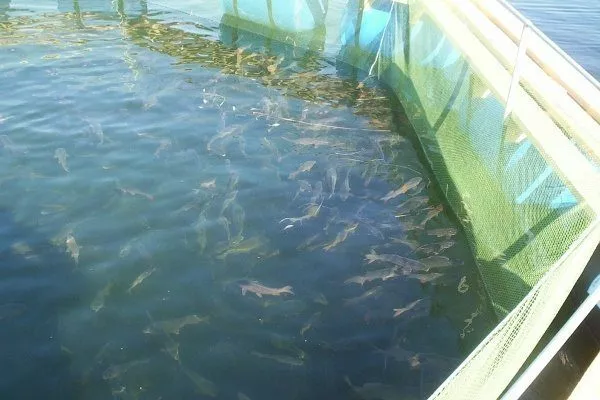
Spawning in cages
Once the water warms to 10 degrees Celsius, the breeders are released into the cages. One male and one female are placed in the same cage. A checkup is performed after 24 hours. If eggs have been laid, the female can be removed, but the male should remain to aerate the eggs.
After two days, the cages are inspected again. If the male is healthy and has not lost his secondary sexual characteristics, he is left for another three days, with the artificial nests replaced with new ones. One female lays 200,000 eggs.
Development of eggs
Spawning should be carried out so that incubation occurs under the most favorable conditions—at a water temperature of 15°C. If the water is warmer, the eggs develop faster, but most of the prelarvae die within the first few days of life.
At 15°C, egg incubation lasts 5-6 days. To determine the mass hatching of prelarvae, take a sample from the artificial nest by placing the eggs in a shallow container and observing their development. If all prelarvae hatch within a few minutes, it can be assumed that mass hatching will occur in the nest within 3-4 hours.
On the fourth day after fertilization, the nests are removed from the cages. The nests are placed in fry ponds on stakes set at a depth of 0.5 meters. A single nest typically contains approximately 200,000 eggs. The intervals between adjacent nests are 2 meters.
How does artificial incubation of eggs take place?
Until the eggs and milt are collected, males and females are kept separately. The water in which the breeders are kept is oxygenated, and the water in the tanks is changed every eight hours.
150 ml of caviar is placed in a 2.5 ml container. One liter of caviar contains approximately one and a half million eggs. The male is placed on its side and, with gentle pressure on its abdomen, sperm is collected with a long pipette. This is then used to sprinkle the eggs. The eggs and sperm should be mixed, which is done with a feather.
To improve fertilization of the eggs, use Woinarovich's solution. Its ingredients are table salt (40 g), urea (30 g), and water (10 l). The mixture is stirred for 10 minutes. The eggs are then rinsed with water and soaked in a solution of tannin (0.8 g of tannin per 10 l) to eliminate stickiness. The mixture is again mixed, rinsed, and placed in a special incubation apparatus. After 3-4 days, the prelarvae hatch and are transferred to a pond, a natural body of water, or raised in special fish-breeding tanks.
Commercial farming of pike perch
Before breeding, it is necessary to check whether the reservoir meets the conditions necessary for growing pike perch.
- ✓ Availability of running water.
- ✓ Solid bottom without silt.
- ✓ Depth more than 3 meters.
- ✓ No algae.
The reservoir must be:
- large enough;
- clean – free from natural and anthropogenic pollution;
- preferably with a pebble or sandy bottom;
- without thickets;
- with high oxygen content.
Unlike pike, zander introduced into industrial ponds with herbivorous fish do not eat commercial fish, as their mouth structure prevents them from consuming large prey. This predator hunts only small fish, acting as a pond "cleaner."
The best combination for a fish farming pond is pike perch and carp. This combination has been shown to increase pond productivity by 1.5-2 times.
Ideal breeders are up to 4 years old, weighing up to 1.2 kg. Young fish are better suited for spawning in artificial conditions.
In summer, the predator is fed small fish weighing 15-25 grams. These are caught in advance in reservoirs. Feeding frequency is once a week. A week's supply is released into the fish tank. In winter, the fish are transferred to winter cages submerged at a depth that prevents freezing. If all maintenance conditions are met, zander quickly gain weight and spawn successfully in the cages.
This predator grows especially rapidly in southern regions. Pike perch parameters depending on age, when fed only fish, are shown in Table 2.
Table 2
| Age | Weight, g | Length, cm |
| yearlings | 80 | 20 |
| two-year-olds | 500 | 30-35 |
| three-year-olds | 1100 | 40-50 |
| four-year-olds | 2000 | 50-55 |
| five-year plans | 3000 | 55-60 |
Profitability of pike perch breeding
Calculating the profitability of raising pike perch in the wild is difficult. If you use the predator as a nurse, the main income will come from the main crop—carp, silver carp, or other herbivorous fish. However, the cost of maintaining the predator is low—once you stock a pond with pike perch, all that remains is to maintain its population.
The ponds' fish production is 135-225 kg/ha. One hectare of pond can yield 90,000-150,000 pike-perch.
The profitability and productivity of pike perch farming depends on the breeding method:
- Extensive – in natural ponds.
- Semi-intensive – in cages.
- Intensive – in closed installations.
The use of specialized feeds is limited due to their high cost. Feed accounts for up to 60% of the fish's production cost. Pike-perch are most often raised using natural food sources. Compound feed is typically used when raising particularly valuable fish species such as sturgeon and salmon. Pike-perch farming profitability:
- in open waters – 10-15%;
- in cage farms – 20-25%.
The disadvantage of cage farms is their seasonality. They operate during warmer months. The most profitable option is to grow pike perch in closed tanks. This is achieved using special recirculating aquaculture systems (RAS), which utilize a circular circulation system. The water passes through biofilters, becoming clean and disinfected. In RAS systems, the stocking density is 50 kg of fish per cubic meter. The water temperature is constant at 20-24°C.
The average profitability of pond fish farming is around 20%. Farming pike perch in cages or recirculating aquaculture systems requires additional investment, so the cost will be even higher. Inexpensive fish like pike perch are best raised naturally in ponds with carp and silver carp, while more expensive methods are best reserved for valuable fish like salmon.