
Everyone is familiar with the pike. This predatory fish is considered one of the largest freshwater fish. Pike fishing is exciting, but to catch a trophy fish, it's important to know where the fish lives, what its lifestyle is, and what it eats. This article provides all the information about this fish.
What does a pike look like?
The pike is considered the most voracious predator in the country's waters. It leads a secretive, sedentary lifestyle. It tends to hunt prey at close range from ambush, stalking its next meal from cover. However, during periods of intense feeding, the fish changes tactics, moving around its territory, and upon spotting a target, it attacks and aggressively pursues it.
The structure of fish and its features
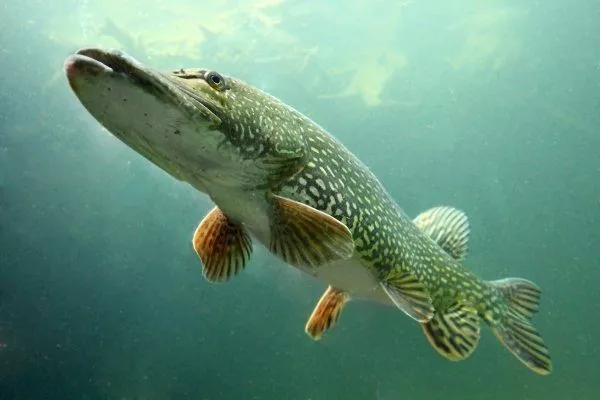
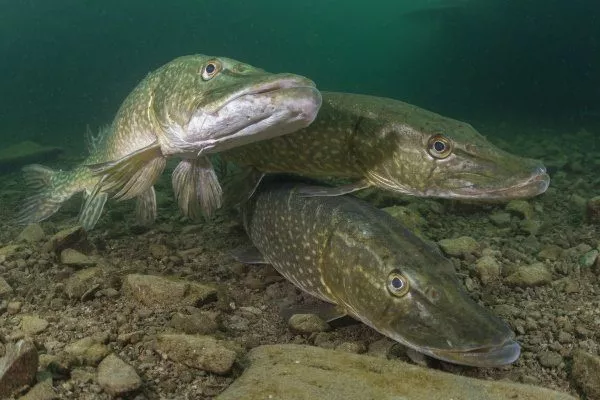
Pike are easy to recognize: they have an elongated, almost cylindrical body. This structure, coupled with the presence of single fins attached to the tail, allows the fish to reach lightning speeds.
The plumage is well-developed, characterized by a paddle-like or rounded shape, which also positively impacts the pike's hydrodynamics. The scales are tightly packed together, forming a dense, monolithic covering over the entire body—this helps protect the fish from the sharp teeth of predators or other fish.
Mouth, vision and sensory organs
The fish has a flattened, wedge-shaped snout, which allows the pike to see frontally, helping it judge the speed and distance of moving fish. This skull structure and high-set eyes allow the pike to scan the water not only above it but also to the side, as well as to see objects below it.
However, due to the wide-open mouth, the angle of view below the fish is significantly reduced, preventing the fish from seeing a nearby target if it's below it. Anglers aware of this characteristic try not to bury their bait too deep.
This predator has excellent hearing, enabling it to hunt even in turbid waters, detecting the source of even the slightest vibrations from a great distance. The pike has a wide, elongated snout, providing a large catching surface, and the unique structure of its gill membranes, which are separated from each other, allows it to open its mouth wide to catch larger fish.
Teeth and their replacement
The predator's mouth is packed with a huge number of sharp teeth, some of which are located on the jaws and consist of fangs of varying sizes. On the tongue and palate are visible setae, a hairy covering of needle-like structures reminiscent of toothbrush bristles.
Interestingly, pike don't chew their prey with their teeth; they use them to hold on to it. Their teeth are the fish's main weapon, as they can cause serious injury to inexperienced anglers who don't know how to handle them.
Another characteristic of pike is the shedding of old and damaged teeth. Some believe this occurs after spawning, during the full moon. Pike teeth are not shed periodically, but continuously. While teeth are shedding, the fish continue to feed, meaning they can be successfully caught. A lack of bite immediately after spawning indicates a decline in strength in the exhausted fish after spawning, not a shedding of teeth.
Color
Pike have a distinctive camouflage pattern, allowing them to remain undetected anywhere in the water. They have light-colored transverse stripes and spots across almost their entire body, except for their belly, creating a camouflage pattern. This is especially beneficial for pike in areas with dense vegetation and snags.
It's difficult to say exactly which color is considered the background and which is part of the pattern. The tone depends on the fish's age, habitat, diet, and other factors. Young specimens have a lighter coloration, which darkens as the fish matures. The most common coloration, characteristic of many fish, is gray-green with olive stripes and spots. Typically, the fish has a dark back, a light yellow or gray-white belly with gray speckles, and gray fins with light streaks and stripes.
Types of pike
Pike is a large fish with seven species. These include the common pike, American pike, Amur pike, black pike, southern pike, Aquitaine pike, and muskellunge.
| Variety | Maximum length | Weight Limit | Average life expectancy | Color features |
|---|---|---|---|---|
| Ordinary | 1.5 m | 8 kg | 10 years | Gray-green, brown, gray-yellowish |
| American | 0.4 m | 1 kg | 10 years | Redfin, southern without red fins |
| Muskellunge | 1.8 m | 32 kg | — | Silvery, green, brownish-brown with spots or stripes |
| Amur | 1.15 m | 20 kg | 14 years old | Silvery or golden-greenish with black-brown spots |
| South | — | — | — | — |
| Black | 0.6 m | 2 kg | — | Mosaic pattern on the sides, dark stripe above the eyes |
| Aquitaine | — | — | — | — |
Ordinary
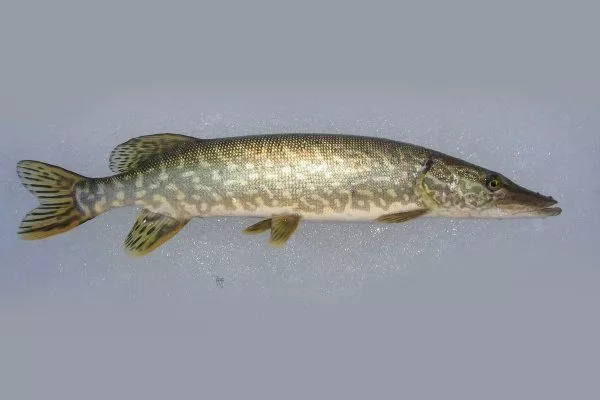
A typical representative of the genus. It inhabits many freshwater bodies in Eurasia and North America. Its body length reaches 1.5 meters with an average weight of 8 kilograms. The color of the common pike varies depending on its habitat. Gray-green specimens, brownish individuals, and grayish-yellowish fish are found.
The common pike prefers to settle in thickets, stagnant waters, and the coastal part of the reservoir.
American
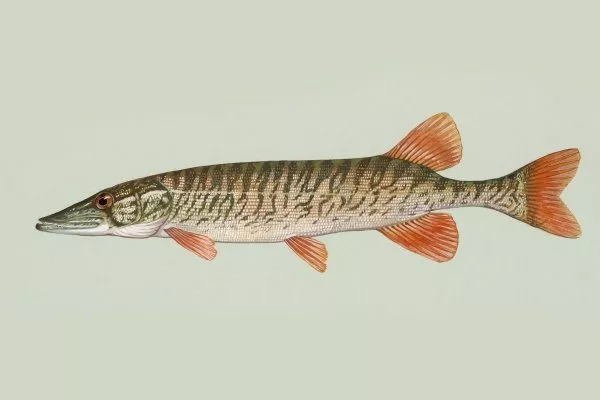
This is a redfin pike found only in eastern North America. It is divided into two subspecies: the northern redfin pike and the southern redfin pike, which inhabits the Mississippi River and waterways flowing into the Atlantic Ocean.
No subspecies of American pike are particularly large. They grow to 35-40 centimeters in length and weigh up to 1 kilogram. A distinctive feature is their shortened snout. Southern pike do not have red fins. The lifespan of American pike is no more than 10 years.
Muskellunge
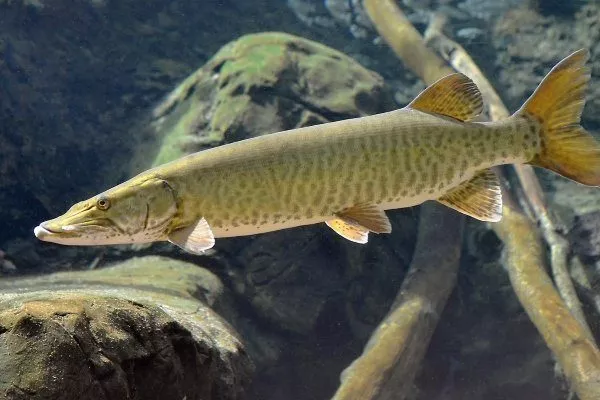
The largest species of pike, considered rare. The fish was named by Native Americans, who called it maashkinoozhe, meaning "ugly pike." The fish also received the name "giant pike" due to its impressive size. Some specimens can weigh up to 32 kilograms and measure up to 1.8 meters in length. The pike's distinctive features are its silvery, green, or tan body color. Its back is marked with spots or vertical stripes.
Amur
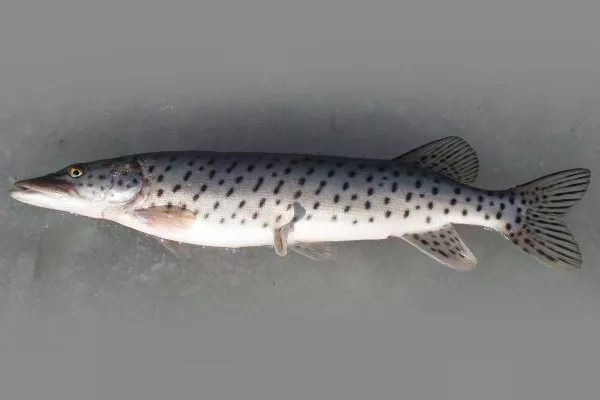
A fish with small silvery or golden-greenish scales, the Amur pike has a striking coloration—numerous black-brown spots scattered across its body, from head to tail.
Members of this species grow up to 1.15 meters long and weigh up to 20 kilograms. The Amur pike inhabits the waters of Sakhalin Island and the Amur River. Its lifespan is up to 14 years.
South
Previously, the southern pike was considered a subspecies of the common pike. The species was first recognized in 2011. It inhabits waters in central and northern Italy.
Black
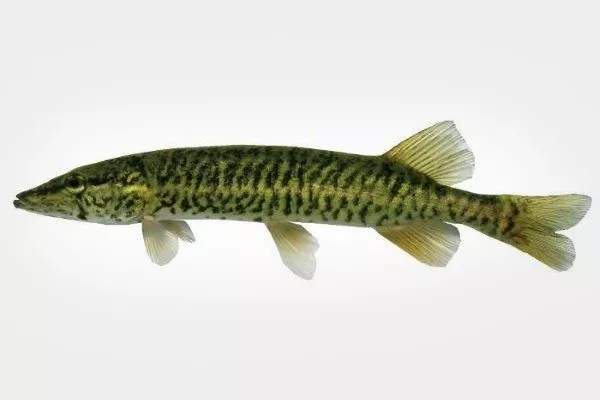
A predator native to North America, it inhabits lakes and vegetated rivers from the southern shores of Canada to Florida in the United States and beyond, to the Great Lakes and Mississippi Valleys. Adults reach up to 60 centimeters in length and weigh up to 2 kilograms. Externally, the black pike is similar to the common pike. Distinguishing features include a mosaic pattern on the sides and a dark stripe above the eyes.
Aquitaine
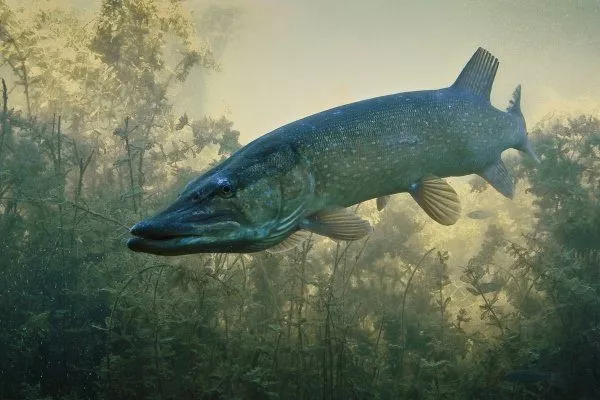
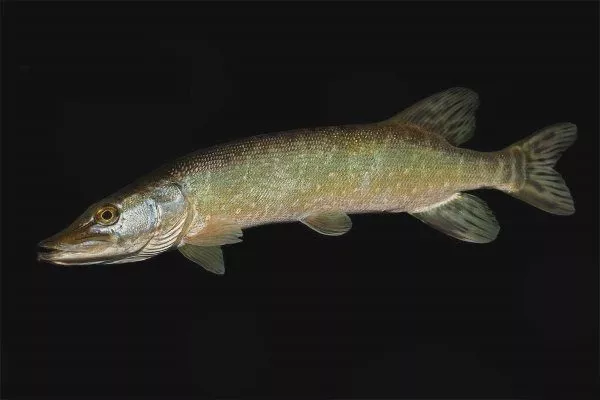
A young species that was first described in 2014. The Aquitaine pike is native to France, where it inhabits virtually all bodies of water.
Where does the predator live?
Pike inhabit freshwater bodies in North America and Eurasia. They typically hide in slow-flowing or stagnant waters, coastal areas, and thickets. They are sedentary fish living in lakes, rivers, and ponds. However, they are often found in partially desalinated sea areas, such as the Curonian, Finnish, and Riga Gulfs of the Baltic Sea.
In lakes and ponds, this predator swims close to the shore, staying in trash-strewn shallows with algae growth. In rivers, the fish is found not only near the coast but also in deep water. Pike prefer to inhabit the estuaries of rivers flowing into large reservoirs.
Pike thrive in waters with sufficient oxygen levels, as even the winter low water levels can kill them. They tolerate acidic water very well, which is why they are often found even in swamps. They tend to avoid fast-flowing and rocky rivers.
The main requirement for fish to thrive is abundant vegetation. In northern regions, fish often hide behind rocks, bushes, or snags—there they lie in wait for their prey.
While lying in wait, the fish remains motionless, then suddenly and swiftly lunges at its prey. It's rare to break the pike's deadly grip; once it's in pursuit, there's no escape. This fish is known for its ability to leap high into the air and to swallow its prey head-on.
What do fish eat?
Pike fry prefer microorganisms found in the water. However, as they grow, they begin to feast on the fry of smaller fish. Adults' diet consists exclusively of fish. Small live fish, including crucian carp, roach, bleak, and rudd, are especially attractive to these predators. perch and fish of the carp family. Wary of unfamiliar fish.
Pike have a feeding frenzy 3-4 times a year, usually before spawning, after spawning, in May-July, and in September-October.
These dates are considered conditional, since much depends on weather conditions.
Spawning and offspring
Pike spawn at temperatures of 3-6 degrees Celsius, immediately after the ice begins to melt, at depths ranging from 15 to 1,000 meters (depending on the location). During spawning, pike swim to shallow water and splash noisily. In natural waters, males reach sexual maturity at four years of age, and females at five.
Reproduction typically begins with the smallest specimens, followed by spawning time for larger specimens. During this time, pike stay in groups, with 2-4 males per female; larger females can have up to 8 males. The female pike swims ahead during spawning, with the males following close behind. During the spawning season, the fish begin rubbing against bushes, stumps, reed stems, cattails, and other objects. The fish do not stay in one place for long, but constantly move around the spawning grounds, spawning.
If the water level drops rapidly after spawning, mass death of the eggs occurs. This phenomenon often occurs during the spring drawdown (release) of reservoir levels.
Reaching 12-15 millimeters in length, pike fry are already capable of independently hunting carp larvae. Carp fish typically spawn after pike, allowing the young pike to become significantly satiated. Once they reach 5 centimeters in length, they switch entirely to feeding on the young of other fish.
In spring, pike migrate along with floodwaters to floodplain lakes. After some time, the connection between the lakes and rivers is severed, causing the lifestyle of these pike to differ significantly from that of their relatives living in rivers or larger bodies of water. Due to a lack of food, individuals of the same age can be 2-2.5 times smaller. Smaller fish become prey for larger predators.
Pike fishing
Pike fishing is a diverse activity that successfully utilizes a variety of lures and techniques. When fishing for pike with a spinning rod from the shore or a sandbar, spoons, primarily spinners, are most often used.
Seasonality
Every fisherman knows that pike are solitary fish, preferring slow-moving waters. They live near vegetation, nesting in holes and snags. Pike fry begin actively hunting from the first days of life. By the end of their first year, the young reach up to 40 centimeters in length and weigh up to 1 kilogram.
In large lakes, several dozen specimens are caught per season, reaching up to 1 meter in length and weighing up to 15 kilograms. The best fishing seasons are spring and fall.
In the spring Pike begin spawning. Fishing is prohibited during this period. After spawning, they begin to feed voraciously, which helps them regain their strength. Hungry over the winter, the fish pounce on anything within their sight and will take any lure. In spring, pike generally bite during daylight hours; at night, they sleep. Shallows and coastal vegetation are considered productive areas. Anglers achieve particularly good results on warm, cloudy days.
In the autumn periodAs the lean months approach, fish begin to store fat. In the fall, the bite is less intense, and pike stay in deeper waters where smaller fish migrate for the winter. However, the fishing is much more exciting, especially since pike gain weight during the summer and are energetic and fight hard. The meat of these fish is considered very tasty.
In summer Pike bite inconsistently, and if they do take the bait, it's extremely unreliable, often hooking only the bottom lip at the very edge and frequently coming off the hook. The best time for fishing is considered to be early afternoon until 4 p.m.
In summer, predators move to the thickets of water lilies, lotus, and water chestnuts, where they harbor numerous small fish and duck hatchlings. During this period, huge pike weighing 10-15 kilograms can be spotted almost in the shallows. With the right casting of a spoon or wobbler, you can catch a large specimen.
Spinning fishing
Both oscillating and spinning lures are good for pike fishing. However, anglers should be aware that spinning lures sink more slowly and are best used in fast currents and grass.
Wobblers are synthetic fish that imitate the behavior of small fish. They are classified as floating or sinking. Floating lures are used to catch pike in the upper layers of water—no more than 2 meters deep—while sinking lures are quickly lowered to deeper water. The optimal wobbler size is considered to be 7-12 centimeters. 4-6 centimeters are also acceptable, but this significantly reduces the chances of catching a trophy specimen.
Fishing out
Pike are reeled in using a landing net or gaff. If you manage to catch your first pike and don't have these tools handy, don't grab it with your hands—the pike will not only escape but also injure your hands.
The most reliable way to land a pike with bare hands is to bring the fish to the shore, apply pressure to its eyes with your thumb and index finger, and gently pull the fish out of the water. The only way to avoid injury is to use a fish extractor to remove the bait from the fish's mouth. The pike's mouth is opened with a gape.
How to catch a trophy pike?
Big-game fishing requires careful preparation and focus. First of all, large pike prefer large bait. Silicone monsters up to 25 centimeters long are considered more effective. Small fish won't approach such a "monster," but specimens weighing 7-8 kilograms will definitely pounce. Trophy pike are caught in a motorboat, dragging several lures at a slow speed.
A characteristic of this predatory fish is that after an unsuccessful hookset, it won't retreat to the depths or swim far; instead, it will return to its original location. Therefore, it's essential to repeatedly fish potential ambush spots. It's important to know that pike will never engage in a long chase, but they may take the risk from a distance of 10 meters. Fishermen have reported that pike sometimes leap out of the water in an attempt to snag the escaping bait.
Useful properties of pike
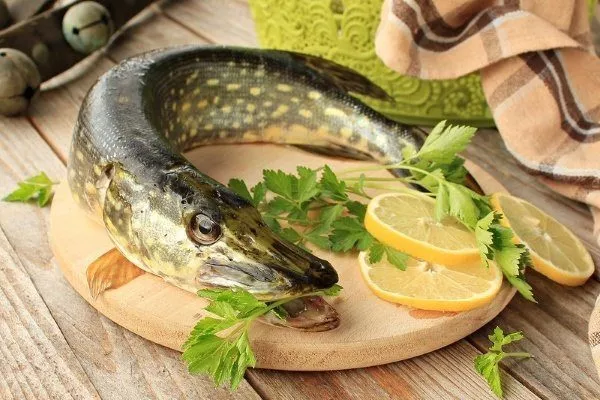
The main advantage of pike is its dietary properties, thanks to its low calorie content and minimal fat content. Pike meat is also rich in powerful natural antiseptics, which not only strengthen the immune system but also help fight bacterial infections. Therefore, pike consumption is recommended for flu prevention.
Pike contains phosphorus and potassium, B vitamins, and other nutrients—regular consumption helps reduce the risk of cardiac arrhythmia. Pike is very beneficial for people with cardiovascular disease, gastrointestinal problems, obesity, and vitamin deficiencies.
Do they breed and raise pike?
Pike are predatory fish, and for this reason, they should not be bred in ponds where carp or trout are raised. However, they thrive in natural lakes, ponds, and rivers where there are plenty of trash fish, which will form the basis of their diet.
Many entrepreneurs successfully farm pike in lakes with densely vegetated banks. Such areas are always teeming with small fish, making it easy for pike to catch prey. However, in sparsely vegetated waters where forage fish are scarce, successful pike farming is out of the question, as pike are prone to preying on smaller fish when starved.
When bred artificially, pike can gain weight much faster than in the wild. With abundant forage fish, young pike weigh an average of 400 grams, with some specimens sometimes reaching up to 1 kilogram.
Features of fish farming:
- Breeding yearlings are raised in nursery ponds alongside carp. The following year, most fish farmers retain only the replacement fry, and the rest of the stock is sold. Two-year-old fish are raised in carp breeding ponds, where they will feed on carp fry and crucian carp. In winter, the pike are placed in earthen cages, where they are stocked with 15-20 crucian carp or roach fingerlings at a rate of one pike.
- If a fish farm doesn't have its own broodstock, pike from natural waters are used to produce young. Due to physiological differences, at least five males are used per female. Earthen cages or small ponds with abundant bottom vegetation are suitable for breeding—spawning is only possible in this environment.
- On the third day, pike larvae are harvested from the cages. No later than 15 days after hatching, the larvae are transferred to nursery waters, where they can find food. To prevent the larvae from becoming trapped in underwater vegetation during harvesting, the vegetation is removed beforehand.
Growing pike in ponds is a laborious undertaking; it is preferable to use special equipment in which the eggs are inseminated and subsequently undergo artificial incubation.
In nursery ponds, the survival rate of juveniles averages around 50%. Ponds with a high concentration of trash fish contain no more than 400 pike per hectare, while those with few trash fish contain no more than 250. In ponds with no trash fish at all, up to 120 juveniles are released. In larger ponds, there are up to 300 juvenile pike per hectare of water surface. The ponds are stocked once every two years.
Interesting facts
The largest pike ever caught was a fish personally caught by Emperor Frederick II Barbarossa in 1230 in the city of Helboron. At the time, the fish was just under 3 meters long and weighed over 70 kilograms. It was ringed and released back into the lake. 267 years later, the same fish was caught in the same lake, this time measuring 5.7 meters in length and weighing 140 kilograms. Due to its long lifespan, the pike had turned completely white. The fish was released again, but was never seen again.
Another interesting fact is that, over the course of their long lives, these fish gain experience, grow, and seek out larger prey. They are capable of feasting on small ducks, muskrats, and other waterfowl. Individuals reaching over 2 meters in length can also feed on larger mammals, such as dogs, and, when reaching 5 meters in length, attack humans (such cases are unknown, but entirely possible).
Pike is a large predatory fish that can be bred in a private pond. Retail sales bring in a considerable profit, as the fish's meat is highly prized for its rich nutritional value, low calorie content, and beneficial effects on the human body.