
Perch is a river or sea fish whose behavior changes depending on the season. At different ages, perch feed on different foods, from young fry to larger fish that can fit in their mouths. Breeding perch at home is possible for a good profit when selling live fish. This article discusses their behavior, spawning process, habitat, and fishing techniques.
| View | Average weight | Average length | Habitat | Peculiarities |
|---|---|---|---|---|
| River | 400 g - 2.5 kg | 20-45 cm | Europe, Siberia | Unpretentious to breeding conditions |
| Yellow | 100-500 g | 10-25 cm | North and Central America | Cold-loving fish |
| Balkhash | 700 g - 2.2 kg | up to 50 cm | Balkhash-Alakol lakes | Elongated, narrow body |
| Nautical | up to 14 kg | more than 1 m | Atlantic and Pacific Oceans | Deep-sea species with large eyes |
External data
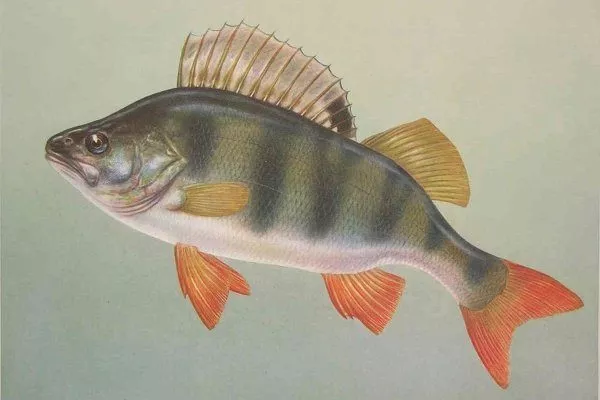
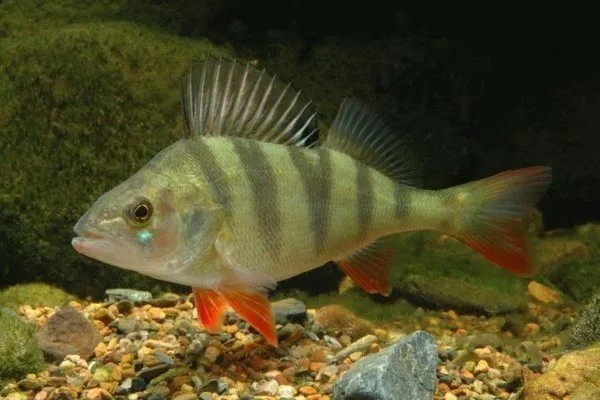
A distinctive feature of members of this order is the unique structure of the dorsal fin: it consists of a spiny anterior portion and a softer posterior portion. Some species have fused fins. The anal fin has one to three stiff spines, and the caudal fin has a distinctive notch. Almost all perch have bright red or pinkish pelvic fins.
Perch have large teeth arranged in several rows in a large mouth, and some species have fangs. The skin is covered with small scales and has noticeable transverse dark stripes. The posterior margin has a comb of serrations or small spines. The gill cover has fine serrations.
The average perch weight ranges from 400 grams to 3 kilograms, with sea giants reaching 14 kilograms. The fish are usually no longer than 30-45 centimeters, but specimens over 1 meter long have been observed. In the wild, these fish are preyed upon by large predatory fish, otters, herons, and humans.
Depending on the variety, perch can be greenish-yellow or gray-green in color. Saltwater species have pinkish or reddish hues. Rarely, individuals with a bluish or yellowish coloration are found. Deep-sea species have large eyes—a distinctive feature.
Habitat and distribution
Perch can inhabit a variety of habitats, depending on the body of water where they live. For most of their lives, they live near the bottom in light grass, near artificial or natural barriers. They also spend a significant amount of time in riverbeds with abundant food sources. Schools of small perch are found in arches where the water suddenly deepens.
Perch dislike fast-flowing waters, rapids, and sandbars. In still waters, ponds, and lakes, similar-sized fish gather in schools near vegetation. They venture into the shallows to feed on fry or small invertebrates.
The season also influences perch habitat. In autumn, when the water cools, schools of juvenile perch retreat to deeper, sloping bottoms. These areas are home to low vegetation, which harbors juvenile carp fish—a food source for predators. By feeding on these juveniles, perch gain the fat reserves they need for winter.
Perch lifestyle
Perch is a unique fish with distinctive behavioral characteristics that manifest differently at different times of the year. This lifestyle includes reproduction and diet.
Behavioral traits
At different times of the year, perch behave differently, depending on the movement of schools of small fish across the reservoir.
In the spring
After spawning, perch continue to inhabit the shallow bays that serve as spawning grounds. This is because schools of whitefish will be entering these same areas during their spawning season. This is a good time for perch to recuperate after spawning. Perch spawn until May, after which they gather in schools and leave the shallow, warm waters.
In summer
After spawning, the fish migrate to areas with slow currents and numerous areas suitable for ambush. They prefer to hide in areas adjacent to riffles and snag-filled areas. In extreme heat, the fish hide in boat docks, under bridge supports, overhanging cliffs, bridge spans, and leaning reeds.
Larger deep-sea bass inhabit more inaccessible areas, preferring deep holes with uneven bottom relief and pools. In larger bodies of water, they locate themselves on prominent elevations on the bottom, clusters of large rocks, and reed beds and lily pads.
In the fall
In early autumn, whitefish gather in schools, moving from the shoreline into the depths of the reservoir. Perch follow these departing fish. When the air temperature drops, all the fish move deeper—the deeper waters are much warmer. Once the perch migrate into these waters, they remain there.
In winter
As winter approaches, dead plants begin to decompose in the shallow waters, causing oxygen levels in the water to drop. These conditions don't faze perch, who only occasionally leave their deep-sea "stopping spots." All vital processes slow down, and the abundance of food in their wintering areas doesn't encourage the fish to be active. During this period, perch should be wary of other, more serious predators.
Only with the spring thaw do perch begin to feed normally again and swim around the reservoir. Schools of perch approach the mouths of thawed streams and rivers, which carry vital oxygen in their waters.
Reproduction
Perch reach sexual maturity at 2-4 years of age, with males maturing earlier than females. These predators spawn in late April and early May, when the water warms to 7-15 degrees Celsius. Water temperature plays a crucial role in perch spawning, as unfavorable conditions prevent them from spawning.
The fish spawn in snags, on the pond bottom, and other vegetation. The eggs are no more than 4 millimeters in size. The fish can lay several clutches at a time in different locations. The spawning process lasts several weeks, once a year.
When the fry hatch from the eggs, their diet consists of plankton. As they mature, they begin to feed on small invertebrates, then on small fish, including their fellow fish.
Diet
The perch's diet consists primarily of small fish, no larger than 6-8 centimeters, sometimes 12 centimeters. During the snowmelt season, these predators feed exclusively on worms and certain types of algae. During the warmer months, they hunt primarily fish. They prefer to feed on crayfish, small crustaceans, and invertebrates. They feed on fish that live near vegetation in open water.
They often feast on small roach and carp up to a year and a half old, as this is when they are less agile and swim slowly, making them easy prey. Perch also feed on other fish species that inhabit their surroundings, including:
- char;
- minnow;
- whitefish;
- gudgeon.
Perch are incredibly voracious and stupid, eating so much that their tails, which couldn't fit in their stomachs, stick out of their throats. This voracity and insatiability often cause perch to suffer, making them a favorite among fishermen, as they bite year-round. For ten months of the year, they feed on anything that moves.
Enemies
Perch is a predatory fish, but it also has many enemies, and its carelessness is explained by its enormous abundance. Some predatory fish, such as burbot and pike-perch, are not at all averse to fresh perch, and pike and catfish sometimes feed exclusively on this species. This is due to the perch's carelessness and slowness, and even its sharp spines cannot deter them. pike with tenacious jaws or catfishThere are a lot of perch, which makes them easy and quick prey.
Besides predators, perch suffer greatly from waterfowl, which prey on their eggs and fry. Char and whooping boar also feed on perch eggs. Sometimes, due to their voracity, the predator, chasing their prey at high speed, slips into the narrow burrows of non-predatory fish, gets stuck, and dies of starvation. Even a common whooping boar can deliver a fatal blow to a perch's mouth with a quick swipe of its dorsal fin.
Fishermen catch many perch using rods and other tackle. These losses are offset by the fish's rapid reproduction.
Diseases and parasites
Many perch diseases are related to parasites. Perch are primarily susceptible to protozoan infections, which can damage the gills, skin, intestines, and other organs. Parasitic diseases are numerous, but only apophallosus and diphyllobothriasis pose a danger to humans. Humans become infected with perch parasites when they consume raw or improperly smoked fish.
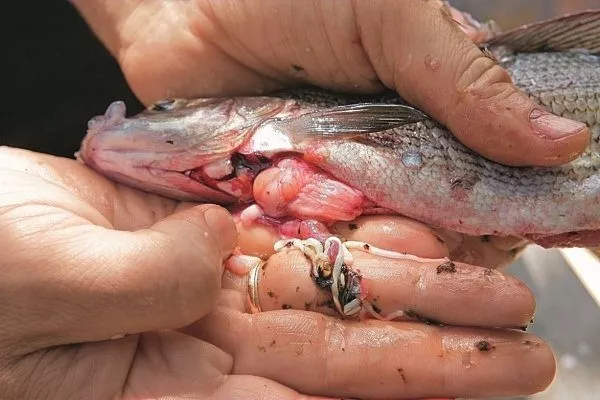
Diphyllobothriasis is caused by tapeworms, and apophallosis is caused by trematodes. A disease specific to perch is hepaticoliosis, which progresses due to nematode colonization in the fish's liver. This can lead to inflammation of the liver and gallbladder, which subsequently leads to general intoxication.
Trypanosoma, a disease common in bodies of water near Lake Baikal, is common. Symptoms include loss of reaction time, loss of coordination, and inactivity. When infected, perch begin to "spiral" through the water, rising to the surface and then sinking to the bottom, where they eventually die. This disease is not dangerous to humans.
Types of perch
The perch family comprises over 100 species and is divided into nine genera. Four species are known from the countries that formerly formed part of the Soviet Union.
River
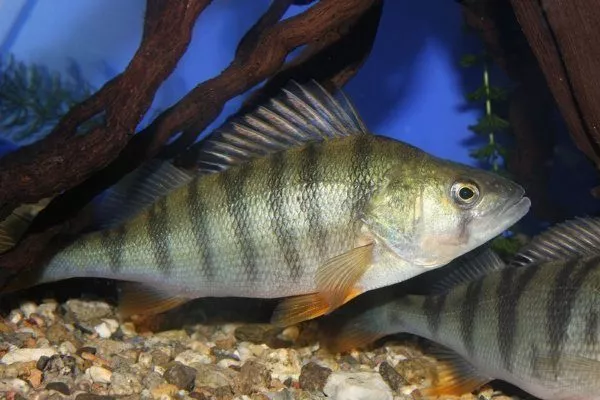
Freshwater perch that inhabit coastal waters rarely weigh more than 250 grams. Perch that inhabit the deep waters of rivers, lakes, and estuaries grow to 2.5 kilograms. River perch range in length from 20-25 centimeters, sometimes more.
The perch is common throughout the European part of the continent. In the east, its range extends to Siberia. Perch are not fussy about breeding conditions.
Yellow
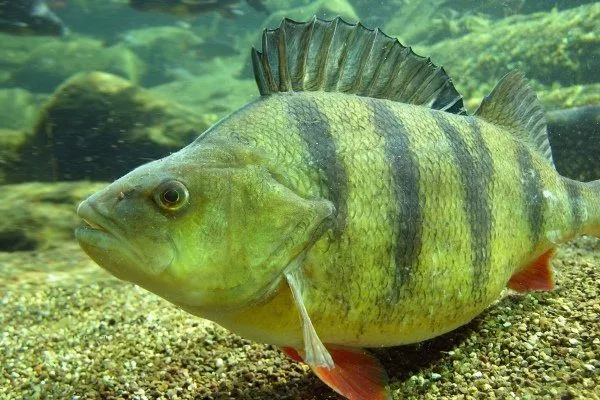
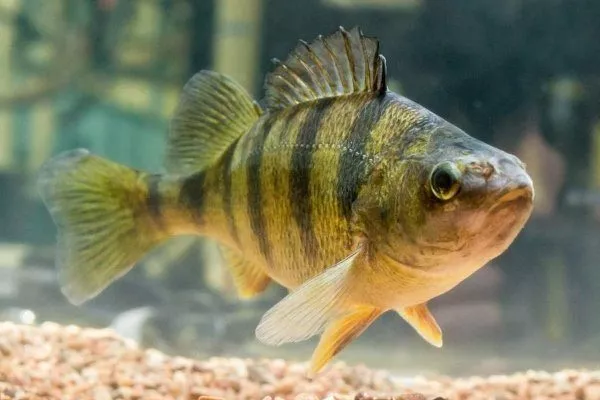
The fish is very similar in appearance to its European relative, the common perch. However, the yellow perch has a yellowish color and is larger. Its body is laterally compressed, elongated, and oval in cross-section. Its back is slightly humped, its head is small, and it has a large mouth and small eyes.
Yellow perch are small predators, averaging 100-500 grams in weight and approximately 10-25 centimeters in length. They are a cold-water fish native to most bodies of water in North and Central America.
Balkhash
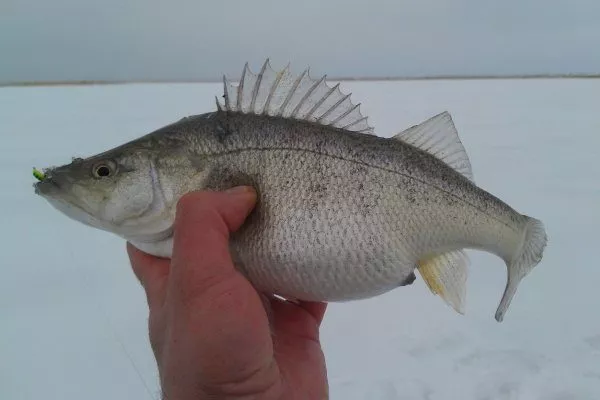
The perch has an elongated, narrow body covered with large scales. Its body coloration ranges from dark gray to almost black, depending on its habitat. Many coastal perch and juvenile pelagic perch have prominent, blurred, dark transverse stripes.
The Balkhash perch reaches 50 centimeters in length and weighs 1.5-2 kilograms. The average weight of the fish is around 2.2 kilograms. Many specimens weigh no more than 700 grams.
The perch's natural habitat is the Balkhash-Alakol lakes, the river basin, and other rivers of the Semirechye region. They are found in fast-flowing semi-mountain rivers, heavily overgrown ponds, lowland rivers, and reservoirs.
Nautical
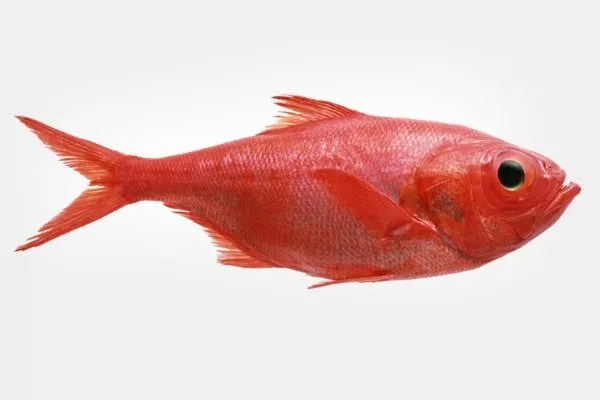
The sea bass is a predatory fish found at depths of up to 3,000 meters. It belongs to the genus Scorpaenidae. Externally, this sea bass is similar to the river bass, but has distinct internal structure and belongs to a different family and order of spiny-finned fishes. Sea bass can be found with bright red, solid, pink, or spotted-striped coloration.
Sea bass have bulging eyes. They feed on small crustaceans, fish, and invertebrates.
The ocean perch has a wide range of habitats. They inhabit intertidal and deep water zones. They are found in the Atlantic Ocean, the northern waters of the Pacific Ocean, off the coast of Ireland, in the northern waters of England and Scotland, and along the coasts of North America and Greenland.
Perch fishing
The aukha perch is listed in the Russian Federation's Red Book, so catching it is prohibited. This applies to legally caught perch.
Perch are sought where there are fry, that is, near the coastal zone. The predatory fish's favorite spots are backwaters overgrown with reeds and sedge, where they often ambush their prey. Larger fish prefer to hunt in various snags or areas with rock embankments. In rivers, they may take up positions near bridge structures.
Perch feed on anything that moves and fits in their mouth, depending on the season. Small perch eat zooplankton. As they get older, they hunt for small fish and are not averse to a variety of small creatures: small crustaceans, leeches, larvae, and worms. Their diet also includes small frogs and molting crayfish. Therefore, it's advisable to select bait based on the perch's preferred food.
In hot weather, perch is more active in the morning and evening, and during the day it hides in the shade.
It's well known that fish behavior changes depending on the season. A successful fishing trip depends on the chosen tackle, fishing location, and bait. With the right approach, even under the most unfavorable conditions, the likelihood of a great catch is high.
In summer
In early summer, many rivers offer effective opportunities for predator fishing in areas with shell-strewn bottoms. Perch stick to these areas throughout the month, actively feeding throughout the day with only brief breaks.
Perch is caught using the following gear:
- offset leash;
- pilker;
- balance beam (in winter);
- jig;
- spoon;
- Wolber;
- semi-bottom or "truck";
- classic donk;
- elastic band.
- ✓ The size of the bait should correspond to the size of the perch's mouth.
- ✓ The color of the bait should be bright in turbid water and natural in clear water.
- ✓ Take into account the seasonal food preferences of perch.
The best bait for perch in summer is a twister or edible rubber. Less commonly used are dung worms, earthworms, maggots, bloodworms, caddis flies, and other insect larvae. Large perch are caught in summer with leeches or live bait. Medium-sized predators readily pounce on these baits.
Catching perch with live bait using a running bottom fishing rod is a fun and dynamic way to efficiently and quickly cover the search area and find active fish. A pole rod, with or without a float, is equally effective instead of a bottom fishing rod. A pole rod is more convenient for fishing in overgrown areas, as the bait is cast through openings between the vegetation. You don't have to wait too long for a hook to set the hook.
When hooked, the fish will fight hard, trying to escape into the weeds and entangle the tackle. Therefore, using too thin a line is not recommended. Perch fishing with a float rod involves fishing from the shore or a boat. Unlike bottom fishing, this method offers anglers a great deal of satisfaction when landing a fish that stubbornly fights.
In winter
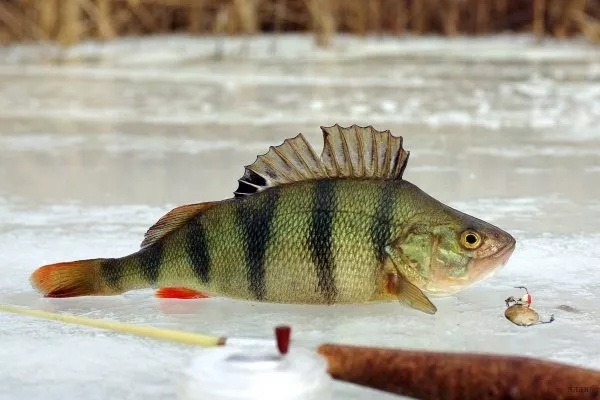
When cold weather sets in, as soon as ice forms on the water's surface, anglers enter a special season—winter perch fishing. The best bite occurs during the "first ice" period. During this time, all winter fishing lures are effective. After that, perch activity noticeably decreases.
In the dead of winter, it's difficult to find a predator, much less coax one to bite. But by late winter, when the last ice forms, perch become active again. The most effective bait during this period is the jig.
In the spring
When the first warm days arrive, when the waters are free of ice, fishermen set out to catch perch. Spring fishing is divided into several periods: pre-spawning and post-spawning. These periods differ significantly not only in fish behavior but also in fishing methods.
Catching perch before spawning is considered a challenging process, as they are very passive after winter and preparing to spawn. The fish stick to their natural waters, don't chase prey, and are still in a state of suspended animation. Microjigging or bottom tackle can help stir them up.
Microjigging for perch in early spring is a challenging task, requiring anglers to constantly adjust lures and their animation. Early spring is a time when fish tend to be capricious.
It's best to use various small silicone worms and slugs that don't have a distinct action. Perch bites in March are sluggish and soft, and the predator typically hangs on the hook. Once you feel the weight, wait a few seconds, then set the hook briefly and lightly. The fish resists weakly, making it easy to land even on thin lines.
Bottom fishing produces excellent results in the spring. The key is to choose the right spot where perch are concentrated. For bait, it's best to use a bunch of common dung worms or bloodworms.
In early April, the perch begin spawning—they stop feeding and begin breeding. The spawning process lasts for 2-3 weeks, after which the fish disperse throughout the reservoir and begin actively feeding again.
After spawning, perch fishing becomes more exciting, as the fish begin to feed voraciously. The water has warmed up, and the predator begins hunting small fish. Perch increasingly swim to the surface. In late spring, fish are caught not only with microjigs, but also with front-weighted spinners, crankbaits, and microspoons. Surface lures gradually begin to produce results, especially in stable, warm, windless weather.
Perch are caught with a float rod in May, when the fish approach the shoreline and begin to actively take bait. Worm and maggot, bloodworm, and twister are considered the best baits. Bottom fishing is done in areas of medium to deep water. In May, these areas often harbor large specimens that have not yet spread out after spawning.
In the fall
In September, as the waters gradually cool, perch retreat to deeper waters. They now approach the surface less frequently, gradually leaving the riffles. During this period, they are sought in deeper areas. Autumn is considered the best time to catch large predatory fish.
In the autumn period, some peculiarities of perch fishing are noted:
- The predator is sought at a depth of two meters. Numerous fish of varying sizes can congregate in one spot.
- The striped predator remains active throughout the day. It's best not to skimp on lure size.
- Fishing for perch in the fall using jigs is considered one of the best and most productive methods. As the weather gets colder, people gradually abandon microjigs and switch to light jigs or various spaced rigs.
- A drop shot rig is preferred—it's a killer rig that allows fishing in a wide variety of conditions. The predators reliably bite on small silicone frogs and worms.
- In addition to spinning lures, perch respond well to worms and live bait. As in summer, some experienced anglers use a running bottom fishing rod. This rig is especially effective on rivers. The best time to use it is from the moment the algae falls to the bottom until the ice forms.
In the fall, perch fishing with minnows can yield a trophy-sized bite. To encourage the fish to take the bait, use a large live bait. Roach and crucian carp are excellent options. However, this type of fishing is prone to pike strikes, so it's advisable to add a fluorocarbon leader to the rig.
In late autumn, perch gather in large schools, resting in deep waters near wintering holes, riverbed slopes, and ditches. In November, perch are best caught with spinning rods. They can also be caught by jigging for zander. In November, perch are not as active as in September and October. During warmer weather or prolonged sunny periods, they may become active, but this activity is short-lived.
Breeding and cultivation
Breeding perch is believed to be beneficial for other pond fish, such as tench, roach, crucian carp, rudd, and bream. This is because ponds occasionally harbor fish such as gudgeon, char, and other small species that tend to prey on the eggs of other fish, slowing the reproduction process. This is precisely the case when introducing perch. By introducing about 40-50 perch into the pond, it will begin to eradicate these parasites.
- Ensure the quality of water in the pond, avoiding silty and frozen-to-the-bottom ponds.
- Place branches of spruce or other tree for perch spawning, protecting them with netting.
- Control the perch population by removing excess eggs.
- Consider the compatibility of perch with other fish species in the pond.
But you'll need to help the perch settle in, as it's possible the char and gudgeon won't eat all the eggs. To do this, on the eve of the perch spawning season, place spruce or other tree branches near the shore where the fish will spawn. The branches are surrounded by fine mesh to prevent pests from getting in.
It's equally important to maintain pond water quality, as perch don't like ponds that are too muddy and almost completely frozen to the bottom. Providing the fish with adequate depth is essential, such as making ice holes in the winter to prevent them from suffocating from lack of oxygen and gases emitted by algae. To reduce perch numbers, a reverse method is used: removing spruce branches containing eggs from the pond.
Perch are a dangerous enemy of carp, as they consume all their eggs and are not averse to their young. When breeding carp, consider whether to stock perch in the pond and in what quantities. Also, be extremely cautious about stocking perch when breeding smelt, minnows, and trout.
Breeding perch in a home pond has its advantages:
- If successful, you will be able to get a good financial profit from selling the caught fish.
- The perch has a bright color, making it visible in the water – this allows you to observe the fish and “relax”.
- Perch is an active fish, which allows anglers to fish all year round.
- If there are other fish in the pond along with the perch, the predator becomes a “cleaner”, destroying weak and sick fish of the freshwater world.
Breeding and growing perch is an enticing undertaking.
Interesting facts
There are many interesting facts about predatory fish. For example, if you ask a fisherman what species of fish produces the most consistent catch, the answer will be unambiguous: perch. This is because the fish is quite voracious and feeds on anything. It's also a reckless hunter, and occasionally, in pursuit of prey, young fish even wash ashore.
Other facts:
- At the end of the 20th century, Russians preferred to indulge in a favorite seafood product known as "wings of the Soviets"—hot-smoked sea bass. Due to the catastrophic excess of the annual catch limits, the fishery was significantly curtailed, and sea bass became a delicacy.
- Large humpback perch are difficult to catch: unlike their smaller relatives, they stay as far away as possible, living at considerable depths.
- It is known that live-bearing fish produce very few offspring, but perch are highly productive – about 2 million fry are produced.
- Perch can adapt to any habitat, feeling equally at home in rivers, stagnant ponds and lakes, brackish waters and low-salt seas.
- The sea bass, found primarily in the waters of the Pacific Ocean, can reach lengths of over a meter and weigh over 15 kilograms. Sea bass meat contains protein, taurine, and numerous essential vitamins and minerals.
- Perch are predatory fish, undiscriminating in their food, and rarely productive. Because of this, their huge populations cause significant damage to habitats of valuable fish species such as trout, pike perch, and carp.
- The average weight of adult perch is no more than 300-400 grams, although the largest specimen has been documented to weigh 6 kilograms. The fish was caught in 1945 in England.
Perch is considered one of the most common and extremely voracious fish species. They gather in schools. Perch have distinctive external characteristics that make them easily recognizable. Fishing is exciting, and breeding them is a fascinating and rewarding process.