
Trash fish are small fish of no commercial interest. They typically grow slowly and feed on the same food as more valuable species. These fish are considered "bait and switch," as they reach a small size (about 20 cm in length) and weigh no more than 100 g.
| Name of the fish | Maximum length, cm | Maximum weight, g | Nutritional Features | Disease resistance |
|---|---|---|---|---|
| Ruff | 20 | 100 | Omnivorous, prefers bottom-dwelling organisms | High |
| Bleak | 15 | 50 | Plankton, insects | Average |
| Verkhovka | 8 | 7 | Small invertebrates | Low |
| Gudgeon | 15 | 80 | Bottom organisms, eggs | Average |
| Stickleback | 20 | 50 | Caviar, small fish | High |
| Bull | 30 | 400 | Small fish, crustaceans | High |
| Rotan | 25 | 300 | Fry, caviar | High |
| Loach | 30 | 150 | Bottom organisms, eggs | Average |
| Amur chebachok | 11 | 30 | Small invertebrates | Low |
Ruff
A bottom-dwelling fish that prefers to live at considerable depths, hiding under snags. It has a keen appetite and eats year-round, but grows poorly. It lives in schools of fish of varying sizes.
The ruff's body is small, laterally compressed, and similar in structure to a perch. Its entire body is covered in scales except for the head, which lies tightly against the body and has sharp edges. Ruffs are easily recognized by their long dorsal fin. The front part is tall and has hard spines, while the back part is shorter and consists only of soft rays. The gill covers are also equipped with spines, 11–12 on each. Its eyes are large, and the iris has a dull purple or bluish tint.
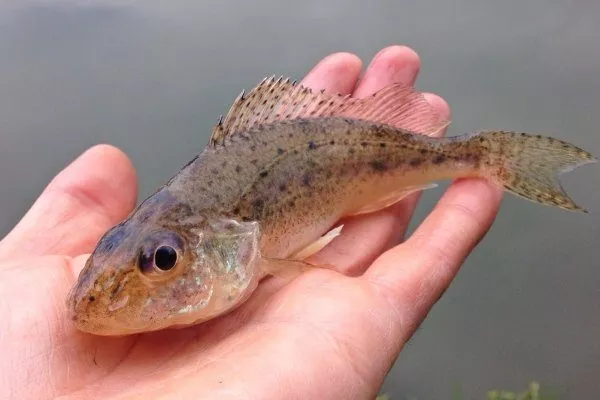
The upper part of the body is gray-green and covered with numerous dark spots of varying sizes. This coloration is ideal for camouflage. However, the color depends on the habitat—if the fish lives in a body of water with a sandy bottom, its color will be lighter than that of a specimen living in a muddy bottom.
Usually in the place where the ruff settles, there are other fish, except perch, is absent, as sexual maturity occurs in the second year. The female lays up to 45,000 eggs, so the ruff population grows exponentially. It is classified as a trash fish because it destroys the eggs of more valuable species.
Bleak
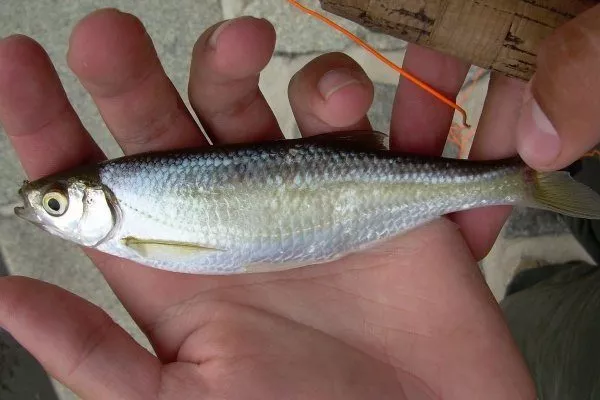
This fish has a long, laterally compressed body. A distinctive feature is a sharp fin (keel) located between the anus and the scaleless pelvic fin. The delicate scales are loosely attached to the body and easily fall off when in contact with a hard object. Small scales easily stick to your hands.
Its back is grayish-green, while its sides and belly are silvery. It glitters in the sun, which attracts predatory fish. For this reason, many anglers use it as bait.
The caudal and dorsal fins are dark gray, while the rest have a yellowish and reddish tint. The eyes are large, disproportionate to the body. The fish's size varies depending on its habitat. For example, the lake dweller is larger than its river counterpart.
River bleak has a more elongated and low-slung body shape. Due to its small size and low value, it is considered a trash species.
Verkhovka
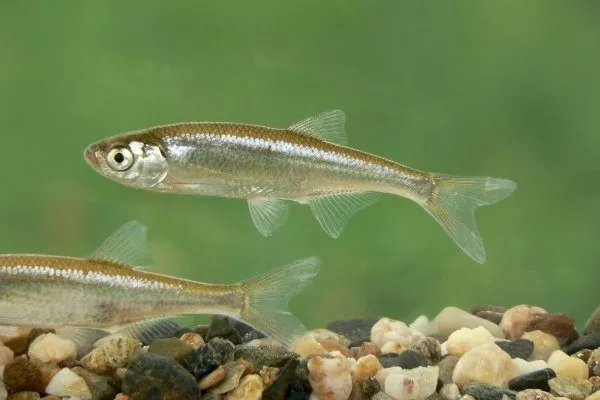
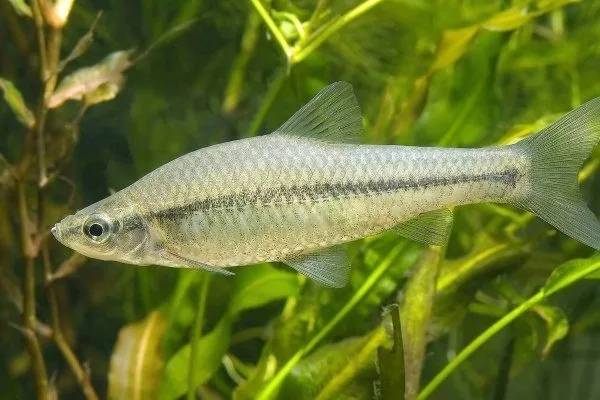
The bleak's younger sister, the verkhovka, is smaller in size. Its body is short and copper-colored, with a small, conical head. Its eyes are large and have a beautiful greenish tint. The fish reaches a maximum length of 8 cm and weighs a maximum of 7 g. On average, it is only 4-5 cm long.
You can distinguish bleak from minnow by the lateral line—the latter has a short one. The scales are large and easily detach from the body. Anglers often use them as bait to catch larger fish.
Gudgeon
The fish has a camouflage coloration and easily “dissolves” in the sandy or rocky bottom, as there are a great many people who want to feast on it, from predatory fish to birds.
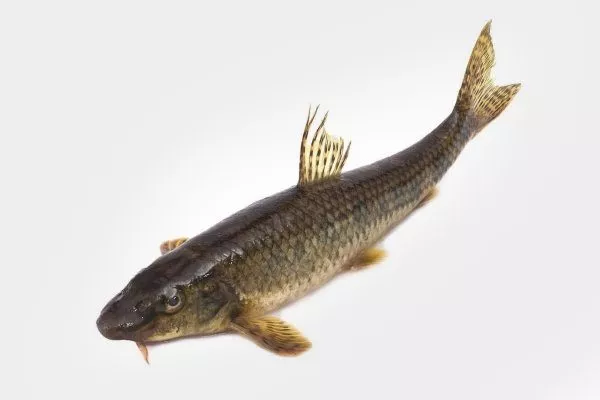
The fish's body resembles a spindle and is covered with large scales; it lacks mucus. Its back is brownish-green or grayish-olive, while its belly and sides are yellowish or bluish. Its entire body is covered with dark spots and streaks, and numerous black dots are visible on its transparent fins. The gudgeon's color changes with age; the older the fish, the darker its color.
But the most distinctive feature is its protruding lips and the presence of two barbels at the corners of its mouth—very sensitive tactile organs that allow the gudgeon to easily locate food between rocks on the bottom or in the water column. Its eyes are bulging and located in the frontal part of its head, which is quite wide.
The gudgeon is an object of sport and amateur fishing and may be of interest to an aquarist.
Stickleback
A fish with an unusual appearance, it swims calmly in the water, unafraid of being eaten. This is because it has spines on its back that it spreads out when threatened, piercing the predator's mouth. The number of spines varies from 3 to 16, depending on the stickleback subspecies.
The largest stickleback is the marine stickleback, growing up to 20 cm. The smallest is the southern little stickleback, reaching only 5 cm in length. These fish lack front fins. Their body is covered not with scales, but with bony plates that serve a protective function. The pelvic fin has a single sharp spine. Coloration varies by habitat and subspecies.
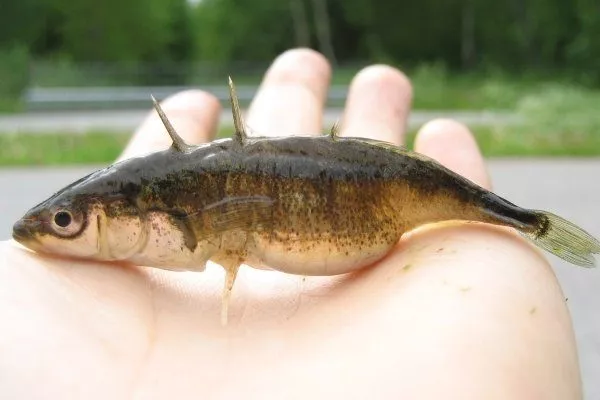
The table shows the varieties of stickleback and their characteristics:
| Length, cm | Back coloring | Abdominal coloration | Number of needles | |
| Three-spined | 4-9 | bluish | silver | 3-4 |
| Four-spined | 4 | olive-brown | light gray | 4-6 |
| Nine-needle | 9 | brownish-yellow | light yellow | 8-10 |
| South Small | 4-5 | brown-green | silver | many small needles |
| Marine | 17-20 | green | golden | up to 16 |
| Brook | 6-8 | yellow-brown | yellow-brown | no more than 5 |
Despite its small size, the stickleback is a voracious eater. It eats not only the eggs of more valuable species, but also its own. This has a significant negative impact on the populations of other fish.
Bull
The goby is difficult to confuse with anything else due to its distinctive structure: a large head, the body tapering toward the tail. The eyes are also large and set close together. The anal and dorsal fins are long, and there may be two dorsal fins. One of them contains bony rays.
The structure of the pelvic fins is interesting: they grow together to form a funnel that “works” like a suction cup, preventing the goby from being washed ashore by the surf.
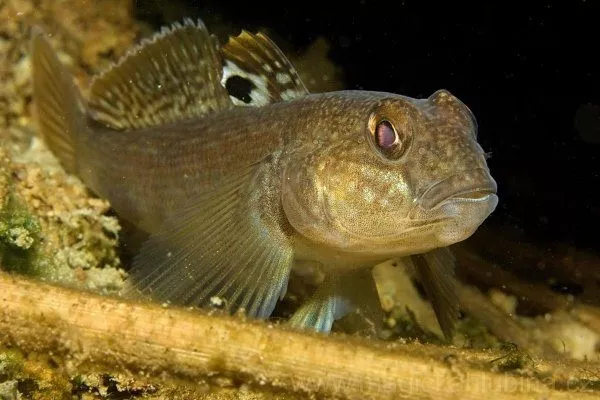
Their coloration depends on their habitat and serves as camouflage. All fish are covered with dark stripes and spots, helping them blend into their surroundings. Females are larger than males.
The fish are sedentary and generally sedentary. However, there is an aggressive species among them—the martovik goby—which attacks small fish and is not averse to snacking on its own kind.
The main types of bulls are presented in the table below.
| Length, cm | Weight, g | Coloring | |
| River or sand goby | 10-20 | 200 | yellow or dirty gray |
| Martovik or bull-whip | 25-30 | 350-400 | yellowish-brown |
| Bull-racer or gray granny | 15-18 | 100-130 | gray-olive |
| Marbled blunt-nosed goby or tsuki goby | 5-7 | 30 | gray-brown |
| Round goby | 15-27 | 270 | gray-beige or dark beige |
| Goby | 10-20 | 200 | gray-brown or brown with a reddish tint |
Rotan
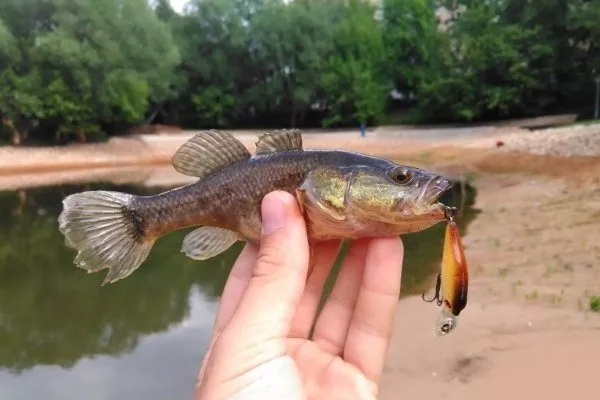
This fish is often called the sleeper goby, and although it shares a similar appearance to the goby, they belong to different genera. The fish's head is large (taking up one-third of its body length). The eyes are low-set, the mouth is very large with small teeth, and the lower jaw protrudes noticeably. The body is covered in scales and mucus. There are two dorsal fins, the second longer than the first.
The rotan is gray-green or brownish-brown in color, with a lighter belly. Its sides have stripes and spots that are lighter than the rest of the fish. It is easily distinguished from gobies by its two pelvic fins, which are small and rounded. It is considered a trash fish because it feeds on the fry of other species.
Loach
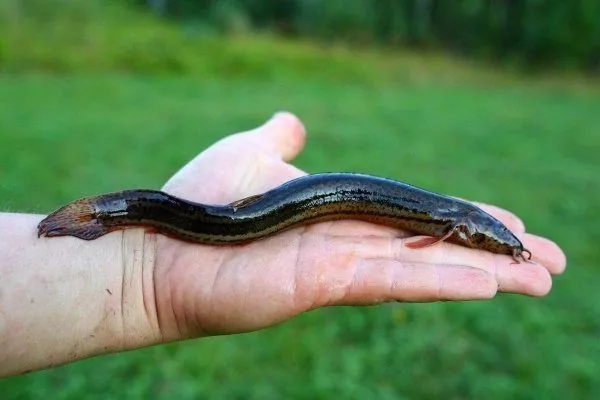
A fish with an elongated, snake-like shape. When pulled ashore, the loach will wriggle and squeak. It grows up to 30 cm in length, but specimens of 15-18 cm are more common. Its body is covered in scales, but they are barely visible due to the large amount of mucus that completely covers its body.
The eyes are small, and above the large round mouth are barbels: six above the upper lip and four below the lower lip. The loach's back is yellowish-brown and covered with black speckles, while the abdomen is yellow or reddish. Black stripes are located on the sides. The loach is known to eat other fish's eggs.
Amur chebachok
A small fish with a maximum length of 11 cm. It has a bronze-silver coloration, and a lateral line runs along its entire body, from the eye to the caudal fin. The scales have a dark "crescent" pattern. The iris is light, with a dark spot above the upper part of the pupil.
All fins are rounded and covered with dark spots. Males are more vibrantly colored than females, with a darker, more distinct pattern. This fish has a short life cycle and is highly fecund.
Advantages and disadvantages of trash fish
Don't think that trash fish, nicknamed so by humans, have no significance in nature. They have undeniable advantages:
- fish provide diversity of fauna in rivers and lakes;
- they take their place in the food chain, being a food source for predatory fish;
- it is eaten by waterfowl fish-eating birds or ichthyophages - herons, cormorants, loons, seagulls and others;
- Some low-value species are of sporting interest to fishermen.
But sometimes trash fish can cause harm:
- It feeds on the same food as more valuable species, and since these fish live in schools, they consume a lot of food, so large fish often go hungry;
- Recently, the number of trash fish has been rapidly increasing due to the fact that fishermen are exterminating the population of predatory fish - their natural enemies;
- They do not disdain the caviar of valuable species, often eating almost all of it, which is why they have a negative impact on their population;
- are carriers of various diseases.
So, trash fish are of no interest from an industrial fishing perspective. However, they are also beneficial, being an important component of the food chain. And amateur fishermen enjoy catching them, cooking them in fish soup, or frying them.
You've included the rotan in the wrong place! It should be classified as a "medium" species, not a "weed" species. It's delicious, healthy, even more resilient than crucian carp, and doesn't require a lot of pond space. A pond with a capacity of 18 liters can accommodate more than 10 rotan! Topwater fry are the rotan's favorite food.
And it has a mass of up to 800 g.
Super!