
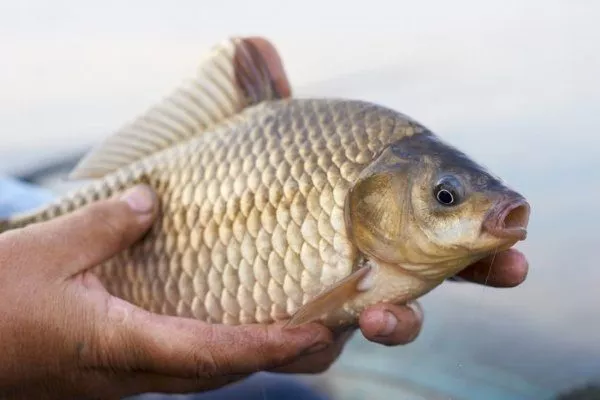
Farming crucian carp was a very convenient activity and was widely practiced by Russian peasants. This fish species quickly adapted to pond life and also got along well with carp in larger bodies of water. Nowadays, farming crucian carp at home is also possible, but certain important rules and conditions must be strictly observed.
Breeding Features
There are two types of crucian carp:
- gold (common);
- silver.
The common crucian carp is the most common species, but for direct breeding it is much preferable to use the silver carp:
- smaller in size, which means it can survive in smaller bodies of water;
- the growth rate is noticeably higher;
- It gains weight much faster than the crucian carp.
Crucian carp are a type of fish with a very strong immune system. Diseases such as rubella or branchiomycosis rarely affect crucian carp, unlike carp and other fish species. High resistance to such serious diseases is an important factor when choosing a fish for farming.
Another major advantage of crucian carp is their unpretentiousness: coupled with a strong immune system, crucian carp is an extremely easy species to breed. For the same reasons, this fish can be kept in harsher conditions than any other.
| Parameter | Golden crucian carp | Goldfish |
|---|---|---|
| Growth rate | 0.8-1.2 kg/year | 1.5-2 kg/year |
| Minimum volume of the reservoir | 10 m³/individual | 6 m³/individual |
| Disease resistance | High | Very high |
| Optimal temperature | +12…+25°C | +10…+28°C |
| pH of water | 6.5-8.0 | 6.0-8.5 |
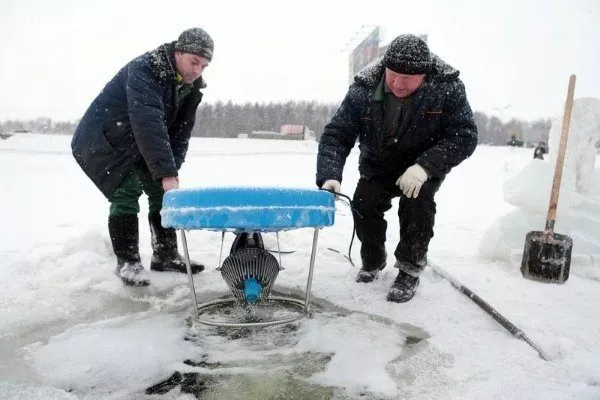
Crucian carp also adapt well to winter conditions. When a pond freezes, they'll feed on literally any food they can find. And such actions won't affect their health or lifestyle in any way.
What's needed? Pond and feeding considerations
Before you begin setting up a pond for breeding crucian carp at home, you should make a list of everything you need. Typically, the following items are required first:
- a pond or reservoir of appropriate size (depending on the breeding method);
- aerator (for the winter, so that the fish do not die from lack of oxygen);
- compound feed (grain/forage grain);
- various fishing equipment.
Next, you'll need the most important things: fingerlings and brood fish. While there's no problem with the female fry, a good male with flowing milk will cost a significant amount. For a small pond, you'll need five of these, and this is definitely something to consider.
The presence of small pike (25-30 cm) is also key. With certain methods of crucian carp farming, the fish may begin to shrink (significantly slowing growth and development). This occurs due to a large population after spawning. The fry begin to suppress each other and interfere with the adults.
The pond's ecosystem will begin to deteriorate, but it's the pike that will restore order. They will consume the fry, creating conditions for natural selection, and normalizing the number of crucian carp in the reservoir.
In principle, other large fish could be used, but pike is still the best choice. In the future, it could be caught with a spoon to maintain a healthy crucian carp population.
Breeding process
Breeding males can be purchased, but they can also be caught in a natural body of water. It's best to choose male crucian carp (a 50/50 split is possible), while females should be exclusively silver. Their sizes should be as close as possible for the best results.
When breeding, it is important to take into account one important detail: before spawning begins, females must be kept at a distance from the breeding males.
Female crucian carp reach sexual maturity at two years of age. However, for breeding purposes, females should be 3-6 years old. This is the age at which crucian carp breeding at home will be most successful.
Spawning schedule
- March-April: Preparing producers
- May: water temperature control (optimum +18°C)
- June-July: spawning (3-4 approaches with an interval of 10 days)
- July-August: incubation of eggs (3-6 days)
- August-September: transfer of fry to the nursery pond
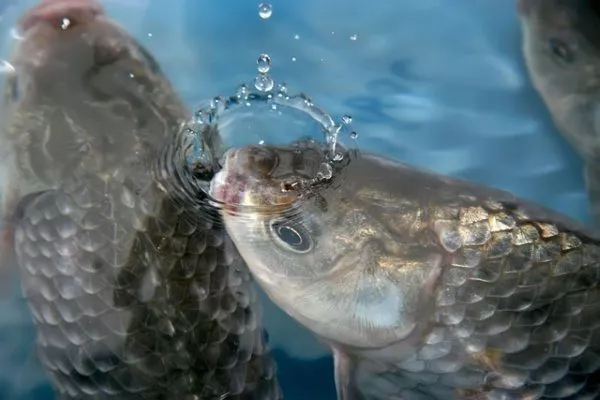
The spawning season most often occurs in June-July. The pond itself should be fairly large, at least one and a half meters deep. The larger the pond, the better for the fish. However, don't create an overly large pond: for 20 yearlings, a 5 by 5 meter surface area and a depth of at least 1.5 meters is sufficient.
Planting plants in the pond is especially important, otherwise the crucian carp will not be able to adapt, its health will deteriorate, and, consequently, breeding will not be successful.
Crucian carp should be fed in a designated area, where a stainless steel plate (called a "feeding table") is installed 1 meter above the water's surface (or on the bottom). Excess food will remain on the plate, which will eventually be lifted up and the food removed.
If this isn't done, the remaining food will pollute and contaminate the water. As a result, all crucian carp will die.
Once spawning is over, crucian carp larvae will appear in 3-6 days.
- ✓ Oxygen control: not less than 5 mg/l
- ✓ Daily water temperature measurements in the morning and evening
- ✓ Change 10-15% of water every 3 days
- ✓ Filtration through a gravel filter (fraction 2-5 mm)
- ✓ Darkening of 30% of the reservoir area
These timeframes are directly affected by the pond's water temperature: if it's below 20°C, it will take longer; if it's above 20°C, it will take the opposite. Crucian carp larvae should be kept in the spawning pond for 14-21 days.
To ensure maximum comfort for the larvae and their future activity, use fertilizers consisting of humus, manure, and peat. However, the spawning pond should be fertilized before it is filled with water.
After hatching, the fry must be transferred from the spawning pond to the nursery pond. The best time to do this is between 6 and 8 days. Transferring the fry earlier is not recommended due to the dangerous consequences: at this time, the fry are still so weak that even the most gentle and careful movements can seriously injure them.
It's important to drain the water in the spawning pond as slowly as possible. The young fish can become entangled in the grass and die quickly.
Autumn is ideal for fishing. It's the most favorable time for such activities.
Video: Briefly about the main points
Watch a helpful video about breeding crucian carp in a backyard pond:
With the right approach, crucian carp will thrive and produce a large number of offspring. This fish is omnivorous, so it can survive even without feeding, although special compound feed will significantly improve its growth and activity. A properly maintained pond will ensure the crucian carp's ultimate comfort.