
Sturgeon farming is a relatively simple business idea for aspiring food entrepreneurs. Growing sturgeon at home requires certain skills and specialized equipment. However, with a well-thought-out business plan, implementing this idea requires little effort and expense.
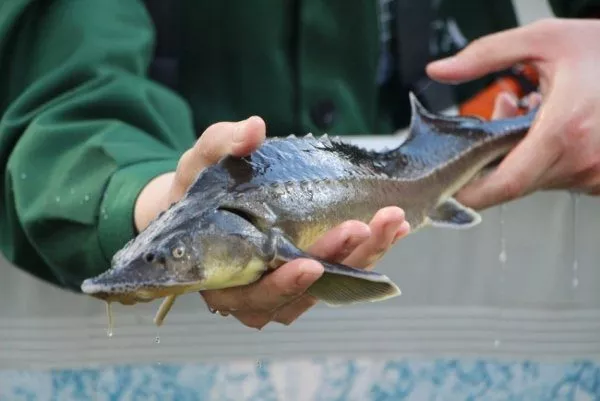
Peculiarities of home breeding of sterlet
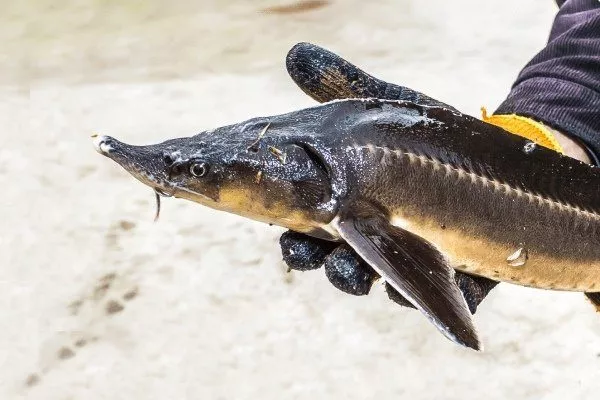
The sterlet belongs to the sturgeon family. This fish species differs from its relatives in a number of ways, the most important of which is its size. A typical sterlet weighs between 500 grams and 2 kilograms, and its length ranges from 30 to 65 centimeters. Under favorable conditions, this fish can grow up to 90 centimeters long and weigh 4 kilograms. Its lifespan reaches over 25 years.
Breeding sterlet on your own is recommended for people living in a private home with a private plot. An additional advantage is the presence of a pond on the property. If one is not available, one will need to be constructed. The size and depth of the pond depend on the capabilities or expected volume of sterlet to be bred. A swimming pool can also be used as a substitute for a pond.
The plan for breeding and selling sterlet includes the following points:
- arrangement of the reservoir (if regular sturgeon farming is planned, additional premises will be required);
- purchasing suitable food;
- After preparing the conditions for the sterlet, the fry are purchased (initially they are kept in a separate container);
- raising fry to the size of adult fish;
- development of a plan for the sale of sturgeon.
Successful breeding of sterlet at home requires detailed study of the technology, availability of equipment, and a large amount of free time.
Innovative inventions are now available that simplify the process of raising fish at home. However, their use requires additional capital investment.
Advantages and disadvantages of sterlet farming
Like any home-based fish farming business, sterlet farming has its advantages and disadvantages.
The list of advantages consists of:
- little competition;
- availability of the opportunity to work from home;
- high income indicator;
- equal demand at any time of the year.
The list of disadvantages includes:
- sensitivity of young fish to the purity and temperature of the water in which they are located;
- high risk of disease and death of fry;
- the need for constant monitoring of the conditions in which the fish are kept;
- the difficulty of acquiring healthy fry for sterlet breeding;
- long payback period for the business (sterlet grows to the size of an adult within 3 years).
Despite the many nuances and difficulties associated with sterlet farming, the numerous advantages make this business highly profitable. Sturgeon are expensive fish species, so demand is high even with competition. Sturgeon is relatively expensive, so selling small quantities can generate significant income. Problems with sturgeon marketing are rare.
In addition to selling fish, sturgeon farming allows for a secondary business selling sturgeon skins, which are also highly valued. Under favorable conditions, the fish will produce caviar reliably. Selling this product offers another source of additional income. However, harvesting caviar requires specialized equipment, which increases the start-up capital required to start a business.
Fish farming area
Setting up a pond for fish is the key to their breeding. The specifics of this step depend on the breeding period. Since sturgeon take three years to reach adulthood, breeding them in a single season is impossible. For this reason, the pond is set up indoors, where the sterlet will feel comfortable during the cold season.
Swimming pool, premises
An indoor pond is created using a swimming pool. A large room of at least 30 square meters is required. If the pool is located in a separate building, it must be heated. To breed sterlet, a pool with minimum dimensions is required:
- depth – 100 centimeters;
- length – 250 centimeters;
- width – 150 centimeters.
A pool of this size can be maintained independently.
| Parameter | Pool | Pond | RAS |
|---|---|---|---|
| Start-up costs | 150-300 thousand rubles | 500-800 thousand rubles | 1.2-2 million rubles |
| Planting density | 60 kg/m³ | 15 kg/m³ | 120 kg/m³ |
| Temperature control | ±3°C | Depends on the season | ±0.5°C |
| Electricity costs | 15-20 kW/day | 5-8 kW/day | 25-35 kW/day |
The average annual fish production under these conditions is at least one ton. The tank is stocked at a rate of 60 kilograms of live fish per square meter.
For more information on setting up a pool for sterlet breeding in an apartment, watch this video:
Pond
To raise sterlet outdoors, you'll need to set up your own pond. The requirements for setting it up are more stringent than for an indoor pool. If you don't follow the instructions, the fish won't thrive.
First, the pond bottom needs to be treated—it needs to be as level as possible. This requires eliminating any holes or low spots. Otherwise, the water will gradually become swampy.
The next step is clearing the area around the pond. The shore should be clear of bushes, branches, and trees. Vegetation should be removed root and root. The presence of a root system will lead to overgrowth and acidification of the pond, making fishing very difficult.
In order for the pond to be independently fed by natural waters, it is necessary to clean nearby reservoirs and outlets to groundwater.
Among pond types for sterlet farming, the drain type is the best choice. The advantages of this option are:
- ease of fishing;
- no difficulties in bottom processing;
- minimal level of oxidation and waterlogging.
If your property has ravines or gullies, a drainage pond is a good option. The water in such ponds is well-warmed by the sun, and the bottom is richly vegetated.
If you have ample funds and the desire to raise large quantities of fish of various species, you can develop a pond-reservoir. However, its construction and maintenance, in addition to the financial investment, will require considerable effort.
Equipment and tanks for sterlet farming
Initially, a small plastic pool will be sufficient for sterlet farming. Its depth should not exceed 100 centimeters and its length should be 250 centimeters. Over the course of a year, it can produce enough fish to generate a profitable business. In the future, as the fish stock and sales increase, a pond or indoor pool can be developed.
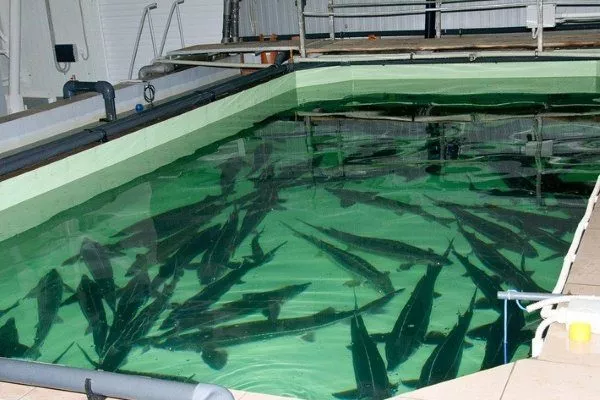
To create favorable conditions, equipment will be required that provides:
- filtration;
- aeration;
- temperature regime.
This problem can be solved using a compressor unit, pumps, and filters. An automatic feeder further saves time and effort. However, due to its high cost, it is not suitable for many beginning entrepreneurs.
When purchasing compressors and pumps, it's important to choose equipment with a performance limit higher than required. This step will help extend the life of the purchased equipment. If you later establish a fish farm, you won't need to purchase new equipment.
To maintain the necessary conditions in a pond, it is recommended to use a RAS (recirculating aquaculture system). This device provides:
- mechanical and biological purification;
- required temperature conditions;
- supplying water with oxygen;
- destruction of harmful microorganisms.
Several such units can be connected to a pool at once. The main requirement is heating in the room where they will be operating. The equipment creates intensive water exchange, creating conditions conducive to dense fish populations.
The care and feeding process is automated. The system's operation can be monitored visually. This equipment saves feed and resources required for sterlet maintenance. It minimizes the impact of weather conditions on the fish, as well as the risk of various diseases.
RAS maintenance schedule
- Daily: pH control (7-8), NH₃ (<0.5 mg/l), O₂ (>6 mg/l)
- Every 3 days: cleaning mechanical filters
- Weekly: Replace 15% of the water volume
- Monthly: checking biofilters
- Every six months: complete disinfection of the system
How to choose food?
Sturgeon are fed at the bottom of the reservoir. This condition is consistent with the natural diet of this species. Ready-made sturgeon food is available commercially. You can also prepare your own if necessary.
Sturgeon feed should consist of:
- protein;
- fat;
- lysine;
- phosphorus.
Sturgeon fry are characterized by uneven development. A fifth of the total population grows faster than the others, becoming stronger as a result and capturing most of the food for themselves.
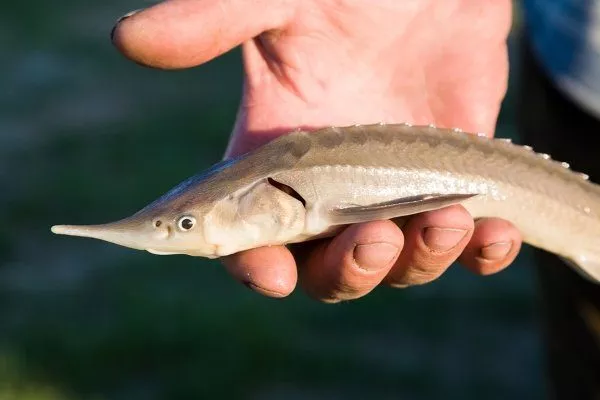
Suitable for feeding young fish of this species:
- daphnia;
- insect larvae;
- small crustaceans;
- fry of freshwater fish species.
When they grow up, you can introduce shells into their diet. Crustaceans are the main food of adult sterlets. Avoid overfeeding, as this can be harmful. It's easier to regulate the amount fed by purchasing specialized food.
| Age of fish | Protein (%) | Fat (%) | Frequency of feeding |
|---|---|---|---|
| Fry (1-10 g) | 48-52 | 12-15 | 8-10 times a day |
| Juveniles (10-100 g) | 45-48 | 10-12 | 5-6 times a day |
| Adults (>100 g) | 40-42 | 8-10 | 3-4 times a day |
The packaging indicates how much food is needed for a certain number of fish depending on their age.
If the fish are kept in an outdoor pond and are not planned to be moved during the winter, feeding stops with the onset of frost, and the pond is limed. During hibernation, the fish's weight remains constant. Feeding resumes in the spring.
Temperature conditions
To ensure the sterlet feels comfortable, the water temperature should be maintained between 18 and 20 degrees Celsius. The acceptable limit is 24 degrees Celsius. Higher temperatures will cause discomfort.
Temperature fluctuations should also be taken into account. In summer, the water temperature should not drop below 20 degrees Celsius. At other times of the year, the temperature should be maintained at no less than 17 degrees Celsius.
Buying fry
If you plan to breed sterlet at home, it's recommended to buy mature fry. These fry are typically purchased from late spring to early fall. These fry can be purchased from specialized fish farms. These fry are fed the proper diet from birth and become accustomed to human interaction. Therefore, any changes to their lifestyle will reduce their stress levels.
Specialty stores also sell fry. However, they typically source their goods from fish farms, charging a premium. Therefore, this method is less profitable.
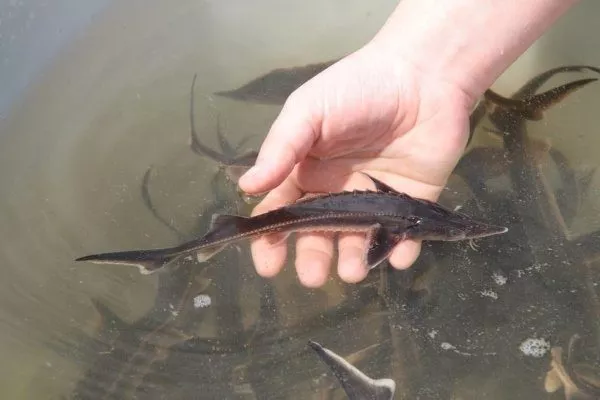
The average cost of sterlet fry depends on its size and is around 20 rubles. If you lack experience in this area, you should consult a specialist. After purchase, the fry should be transported at a cool temperature. Therefore, if the weather is hot, it's best to postpone transporting them until the evening.
Breeding fry on your own requires additional costs.
This method can be used when you have a sufficient number of adult sterlet at your disposal.
Container for fry
The tank requirements for fry are the same as for adult fish, with the exception of size. Young sterlets are kept in a small plastic tank. Once they grow, they can be released into the pond.
You can build a fry tank yourself or buy ready-made equipment. The latter option is simpler, as it involves purchasing pre-assembled tanks with the necessary equipment.
Investments and return on investment
The investment amount depends on the planned quantity of fish to be raised. Raising 1,000 fry requires equipment worth 300,000 rubles. Additional costs include:
- purchase of fry - 25 thousand rubles;
- purchase of food - 35 thousand rubles;
- electricity bill – 25 thousand rubles.
From early spring to late fall, the average fry grows to 500 grams. Once the fish of this species reaches this weight, they are ready to sell. The average price per fish is 300 rubles. The payback period is at least a year.
Recommendations for the sale of farmed sterlet
The simplest and most profitable option is to open your own store. However, to maintain it and attract customers, you'll need to breed other fish species. You can also supply products to existing stores. In this case, the main goal is to offer customers a more competitive pricing policy than competitors. By opening your own fish farm, you can eventually sell the fry to people just starting their own business.
Breeding sturgeon at home is a profitable business idea for those willing to dedicate most of their time to it. However, to succeed in this field, specialized equipment and knowledge of sturgeon farming systems are required. Otherwise, the business will not be profitable.