
The boletus mushroom belongs to the Boletaceae family. It is a valuable wild mushroom with excellent flavor. Boletus mushrooms grow in both coniferous and deciduous forests. These mushrooms grow both in groups and singly.
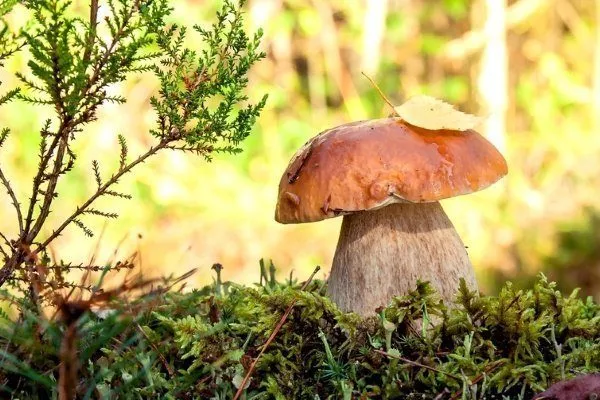
General characteristics
Boletus The boletus is a tubular mushroom and belongs to the Boletaceae family. It has a fairly massive fruiting body. The cap is rounded, with a dry, velvety surface. The stem of the boletus is thickened.
The mass spread of these mushrooms is observed in August.
100 g of fresh boletus contains only 34 kcal.
The mushrooms contain:
- antioxidants;
- proteins;
- mineral salts;
- dietary fiber;
- vitamins B1, E, PP.
Despite their composition and excellent taste, boletus mushrooms should not be consumed by those with acute gastrointestinal diseases or gout, or by children under 7 years of age.
Types of edible boletus mushrooms
Edible subspecies of boletus include:
- The White Spruce, commonly known as the "Colonel," is a mushroom with a dark brown cap. Its diameter can reach 30 cm. The stem of the White Spruce mushroom is about 18 cm tall. This type of boletus has a mild, neutral flavor. The White Spruce mushroom grows in spruce forests.
- Dark bronze, or hornbeam. The cap is dark chocolate, almost black. It has a mild, neutral flavor.
- The netted porcini mushroom grows in sunny deciduous forests, at forest edges, and in clearings. Its cap is light brown. Its size can vary from 5 to 30 cm in diameter. The picking season for the netted porcini mushroom begins in May and continues (under favorable conditions) until September.
- White Pine. The cap of this variety of boletus is chocolate-brown. It reaches 25 cm in diameter. The mushroom exudes a nutty, mushroomy aroma.
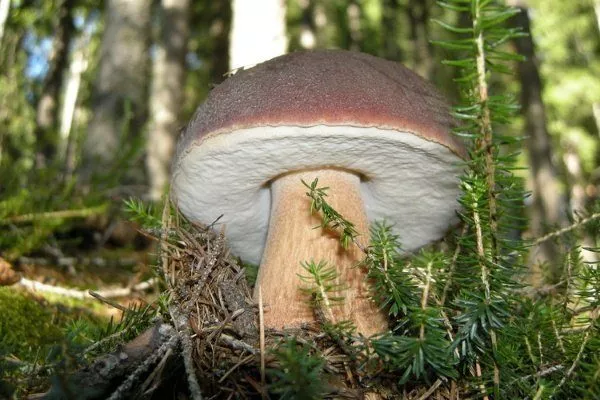
White spruce edible boletus
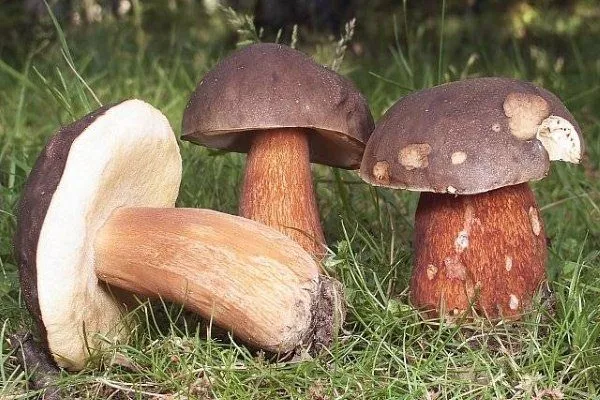
Dark bronze edible boletus
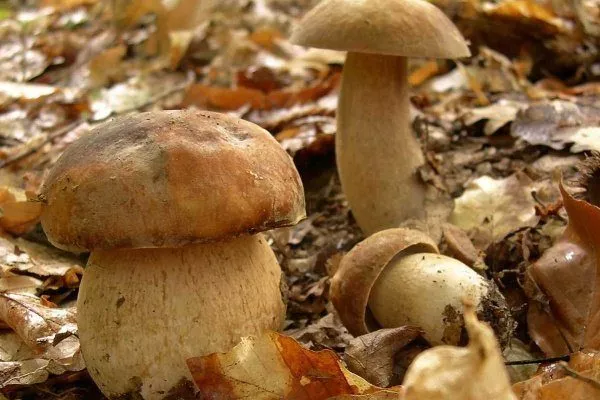
Netted white edible mushroom
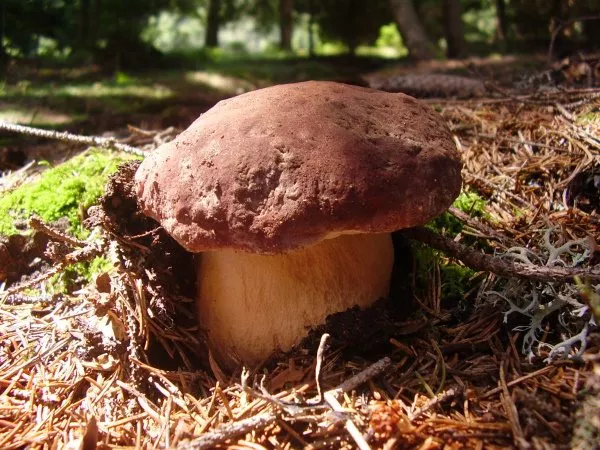
Pine boletus
There are many more species of edible boletus mushrooms in nature. The varieties listed above are the most recognizable and are the most frequently collected by mushroom pickers.
| View | Cap color | Cap diameter (cm) | Place of growth | Harvest season |
|---|---|---|---|---|
| White spruce | Dark brown | Up to 30 | Spruce forests | August-September |
| Dark bronze | Chocolate | 7-17 | Oak groves | July-October |
| Mesh white | Light brown | 5:30 | Deciduous forests | May-September |
| White pine | Chocolate brown | Up to 25 | Pine forests | June-October |
Types of inedible boletus mushrooms
Certain types of boletus mushrooms may be unsuitable for human consumption because they contain toxic compounds. These include:
- The beautiful-stemmed boletus can be identified by the color of its stem: starting with a lemon-yellow hue at the base, it gradually turns red and then brown.
- The boletus magnificus (Boletus spp.) is a beautiful mushroom. The stem of this inedible boletus can reach 12 cm in diameter. The mushroom's pores are bright brown, turning blue when pressed.
- Rooting. This mushroom has a bright beige stem with turquoise spots on the underside.
- Pink-purple. This inedible boletus has an uneven color: it ranges from light gray to olive, with purple-red and brown spots in some areas.
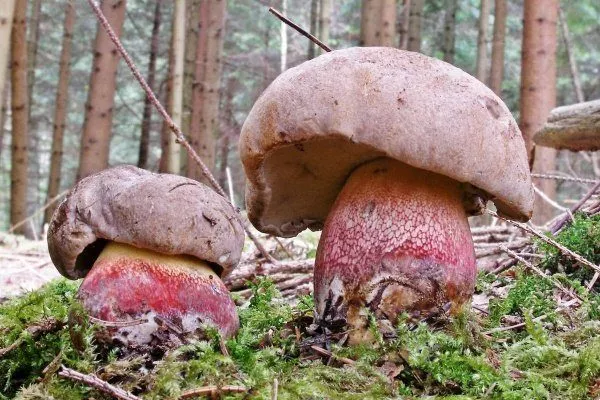
The beautiful-stemmed inedible boletus
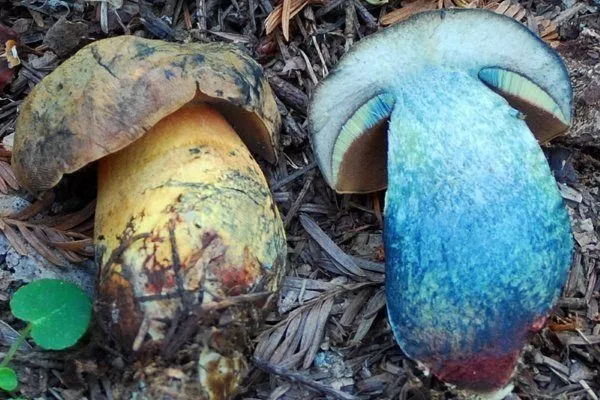
The beautiful inedible boletus mushroom is boletus
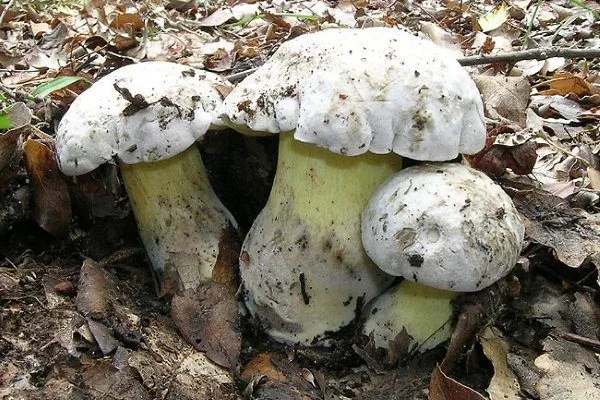
Rooted inedible mushroom
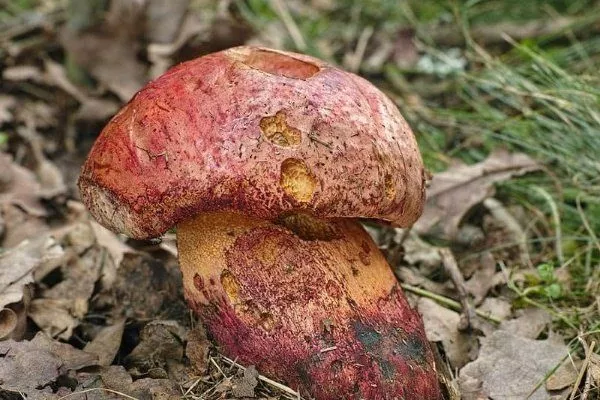
Pink-purple inedible boletus
When picking mushrooms, you need to be extremely careful and not pick boletus mushrooms with bright or unusual colors.
Places of growth
Boletus mushrooms grow in dry places, primarily in forests with oak, pine, spruce, and birch trees. They can also be found in small stands and groves. Boletus mushrooms are common on all continents except Antarctica and Australia.
Growing boletus mushrooms
Boletus mushroom lovers who want to enjoy fresh mushrooms not only in late summer and early fall can grow their own, eliminating the seasonality of their harvest. Boletus mushrooms can be grown both outdoors and indoors.
Stages of preparation
- Collection of mature mushroom caps (diameter from 10 cm)
- Soaking in water with sugar and potassium permanganate
- Preparation of substrate (straw + husk)
- Sterilization of the mixture with boiling water/steam
- Selecting a site with symbiotic trees
Growing mushrooms outdoors
Regardless of the chosen method, you'll first need to prepare the seed. In this case, the fruiting bodies of boletus mushrooms, or more specifically, the caps, collected in the forest are suitable. They should be placed in cold water and left for several hours.
To stimulate spore germination, you can add alcohol to the water (3 cups per 10 liters of water). Also, add 1 g of potassium permanganate to the water containing the caps.
After 2 hours, add sugar to the bowl containing the future material. The proportions are 20 teaspoons per 10 liters of water. After this, let the mixture sit for a few more hours. The resulting liquid will contain a large number of boletus spores.
There is an easier way - buying ready-made mycelium.
After preparing the seed, you need to create a mixture, or substrate, in which the boletus mushrooms will grow. The substrate includes straw, sunflower husks, and buckwheat.
Before placing the seed into the substrate, the mixture must be saturated with moisture. This can be done by rinsing it with boiling water or steaming it.
The area must have trees growing under which the boletus mushrooms were collected (oaks, pines or birches).
Remove 15 cm of soil within a meter of a suitable tree. Pour the spore-infused solution onto the roots, then cover with soil and water generously. The best time to plant mushrooms this way is from mid-August to mid-September.
This video shows how to plant porcini mushrooms in your garden:
Growing boletus mushrooms indoors
Growing boletus mushrooms indoors is different. A barn, basement, or greenhouse can serve as the growing space.
You need to do the following:
- boil the substrate material without removing it from the packaging bags for 1-1.5 hours;
- let the substrate cool;
- mix mycelium and substrate;
- place the resulting mixture in bags weighing 5-15 kg each, compacting it tightly;
- make neat thin cuts on the bags using a blade;
- Place the bags on the incubation shelves, leaving a distance of 5 cm between each bag.
The temperature in the room intended for growing boletus mushrooms should not exceed 25 degrees Celsius. Humidity should be high – between 85-95%. Daily treatment with a chlorine solution is necessary to prevent mold growth.
Bags with substrate should be watered using a spray bottle once a day.
| Parameter | Incubation | Fruiting |
|---|---|---|
| Temperature | 23-25°C | 16-18°C |
| Humidity | 90-95% | 85-90% |
| Lighting | Not required | 5-6 hours/day |
| Ventilation | 1 time/day | 3-4 times a day |
Mushrooms will appear about a month after planting.
Useful properties of boletus
Boletus mushrooms not only have a pleasant taste, but their composition also provides a beneficial effect on the human body.
The following are among the beneficial properties of boletus:
- nutrition of bones and joints, made possible by the content of calcium and iron;
- increasing immunity;
- combating excess cholesterol in the blood;
- normalization of hemoglobin;
- cleansing blood vessels from cholesterol plaques;
- decreased blood clotting ability;
- removal of heavy metal salts and carcinogens from the body;
- combating chronic fatigue;
- lowering blood pressure;
- restoration of metabolic processes.
- improved sleep;
- reduction of pain severity during angina attacks;
- stimulation of digestion;
- suppression of excessive excitability.
In addition, boletus mushrooms have antitumor, antifungal, antiviral, anti-inflammatory and tonic effects.
Boletus mushrooms are considered the king of mushrooms due to their exquisite flavor. They also have beneficial effects on the body. They can be collected in forests and planted areas, or grown indoors, in the garden, or outdoors.
Well, did the mushrooms grow after they were planted in the holes?