
A poisonous mushroom like the fly agaric can be used to treat a wide variety of ailments if prepared correctly, taking into account any contraindications and the proper dosage. Some species are edible, but to avoid side effects, they must be thoroughly cooked.
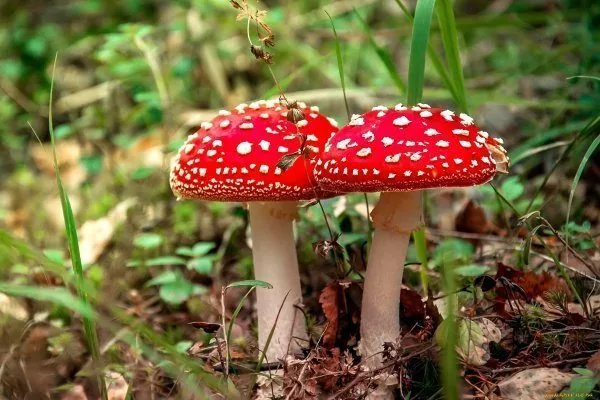
Description of the mushroom and its characteristics
The fly agaric belongs to the amanita family of mushrooms. The brightly colored appearance of this forest dweller is quite deceptive – it is a poisonous fungus root, a symbiotic relationship between the mycelium and the roots of various plants and trees. Currently, there are over 600 species of fly agaric in the wild, and their caps are not always bright red; they can be brown, yellow, or white. The most well-known varieties are the royal, Caesar's, panther, and red fly agaric.
Externally, the common red fly agaric is a large, fleshy mushroom. Its cap can be thinner or thicker, sometimes with a small tubercle. White flakes are scattered across the cap—these are the surviving tissue segments during the development process. The base of the stem widens toward the ground. The ring or "skirt" at the top of the stem is the casing that encloses the young mushrooms, which reproduce via spores.
Not everyone knows that the most poisonous mushroom, the death cap, which can be fatal, also belongs to the fly agaric family. Its cap can be 10-14 cm in diameter, and its stem is tall – up to 12 cm. Just a few grams of this mushroom are enough to cause death. A distinctive feature of the death cap is the presence of a membranous ring, which distinguishes it from similar-looking mushrooms such as russula, champignons, and other mushrooms.
Composition and properties
The body of the mushroom contains several types of toxic components, which are mainly found in the cap and its skin; the stem has a lower content.
The chemical composition of the most common red fly agaric is represented by the following substances:
- muscimol – a hallucinogen with a hypnotic, sedative effect, capable of disrupting the functioning of consciousness;
- ibotenic acid – a toxic substance that has a destructive effect on brain cells;
- muscarine - a natural alkaloid that causes vasodilation and the inability of the heart to contract fully. As a result of its entry into the body, poisoning occurs with all the characteristic symptoms - decreased blood pressure, nausea and vomiting;
- muscarufin – an antibacterial substance, which, in addition, has anti-inflammatory and antitumor properties, which makes it possible to use the mushroom for medical purposes;
- Muscazon It is formed as a result of the breakdown of ibotenic acid and is characterized by a weak effect on the functioning of the nervous system.
The fly agaric accumulates the most toxic substances in spring and summer, and at this time it is especially dangerous.
Fly agarics feed on organic matter, as they are unable to absorb carbon dioxide from the air, and they also do not contain chlorophyll.
Microscopic quantities of these poisons are successfully used in pharmacology to create medications for insomnia, joint diseases, colds, infections, and cancer. Medicines created using fly agaric successfully heal wounds, relieve pain and spasms, boost immunity, and prevent bleeding.
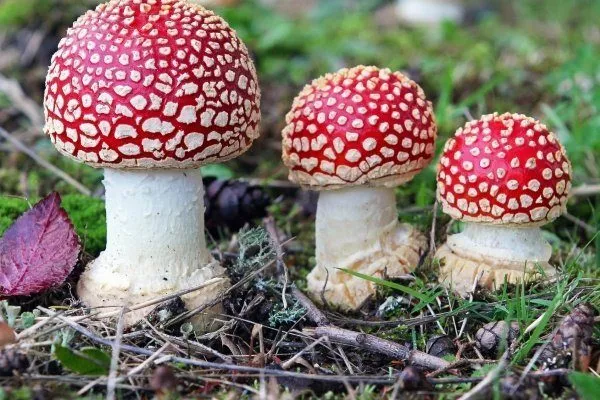
Varieties
Fly agarics are found virtually everywhere—species of this mushroom can be seen in deciduous and coniferous forests in Russia and many other countries. They are also found in colder regions, such as the tundra.
In addition to the red fly agaric, which grows everywhere, there are other varieties that differ in appearance:
- Death cap mushroom or yellow death cap. The mushroom has an unpleasant odor and a hemispherical white cap with snow-white spots. It can most often be found in coniferous or deciduous forests, from July to October.
- Panther fly agaric. It is brown in color, with a cap ranging from 5 to 12 cm and a cylindrical stem of approximately the same height, featuring a porous surface and a low, fragile frill. It has an unpleasant odor, and the flesh is white.
- Royal fly agaric. It can be seen in oak or beech groves, or in pine forests. This variety can cause severe hallucinations if poisoned. It is a large (brown or olive-colored) mushroom with a cap up to 20 cm in diameter and yellow flakes. The flesh is yellow-brown and does not darken when cut. This mushroom prefers forests dominated by birch, spruce, and pine. It is common throughout Russia and Europe, and can be found in Korea, England, and Alaska.
- Rough fly agaric. This is a small, fleshy mushroom, yellowish or olive-colored, with a thick stem. Young mushrooms have a nearly round, spherical cap; mature mushrooms have a flat cap, with slightly upward-curving margins. When cut, the white flesh quickly turns yellow and, unlike other species, has a pleasant aroma. The fly agaric grows in Europe, America, Japan, South Asia, and Central Asia. However, it can be difficult to spot in the wild; it prefers to grow near hornbeams, beeches, and oak groves.
- Amanita thorny-headed (bristly, fat) fly agaric. This mushroom is distinguished by its umbrella-shaped, fleshy head, which is round in young specimens. The cap is covered with gray warts. A distinctive feature is the white stem, thickened in the middle and scaled at the base. The gills of mature fly agarics are pink, and the flesh is dense and has a pungent odor. It prefers a symbiotic relationship with conifers and oaks, often growing near bodies of water. This is a poisonous variety, capable of causing poisoning even after cooking.
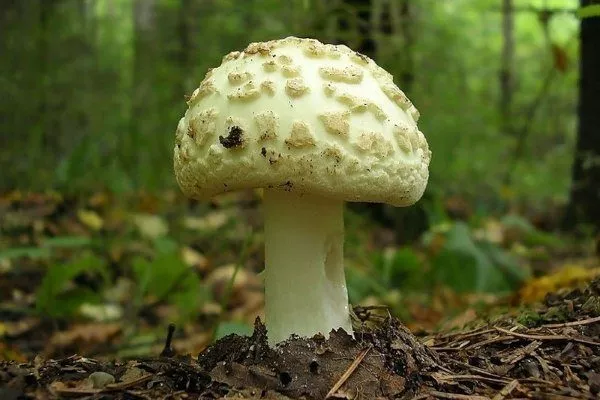
Toadstool fly agaric
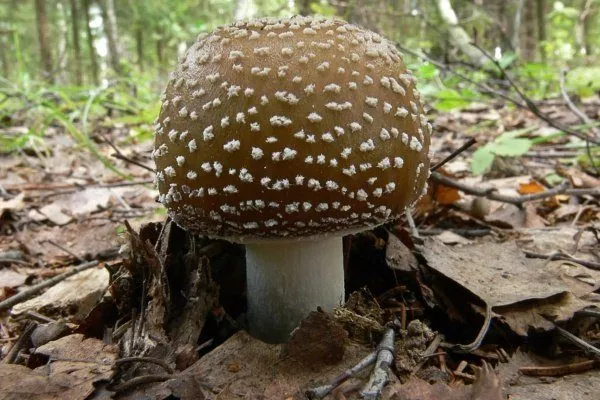
Panther fly agaric
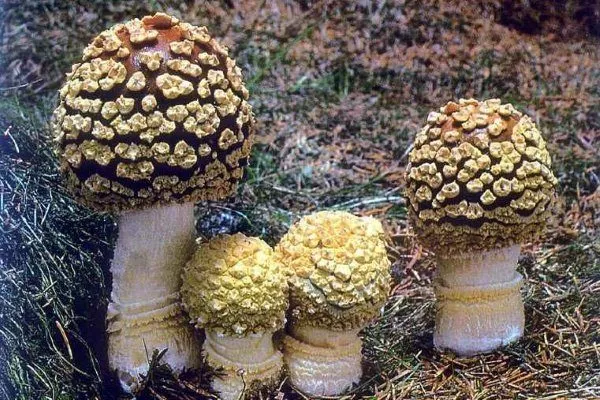
Royal fly agaric
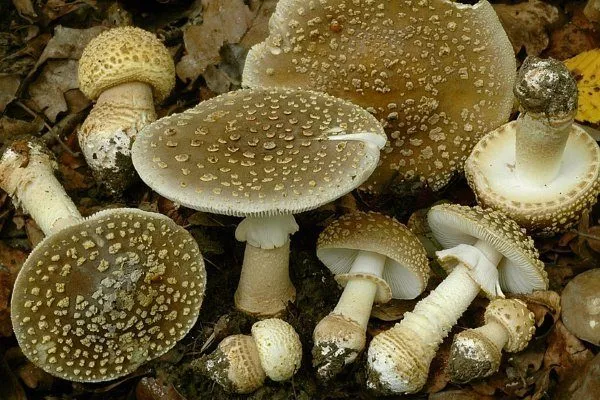
Rough fly agaric
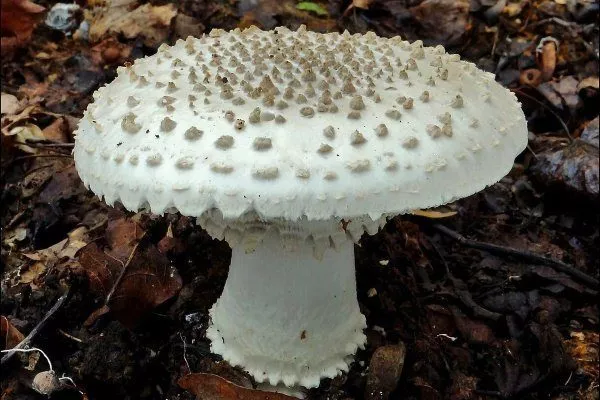
Spiny-headed fly agaric
Almost all types of mushrooms are unusually beautiful – this is a kind of warning that they are deadly poisonous.
| A type of fly agaric | Cap color | Cap diameter (cm) | Peculiarities | Toxicity |
|---|---|---|---|---|
| Red | Bright red | 8-20 | White flakes, ring on the stem | High |
| Panther | Brown | 5-12 | Unpleasant smell, porous leg | Deadly |
| Royal | Brown/olive | Up to 20 | Yellow flakes, does not darken when cut | Hallucinogenic |
| Rough | Yellowish/olive | 5-10 | Pleasant smell, turns yellow when cut | Moderate |
| Thornyhead | Grey | 6-12 | Pink plates, pungent smell | High |
Can you eat fly agarics?
Some species of fly agaric are considered conditionally edible. These include the following mushrooms:
- Yellowish-brown fly agaric, also known as the float mushroom. It's not particularly popular due to its thin cap and lack of flesh, while at the same time, it resembles a toadstool so much that many are reluctant to risk it. Raw float mushrooms are poisonous and, indeed, dangerous, but after thorough cooking, they are perfectly edible.
The mushroom has a flat cap up to 8 cm in diameter, brown or brownish-orange in color, with a small, darker tubercle in the center. The stem is fragile and up to 15 cm tall, with a thickening at the base. A distinctive feature is the absence of a ring. The fly agaric feels watery to the touch, with a slimy coating, and has no odor. - Pineal fly agaric – a thick-fleshed mushroom with a hemispherical cap, white or gray, covered with pointed pyramidal warts. The stem is cylindrical, wide at the base. This mushroom grows in coniferous and broad-leaved forests, often forming mycorrhiza with linden, beech, and oak. It contains small amounts of muscimol and ibotenic acid, so it is boiled and discarded before consumption.
- Caesar's mushroom It is also edible and has excellent taste. Its differences from its poisonous relatives include:
- the cap is red-orange in color, smooth and without growths;
- plates and legs are golden-yellow;
- The mushroom has a wide, sac-like cover on the lower part of the stem.
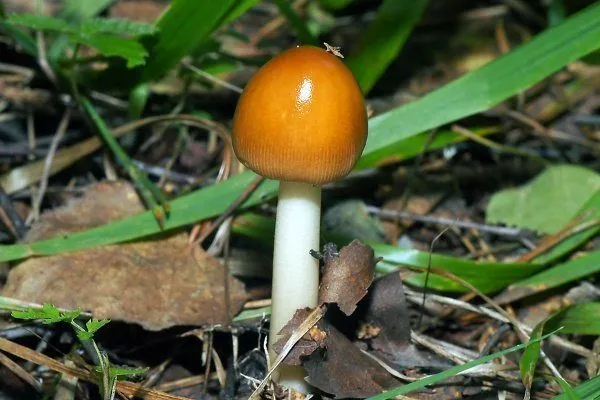
Mushroom "Float"
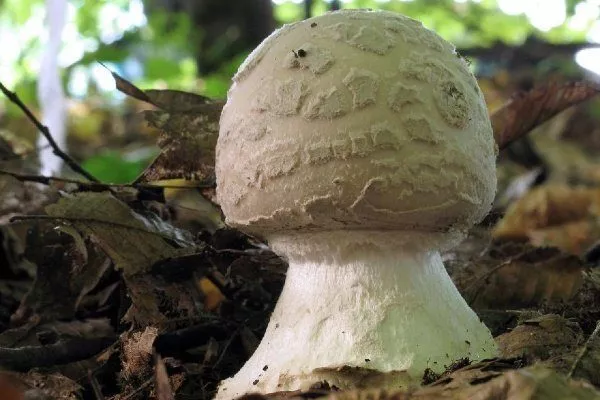
Pineal fly agaric
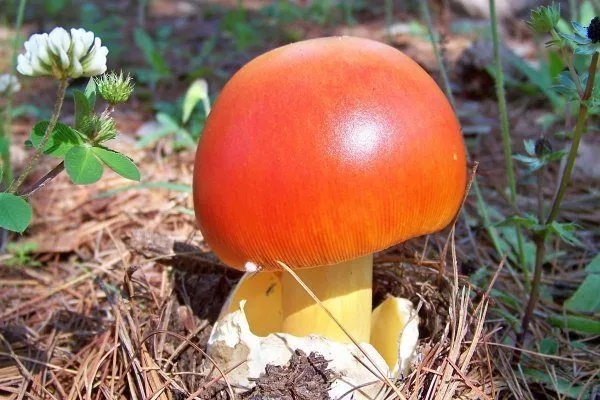
Caesar's fly agaric
Edible varieties also include brown, gray, and snow-white fly agarics, as well as the pink and tall fly agarics. Of course, all of them require proper preparation and pre-boiling.
Uses of mushrooms
As it turns out, the proper use of poisonous mushrooms can cure many ailments. They are used both externally and internally.
When taken in a strictly calculated dosage, fly agaric is recommended for problems such as:
- skin diseases – diathesis, eczema, neurodermatitis;
- muscle and joint pain;
- headache;
- radiculitis and rheumatism;
- male impotence;
- eye diseases;
- diabetes mellitus;
- tuberculosis;
- epileptic seizures;
- oncological lesions.
And this is far from a complete list of all the diseases that this mushroom can help with.
Tincture preparation plan
- Collect whole caps without damage
- Keep in the refrigerator for 3 days (+2…+4°C)
- Chop with a glass knife
- Fill with alcohol (40%) in a 1:1 ratio
- Infuse for 15 days in a dark place
- Filter through cotton cloth
The common red fly agaric, the most common, can be used as an alcohol tincture, juice, dried raw material, and ointment. All of these remedies are applied topically to treat varicose veins, persistent wounds, burns, bruises, and joint inflammation.
The tincture can be made with alcohol or vodka. The crushed caps should be refrigerated for three days, after which they are filled into a jar and poured to a depth of 1 cm above the mushrooms. The mixture is left in a dark place for 15 days and then filtered.
The ointment can be made from fresh mushrooms, mashed into a paste and mixed with sour cream. Alternatively, you can first make a powder by drying the fly agaric caps, then grind them, and add Vaseline or vegetable oil.
Today, special medications based on the poisonous mushroom have already been released – fly agaric ointment, tincture, medicinal creams, and homeopathic preparations.
Helpful tips for choosing
When using mushrooms on your own, you need to know how to choose them correctly:
- the most useful, as well as harmful substances, are contained in the cap - this part should be intact, not touched by insects;
- when drying the caps, the gills are removed from them, after which they are strung on a thread;
- When using, it is important to follow the recipe and the exact proportions of all ingredients;
- People with digestive problems should avoid using it;
- When preparing ointments and other products, avoid using metal utensils and metal tools.
This product is contraindicated in any form for people with mental disorders and pregnant (nursing) mothers.
After use, it's advisable to wash your hands thoroughly with detergent. Ideally, wear rubber gloves when preparing the tincture or ointment. Fly agaric remedies should only be taken internally after consultation with and under the supervision of a healthcare professional. Except in rare cases, mushroom-based medications are not recommended for children.

It's important to remember that eating just four fly agaric mushroom caps is enough to cause fatal poisoning. Such poisoning can be accompanied by suffocation, delirium, convulsions, and respiratory paralysis.
A poisonous mushroom like the fly agaric is a living example of the contradictions inherent in every living thing on our planet. On the one hand, it is extremely dangerous, but on the other, it is as beautiful as its appearance and offers obvious medicinal benefits. All that remains is to use this undeniable gift of nature with respect and caution.