
The hedgehog mushroom is an edible mushroom found in mixed or coniferous forests, primarily under pine trees. There are several varieties of hedgehog mushroom, none of which are particularly tasty. Despite this, they are often used in cooking for salads, sauces, and the like.
Other names of the mushroom
The hedgehog mushroom has various varieties, and the name "hedgehog mushroom" comes from the spines found under the cap of each mushroom. The mushroom also goes by other names:
- satyr's beard;
- monkey head;
- Hericium.
Description and characteristics of the mushroom
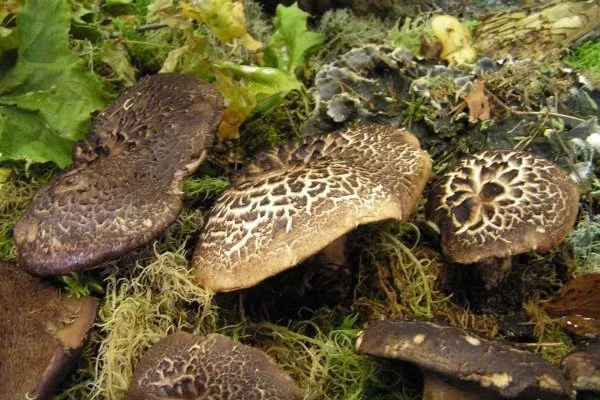
There are several species of hedgehog mushroom, all similar in structure and taste, yet each has its own distinctive features. The most common edible mushroom, often found in pine forests, is the variegated hedgehog mushroom. This variety of hedgehog mushroom is considered an autumn mushroom, as it ripens in late summer and finishes fruiting in late autumn.
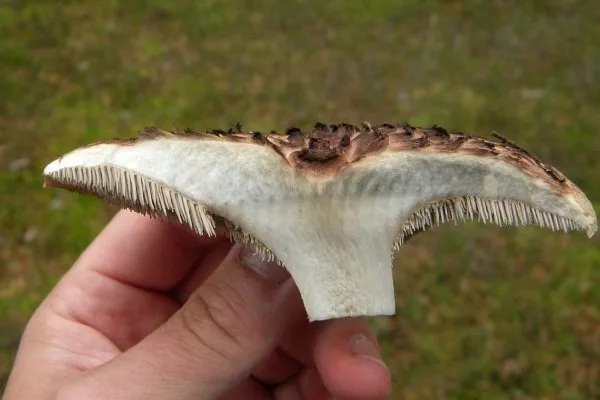
- Hat. A conditionally edible mushroom, the cap reaches 14 centimeters in diameter and is brown or gray. Round, dark-colored scales appear at the top. The younger the mushroom, the softer and less noticeable the scales are, but as it ages, these scales acquire a rough surface and increase in size. If the mushroom is very old, the scales fall off, leaving the mushroom completely smooth. The mushroom is initially convex, then becomes depressed as it matures, and in some cases, a funnel-like shape develops.
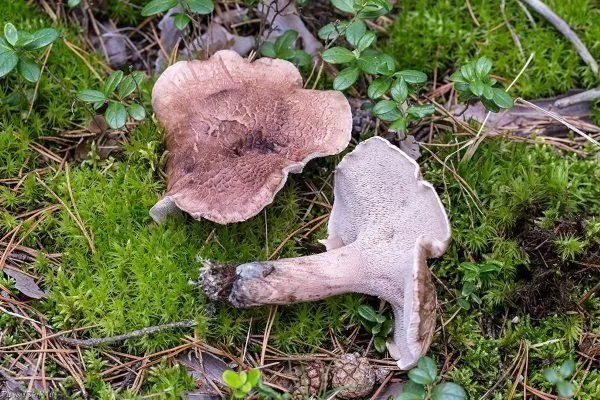
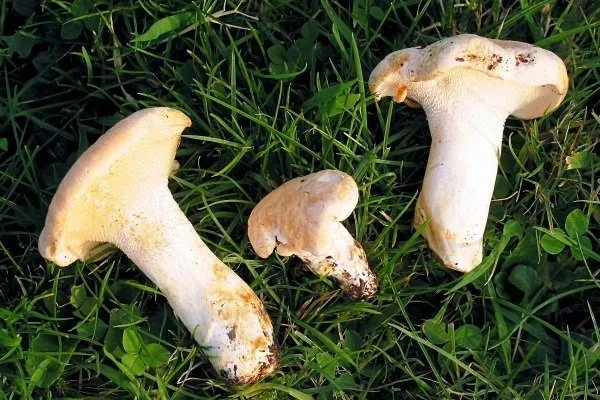
- Leg. The stem reaches 6 centimeters in height and can be smooth or fibrous. Its color is the same as the cap, but purple or lilac shades are also found. The stem is thick and sturdy, thinner at the base and thicker as it approaches the cap.
- Pulp. It has a white or gray color; if the mushroom is young, it has a pleasant aroma and spicy taste, but an old mushroom will smell rotten.
When and where does hedgehog mushroom grow?
The hedgehog mushroom grows primarily in dry forests, most often found in coniferous forests. There are several varieties, which can be found either alone or in association with other mushroom species, and they can also form rings.
They grow in virtually all forests across Russia, and this applies to all species of mushroom: variegated, yellow, crested, and coral. Fruiting occurs primarily from June to November. The hedgehog mushroom can be found from mid-August to late October on the Eurasian continent in temperate climates. They grow in mixed forests or coniferous forests, alongside pine trees.
Varieties
There are numerous varieties of hedgehog mushrooms worldwide. They are all from the same genus, but differ in appearance and coloration. Before you go mushroom picking, it's important to know the differences so you can identify the mushroom in front of you.
| View | Color | Size (cm) | Fruiting period | Features of the pulp |
|---|---|---|---|---|
| Comb | White/cream | Up to 25 | August-October | Turns yellow with age |
| Yellow | Orange-yellow | Hat up to 15 | June-October | Old specimens taste bitter |
| Coral-shaped | White/nude | Up to 30 | June-October | Fibrous structure |
| Motley | Brown/gray | Hat up to 14 | August-November | It acquires a putrid smell |
Lion's-crested mushroom
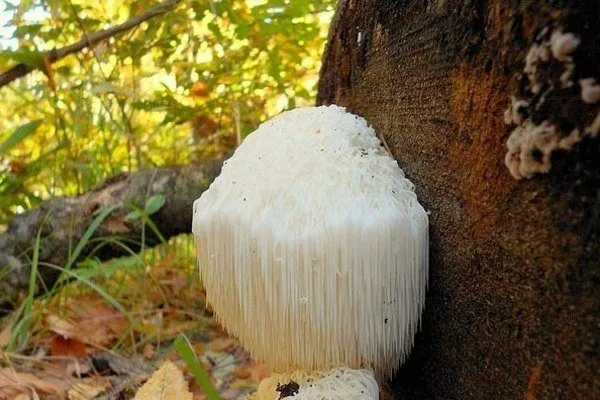
The edible hedgehog mushroom can reach 25 centimeters in length and weigh up to 2 kilograms. It comes in yellow, cream, or white hues. Its shape is round, oval, or even irregular, resembling nothing at all. This mushroom lacks a cap or stem, and its flesh is white and fleshy, turning yellow and drying out as it matures.
When and where does it grow? This mushroom can be found in Crimea, China, and the Far East from mid-August to late October. It grows on weak or diseased trees, including oaks and beeches, where the bark is broken.
Is hedgehog mushroom edible? This mushroom is extremely rare, it is rarely added to food, and its taste is reminiscent of shrimp meat.
What makes the mushroom valuable? It's not only suitable for food, but also used to make useful medicinal preparations and dietary supplements. The mushroom is used to treat ulcers, gastritis, and gastrointestinal problems. However, these claims have not been studied or scientifically proven.
Clinical studies have shown that this mushroom has a positive effect on tumors, both benign and malignant. When used in combination with conventional therapy, it also helps cure prostate cancer, cysts, fibroids, and cancer of all organs.
Yellow hedgehog mushroom
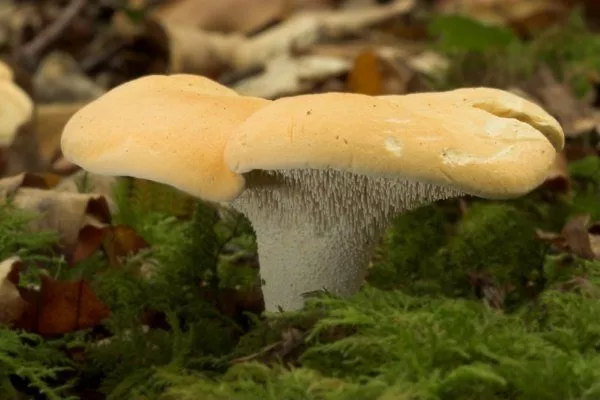
hat The cap of this mushroom is 15 inches long and is reddish-orange. If pressed hard, it darkens, as does the cap of an older mushroom. It is fleshy, irregularly shaped, dense, and convex, opening up as it matures. The edges of the cap are curved, and the inside has small spines that break off easily, giving the mushroom its name.
Leg Reaches 8 centimeters in height, cylindrical in shape, wider at the bottom than at the top. The surface is dry yet smooth. Its color is the same as the cap—yellow; the older the mushroom, the darker the stem.
Pulp Brittle, white or yellow in color, it becomes dark and firm to the touch as it ages. It has a rich, fruity aroma, while older hedgehog mushrooms have a bitter taste.
When and where can I find it? In temperate climates across the Eurasian continent and the Americas, and throughout the region, from mid-June to October 13-20. This mushroom grows in coniferous and deciduous forests, among birch trees, and near small bushes. They can also form circles.
What makes the mushroom valuable? Yellow hedgehog mushroom contains amino acids, organic acids, and mycosterol. The isolated compound repandiol has shown strong activity against cancer cells of any organ, especially the stomach. Repandiol inhibits the proliferation of cancer cells by binding to the DNA bridges in cancer cells.
Coral hedgehog
The mushroom grows like a coral-shaped, branched bush. It is white in color, though yellow or flesh-colored hues are less common. It reaches 30 cm in diameter. The coral-shaped hedgehog mushroom has two-centimeter-long, thin, brittle spines.
Pulp Tasty, aromatic, elastic and fibrous, it turns yellow as it matures.
Where and when does it ripen? This species of mushroom can be found in all forests of Russia, except for the northern part. They grow in all forests, nesting on dead tree bark, in hollows of living trees, and on branches. In southern Russia, the coral mushroom prefers oak, linden, and elm trees, while in temperate forests, it prefers aspen and birch. Mushrooms can be picked and prepared from June to October.
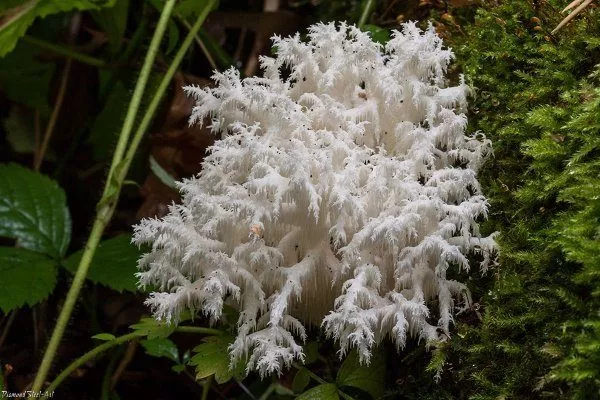
This mushroom can be used to make soups, stuff various dishes, fry or dry.
Culinary uses of the mushroom
The hedgehog mushroom is a rare mushroom. Many experts recommend eating the yellow variety due to its pleasant flavor. The variegated hedgehog mushroom, considered conditionally edible, can only be eaten when young. Interestingly, the yellow variety doesn't shrink when cooked due to its high density.
The flesh of both the variegated and yellow hedgehog mushrooms is dense and tart, but this only happens when the mushrooms are young. Before cooking, remove all the spines on the inside of the cap. If this is not done, the spines will fall off during cooking, and the soup will turn into mush.
Benefits and nutritional value of mushrooms
Thanks to its composition, the mushroom boasts a high content of fiber, carbohydrates, and protein. It also contains all the essential macronutrients and micronutrients. The energy value of 100 grams of the mushroom is 22 kcal.
Vitamins contained in hedgehog mushrooms:
- vitamin PP;
- vitamin C;
- ryboflavin;
- vitamin B4;
- pantothenic acid;
- betaine;
- vitamin D;
- vitamin D2;
- vitamin K
As for microelements and macroelements, the lion's mane contains the following:
- magnesium;
- phosphorus;
- calcium;
- potassium;
- sodium;
- selenium.
The product also contains:
- aminopropanoic acid;
- diaminohexanoic acid;
- leucine;
- glutamic acid;
- aminosuccinic acid.
Thanks to its unique composition, the mushroom is widely used in folk medicine. Its active components help cure many ailments:
- Campesterol. This substance is structurally similar to cholesterol. When it enters the body, it combines with bad cholesterol, facilitating its natural elimination.
- Glutamic acid. Thanks to it, the mushroom's taste becomes piquant, it restores muscle tissue and serves as a source of energy.
- Aspartic acid. It normalizes the functioning of the endocrine system and is also a growth hormone.
- Potassium maintains the body's water balance, also regulates the heartbeat and normalizes blood pressure.
- Nicotinic acid. It takes an active part in protein synthesis and energy metabolism.
Contraindications
The list of contraindications is no different from those doctors give for all mushrooms. People with the following conditions should exclude lion's mane from their diet:
- biliary tract;
- gastritis;
- increased acidity;
- kidney diseases;
- allergy sufferers;
- children under 5 years old;
- pregnancy.
Growing
Many wild mushrooms, including the hedgehog mushroom, are difficult to cultivate artificially, so people rarely ask how to grow a hedgehog mushroom themselves.
The easiest way to grow the mushroom is to purchase ready-made mycelium, which is sold in stores, online, and on official websites. If you plan to grow the mushrooms outdoors, planting should take place between April and October. This mushroom species also thrives indoors, so it's best to grow them in a basement or shed, where they can grow year-round.
How to grow hedgehog mushroom:
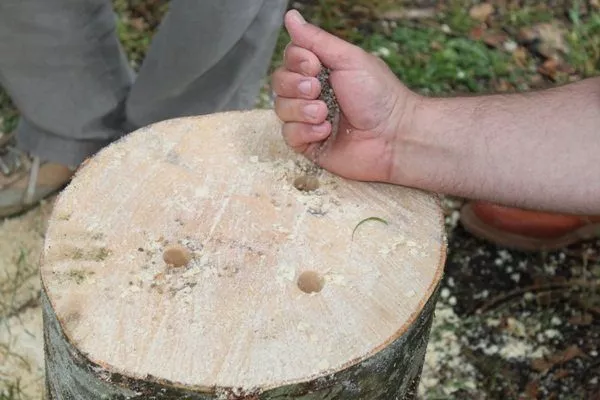
- First, you need to cut down a deciduous log, which must not be rotten.
- Branches can be cut, but the bark must not be touched; the wood must be wet.
- The wood is left in a warm, ventilated room for 7 days.
- Next, you need to drill a hole 1 centimeter in diameter and 40 millimeters deep. Several such holes should be made in a staggered pattern.
- It is in these holes that the mycelium is placed.
- Wrap the logs in plastic with holes so that the wood can breathe.
- The logs are transported to a warm room, away from direct sunlight, and watered three times a day to maintain moisture.
- As soon as the first threads of fungus appear, the wood is placed in cold water for 24 hours.
- Next, the logs are moved to a bright room and placed vertically.
At the end of autumn, the logs are covered with leaves or taken to the basement.
Work schedule
- April: Wood preparation and inoculation
- May-September: incubation period
- October: Transfer of logs to fruiting
- November-March: winter shelter/transfer to the basement
- After 6 months: first harvest
The first harvest will be in just six months, after which the mycelium only needs to be watered occasionally for two weeks. Then, harvest the mushrooms as they mature, preferably when young.
There are only four species of hedgehog mushroom, each unique in its own way. Some varieties offer significant health benefits, but overindulgence is not recommended, as they are heavy foods. Before heading out into the forest to pick mushrooms, carefully examine each mushroom to avoid picking a poisonous one through inexperience and suffering poisoning.