
For a good, high-quality potato harvest with a unique flavor, the Timo variety is preferred. This vegetable has gained popularity due to its undemanding nature in terms of soil, weather, and climate. It boasts high yields.
Description and characteristics of potatoes
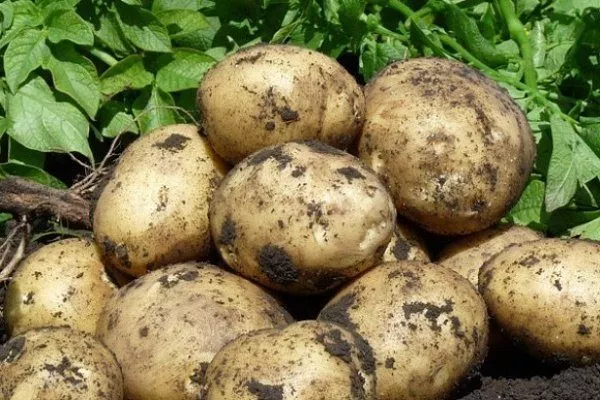
The Timo potato variety is familiar to many gardeners in regions with risky land use. It is characterized by low, compact bushes with numerous leaves and light green stems. The leaves are large. The flower corollas are bluish-purple.
When ripe, potatoes become rounded and light beige or yellowish in color. Their eyes are small, and the flesh is light yellow. The weight of a single potato ranges from 75 to 125 grams. When harvested early, gardeners harvest approximately 240 kilograms per 100 square meters of land; when harvested late, this figure increases to 80 kilograms.
The appeal of this variety lies in its versatility—Timo can be planted in various regions of the country. However, when planting, weather and soil quality directly impact yield. In northern regions, 150-200 kilograms of potatoes are produced per 100 square meters of land. In the northwestern regions, yields reach up to 380 kilograms.
This early-ripening variety boasts delicious tubers. The potatoes are used in a variety of dishes, including baking, frying, boiling, and mashing.
Advantages and disadvantages of Timo
Potatoes have not only positive but also negative sides, but there are many more advantages.
| Advantages | Flaws |
|
|
Requirements and preparation for landing
The Timo potato is an easy-to-grow nightshade crop, notable for its undemanding soil conditions. It responds well to regular fertilizing. It's best to plant potatoes in areas pre-fertilized with green manure, such as winter crops, annual herbaceous plants, or flax.
- ✓ The area must be well lit, without shading from buildings or trees.
- ✓ The soil should have good air permeability, avoid areas with stagnant water.
Potatoes are planted in mid-April, provided weather conditions are favorable. In northern regions, planting is postponed until the end of May. Loosening the soil is essential, as this crop especially requires it.
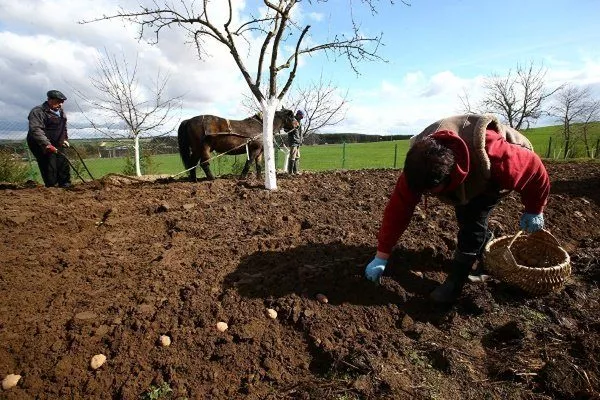
- In the fall, carry out deep digging of the area with the addition of organic fertilizers.
- In the spring, a month before planting, dig up the soil again and add complex mineral fertilizers.
- Before planting, loosen the soil to improve air permeability.
Soil preparation
Soil preparation should begin in the fall. Deep cultivation and fertilization are essential. In the fall, the soil is typically fertilized with manure or a combination of vitamin-rich fertilizers.
A month before planting potatoes, deeply cultivate the soil again and apply one portion of organic fertilizer. Mark the soil according to the planting method. The planting method is selected based on the soil type. There are three methods:
- Ridge planting. This method is designed for planting vegetables in heavy soil with excess moisture. Ridges are made about 15 cm high and the tubers are planted approximately 30 cm apart.
- Trench planting. This planting method is suitable for light, sandy soils. Trenches 15 cm deep and 70 cm apart are dug for the potatoes. Large tubers should be spaced every 40 cm, while smaller ones should be spaced every 30 cm.
- Smooth landing. The simplest option involves digging holes half a spade deep, spaced at least 70 cm apart. Place the planting material in the holes, sprouts facing up, and cover with soil.
Timo potatoes are often used for planting in challenging conditions. Container growing is a popular method. This yields about one bag of potatoes per plant. In less fertile soils, potatoes are grown using the mound method: a circular mound is created and several plants are planted in a circle.
Seed preparation
Before planting, be sure to treat the seed. After harvesting, immediately separate the tubers for planting. They should be kept in a sunny place for several days to turn green. This will protect the tubers from mice. A month before planting, the tubers are removed from the cellar and disinfected.
Keep the tubers in a warm place for several weeks; sprouts should appear after three weeks. At this stage, discard tubers that haven't sprouted and those with thin, thread-like sprouts. Pre-soaking the planting material in a solution of saltpeter and superphosphate, then dusting with wood ash, helps speed up growth.
Landing
Planting begins when the soil temperature has warmed to 8-10 degrees Celsius. Before planting, the soil should be plowed to ensure it is moist.
Place the tubers carefully to avoid damaging the sprouts when filling the holes with soil. The plants should emerge within 10-14 days. From this point on, it's important to follow the care instructions to increase yield and improve quality.
Caring for Timo potatoes
Caring for Timo potatoes is a simple task, but it is of great importance, as the yield obtained depends on it.
To care for potatoes, you should not only take care of watering the plants, but also not forget about weeding and hilling, fertilization, and preventative measures. Only then will the gardener be able to enjoy a rewarding harvest.
Watering
When there's no severe drought, watering the plants three times per season is sufficient, preferably at the right time. Watering potatoes immediately after planting isn't necessary, as the soil still contains spring moisture. Water them during active growth. A second watering is given during flowering. The third watering is based on soil dryness: when the soil is hardened and dry at a depth of 6 cm or more, water it. Watering is stopped a month before harvest.
Watering also influences the production of large fruits – with regular watering, you will be able to obtain even fruits with an attractive marketable appearance.
Hilling and weeding
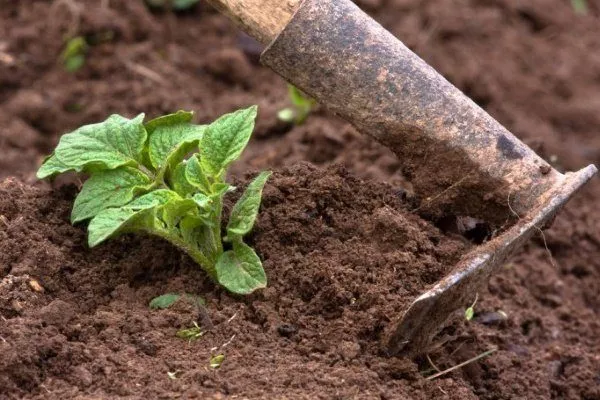
Hilling is a mandatory procedure performed when planting seedlings at a depth of 5-10 cm. Hilling is important during severe drought and when planting potatoes using the ridge method.
Typically, hilling is done three times. After strong shoots reach 10 cm, they are covered with 8 cm of soil. This method will protect the plants from frost. When the shoots grow another 10 cm, they are hilled a second time. During this period, the soil between the rows is loosened. The third hilling is done one month before harvest.
Weed regularly after watering and rainfall. This will prevent a hard crust from forming on the soil surface. The more moisture the soil has, the more it needs to be loosened.
Fertilizer
Regular and timely fertilization is an important factor affecting yield. Fertilize the crop three times throughout the growing season:
- When the tops reach 10 cm. Feed potatoes with organic fertilizer. Apply about 500 ml of liquid manure per plant. Apply after watering or precipitation.
- At the time of budding. At this stage, ash or potassium compounds are added to accelerate flowering.
- At the flowering stage. Organic fertilizers help accelerate root growth. For this, you'll need 200 ml of mullein and 40 g of superphosphate per 10 liters of water.
Pest and disease control
The Timo variety is distinguished by its increased resistance to many diseases. However, many gardeners believe otherwise. Some note that this variety is highly susceptible to wireworm attacks, and when replanted, it quickly becomes infested. late blightPotatoes are not particularly resistant to the golden nematode.
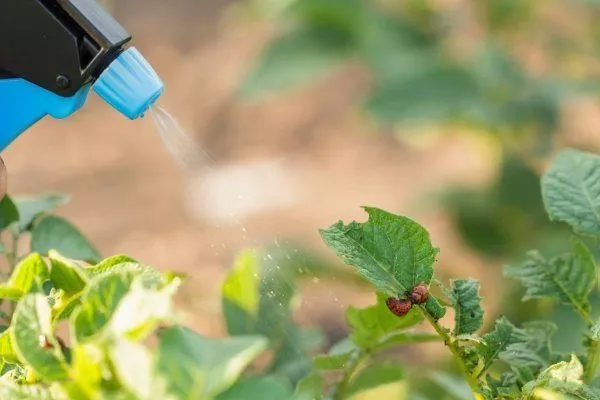
There is no potato variety that is not attacked by Colorado potato beetles. As a preventative measure pest attacks To prevent and treat fungal diseases, it's important to treat the tubers before planting. When replanting potatoes during the same season, additionally disinfect the seed using Fitosporin.
Harvesting and storage
The harvest begins 50-70 days after planting. The tubers should be stored indoors, dry and protected from direct sunlight. Good ventilation and an optimal temperature of 4-6 degrees Celsius are essential.
Gardeners prefer storage of tubers In specially prepared storage areas, cellars, or storage bins. When storing tubers in a cellar, they should not be left on the ground. It's better to place them in nets or wooden boxes. For storage in storage bins, special depressions are dug in the ground, filled with tubers, covered with straw, and covered with soil—this helps preserve the harvest for a long time.
Comparison with other varieties
To compare Timo potatoes with other early and ultra-early varieties, the table shows the advantages and disadvantages, as well as the yield of the varieties.
| Variety | Ripening period | Advantages | Flaws | Productivity |
| Timo | 55-70 days |
|
| 240-380 kg/1 are |
| Bellarosa | 50-70 days |
|
| 300-400 kg/1 are |
| Vineta | 45-70 days |
| Low resistance to late blight. | 300-400 kg/1 are |
| Gala | 70-80 days |
| The variety is not resistant to late blight and is susceptible to rhizoctonia. | 250-400 kg/1 are |
| Impala | 50-60 days |
| It has a watery taste and is susceptible to late blight. | 200-380 kg/1 are |
| Colombo | 50-65 days |
| Low resistance to scab and late blight. | 220-420 kg/1 are |
| Riviera | 45-80 days |
| Low resistance to scab and late blight. | 300-400 kg/1 are |
Gardeners have mixed opinions about this variety. Some prefer it for its good growth in drought conditions. This variety tolerates excessive soil moisture and transports well. These qualities are especially important for vegetable growers who sell the vegetable for profit. Other gardeners, however, often complain that potatoes are often affected by late blight.
Timo potatoes are grown by many farmers today, renowned for their excellent taste, low maintenance, and numerous advantages. They continue to be preferred in subsequent years, even after their first trial. However, to achieve high yields and large, high-quality fruits, they must be planted and cared for properly.