
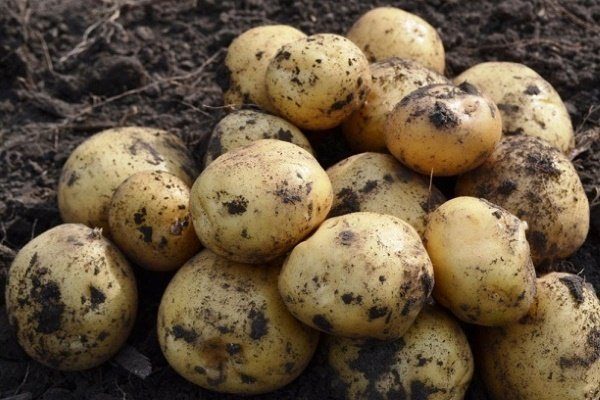
The super-early "Riviera" variety is beloved by our farmers and gardeners for its high yield, drought resistance, and excellent flavor. This Dutch variety is ideal for growing commercial potatoes—several harvests can be harvested within a season.
Origin of the variety
Through selective breeding, potato varieties have been developed that thrive in any climate, one of which is "Riviera." This is the fruit of the work of Dutch breeders from the Agrico holding, an association of farmers specializing in potatoes. The company has been in business since the 1980s, growing tubers for seed in its fields. The "Riviera" variety was added to the State Register of Plants of the Russian Federation in 2013. Agrico also owns popular potato varieties such as Ariel, Romano, Marlene, Sante, and others.
Description of the variety
The Riviera variety produces high yields even in the driest seasons. It is suitable for growing under plastic. In southern regions, two harvests of Riviera can be achieved. Digging for edible tubers can begin 35 days after emergence. The characteristics of the Riviera variety are listed in Table 1.
Table 1
| Peculiarities | Indicators |
| Ripening category | very early |
| Ripening period, days | 40-80 |
| Starch, % | 12-16 |
| Weight of tubers, g | 100-180 |
| Number of tubers in one bush, pieces | 8-12 |
| Yield, c/ha | 450 |
| Tuber shape | round, oval |
| Peel color | light yellow |
| Pulp color | cream |
| Consumer qualities | tasty, crumbly when boiled |
| Shelf life % | 94 |
| Regions with the highest yields | Central |
| Attitude to diseases | can be affected by scab and late blight |
| Features of cultivation |
|
| Appearance of bushes | medium-sized, upright or spreading, height – 75-85 cm |
| Appearance of leaves | light green, medium to large, with wavy edges |
| Bloom | white flowers |
| Degree of foliage | average |
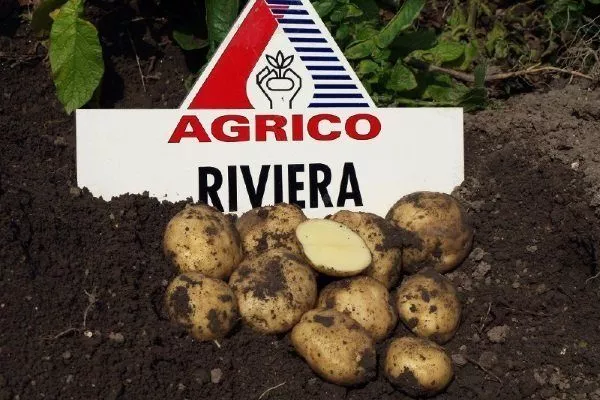
The bushes are distinguished by strong stems and a powerful root system. A distinctive feature is their rapid growth at the beginning of the growing season. The tubers have shallow eyes, making them easy to peel.
Characteristics of the Riviera variety
Thanks to its characteristics, the Riviera variety is ideal for growing in Russia, Ukraine, and Moldova. This Dutch potato boasts the following qualities:
- Early ripeningAlready on the 40th day after emergence, the tubers can be dug up – they have acquired marketable weight.
- High yield. On the 35th day it is 280 c/ha, on the 40th – 450 c/ha.
- Drought resistance. This variety tolerates lack of water, producing a decent harvest even during dry seasons. The plants have a strong root system that provides the bush with moisture and nutrition.
Due to its early maturity, 'Riviera' completes its vegetative cycle before the summer heat sets in. This variety is suitable for growing in the hottest regions.
- Good tolerance to mechanical damage. During harvesting, the integrity of tubers is 87-92%.
- The variety is resistant to diseases. It has good resistance to cancer, viral diseases, and nematodes. It can be susceptible to late blight and scab.
- Good shelf life. Tubers harvested during the second harvest are especially well preserved.
- High nutritional quality. Potatoes of this variety, when assessed for taste on a 5-point scale, score 4.8 points.
- Intended purpose – for food in a young form and for long-term storage.
The variety is unpretentious, but has soil preferences – it grows best in light soils.
Table 2 provides a comparative analysis of the Riviera potato with other popular varieties, comparing yield and tuber weight.
Table 2
| Variety | Commercial weight of tubers, g | Yield, c/ha |
| Riviera | 100-180 | up to 450 |
| Lilac fog | 90-160 | 180-310 |
| Lord of the expanses | 80-120 | up to 700 |
| Red Fantasy | 90-140 | 260-380 |
| Gourmet | 90-110 | 350-400 |
| Jelly | 85-135 | up to 550 |
| Palm | 180-250 | up to 450 |
| Handsome | 90-165 | 170-200 |
| Lily | 100-200 | up to 670 |
The Riviera potato is a table variety. It's great for mashed potatoes, salads, and fried potatoes. Its tubers are characterized by their average cooking time. Gardeners agree: the tastiest tubers are those dug early in the ripening process.
Advantages and disadvantages
"Riviera" is an excellent potato variety, worthy of the attention of producers and gardeners growing their own crops. The variety's pros and cons are listed in Table 3.
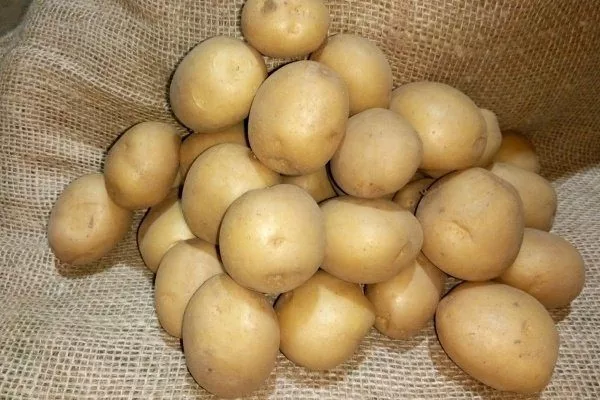
Table 3
| Pros | Cons |
| Fast ripening | Susceptibility to some diseases (scab, late blight) |
| Adaptability to different climatic conditions | Demanding of soil – good yields are observed on neutral and loose soils |
| Pleasant taste | High cost of seed tubers |
| Disease resistance | |
| Easy to store, low waste percentage | |
| Good transportability |
Preparation of seed material
The maximum growing season is 45 days. To harvest potatoes early and allow time for a second crop, the seeds are germinated.
Table 4
| Peculiarities of preparing tubers for planting | |
| Selection time | Autumn. Small tubers, weighing 40-70 g, are selected for planting and stored separately from the potato mass. |
| Germination | The tubers are sprouted. The sprouts reach a height of 0.5-2 cm. |
| Duration of germination | 14 days |
| Germination temperature | 12-15°C |
With the arrival of spring, the tubers set aside for planting are sorted through to remove any rotten or frozen roots.
Riviera potatoes can be germinated two months before planting, creating favorable conditions for sprouting. This allows the roots to begin to form on the tubers by the time they're planted. This method shortens the ripening period. To ensure proper germination, turn the tubers occasionally.
There are three different methods of germination:
- In the boxesThis is the traditional method: tubers are placed in boxes in 1-2 layers and kept in the light at 15 degrees Celsius for 15 days.
- In bags. The tubers are sprouted in transparent plastic bags with pre-punched holes. The seeds are placed in the bags, tied, and hung so that they receive light, but not direct sunlight. The sprouts emerge quickly due to the greenhouse effect.
- Withering. The tubers are stored in basements and attics.
If the spring is damp and cold, and it is too early to plant sprouted potatoes, they are transferred to boxes with sawdust - the sawdust is placed on the bottom, soaked in liquid fertilizer.
Thanks to germination, the yield increases up to 100%, and the harvesting period is moved forward by a week.
Growing potatoes from seeds
If you grow the same variety from tubers, it will begin to degenerate after 5-6 years of cultivation. Signs of variety degeneration:
- crop yields are declining;
- the size of tubers decreases;
- Immunity declines – plants start to get sick.
It's necessary to replace the seed stock. But premium tubers are expensive. Furthermore, there's a risk of buying potatoes that don't meet the varietal specifications. It's much more cost-effective to grow root vegetables from seed.
Where to get seeds:
- collect from the bushes - you need to choose the most powerful and productive plants;
- buy in specialized gardening centers.
There are two options for growing potatoes from seeds:
- Sowing in the groundThe tubers grow small and are used for planting next year.
- Seedlings. The seeds are germinated in March-April, keeping them for several days in a damp cloth.
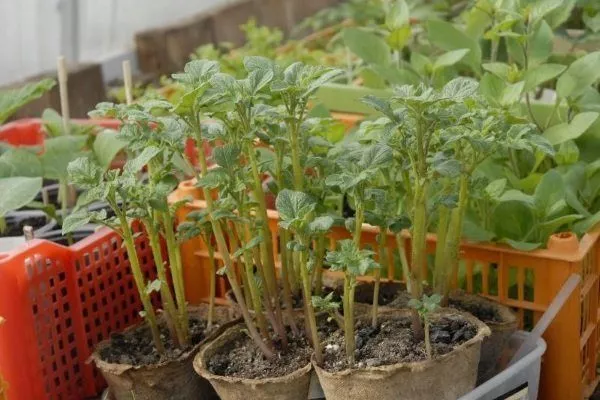
The procedure for growing seedlings:
- Prepare a nutritious soil mixture. Take 1 part soil and 4 parts peat. Add fertilizer.
- Sprouted seeds are sown in containers. The distance between adjacent seeds is 5 cm. The distance between rows is 10 cm.
- The seeds are sprinkled with soil and sprayed with a humidifier.
- Cover the containers with transparent film and place them in a warm, bright location. Moisten the soil periodically, avoiding drying out or overwatering. Ventilate the room regularly.
- The first shoots appear after 10 days. When two leaves appear, the seedlings are transplanted into individual cups, which must have drainage holes.
- In addition to watering, caring for seedlings requires rotating the cups to ensure even light exposure and prevent them from stretching. Loosening the spaces between the rows is also necessary to allow air to reach the roots.
To help the seedlings root better, they are given a urea solution (1 g per 1 l) as a fertilizer. The seedlings are then fed monthly.
Once the seedlings have grown, they are hardened off by taking them outdoors for half an hour. Gradually, the "hardening" time is increased. Before planting in the ground, the seedlings are kept outdoors for several days. When the threat of frost has passed, they are planted in the ground. Specific planting tips for potato seedlings:
- Add fertilizer into the holes - humus (300 g) or ash;
- the plants are deepened into the soil, only three leaves should remain on its surface;
- At first, the seedlings are covered with agrofibre to prevent them from being damaged by temperature changes and direct sunlight;
- when the weather becomes consistently warm, the agrofibre is removed;
- At first, the plants are watered frequently - every two days, then - like regular potatoes.
The seed crop produces small potatoes that become the source of elite potatoes for the next five years.
Seedlings can be grown not only from seeds but also from sprouts. To do this, break off the sprouts from the sprouted tubers and transplant them into separate containers.
Planting times and rules
Planting rules for the Riviera variety:
- It is recommended to plant potatoes in an open area with good sun exposure.
- Soil requirements: low groundwater level, no more than 70 cm from ground level.
- The soil for planting is dug up twice:
- in autumn to a depth of 15 cm;
- in spring – re-digging.
- In autumn, add fertilizer – manure (10 kg per square meter).
- The tubers need to be planted in moist and well-warmed soil – up to +10-+12°C.
In the central part of the country, tubers are not planted until mid-April. The planting time depends on the region and its climate, as well as the weather conditions during the given season.
Tubers the size of a chicken egg, weighing 30-60 g, are considered ideal for planting.
If you plant potatoes in April, you can harvest them by the end of May. The key is to take your time—the tubers won't begin to sprout until the soil has warmed deeply enough. The optimal time for planting, according to folk wisdom, is when birch leaves reach the size of a nickel.
Step-by-step instructions for planting potatoes:
- The soil is dug over. Lime or dolomite flour is added.
- The rows are marked out using a cord. The interval between rows is 65-70 cm.
- Fertilizer is added to the holes and the tubers are placed. The distance between adjacent potatoes is 35-40 cm. The tubers are placed with the sprouts facing up.
- Fill the holes with soil. The soil layer above the potatoes should be 6-10 cm.
Features of cultivation
Growing techniques for the Riviera variety are extremely simple. Among the growing requirements for this variety is infrequent watering—it only needs watering during severe drought.
The variety grows well in loamy, peaty, and sandy loam soils with high nitrogen and potassium content. To ensure a productive potato harvest, gardeners often fertilize potato crops with humus or rotted manure. Farmers typically fertilize potatoes with liquid fertilizers—slurry or chicken manure solution. To increase yields, the soil should be dug twice—in the fall and then in the spring.
A doctor of agricultural sciences discusses the specifics of growing the Riviera variety, its yield, and processing methods:
Watering
During heavy rainfall, it's recommended to feed the plants with dry fertilizer. During drought, the bushes should be dug up to prevent the spread of late blight on the tubers. Bushes have a strong root system, but during the period of foliage formation, even they may not be able to withstand drought, so the plants need watering.
If the weather is dry when seedlings emerge, the number of ovaries decreases.
Table 5
| Watering Rules for the Riviera Variety | |
| Number of waterings per season | 2 |
| 1st watering. The seedlings have grown to 10-15 cm. | at least 3 liters of water |
| 2nd watering. The tuber formation period begins with flowering. | 2 liters of water per plant |
| Depth of hydration | 25 cm |
| Average watering rate for one bush | 4 l |
If you follow the watering schedule for potatoes, the tubers will be smooth, free from scab and without cracks.
Lack of watering during drought will lead to a poor harvest – the tubers will grow small.
If potatoes are grown over large areas, it is recommended to use:
- drip irrigation – moisture is supplied to the roots of plants;
- Sprinkler system - a device that imitates natural rain and creates a humid environment.
For the Riviera variety, sprinkler irrigation is more suitable, since this method not only irrigates the soil, but also washes away harmful insects from the foliage.
Hilling
Loosening the soil is a necessary agricultural practice when growing potatoes. The roots of this plant require oxygen more than other plants for growth and tuber development.
Hilling goals:
- prevent exposure and diseases of basal stems;
- provide increased oxygen access to the tubers so that they fill out better;
- prevents freezing of young shoots when the temperature drops;
- weed removal.
During the season, two hillings are carried out:
- First – when the tops grow to 14-16 cm.
- Second – in 2-3 weeks, before flowering.
Hilling can be:
- Manual - using a hoe or flat cutter.
- Mechanized – cultivator, walk-behind tractor, other agricultural machinery.
Failure to hill potato plants can result in yield losses of up to 30%. It is recommended to hill the plants in the mornings and evenings, when sunlight is weak. The best time to hill is after watering or rain. It is essential to loosen the soil and remove weeds from the spaces between rows.
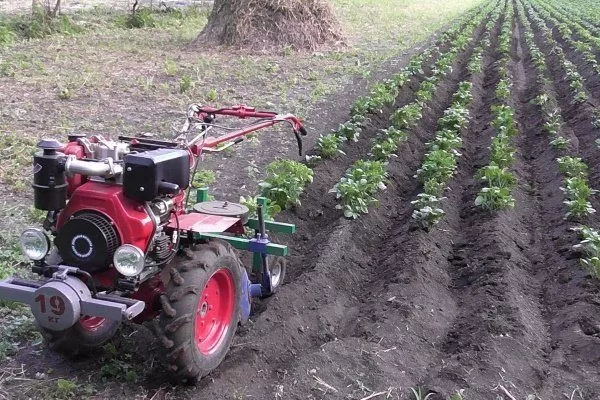
Read more about proper potato hilling Here.
Fertilizing and mulching
"Riviera" is an easy-to-grow variety, but its yields will be much higher in fertilized soils. Micronutrients added to the soil:
- increase plant resistance to diseases;
- increase the starch content in tubers - potatoes will be tastier and more crumbly;
- increase the shelf life and shelf life of tubers.
In spring, the soil needs to be fertilized (proportions for one hundred square meters):
- potassium sulfate – 2 kg;
- ammonium nitrate – 1 kg;
- double superphosphate – 1 kg;
- ash – 5 kg;
- nitroammophoska – 3 kg;
- nitrophoska – 5 kg.
The timing of fertilizing after planting tubers is given in Table 6.
Table 6
| Deadlines for contributions | Mineral fertilizers per 1 sq. m | Organic fertilizer per 1 sq. m. |
| Before the first hilling – when the seedlings reach 12-14 cm | Superphosphate (20 g) and urea (10 g) | 1. Bird droppings diluted in water (1:10). Consumption per bush: 2 liters.
2 Manure with water (1:10). 3. Herbal infusion – weeds fermented in water. Add it to the hole. 4. Nettle infusion – ferment and strain the infusion, dilute it with water. Water every 10 days. |
| During flowering | 100 g of ash is a source of potassium | |
| At the end of flowering | Foliar feeding: superphosphate (100 g) per 10 liters of water. The consumption rate is 3 liters per 100 square meters. | |
| After flowering | For intensive growth of tubers, add superphosphate - 30 g per 10 l, or Mag-Bor - 15 g per 10 l |
Recommended mulch the beds Hay or sawdust. A 5-10 cm layer retains heat well and prevents weed growth. Dark film is also used as mulch.
Today, many gardeners grow potatoes in mulch:
- The grass is mown on the plot and the tubers are laid out with the sprouts facing up.
- Cover the tubers with hay or freshly cut grass. Apply a 10 cm layer of mulch.
- As the grass settles and shoots sprout, add hay – shoots up to 15 cm in height should remain on the surface.
- The seedlings are watered and fed.
- Once the bushes have finished flowering, wait another 2-3 weeks and harvest the crop – to do this, simply lift the mulch.
The success of this interesting method depends on the potato variety, soil composition, and the gardener's experience. When growing potatoes, it's important not to overdo it. Overwatering the planting increases the risk of late blight, a disease that can destroy half the crop. Overfertilizing the soil will cause the plants to become diseased, which will also lead to crop loss.
Diseases, pests and methods of their prevention
This variety is resistant to most viral and bacterial attacks. The only serious threat is late blight. To prevent disease and insect damage, preventative measures are necessary.
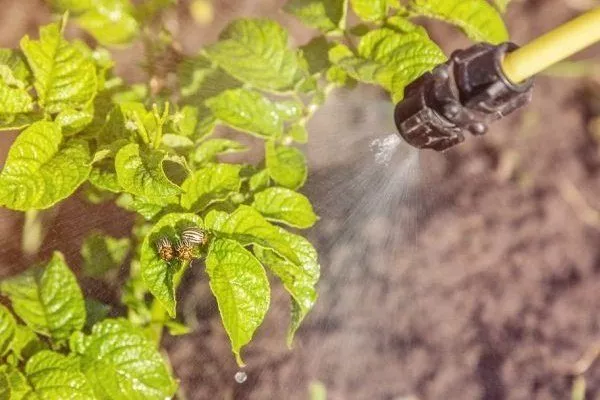
Before planting, it's recommended to treat the tubers with Prestige, a Colorado potato beetle repellent. The tubers are laid out in a single layer and treated with the product. After spraying one side, the tubers are turned over to treat the other side.
To improve plant immunity, it is recommended to spray the bushes with "Fitospirin".
Means of control of diseases and pests are in tables 7 and 8, respectively.
Table 7
| Disease | Symptoms | Treatment methods | Prevention |
| Late blight |
| The bushes are sprayed with 1% Bordeaux mixture or 0.5% copper oxychloride solution. |
|
| Macrosporiosis |
| Treat with the preparation “Rost” (40 g per 10 l) or “Arcerid” (50 g per 10 l). | Spray with Bordeaux mixture throughout the growing season. Spray once a week. |
| Blackleg |
| The diseased plant is pulled out. Ash and copper sulfate (1 cup and 1 teaspoon, respectively) are added to the hole. | Before budding, the bushes are treated with copper sulfate (1 tablespoon of copper sulfate and 40 g of laundry soap per 10 liters of water). |
| Dry rot |
| Tubers affected by the disease cannot be treated. | Preventing mechanical damage to tubers. Compliance with storage regulations. |
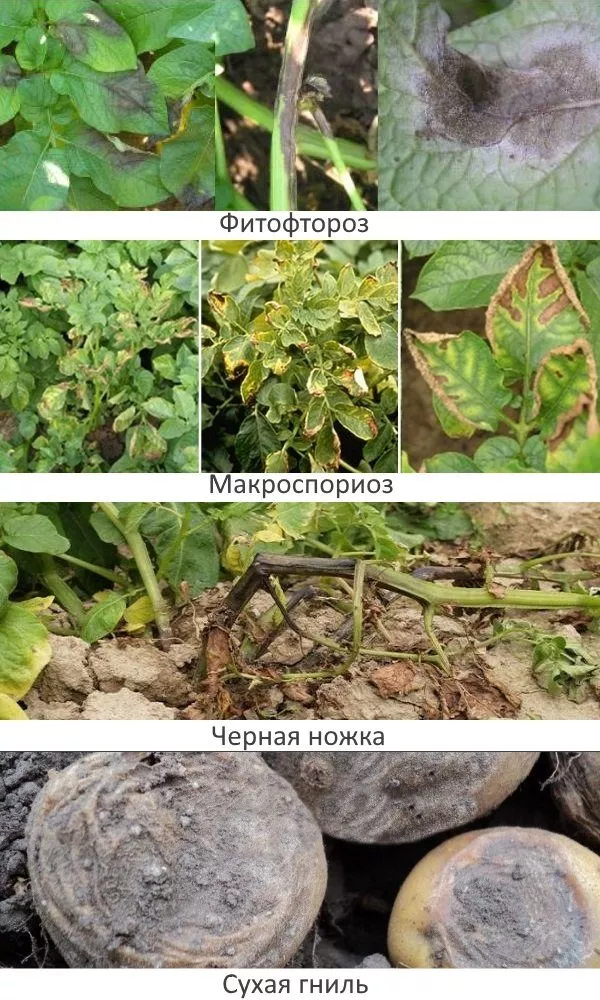
Table 8
| Pests | Signs of defeat | Methods of struggle | Prevention |
| Colorado beetle | The larvae and beetles eat the leaves right down to the veins. | Collection of eggs, larvae and beetles by hand.
Treatment with "Boverin" (30 g per 10 l of water) or "Bitoxibacillin" (50 g per 10 l of water). Spraying with urea solution (100 g per 10 l) | Autumn digging of the soil. |
| Wireworm | Passages in tubers. | Spraying bushes with the drug "Karate" (2 ml per 10 l of water), "Decis" (1 g per 10 l) or "Actellic" (ampoule per 2 l of water). | Before planting tubers, the soil is treated with a solution of potassium permanganate (5 g per 10 liters of water). |
| Mole cricket | Holes in the beds.
Affected bushes wither and die. | Treatment with "Medvetoks" is applied to the soil at a depth of 5 cm. Consumption is 2 g per square meter. | Autumn digging – as deep as possible. |
| Potato moth | Gnaws the bases of stems, damaging tubers. | Treatment with Fitoverm (4 ml per 2 liters of water) or Agrovertin (5 ml per 1.5 liters of water) | Destruction of weeds and digging of soil. |
| Potato moth | Egg-laying sites are visible on the stems, tubers, and leaves. There are holes in the tubers. | Treatment of affected tubers with a 1% solution of Lepidocide or Bitoxibacillin (100 g per 10 l of water) | Weed control.
Hilling up bushes. Compliance with storage standards. |
It has been observed that mole crickets prefer 'Riviera' to other varieties. If several potato varieties are grown in a garden, the pest will choose 'Riviera'.
Read more about potato pests and methods of controlling them. here.
Harvesting
Harvest readiness can be judged visually and by timing. By the 40th day after emergence, the stems fall and wither. Two weeks before harvest, the tops are completely removed—this is done to improve the shelf life of the root vegetables.
The first harvest takes place in late June or early July. In southern regions where two crops are grown, the second harvest occurs in September.
What you need to know about cleaning:
- The seed material is collected immediately during harvest. Potatoes selected for seed are placed in a sunny spot to allow them to turn green. This is done to improve germination.
- The tubers removed from the soil are placed to dry - directly on the boundary or under a canopy.
- The tubers are sorted, rotten and diseased ones are removed - they can infect healthy ones.
- The walls of the room where the potatoes will be stored, and the tubers themselves, are sprayed with "Antignilya" (Antigneel), an effective biological product that increases shelf life. It is recommended to whitewash the cellar walls with lime and line the bottom with matting.
- The tubers are treated with a copper sulfate solution (0.2 g per 10 liters of water). This will improve the shelf life of the roots.
- Storage temperature: +2…+4°C. If it is warmer, the tubers will sprout.
- During the winter, potatoes are sorted 2-3 times, removing spoiled tubers.
Gardeners usually use a pitchfork to dig a row, slightly away from the holes, so as not to damage the tubers.
Storage methods
Storing potatoes They can be stored in basements, piles, and trenches. When storing tubers in basements, they can be stored in the following manner:
- In bulk. The simplest and oldest method. It's used when potatoes are scarce. The downside is that it can lead to rot, which can cause significant losses.
- In the boxesThe best boxes are made from coniferous wood – they are less susceptible to fungal and bacterial damage.
- In containers. The best option for farmers and gardeners growing potatoes for sale. Each container typically holds 500 kg of potatoes. The containers have slits for ventilation. Containers can be stacked in several rows.
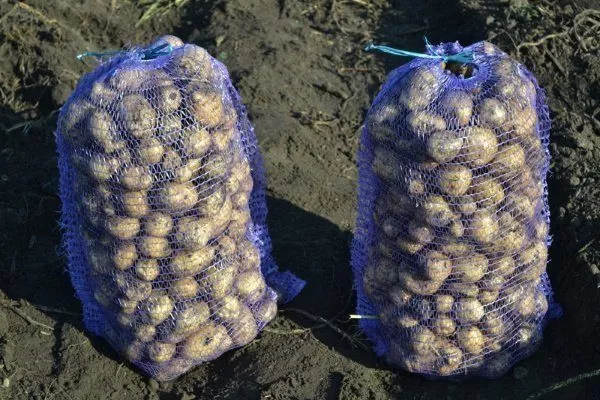
- In bags or nets. A convenient method is to stack the bags on shelves or one on top of another. This ensures good ventilation for the root vegetables. It's best to use bags made of natural materials. However, mesh bags are more common these days—they're inexpensive and convenient.
- Conduct a soil analysis.
- Add the necessary fertilizers.
- Carry out plowing or digging.
- Moisten the soil if necessary.
If you layer the tubers with plants that produce phytoncides, such as pine or spruce branches or rowan leaves, the potatoes will preserve better. Wormwood, goutweed, elderberry, fern, onion skins, and garlic also prevent rot.
- ✓ No mechanical damage
- ✓ Uniformity of size and shape
- ✓ No signs of disease
Advice from the pros
To achieve high yields, it's essential to follow proper cultivation techniques. Experienced farmers' advice will help you achieve your goals:
- You shouldn't plant Riviera on heavy, rocky soils – the tubers will grow slowly and will become deformed.
- Be sure to dig the area twice a year—in the fall and spring. This will loosen the soil and enrich it with oxygen.
- Potatoes grow well after cucumbers, squash, onions, zucchini, pumpkin, and legumes. This reduces the risk of pathogenic microbes and increases the likelihood of high yields. It is not recommended to plant potatoes in areas previously occupied by strawberries.
- To repel Colorado potato beetles, plant beans, cilantro, tansy, or nasturtiums between rows. To prevent late blight, plant onions and garlic near potatoes.
- When planting small tubers – up to 30 g, place 2-3 pieces per hole.
- You can't grow potatoes in the same place for years - this will deplete the soil, and the tubers will become smaller and smaller.
| Soil type | Water permeability | Fertility | Recommended crops |
|---|---|---|---|
| Clayey | Low | High | Cabbage, potatoes |
| Sandy | High | Low | Carrots, onions |
| Sandy loam | Average | Average | Cucumbers, tomatoes |
Reviews from gardeners and farmers
The Dutch variety "Riviera" attracts gardeners and farmers with its high yield and early ripening time, excellent flavor, and undemanding growing conditions. Even during the most severe drought, a "Riviera" plantation will not leave its owners without a harvest.