
A variety of pests can damage potatoes. Each requires specific control methods. To prevent their development, preventative measures should be taken in advance.
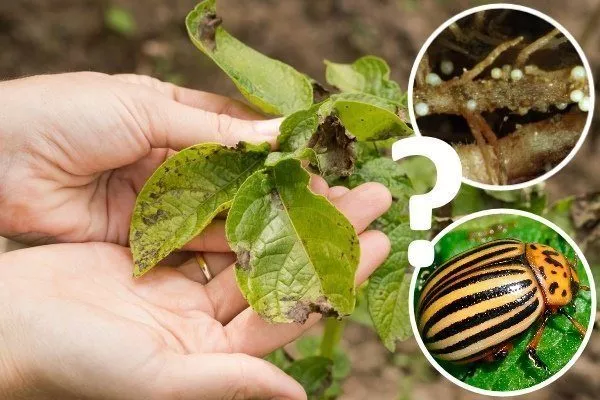
| Pest | Chemical method | Folk method | Efficiency |
|---|---|---|---|
| Colorado beetle | Colorado, Sumitsidin, Marshall | Tincture of wormwood, calendula | High |
| Caterpillars | Danadim, Zolon | — | Average |
| Mole cricket | Medvetox, Medvecid, Fenaskin Plus | Chicken manure | High |
| Nematode | Dimethoate, BI-58 | — | High |
| Wireworm | Force, Celeste Top, Voliam Flexi | Legumes | Average |
Common potato pests
Colorado beetle
The Colorado potato beetle is the most common and dangerous potato pest. It is voracious and causes significant damage to the crop. Furthermore, adult beetles are capable of flight, allowing them to cover large distances and infest multiple crops.
The Colorado potato beetle is a member of the leaf beetle family. This pest has an oval body, ranging from 8-15 mm in length and 7 mm in width. The abdomen is orange with black spots. Hard elytra are attached to the pest's body. This beetle has three pairs of legs.
Both larvae and adults feed on the leaves of cultivated and wild nightshade plants. In addition to potatoes, they also eat the leaves of tomatoes, eggplants, and bell peppers.
Adults overwinter in the soil, at a depth of about 50 cm. After overwintering, they emerge, begin feeding, and mate.
Females lay eggs on the underside of potato leaves. One female Colorado potato beetle lays about 350 eggs per season. Larvae hatch from the eggs 1-2 weeks after laying, depending on weather conditions.
The larvae, like the adult beetles, eat away the potato leaves, leaving only the stems. Having destroyed the tops of one plant, the pests move on to another.
The lifespan of this pest is 1 year, but some individuals live up to 2-3 years.
Birds that prey on insects are unable to control this pest. This is because Colorado potato beetles accumulate numerous toxic alkaloids in their bodies, making them inedible.
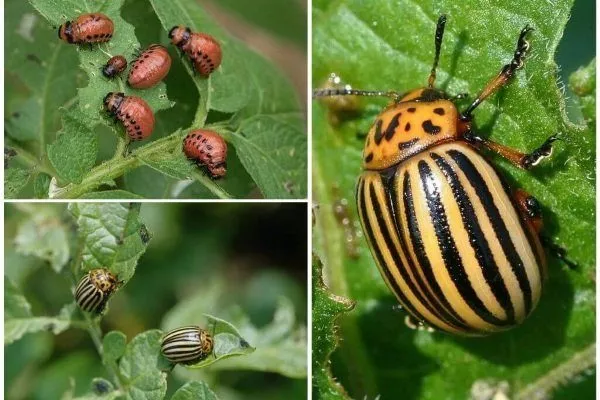
These pests are capable of destroying an entire potato crop due to their voracious feeding habits. Colorado potato beetles can consume not only young stems but also mature tubers.
Caterpillars
Potatoes can also be damaged by caterpillars. The potato cutworm is the most common insect. Its caterpillars prefer moist soil and shaded areas. They appear on potato stems in late April to early June.
Cutworms are primarily nocturnal. Their caterpillars are polyphagous pests, feeding not only on potatoes but also on carrots, onions, and some other crops.
The greatest damage is caused by potato moth caterpillars in rainy years, when the air temperature is moderate.
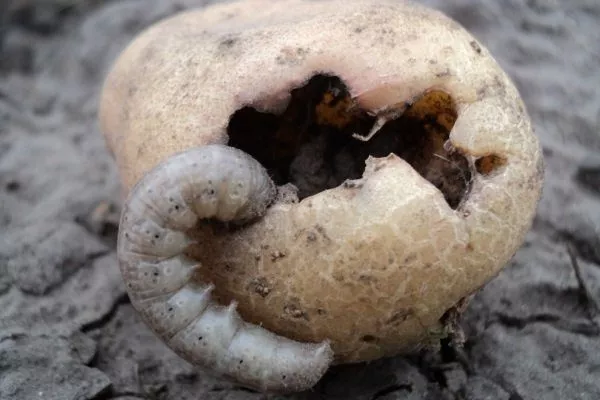
The potato cutworm is light yellow or bright red in color, with a reddish-brown head and no pattern. Its body length is approximately 5 cm and it has 8 pairs of legs. The caterpillar infests the area above the root collar. The plant hosting the cutworm quickly dries up and withers.
Caterpillars burrow into the potato tuber, gnawing through the stem of the plant. This damages the entire plant.
Caterpillars typically don't damage the potato skin. They make a small hole and tunnel, at the end of which they form a cavity, initially small but gradually expanding, which gradually fills with excrement. When the moth finishes feeding, it leaves the tuber, creating a new, larger tunnel. Potatoes damaged by caterpillars usually rot due to secondary infection.
Mole cricket
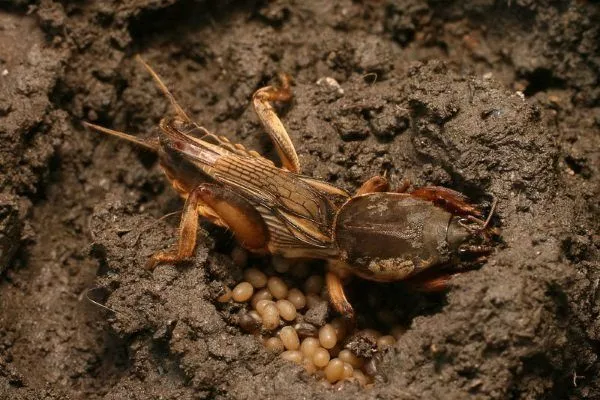
The mole cricket is an orthopterous insect whose body reaches up to 5 cm in length. Its body is large and dark brown. The mole cricket has short wings and powerful legs, which allow it to burrow deeply into the ground. This insect also has strong jaws and long antennae.
An adult mole cricket builds a nest not too deep underground, filling it with eggs. After laying eggs, hundreds of larvae, each 2-3 mm in size, hatch. They grow for several years, after which they begin to lead a full life.
The mole cricket poses a threat to all plants it encounters. It damages not only potatoes, but also cucumbers, beets, cabbage, and grains.
The insect has a spindle-shaped abdomen and a head with large eyes. Two pairs of tentacles are located around the gnawing mouth. The insect reproduces in the soil, laying up to 250 eggs at a depth of 15 cm or more.
Not only adult mole crickets but also their larvae pose a danger to potatoes. They chew through the stem, causing it to fall or wither, stopping development. The mole cricket can also chew large cavities in the tubers.
Most often, mole crickets completely eat root vegetables. Even potatoes that have been simply "eaten" by mole crickets are unfit for consumption.
Wireworm
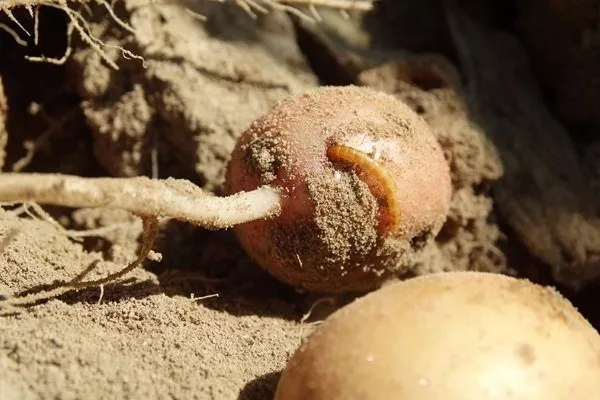
The wireworm is a pest comparable in danger to the Colorado potato beetle. It belongs to the beetle family. Its body length reaches 7-20 mm.
Externally, wireworms look like click beetle larvae with a finger-like process directed backwards.
The adult is a black beetle with an elongated body.
A single female can lay up to 150 eggs. The larvae hatch in 20-40 days and grow and develop for 3-4 years.
In the first year, the larvae do not pose a danger to cultivated plants, but in the next 3 years they become active and are capable of eating the seeds even before they sprout.
Wireworms cause significant damage to potatoes. They destroy seeds and seedlings, gnaw at roots and stems, and burrow into roots and tubers. This causes the potatoes to rot.
Wireworms actively eat potatoes if the weather is hot, there is insufficient moisture, and also if they lack couch grass roots, which are the pest's favorite food.
Nematode
The golden potato nematode is a microscopic pest that causes the disease globoderose.
The nematode lives in the soil, remaining active for up to 10 years. The pest survives the winter as larvae and eggs in cysts.
In the spring, the eggs hatch into larvae that penetrate the plant's roots. Here, they develop until they mature into sexually mature males and females.
Females tear apart the roots, partially remaining inside the plant. After fertilization, they lay eggs inside their own bodies. When the eggs mature, the female's body dies, retaining the eggs inside. When the potatoes are harvested, the cysts fall off and penetrate the soil. The cycle repeats.
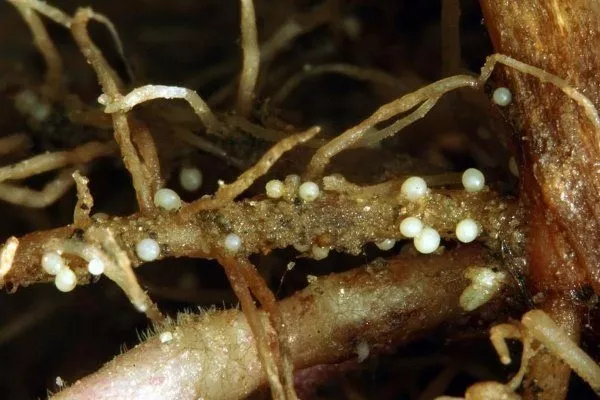
Nematode under a microscope
Potato flea beetle
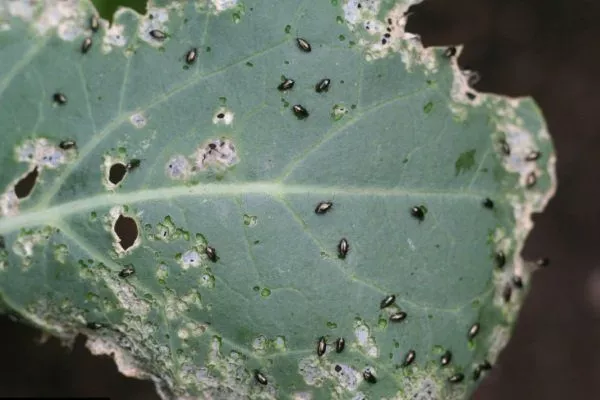
The potato flea beetle is a mature beetle up to 3 mm long. Its body is black, with dark brown appendages.
Potato flea beetles damage potato tops. Larvae developing on the roots can cause the loss of healthy plants. If favorable conditions for pest development exist, a significant portion of the crop is lost.
Potato flea beetles leave pits and holes on the surface of leaves. Adults feed on the foliage. If the foliage is severely infested, potato seedlings die, especially if planting was late.
Potato flea beetle larvae inhabit the root systems of various nightshade plants: not only potatoes, but also tomatoes and eggplants.
The potato flea beetle causes the greatest damage to bushes if the year is warm and humid.
This pest is a carrier of many infectious potato diseases.
Potato moth
This moth can destroy up to 80% of crops. It is small, reaching 6-8 mm in length. In summer, the development process from egg to adult takes up to 4 weeks.
The potato moth is undemanding of environmental conditions. It lays eggs on the underside of plant leaves. A clutch typically consists of 1-20 eggs. The eggs hatch into caterpillars, which later develop into butterflies.
The potato moth feeds on the underside of potato leaves. When the tops dry out, the pest moves to the tubers. The moth penetrates through the eyes and cracks on the surface and feeds on the flesh.
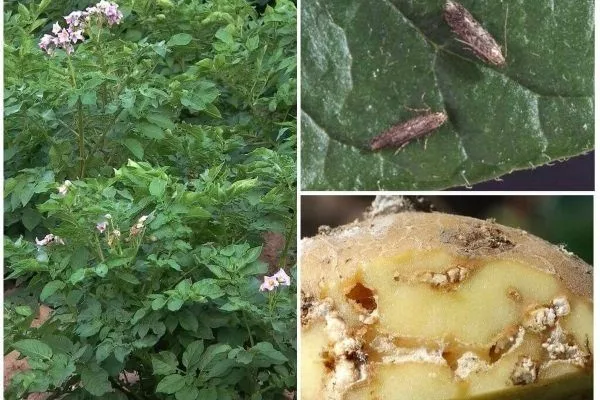
The potato moth weakens potato bushes, damages tubers and reduces the quality and quantity of seed material.
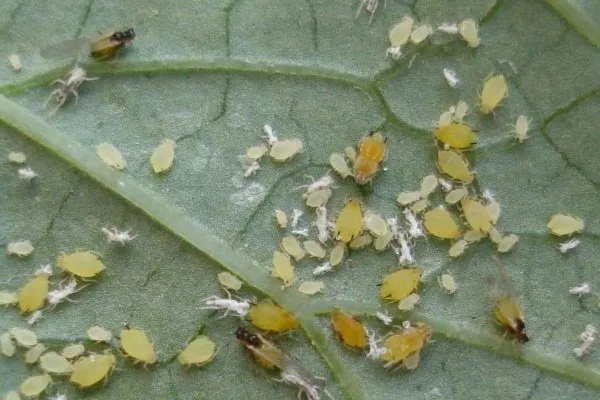
Potato aphid
This pest belongs to the order Hemiptera. They are small insects, reaching 3.5 mm in length. They include both winged and wingless species. The pest is found everywhere.
The body is shiny, elliptical in shape, and the color ranges from white-green to yellow-green.
These insects' mouthparts are adapted for piercing tissue and sucking sap from plants. This causes damaged potato leaves to dry out, the crop to stop growing, and yields to decline.
A characteristic feature of these pests is that they leave sugary secretions where they have absorbed the juices. These secretions attract other pests, creating favorable conditions for fungal growth. In this case, the crop dies completely due to the infestation of various insects.
Aphids reproduce very quickly in dry, warm weather. The number of aphids is significantly reduced if ladybugs are present in the area.
May beetle
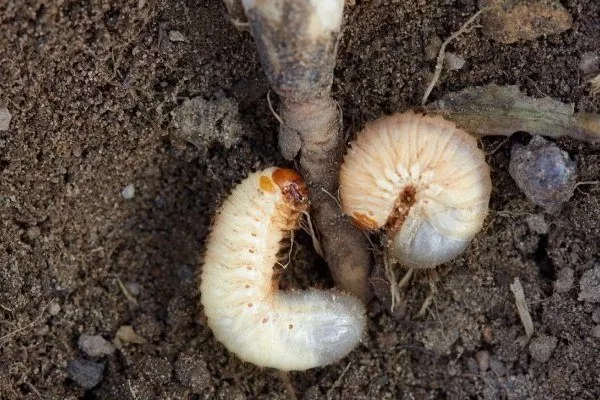
May beetle larvae can also cause damage to potato crops.
The cockchafer emerges in late April or early May. A single female lays up to 70 eggs in the soil. Larvae emerge a few weeks later. During the first year, they feed on organic matter, enriching the soil with waste products and beneficial to the soil. In subsequent years, the larvae develop a chewing apparatus, enabling them to consume potato roots and tubers.
The larvae are located in the upper layers of soil, at a depth of 20 to 40 cm.
When larval concentrations in the soil are high, large quantities of potatoes are destroyed. Even a single larva, aged 3-4 years, can damage dozens of tubers in just a few weeks.
It's quite easy to determine whether your potatoes have been infested with the cockchafer larva: if the leaves wilt, dry out, and turn yellow for no apparent reason, this is the result of this pest becoming active.
Slug
Naked slugs rarely attack potatoes, but they can still cause damage.
Depending on the species, their body length can reach 3-6 cm. They are most active at night and prefer areas with high humidity.
Slugs attack potato foliage and tubers. They chew irregular holes in the leaves, leaving only the stem and the largest veins intact.
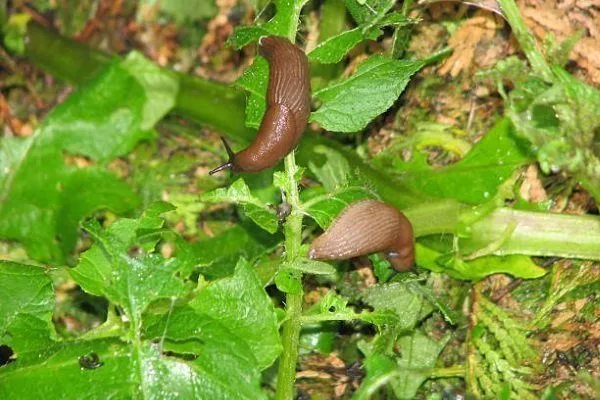
Slugs spread fungal and viral diseases by crawling from one plant to another. If they damage potatoes, late blight develops.
Rodents
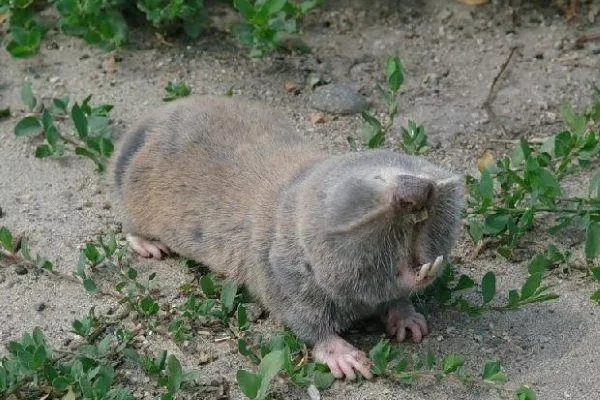
Certain rodent species also pose a threat to potatoes. This crop is often damaged by the mole rat, a small animal resembling a mole. Instead of eyes, it has a fold of skin covered with stiff bristles. It feeds only on root vegetables and does not eat insects. The mole rat eats large potatoes on the spot and carries smaller ones into its burrow.
The mole rat also chews potato tubers. It can be seen in plots located near bodies of water. It penetrates 15-25 cm underground and chews through the roots. In addition to damaging the crop, the rodent disrupts the root system of the plants, causing them to dry out and reducing yields.
The mole rat also creates underground storage areas where it hides food for the winter. These storage areas are approximately 20 cm deep. This rodent is very prolific and quickly produces many new pests.
Leafhoppers
Leafhoppers are small insects (1-3 cm) that resemble jumping butterflies. They live in anthills during the day and emerge at night to drink plant sap.
Leafhoppers reproduce very quickly: it takes only 20 days for an egg to develop into an adult. Their widespread spread across Russia was facilitated by the import of plants from abroad.
By sucking the juice from the leaves of cultivated plants, leafhoppers cause damage to them: this leads to slow development and growth cessation, as well as the death of part of the potato bush.
Potato leaves damaged by leafhoppers turn yellow and become deformed, with white or red spots appearing on their surface. Bacteria and fungi, which cause various diseases, easily penetrate through the damaged areas.
Leafhoppers can also transmit viral diseases. These pests infect plants with toxic saliva and lay eggs. Both adults and larvae pose a threat to plants.
Methods of controlling potato pests
If pests appear, immediate action must be taken to combat them; otherwise, you could not only lose your harvest, but also end up with potato tubers infected with diseases carried by the pests.
The most effective methods for controlling pests are the following:
Chemical treatment
Various chemical-based products are a reliable way to eliminate beetles and insects that harm potatoes:
- To deal with the Colorado potato beetle, you should treat the area with Colorado, Sumicidin or Marshal.
- To combat caterpillars, use the preparations Danadim and Zolon.
- The following medications are effective against the mole cricket: Medvetox, Medvecid, Fenaskin Plus.
- The nematode that harms potatoes can be neutralized using chemicals containing phosphamide or mercaptophos (Dimethoate, BI-58).
- To neutralize wireworms, use Force, Celeste Top, and Voliam Flexi.
- Potato moths are sensitive to the insecticides Tsimbush and Decis.
- Rodenticides and fumigants are effective against rodents.
- Potato moths can be controlled using the same products used to combat the Colorado potato beetle. This pest can also be killed by Decis or Fastak. If potato moths have infested a cellar containing harvested potatoes, the affected tubers can be treated with Lepidocid or Bitoxibacillin solutions. Smoke bombs such as FAS or Gamma can also be used.
- If leafhoppers have appeared in the area, the affected potato bushes should be treated with insecticides such as Proteus, Calypso, Bizkaia, or Akarin.
- Insecticides such as Force, Grom 2, and Regent are used against potato aphids.
- ✓ Infection rate
- ✓ Presence of pets
- ✓ Budget
When using chemicals, you must follow the safety instructions to avoid harm to your health.
Traditional methods
To combat the Colorado potato beetle, you can use calendula: this plant has a scent that these pests dislike. You can plant it around your vegetable fields.
You can also combat the Colorado potato beetle with a wormwood infusion. Take a third of a bucket of fresh wormwood, pour boiling water over it, and let it steep. Apply the resulting infusion to the infested areas.
Many pests dislike the smell of garlic or onions. That's why affected potato plants can be treated with an infusion made from these ingredients. To prepare, take 250 grams of onion or garlic, chop it, and add a liter of water. Let it steep for a week in a sealed container, then apply the resulting mixture to the plants.
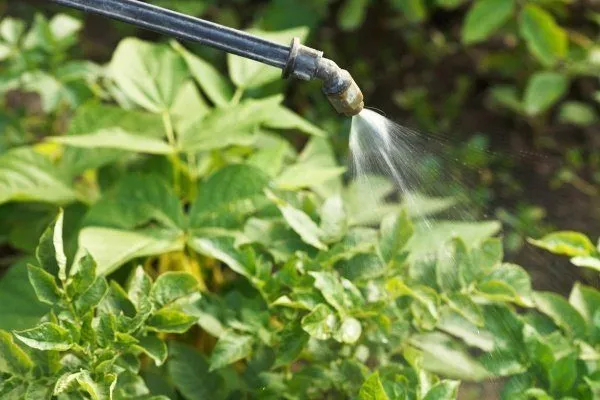
Potato flea beetles are controlled with a mixture consisting of ash, chamomile infusion, and tobacco dust, taken in equal proportions.
Chicken manure can be used to effectively control mole crickets; this pest doesn't thrive in fertilized soil. Take 2 kg of manure and dissolve it in 10 liters of water. Dilute the resulting solution again at a ratio of 1 part solution to 5 parts water. Fertilize the mole cricket-infested areas with this mixture.
Many pests cannot stand the smell of plants with a strong aroma. That's why parsley, mustard, lavender, peppermint, coriander, basil, and fennel can be planted near potato plants.
Soil care
To get rid of pests, it's essential to dig up the soil in early autumn, thus bringing to the surface layers that may contain larvae and eggs. Throughout the summer, the soil should be loosened.
Preventive measures
To prevent the appearance of pests on potatoes, it is necessary to take adequate measures in a timely manner.
To prevent the appearance of the Colorado potato beetle, you need to:
- Plant potatoes next to garlic, beans, and coriander—they will mask the aroma of nightshade crops, which attracts pests. If such plants are not available, they should be planted around the perimeter of the area where the potatoes are planted.
- Sprinkle spruce or birch sawdust between the rows of potatoes - they emit a resinous smell that repels the beetle.
To prevent the appearance of nematodes, it is necessary:
- treat the soil in which the potatoes grew with urea: 1 kg of urea is needed per 1 sq. m of land, it is filled in and dug up;
- burn the infected plant without shaking off the soil;
- Give preference to varieties that are resistant to this pest: these include Rosara, Zhukovsky, Symphony.
You can prevent the appearance of wireworms in the following ways:
- plant legumes next to potatoes - they repel this pest;
- do not leave potatoes in the ground over the winter, even if they are spoiled;
- dig the garden deeply in the fall;
- remove weeds and remove them from the garden.
To prevent the appearance of mole crickets, you should:
- dig the soil deeply in the fall;
- loosen the soil in spring and summer on a regular basis;
- plant plants with a strong smell next to potatoes: coriander, marigolds;
- When planting potatoes, water the holes with an iodine solution (20 drops of iodine per 10 liters of water).
Watch a video about potato pests and how to prevent them:
There are many types of pests that damage potatoes. They can be controlled using chemicals and folk remedies. To prevent pests, maintain the soil and till it in the fall. Plant strong-smelling plants around the perimeter of the garden.