
Many experienced vegetable and garden growers are increasingly opting for hybrid potato varieties. The Dutch table potato variety Colombo (Colomba) is particularly popular. It is successfully grown in garden plots and large commercial plantations. Colombo is characterized by excellent flavor, high yield, transportability, shelf life, and early maturity.
General information about the Colombo variety
The Colombo potato variety was developed in the Netherlands by crossing two local varieties, Agata and Carrera. It has long been successfully and extensively grown in Finland, leading Colombo to be mistaken for a Finnish variety. It is popular in Russia and Ukraine in areas with warm and temperate climates. Colombo is zoned for cultivation in the following Russian regions:
- Volga-Vyatka region;
- Black Earth Region;
- North Caucasus;
- Central District;
- North-West region.
Colombo is a mid-early variety with a growing season of 60-65 days. However, the first fruits can be harvested as early as 45 days after emergence. When harvested early, the variety yields 1 to 3 kg per square meter. Young tubers are rich in vitamins. If you wait until technical maturity (65-75 days), when the plant begins to dry out, you can harvest 3 to 4.5 kg of potatoes per square meter of soil.
Typically, seeds are planted in May, and young tubers are harvested in July. In southern regions, two Colombo harvests are possible per season.
Description and characteristics of the variety
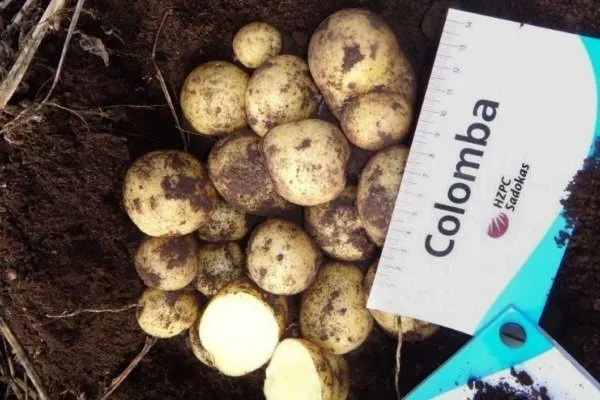
The Colomba hybrid potato is planted outdoors. It forms a bush about half a meter tall, spreading or upright. The leaves are emerald-green, and the flowers are light lilac. The hybrid's tubers have a thin, amber-colored skin. The eyes are shallow and small—up to 0.2 mm. The flesh is yellow or cream-colored.
General characteristics of the variety:
| Indicator | Description |
| Peel | quite thin, with an amber color |
| Eyes | small |
| Pulp | has a creamy color |
| Form | elongated-oval |
| Starch | 12-14% |
| Average tuber weight | 70-130 g |
| Bush | straight, spreading, 55 cm high |
| Flowers | white with a lilac tint |
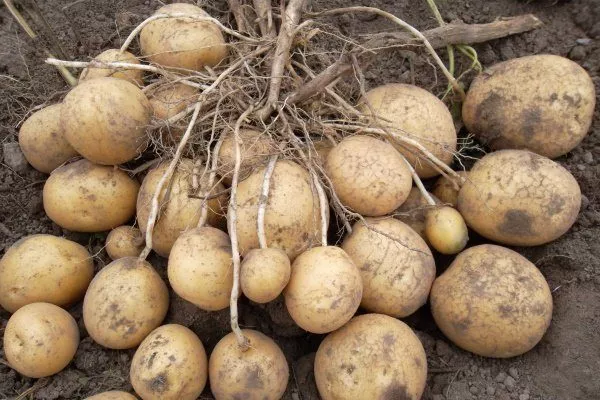
An average of 12 tubers grow on a single cluster. They are large and uniform, with a regular (round or oval) shape. Each potato weighs up to 130 g, depending on the number of potatoes per bush. Small potatoes are rare, which contributes to Colombo's high marketability. The potato slices do not fall apart and retain their shape during cooking (frying, boiling).
Table potatoes are suitable for any dish. Due to their low starch content (11-15%), they won't produce fluffy mashed potatoes. However, this variety can be used to make:
- potato pancakes;
- homemade chips;
- soups;
- casserole;
- French fries, etc.
Advantages and disadvantages of the variety
Everyone familiar with the Colombo variety notes its excellent taste. The texture is firm, and the potatoes don't overcook. The hybrid also boasts other advantages, including:
- The attractive presentation of the fruit ensures Colombo's high sales volume.
- Easy to care for.
- Resistance to temperature changes, drought periods and diseases.
- Early maturity.
- High yield, reaching up to 40 tons per hectare.
- Colombo has a good shelf life – up to 95%.
How to grow and care for potatoes?
The variety's cultivation techniques are simple and standard, but they do have their own unique characteristics. To get a good Colombo harvest, you need to learn the growing rules and follow the recommendations of experienced farmers. Finns have achieved success growing Colombo potatoes and recommend the following pre-planting measures:
- processing of tubers;
- soil preparation.
Preparation of seed material
Before planting, it's important to ensure the quality of the seed. The tubers should be germinated a month to a month and a half before planting. They should be placed in a dry, bright place with a temperature between 13 and 20 degrees Celsius. You can also place the tubers in a box where the first sprouts will emerge in the sun and warm air. If the air in the room is too dry, it should be humidified by sprinkling the tubers with water.
| Method | Duration | Temperature |
|---|---|---|
| Dry | 10-14 days | 13-20°C |
| Wet | 2-3 weeks | up to 15°C |
After 10-14 days, the fruits are moved to a cooler temperature—around 10 degrees Celsius. They are stored there until planting.
If the tuber diameter for planting is greater than 5 cm, it should be cut into pieces with the flesh and sprouts (2-3). To prevent rotting, each half should be dried for 4-5 days and then planted.
Another sprouting option is wet sprouting. This method involves storing seed potatoes in a dark room where the temperature does not exceed 15 degrees Celsius. The tubers are placed in boxes or crates and covered with sawdust or damp soil. The substrate must be regularly moistened; after 2-3 weeks, seedlings will appear, and the sprouted potatoes can be planted outdoors.
Sometimes tubers don't wait to be transplanted and begin to sprout vigorously. In this case, you can use the seedling method:
- Wait until the sprouts gain strength, the beginnings of roots appear at their base, and the length of the sprouts themselves reaches 6 cm.
- Carefully separate each root from the tuber and place it in the nutrient mixture.
- The distance between sprouts should not be less than 5 cm.
- Once the seedlings have strengthened, they can be immediately planted outdoors.
Before planting, it's recommended to treat potato tubers with special products containing stimulants and disease protectants. Colombo is an excellent variety, highly resistant to potato cancer and golden nematode, but prevention is always a good idea. You can also treat the soil with a disease preventative before planting.
Site selection and soil preparation
Despite its low maintenance requirements, Dutch potatoes are demanding of soil quality. They prefer fertile, light, and well-drained soils to promote root development.
- ✓ The site should be protected from northerly winds to minimize the risk of frost.
- ✓ The soil must have good drainage to prevent water stagnation.
Colombo does not tolerate overwatering well, as the tubers may rot. If the planting site has a high groundwater table, consider planting in 40 cm high beds or using a raised bed method.
Potatoes grow well on:
- sandy loam soils;
- black soil;
- loams (light);
- drained peatlands with acidity less than 5-7 pH.

If the soil is acidic—this can be determined by the presence of indicator plants such as buttercups and horsetails—the potatoes will be unable to absorb nutrients from it, and their microbiological activity will be suppressed. There's no need to look for a different location. The soil can be improved by adding lime, wood, or peat ash (up to 15 kg of ash per 100 square meters).
Colombo potatoes don't grow well in virgin soil. They should also be avoided in areas previously planted with tomatoes or grains. The best predecessors for potatoes are cabbage, peas and beans, squash, and herbs. All these factors should be considered when choosing a planting site. The chosen site should be well-drained, the soil warm, and the soil thoroughly prepared before planting—weed-free, dug over, and fertilized.
On marshy soils or clay, it is advisable to prepare raised beds in the fall so that they warm up in early spring.
Box-beds
If you have a small plot to plant, you can plant potatoes in boxes. This method is suitable for Colombo and offers several advantages:
- does not require regular digging;
- reduces fertilizer costs;
- makes weeding garden beds easier;
- convenient when it is necessary to propagate a variety.
Potato tubers are planted in raised beds made from four planks. The boxes are bottomless and pre-treated with an antiseptic. The boxes are placed in the beds and filled with soil, then the potatoes are planted. It's important to remember that raised beds require ample watering. Several boxes (10-20) will provide a family with a good harvest all summer long.
Combs
Another good option for planting Colombo is in raised beds. This allows the soil to warm and circulate easily, which is exactly what this variety prefers. Raised beds, 12-16 cm high, are created in the fall. The distance between each raised bed is approximately 50-60 cm, and they are oriented north-south (as with other planting options). Organic fertilizers, especially manure, decompose slowly, so it is recommended to apply them in the fall as well. The optimal amount of manure is 3 kg per square meter. Humus can be added in the spring.
When and how to plant?
Colombo potatoes, like many other varieties, don't like cold temperatures. It's recommended to plant them outdoors when the soil has warmed up sufficiently. This is typically late April to May. Planting the tubers earlier will cause problems. The following temperatures are recommended for planting Colombo:
- soil temperature at a depth of 10 cm is not less than 7 degrees;
- for the formation of tubers - from 11 degrees and above (up to +17).
The second harvest is planted in August after the first one is harvested. Then, by mid-October, you can have a new batch of delicious potatoes. This is possible in warm regions of the country, where temperatures remain comfortable in the autumn months. Colombo potatoes are successfully grown in southeastern Russia and the Sumy region of Ukraine. Favorable climate conditions and soil composition are ideal for cultivating this variety.
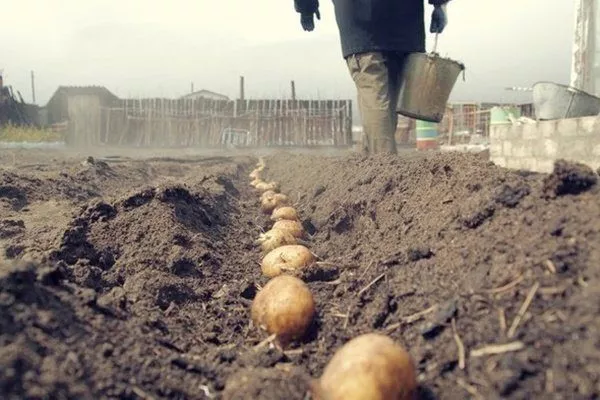
Planting holes should be dug 30 cm apart, with each hole about 7-10 cm deep. When you want the potatoes to germinate faster, don't plant them too deeply. Leave at least 50-70 cm of space between the beds, or an average of 3 holes per meter. Spreading bushes will emerge, ensuring adequate sun exposure. The subsequent process is as follows:
- Sprouted tubers or seedlings (according to the chosen method) are placed into the holes.
- Fertilizer is added - 250-300 g of ash or humus.
- Each hole is filled with soil, the height of the embankment should not exceed 5-8 cm.
- You can cover the seedlings with film or agrofibre to speed up the emergence of shoots.
Care and growing process
The Colomba variety requires standard potato care: it needs to be done in time spud and harrow, monitor soil moisture, prevent scab and diseases, and promote pest resistance. No special skills are required to care for Colombo potatoes, but there are some important points to consider when caring for the crop even before it appears.
Before seedlings emerge—approximately five days after planting—the soil is harrowed. This procedure is repeated 2-3 more times before and after seedlings emerge. Surface loosening of the soil is also performed between rows to aerate the soil and eliminate weeds.
Weeds should be removed regularly, preferably after watering or rain.
Once the seedlings have emerged and reached 15 cm in height, the first hilling is performed. Subsequently, it is recommended to hill them every two weeks, but at least three times per season. If there is a threat of severe frost, the sprouted bushes can be hilled up to the very top—"to the top," as gardeners say.
The benefit of hilling is that it increases the soil compaction around the roots, which promotes abundant tuber formation. In heavy soils, it is recommended to additionally loosen the soil once a week, avoiding the formation of a crust on the surface.
Strong shoots (over 15 cm) require regular watering. Smaller shoots are considered weak, and moisture can trigger rot. When caring for the Colombo variety, it's important to follow these watering guidelines:
- Use water that's warmed to the same temperature as the air. To do this, you can place the watering can in the sun for a few hours.
- The optimal amount of liquid is 4 liters per potato plant. The soil should be moistened to a depth of 20 cm.
- To avoid washing away the roots, do not pour out more than one liter at a time.
- Depending on the plant's growth phase, it's necessary to adjust the watering volume. When buds are forming on the bushes, the volume should be increased by 1-2 liters per bush.
- Potatoes should be watered once a week in moderate temperatures and humidity and 2-3 times a week in hot weather.
The fastest and most cost-effective way to water is by using furrows that appear during hilling and run along the line where the tubers are planted.
Fertilizing and fertilizing are essential during watering. Colombo requires these throughout the growing season. The first can be applied as early as a month after planting. The most effective method is to apply fertilizer at the roots of the plants. To do this, drive a stake about 20 cm deep between two plants, remove it, and pour the prepared solution into the hole. The potatoes will absorb the necessary nutrients from the soil on their own.
What fertilizers and supplements are suitable for Colombo?
- chicken manure diluted in water (1:2);
- bog silt, mud;
- ash;
- green manure – clover, mustard, lupine.
A specialist will tell you more about how and what to feed potatoes:
Pest and disease control
Colombo is quite resistant to many diseases, but is still susceptible pestsIt is important to regularly inspect plantings to promptly identify diseases and implement appropriate preventative or treatment measures.
This table shows common potato diseases and the level of variety resistance to them.
| Disease | Disease resistance (maximum 9 points) |
| Common scab | 6.5 points |
| Late blight | 6 points – tubers 4 points – tops |
| Drought resistance | 5 points |
Upon detection late blightDamaged plants are burned, and the remaining ones are sprayed with a copper-containing fungicide. In other cases, when pests appear, less drastic measures are effective:
- May beetle larvae will have to be removed manually. They are discovered during loosening and hilling.
- To prevent the appearance of click beetle larvae, Barguzin granules are added to the soil when planting.
- The Colorado potato beetle, the potato's main enemy, is also collected by hand. As a preventative measure, the undersides of the leaves are treated with Actellic or Alatar.
Colombo potatoes also need to be treated against fungal diseases. For this purpose, use products such as "Ditan M-45," "Epin," "Krezatsin," or a copper sulfate solution.
It's important to remember that chemical treatments should be carried out in calm weather. It's best to do this early in the morning or late in the evening, and be sure to follow safety precautions: wear protective equipment and wash your hands thoroughly afterward.
Harvesting and storage
You can harvest Colombo potatoes before the tops turn yellow. You can determine their ripeness by digging up a single plant and carefully examining the tubers. They should be 3-5 cm in diameter. If they're smaller, they're not yet ripe; if they're larger, they're overripe.
There's a way to speed up the ripening process of tubers. To do this, the above-ground portion of the bush is cut off in advance, about a week before the intended harvest date.
During harvest, remove diseased or affected tubers and set them aside. They should not be stored with healthy tubers to prevent infection. Healthy tubers should be dug up and left to dry in the garden beds for several hours. This simple procedure can achieve the following:
- avoid fungal diseases of tubers;
- contribute to the roughening of the skin.
Before storing the fruits, they should be carefully sorted and cleaned of dirt and grass residue. Damaged tubers should be consumed immediately—they won't keep for long. Colombo is praised for its shelf life. It can be transported long distances, easily withstands shocks, and can easily be stored for up to six months in cool storage areas where temperatures are maintained between 1-3 degrees Celsius.
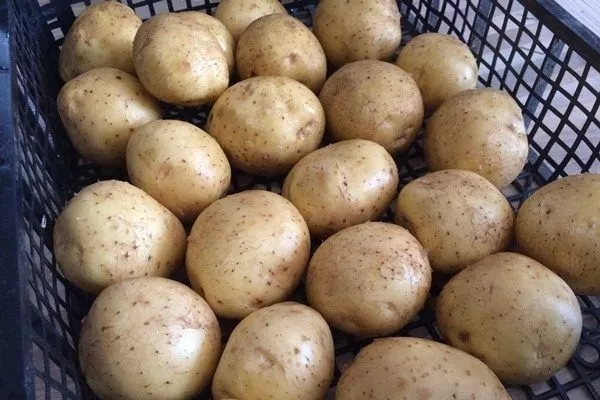
Optimal houses storage conditions They can be grown in containers and boxes placed on a balcony or basement. The temperature and humidity should be appropriate:
- air temperature not higher than + 4°С;
- humidity levels – 75-80%.
Reviews from gardeners
Vegetable growers generally leave positive reviews about the Colombo variety. It is grown both on large plantations (for subsequent sale) and for personal use in home gardens. By all accounts, this variety is easy to grow and produces good yields.
The Colomba variety is a shining example of modern breeding. When developing it, careful attention was paid to all the nuances and characteristics of this crop. This Dutch potato is productive, ripens early, stores well, and is resistant to many diseases. Colomba has virtually no drawbacks. Its main advantage for all home cooks is that it produces delicious dishes. Anyone can grow this variety in their garden, even without any gardening experience.