
The Gala potato is considered one of the most promising varieties, having made its presence felt on the market 11 years ago. It is widely grown in the Yaroslavl, Tver, Vologda, Kostroma, Novgorod, Pskov, and Kaliningrad regions. Its key advantages include early ripening, disease resistance, mild flavor, and preservation of all its qualities during storage. It was recognized as a sales leader in 2013.
Variety information
This variety was developed by German scientists, enhancing its adaptability to any climate. It was added to the Russian registry in 2008.
Modern scientists are constantly developing new varieties. Currently, approximately 40 private enterprises are engaged in improvements, primarily in the Baltic regions.
The state funds the gene bank, as well as the research and equipment development. When developing Gala, consideration was given to:
- disease resistance;
- phytosanitary inspection;
- taste qualities;
- processing methods;
- suitability for a particular area.
Description and qualities
This variety is a table variety and is highly resistant to mechanical damage, making it easy and convenient to transport and harvest mechanically.
The characteristics of the Gala potato are given in the table:
| Parameters | Characteristic |
| Escapes | Semi-erect, short, with large, rich green leaves and wavy edges. |
| Tuber size | Length – up to 8 cm, width up to 6 cm |
| Corolla of inflorescence | White, medium size. |
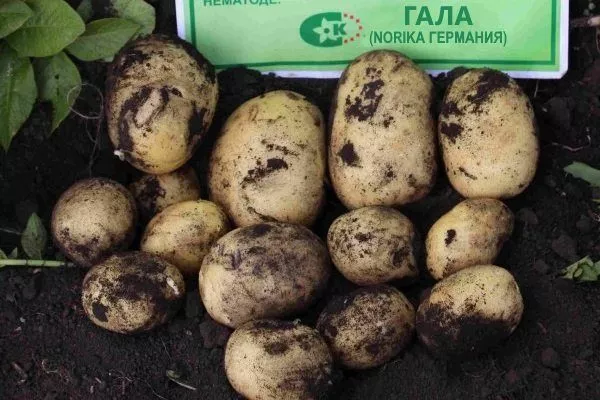
| Tubers | Small, optimal weight is 71-120 grams. |
| Form | Round, much less often – oval. |
| Skin | Yellowish in color, medium thickness. |
| Pulp | Pale yellow, occasionally a richer shade. Dense and fibrous. Low in starch and high in carotene, it does not change color when cooked. |
| Taste | It's a table wine. It was given a 9 out of 10 rating in a tasting. |
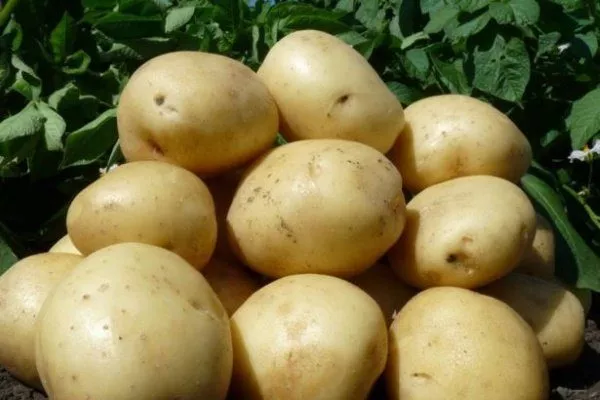
Potatoes do not spoil or lose their properties under standard storage conditions. This makes them a priority when growing or purchasing. The pulp is rich in starch, accounting for 11-13% of the total weight. They retain their color, texture, and properties when cooked, and maintain their shape. Considered a dietary potato due to its high carotene content, they are excellent in salads or as a stand-alone dish.
Pros and cons of the variety
What's so great about this potato variety? The list is long, but the highlights deserve a separate mention:
- Unfussy in cultivation, the Gala potato grows well in virtually any climate zone. Its ripening time allows for a very large yield of tubers, even in low temperatures during the growing season.
- Virus resistant. Does not require special chemical treatment.
- Ripening period. The first tubers can be harvested 65-80 days after planting. A full harvest can be achieved within two months.
- High yield. Potatoes produce a truly impressive yield – 263 c/ha.
- High quality taste confirmed by world tasters.
"Gala" was bred specifically for a specific soil and climate, but adapts to any conditions. It maintains its yield even when planted in sandy loam soil with low humus content. This variety is highly praised by gardeners and farmers for its high yields and ease of cultivation.
Positive reviews indicate that potatoes have no practical drawbacks. Of these, only two stand out:
- Don't delay harvesting the tubers. This will reduce the quality of the potatoes.
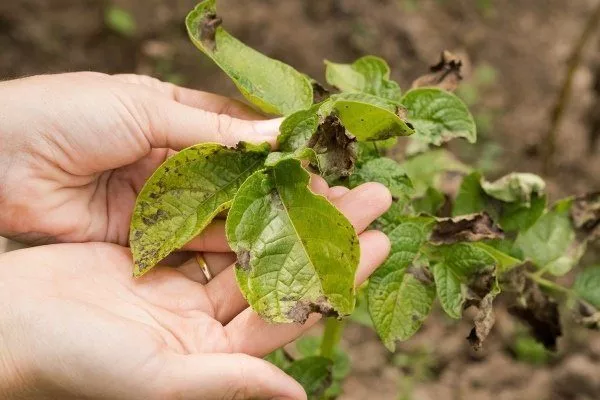
- Susceptibility to late blight, which occurs with excess moisture and low temperatures. Unfortunately, these conditions are common in many regions of our country.
The healing properties of the Gala potato are especially noteworthy. In folk medicine, the juice is used for:
- heart and kidney diseases;
- stomach ulcers and gastritis;
- hypertension;
- restoration of metabolism;
- burns and skin diseases;
- poisoning with plant toxins.
This variety is highly valued for its high potassium content: 500 g per 100 g of tuber, its composition is close to bread, and its vitamin content is similar to greens.
Contains all the amino acids necessary for the human body.
Features of cultivation
Gala potatoes require special attention during cultivation. It's important to properly prepare the seed, choose the right time for planting, and water and fertilize regularly.
Preparation of seed material
Only healthy tubers, no more than 3 cm in diameter, are ideal for planting. The larger the potato, the more nutrients it will retain, meaning its root system will develop significantly better. This is where the root tubers will grow.
- ✓ No mechanical damage on the tuber surface.
- ✓ Presence of several shoots up to 1 cm long.
- ✓ No signs of disease (spots, rot).
In order for the seed material to produce the maximum yield, it is recommended to carry out certain preparations.
Its features:
- Before planting, the seeds should be placed in a warm, bright place to germinate. Try to expose them to sunlight. This will allow the skins to harden and turn slightly green, which is an excellent growth stimulant.
- Ultraviolet rays are excellent sterilizers. Exposing seeds to sunlight for long periods of time kills bacteria and other microorganisms.
- Select tubers with sprouts up to 1 cm long. If they are longer, there is a risk of breaking them during planting.
- If possible, it is recommended to sprinkle the tubers with wood ash.
- Planting time is the best time to treat the seeds for pests. Any later and you risk damaging the tops.
'Gala' loves uniform moisture and germinates well under film cover.
Selecting the time and place of landing
Determining the exact planting time is extremely difficult, given the specifics of different regions and sometimes even climate conditions. Avoid planting tubers in unheated soil. Under such conditions, they will not sprout early, and leaving them in cold soil can result in crop loss and complete seed rot.
- Conduct a soil analysis for acidity and humus content.
- Add organic fertilizers (rotted manure, compost) in the fall.
- Add mineral fertilizers (nitrophoska, ammonium nitrate) in the spring before planting.
When choosing soil, a light, sandy loam soil rich in organic fertilizer is an excellent choice. Tubers don't thrive in heavy soil, as they create many more niches and produce more tubers, but they're much smaller and irregularly shaped.
For more reliable potato development in heavy soil conditions, it is recommended:
- Add river sand to the soil.
- Create organic fertilizer. If none is available, add straw, mown grass, and tops from last year's harvest to the fall plowing.
- Try to do this during autumn plowing, since it is impossible to carry out a similar procedure in the spring due to the long process of fertilizer formation.
Planting and care features
When planting, the following conditions must be met:
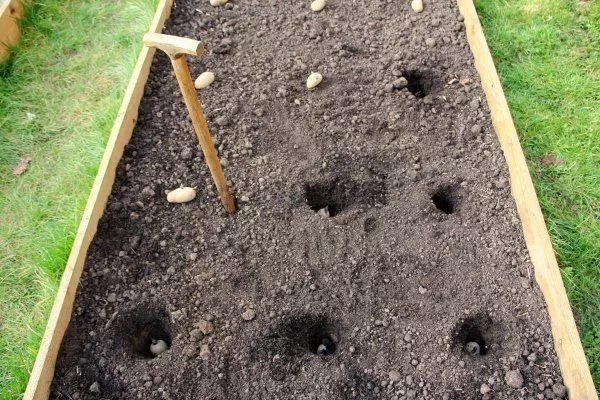
- Maintain a distance of at least 60-70 centimeters between tubers, and 50-60 centimeters in rows.
- Avoid planting tubers too close together. This variety requires a large area for proper growth. Seeds planted too close together will clash with each other, hindering development.
- Avoid planting multiple potatoes in the same hole. This will significantly reduce the quality of the plant's fruit and reduce the yield.
- The hole should be about 13-15 centimeters deep (half a spade deep).
Watering
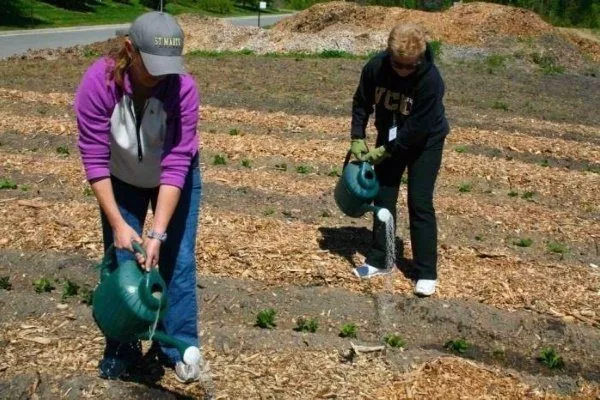
Watering is an important aspect of potato care. The variety itself is intolerant to moisture and often gets sick when grown near bodies of water.
Peculiarities:
- After planting, each bush needs to be watered from one to two liters.
- In hot weather, it is recommended to maintain moderate watering, using one to one and a half liters of water per bush.
- You can resort to drip irrigation, using a similar volume of liquid.
Hilling
Under certain conditions, hilling will increase the quality and quantity of the crop. Hilling – this is raking soil onto the plant in the shape of a mound. A few important tips:
- Planting should be done in prepared ridges, the height of which does not exceed 20 cm.
- When creating such shafts, it is advisable to have specialized equipment available.
- Cover the stems of the bushes carefully, surrounding them with soil on all sides to achieve maximum effect.
- Monitor the development of potatoes. During growth, the root system is damaged, which can cause stress to the plant and reduce yield.
- Planting potatoes in pre-cut ridges will facilitate tuber development. The root system will not be damaged and will continue to develop fully.
During the growing season, two hilling operations need to be carried out:
- First. After the mass emergence of bushes.
- Second. After major watering.
Monitor weather conditions. If the soil warms up to more than 25 degrees Celsius and the air temperature is at least 30 degrees Celsius, it's best not to hill up the soil. In these conditions, loosen the surface and remove weeds.
Top dressing
Fertilizing potatoes during the growing season is crucial. This is a delicate process and requires careful attention. Physically introducing organic matter is strictly prohibited, and caution must be exercised when adding mineral fertilizers, as there is a risk of miscalculating the volume and dosage.
Features of fertilizing:
- In the fall, when preparing the site for future planting, use 5-7 kilograms of rotted manure and 15 grams of potassium sulfate per square meter. Place the mixture into the soil to a depth of no more than 15 centimeters.
- In the spring, before planting potatoes, add half a bucket of peat manure or compost per square meter. Add 30 grams of nitrophoska, 20 grams of ammonium nitrate, and 20 grams of potassium sulfate. Add this entire mixture to the soil.
- During the growing season, before hilling, water the square meter of soil with a solution of 0.5 buckets of water at a ratio of 1:10, with added manure. After fertilizing the soil, water thoroughly, using 1.5 to 2 liters of water per bush.
Diseases and pests
The Gala potato variety has excellent disease resistance, but safety and pest control measures are still necessary. Damage can be classified into several types.
1. Diseases caused by pathogenic fungi are among the most dangerous:
- Alternaria;
- late blight;
- scab and rot;
- brown, black rot;
- blackleg;
- leaf curling;
- ring rot.
2. Diseases caused by technical damage:
- darkening of the tuber pulp;
- spotting;
- rustiness.
3. Damage from pests:
- wireworm;
- cutworm caterpillars;
- cockchafer larvae;
- mole crickets;
- potato moth.
All these diseases are known, and there are proven methods for combating them. Farmers recommend the following medications:
- Aktara
- Regent
- Corado
- Prestige
The only serious problems are mole crickets and wireworms. Since they are almost impossible to eradicate, it's recommended to change the planting location to deprive the beetles of food and force them to leave their usual habitats.
Prevention
This variety produces fruit well for about six years, but there are some nuances worth considering. If regular varieties are growing in adjacent beds, viruses can spread along with the aphids. These potatoes are edible, but not suitable for planting.
How to identify affected bushes:
- Inspect the leaves when the plants grow to 10-15 cm; diseased plants will have curled leaves.
- Bushes with viruses have fewer tubers.
A weak point of the 'Gal' variety is its susceptibility to fungus, or rhizoctonia, which attacks the roots, stems, and shoots. Dark lumps appear on the tubers, and brown ulcers appear on the shoots. These potatoes develop poorly and wilt. Infection can occur through the soil or diseased tubers. Simple precautions can help prevent this problem:
- There should be no crust on the soil.
- Treat the tubers with a boric acid solution.
- Treat the emerging shoots with Zircon: 300 ml per bucket of water.
- If an infestation does occur, treat the potatoes with the fungicide "Kuprosat": 25-50 g per bucket of water. Repeat after 10 days.
Do not add chemicals 3 weeks before harvest!
Harvesting and storage features
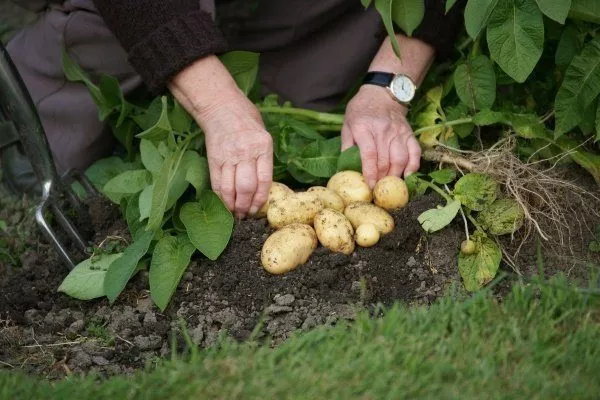
Harvesting can begin after 80 days of cultivation. The tops should be trimmed before harvesting. In cold climates, they should be removed two weeks before harvesting. This not only stops the tubers from growing but also helps them develop a strong skin. This strength ensures long shelf life, and a cellar is the ideal storage option.
Potatoes should be stored in a dry place, at a temperature of about 5 degrees Celsius and high humidity. Select only firm tubers. More information on proper potato storage can be found here. here.
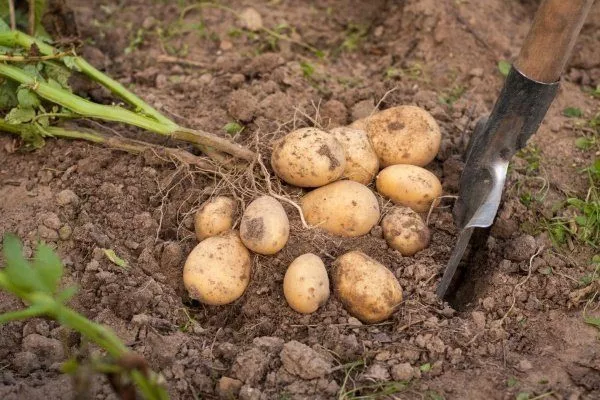
With proper care, up to 400-600 centners can be harvested from 1 hectare.
Reviews
The Gala potato has received a fair amount of feedback, both positive and negative, but the positive ones far outnumber the negative ones. Farmers' main complaints and praise are:
"Gala" is one of the earliest-ripening potato varieties. Full maturation takes 60 to 80 days from planting. Its capabilities make it an ideal choice for those wanting to grow this crop in temperate climates.