
After a bountiful potato harvest, farmers face the challenge of storing this vegetable. With proper organization, the tubers can be preserved until next winter. To prevent potatoes from spoiling, a number of rules must be followed.
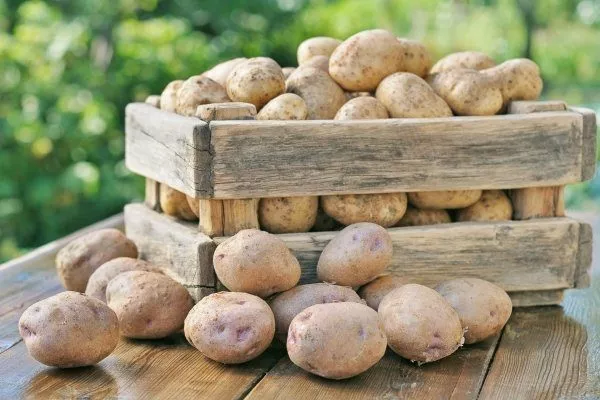
Preparing tubers
To prevent spoilage of your harvested produce, it's important to properly prepare it for storage. Please note the following recommendations:
- Drying and washing. Dug up tubers should be left in the sun for 3-4 hours to dry thoroughly. Afterward, they should be placed in a cool, dark place to allow the skins to harden. If it's raining, the tubers should be thoroughly washed to remove any pathogens. Wash the tubers in cool water and then spread them out to dry.
- Sorting. The harvested crop must be sorted, separating tubers for consumption, spring planting, and feeding to livestock and poultry. Potatoes affected by disease must be removed and destroyed. Vegetables intended for consumption are also sorted by short shelf life (small, damaged, and immature tubers), medium shelf life (larger vegetables), and long shelf life (medium-sized, mature vegetables).
- Spraying with antifungal agents. This applies to seed potatoes planned for spring planting. Tubers can be treated with Maxim, Zircon, or Alirin-B. At home, potassium permanganate or brilliant green dissolved in water can also be used.
- It is necessary to ensure that the tubers left for storage are not damaged, dry, healthy and clean, and do not have sprouts or foreign odors.
This video explains how to properly prepare tubers for long-term storage:
Optimal parameters for preparation for storage
- ✓ Cooling of tubers to +2…+4°C for 10-14 days after harvesting.
- ✓ Healing period (14-18 days at +15…+18°C) for healing of damage.
- ✓ Treatment with biological preparations (Fitosporin-M 5 g/10 l) for seed potatoes.
Long-lasting potato varieties
The shelf life of potatoes depends largely on their variety. Mid-late and late varieties store best.
The following varieties are characterized by the ability to be stored for a long time:
- Gull;
- Crane;
- Slav;
- Saturn;
- Asterix;
- Scarlett;
- Nevsky;
- Kolobok;
- Bernadette;
- Blue;
- Tatchinsky;
- Yavir.
Any potato variety, even the most shelf-stable, requires certain storage conditions, otherwise the tubers will rot and their quality will deteriorate.
Vegetables grown on light soils with a significant admixture of sand are stored much longer than those grown on low-lying lands with a predominance of clay.
Tuber condition monitoring schedule
- The first check is 2 weeks after planting (to identify areas of rot).
- Monthly inspection during the main storage period (November-February).
- Increased control when temperatures rise (every 7-10 days in spring).
Storage containers
Potatoes that will be stored for about six months after being dug up must be placed in specially prepared containers.
You can store tubers in:
- Wooden boxesThis is the most common option for storing vegetables. When choosing boxes, ensure the boards are loosely packed. The tops of the boxes should be open to allow for good air circulation. Each box should hold 10-12 kg of tubers. The containers should be placed on shelves or racks, with a distance of 10-15 cm between them. The bottom boxes should be 15 cm above the floor to ensure better air circulation.
- Plastic containersThis container is lightweight, making it easy to carry. Its mesh walls and bottom also ensure adequate airflow to the tubers.
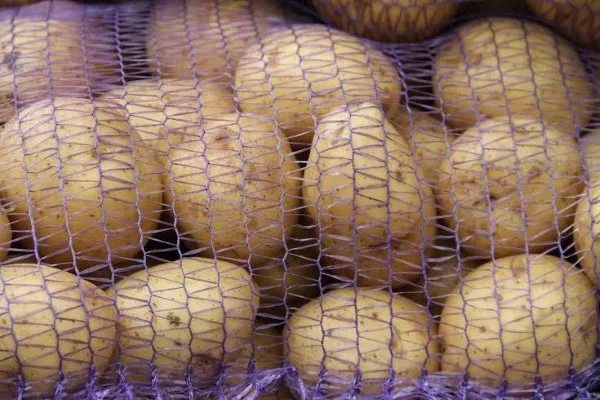
- Mesh bagsAvoid thick polypropylene bags, as they are practically impermeable to air and promote potato rotting. These containers can be placed vertically or horizontally. In the latter case, you can stack one bag on top of another.
Potato storage facilities
There are different ways to preserve the harvested crop: in separate rooms designated for this purpose, on the balcony, or even in the ground.
Technological storage parameters
| Period | Temperature | Humidity | Ventilation |
|---|---|---|---|
| Medicinal | +15…+18°C | 90-95% | 5-6 volumes/hour |
| Basic | +2…+4°C | 85-90% | 2-3 volumes/hour |
| Spring | +1…+2°C | 80-85% | 4-5 volumes/hour |
Cellar
The room must be thoroughly treated beforehand. The walls must be whitewashed with lime mixed with table salt and copper sulfate. The cellar must have a functioning ventilation system. Before introducing the harvest, the room must be ventilated, and wooden structures must be thoroughly dried and treated with lime.
Potatoes should be stored in containers such as wooden crates or baskets. They can also be poured into bags or special compartments.
The advantage of this storage method is the ability to preserve large quantities of potatoes. The disadvantage is the need to carefully prepare the storage area for harvest and periodically check the condition of the tubers.
If there is no cellar, then the harvest can be stored in the basement, which is located in the garage.
Burt
This is a popular method of preserving crops in urban areas. A potato pile is like a cellar. The mound is buried half a meter deep in soil, then covered with a layer of straw (50-85 cm), on top of which is laid thermal insulation material. The structure is secured on the sides with boards. Ventilation is provided by installing a pipe, with a pit dug around its perimeter to drain away any excess water.
The advantage of this method is that storage conditions are as close as possible to those in a basement. The disadvantage is the complexity of constructing the storage pile.
This video explains how to organize potato storage this way:
Trench or pit
This is a rather outdated method. Vegetables can be stored outdoors as follows: dig a hole or trench 1 m deep. The tubers are laid in layers, with each layer covered with a 3 cm layer of moist soil. The top layer of soil should be 20 cm thick.
The advantage of this method is the ability to preserve a large harvest. The disadvantage is the considerable effort required to stack the potatoes for storage.
Balcony
This is the only place in the apartment where you can fully preserve your potato harvest. To prevent the tubers from freezing, place them in a double-layered cloth bag, which is then placed in a box or crate.
After this, place the container with the potatoes into another, larger container. Fill the space between the two boxes with foam rubber or old warm items such as jackets or blankets.
Tubers can also be stored on the balcony in special boxes that are insulated on the outside with foam and lined with waterproofing material on the inside.
The advantage of this method is the ability to preserve the harvest without compromising the overall space of the apartment. The disadvantage is the risk of the potatoes freezing when the air temperature drops.
Kitchen in the apartment
If storing potatoes in the kitchen, the best place is under the sink. A small number of tubers can be placed in a wicker basket. A bucket or basin can also be used, but holes must be drilled in them. Plastic bags are not recommended, even for short-term storage.
If potatoes are stored under the sink, you need to regularly monitor the condition of the plumbing to ensure that the tubers are not flooded with water.
The disadvantage of this method is that it's only suitable for short-term storage and only allows for small quantities of potatoes. The advantage is that it allows for a small number of tubers to be stored without compromising the overall storage area.
Fridge
You can't store a lot of potatoes in the refrigerator, but it offers the perfect conditions for storing them. The refrigerator can maintain the desired temperature at all times. Paper bags are best for packaging vegetables.
The downside of this method is the small number of tubers that can be preserved. The undoubted advantage is high-quality storage.
Entrance
Residents of apartment buildings often carry potatoes in bags into the entryway: this way, they don't take up space in the apartment and are within walking distance. However, this is a rather specific location, and storing potatoes there carries a high risk of spoilage.
To reduce the risk of potato rot, it's recommended to place the tubers in a box and securely fasten it to the floor. Cover the container with a lid and drill ventilation holes to allow air to reach the tubers.
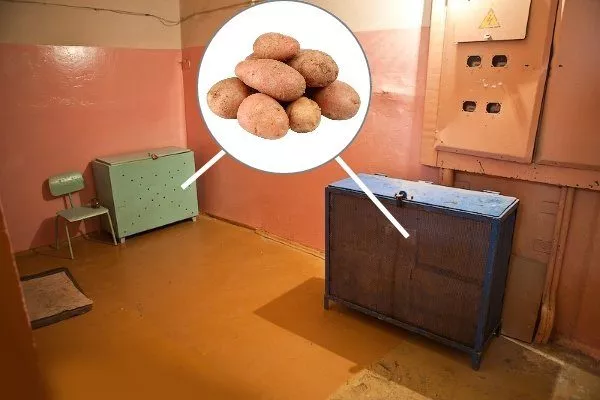
Humidity levels in entryways fluctuate constantly, so they need to be monitored. This can be done using an open plastic container: place it in a drawer and observe its interior. If dark spots appear, this indicates high humidity, which is harmful to the vegetables. This is a significant drawback of this storage method.
At the same time, it has an advantage: the entryway is cooler than the apartment, and in winter it's warmer than outside. The temperature here is close to the optimal temperature for storing tubers—from 4 to 6 degrees Celsius.
Helpful tips for best harvest preservation
To preserve vegetables until spring and prevent them from spoiling, you should strictly follow these recommendations:
- The temperature in the room or structure where the root vegetables are stored should not fluctuate significantly. Optimal temperatures range from 0 to 3°C (32°F to 36°F). Under these conditions, the tubers will not freeze or sprout. A thermometer should be installed in the room to monitor the temperature. Keep in mind that different potato varieties require specific temperatures: for example, Temp, Ogonyok, and Foran require temperatures between 1.5 and 3°C (53°F to 36°F), while Stolovy 19 and Start require temperatures between 3 and 5°C (36°F to 56°F).
- When the temperature drops or severe frosts occur, cover the tubers with straw or regular clean bags. If the space is small, plastic bottles filled with hot water can be placed on the floor.
- Humidity levels should be between 85-90%. If this level is exceeded, the tubers will inevitably mold. If the humidity is too low, the tubers will lose moisture and dry out. To increase humidity, use a humidifier or hang a damp cloth around the room. If you need to lower the humidity, you can ventilate the room, place a layer of beets on the tubers to absorb excess moisture, or use a dehumidifier.
- To prevent potato tubers from rotting, you can sprinkle them with crushed garlic. 100 g of garlic is enough for 100 kg of potatoes. Elderberry leaves or fern also help prevent rot.
- If potatoes are stored in bulk, the height of the bulk should not exceed 1.5 m.
- Mint prevents potato sprouting. To do this, place it between the tubers. Half an apple placed in each box in spring serves the same purpose.
- Light should not penetrate the room. Sunlight promotes the formation of harmful substances in potatoes, which turn them green and inedible.
- To better preserve the harvest, you can place fresh rowan leaves or pine branches between the potatoes. They contain phytoncides that have a beneficial effect on the vegetable. Ginger root has a similar effect.
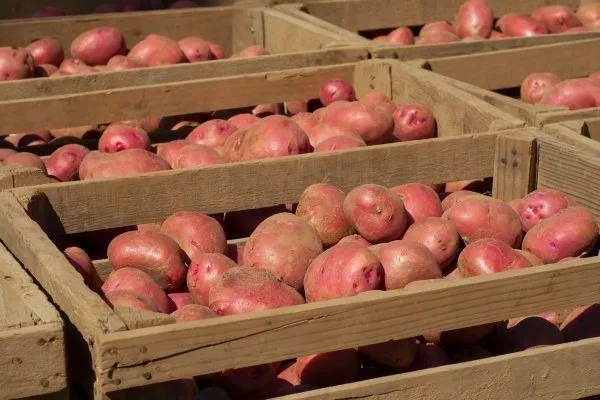
Throughout the entire storage period, you should visit the room where the harvest is stored and check the condition of the vegetables in order to notice signs of disease or rot in a timely manner.
Monitoring storage status
- ✓ Daily temperature recording at 3 points (near the floor, in the middle, under the ceiling).
- ✓ Humidity control with a hygrometer and recording readings twice a week.
- ✓ Checking the CO2 concentration (no more than 0.5%) with a gas analyzer once a month.
Common mistakes
Improper handling of vegetables and violation of storage rules degrades the taste of the vegetable and generally makes it unsuitable.
The most common mistakes associated with storing crops include the following:
- Storing damaged potatoes. Potatoes contaminated with pathogens can infect healthy tubers, leading to widespread rotting. In this case, the harvest cannot be saved.
- Reluctance to sort potatoes periodically. Vegetables need to be sorted regularly to promptly remove any affected by pathogenic microflora.
- Store all types of potatoes together. It's important to sort early, mid-season, and late varieties.
- Inadequate drying of potatoes. After harvesting, the crop must be thoroughly dried, otherwise widespread infection by bacterial ring rot can occur.
- Lack of ventilation in the room. Under such conditions, tubers quickly rot.
- Insufficient disinfection of the premises. Before moving vegetables into the storage room, be sure to treat the walls with whitewash.
- Using too-tight containers. If too many potatoes are packed into a box or bag, individual tubers will experience intense pressure from their neighbors and become compressed. This leads to the development of gray spot.
This video explains how to sort potatoes, choose the right containers, and choose the right storage location:
To preserve potatoes from harvest until spring, you need to prepare both the storage area and the tubers themselves. The vegetables should be kept in optimal temperature and humidity conditions, free from mechanical pressure, and regularly inspected for rot and other diseases.