
Beekeeping is a profitable business, even for beginners. And the main goal of an apiary owner is to harvest as much honey and by-products as possible. Therefore, anyone just learning the basics of this hobby is concerned with the question: how much honey can a single hive produce in a season? A rough estimate is 20-30 kg, but everything depends on many factors.
The amount of honey in a given time
Bees always produce varying amounts of honey, but it's possible to calculate averages, for example, over a season or over a year. These figures will vary from beekeeper to beekeeper. Below are approximate honey yields for different periods of time.
- ✓ Accounting for the flowering time of the main honey plants in the region.
- ✓ Analysis of the strength of the bee colony before the start of the season.
- ✓ Planning migrations taking into account the flowering calendar.
For the season
Average honey yields for the season can be calculated in advance by knowing the number of honey frames in the hive. Each frame yields between 1 and 1.5 kg of honey. If the standard number of frames is 12, then the final yield can be between 12 and 18 kg of honey. In practice, this amount drops to 11-15 kg, which is normal. It is not possible to completely clean the combs, especially since not all frames, especially the outer ones, are completely filled.
In his video, a beekeeper shows how much honey he produces per bee colony per season:
The maximum and minimum honey yields can never be calculated in advance. Experienced beekeepers consistently harvest 60-80 kg of honey per hive over the summer. The average yield to aim for is 30 to 40 kg per season.
In a year
The amount of honey collected per year is calculated from the moment of the first pumping until preparing bees for winterIf a single bee colony produces 30 to 40-45 kg of honey per season, the annual yield can increase several times (60 to 80 kg). However, the desired harvest may be less than the beekeeper's estimate for the same reasons—not all honeycombs are completely filled, and some honey remains.
During the harvest months, favorable for collecting, and under ideal conditions, the amount of nectar collected reaches 100-120 kg. It is assumed that the bees work hard and fill the frames more than once, and the nearby honey plants provide them with this opportunity. When beekeepers set up a mobile apiary, they can harvest a record 200 kg of honey per year.
What factors influence honey yield?
Beekeeping is a complex craft, and it relies on several factors: local geography, available hives, and the bee breed. The amount of nectar a single colony can produce also depends on many factors:
- Climate in general: air temperature, early or late spring and autumn, severe or mild winter.
- Weather, which directly impacts the volume of the flower base. During the dry month, the harvest is minimal, as there are insufficient honey plants.
- Selected locationThe honey production capacity of one hive can be significantly larger than that of another.
- Insect healthStrong and vigorous bees produce many times more honey than weakened ones.
- Bee breeds, which are more and less productive.
How to increase apiary productivity?
Based on the factors described above, beekeepers use various beekeeping methods to increase productivity (for example, by increasing colony size or replacing the queen during the main honey flow). Much depends on luck and the beekeeper's skill. To ensure abundant honey production, experienced beekeepers adhere to the following rules:
- place the hives in the right places;
- raise a strong bee colony;
- control the brood, leaving room for honey.
There are ways to increase the productivity of a single apiary. A popular method is so-called migratory beehives—moving hives from one location to another. This method is often used in mountainous areas where there are many bees near the apiary. honey plantsThe safest distance to move hives is up to 30 km from their permanent wintering site. Three or four migrations per year are acceptable, or more.
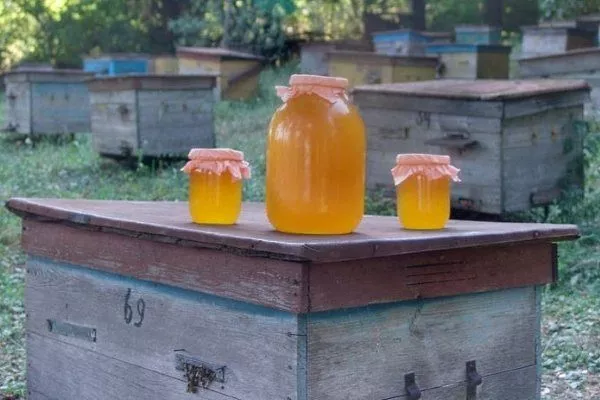
To stimulate the bees to create new honey reserves, the owner regularly harvests honey, and hive owners can replenish it up to 10 times per season. It's important to remember that some nectar is left for the bees to overwinter.
Honey volumes depending on the location
There are regions where bees have been kept for centuries and enjoy large harvests, initially favored by a favorable combination of climate and honey plant growth. In good-quality meadows, the overall yield is approximately 80 kg of bee nectar per hectare, in poorer meadows it's up to 50 kg, and in marshes, only up to 20 kg per hectare. Among natural honey-bearing areas, the largest quantities of honey are produced by linden forests, vegetation in clearings, burnt areas, and sparse forests, hayfields, marshy areas, and pastures.
The honey balance of the surrounding area can be calculated by determining the area of honey plants (within a radius of 2 km), multiplying this number by the honey productivity of the honey plants and adding up the total amount of honey that bees are expected to collect from all honey plants of the season.
Regions of Russia
On average, a single colony in Russia produces between 7 and 17 kg of commercial honey. The country's most honey-producing regions include the Republic of Bashkortostan, the Altai Territory, Tatarstan, and Primorsky Krai. In these regions, a single hive yields at least 40-50 kg of honey, or more. The mountain forest zone of the Urals and the Far East is characterized by the linden honey zone, which is present in its purest form. Daily weight gain per hive reaches 10-20 kg.
| Region | Average yield per hive (kg) | Main honey plants |
|---|---|---|
| Bashkortostan | 40-50 | Linden, buckwheat |
| Altai Krai | 30-40 | Sunflower, mixed herbs |
| Primorye | 35-45 | Linden, angelica |
Bashkiria is not called a honey region for nothing. Bee nectar is collected both in apiaries, on an industrial scale, and from nests in the forests. wild bees (borti). One beehive yields between 1 and 15 kg of honey at a time. The average yield is 5 kg. Today, there are approximately 400 active beehives in the region, and in the best year, beekeepers harvest 3-4 tons of honey from them. Read more about Bashkir beekeeping. here.
Also in the top 10 honey regions are:
- Krasnodar Krai;
- Rostov;
- Voronezh;
- Volgograd;
- Saratov;
- Belgorod region.
The southern regions, as well as mountainous areas, are favorable for beekeeping. These include the North Caucasus republics of Ingushetia, Chechnya, and Dagestan, where they produce up to 20 kg of honey per hive, and the Altai region. Sunflower and mixed honey flow conditions, found in the Altai Krai, Rostov and Volgograd regions, and elsewhere, promote the spring development of bee colonies. Two or more productive honey flows are observed here per season, with good harvests. Central Russia also experiences two main honey flows, with each hive yielding up to 10 kg or more.
In Ukraine
Honey collected by bees from a single honey plant—monomed—is considered valuable in Ukraine. Buckwheat honey is primarily harvested and processed in the central and western regions. In the south and east of the country, sunflower honey predominates, with acacia honey considered a premium variety.
The highest honey yields in Ukraine come from apiaries in the Forest-Steppe zone, where linden, buckwheat, rapeseed, legumes, and other crops grow. The Steppe zone produces slightly less honey. Moderate to small honey yields occur in the Polissia zone and the Carpathians. On average, a single bee colony produces up to 16 kg of honey per season.
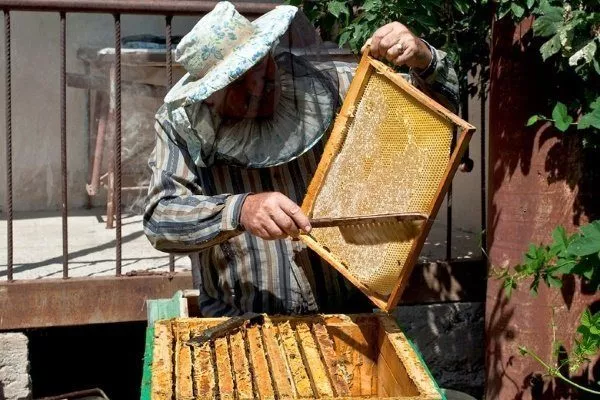
What is remarkable about Ukrainian beekeeping is described in next article.
The influence of bee breed on honey production
The total amount of honey collected depends on the specific breed of bees kept in the apiary. Honey production varies between breeds. The following breeds have the best honey production:
- Central Russian – produces 30 kg of honey and more per season, and up to 100 kg under favorable conditions.
- Ukrainian steppe, the indicators of which are 30-40 kg, give a maximum of 80-100 kg.
- Carpathian bee. Honey collection – from 30 to 80 kg.
- Gray Caucasian mountain bee gives 28-29 kg.
- Italian The breed produces 25-29 kg per season.
When beekeeping, it's recommended to consider all the nuances to maximize honey production. Productivity is influenced by the bee breed, region, and climate, as well as the overall efforts of the beekeeper. On average, one hive produces 30 kg of honey per season. However, it may yield nothing if the beekeeper is inactive or doesn't take adequate care of the hive.
We recently took up beekeeping, and before that, we carefully studied all the information, especially regarding honey yields. After all, we need to ensure we not only consume the honey ourselves, but also somehow justify the investment. Now, after some time, I finally found your article and want to thank you for the valuable information. I learned a lot.
What an interesting article to start with, at least some information. Beekeepers are reluctant to make contact (superstitions and superstitions influence this; at least that's how I get information mainly from articles like this).