
The gray mountain Caucasian bee breed (Amcaucasica) was developed in the mountainous regions of Transcaucasia and the Caucasus and has deservedly become the second most popular breed in the world. Most beekeepers who breed bees enjoy working with the Caucasian bee breed.
General characteristics of the breed
The Caucasian grey bee has a number of distinctive features in its appearance and behavior.
Appearance
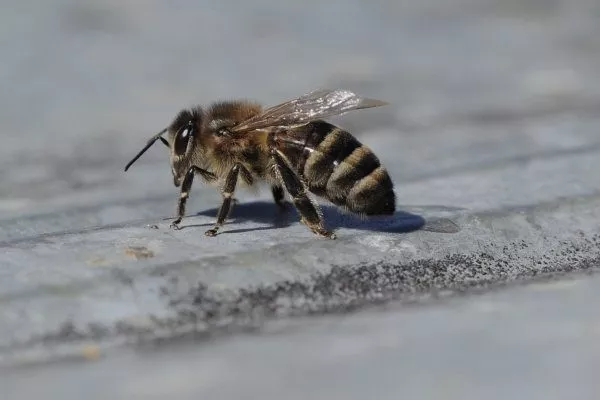
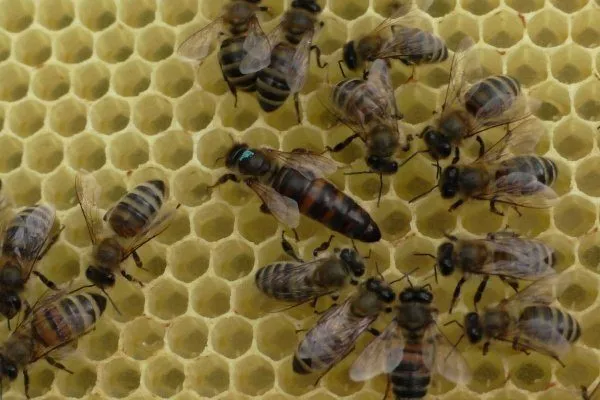
The bee's color is light gray with a silvery sheen or yellow speckles (depending on the subspecies). There are no yellow stripes on the abdomen. Caucasian bees are relatively small in size.
A unique feature distinguishing these insects from other species is their long proboscis (averaging 7.2 mm). A one-day-old worker bee weighs between 75 and 90 mg. A fertile queen weighs approximately 200 mg, while a barren queen weighs 180 mg. She is difficult to confuse with other bees in the hive.
Productive Features
The productivity of the Caucasian grey bee depends on many external factors and the characteristics of a particular subspecies.
The queen's egg production ranges from 1,100 to 1,700 eggs per 24 hours. The tendency to cohabit is considered high.
The worm production process can occur in January or February. The beekeeper must closely monitor this process and add frames if necessary.
The queen is an excellent defender of the nest. She stocks up on honeycomb and propolis even when honey plants are minimal. Caucasian bees switch to nectar collection, gradually filling the cells, depriving the queen of the opportunity to lay eggs.
It is worth noting that the gray mountain Caucasian bees use many more species for this purpose. honey plants, than other breeds.
Most beekeepers prefer the gray Caucasian bee due to a number of productive characteristics:
- Given the presence of long proboscises characteristic of the species, they are considered excellent pollinators of red clover.
- During the honey flow, bees store honey in cells emptied of brood. Once the brood combs are filled, they move to the super. This concentrates the honey reserves in a small area containing the combs.
- One of the features is the activity of bees in producing propolis, which is used to seal all the cracks in the hives before wintering.
Habits of Caucasian women
It's important to note the exceptionally peaceful nature of these insects. Moreover, they tolerate inspection of their hives by strangers. Even the queen reacts calmly to this.
The thieving nature of Caucasian bees can be explained by the fact that these little workers will do anything to obtain nectar, and sometimes they look into other hives for this purpose.
It's worth noting that gray mountain Caucasian bees have a low swarming tendency. They easily switch to a working mode. A beekeeper can facilitate this by removing queen cells and expanding the nest, leaving no more than five frames.
How does honey collection take place?
A unique feature of Caucasian bees is that they begin the honey collection season and finish work much later, as they easily tolerate low temperatures.
When searching for a new honey source, they are very enterprising and can switch from one area to another. Bees emerge early in the morning, when temperatures are typically lower. The honey flow ends late in the evening.
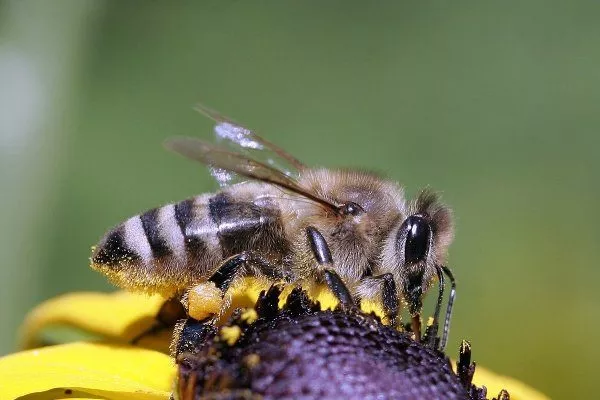
Grey mountain Caucasian bees are able to continue their work in drizzling rain or fog, when other species do not fly at all.
Even in areas with few flowering plants, they manage to collect significant volumes of honey. During honey flow, the Caucasian bee primarily fills the nest with honey, limiting the queen's supply, and the beekeeper must make efforts to equip the combs with supers for the honey flow.
Breeding zones
Caucasian bees are bred in Finland, China, Korea, Germany, France, Poland, and the United States. However, the natural habitat of the Caucasian gray mountain bee is generally considered to be the mountainous regions of the Caucasus and its foothills.
Only the Italian breed surpasses Caucasian cats in popularity.
Populations
Several populations of the grey Caucasian bee should be distinguished.
| Population | Length of proboscis (mm) | Winter hardiness | Swarming | Peculiarities |
|---|---|---|---|---|
| Abkhazian | 7.2 | High | Moderate | Peacefulness, hard work |
| Gurian | 7.5 | High | Low | Long proboscis, disease resistance |
| Iranian yellow | 7.0 | Low | Low | Gray body without stripes, collecting nectar at +10°C |
| Valley yellow | 7.0 | Low | High | Yellow-gray color, low winter hardiness |
| Megrelian | 7.5 | High | Low | Silver-gray color, protection of hives |
| Kabahtapinskaya | 7.0 | High | Moderate | High fertility of queens |
Abkhazian
Beekeepers most often cultivate this population in the valleys of Abkhazia and mountainous regions. These insects are characterized by their peaceful nature, hardiness, tolerance of low temperatures, and moderate swarming. They also possess excellent nectar-gathering abilities. The bees leave the hive early in the morning and return home late.
- ✓ Level of winter hardiness
- ✓ Length of the proboscis
- ✓ Tendency to swarming
- ✓ Disease resistance
- ✓ Productivity
Gurian
This bee species is common in Western Georgia. Their distinctive feature is their long proboscis (approximately 7.5 mm). This unique feature allows them to extract nectar from the most inaccessible areas of honey plants.
Experts have discovered that bees have a natural ability to survive harsh winters. This makes them ideal for areas with harsh climates.
Iranian yellow
It is widespread in Iran, Armenia, and Azerbaijan. It is also cultivated in Abkhazia and Georgia. In Russia, the insects are found only in apiaries in the central regions, as bees do not tolerate long winters.
The bee's body is gray and stripeless. It collects nectar even at temperatures below 10 degrees Celsius. However, in spring, the emergence process is delayed.
Among their positive qualities, they are noted for their lack of swarming. However, the insect is susceptible to nematodes and other diseases. They also consume a small amount of food during the winter. Bees fiercely defend their nests.
Valley yellow
Yellow stripes are visible on the insect's abdomen. It tolerates extreme heat well. It feels most comfortable in Iran, Georgia, and Armenia. It has a yellow-gray coloration. When examined, it does not show aggression. It continues to collect nectar even in inclement weather.
Among the breed's characteristics, it's worth noting its low winter hardiness, so it's best grown in areas with a mild climate. They produce ample pollen and propolis, and they survive transportation well.
Disadvantages include high swarming, susceptibility to diseases, and production of small amounts of wax.
Megrelian
An excellent choice for the northern regions of the Russian Federation. The insect's body color is silvery-gray without yellow speckles. The proboscis can reach 7.5 mm in length, which affects the bee's ability to extract nectar from clover. They are industrious and actively defend their hives from intruders. These insects have a low swarming tendency.
Kabahtapinskaya
This subspecies of Caucasian bees typically inhabits the mountains of Azerbaijan. Their body color is gray. They are distinguished by a proboscis up to 7 mm long. They are characterized by the high fertility of their queens. They can tolerate winter temperatures down to -25 degrees Celsius.
Content Features
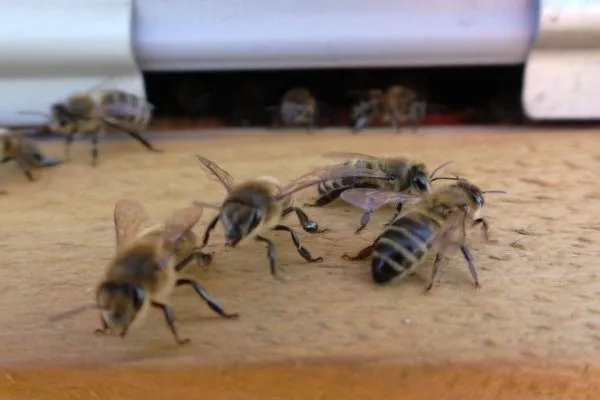
Caucasian gray mountain bees tolerate transportation well and are suitable for keeping in pavilions, as well as in areas with low honey flow and where honey plants are scarce. However, it's important for beekeepers to understand all the specifics of keeping this breed.
Nutrition
The main diet of bees in the summer is the nectar of flowering plants. These are called honey plants. There are also pollen plants, which bees rely on as sources of pollen. Given the flowering season, bees can feed almost year-round.
But feeding them during the winter is vital. Food should be prepared in advance.
When is complementary feeding not necessary?
Some experts believe that top dressing Insects don't need it, while others argue that bees can't function normally without it. Several factors influence this factor:
- First, the beekeeper inspects the hives and calculates how much honey should be stored for the winter. If there is enough, feeding is not necessary. Otherwise, it's time to begin storing food.
- It's important not to overfeed the bees. Otherwise, the queen will hatch prematurely. Feeding is also necessary if the honey crystallizes quickly. The insects will be unable to fully process the honey and will require additional nutrition.
- Until early February, insects are passive and eat almost nothing. Beginning in the last weeks of February, the queen begins laying eggs and the bees become active, feeding the brood. Due to the energy expended to maintain the required temperature, adequate feeding is necessary.
How and what to feed bees?
To ensure that Caucasian bees' nutrition is effective and balanced, it is important to consider several feeding methods:
1Sugar and honey dough
It is mixed in its pure form. Sometimes it is advisable to add medicinal components. To prevent the dough from drying out and hardening, place it in a plastic bag with holes in the bottom to allow it to drain slowly—this will make it easier for the bees to consume.
2Sugar syrup
First, prepare the hives by placing a couple of partial frames in the center for the bees to store the syrup they've produced. During the winter, they'll be able to consume the processed syrup, and in the spring, when the brood appears, the cells will contain the honey the bees have collected.
For 3,000 individuals, approximately 2 kg of honey is required. Honey obtained from syrup should make up no more than 30% of the total honey. Sugar syrup is fed from the second ten days of August to early September.
To prepare it, you can use pure beet or cane sugar. Boil the water and let it sit for a couple of days. Pour off the resulting sediment. The syrup should be thick; don't boil it, and be careful not to burn the sugar. Liquid feed will be difficult for bees to digest, causing them to become weak, while crystallized sugar or burnt syrup will negatively impact their health.
Some beekeepers add a little pine needles to the syrup to protect their hives from mites. They also provide an additional source of nutrients.
For one family, you can add a fresh chicken egg, considered an essential source of protein, to the sweet feed. Shake it well and strain it through cheesecloth.
In the fall and spring, discarded frames are removed from the nests. They are unpacked and placed near strong bee swarms. If honey crystallizes in the combs, it can be melted with warm water and returned to the nest for feeding. If honey sours, do not feed it to the bees.
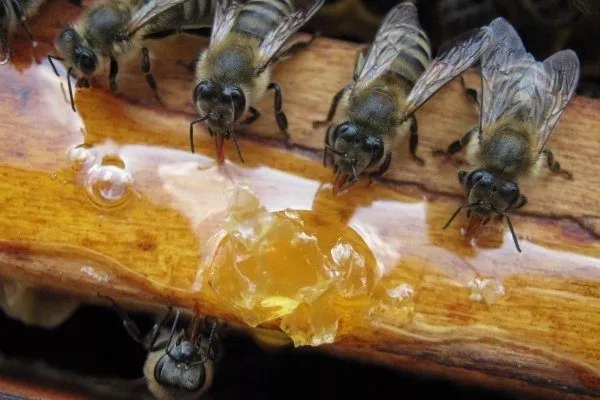
Compared to other insect species, the Caucasian gray mountain bee requires more food. Therefore, it's important to plan ahead for syrup and dough. In northern regions, food consumption per bee colony doubles compared to southern regions.
Conditions of detention
Beekeepers breeding the gray mountain Caucasian bee need to remember the key features of its care:
- After wintering, when a consistently high temperature sets in (not below +7 degrees), the hives are taken out of the wintering house.
- Carefully inspect the bottoms and clean them from debris and dead bees.
- If necessary, the bottom is replaced with a dry, disinfected one.
- They also inspect the bee colonies and check for food availability. If food is in short supply, beekeepers place sugar syrup or a sugar-honey paste on the frames.
- The brood frames are inspected and cleaned. It's crucial not to combine healthy colonies with weak ones showing signs of illness.
- It is unacceptable to use honeycombs containing brood from diseased swarms.
- At the apiary, it is necessary to install drinking bowls containing fresh salted water.
- When stable warm weather sets in, the nest is expanded.
- Disinfection of hives is carried out using fire or steam.
Frost resistance of Caucasian women
Purebred Caucasian bees have high frost resistance. The bees' ability to survive the winter is influenced, in part, by the physiological changes that occur in the insects' bodies in the fall. Therefore, it is during the fall that they tend to consume a lot of pollen.
It has been noted that grey bees survive the cold season well thanks to their ability to accumulate not only nutrients but also fat in their bodies.
Given the biochemical characteristics of purebred individuals, it's safe to say that mountain Caucasian bees are winter-hardy, which can't be said of their hybrids. Therefore, only purebred bees should be kept in apiaries.
Features of wintering
As the season ends, experienced beekeepers have no difficulty providing Caucasian bees with the proper conditions:
- Given the fact that the gray mountain Caucasian bee breed has many populations that differ in their winter hardiness, it is important to be careful when purchasing a swarm.
- To ensure that bees survive the winter well, it is not advisable to leave sunflower honey in the hives during the cold season.
- In the last days of August, everything is pumped out and the bees are given sugar. Some specialists dilute beneficial medications (for example, Fumagillin) in sugar syrup.
- The hives must be placed in a well-ventilated area where there is no dampness.
- It's important to ensure that no old, dark combs remain. It's best to use new combs. Alternatively, use combs that have only produced one generation of insects.
- Hives can be placed both outdoors and in wintering houses.
Bee diseases
Caucasian bees are quite resistant to various bee diseases. However, they can pose a danger. nosematosis and rottenness.
Pros and cons of the breed
The Caucasian gray mountain bee has the following advantages:
- Insects are characterized by low swarming.
- Thanks to the special structure of its proboscis, the bee is able to extract nectar from even the most unassuming flower. Caucasian gray bees are considered the best for pollinating legumes and clover.
- They navigate when choosing a honey plant. First, the Caucasian bee locates the main nectar source, then flies to another.
- Given the unique ability of representatives of this species to determine the level of nectar in a source, preference is given to specimens with a lower percentage of sugar content.
- The beekeeper doesn't need to pay close attention to the queen during egg-laying. The worker bees take care of everything.
- Bees care for their hives. They produce enough wax and propolis to maintain them. Their honey seal is wet and dark.
- The change of queens occurs without any fuss. To prevent swarming, you should promptly remove excess queen cells and slightly expand the nest. How to breed a queen read here.
- Two queens can coexist in one nest, although this is often a temporary phenomenon.
But it is worth paying attention to flaws Caucasian women:
- Most populations are susceptible to nematode and foulbrood, so it is important to regularly inspect hives to prevent problems in time.
- The Caucasian worker's thieving behavior. Beekeepers usually try to prevent such incidents.
- Bees tend to limit the queen's brooding, which can lead to a reduction in the size of the colony.
- In some cases, the brood is located on frames located far away, which causes the bee bread and honey to mix.
Reviews
The Caucasian gray mountain bee is popular among both experienced and novice beekeepers. It's an excellent choice for low honey flow, clover fields, and greenhouses. They're easy to care for, but they need suitable conditions during wintering.