
Carpathian bees are among the most common breeds among many beekeepers, both beginners and professionals. However, before purchasing these bees, it's important to carefully research their living conditions and care requirements.
General characteristics of the breed
The origins of the Carpathian bee breed are still debated among experts. However, they confidently assert that these insects emerged several million years ago. Over this long period of time, the Carpathian bee breed has adapted well to mountainous conditions.
It wasn't until the middle of the last century that scientists discovered these bees and began breeding and improving them. These improved insects began to gain popularity in many countries.
To preserve the breed, some countries are creating protected areas for this species, where the import of other bees is prohibited.
Appearance
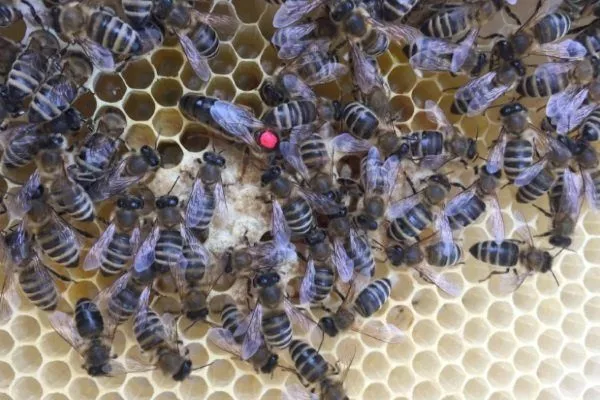
A distinctive feature of the Carpathian bee, or as it is commonly known, the Carpathian bee, is the lack of pronounced stripes on its body. The insect has a gray hue with an ashy sheen.
The queen's body color can vary from black to cherry (depending on the type). Each worker bee weighs approximately 110 mg, while the queen weighs 205 mg (fertile) or 180 mg (non-fertile).
The body structure is regular, with a proboscis length of approximately 7 mm and a tergite width of 4.8 mm. The long proboscis allows the Carpathian bee to collect nectar in hard-to-reach places and pollinate legumes.
In 24 hours, the queen lays on average about 1,800 eggs, and in breeding apiaries this figure increases to 3,000 eggs.
Selection
To date, breeders have developed several types of this breed. The most popular are:
- Vuchkovsky. This is one of the most common types of Carpathian bees in countries such as Slovakia and the Czech Republic. The bees are gray in color, while drones can have a brownish body, and queens are brown or black.
- Kolochanovsky. Distinguishing features of this type include large wings. Additionally, some specimens have small brown spots on their bodies.
- Hoverla. This type is very similar in appearance to the one above. However, it differs in having a longer proboscis and high egg production in the queens.
- Maykop. Bred specifically to improve insect adaptation to the conditions of central and southern Russia. Through selective breeding, this type of bee has a longer proboscis, which contributes to increased productivity in these regions.
Productive Features
The Carpathian bee breed is known for its high productivity. In one season, the insects collect an average of 40-50 kg of honey, and under favorable conditions and proper hive placement, this amount increases to 80 kg.
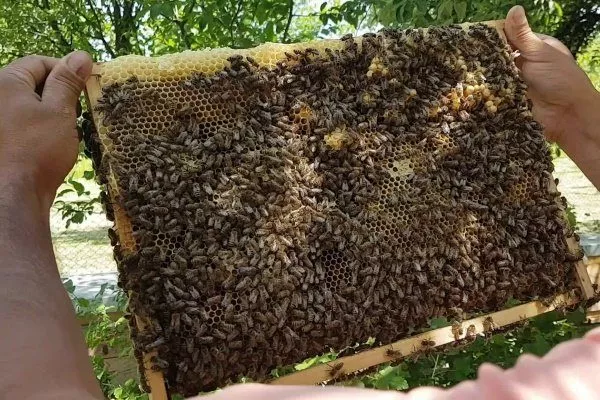
The Carpathian bee collects pollen from a variety of plants without being tied to just one, which is the main reason for its high productivity even during unfavorable conditions. This breed is also highly productive in wax production.
Behavioral features
The Carpathian bee is a calm and non-aggressive breed. When inspecting their nests, smoke is usually not necessary, as the insects work quietly on the frames and pay little attention to humans.
However, despite its non-aggressive nature, the Carpathian leopard is very active in protecting its home from parasites. The only exception is the wax moth.
With proper beekeeping, the Carpathian breed has a low tendency to swarm. Carpathian bees are also independent, so breeding them requires no special equipment or additional work.
Breeding zones
This breed is bred not only in Ukraine, but also in Russia, Belarus, primarily in the south of the countries, as well as in several regions of Uzbekistan and Kyrgyzstan.
Recently, the Carpathian bee breed has also been successfully used in some European countries, primarily in Poland.
Features of honey collection
One of the undeniable advantages of the Carpathian bee is the ability to begin collecting nectar in early spring, when young individuals are young. Even from poor honey plants, these insects collect a good amount of nectar with varying sugar content.
- ✓ The presence of a variety of honey plants within a 2 km radius of the apiary is critical to ensuring high productivity.
- ✓ The optimal time to start honey collection is early spring, when bees can use early honey plants.
Bees pollinate plants both in open areas and in pavilions. Carpathian honey has excellent taste and quality, with a low sugar content.
Bees tolerate transportation well, so hives can be transported to remote locations. The Carpathian breed builds combs quickly, however propolis Bees produce only small quantities. This is due to the mountainous conditions in which these insects originated.
Content Features
Most experts note that the Carpathian breed is well suited even for novice beekeepers, however, for successful keeping and breeding of these bees, it is necessary to pay attention to some features of their care.
Conditions of detention
After purchasing Carpathian bees, you should choose the right hive. A multi-hull hive is best for this species, as it provides the closest possible habitat to the natural habitat of this breed of bees.
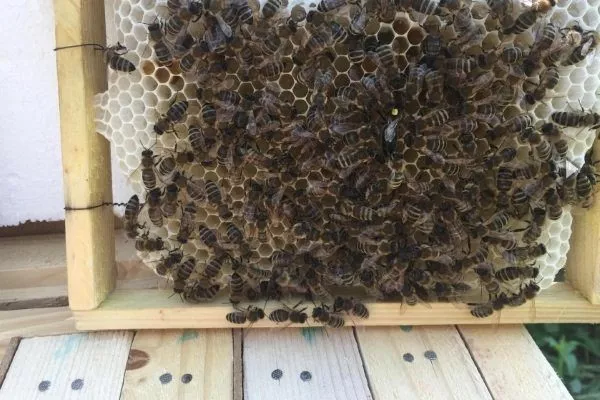
Experts recommend arranging the exit holes facing southeast or southwest. This will help the bees navigate the time. It's best to stagger the hives at least 2 meters apart. This way, the bees can easily find their nests and avoid disturbing other colonies. Rows are also an option.
The Carpathian bee breed is kept in various conditions:
- in greenhouses;
- pavilions;
- on the street.
Placing hives outdoors is only suitable for temperate climates, but experienced beekeepers have placed bees outdoors in harsher climates.
Nutrition
When choosing a location for installing hives, please note that there should be hives located at a distance of up to 2 km. honey plantsAreas near forests are ideal. Hives can also be placed in gardens with many fruit trees.
Additionally, ensure there are insect waterers available. Several should be placed throughout the apiary. The bees will choose the most suitable location for watering, and the remaining waterers can be removed.
For spring feeding, use sugar syrup with added acetic acid. To prepare it, mix 1 kg of sugar and 3 g of acid in 1 liter of water. Many beekeepers also use Alimak at this time, which helps the insects recover quickly from winter and begin working more effectively. Various cobalt-containing supplements (such as Pchelodar) are also used.
Wintering
For a good wintering, experts recommend feeding to stimulate growth. bee bread To prepare for winter and accelerate the spring development of bee colonies, this should be done in the fall. For feeding, use 33% sugar syrup (200 g), to which 2.5% flower pollen is added.
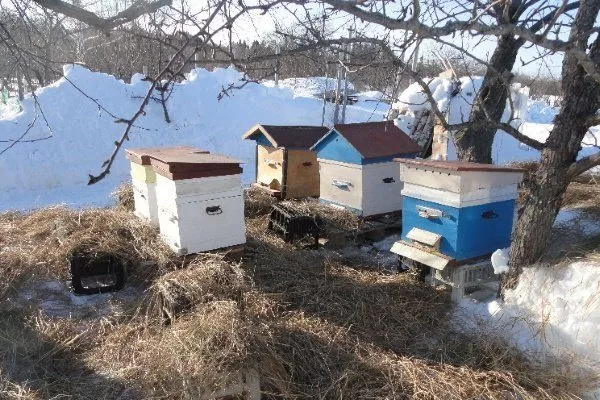
Carpathian bees tolerate winter well. This factor facilitates their breeding even in Siberia, as their productivity allows them to secure the necessary food supply for the cold season. To successfully overwinter, Carpathian bees require approximately 30 kg of flower honey.
However, to ensure that insects survive the winter well, their home should be regularly inspected and, if necessary, their depleted food supply should be replenished.
Additionally, maintain a suitable humidity level (65-80%). To achieve this, the bees must be moved to the wintering house in a timely manner. The best time is the onset of sustained frost.
When raising bees in temperate climates, some wintering considerations should be taken into account. If kept in multi-box hives, the upper boxes should be removed one by one in the fall. They are placed on top of the bottom stand, and the bees are shaken off the frames of the lower box.
First, remove the slats. This leaves a 5mm hole for bee flight and ventilation, along with another hole on the first body. In the spring, place the bottom block underneath.
What do beekeepers advise?
Beekeeping experts offer several helpful tips for successfully keeping Carpathian bees:
Bee packages
First of all, when choosing bee packages, be especially careful with standard kits, as unverified suppliers may sell completely different bees than Carpathian ones. In such cases, the insects may be weak, sickly, and have low productivity.
The signs of a complete package are:
- availability of feed reserves (about 3 kg);
- worker bees in sufficient numbers (about 15,000 individuals);
- young uterus;
- the number of dead bees should not exceed 20 bees.
Experts recommend that novice beekeepers purchase packages from reputable suppliers or from friends.
Wax moth
To combat this pest, you can use natural remedies that are safe for bee colonies. Often, various scents that moths dislike are used as a deterrent.
Mint, garlic, hops, and wormwood are used for this purpose. These plants can be used either individually or in combinations. Various chemical treatments are also available, such as vinegar or paradichlorobenzene. Biosafe and Entobacterin have proven effective.
Swarm control
Although the Carpathian bee breed is almost never prone to swarming, it does happen. Therefore, take timely action. anti-swarming measuresTo do this you need to:
- create good ventilation and reduce the amount of sunlight;
- separate young and mature bees from one family and unite them with the main families when nectar appears;
- use multi-body hives.
Advantages and disadvantages
Like every breed, Carpathian bees also have advantages and disadvantages.
TO merits The Carpathian breed should include:
- The insects are non-aggressive. This allows them to be kept close to the home and easily inspect their habitats.
- High productivity. Carpathian bees produce a good amount of honey even in unfavorable years.
- The ability of an insect to use various bribes for collection.
- Carpathian bees protect their habitat well from pests, which in turn significantly reduces the loss of honey and various diseases in insects.
- The breed is highly hardy. It tolerates a wide range of climates and temperature fluctuations.
- Unlike other species, they begin their activity at a younger age.
- They tolerate transportation well, which allows families to move to a more favorable area for work.
- They do an excellent job of pollinating various legume crops.
- Carpathian bees use a dry method for sealing honeycombs.
TO disadvantages Breed experts attribute the following factors to the breed:
- Carpathian bees are poor at collecting pollen.
- They do not protect their nests from wax moths. If the beekeeper does not respond promptly, this can lead to significant damage to the honeycombs.
- The Carpathian has a tendency to steal, often due to a lack of good prey.
Carpathian bee breed (video)
In this video, beekeepers demonstrate how to transfer Carpathian bees from a package to a new hive:
Reviews
The Carpathian bee breed is easy to care for, making it ideal even for novice beekeepers. It stands out for its non-aggressive nature, high productivity in any conditions, and its ability to withstand transportation. However, when keeping the Carpathian breed, regular inspection of the hives for wax moths is essential.