
Compared to their domestic counterparts, wild bees are characterized by greater work capacity and endurance. These insects are robust and adaptable to a variety of weather conditions. This article discusses bee habitats, the benefits of honey, their diet, and the advantages and disadvantages of beekeeping.
Description and characteristics
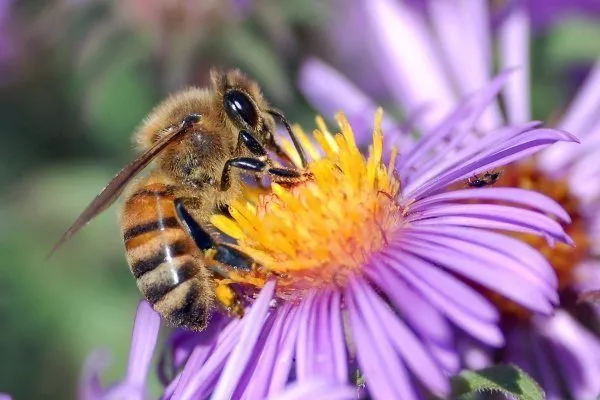
Wild bees differ from domesticated bees. They are significantly smaller than domesticated bees, averaging 2-3 centimeters in length. They are characterized by a uniform coloration, but some specimens have several shades, usually muted and not as vibrant as those of their domesticated relatives. Their thorax is protected by a carapace, their forewings are longer than their hindwings, and their hair is much thicker, keeping them warm during the winter.
The largest wild bees live in Indonesia, their length can reach up to 39 mm.
The hindquarters of their bodies are striped black and yellow, and they have wide, flat legs covered with hairs used for collecting pollen. They have a well-developed proboscis. Their eyes are positioned so that they can see almost everything. Bees can see ahead and to the sides, as well as a little of what's behind them. The main defense of any bee is its sting. In the wild bee, it is dominated by a slightly different glandular structure. However, these insects are not afraid to use their "weapon"; noise or a bad smell can provoke them to attack.
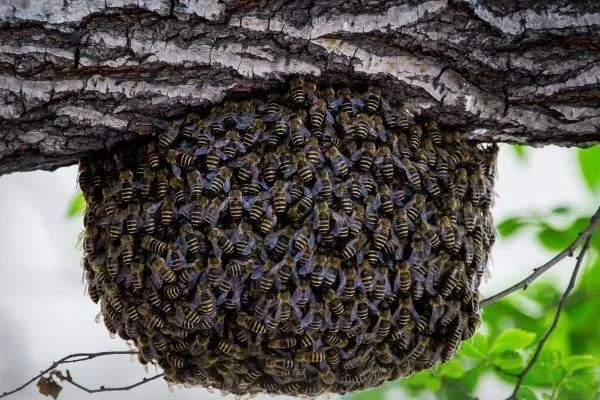
All wild bees pollinate various plant species. They range from solitary individuals to swarms of 20,000 bees. Solitary bees pollinate plants but are unable to produce honey. They most often form worker colonies of up to 20 workers. However, such colonies can only survive for a year.
A distinctive feature of bees is their aggressive nature. As soon as they sense danger, they can use a glandular stinger, which both the queen and worker bees possess. They react to any noise or strong odor, as wild bees have a huge number of enemies:
- Animals love to taste sweet honey. In such situations, the insects often attack thieves in a swarm.
- Also, social insects, including the queen and worker bees, are considered enemies of wild bees. male drones.
The division of labor between individuals depends on the insects' age. There are nurse bees, scout bees, foragers, and so on. Their primary function is fertilizing the queen. After hibernation, they are unable to reproduce. Because of this, before the cold weather sets in, other members of the swarm drive them out of the hive.
The queen lays eggs. Worker bees obey her. They can collect nectar, raise brood, and so on. They are highly resistant to most diseases that would be fatal to domesticated bees. Wild bees can withstand temperatures as low as -50 degrees Celsius. They have more toxic venom.
Dangerous "wild" individuals
Wild bees, living in the wild and not domesticated by humans, can be very dangerous. They tend to immediately defend themselves at any approaching danger. These insects are aggressive and can sting both animals and humans. Having wild bees near your home can be a very unpleasant presence, not only because the noise the swarm makes is disturbing, but also because their stings can be a serious problem.
A single bee sting can make someone with allergies sick. However, if a person is stung by several wild bees at once, it can be tragic. insect venom very concentrated than that of its domestic relatives.
If you are stung by a wild bee, call an ambulance or take the following measures:
- The sting is removed.
- The wound is treated with alcohol.
- To remove the poison, you need to thoroughly rinse the wound with salt water.
- After all procedures, apply a piece of ice or a cold compress to the bite site.
Drinking plenty of fluids containing ascorbic acid is essential. This could include rosehip infusion or lemon tea.
What wild bees are there?
According to their organization, representatives of the bee species are divided into several forms:
- Single. In nature, there are many solitary bee species. A single female lays eggs and raises the young. These bees do not produce wax or honey, and pollination often occurs in a one-species-per-plant relationship. If a population of a particular wild solitary bee species disappears, the threat of extinction for the corresponding plants increases dramatically.
- Semi-public. These bees have not been studied, but it is known that there are many such varieties. They tend to group into small colonies, usually 10-12 individuals. These groups contain a minimum of worker bees. These bees live for only one year, and only the most prolific females survive the winter.
- Public. These bee colonies are distinguished by increased resistance to disease. They are characterized by high productivity and a slightly smaller size compared to domestic bees. Some varieties have a dense, fluffy covering and an aggressive nature.
Where do they live?
The honeybee, which is very rare today, is considered a valuable species. Many individuals live in Bashkiria, and extensive conservation efforts are underway: entire nature reserves are being built with an abundance of hollow trees, ensuring the bees' survival.
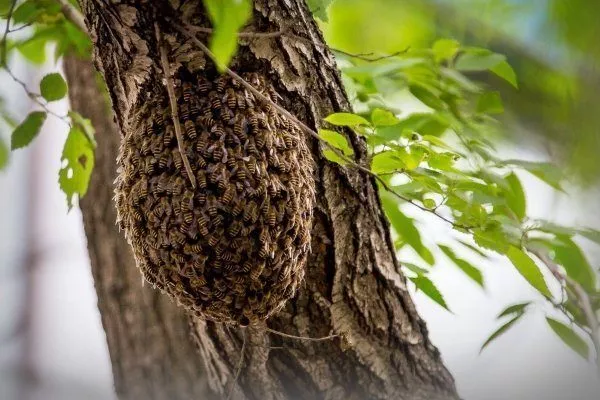
Bees typically nest in tree hollows, but this often turns out to be a different story. The most important requirement is a spacious location protected from direct sunlight and strong winds. A nearby body of water is also crucial. For this reason, bees are often found in rock or earth crevices.
Over time, wild bees have come to prefer to settle near people, which is why the insects often choose attics, secluded corners in sheds, or garages as their homes.
About life
Bees lead an active lifestyle. They are hard workers who ensure comfortable conditions. They build a nest, reproduce, and feed themselves.
How are houses built?
Wild bees can build their nests both in the ground and in hollow trees. When built underground, the nest resembles a tunnel with various branches and exits. A large nest, inhabited by a huge colony, can be located underground. The construction process is quite complex. Bees typically tunnel through the ground, requiring care to prevent the earth from collapsing during their passage. For this purpose, the insect uses its saliva, and after strengthening the walls, the entire nest is further coated with abdominal secretions.
Once set, the nest will not be damaged by rain or ground collapse, as the walls are firmly set and weather-resistant. Bees lay eggs in the nest and store their collected nectar.
Honeybees, however, prefer nesting in tree hollows because they need to process the nectar. If you look inside their nest, you'll find numerous honeycombs filling the hollow.
What do they eat?
The food of any wild bee is nectar collected from plants and flowers. Wild bees prefer plants such as sage, linden, bird cherry, and chicory. They are also attracted to coltsfoot, thyme, and other fragrant plants.
The process of reproduction
After the queen bee leaves the nest, she is accompanied by drones. During the mating season, the male and female mate. The queen returns to the nest, where she lays up to 2,000 eggs daily, while the drones, no longer needed, are expelled.
The queen bee's lifespan is approximately 5 years. During this time, she lays over 2 million eggs.
Where and how do they spend the winter?
A distinctive characteristic of bees is their sensitivity to cold, which is why beekeepers must take numerous measures to ensure their insects survive the cold without significant losses. Wild bees don't have these conditions, and they must fend for themselves:
- Insects obtain their food by storing up huge amounts of food for the winter period.
- They expel the drones from their nest, continue to actively reproduce, and renovate their home. Any cracks or holes are immediately sealed.
- Honeybees migrate to the lower part of their nest, where there are no food reserves. Here, they form a cluster and are in constant motion. If they stop, they will freeze and die.
Hives
Various types of hives are found in the wild, including those located in trees. These are small sacs made of dried leaves, grass, and natural adhesives. Before the onset of cold weather, bees are busy: sealing cracks with propolis, raising young brood, and driving out lazy drones.
After the work is completed, the bees gather at the bottom of the hive; this place is considered the warmest, as there are no honeycombs in it.
Ground beesLike ants, they settle in groups and dig numerous tunnels underground. At the end of each tunnel, they create a burrow, compacting it with their paws and moistening it with their saliva.
This is how bees create compact and safe nests for themselves, each containing an egg on a cushion of flower nectar. The saliva hardens, forming a film that prevents water and cold from penetrating the nests.
How are wild bees different from domestic insects?
Although both domestic and wild bees belong to the same species category, they still have common characteristics:
- both domestic and wild bee colonies live in close-knit organized groups;
- Both species use a sting when they sense approaching danger;
- each bee in the hive performs its own duties: worker bees, drones, queen, honey-producing individuals;
- have the same body parts, but the distinguishing features are small details;
- Both domestic and wild bees create honeycombs to store honey.
Bees are distinguished by the following characteristics:
- Wild bees are predominantly gray in color, lacking the characteristic yellow color. Some species have no distinct stripes on their bodies at all.
- The wild bee is characterized by an aggressive nature and is capable of attacking an animal or a person if it does not like the smell or the slightest noise.
- Wild bees have strong immune systems, which can't be said of domesticated bees. They can even survive temperatures as low as -50 degrees Celsius.
- Undomesticated insects are characterized by industriousness, activity, and the ability to collect nectar and produce honey. As a result, wild bees store more honey in preparation for the cold weather.
- Some wild specimens have a "fur" covering and protective armor on the chest.
- Wild honeybees have smaller bodies than domesticated bees, averaging 2-3 centimeters in length. However, larger specimens do exist.
How to get rid of wild bees?
Unlike common domestic insects, wild bees are considered very dangerous. Their venom is much more toxic, making a sting a serious threat, especially to a child or someone with allergies. A large attack can be fatal. It's important to know how to properly remove wild bees if they settle in an area already occupied by humans.
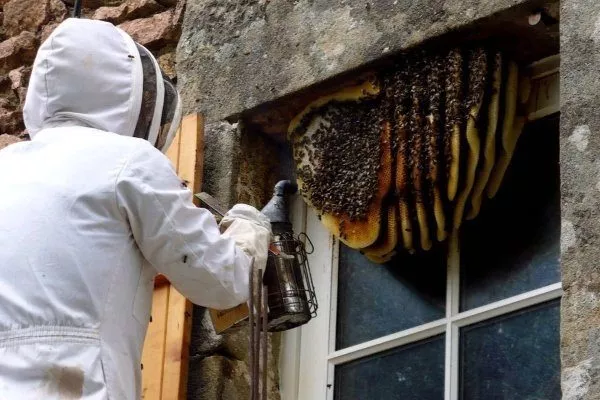
Initially, they use a simpler method: they call the veterinary service or any similar organization that will be able to catch the insects and relocate them to a safe habitat.
If there is no such service in the city, you will have to solve the problem yourself:
- It is necessary to create a decoy hive - an ordinary wooden or cardboard box, disguised as a tree.
- After preparing the bait, it is placed near the wild bees' nest. Queen pheromone or lemongrass oil is dripped into the false hive to attract the insects. Bees are particularly sensitive to odors, so they will quickly move to a new location if they like it.
- After the bees have moved in, after putting on a protective suit, the hive is closed and placed in a tight bag.
- Finding a new home for the bees becomes a difficult task in such a situation. They are moved or transported to a new location, the bag is removed to prevent aggressive behavior, and the bees are smoked. The hive is not removed; it is left with the bees.
Bee catching and breeding
To catch wild bees, beekeepers use a special trap made from ordinary plywood and also perform the following manipulations:
- They make a box in which they install 4-8 frames. A few frames with old combs can be used as bait, and the rest are secured with wire.
- Next, climb a tree 3-6 meters above the ground and hang the trap. It's best to set it up near a clearing or a clearing, preferably surrounded by coniferous trees.
- The box is secured with slings or ropes and then left for a while. Bees are most often caught during the swarming period, which lasts from May 25 to July 10. The trap is checked every 7-10 days.
- Once the swarm has settled into the box, it is carefully removed from the tree and transported to the desired location. This operation is performed after sunset, when all the workers have returned to their new home. They quietly climb the tree and close the container, securing it securely so that it does not open during the descent to the ground. Keep in mind that the weight of the captured swarm and the box combined will be over 5 kilograms.
- ✓ The presence of coniferous trees around increases the chances of a successful catch.
- ✓ The trap should be installed at least 3 meters above the ground to attract the attention of bees.
It's possible to trap a swarm of wild bees, but breeding them at home is impossible. Experienced beekeepers set up a split log hive in forests and near houses in Bashkiria. This is called beekeeping, which is considered a very ancient form of beekeeping. In such a log hive, the swarm will continue to live its normal life, and the beekeeper's main task is to collect honey from the wild bees in a timely manner.
- ✓ Using aromatic herbs to attract bees to a new home.
- ✓ Ensuring the availability of ready-made combs in the new hive to increase the chances of colonization.
Insects are very selective, so they're not always willing to move to just any wood. It's recommended to rub cut logs with aromatic herbs, build honeycombs, and only then collect some of the honey. Otherwise, the bees may flee the destroyed nest. However, if they've found a suitable location, they may settle there.
Benefits of wild honey
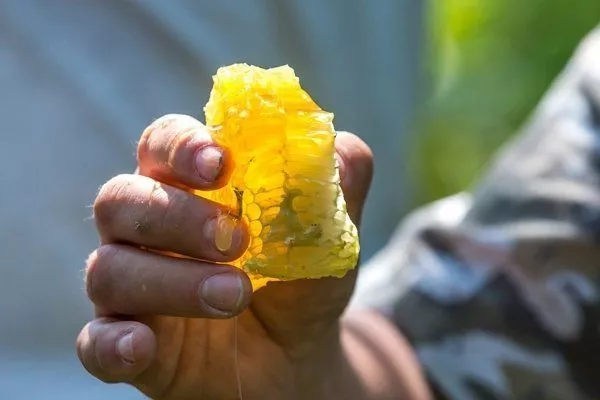
Wild honey is harvested in the fall, allowing it time to fully ripen, accumulate nutrients, and develop its subtle, natural aroma and flavor. Honey is popular in cosmetology, folk medicine, and traditional medicine. It is believed to help treat various ailments, including those of the gastrointestinal tract, bronchi, heart, lungs, and more. It also helps reduce inflammation and pain.
Wild honey is a special product with unique healing properties due to its rich composition:
- many vitamins;
- bee bread, wax and propolis;
- macro- and microelements;
- mineral substances.
This is a rich and fully ripened product. Maximum value is achieved through hand harvesting, which ensures the insects' natural activity is not disturbed. No mechanical interventions are used during processing.
Traditional medicine often turns to the medicinal properties of wild honey. Honey has been noted to increase appetite and improve metabolism. It can help normalize cardiac function and capillary permeability, and treat gastrointestinal disorders.
What other problems does honey help combat?
- helps treat kidney disease;
- improves the treatment of respiratory diseases;
- helps improve the condition with elevated body temperature, inflammation, and sore throat;
- improves blood circulation in internal organs;
- effectively relieves muscle pain and joint spasms.
The product's distinctive features include a dark, rich hue, reminiscent of buckwheat. The honey has a heady aroma with a hint of smoke, a viscous, very thick consistency, and a tart taste.
Advantages and disadvantages of wild bees
Although wild bees prefer only a few plants for honey collection, this doesn't prevent them from collecting record quantities during the main harvest season. They can build numerous large combs, making beekeepers' work easier.
An advantage is that breeding this bee breed is called "dry honey sealing." Wild bees seal the honey in the combs so that an air gap remains between the honey and the top. The finished frame of combs has a very beautiful appearance, which is especially prized by beekeepers.
When the main honey collection period begins, bees tend to fill the supers in the hives with honey, which significantly facilitates collection at the apiary.
A positive aspect is considered not only the increased resistance to diseases, but also the high productivity of bees, large volumes of honey produced and its excellent quality.
One of the disadvantages of wild bees is their overly aggressive nature, as the insects can become enraged by any interference in the hive, which is why working with them requires wearing a special protective suit.
Another downside is the potential for a decrease in honey yield if the plants preferred by the insects are not in bloom. However, this rarely happens; wild bees manage to find a suitable honey source during their main flight period.
A negative factor is the tendency of wild bees to actively swarm, which is very difficult to remove. Due to their strong reproductive instinct, the population is capable of surviving in harsh climates, but this can make honey harvesting difficult.
Although wild bees are dangerous insects, they are considered very beneficial to nature and humans, as their characteristics are easy to define. They are hardy, leading an active lifestyle that allows them to collect large quantities of delicious honey, which is then harvested by beekeepers.