
The Italian bee breed survived the Ice Age and is genetically very different from other species. It adapts well to a variety of climates, including temperate and subtropical climates (except humid regions).
Appearance
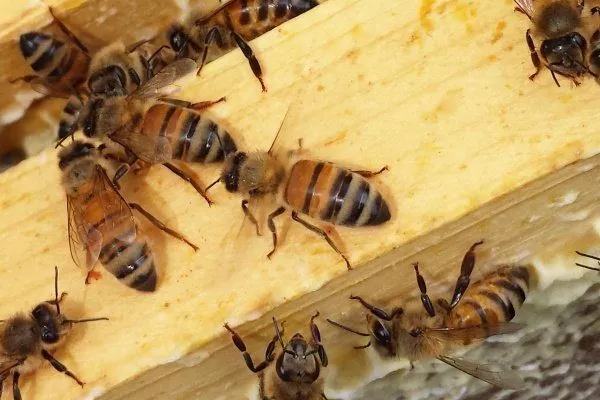
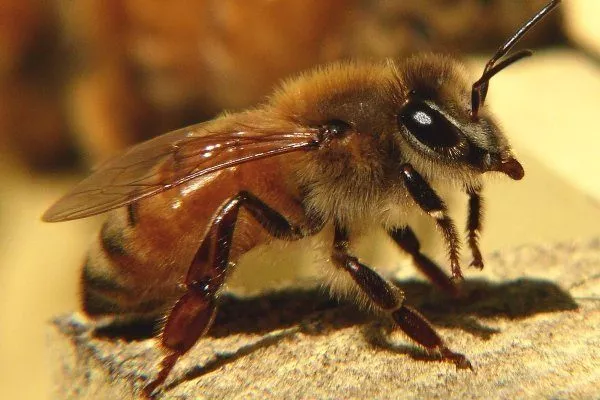
Depending on their habitat, Italian bees come in golden or gray colors. Several yellow or brown stripes are visible on their abdomen.
Individuals of this breed are smaller in size and have a long proboscis for collecting nectar and pollen. This feature allows Italian bees to penetrate hard-to-reach places and collect honey, for example, from clover flowers.
The average queen weighs approximately 210 mg. The body itself is flattened, and the hairs are much shorter than those of the common Central Russian bee.
Through selective breeding, American-Italian bees changed their appearance. Breeders enhanced the yellowness of the tergites, making this a distinctive characteristic. Therefore, in the Italian part of the bee, the first three tergites (three-striped Italian bee) are yellow, while in American individuals, the fourth and fifth tergites (golden Italian bee) will be clearly visible.
In this video, you can clearly see what the Italian bee breed is like and see its productivity after just one month of work:
| Breed | Productivity (kg of honey per family) | Start of activity |
|---|---|---|
| Italian | 30 | July |
| Central Russian | 20 | May |
| Carpathian | 25 | June |
Productive Features
Bees are renowned for their high productivity and their ability to instantly switch to a new honey plant. Bees are not adapted to early foraging, so they only become active in July.
The queen can lay 2,300 to 2,500 eggs per day. The breeding season begins in early spring and continues until late autumn.
You'll see how experienced beekeepers introduce a clean Italian queen into a colony in this video:
Features of honey collection
Bees are highly productive, especially in the middle and late season. In low honey flow conditions, they can produce up to 30 kg of honey per colony. These insects are highly resourceful when searching for new food sources. This may be why they are prone to stealing and attacking other colonies.
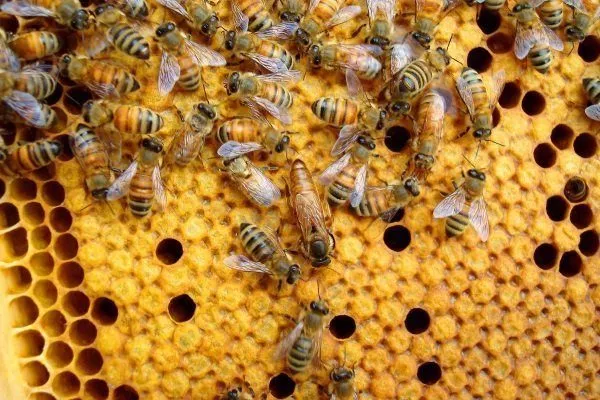
After collecting honey, the bees store it in the upper hive. When it's full, they seal it with a mixed gray or white wet seal. During this process, the bees secrete a large amount of wax, allowing them to easily build combs that look neat and beautiful.
Bees can easily move into a neighboring hive because they lack good orientation. They find their home using their color palette. Beekeepers should also be aware that moving or transporting hives is not possible, as the insects do not tolerate this type of stress well and may die.
Bees are known for their docility and hard work. They begin work early in the morning and finish later than everyone else. Sometimes, one can observe an attachment to certain favorite flower species.
But remember that when it is cold outside, raining or there are other unfavorable conditions, bees refuse to work and wait until the weather improves.
Behavioral features and breeding areas
The main characteristic of Italian bees is their penchant for thieving. After a strong colony has formed, it begins to rob weaker nests in close proximity. Despite this habit, however, these insects are quite peaceful and allow beekeepers to inspect their hives without any problems.
Italy (the Apennine Peninsula) is considered the homeland of bees. From there, they spread widely to many continents, including Canada, the United States, Japan, Australia, and other countries. The breed is particularly popular in the United States, where it was best bred in nurseries.
One of the first to obtain Italian women and begin researching them was E. Grechina. The events took place in 1897 in Vyborg and Pskov.
The Italian bee breed is quite popular in the United States. According to historical records, they arrived there in 1859 and soon displaced virtually all dark European bee species on the continent. The species' name was coined by the renowned British beekeeper of the time, Thomas Wide Woodbury.
Since the habitat climate was warm and the summers were dry, their breeding in northern latitudes with harsh winters and cold, prolonged springs presents significant difficulties, and the honey collection process will not be as active.
Threat of extinction
The Italian Beekeepers' Federation has reason to believe that Italian bees are in danger of extinction. Despite this statement, the breed continues to be successfully bred and spread worldwide. The only caveat is that the number of individuals born does not exceed the number of those who die.
Among the main reasons that may be associated with the threat of extinction are the treatment of flowers with chemicals and poor care in apiaries.
How to support Italian women?
The beekeeper needs to know what to do to ensure maximum comfort for the Italian breed.
Nutrition
The primary nutrition of individuals older than 10-12 days consists of carbohydrates found in honey. Brood and nurse bees obtain proteins and fats from pollen.
On average, the food supply for Italian bees during the fall and winter should be at least 2 kg of honey per 200 g of bees. Overall, a normal colony consumes approximately 80-100 kg of honey and 20 kg of pollen.
The calculations provided are taken from average statistical data.
Wintering
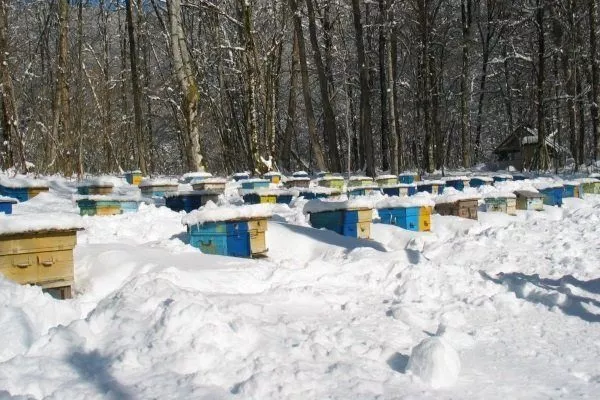
One of the disadvantages of the Italian breed is its low frost resistance. This is due to its origin, so during this difficult period, beekeepers must insulate the bees' habitat as much as possible and stock up on sufficient provisions for their food.
Remember that a harsh winter can destroy an entire colony of bees.
During cold weather, it's best to feed insects honey and pollen. Please note that honeydew is not recommended, as it can cause intestinal problems and diarrhea. This will weaken the bees, shorten their lifespan, and may even lead to the extinction of an entire colony.
Diseases
Like any living organism, the Italian cat is susceptible to various diseases. Some are not very serious, while others are fatal.
- Inspect hives regularly for signs of disease.
- If sick individuals are found, isolate them from healthy ones.
- Use recommended veterinary medications for treatment.
- Take preventive measures to prevent diseases.
The most common diseases of Italian bees are:
- sac brood;
- varroatosis;
- acarapidosis;
- senotainiosis;
- foulbrood;
- aspergillosis;
- nosematosis;
- paragnilec.
Italian beetles don't tolerate wax moth caterpillars, but they are resistant to European foulbrood. This is due to their highly developed nest-cleaning instinct.
Swarming
Italian bees have an average swarming rate. Under unfavorable conditions, this rate can reach 30% of the apiary. However, with the onset of the honey flow, the insects recover from this swarming.
Provided that there is enough space in the nest for the development of the family, insects do without swarming.
Secrets of keeping bees: beekeepers' experience
Here are a few secrets to help beginning beekeepers:
- Buy a hive with any frame size, as the bees will carry the honey upwards. On average, one colony takes up about 40 Dadan frames (300 mm), but some can take up to 50.
- The queen won't climb over or through the foundation. For example, if you take a colony of 4-5 frames and give it two frames of foundation, the queen will be confined to one or two frames, although there will be free cells on the sides (through the foundation).
- Bees repair combs in the upper boxes perfectly. The lower boxes will always remain filled with brood, even during heavy nectar flow. It is recommended to place a grid between the honey and brood boxes.
- The basic rules for wintering are feeding sugar syrup and strictly prohibiting the hatching of late queens. Otherwise, there's a 50% chance they'll worm until early spring.
- Bees propolise the nest quite extensively. This phenomenon is especially active in the fall.
- Bees are quite clingy to frames, so when removing them, you'll need to brush them thoroughly or blow them away with air. Alternatively, use a bee remover, such as the Quebec.
- Italian bees are not afraid of hot periods of the year. They are very effective in late nectar flows and sunflowers.
Pros and cons of the breed
The main advantages of Italian bees include:
- high fertility of the uterus;
- moderate swarming;
- the ability to quickly build a strong family.
Reviews
The Italian bee breed, like all other varieties, has its pros and cons. You can recognize the Italian bee by its colorful appearance, which varies depending on its location. The productivity of these bees is quite high, although this will depend on many factors, including proper care and sanitation in the hives.