
The Ukrainian steppe bee has gained great popularity among beekeepers, as it produces excellent honey, allowing for a large honey harvest per season. Steppe bees are known for their calm nature, but can be aggressive towards their enemies and are not easily offended. This article explores the characteristics and productivity of Ukrainian steppe bees.
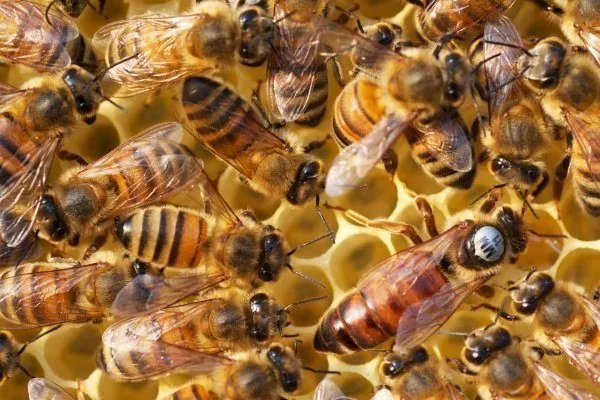
| Parameter | Ukrainian steppe | Central Russian | Carpathian |
|---|---|---|---|
| Disease resistance | High | Average | High |
| Feed consumption in winter | Short | Average | Short |
| Aggressiveness | Low | High | Low |
| Honey yield, kg/season | 150 | 100 | 120 |
Origin and description of the breed
The origins of the steppe bee are hotly debated among scientists. Some are convinced that the breed is a southern branch of the Central Russian breed. Others believe the Ukrainian steppe bee is related to the Carpathian and Krainka bees. Still others insist it descends from the Macedonian bee.
In 1929, bees native to southern Ukraine and Russia were named Apis mellifera acervorum Scorikov by the scientist and beekeeper A.S. Skorikov. Further research revealed that the subpopulation inhabiting the steppes and forest-steppes of Ukraine differs so significantly in many characteristics that some consider it a separate species. In 1999, American scientist M. Engel named the bee Apis mellifera sossimai Engel.
In the second half of the 20th century, Caucasian and Carpathian breeds began to be imported to Ukraine. As a result, Ukrainian steppe bees interbred with them in many areas, resulting in a loss of breed purity. The original population is currently being restored. Large bee nurseries have been established, providing scientists with all the necessary conditions for developing new lines.
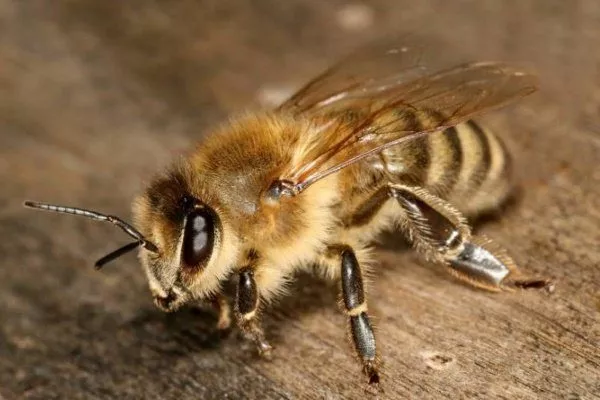
The Ukrainian steppe bee has a lighter coloration than the Central Russian breed. The steppe bee has a uniform grayish color with a slight yellow tint. A worker bee weighs approximately 105 mg, a virgin queen weighs 180 mg, and a fertile queen weighs 200 mg. Queen fertility is somewhat lower than that of the Central Russian breed, at 1,500 eggs per day.
- ✓ Disease resistance.
- ✓ Low feed consumption during the winter period.
- ✓ Calm character.
- ✓ High honey yield.
Breed character
The Ukrainian steppe bee is known for its calm nature. They are not very aggressive if beekeepers inspect their nests or open them. They are winter-hardy. Steppe bees develop slowly in the spring and do not fly out in cold weather.
Ukrainian steppe bees are excellent workers, characterized by productive insects. They are remarkably healthy, making them resistant to nosema and European foulbrood. During cold weather, they consume minimal amounts of food. They are easily transported and bred for migration and mobile apiaries.
If necessary, bees are tamed with smoke. They are known for their low swarming potential. They are valued for their good, reliable comb, which the bees seal with a white paste during construction.
An advantage of this breed is that they are not prone to theft, which distinguishes them from the Central Russian breed. They are also considered good guardians of their nests, preventing enemies from entering. At the same time, the Ukrainian steppe bee is peaceful.
Beekeepers have widely differing opinions regarding aggressiveness. Some consider the Ukrainian steppe bee vicious, others peaceful. This can be understood through comparison. In reality, the insect will not attack without provocation, only if its peace is disturbed. Avoiding provocation is simple: wear protective clothing, remain calm, and do not fuss.
To preserve the purity of the breed, bee breeding is carried out in nurseries located in the Khmelnytskyi and Sumy regions.
Swarming
The likelihood of swarming is moderate: up to 10% of bee colonies swarm, and a week later than Carnic or Carpathian bees. A single colony produces up to 15 queen cells, which are then removed. They fight swarming by replacing old honeycombs and renewing queen bees every few years.
Honey collection
Once you gain knowledge about the Ukrainian steppe breed, it will be quite easy to harvest a good crop in the future.
Acacia is a favorite plant of Ukrainian steppe bees. During the acacia's flowering period, honey yields can reach approximately 60 kilograms, and during migrations, they collect up to 10 kilograms of honey.
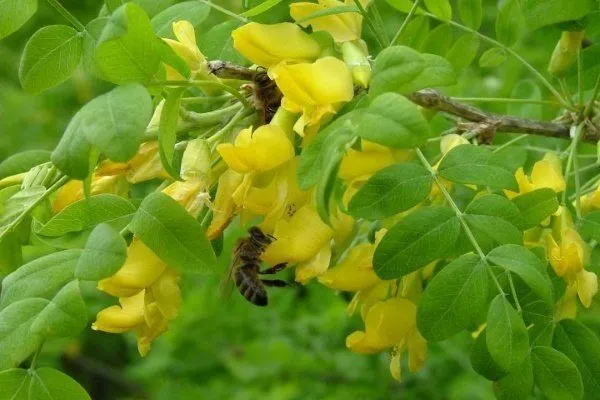
Insects enjoy harvesting crops in forests, particularly buckwheat, rapeseed, and sainfoin.
The bees carefully place the nectar in the "store", which allows the queen to lay eggs without any obstacles, and the worker bees do not interfere with the formation of the fruit.
Wax production
The Ukrainian steppe bee is prized for its large wax production. For this reason, scientists compare the steppe bee to the Italian breed. In a single season, these "workhorses" are capable of constructing around 20 frames, which are strong and sturdy. bee colonies They boast the best results – up to 25 combs. The beekeeper needs to install wax foundation during the period when the insects begin working in the garden, after which they move to acacias, grasses, sunflowers, and linden.
There are various ways to install wax foundation for Ukrainian steppe bees: cross-cut, in a row, under a grid, or during a honey flow. If a bee finds a suitable place to store honey, it will not limit its queen's egg production. This insect is capable of constructing numerous neat combs, which is why it is considered similar to the Central Russian variety.
Another feature of the Ukrainian steppe bee is the ability to build wax foundation around brood and over nests, but for this it requires a bribe.
Spring development
A negative aspect is the queen's tendency to worm the combs after the first pollination. Colony strength increases as summer approaches. Before then, the population is supported by the bees that survived the winter. In the spring, dead bees It's rare. Until June, when the weather is cloudy, worker bees remain in the hives. Until mid-summer, the harvest is minimal.
Wintering
Bees will only be able to build up their strength towards the end of summer. They complete their pollination flights in November. In winter, a cluster is formed – standard frames – 3, Dadan frames – 6-8, and root frames – 7-10. By the first flight (in March), the bees consume 10 kg of honey, sometimes sunflower honey. Ukrainian beekeepers They prefer to keep their hives in the open air.
The flightless period lasts up to 180 days. Another advantage is that the queen bee doesn't react to the thaw, meaning she doesn't start laying eggs.
Bee health
The Ukrainian steppe bee has increased resistance to honeydew toxicosis, ascospherosis, European foulbrood. This is explained as follows:
- The breed is considered clean, as the insect immediately eliminates the culprit of disease. The Ukrainian steppe bee does not allow wax and dead bees to accumulate. This leads to frequent infestations of moths, which destroy the honeycombs, and then the insects become infected. In the spring, after their first flight, the bees thoroughly clean their nests. In Germany, bees are specially bred to clean up after themselves; Ukrainian steppe bees possess this genetic trait.
- The insects are characterized by moderate propolisation of their nests, and in winter they are capable of increasing it to 80 grams per family. The bee colonies are healthy, their propolis contains many useful substances, which helps to get rid of various diseases and pests.
- Ukrainian steppe bees are not prone to thieving and are able to resist other insects that attempt to invade their nests. They rarely become infected by other colonies.
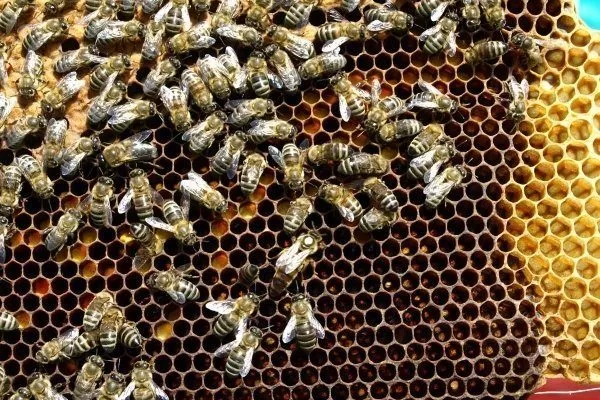
The Ukrainian steppe breed is distinguished by its cleanliness, resistance to diseases, but slow development.
Advantages and disadvantages of the "Ukrainian steppe" bee
Most beekeepers prefer this particular breed of bees. This is due to its numerous positive aspects:
- Robust health. Insects are resistant to nosematosis and foulbrood.
- Hassle-free transportation. Even with constant relocation, no complications arise. This breed is used for migration, which increases honey yield.
- Nest Defense. Ukrainian steppe bees are considered excellent guards, despite not being aggressive. However, they are willing to defend their hive against enemies.
- Weak swarming. Only a minimal number of bees of this breed can undergo this process. With the right approach, the beekeeper can overcome these difficulties.
- Easy wintering. Insects survive the winter period resiliently, and during frosts they consume little food.
- Substantial honey yield. Under favorable weather conditions and proper care, bees can collect approximately 150 kg of honey per season. This is a significant yield, exceeding that of many breeds.
Where to buy and what is the price?
The Ukrainian steppe bee can be purchased in its native country, Ukraine. The breed is found in the following regions:
- Poltava;
- Odessa;
- Kirovograd;
- Kyiv;
- Donetsk;
- Dnepropetrovsk;
- Vinnytsia.
The cost of one Ukrainian steppe bee varies from 80 to 250 hryvnia.
Beekeepers' reviews
This breed of bees receives only positive reviews, with high productivity and frost resistance noted.
The Ukrainian steppe bee breed had fallen into oblivion. Beekeepers are now making every effort to reintroduce it to its natural habitat. The breed is renowned for its high yields, excellent honey production, and calm disposition.
THANK YOU so much! This is written truthfully, heartfelt, and clearly. A bibliography would be appreciated.