
Ukraine is Europe's leading honey producer, and this is no surprise: beekeeping is one of the most developed agricultural sectors here. The Vinnytsia, Zhytomyr, Zaporizhzhia, Ivano-Frankivsk, Mykolaiv, and Khmelnytskyi regions each have over 100,000 bee colonies. At least 400,000 beekeepers live in Ukraine.
Bees in Ukraine
Essentially, all that's required to produce honey in the wild are bees and honey plants. The following insect species are found in apiaries in Ukraine:
- Central Russian. A disease-resistant breed that survives winter well. However, it is known for its aggressive and rather nasty temperament.
- Gray Caucasian. Perhaps the friendliest bees, renowned for their high productivity. However, they tolerate diseases and wintering significantly worse than the Central Russian bees.
- Carpathian. A calm, docile breed, not prone to swarming and quite winter-hardy. A good choice for a beginner. However, honey production by Carpathian bees is average.
- Ukrainian steppe. A winter-hardy, moderately aggressive breed. It produces more honey than the Carpathian bee, but is more prone to swarming.
- Yellow Caucasian. They are best suited for keeping in hot and arid regions of Ukraine. They have a moderate tendency to swarm, and are relatively peaceful toward beekeepers, though they may attack other bee colonies.
- Carnica. It's more prone to swarming than other breeds, but produces twice as much honey as the Carpathian, Ukrainian Steppe, and Yellow Caucasian bees. Furthermore, the queens are highly reproductive.
- Italian. These are the most prolific breeds found in Ukraine. However, they are not very winter-hardy and are quite susceptible to disease.
| Breed | Productivity (kg of honey/year) | Winter hardiness | Disease resistance | Character |
|---|---|---|---|---|
| Central Russian | 30-40 | High | High | Aggressive |
| Gray Caucasian | 40-50 | Average | Average | Friendly |
| Carpathian | 25-35 | High | High | Calm |
| Ukrainian steppe | 35-45 | High | Average | Moderately aggressive |
| Yellow Caucasian | 30-40 | Average | Average | Peace-loving |
| Carnica | 50-60 | Average | High | Prone to swarming |
| Italian | 45-55 | Low | Low | Friendly |
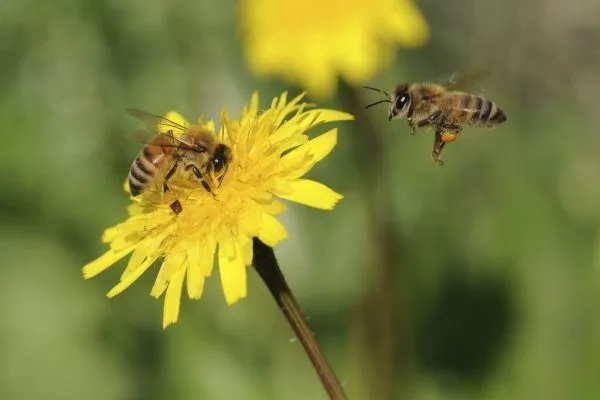
Ukrainian honey plants
In the spring The following plants bloom in Ukraine:
- bluebell;
- hazel;
- hazel;
- willow;
- reddened;
- apricot;
- dandelion;
- currant;
- cherry;
- plum;
- pear;
- apple;
- yellow acacia, etc.
- ✓ Flowering period
- ✓ Duration of flowering
- ✓ Amount of nectar
- ✓ Weather resistance
In summer other honey plants come to replace them:
- white acacia;
- red and meadow clover;
- thyme;
- thyme;
- white clover (Dutch);
- white porridge;
- motherwort;
- linden;
- buckwheat;
- milk thistle;
- sunflower, etc.
A in autumn Heather is blooming in Ukraine.
Tips for aspiring Ukrainian beekeepers
First of all, a novice beekeeper from Ukraine should decide on the beekeeping method he will adhere to in the future:
- artificial swarming;
- free swarming;
- swarm method;
- sectional method.
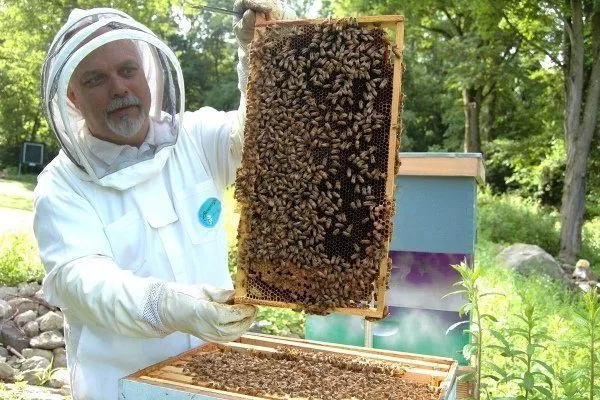
You should also listen to the recommendations:
- Keep the number of bee colonies to a size that can be given adequate attention and managed.
- Perform all apiary maintenance conscientiously and efficiently. Keeping all nests completely clean is the direct responsibility of a good beekeeper.
- Bees need to be provided with an optimal amount of food not only during the wintering period, but also in the spring.
- Every bee colony must be strong. After wintering, a colony needs at least eight streets.
- Bees should be kept exclusively in warm hives. They should have strong walls and a leak-proof roof. In winter, bees should be kept at a temperature of two to four degrees Celsius in dry, insulated wintering houses.
- The number of colonies must be increased using colonies derived from the strongest bee colonies. By the time of the main honey flow, the new colonies should be equal in strength to the original colonies.
- Choose the right time to expand bee nests. Constantly monitor the workload and the bees' well-being within the hive. The bees must be constantly busy.
- An apiary must have a sufficient amount of comb. In regions with average honey flow, after culling, there should be at least twelve nest frames per colony, and ten super frames. In regions with excellent honey flow, double the amount of super frames is necessary.
- The apiary should be located in a windless, dry area, but surrounded by a large number of honey plants. Ideally, the plants should bloom at different times of the year: some in early spring, some in late spring, and some in summer.
- The queen bee should be no more than two years old. There are exceptions, but generally, a queen bee loses fertility after just one and a half years.
You will find even more tips for the beginning beekeeper Here.
Beekeeping in Ukraine as a business
Demand for honey in Ukraine is significantly higher than the market supply. This, in turn, offers excellent prospects for the development of beekeeping as a business.
Furthermore, the country has adopted the Law on Beekeeping, which stipulates that all bee products and beekeeping activities themselves are tax-exempt. The law regulates the breeding and industrial use of bees and ensures the protection of bee colonies, which provides significant support for aspiring entrepreneurs.
How to start a business?
For a beekeeping business to be successful, it is necessary to ensure not only high-quality equipment and inventory, but also prudent operation.
Beekeeping will require the presence of:
- directly from the hives;
- frames;
- cargo scooters;
- template boards;
- spool holders;
- combination rollers;
- nomadic booths;
- drinking bowls for bees;
- psychrometers;
- thermometers and other equipment.
To fully equip 20 hives, it may cost up to five thousand dollars.
Before engaging in beekeeping for profit, it's essential to find future employees in advance. The level of professionalism and quality of work are the key criteria for selecting future employees. Focus primarily on the individual's experience and specialization in beekeeping and honey production.
Business plan
Without a well-developed business plan, it will be impossible to secure loans and investments for your future beekeeping business. A business plan must include:
- future direction of activity and niche of the enterprise (private entrepreneurship) in the market;
- honey production tasks;
- development of tactics for future apiary work;
- search plan and requirements for employees and managers;
- assessment of the possibilities and costs of entrepreneurial activity;
- consideration of potential future suppliers and buyers.

It is also necessary to conduct a market analysis of the region where the business plan is planned. The future type and range of products to be offered must be determined in advance.
Don't overlook the initial costs of tools, equipment, bees, and initial staff salaries.
When planning a beekeeping business, it is necessary to consider the breadth of the future audience, the area required for honey production, and the presence of honey plants on it.
Industrial beekeeping
Production efficiency in Ukraine remains extremely low, especially compared to other countries. For example, in Canada, one beekeeper produces over 4 tons of honey, while in Ukraine, the same figure is 200 kilograms. This difference in productivity is explained by the fact that honey production in Ukraine is still largely amateur.
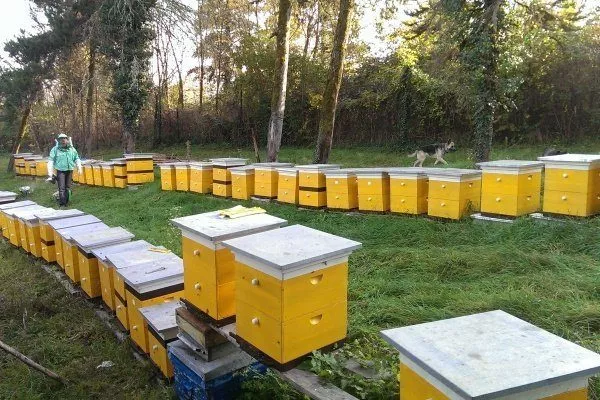
Uniting beekeepers into cooperatives would help increase honey production. Beekeeping with 3-10 hives can only provide honey for the beekeeper's own family, and this is more of a hobby. Such a business only becomes profitable with hundreds of bee colonies.
Furthermore, the type of hives needs to be changed. Ukrainian beekeepers typically use horizontal hives, which are difficult to transport due to their bulkiness, and for the benefit of an industrial apiary, the honey supply must be periodically replaced. Switching to multi-body hives would help overcome this barrier to bringing beekeeping in Ukraine to a commercial level.
Another barrier is quality. First and foremost, it's essential to ensure that Ukrainian beekeepers comply with European Union quality standards. This will help reduce the use of antibiotics, promote the transition to wax-free production, and eliminate the harvesting of unripe honey.
Until all barriers are overcome, Ukraine will not be able to reach production levels for honey and other beekeeping products. However, there are opportunities, and they are quite promising.
Another important step is business integrity. The European Union requires that honey exports be traceable back to the apiary. In other words, all exported honey must be accompanied by a complete set of necessary documentation and standardized packaging.
Factors in the development of beekeeping in Ukraine
To achieve maximum beekeeping efficiency, special attention should be paid to the following factors:
- Breed. Comprehensive and comprehensive knowledge of bee breeds, their characteristics, advantages, and disadvantages is the key to a successful business. Creating new breed groups, developing lines and types, and using effective methods in the process will certainly help.
- Technologies. It is strongly recommended to use only the latest tools, methods, and techniques. "Time-tested" isn't always the best.
- Readiness. A good beekeeper cannot be caught off guard; he must always have preventative measures and rapid response actions prepared in advance.
- Environment. The honey plants surrounding the apiary should always be thoroughly studied. This is necessary, first and foremost, for maximum productivity and bee safety.
- Pollination. Bees should be used regularly to pollinate plants.
- Health. It is necessary to constantly monitor the beekeeping market: Ukraine provides increasingly effective medicines and more nutritious feed every year.
- Certificates. All manufactured products must be certified. This way, Ukrainian producers can earn the trust of European consumers.
- Region. The choice of region for business will determine many factors in the future: the choice of bee breed, the time of honey collection, and so on.
Problems and difficulties
Honey consumption in Ukraine has declined significantly due to the decline of the Ukrainian economy and rising export prices: honey used to cost 1.5 euros, and it still costs the same today. However, in hryvnia terms, it has become significantly more expensive – the price of liquid gold on the domestic market has tripled.
Since honey is not an essential product, Ukrainian citizens are reluctant to pay such a high price for it. Therefore, it is more profitable for entrepreneurs to export their product rather than sell it domestically.
Another problem in the domestic Ukrainian market is the significant share of counterfeit goods. Most sales are made not through stores, but directly by beekeepers and through informal trade. Typically, such products are not tested for antibiotics, as this is quite expensive for a single beekeeper—the cost of testing can be around 2,500 hryvnias. For a small batch of 100-500 kilograms, conducting this testing is simply unprofitable.
Beekeeping in Ukraine is a developed industry that can easily generate profits for any entrepreneur. The right bee breed, region, quality tools, and skilled staff can all help you achieve financial success in a short time. The key is to learn as much as possible and be unafraid to apply it.