
Bashkiria is currently recognized as Russia's leader in honey production. Regardless of the economic situation, the number of apiaries in the republic is constantly growing. The beekeeping experience accumulated over centuries, passed down from generation to generation, allows this industry to flourish.
How is beekeeping developing in Bashkiria?
Beekeeping in Bashkortostan is recognized as one of the most successful and dynamically developing agricultural industries. Experts estimate a staggering number of bee colonies in local apiaries—over 250,000. Initially, similar to other Russian regions, the republic focused on wild-hive honey production, but log and frame honey collection methods soon gained significant traction. The experience of Bashkir beekeepers is undeniable and extremely extensive, and it continues to grow each year.
Apiaries in the republic are typically owned by individual entrepreneurs, but a significant number of both state-owned and scientific beekeeping farms are also present. For example, Bashkiria has a vibrant research center for beekeeping and apitherapy, founded in 1998. The company even has the right to use its own brand, "Bashkir Honey."
| Apiary type | Number of families | Market share | Main products |
|---|---|---|---|
| Private | 180,000 | 72% | Honey, wax |
| State | 50,000 | 20% | Honey, royal jelly |
| Scientific | 20,000 | 8% | Medicines, cosmetics |
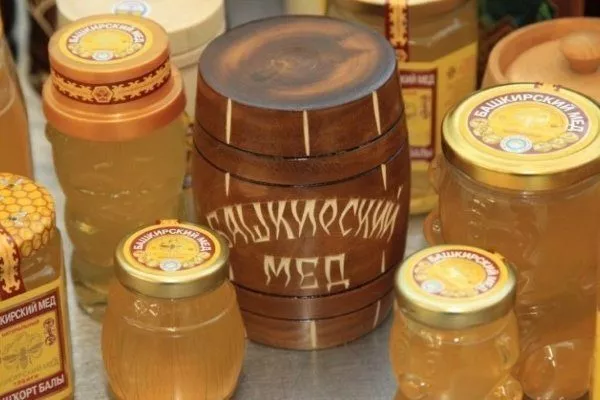
In addition to research, the center also produces cosmetic and therapeutic products, such as:
- bath foam;
- shower gels;
- detergents;
- medicines based on beekeeping products;
- cream for face, body, etc.
In addition to the products listed above, the center provides more familiar items, such as honey in its many varieties and royal jelly. However, the main goal of the research center is to promote bee development: breeding bees, preserving their habitat, and studying their living conditions and development.
Bashkir apiaries
Products from the apiaries of the Republic of Bashkortostan, from honey to honey-based medicines, are recognized as the highest quality, both by experts analyzing and comparing the components, and by the general public of the Russian Federation.
There are a number of factors that contribute to the impeccable quality of honey from Bashkiria, along with the extensive experience of its beekeepers:
- an impressive number of diverse honey plants;
- worker bees;
- Providing the republic with a high-level educational base: any resident of Bashkiria can receive a beekeeping education, up to and including the relevant specialization, at a higher educational institution;
- a large number of enterprises in the Republic of Bashkortostan engaged in the production of beekeeping equipment at affordable prices and of good quality with subsequent distribution among beekeepers;
- confident and favorable legislation that promotes the development of the industry (the Law "On Beekeeping", consisting of 5 chapters and 26 articles, carefully protects the interests of beekeepers).
But despite human achievements, the main advantage is still given to the natural component, namely the presence of rich vegetation (in particular, linden forests), which became the first step in the development of beekeeping in the republic. Sunflowers and buckwheat grow in abundance in the fields, and the endless steppes are ablaze with flowers such as:
- sweet clover;
- clover;
- rape;
- mustard;
- alfalfa;
- a variety of legumes.
Beekeeping
Beekeeping pioneered the development of beekeeping not only in Bashkortostan but worldwide. This method involves keeping bees in tree hollows, and the honey they produce is eventually extracted by beekeepers. Despite the progress and advances in beekeeping, there remains a region in the republic where honey is produced using this ancient method. The word "bortnichestvo" comes from the word "bort" (bort'), a hive shaped like a hollowed-out log or tree hollow.
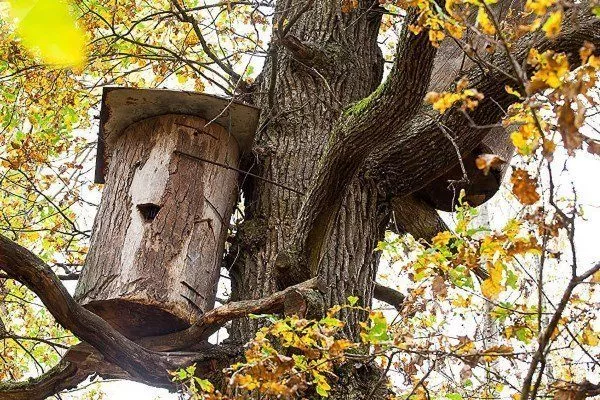
The Shulgan-Tash nature reserve, created in its time with the aim of preserving and demonstrating to people this ancient form of honey production, enjoys considerable fame.
The optimal combination of linden forests and tall pine trees is the perfect location for the development of the wild-hive honey industry. The Burzyansky District is a prime example of a region where beekeeping continues to thrive, and local honey garners praise not only within the Russian Federation but even beyond its borders.
Beekeeping traditions are traditionally passed down from generation to generation. This is because a single beehive can operate for 150 years.
| Parameter | Beekeeping in apiaries | Frame beekeeping |
|---|---|---|
| Honey collection from the family | 5-7 kg | 30-50 kg |
| Service life of a hive | 100+ years | 10-15 years |
| Maintenance costs | Minimum | Tall |
| Winter hardiness of bees | +38°C | +25°C |
The main honey plants of Bashkiria
Honey collection calendar
- April-May: willow, maple (120 kg/ha)
- June: honeysuckle, currant (150 kg/ha)
- July: linden, clover (1000 kg/ha)
- August-September: sweet clover, bruise (200 kg/ha)
Bashkiria is the homeland of many honey plants, whose flowering periods fall at different times of the year: spring, summer, and early fall. Let's look at the most valuable and widespread among them.
Spring honey plants
There are about 40 species of spring honey plants growing in the Republic of Bashkortostan:
- willow - goat, blackening, white, ash, etc.;
- honeysuckle - fluffy and Tatar;
- currants - red and black;
- as well as other plants such as Norway maple, hawthorn, bird cherry, rowan, etc.
Summer honey plants
Bashkiria is rich in summer honey plants – over a hundred plant species, from herbaceous plants to trees, bloom in the republic in summer:
- clover - white, pink and creeping;
- Siberian hogweed;
- small-leaved linden;
- mouse peas.
And many other plants. Summer honey plants are the basis for future industrial-scale honey production, and beekeepers consider the linden tree, which grows in enormous quantities in Bashkiria, to be their main source.
Autumn honey plants
The Republic has about 30 species of late summer and autumn honey plants:
- common ecchymosis;
- Ivan tea;
- white sweet clover;
- whorled sage;
- yellow alfalfa;
- common chicory, etc.
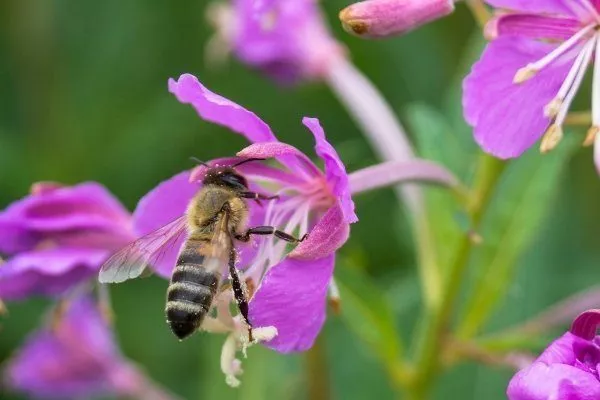
Bashkiria is blessed with flowering plants for three out of four seasons, allowing local bees to produce honey almost year-round.
Problems of local beekeeping
However, despite Bashkiria being a beekeeping titan in the Russian Federation, it is not without its challenges and difficulties. These problems are especially noticeable for beginning beekeepers:
- Monopolization. The aforementioned Bashkir Scientific Research Center for Beekeeping and Apitherapy occupies a significant share of the market, as well as positive attention from the republic's authorities. This poses a risk, as legislation primarily favors the center, not individual entrepreneurs. Furthermore, beginning beekeepers often find it too difficult to compete with such a giant.
- Technological backwardness. Although beekeeping is well developed in Bashkiria, it still takes a considerable amount of time before the latest technologies reach the republic.
- Deforestation. This problem is relevant to many industries, especially agriculture, but it plays a particularly significant role in honey production. The difficulty is obvious: the fewer honey trees there are, the less honey will ultimately be produced.
- Vegetation treatment insecticidal agents. It leads to mass deaths of bees. Furthermore, traces of these chemicals are later found in honey.
- A short list of breeding apiaries, engaged in breeding the Bashkir population of honey bees.
- High prices for breeding material.
- Lack of control import of bee colonies and queens In the Republic of Bashkortostan from other regions and from abroad, this leads to crossbreeding, and, as a result, the quality of Bashkir honeybee breeds is degraded.
The value and characteristics of Bashkir honey
The diastase index is a parameter used to determine the value of honey. It represents the ratio of enzymes per unit volume. In other words, the higher the enzyme content in honey, the more valuable it is. On average, honey produced in Russia has a diastase index of 4-10. Altai honey, a relatively popular and sought-after variety, has a diastase index of 16-20. Bashkir honey, on the other hand, has a diastase index of 20-50, making it the most beneficial honey.
The Republic of Bashkortostan produces a wide variety of honey, each with its own unique value. However, each contains a wealth of beneficial substances:
- amino acids, enzymes and proteins;
- vitamins A, B, E, K and PP;
- potassium, iron, sulfur, sodium, phosphorus, calcium;
- cholines, tannins and essential oils;
- folic acid.
The most useful products of Bashkir beekeeping are the following types of honey:
- Lime. Bashkir linden honey contains a huge amount of vitamins and microelements, and is the leader in their concentration per unit volume of honey.
- Floral. It's only slightly inferior to linden honey in terms of enzyme content: flower honey contains fewer. However, the chemical composition of flower honey is more diverse than that of linden honey.
- Buckwheat. Known for its high iron and protein content, it is valued for its ability to raise hemoglobin levels and for its beneficial effects on the nervous system.
- Mountain. An indispensable aid for sore throats, laryngitis, and acute respiratory infections. It also has a very beneficial effect on the nervous and vascular systems.
Regardless of the variety, the quality and health benefits of Bashkir honey are universally recognized. Such is the confidence in it that honey from the republic is included in the diet of Russian cosmonauts: it is part of the daily rations of workers on orbital stations.
Helpful tips for beginning Bashkir beekeepers
Before you begin beekeeping, there are two factors that are of great importance to those new to the industry:
- Multi-body hives are the most efficient to use in Bashkiria. Their design allows for large numbers of bees to be kept in a small space, which is important for beginning beekeepers who don't have much money to start with.
- A large number of bee colonies does not guarantee a large amount of honey, and often it can even be detrimental: if a mistake is made, starting over will be difficult, and recouping the investment is impossible. Therefore, it's best to start with a small, but stable and well-established operation and gradually expand.
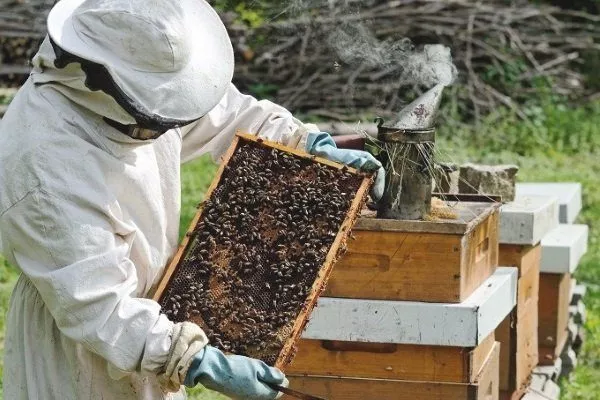
You should also be prepared in advance for natural risks and have an action plan in case any of the following situations arise:
- Infections and parasites. If there is no response, bee colonies will begin to rapidly decline, leading to the complete destruction of the population.
- Nest hypothermia. This could lead to a reduction in the birth rate of bees, as the larvae could simply freeze.
- Starvation. It occurs due to a lack of honey or bee bread, which leads to the weakening or even death of bee colonies.
- Toxins. They cause diseases in bee colonies, including mass death.
It's recommended to start with the Caucasian gray bee and the Carpathian bee if you're in the southern regions. These bee breeds are relatively easy to maintain and produce a good honey harvest.
It's also not worth investing heavily in inventory and equipment from the start. Rarely does a beekeeper initially have a huge apiary that desperately needs tools, machinery, and hired labor. Much of the work can be done relatively easily by hand without any additional financial outlay.
When choosing a location for an apiary, it's best to choose a site abundantly planted with flowering plants. A nearby field or orchard is an undeniable natural advantage.
The pros and cons of beekeeping in Bashkiria
Advantages beekeeping in the republic:
- Getting started doesn't require significant capital investment. In fact, you can start with just 10 hives without any additional costs.
- Beekeeping isn't a field that requires constant training. A single, well-mastered and proven method is sufficient to produce the optimal amount of honey at minimal cost.
- High profitability, around 40%. This is due to the fact that there is always demand for Bashkir honey.
- On a small scale, beekeeping can be carried out by one person, thereby saving on employee salaries, and all profits can be distributed at the owner's discretion.
- There is no need to enter into contracts to sell the resulting products; everything can be sold at markets and fairs, provided a product quality certificate is available.
- The process of pumping honey is not that complicated, the main thing is to learn the correct technique from the very beginning.
Flaws beekeeping in Bashkiria:
- The market is highly competitive. It's especially difficult to compete with a giant like Bashkir Honey. However, good product quality and advertising are quite capable of ensuring a steady flow of customers.
- Risks. If natural problems arise (cold winter, bee diseases, etc.), additional resources will be required, as you'll essentially have to start all over again.
Beekeeping in Bashkiria (video)
You can learn about the nuances of the beekeeping industry in the Republic of Bashkortostan, as well as about the Bashkir Research Center for Beekeeping and Apitherapy, by watching this video:
We also recommend reading an instructional article for beginning beekeepers.
Honey is something Bashkortostan can rightfully be proud of. Despite the challenges, any hardworking resident of the republic can easily turn beekeeping into a profitable business. All it takes is studying all the available information and putting in a little effort.