
To survive and produce honey in latitudes with harsh climates, the Central Russian bee breed was specially bred. This species is considered one of the most aggressive.
General characteristics of the breed
This bee breed is widespread throughout Russia, including Bashkortostan, where purebred Central Russian bees can be found. In other areas, mixed bee species are more common.
The Central Russian species was first discovered over 8,000 years ago. Found primarily in Europe, it arrived in Russia after the widespread planting of linden trees began.
In the 18th century, bees of the Central Russian breed were brought to the lands of Siberia, where they were able to strengthen their immune system and increase their productivity.
Appearance
Bees of this breed differ in appearance from their fellow bees. They have a relatively large body, wide legs, and a short proboscis (up to 6.5 mm). They weigh approximately 100-110 mg. A virgin queen of this variety weighs up to 190 mg, and a fertile queen weighs up to 200 mg.
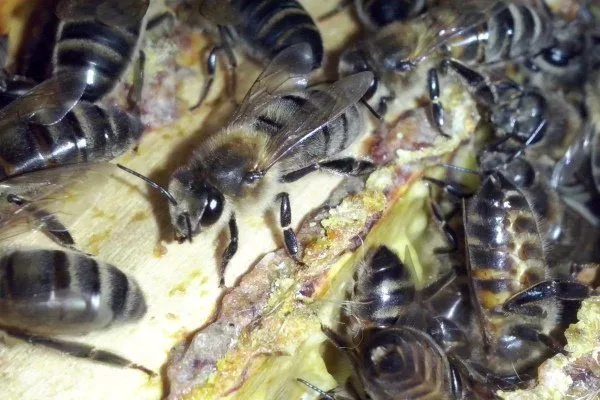
Central Russian bees are dark gray in color, though darker specimens are occasionally encountered. They lack pronounced yellow stripes. Furthermore, these bees are quite hairy, with hairs reaching up to 5 mm in length.
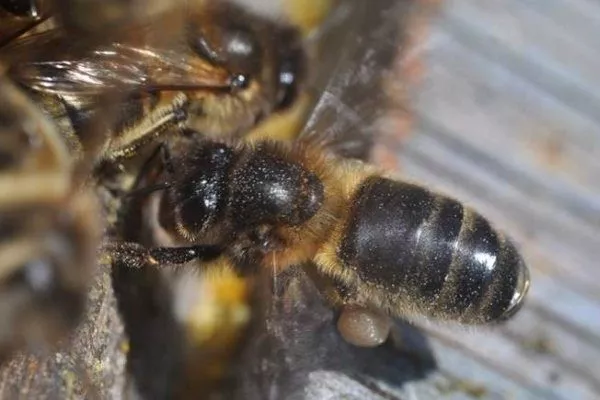
Representatives of this species are among the largest in the world and are second in size only to the Italian breed of bees.
Productive Features
Bees of this variety are very productive and resilient. They can work all day long, as long as the air temperature remains between 10-12 degrees Celsius and there are no strong gusts of wind. They also remain productive in temperatures up to 35-37 degrees Celsius, but only if the hives are located in the shade.
In the harsh climates where the Central Russian bee breed is predominantly raised, the honey flow season is relatively short. It is followed by a cold and long winter. Therefore, bees strive to produce as much winter reserves as possible in a short period of time. Over the course of a season, worker bees in a hive produce 50-70 kg of honey.
In hot weather, honey production among Central Russian bees drops significantly. A beekeeper can harvest no more than 30 kg from a single hive.
Bees of this species also have a high capacity for quickly constructing hives and honeycombs. During this time, they produce a lot of wax.
It's worth noting that the Central Russian bee breed is also highly prolific. A queen bee can lay between 2,000 and 2,500 eggs per day, stopping only for feeding breaks.
These insects not only actively reproduce, but also provide high-quality care for their offspring, so most of them survive.
Behavioral features
Before starting to breed the Central Russian bee breed, a beekeeper should familiarize themselves with some of its behavioral characteristics:
- This species of insect is particularly aggressive. If a beekeeper inspects a hive carelessly, they may be stung. Therefore, hives must be inspected very carefully, without making unnecessary movements. In this case, the inhabitants will simply wait, clustered at the bottom, on the removed bar. It's almost never possible to see the queen during an inspection of the insect's nest, as she is well hidden among the other bees.
- Bees, despite their stubborn nature, are not prone to theft and cannot always defend even their own honey reserves.
- The Central Russian bee breed is highly adaptable to virtually any climate. Worker bees begin flying around the hive as early as March, when temperatures drop below 5 degrees Celsius.
- Insects do not like gloomy weather, rain and strong winds; at these times they prefer to stay in the hive.
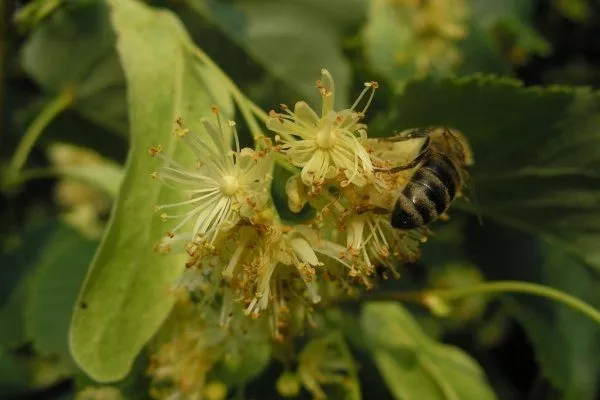
- Central Russian bees are selective about the plants they use to produce honey. They prefer buckwheat and linden. If these plants don't bloom well, it's very difficult for the bees to change their habits and switch to another honey plant.
Beekeepers also note the high swarming potential of the Central Russian bee variety. To successfully keep them, prevent swarming at the wrong time.
- ✓ The queen should not be older than two years to reduce her tendency to swarm.
- ✓ High fertility of the queen ensures the stability of the bee colony.
- ✓ The absence of signs of disease in the queen guarantees the health of the offspring.
It's crucial to monitor the age of their queen. If she's under two years old, the bees are unlikely to swarm. However, when the queen gets older, the bees can swarm at any time, so it's important to find a replacement promptly. How to raise a new queen read here.
Furthermore, it's important for the queen bee's fertility to be sufficiently high. This will ensure that the bees stop worrying about their future offspring and continue working.
You can learn more about the life and behavior of Central Russian bees by watching the following video:
Breeding zones
The Central Russian bee breed is successfully bred both in Russia and in many European countries – Germany, France, Switzerland, Holland, etc. It is widespread throughout Russia, including the Urals and Siberia.
Beekeepers believe that this variety thrives in regions with cooler temperatures, such as the northern European part of Russia, Siberia, and the Urals. A large number of apiaries with this Central Russian variety can be found in Bashkortostan.
If bees of this breed are sent to the Caucasus or Central Asia, they gradually stop producing large quantities of honey and become less resilient. Therefore, they are often crossed with other breeds.
It's worth noting that this breed is a primary breeding method for beekeepers. Other bee breeds have already been successfully developed using it:
- Tatar;
- Chelyabinsk;
- Vologda;
- Vladimir;
- Oryol;
- Bashkir;
- Novosibirsk;
- Perm;
- Krasnoyarsk;
- Kirov;
- Mordvin;
- Burzyanskaya.
All varieties of the above-mentioned bee breeds differ from each other in appearance, productivity, and size. However, they share many similar behavioral and lifestyle traits. Bashkir bees are the most cold-resistant, while Burzyan bees are the most prone to swarming.
Of the aforementioned breeds descended from the Central Russian variety, the Bashkir variety has gained the most popularity among beekeepers. Its representatives are noted for their hardiness and frost resistance.
Features of honey collection
Beekeepers note that this breed will not collect nectar from any flowering plant to produce honey, as other insect species do. Central Russian bees prefer only linden trees and buckwheat to produce their honey.
Members of this species produce large quantities of honey in areas where summer and late nectar flows are strong. A swarm can utilize these types of nectar flows in different ways. If the swarm is weak, the insects are busy increasing their numbers and do not release all the worker bees to collect nectar.
When honey plants are blooming profusely, the hive's entire energy is focused on collecting nectar. Central Russian bees first fill the upper parts of the hive with honey, and only then, when there's no more room, do they begin storing the nectar in the nest. They also produce large quantities of wax.
This species of insect has its own unique honey production process: they try to leave a small gap between the honey deposits and the honeycomb walls, which contains air. This gives their honey a fragrant aroma and a slightly cloying taste. The honey seal of this species is always dry and white. Central Russian bees never produce "wet" honey.
Content Features
Not all beekeepers are capable of keeping this breed. It is preferred by experienced beekeepers.
Nutrition
During the wintering period, Central Russian bees use food very sparingly, so beekeepers can safely leave frames only partially filled with honey in the hive.
When the air temperature rises to 12-14 degrees Celsius, the insects begin their first flights, and the queen begins actively laying eggs. This increases their food requirements. During this period, the bees try to replenish their reserves.
Experienced beekeepers recommend that beginners leave at least three kilograms of high-quality honey for the Central Russian breed to feed on if they spend the winter outdoors.
Conditions of detention
Due to the fact that bees of the Central Russian breed are prone to swarmThe beekeeper must add frames to the hive for expansion and replace old queens with younger ones. A swarming colony can form when a honey flow of at least two kilograms has accumulated. This can affect 10-50 percent of the entire apiary, making it very difficult to control.
It is worth noting that the Central Russian bee breed cannot have two queens in one hive, unlike some other varieties of these insects.
Central Russian bees stop raising brood in early autumn, so adult bees don't become worn out over the winter. As a result, beekeepers don't observe large numbers of dead bees in the spring.
Wintering
Keeping this breed of bees during the winter requires compliance with the following rules:
- Assembling a hive for winter involves placing a horizontal full-copper frame on planks.
- Place a cake of bee bread on the top bars of the frames when checking the hive.
- There is no need to actively build up frames with wax foundation with the arrival of spring.
- Check the hives to make sure they have enough honey for wintering.
- Make sure there are no cracks and keep the inside of the hive dry.
- Place bee bread cakes on the top bars of the frames for additional nutrition.
- Orient the hive entrances to the east for optimal lighting.
Beekeepers position hives containing Central Russian bees so that the entrance faces east. A couple of days after swarming, the old colony is moved half a meter away. The entrance is rotated 90 degrees. A new hive, which will house the young swarm, is installed in the vacant space.
Since the insects first collect honey in the super, and only from there is it delivered to the part of the hive where the brood is kept, the beekeeper must be extremely careful when extracting it before wintering, so as not to leave his charges without food for an extended period.
Other care features
Thanks to its strong immune system, the Central Russian bee breed is virtually immune to diseases that often affect other varieties of these insects (nosematosis, European foulbrood, and toxicosis). Wax moth is encountered only in rare cases.
The fact is that this bee breed developed in rather harsh conditions. This contributed to the development of strong and productive insects. Central Russian bees are not afraid of winter and cold. Even when the air temperature drops to -40 degrees Celsius, they easily survive wintering periods lasting up to seven months.
In general, the Central Russian bee breed is quite undemanding to weather conditions, but a beekeeper who decides to breed it must understand that he will have to provide them with proper care, since without it, the insects begin to swarm, and there is a risk of losing them.
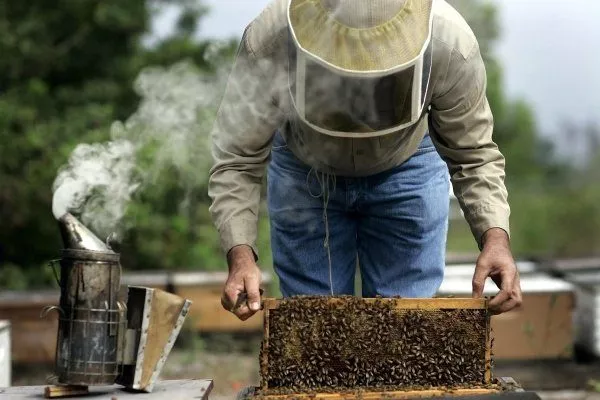
Worker bees of this breed, although seemingly unpretentious at first glance, require careful maintenance of their hive. However, if the owner shows uncertainty or fear, they sting.
Is it worth keeping bees? The pros and cons of the breed
Experienced beekeepers note several undoubted advantages in breeding the Central Russian breed:
- Bees of this variety are able to adapt to almost any climate. They are not afraid of cold, making them especially popular in areas with changeable and frosty weather.
- High resistance to various diseases common to bees. Due to the breed's development in harsh weather conditions, its representatives have a strong immune system.
- Central Russian bees are extremely resilient and productive. Because the honey flow season in their regions is relatively short, they devote all their energy to it. Worker bees begin their work early in the morning and continue until late at night.
- Insects are also famous for using their food supplies very economically.
- Bees of the Central Russian breed produce tasty and healthy honey.
- They produce a large amount of wax, which allows them to repair the hive in a short time if necessary or to build new honeycombs.
- The queen of this breed of bees is highly productive and produces a large number of eggs per day.
- Bees of the Central Russian breed are not prone to stealing from other hives.
Despite the large number of advantages of these bees, they also have flaws:
- Aggressive and vicious nature. Not all beekeepers can cope with the aggression of Central Russian bees. When working with them, one must be extremely focused and cautious, as they do not tolerate rudeness or carelessness.
- In some hives, two strong queen bees may emerge at once and start a war, which often leads to swarming of all the individuals.
- They are particularly selective in their choice of honey plants. Bees of this species have difficulty collecting nectar from other plants if their favorite ones, for whatever reason, have not bloomed in large quantities.
- Although insects are not inclined to steal from other hives, they do not seek to fight against invaders of their supplies and always yield to them.
- A tendency to swarming. Beekeepers must be very attentive to their hives and try to prevent this phenomenon.
It's worth noting that not all beekeepers consider this breed's tendency to swarm a significant drawback, as it leads to the spread of their population across a larger area of the country.
Reviews
The Central Russian bee breed is the most promising for breeding in regions with harsh climates. In warmer climates, the productivity and performance of this breed will decrease significantly. However, beekeepers with extensive experience and knowledge in beekeeping are better off purchasing this variety.